

A place for conversations from the University of Edinburgh community on topics around social responsibility and sustainability.
Five things we’ve learned while implementing the Concordat for the Environmental Sustainability of Research and Innovation Practice
The UK Concordat for the Environmental Sustainability of Research and Innovation Practice, launched in 2024, is a voluntary agreement that commits universities and research institutions to reduce the environmental impact of scientific work. In this blog post, Susie Cook, Sustainability Implementation Manager in the Department for Social Responsibility and Sustainability, reflects on learnings to date.
#1 It’s helpful to have a clear direction
It’s been two years since the University of Edinburgh signed the Concordat for the Environmental Sustainability of Research and Innovation Practice, and we’ve been busy assessing what this means for research at University, and confirming our approach . We’re now focusing on all 6 priority areas of the Concordat:
- Leadership and system change
- Sustainable infrastructure
- Sustainable procurement
- Emissions from business and academic travel
- Collaborations and partnerships
- Environmental impact and reporting data
Our sustainable research practice implementation plan has been developed to align the delivery of the University’s Regenerative Sustainability Strategy with our Research Culture Delivery Action Plan (2026-2028). In the early stages of implementation, it was important to focus on our labs and the initial priority areas. Our new plan helps us to set out exactly what progress we are making under the Concordat. It also helps to highlight existing work that is sector leading, e.g. within our responsible procurement work or operational goals within our new Regenerative Sustainability Strategy. sector-leading
We also now report on our progress under the Concordat on an annual basis to our Research Strategy Group (RSG) and to our Regenerative Sustainability Strategy Board (RSSDB) .
#2 The importance of supporting our technical community
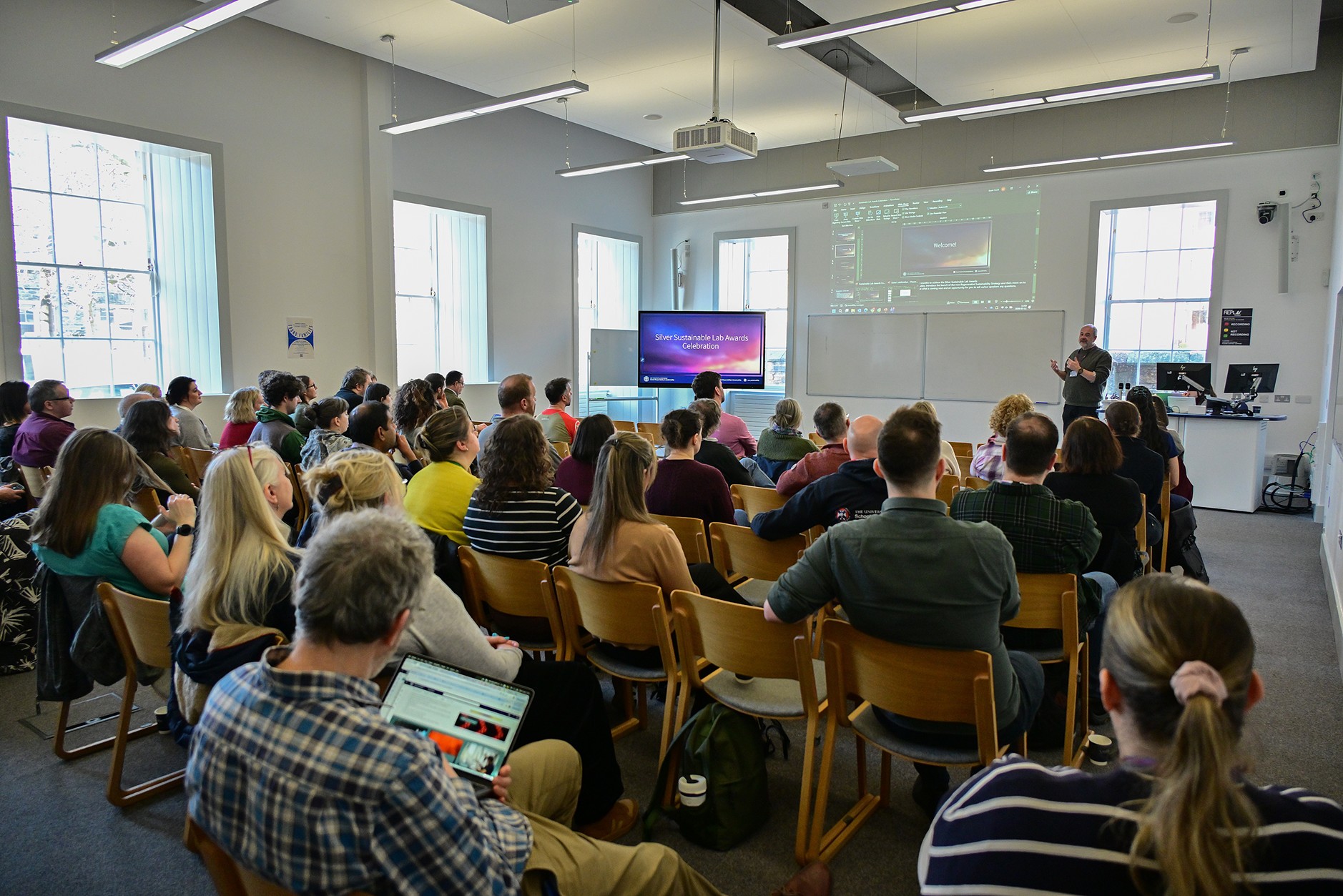
Thanks to the hard work of colleagues within our labs, we have hit a key milestone in improving lab sustainability. All our relevant research labs are now accredited to the Silver Sustainable Labs standard, an achievement we celebrated at a special event in March. This has been an enormous effort, especially considering that we also changed the registration process to sign up to the awards and with the deadline of the 1st January 2026 for funder requirements.
Our sustainability coordinators, Neil Johnston and Agata Gluszek-Kustusz, have worked intensively to coordinate evidence uploading, mock audits and peer-to-peer learning across and within their respective Colleges. They have also been collaborating with the Department for Social Responsibility and Sustainability (SRS) to make sure that our researchers can easily demonstrate their participation in the sustainable lab scheme for the benefit of their grant applications.
SRS have also collaborated with colleagues from the University’s College of Medicine and Veterinary Medicine, the University of St Andrews and the University of Glasgow to work on the Wellcome Trust Funded RELAX (Recognising Leadership & Expertise) project.
#3 Culture change starts at the beginning
We have started piloting ‘skills for sustainable research practice’ workshops, aimed at early career researchers. These have challenged us to consider different enablers and challenges for improving sustainable research practice at the University and what the impact of different funder policies would be on our different University communities.
Although early career researchers are not yet expected to meet the same requirements as Principal Investigators/lead applications to embed sustainable research practice, it has been instructive and motivating to see that many of our junior researchers are already considering the environmental impact of their research, and understand that this is something that should be done by default.
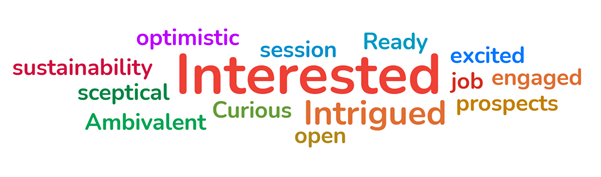
Word cloud answering the question: How are you feeling about the sustainable research practice session today – optimistic, sceptical, interested?
#4 The importance of collaboration and mutual support
We have also been active in sharing our plans to embed sustainable research practice internally and externally. We hosted a session on sustainable research practice at the 2025 EAUC conference in Sheffield, as well as one on collaboration and partnerships at EAUC Scotland in March 2026.
We’ve spoken at the University’s Research Support Services Conference, Digital Research Seminars and a number of College-level support and development forums. We also helped to organise a few sessions for the 2026 TechNet Scotland Conference, particularly looking at raising awareness of the expertise and time commitment provided by our technical staff in pursuit of embedding sustainable research practice.
Most recently, we’ve been exploring opportunities to collaborate across the sector and learn from our talented colleagues across the UK. We’ve been at the UKNSR two-day sustainable research seminar series, presenting on lessons learned from our sustainable lab awards. We are looking forward to seeing what collaborative projects materialise from connections made at these events.
#5 We’re still only at the start!
Digital sustainability, Generative AI and High-Performance Computing (HPC) have all been hot topics across the last 18 months. We have been exploring feasibility of the HPC behaviour change programme, Green Disc, learning from the experience of our colleagues over at the Software Sustainability Institute (SSI).
Colleagues from SSI and EPCC (Edinburgh Parallel Computing Cluster) are also contributing to a new course on Digital Sustainability that will be hosted on SparkHub, a new guidance and resources programme from UKRI. As a compliment to Green DiSC, colleagues from Edinburgh involved with the Digital Humanities Climate Coalition (DHCC), have also contributed to guidance on ‘Interpreting UKRI Environmental Sustainability Guidance for the Digital Humanities’ and the ‘DHCC Project Self-Assessment Tool’.
Responding to the direction of the sector and the ask of our research community, we think that 2026 will focus more on so-called “dry lab” research, alongside continued work to embed our Sustainable Lab Awards. We plan to expand our guiding questions and advice for grant applications, focusing on travel and procurement as the most material impacts for all research.
We would ask our research community here at Edinburgh to take a look at our Sustainable Research Practice SharePoint, read our Regenerative Sustainability Strategy and let us know what more we can do to support you.
Another big thank you to all of our staff and students who have worked so hard to help the University of Edinburgh further embed sustainable research practice.
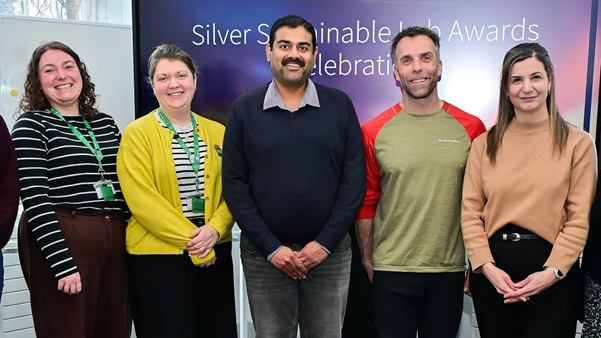
Photos by: Craig Nicol, IGC Graphics
Related links
Sustainable research practice [Sharepoint]
Sustainable Research and Innovation Practice
Crafting your application: Guidance on UK Funder Policies on Sustainable Research




Recent comments