

Diag====| Initiating an AUTOMATIC CHECK FOR UPDATES ON PAGE LOAD wp_loaded due to FeedWordPress option = string(4) "init"
Diag====| FeedWordPress is set up to hold pings, fwp_held_ping=0
Diag| Polling feed [https://blogs.ed.ac.uk/dennyroberts/feed/]
Diag====| HTTP [https://blogs.ed.ac.uk/dennyroberts/feed/] ⌈ array(7) {
  ["timeout"]=>
  int(20)
  ["redirection"]=>
  int(5)
  ["headers"]=>
  array(1) {
    ["Accept"]=>
    string(185) "application/atom+xml, application/rss+xml, application/rdf+xml;q=0.9, application/xml;q=0.8, text/xml;q=0.8, text/html;q=0.7, unknown/unknown;q=0.1, application/unknown;q=0.1, */*;q=0.1"
  }
  ["user-agent"]=>
  string(162) "FeedWordPress/2024.1119 (aggregator:feedwordpress; WordPress/6.8.5 + SimplePie/1.8.0; Allow like Gecko; +http://feedwordpress.radgeek.com/) at blogs.ed.ac.uk/dlam"
  ["authentication"]=>
  NULL
  ["username"]=>
  string(0) ""
  ["password"]=>
  string(0) ""
}
Diag====| HTTP [https://blogs.ed.ac.uk/dennyroberts/feed/] ⌉ array(6) {
  ["headers"]=>
  object(WpOrg\Requests\Utility\CaseInsensitiveDictionary)#2424 (1) {
    ["data":protected]=>
    array(12) {
      ["content-type"]=>
      string(34) "application/rss+xml; charset=UTF-8"
      ["date"]=>
      string(29) "Sun, 10 May 2026 05:44:00 GMT"
      ["server"]=>
      string(6) "Apache"
      ["x-powered-by"]=>
      string(10) "PHP/8.3.30"
      ["expires"]=>
      string(29) "Thu, 19 Nov 1981 08:52:00 GMT"
      ["cache-control"]=>
      string(35) "no-store, no-cache, must-revalidate"
      ["pragma"]=>
      string(8) "no-cache"
      ["link"]=>
      string(72) "<https://blogs.ed.ac.uk/dennyroberts/wp-json/>; rel="https://api.w.org/""
      ["set-cookie"]=>
      array(3) {
        [0]=>
        string(62) "PHPSESSID=t59gtdr1bf547312rbk94tfhvl; path=/; secure; HttpOnly"
        [1]=>
        string(136) "spo_1551_fa=c689ec6bd96c3d91f62a6be90c844405; expires=Sun, 10 May 2026 06:14:00 GMT; Max-Age=1800; path=/dennyroberts/; Secure; HttpOnly"
        [2]=>
        string(125) "RCKBMHKB=027ff8be59-56fd-48rUkyE41VqiWnYH9tNGZ_Vw6FRjFe6meTZyHMWybLS-4UvoMGlhqJSp7YnkhlpxD70LU; path=/; SameSite=None; Secure"
      }
      ["last-modified"]=>
      string(29) "Wed, 26 Aug 2020 09:03:59 GMT"
      ["etag"]=>
      string(34) ""f59fa4db194d35ecb76b8f41c56b098e""
      ["vary"]=>
      string(15) "Accept-Encoding"
    }
  }
  ["body"]=>
  string(5688) "<?xml version="1.0" encoding="UTF-8"?><rss version="2.0"
	xmlns:content="http://purl.org/rss/1.0/modules/content/"
	xmlns:wfw="http://wellformedweb.org/CommentAPI/"
	xmlns:dc="http://purl.org/dc/elements/1.1/"
	xmlns:atom="http://www.w3.org/2005/Atom"
	xmlns:sy="http://purl.org/rss/1.0/modules/syndication/"
	xmlns:slash="http://purl.org/rss/1.0/modules/slash/"
	xmlns:cc="http://creativecommons.org/ns#" >

<channel>
	<title>[placeholder]</title>
	<atom:link href="https://blogs.ed.ac.uk/dennyroberts/feed/" rel="self" type="application/rss+xml" />
	<link>https://blogs.ed.ac.uk/dennyroberts</link>
	<description>Denny's thoughts</description>
	<lastBuildDate>Fri, 14 Aug 2020 14:57:18 +0000</lastBuildDate>
	<language>en-GB</language>
	<sy:updatePeriod>
	hourly	</sy:updatePeriod>
	<sy:updateFrequency>
	1	</sy:updateFrequency>
	<generator>https://wordpress.org/?v=6.8.5</generator>
<cc:license >Creative Commons Attribution CC BY 3.0</cc:license><dc:rights  >Creative Commons Attribution CC BY 3.0</dc:rights>	<item>
		<title>Hyperreal, Marx and Furry Pets</title>
		<link>https://blogs.ed.ac.uk/dennyroberts/hyperreal-marx-and-furry-pets/</link>
		
		<dc:creator><![CDATA[Denny Roberts]]></dc:creator>
		<pubDate>Tue, 05 May 2020 11:30:16 +0000</pubDate>
				<category><![CDATA[Uncategorised]]></category>
		<category><![CDATA[dlam-feed]]></category>
		<guid isPermaLink="false">https://blogs.ed.ac.uk/dennyroberts/?p=29</guid>

					<description><![CDATA[<span class="span-reading-time rt-reading-time" style="display: block;"><span class="rt-label rt-prefix">Reading Time: </span> <span class="rt-time"> 3</span> <span class="rt-label rt-postfix">minutes</span></span>  It is hyperreal to describe the office workplaces of the early 21st century – that now lie derelict – as being centres for authentic connection between workers in any traditional sense. For decades open-plan office decorum had restricted conversations at desks, professional or casual. Limited meeting spaces led to quick fire stand-ups in corridors […]]]></description>
										<content:encoded><![CDATA[<span class="span-reading-time rt-reading-time" style="display: block;"><span class="rt-label rt-prefix">Reading Time: </span> <span class="rt-time"> 3</span> <span class="rt-label rt-postfix">minutes</span></span><p> </p>
<p>It is hyperreal to describe the office workplaces of the early 21st century – that now lie derelict – as being centres for authentic connection between workers in any traditional sense.</p>
<p>For decades open-plan office decorum had restricted conversations at desks, professional or casual. Limited meeting spaces led to quick fire stand-ups in corridors or prevented meetings occurring at the necessary time. Outlook emails and increasingly Teams have been the dominant tools to collaborate and to progress. The desk telephone collected dust long before Lockdown.</p>
<blockquote><p>If we are to transform, we need to understand the limits in our current thinking imposed by the language we use.</p></blockquote>
<p>‘Remote working’ is a linguistic relic of a recent history from the dominance of ‘the workplace’. Remote working is a term that we should be cautious to use. Remote in this context is from the perspective of an organisation directed at the individual. It infers a disconnect of the individual worker to the larger organisation and in some circumstances, this may be true, but for others work has continued, with continual adaption, as before.</p>
<p>What if we switched to the perspective of the worker? After all the term is being applied to us.</p>
<p>Here we are in our homes, our place of residence. A place that for many we have chosen. For some, it may be shared with family, collected artefacts, furry pets and failed DIY projects. It’s a place of love and of loss, frustrations and delights. It encapsulates our authentic experience of life, leaks an’ all. The home has been the incubator that we turned to for protection, when nothing else could. So how is it, from a worker’s perspective, that working here is remote?</p>
<p>For many, the old commute by train, bicycle or car, had become more a symbolic habit – hyperreal – with no genuine value. Packing a laptop into a bag, closing the door on our family home, paying for expensive seasonal tickets with increasing environmental costs, only to unpack the same laptop in an impersonal grey office, separated from all we have. It is this that <em>alienates</em>, that excludes and separates. The commute is for some maybe even the many, nothing more than a repetitive task, working remotely, to return home for a few hours with the family, to eat and sleep.</p>
<p>Where we are now is not remote working, it is professionally proximate, its decentralised working. It is a new holistic embrace that brings life’s components within reach, malleable around one another, sensitive to the individual needs.</p>
<p>Marx referred to work as <em>fulfilling our species essence</em>, providing us with creative outlets. And for some of us, work has provided a structure and a sense of purpose to the lockdown day. It has benefited our mental health without threatening our physical health, without financial or environmental cost.</p>
<p>Marx, in a different context, posited <em>the working class must organise itself at home</em> – well here we are at home, we are organised, and we are working, sustainably.</p>

			<span class="uoe-published-time uoe-seo-hidden-area">
				<time datetime="2020-05-05" itemprop="dateModified">May 5, 2020</time>
			</span>
		]]></content:encoded>


			</item>
	</channel>
</rss>
"
  ["response"]=>
  array(2) {
    ["code"]=>
    int(200)
    ["message"]=>
    string(2) "OK"
  }
  ["cookies"]=>
  array(3) {
    [0]=>
    object(WP_Http_Cookie)#2436 (7) {
      ["name"]=>
      string(9) "PHPSESSID"
      ["value"]=>
      string(26) "t59gtdr1bf547312rbk94tfhvl"
      ["expires"]=>
      NULL
      ["path"]=>
      string(1) "/"
      ["domain"]=>
      string(14) "blogs.ed.ac.uk"
      ["port"]=>
      NULL
      ["host_only"]=>
      bool(true)
    }
    [1]=>
    object(WP_Http_Cookie)#2435 (7) {
      ["name"]=>
      string(11) "spo_1551_fa"
      ["value"]=>
      string(32) "c689ec6bd96c3d91f62a6be90c844405"
      ["expires"]=>
      int(1778393640)
      ["path"]=>
      string(14) "/dennyroberts/"
      ["domain"]=>
      string(14) "blogs.ed.ac.uk"
      ["port"]=>
      NULL
      ["host_only"]=>
      bool(true)
    }
    [2]=>
    object(WP_Http_Cookie)#2437 (7) {
      ["name"]=>
      string(8) "RCKBMHKB"
      ["value"]=>
      string(85) "027ff8be59-56fd-48rUkyE41VqiWnYH9tNGZ_Vw6FRjFe6meTZyHMWybLS-4UvoMGlhqJSp7YnkhlpxD70LU"
      ["expires"]=>
      NULL
      ["path"]=>
      string(1) "/"
      ["domain"]=>
      string(14) "blogs.ed.ac.uk"
      ["port"]=>
      NULL
      ["host_only"]=>
      bool(true)
    }
  }
  ["filename"]=>
  NULL
  ["http_response"]=>
  object(WP_HTTP_Requests_Response)#2423 (5) {
    ["data"]=>
    NULL
    ["headers"]=>
    NULL
    ["status"]=>
    NULL
    ["response":protected]=>
    object(WpOrg\Requests\Response)#2425 (10) {
      ["body"]=>
      string(5688) "<?xml version="1.0" encoding="UTF-8"?><rss version="2.0"
	xmlns:content="http://purl.org/rss/1.0/modules/content/"
	xmlns:wfw="http://wellformedweb.org/CommentAPI/"
	xmlns:dc="http://purl.org/dc/elements/1.1/"
	xmlns:atom="http://www.w3.org/2005/Atom"
	xmlns:sy="http://purl.org/rss/1.0/modules/syndication/"
	xmlns:slash="http://purl.org/rss/1.0/modules/slash/"
	xmlns:cc="http://creativecommons.org/ns#" >

<channel>
	<title>[placeholder]</title>
	<atom:link href="https://blogs.ed.ac.uk/dennyroberts/feed/" rel="self" type="application/rss+xml" />
	<link>https://blogs.ed.ac.uk/dennyroberts</link>
	<description>Denny's thoughts</description>
	<lastBuildDate>Fri, 14 Aug 2020 14:57:18 +0000</lastBuildDate>
	<language>en-GB</language>
	<sy:updatePeriod>
	hourly	</sy:updatePeriod>
	<sy:updateFrequency>
	1	</sy:updateFrequency>
	<generator>https://wordpress.org/?v=6.8.5</generator>
<cc:license >Creative Commons Attribution CC BY 3.0</cc:license><dc:rights  >Creative Commons Attribution CC BY 3.0</dc:rights>	<item>
		<title>Hyperreal, Marx and Furry Pets</title>
		<link>https://blogs.ed.ac.uk/dennyroberts/hyperreal-marx-and-furry-pets/</link>
		
		<dc:creator><![CDATA[Denny Roberts]]></dc:creator>
		<pubDate>Tue, 05 May 2020 11:30:16 +0000</pubDate>
				<category><![CDATA[Uncategorised]]></category>
		<category><![CDATA[dlam-feed]]></category>
		<guid isPermaLink="false">https://blogs.ed.ac.uk/dennyroberts/?p=29</guid>

					<description><![CDATA[<span class="span-reading-time rt-reading-time" style="display: block;"><span class="rt-label rt-prefix">Reading Time: </span> <span class="rt-time"> 3</span> <span class="rt-label rt-postfix">minutes</span></span>  It is hyperreal to describe the office workplaces of the early 21st century – that now lie derelict – as being centres for authentic connection between workers in any traditional sense. For decades open-plan office decorum had restricted conversations at desks, professional or casual. Limited meeting spaces led to quick fire stand-ups in corridors […]]]></description>
										<content:encoded><![CDATA[<span class="span-reading-time rt-reading-time" style="display: block;"><span class="rt-label rt-prefix">Reading Time: </span> <span class="rt-time"> 3</span> <span class="rt-label rt-postfix">minutes</span></span><p> </p>
<p>It is hyperreal to describe the office workplaces of the early 21st century – that now lie derelict – as being centres for authentic connection between workers in any traditional sense.</p>
<p>For decades open-plan office decorum had restricted conversations at desks, professional or casual. Limited meeting spaces led to quick fire stand-ups in corridors or prevented meetings occurring at the necessary time. Outlook emails and increasingly Teams have been the dominant tools to collaborate and to progress. The desk telephone collected dust long before Lockdown.</p>
<blockquote><p>If we are to transform, we need to understand the limits in our current thinking imposed by the language we use.</p></blockquote>
<p>‘Remote working’ is a linguistic relic of a recent history from the dominance of ‘the workplace’. Remote working is a term that we should be cautious to use. Remote in this context is from the perspective of an organisation directed at the individual. It infers a disconnect of the individual worker to the larger organisation and in some circumstances, this may be true, but for others work has continued, with continual adaption, as before.</p>
<p>What if we switched to the perspective of the worker? After all the term is being applied to us.</p>
<p>Here we are in our homes, our place of residence. A place that for many we have chosen. For some, it may be shared with family, collected artefacts, furry pets and failed DIY projects. It’s a place of love and of loss, frustrations and delights. It encapsulates our authentic experience of life, leaks an’ all. The home has been the incubator that we turned to for protection, when nothing else could. So how is it, from a worker’s perspective, that working here is remote?</p>
<p>For many, the old commute by train, bicycle or car, had become more a symbolic habit – hyperreal – with no genuine value. Packing a laptop into a bag, closing the door on our family home, paying for expensive seasonal tickets with increasing environmental costs, only to unpack the same laptop in an impersonal grey office, separated from all we have. It is this that <em>alienates</em>, that excludes and separates. The commute is for some maybe even the many, nothing more than a repetitive task, working remotely, to return home for a few hours with the family, to eat and sleep.</p>
<p>Where we are now is not remote working, it is professionally proximate, its decentralised working. It is a new holistic embrace that brings life’s components within reach, malleable around one another, sensitive to the individual needs.</p>
<p>Marx referred to work as <em>fulfilling our species essence</em>, providing us with creative outlets. And for some of us, work has provided a structure and a sense of purpose to the lockdown day. It has benefited our mental health without threatening our physical health, without financial or environmental cost.</p>
<p>Marx, in a different context, posited <em>the working class must organise itself at home</em> – well here we are at home, we are organised, and we are working, sustainably.</p>

			<span class="uoe-published-time uoe-seo-hidden-area">
				<time datetime="2020-05-05" itemprop="dateModified">May 5, 2020</time>
			</span>
		]]></content:encoded>


			</item>
	</channel>
</rss>
"
      ["raw"]=>
      string(6549) "HTTP/1.1 200 OK
Content-Type: application/rss+xml; charset=UTF-8
Transfer-Encoding: chunked
Connection: close
Date: Sun, 10 May 2026 05:44:00 GMT
Server: Apache
X-Powered-By: PHP/8.3.30
Expires: Thu, 19 Nov 1981 08:52:00 GMT
Cache-Control: no-store, no-cache, must-revalidate
Pragma: no-cache
Link: <https://blogs.ed.ac.uk/dennyroberts/wp-json/>; rel="https://api.w.org/"
Set-Cookie: PHPSESSID=t59gtdr1bf547312rbk94tfhvl; path=/; secure; HttpOnly
Set-Cookie: spo_1551_fa=c689ec6bd96c3d91f62a6be90c844405; expires=Sun, 10 May 2026 06:14:00 GMT; Max-Age=1800; path=/dennyroberts/; Secure; HttpOnly
Last-Modified: Wed, 26 Aug 2020 09:03:59 GMT
ETag: "f59fa4db194d35ecb76b8f41c56b098e"
Vary: Accept-Encoding
Set-Cookie: RCKBMHKB=027ff8be59-56fd-48rUkyE41VqiWnYH9tNGZ_Vw6FRjFe6meTZyHMWybLS-4UvoMGlhqJSp7YnkhlpxD70LU; path=/; SameSite=None; Secure

<?xml version="1.0" encoding="UTF-8"?><rss version="2.0"
	xmlns:content="http://purl.org/rss/1.0/modules/content/"
	xmlns:wfw="http://wellformedweb.org/CommentAPI/"
	xmlns:dc="http://purl.org/dc/elements/1.1/"
	xmlns:atom="http://www.w3.org/2005/Atom"
	xmlns:sy="http://purl.org/rss/1.0/modules/syndication/"
	xmlns:slash="http://purl.org/rss/1.0/modules/slash/"
	xmlns:cc="http://creativecommons.org/ns#" >

<channel>
	<title>[placeholder]</title>
	<atom:link href="https://blogs.ed.ac.uk/dennyroberts/feed/" rel="self" type="application/rss+xml" />
	<link>https://blogs.ed.ac.uk/dennyroberts</link>
	<description>Denny's thoughts</description>
	<lastBuildDate>Fri, 14 Aug 2020 14:57:18 +0000</lastBuildDate>
	<language>en-GB</language>
	<sy:updatePeriod>
	hourly	</sy:updatePeriod>
	<sy:updateFrequency>
	1	</sy:updateFrequency>
	<generator>https://wordpress.org/?v=6.8.5</generator>
<cc:license >Creative Commons Attribution CC BY 3.0</cc:license><dc:rights  >Creative Commons Attribution CC BY 3.0</dc:rights>	<item>
		<title>Hyperreal, Marx and Furry Pets</title>
		<link>https://blogs.ed.ac.uk/dennyroberts/hyperreal-marx-and-furry-pets/</link>
		
		<dc:creator><![CDATA[Denny Roberts]]></dc:creator>
		<pubDate>Tue, 05 May 2020 11:30:16 +0000</pubDate>
				<category><![CDATA[Uncategorised]]></category>
		<category><![CDATA[dlam-feed]]></category>
		<guid isPermaLink="false">https://blogs.ed.ac.uk/dennyroberts/?p=29</guid>

					<description><![CDATA[<span class="span-reading-time rt-reading-time" style="display: block;"><span class="rt-label rt-prefix">Reading Time: </span> <span class="rt-time"> 3</span> <span class="rt-label rt-postfix">minutes</span></span>  It is hyperreal to describe the office workplaces of the early 21st century – that now lie derelict – as being centres for authentic connection between workers in any traditional sense. For decades open-plan office decorum had restricted conversations at desks, professional or casual. Limited meeting spaces led to quick fire stand-ups in corridors […]]]></description>
										<content:encoded><![CDATA[<span class="span-reading-time rt-reading-time" style="display: block;"><span class="rt-label rt-prefix">Reading Time: </span> <span class="rt-time"> 3</span> <span class="rt-label rt-postfix">minutes</span></span><p> </p>
<p>It is hyperreal to describe the office workplaces of the early 21st century – that now lie derelict – as being centres for authentic connection between workers in any traditional sense.</p>
<p>For decades open-plan office decorum had restricted conversations at desks, professional or casual. Limited meeting spaces led to quick fire stand-ups in corridors or prevented meetings occurring at the necessary time. Outlook emails and increasingly Teams have been the dominant tools to collaborate and to progress. The desk telephone collected dust long before Lockdown.</p>
<blockquote><p>If we are to transform, we need to understand the limits in our current thinking imposed by the language we use.</p></blockquote>
<p>‘Remote working’ is a linguistic relic of a recent history from the dominance of ‘the workplace’. Remote working is a term that we should be cautious to use. Remote in this context is from the perspective of an organisation directed at the individual. It infers a disconnect of the individual worker to the larger organisation and in some circumstances, this may be true, but for others work has continued, with continual adaption, as before.</p>
<p>What if we switched to the perspective of the worker? After all the term is being applied to us.</p>
<p>Here we are in our homes, our place of residence. A place that for many we have chosen. For some, it may be shared with family, collected artefacts, furry pets and failed DIY projects. It’s a place of love and of loss, frustrations and delights. It encapsulates our authentic experience of life, leaks an’ all. The home has been the incubator that we turned to for protection, when nothing else could. So how is it, from a worker’s perspective, that working here is remote?</p>
<p>For many, the old commute by train, bicycle or car, had become more a symbolic habit – hyperreal – with no genuine value. Packing a laptop into a bag, closing the door on our family home, paying for expensive seasonal tickets with increasing environmental costs, only to unpack the same laptop in an impersonal grey office, separated from all we have. It is this that <em>alienates</em>, that excludes and separates. The commute is for some maybe even the many, nothing more than a repetitive task, working remotely, to return home for a few hours with the family, to eat and sleep.</p>
<p>Where we are now is not remote working, it is professionally proximate, its decentralised working. It is a new holistic embrace that brings life’s components within reach, malleable around one another, sensitive to the individual needs.</p>
<p>Marx referred to work as <em>fulfilling our species essence</em>, providing us with creative outlets. And for some of us, work has provided a structure and a sense of purpose to the lockdown day. It has benefited our mental health without threatening our physical health, without financial or environmental cost.</p>
<p>Marx, in a different context, posited <em>the working class must organise itself at home</em> – well here we are at home, we are organised, and we are working, sustainably.</p>

			<span class="uoe-published-time uoe-seo-hidden-area">
				<time datetime="2020-05-05" itemprop="dateModified">May 5, 2020</time>
			</span>
		]]></content:encoded>


			</item>
	</channel>
</rss>
"
      ["headers"]=>
      object(WpOrg\Requests\Response\Headers)#2426 (1) {
        ["data":protected]=>
        array(12) {
          ["content-type"]=>
          array(1) {
            [0]=>
            string(34) "application/rss+xml; charset=UTF-8"
          }
          ["date"]=>
          array(1) {
            [0]=>
            string(29) "Sun, 10 May 2026 05:44:00 GMT"
          }
          ["server"]=>
          array(1) {
            [0]=>
            string(6) "Apache"
          }
          ["x-powered-by"]=>
          array(1) {
            [0]=>
            string(10) "PHP/8.3.30"
          }
          ["expires"]=>
          array(1) {
            [0]=>
            string(29) "Thu, 19 Nov 1981 08:52:00 GMT"
          }
          ["cache-control"]=>
          array(1) {
            [0]=>
            string(35) "no-store, no-cache, must-revalidate"
          }
          ["pragma"]=>
          array(1) {
            [0]=>
            string(8) "no-cache"
          }
          ["link"]=>
          array(1) {
            [0]=>
            string(72) "<https://blogs.ed.ac.uk/dennyroberts/wp-json/>; rel="https://api.w.org/""
          }
          ["set-cookie"]=>
          array(3) {
            [0]=>
            string(62) "PHPSESSID=t59gtdr1bf547312rbk94tfhvl; path=/; secure; HttpOnly"
            [1]=>
            string(136) "spo_1551_fa=c689ec6bd96c3d91f62a6be90c844405; expires=Sun, 10 May 2026 06:14:00 GMT; Max-Age=1800; path=/dennyroberts/; Secure; HttpOnly"
            [2]=>
            string(125) "RCKBMHKB=027ff8be59-56fd-48rUkyE41VqiWnYH9tNGZ_Vw6FRjFe6meTZyHMWybLS-4UvoMGlhqJSp7YnkhlpxD70LU; path=/; SameSite=None; Secure"
          }
          ["last-modified"]=>
          array(1) {
            [0]=>
            string(29) "Wed, 26 Aug 2020 09:03:59 GMT"
          }
          ["etag"]=>
          array(1) {
            [0]=>
            string(34) ""f59fa4db194d35ecb76b8f41c56b098e""
          }
          ["vary"]=>
          array(1) {
            [0]=>
            string(15) "Accept-Encoding"
          }
        }
      }
      ["status_code"]=>
      int(200)
      ["protocol_version"]=>
      float(1.1)
      ["success"]=>
      bool(true)
      ["redirects"]=>
      int(0)
      ["url"]=>
      string(41) "https://blogs.ed.ac.uk/dennyroberts/feed/"
      ["history"]=>
      array(0) {
      }
      ["cookies"]=>
      object(WpOrg\Requests\Cookie\Jar)#2422 (1) {
        ["cookies":protected]=>
        array(3) {
          ["PHPSESSID"]=>
          object(WpOrg\Requests\Cookie)#2430 (5) {
            ["name"]=>
            string(9) "PHPSESSID"
            ["value"]=>
            string(26) "t59gtdr1bf547312rbk94tfhvl"
            ["attributes"]=>
            object(WpOrg\Requests\Utility\CaseInsensitiveDictionary)#2429 (1) {
              ["data":protected]=>
              array(4) {
                ["path"]=>
                string(1) "/"
                ["secure"]=>
                bool(true)
                ["httponly"]=>
                bool(true)
                ["domain"]=>
                string(14) "blogs.ed.ac.uk"
              }
            }
            ["flags"]=>
            array(4) {
              ["creation"]=>
              int(1778391840)
              ["last-access"]=>
              int(1778391840)
              ["persistent"]=>
              bool(false)
              ["host-only"]=>
              bool(true)
            }
            ["reference_time"]=>
            int(1778391840)
          }
          ["spo_1551_fa"]=>
          object(WpOrg\Requests\Cookie)#2431 (5) {
            ["name"]=>
            string(11) "spo_1551_fa"
            ["value"]=>
            string(32) "c689ec6bd96c3d91f62a6be90c844405"
            ["attributes"]=>
            object(WpOrg\Requests\Utility\CaseInsensitiveDictionary)#2432 (1) {
              ["data":protected]=>
              array(6) {
                ["expires"]=>
                int(1778393640)
                ["max-age"]=>
                int(1778393640)
                ["path"]=>
                string(14) "/dennyroberts/"
                ["secure"]=>
                bool(true)
                ["httponly"]=>
                bool(true)
                ["domain"]=>
                string(14) "blogs.ed.ac.uk"
              }
            }
            ["flags"]=>
            array(4) {
              ["creation"]=>
              int(1778391840)
              ["last-access"]=>
              int(1778391840)
              ["persistent"]=>
              bool(false)
              ["host-only"]=>
              bool(true)
            }
            ["reference_time"]=>
            int(1778391840)
          }
          ["RCKBMHKB"]=>
          object(WpOrg\Requests\Cookie)#2433 (5) {
            ["name"]=>
            string(8) "RCKBMHKB"
            ["value"]=>
            string(85) "027ff8be59-56fd-48rUkyE41VqiWnYH9tNGZ_Vw6FRjFe6meTZyHMWybLS-4UvoMGlhqJSp7YnkhlpxD70LU"
            ["attributes"]=>
            object(WpOrg\Requests\Utility\CaseInsensitiveDictionary)#2434 (1) {
              ["data":protected]=>
              array(4) {
                ["path"]=>
                string(1) "/"
                ["samesite"]=>
                string(4) "None"
                ["secure"]=>
                bool(true)
                ["domain"]=>
                string(14) "blogs.ed.ac.uk"
              }
            }
            ["flags"]=>
            array(4) {
              ["creation"]=>
              int(1778391840)
              ["last-access"]=>
              int(1778391840)
              ["persistent"]=>
              bool(false)
              ["host-only"]=>
              bool(true)
            }
            ["reference_time"]=>
            int(1778391840)
          }
        }
      }
    }
    ["filename":protected]=>
    NULL
  }
}
Diag| Considering item [https://blogs.ed.ac.uk/dennyroberts/?p=29] "Hyperreal, Marx and Furry Pets"
Diag========| SQL: SELECT   wp_30_posts.ID, wp_30_posts.guid, wp_30_posts.post_modified_gmt, wp_30_posts.post_name
					 FROM wp_30_posts  LEFT JOIN wp_30_postmeta EO_META ON EO_META.meta_key = 'ease_only' AND EO_META.post_id = wp_30_posts.ID 
					 WHERE 1=1  AND ((guid = 'https://blogs.ed.ac.uk/dennyroberts/?p=29'))
					 
					 ORDER BY wp_30_posts.post_date DESC
					 
Diag====| Item [https://blogs.ed.ac.uk/dennyroberts/?p=29] "Hyperreal, Marx and Furry Pets" is a duplicate of an existing post.
Jackie Aim – Digital Learning Applications and Media
Any views expressed within media held on this service are those of the contributors, should not be taken as approved or endorsed by the University, and do not necessarily reflect the views of the University in respect of any particular issue.

Author: Jackie Aim

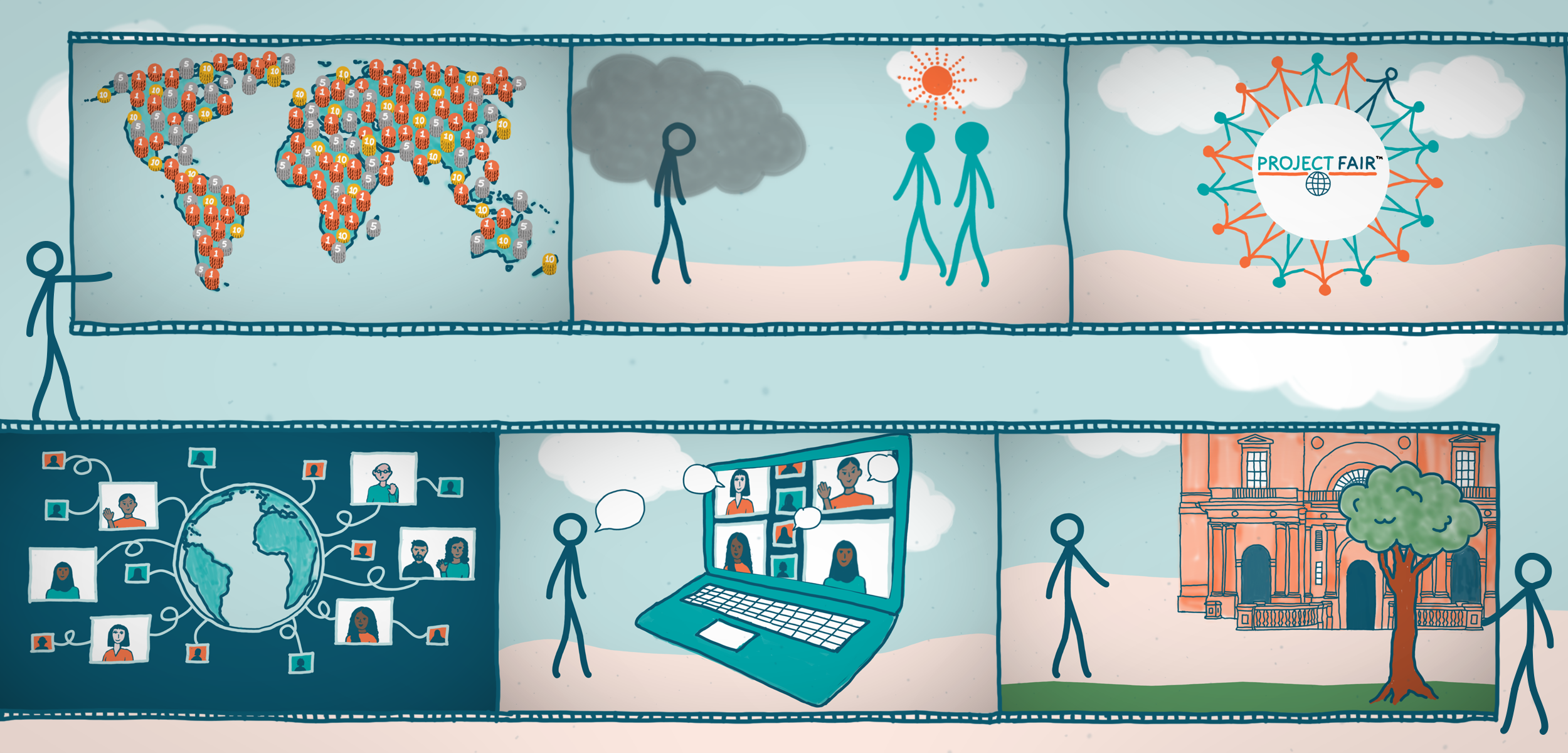
Screenshots from the Project Fair video in a filmstrip style, showing the map, stick figures in a circle, communications and building

Changing the visual design mid-way in a video project is quite unusual, but pivoting to a softer animation style with stick figures proved successful for both the client and us.
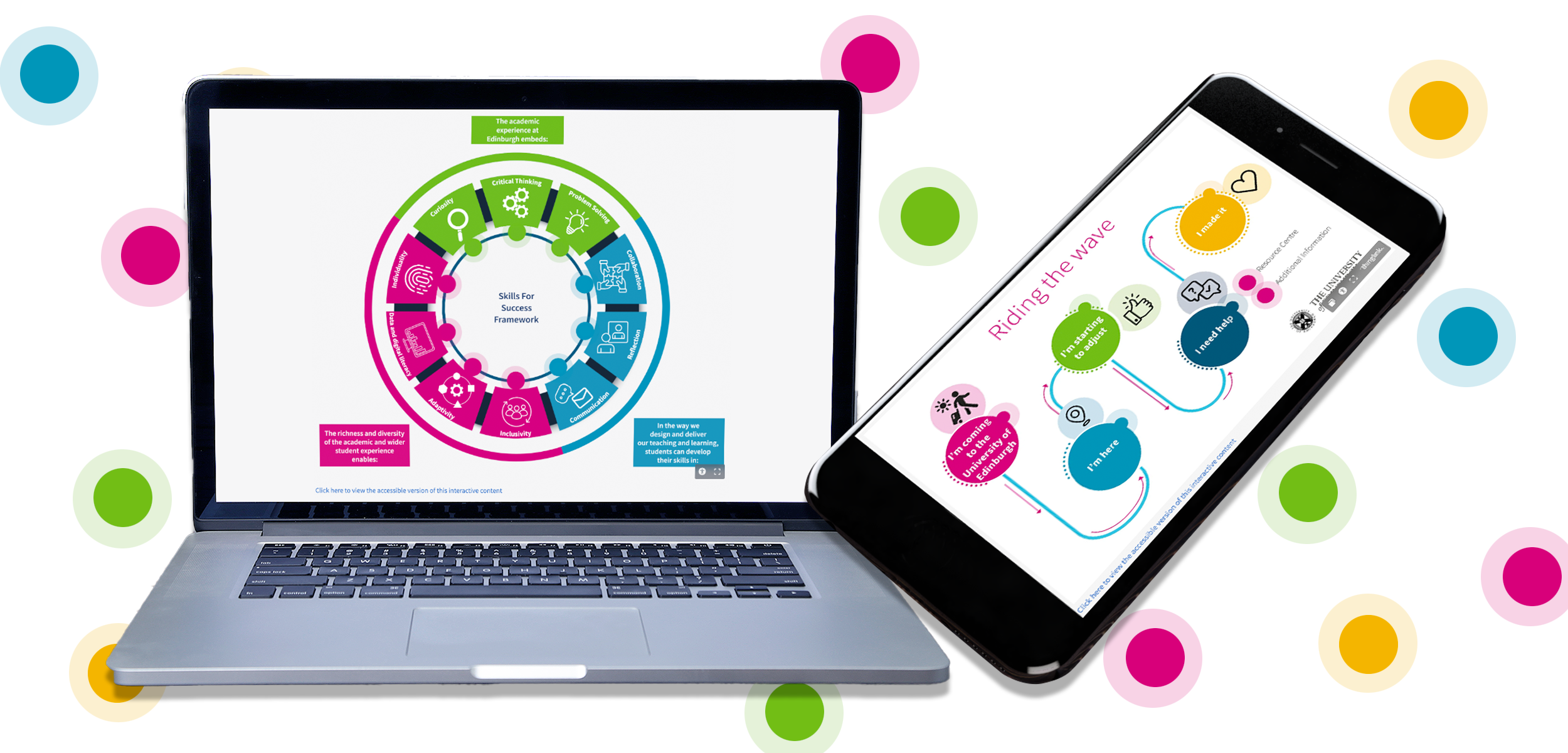
Laptop and phone screens showing 'Skills for Success Framework' and 'Riding the wave' projects

The Interactive Content team used ThingLink to create interactive learning materials for two Careers Services projects: ‘Skills For Success Framework’ and ‘Riding the Wave’. They chose ThingLink for its ability to add interactivity to graphics and its ease of embedding into EdWeb. The team collaborated with the Graphics Design service to create engaging and accessible content using ThingLink’s scenes and tags features.

Photographs of 7 different people – various ages, ethnicities and genders. One person is highlighted in yellow.

Interactive Content developer Jackie Aim shares her early experiments with Generative AI when creating educational short videos. In particular, using Adobe’s commercially safe Firefly to extend stock video footage and generate bespoke imagery.
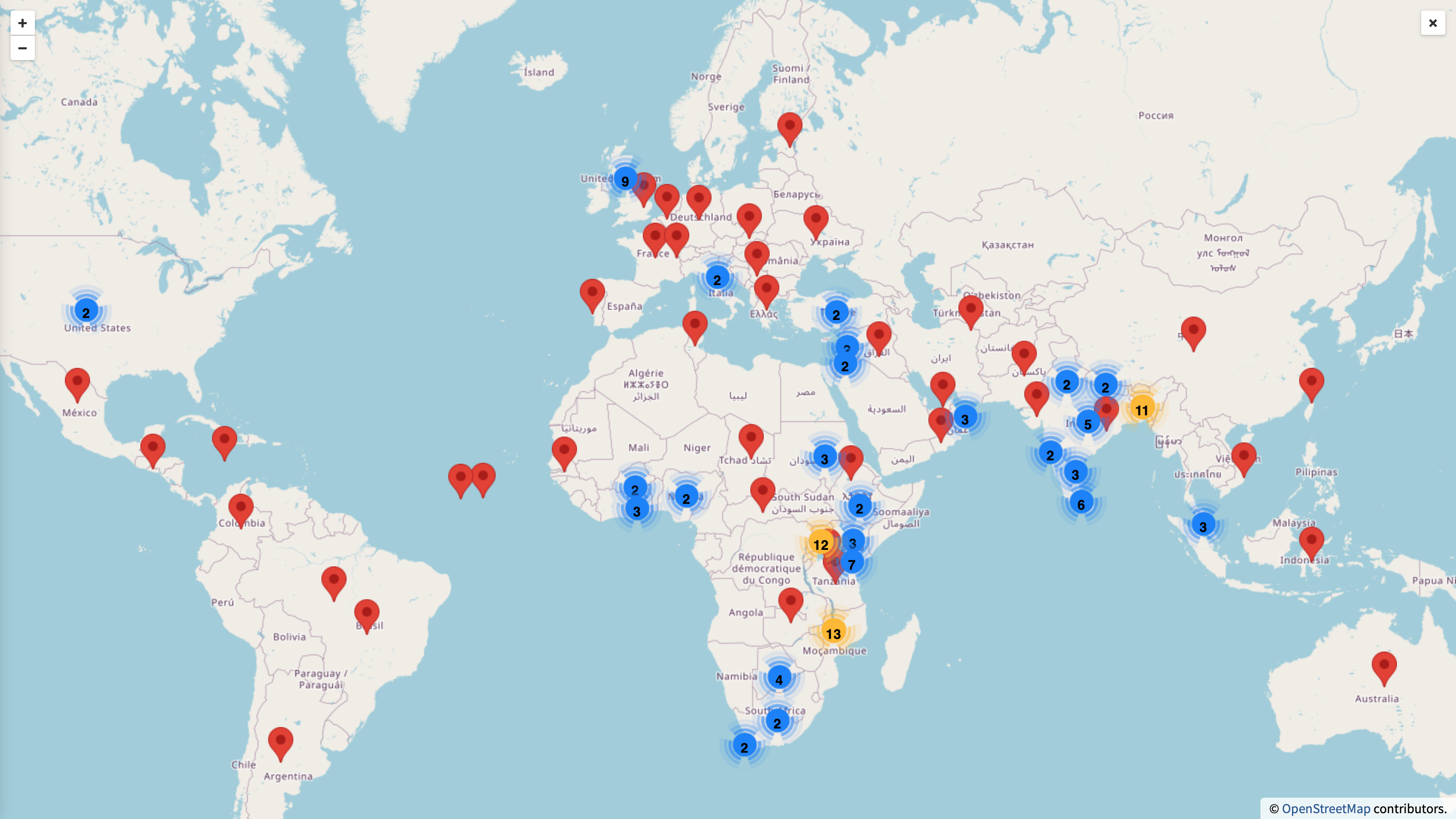
World map showing tens of red and blue markers/pins.

Interactive Content were contacted by CMVM Research Office and Communications and Marketing to create a bespoke, engaging and easy-to-use interactive map. This resource highlights where the University’s research and innovation in health are making a difference around the world.
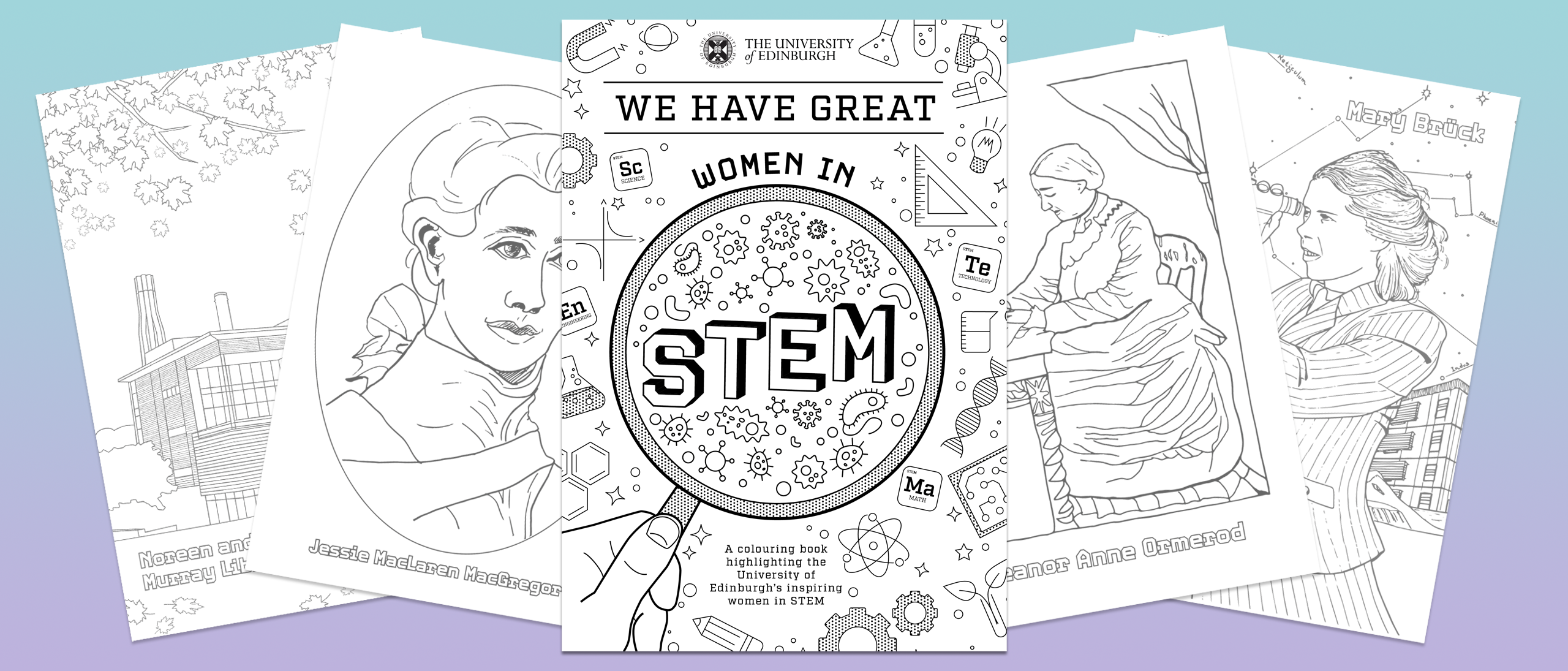
Reading Time: 2 minutes ‘We Have Great Women in STEM’ colouring book Our volume three colouring book ‘We Have Great Women in STEM’ is now available on Edinburgh Diamond, the University of Edinburgh’s digital service for hosting Diamond Open Access books and journals. Hosting our books on Edinburgh Diamond Although we have our books available on the Colouring Books website having them […]
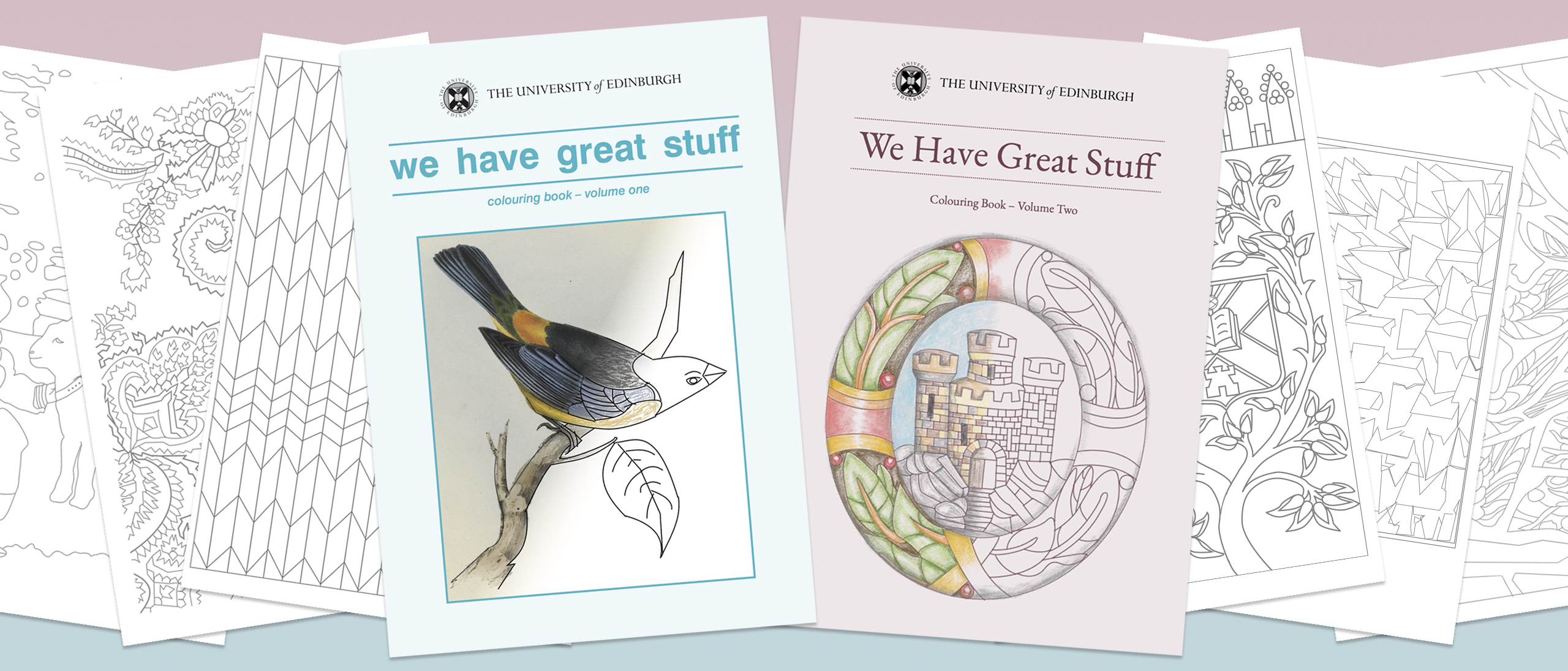
Colouring books volumes one and two with page samples

Our colouring books ‘We have great stuff’ volumes one and two are now available on Edinburgh Diamond, the University of Edinburgh Library’s digital service for hosting Diamond open source books and journals.
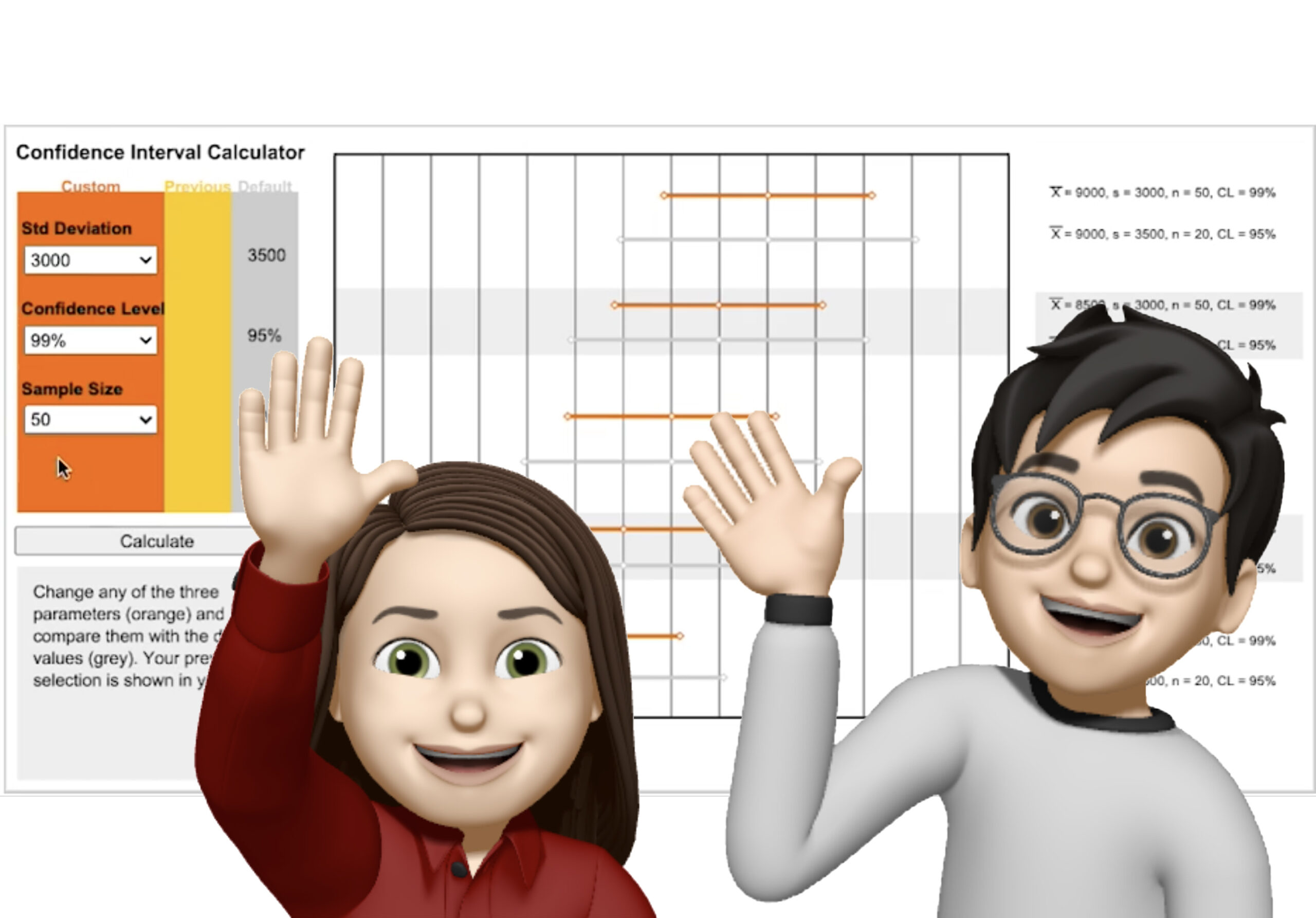
Jackie and Charlie's Memoji avatars waving in front of a screen grab of the CI calculator.

Jackie Aim and Charlie Chu from the Interactive Content team talk about collaborating in the office (IRL) on a high-priority, complicated HTML5 statistics interactive for the College of Medicine & Veterinary Medicine (CMVM).
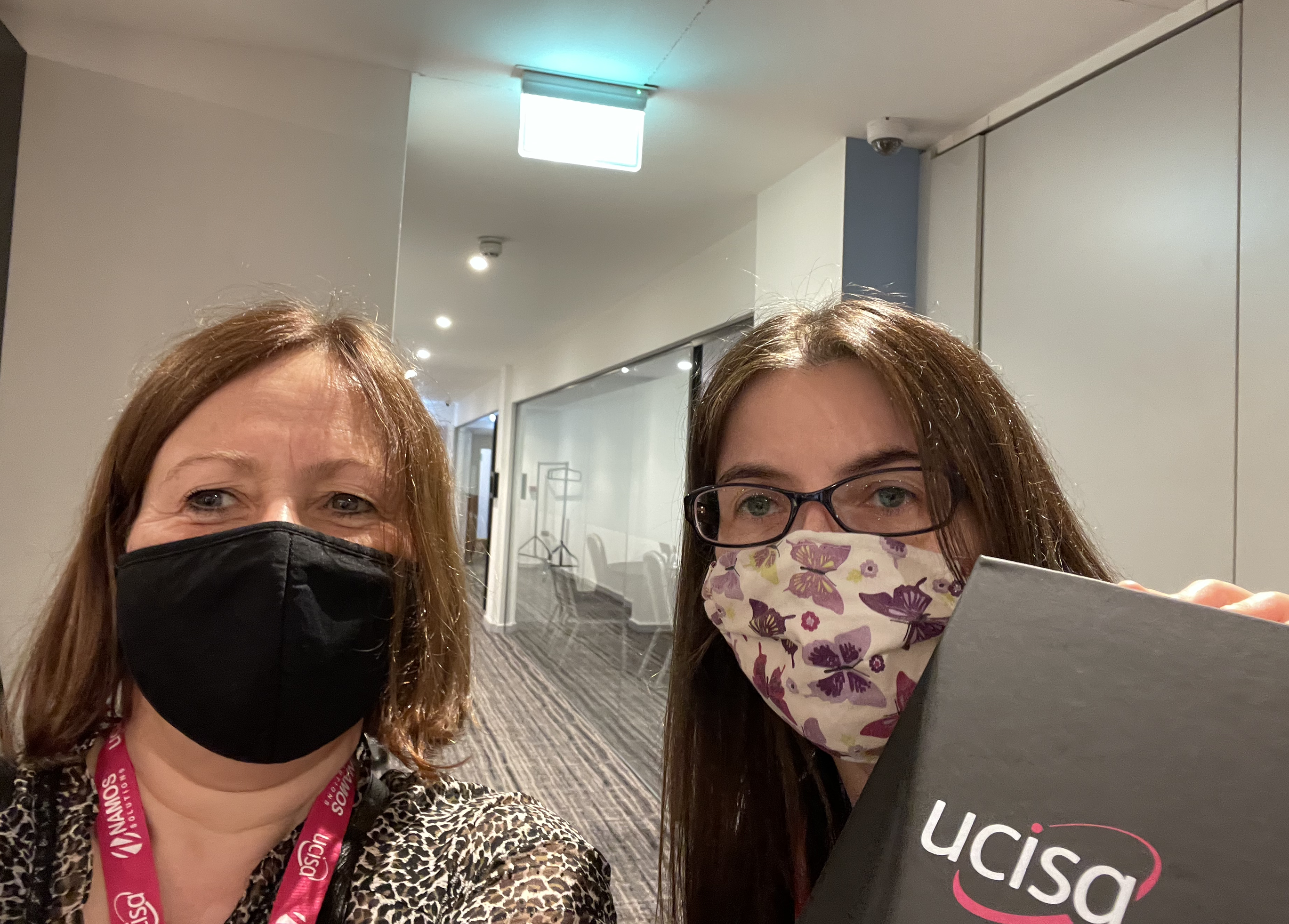
Jackie (left) and Karen (right) at UCISA conference in Birmingham

Personal highlights from the UCISA women In tech conference (#WiT22), including presentations from Avril Chester and Jake Dovey.
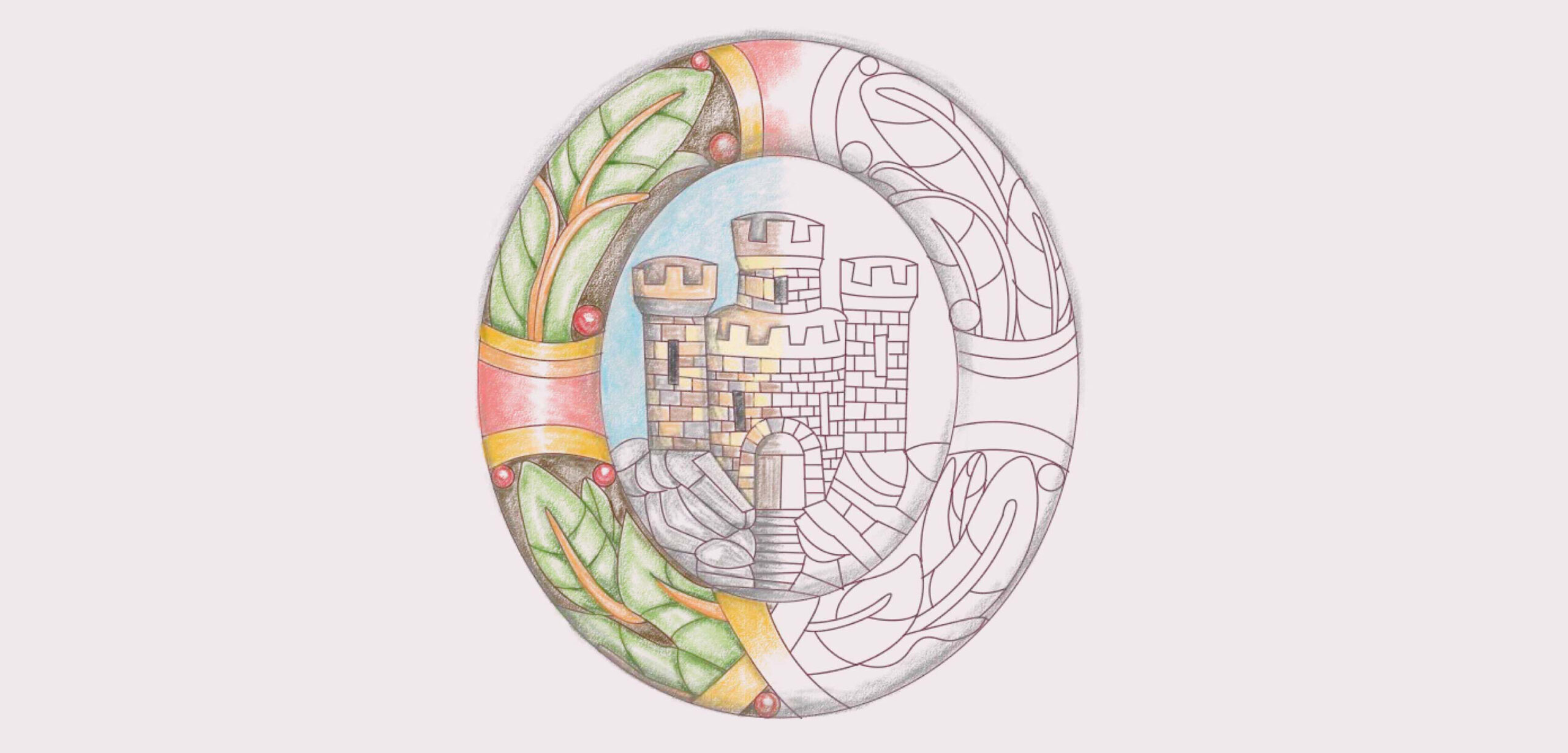
Volume 2 front cover

A second edition of the popular ‘We Have Great Stuff’ colouring book has been launched centred around the theme of a Treasure Map that explores treasures found around the University of Edinburgh.
4 Apple iPad Pros with the new H5P content types displayed, including a crossword.

Reading Time: 2 minutes H5P have recently brought out three new content types: Crossword Image Choice Sort the Paragraphs and of course I couldn’t wait to have a play. Crossword The Crossword type is great fun and easy to create, the hardest par…

Diag| Memory: Current usage: 8 MB
Diag| Memory: Peak usage: 8 MB
css.php

Report this page

To report inappropriate content on this page, please use the form below. Upon receiving your report, we will be in touch as per the Take Down Policy of the service.

Please note that personal data collected through this form is used and stored for the purposes of processing this report and communication with you.

If you are unable to report a concern about content via this form please contact the Service Owner.

Please enter an email address you wish to be contacted on. Please describe the unacceptable content in sufficient detail to allow us to locate it, and why you consider it to be unacceptable.
By submitting this report, you accept that it is accurate and that fraudulent or nuisance complaints may result in action by the University.

  Cancel