Diag====| HTTP [https://blogs.ed.ac.uk/dennyroberts/feed/] ⌉ array(6) {
  ["headers"]=>
  object(WpOrg\Requests\Utility\CaseInsensitiveDictionary)#2405 (1) {
    ["data":protected]=>
    array(12) {
      ["content-type"]=>
      string(34) "application/rss+xml; charset=UTF-8"
      ["date"]=>
      string(29) "Fri, 15 May 2026 16:30:18 GMT"
      ["server"]=>
      string(6) "Apache"
      ["x-powered-by"]=>
      string(10) "PHP/8.3.30"
      ["expires"]=>
      string(29) "Thu, 19 Nov 1981 08:52:00 GMT"
      ["cache-control"]=>
      string(35) "no-store, no-cache, must-revalidate"
      ["pragma"]=>
      string(8) "no-cache"
      ["link"]=>
      string(72) "<https://blogs.ed.ac.uk/dennyroberts/wp-json/>; rel="https://api.w.org/""
      ["set-cookie"]=>
      array(3) {
        [0]=>
        string(62) "PHPSESSID=l2d741j5r5kkldgdi7nrik2ctn; path=/; secure; HttpOnly"
        [1]=>
        string(136) "spo_1551_fa=c689ec6bd96c3d91f62a6be90c844405; expires=Fri, 15 May 2026 17:00:18 GMT; Max-Age=1800; path=/dennyroberts/; Secure; HttpOnly"
        [2]=>
        string(125) "RCKBMHKB=027ff8be59-56fd-48u9jriKZP9jqUXGXSd35w41hMCpOa-BXVj5IkvZSfF_hfUBAjldRoR6F2psHbfCkzNtw; path=/; SameSite=None; Secure"
      }
      ["last-modified"]=>
      string(29) "Wed, 26 Aug 2020 09:03:59 GMT"
      ["etag"]=>
      string(34) ""f59fa4db194d35ecb76b8f41c56b098e""
      ["vary"]=>
      string(15) "Accept-Encoding"
    }
  }
  ["body"]=>
  string(5688) "<?xml version="1.0" encoding="UTF-8"?><rss version="2.0"
	xmlns:content="http://purl.org/rss/1.0/modules/content/"
	xmlns:wfw="http://wellformedweb.org/CommentAPI/"
	xmlns:dc="http://purl.org/dc/elements/1.1/"
	xmlns:atom="http://www.w3.org/2005/Atom"
	xmlns:sy="http://purl.org/rss/1.0/modules/syndication/"
	xmlns:slash="http://purl.org/rss/1.0/modules/slash/"
	xmlns:cc="http://creativecommons.org/ns#" >

<channel>
	<title>[placeholder]</title>
	<atom:link href="https://blogs.ed.ac.uk/dennyroberts/feed/" rel="self" type="application/rss+xml" />
	<link>https://blogs.ed.ac.uk/dennyroberts</link>
	<description>Denny's thoughts</description>
	<lastBuildDate>Fri, 14 Aug 2020 14:57:18 +0000</lastBuildDate>
	<language>en-GB</language>
	<sy:updatePeriod>
	hourly	</sy:updatePeriod>
	<sy:updateFrequency>
	1	</sy:updateFrequency>
	<generator>https://wordpress.org/?v=6.8.5</generator>
<cc:license >Creative Commons Attribution CC BY 3.0</cc:license><dc:rights  >Creative Commons Attribution CC BY 3.0</dc:rights>	<item>
		<title>Hyperreal, Marx and Furry Pets</title>
		<link>https://blogs.ed.ac.uk/dennyroberts/hyperreal-marx-and-furry-pets/</link>

		<dc:creator><![CDATA[Denny Roberts]]></dc:creator>
		<pubDate>Tue, 05 May 2020 11:30:16 +0000</pubDate>
				<category><![CDATA[Uncategorised]]></category>
		<category><![CDATA[dlam-feed]]></category>
		<guid isPermaLink="false">https://blogs.ed.ac.uk/dennyroberts/?p=29</guid>

					<description><![CDATA[<span class="span-reading-time rt-reading-time" style="display: block;"><span class="rt-label rt-prefix">Reading Time: </span> <span class="rt-time"> 3</span> <span class="rt-label rt-postfix">minutes</span></span>  It is hyperreal to describe the office workplaces of the early 21st century – that now lie derelict – as being centres for authentic connection between workers in any traditional sense. For decades open-plan office decorum had restricted conversations at desks, professional or casual. Limited meeting spaces led to quick fire stand-ups in corridors […]]]></description>
										<content:encoded><![CDATA[<span class="span-reading-time rt-reading-time" style="display: block;"><span class="rt-label rt-prefix">Reading Time: </span> <span class="rt-time"> 3</span> <span class="rt-label rt-postfix">minutes</span></span><p> </p>
<p>It is hyperreal to describe the office workplaces of the early 21st century – that now lie derelict – as being centres for authentic connection between workers in any traditional sense.</p>
<p>For decades open-plan office decorum had restricted conversations at desks, professional or casual. Limited meeting spaces led to quick fire stand-ups in corridors or prevented meetings occurring at the necessary time. Outlook emails and increasingly Teams have been the dominant tools to collaborate and to progress. The desk telephone collected dust long before Lockdown.</p>
<blockquote><p>If we are to transform, we need to understand the limits in our current thinking imposed by the language we use.</p></blockquote>
<p>‘Remote working’ is a linguistic relic of a recent history from the dominance of ‘the workplace’. Remote working is a term that we should be cautious to use. Remote in this context is from the perspective of an organisation directed at the individual. It infers a disconnect of the individual worker to the larger organisation and in some circumstances, this may be true, but for others work has continued, with continual adaption, as before.</p>
<p>What if we switched to the perspective of the worker? After all the term is being applied to us.</p>
<p>Here we are in our homes, our place of residence. A place that for many we have chosen. For some, it may be shared with family, collected artefacts, furry pets and failed DIY projects. It’s a place of love and of loss, frustrations and delights. It encapsulates our authentic experience of life, leaks an’ all. The home has been the incubator that we turned to for protection, when nothing else could. So how is it, from a worker’s perspective, that working here is remote?</p>
<p>For many, the old commute by train, bicycle or car, had become more a symbolic habit – hyperreal – with no genuine value. Packing a laptop into a bag, closing the door on our family home, paying for expensive seasonal tickets with increasing environmental costs, only to unpack the same laptop in an impersonal grey office, separated from all we have. It is this that <em>alienates</em>, that excludes and separates. The commute is for some maybe even the many, nothing more than a repetitive task, working remotely, to return home for a few hours with the family, to eat and sleep.</p>
<p>Where we are now is not remote working, it is professionally proximate, its decentralised working. It is a new holistic embrace that brings life’s components within reach, malleable around one another, sensitive to the individual needs.</p>
<p>Marx referred to work as <em>fulfilling our species essence</em>, providing us with creative outlets. And for some of us, work has provided a structure and a sense of purpose to the lockdown day. It has benefited our mental health without threatening our physical health, without financial or environmental cost.</p>
<p>Marx, in a different context, posited <em>the working class must organise itself at home</em> – well here we are at home, we are organised, and we are working, sustainably.</p>

			<span class="uoe-published-time uoe-seo-hidden-area">
				<time datetime="2020-05-05" itemprop="dateModified">May 5, 2020</time>
			</span>
		]]></content:encoded>


			</item>
	</channel>
</rss>
"
  ["response"]=>
  array(2) {
    ["code"]=>
    int(200)
    ["message"]=>
    string(2) "OK"
  }
  ["cookies"]=>
  array(3) {
    [0]=>
    object(WP_Http_Cookie)#2417 (7) {
      ["name"]=>
      string(9) "PHPSESSID"
      ["value"]=>
      string(26) "l2d741j5r5kkldgdi7nrik2ctn"
      ["expires"]=>
      NULL
      ["path"]=>
      string(1) "/"
      ["domain"]=>
      string(14) "blogs.ed.ac.uk"
      ["port"]=>
      NULL
      ["host_only"]=>
      bool(true)
    }
    [1]=>
    object(WP_Http_Cookie)#2416 (7) {
      ["name"]=>
      string(11) "spo_1551_fa"
      ["value"]=>
      string(32) "c689ec6bd96c3d91f62a6be90c844405"
      ["expires"]=>
      int(1778864418)
      ["path"]=>
      string(14) "/dennyroberts/"
      ["domain"]=>
      string(14) "blogs.ed.ac.uk"
      ["port"]=>
      NULL
      ["host_only"]=>
      bool(true)
    }
    [2]=>
    object(WP_Http_Cookie)#2418 (7) {
      ["name"]=>
      string(8) "RCKBMHKB"
      ["value"]=>
      string(85) "027ff8be59-56fd-48u9jriKZP9jqUXGXSd35w41hMCpOa-BXVj5IkvZSfF_hfUBAjldRoR6F2psHbfCkzNtw"
      ["expires"]=>
      NULL
      ["path"]=>
      string(1) "/"
      ["domain"]=>
      string(14) "blogs.ed.ac.uk"
      ["port"]=>
      NULL
      ["host_only"]=>
      bool(true)
    }
  }
  ["filename"]=>
  NULL
  ["http_response"]=>
  object(WP_HTTP_Requests_Response)#2404 (5) {
    ["data"]=>
    NULL
    ["headers"]=>
    NULL
    ["status"]=>
    NULL
    ["response":protected]=>
    object(WpOrg\Requests\Response)#2406 (10) {
      ["body"]=>
      string(5688) "<?xml version="1.0" encoding="UTF-8"?><rss version="2.0"
	xmlns:content="http://purl.org/rss/1.0/modules/content/"
	xmlns:wfw="http://wellformedweb.org/CommentAPI/"
	xmlns:dc="http://purl.org/dc/elements/1.1/"
	xmlns:atom="http://www.w3.org/2005/Atom"
	xmlns:sy="http://purl.org/rss/1.0/modules/syndication/"
	xmlns:slash="http://purl.org/rss/1.0/modules/slash/"
	xmlns:cc="http://creativecommons.org/ns#" >

<channel>
	<title>[placeholder]</title>
	<atom:link href="https://blogs.ed.ac.uk/dennyroberts/feed/" rel="self" type="application/rss+xml" />
	<link>https://blogs.ed.ac.uk/dennyroberts</link>
	<description>Denny's thoughts</description>
	<lastBuildDate>Fri, 14 Aug 2020 14:57:18 +0000</lastBuildDate>
	<language>en-GB</language>
	<sy:updatePeriod>
	hourly	</sy:updatePeriod>
	<sy:updateFrequency>
	1	</sy:updateFrequency>
	<generator>https://wordpress.org/?v=6.8.5</generator>
<cc:license >Creative Commons Attribution CC BY 3.0</cc:license><dc:rights  >Creative Commons Attribution CC BY 3.0</dc:rights>	<item>
		<title>Hyperreal, Marx and Furry Pets</title>
		<link>https://blogs.ed.ac.uk/dennyroberts/hyperreal-marx-and-furry-pets/</link>

		<dc:creator><![CDATA[Denny Roberts]]></dc:creator>
		<pubDate>Tue, 05 May 2020 11:30:16 +0000</pubDate>
				<category><![CDATA[Uncategorised]]></category>
		<category><![CDATA[dlam-feed]]></category>
		<guid isPermaLink="false">https://blogs.ed.ac.uk/dennyroberts/?p=29</guid>

					<description><![CDATA[<span class="span-reading-time rt-reading-time" style="display: block;"><span class="rt-label rt-prefix">Reading Time: </span> <span class="rt-time"> 3</span> <span class="rt-label rt-postfix">minutes</span></span>  It is hyperreal to describe the office workplaces of the early 21st century – that now lie derelict – as being centres for authentic connection between workers in any traditional sense. For decades open-plan office decorum had restricted conversations at desks, professional or casual. Limited meeting spaces led to quick fire stand-ups in corridors […]]]></description>
										<content:encoded><![CDATA[<span class="span-reading-time rt-reading-time" style="display: block;"><span class="rt-label rt-prefix">Reading Time: </span> <span class="rt-time"> 3</span> <span class="rt-label rt-postfix">minutes</span></span><p> </p>
<p>It is hyperreal to describe the office workplaces of the early 21st century – that now lie derelict – as being centres for authentic connection between workers in any traditional sense.</p>
<p>For decades open-plan office decorum had restricted conversations at desks, professional or casual. Limited meeting spaces led to quick fire stand-ups in corridors or prevented meetings occurring at the necessary time. Outlook emails and increasingly Teams have been the dominant tools to collaborate and to progress. The desk telephone collected dust long before Lockdown.</p>
<blockquote><p>If we are to transform, we need to understand the limits in our current thinking imposed by the language we use.</p></blockquote>
<p>‘Remote working’ is a linguistic relic of a recent history from the dominance of ‘the workplace’. Remote working is a term that we should be cautious to use. Remote in this context is from the perspective of an organisation directed at the individual. It infers a disconnect of the individual worker to the larger organisation and in some circumstances, this may be true, but for others work has continued, with continual adaption, as before.</p>
<p>What if we switched to the perspective of the worker? After all the term is being applied to us.</p>
<p>Here we are in our homes, our place of residence. A place that for many we have chosen. For some, it may be shared with family, collected artefacts, furry pets and failed DIY projects. It’s a place of love and of loss, frustrations and delights. It encapsulates our authentic experience of life, leaks an’ all. The home has been the incubator that we turned to for protection, when nothing else could. So how is it, from a worker’s perspective, that working here is remote?</p>
<p>For many, the old commute by train, bicycle or car, had become more a symbolic habit – hyperreal – with no genuine value. Packing a laptop into a bag, closing the door on our family home, paying for expensive seasonal tickets with increasing environmental costs, only to unpack the same laptop in an impersonal grey office, separated from all we have. It is this that <em>alienates</em>, that excludes and separates. The commute is for some maybe even the many, nothing more than a repetitive task, working remotely, to return home for a few hours with the family, to eat and sleep.</p>
<p>Where we are now is not remote working, it is professionally proximate, its decentralised working. It is a new holistic embrace that brings life’s components within reach, malleable around one another, sensitive to the individual needs.</p>
<p>Marx referred to work as <em>fulfilling our species essence</em>, providing us with creative outlets. And for some of us, work has provided a structure and a sense of purpose to the lockdown day. It has benefited our mental health without threatening our physical health, without financial or environmental cost.</p>
<p>Marx, in a different context, posited <em>the working class must organise itself at home</em> – well here we are at home, we are organised, and we are working, sustainably.</p>

			<span class="uoe-published-time uoe-seo-hidden-area">
				<time datetime="2020-05-05" itemprop="dateModified">May 5, 2020</time>
			</span>
		]]></content:encoded>


			</item>
	</channel>
</rss>
"
      ["raw"]=>
      string(6549) "HTTP/1.1 200 OK
Content-Type: application/rss+xml; charset=UTF-8
Transfer-Encoding: chunked
Connection: close
Date: Fri, 15 May 2026 16:30:18 GMT
Server: Apache
X-Powered-By: PHP/8.3.30
Expires: Thu, 19 Nov 1981 08:52:00 GMT
Cache-Control: no-store, no-cache, must-revalidate
Pragma: no-cache
Link: <https://blogs.ed.ac.uk/dennyroberts/wp-json/>; rel="https://api.w.org/"
Set-Cookie: PHPSESSID=l2d741j5r5kkldgdi7nrik2ctn; path=/; secure; HttpOnly
Set-Cookie: spo_1551_fa=c689ec6bd96c3d91f62a6be90c844405; expires=Fri, 15 May 2026 17:00:18 GMT; Max-Age=1800; path=/dennyroberts/; Secure; HttpOnly
Last-Modified: Wed, 26 Aug 2020 09:03:59 GMT
ETag: "f59fa4db194d35ecb76b8f41c56b098e"
Vary: Accept-Encoding
Set-Cookie: RCKBMHKB=027ff8be59-56fd-48u9jriKZP9jqUXGXSd35w41hMCpOa-BXVj5IkvZSfF_hfUBAjldRoR6F2psHbfCkzNtw; path=/; SameSite=None; Secure

<?xml version="1.0" encoding="UTF-8"?><rss version="2.0"
	xmlns:content="http://purl.org/rss/1.0/modules/content/"
	xmlns:wfw="http://wellformedweb.org/CommentAPI/"
	xmlns:dc="http://purl.org/dc/elements/1.1/"
	xmlns:atom="http://www.w3.org/2005/Atom"
	xmlns:sy="http://purl.org/rss/1.0/modules/syndication/"
	xmlns:slash="http://purl.org/rss/1.0/modules/slash/"
	xmlns:cc="http://creativecommons.org/ns#" >

<channel>
	<title>[placeholder]</title>
	<atom:link href="https://blogs.ed.ac.uk/dennyroberts/feed/" rel="self" type="application/rss+xml" />
	<link>https://blogs.ed.ac.uk/dennyroberts</link>
	<description>Denny's thoughts</description>
	<lastBuildDate>Fri, 14 Aug 2020 14:57:18 +0000</lastBuildDate>
	<language>en-GB</language>
	<sy:updatePeriod>
	hourly	</sy:updatePeriod>
	<sy:updateFrequency>
	1	</sy:updateFrequency>
	<generator>https://wordpress.org/?v=6.8.5</generator>
<cc:license >Creative Commons Attribution CC BY 3.0</cc:license><dc:rights  >Creative Commons Attribution CC BY 3.0</dc:rights>	<item>
		<title>Hyperreal, Marx and Furry Pets</title>
		<link>https://blogs.ed.ac.uk/dennyroberts/hyperreal-marx-and-furry-pets/</link>

		<dc:creator><![CDATA[Denny Roberts]]></dc:creator>
		<pubDate>Tue, 05 May 2020 11:30:16 +0000</pubDate>
				<category><![CDATA[Uncategorised]]></category>
		<category><![CDATA[dlam-feed]]></category>
		<guid isPermaLink="false">https://blogs.ed.ac.uk/dennyroberts/?p=29</guid>

					<description><![CDATA[<span class="span-reading-time rt-reading-time" style="display: block;"><span class="rt-label rt-prefix">Reading Time: </span> <span class="rt-time"> 3</span> <span class="rt-label rt-postfix">minutes</span></span>  It is hyperreal to describe the office workplaces of the early 21st century – that now lie derelict – as being centres for authentic connection between workers in any traditional sense. For decades open-plan office decorum had restricted conversations at desks, professional or casual. Limited meeting spaces led to quick fire stand-ups in corridors […]]]></description>
										<content:encoded><![CDATA[<span class="span-reading-time rt-reading-time" style="display: block;"><span class="rt-label rt-prefix">Reading Time: </span> <span class="rt-time"> 3</span> <span class="rt-label rt-postfix">minutes</span></span><p> </p>
<p>It is hyperreal to describe the office workplaces of the early 21st century – that now lie derelict – as being centres for authentic connection between workers in any traditional sense.</p>
<p>For decades open-plan office decorum had restricted conversations at desks, professional or casual. Limited meeting spaces led to quick fire stand-ups in corridors or prevented meetings occurring at the necessary time. Outlook emails and increasingly Teams have been the dominant tools to collaborate and to progress. The desk telephone collected dust long before Lockdown.</p>
<blockquote><p>If we are to transform, we need to understand the limits in our current thinking imposed by the language we use.</p></blockquote>
<p>‘Remote working’ is a linguistic relic of a recent history from the dominance of ‘the workplace’. Remote working is a term that we should be cautious to use. Remote in this context is from the perspective of an organisation directed at the individual. It infers a disconnect of the individual worker to the larger organisation and in some circumstances, this may be true, but for others work has continued, with continual adaption, as before.</p>
<p>What if we switched to the perspective of the worker? After all the term is being applied to us.</p>
<p>Here we are in our homes, our place of residence. A place that for many we have chosen. For some, it may be shared with family, collected artefacts, furry pets and failed DIY projects. It’s a place of love and of loss, frustrations and delights. It encapsulates our authentic experience of life, leaks an’ all. The home has been the incubator that we turned to for protection, when nothing else could. So how is it, from a worker’s perspective, that working here is remote?</p>
<p>For many, the old commute by train, bicycle or car, had become more a symbolic habit – hyperreal – with no genuine value. Packing a laptop into a bag, closing the door on our family home, paying for expensive seasonal tickets with increasing environmental costs, only to unpack the same laptop in an impersonal grey office, separated from all we have. It is this that <em>alienates</em>, that excludes and separates. The commute is for some maybe even the many, nothing more than a repetitive task, working remotely, to return home for a few hours with the family, to eat and sleep.</p>
<p>Where we are now is not remote working, it is professionally proximate, its decentralised working. It is a new holistic embrace that brings life’s components within reach, malleable around one another, sensitive to the individual needs.</p>
<p>Marx referred to work as <em>fulfilling our species essence</em>, providing us with creative outlets. And for some of us, work has provided a structure and a sense of purpose to the lockdown day. It has benefited our mental health without threatening our physical health, without financial or environmental cost.</p>
<p>Marx, in a different context, posited <em>the working class must organise itself at home</em> – well here we are at home, we are organised, and we are working, sustainably.</p>

			<span class="uoe-published-time uoe-seo-hidden-area">
				<time datetime="2020-05-05" itemprop="dateModified">May 5, 2020</time>
			</span>
		]]></content:encoded>


			</item>
	</channel>
</rss>
"
      ["headers"]=>
      object(WpOrg\Requests\Response\Headers)#2407 (1) {
        ["data":protected]=>
        array(12) {
          ["content-type"]=>
          array(1) {
            [0]=>
            string(34) "application/rss+xml; charset=UTF-8"
          }
          ["date"]=>
          array(1) {
            [0]=>
            string(29) "Fri, 15 May 2026 16:30:18 GMT"
          }
          ["server"]=>
          array(1) {
            [0]=>
            string(6) "Apache"
          }
          ["x-powered-by"]=>
          array(1) {
            [0]=>
            string(10) "PHP/8.3.30"
          }
          ["expires"]=>
          array(1) {
            [0]=>
            string(29) "Thu, 19 Nov 1981 08:52:00 GMT"
          }
          ["cache-control"]=>
          array(1) {
            [0]=>
            string(35) "no-store, no-cache, must-revalidate"
          }
          ["pragma"]=>
          array(1) {
            [0]=>
            string(8) "no-cache"
          }
          ["link"]=>
          array(1) {
            [0]=>
            string(72) "<https://blogs.ed.ac.uk/dennyroberts/wp-json/>; rel="https://api.w.org/""
          }
          ["set-cookie"]=>
          array(3) {
            [0]=>
            string(62) "PHPSESSID=l2d741j5r5kkldgdi7nrik2ctn; path=/; secure; HttpOnly"
            [1]=>
            string(136) "spo_1551_fa=c689ec6bd96c3d91f62a6be90c844405; expires=Fri, 15 May 2026 17:00:18 GMT; Max-Age=1800; path=/dennyroberts/; Secure; HttpOnly"
            [2]=>
            string(125) "RCKBMHKB=027ff8be59-56fd-48u9jriKZP9jqUXGXSd35w41hMCpOa-BXVj5IkvZSfF_hfUBAjldRoR6F2psHbfCkzNtw; path=/; SameSite=None; Secure"
          }
          ["last-modified"]=>
          array(1) {
            [0]=>
            string(29) "Wed, 26 Aug 2020 09:03:59 GMT"
          }
          ["etag"]=>
          array(1) {
            [0]=>
            string(34) ""f59fa4db194d35ecb76b8f41c56b098e""
          }
          ["vary"]=>
          array(1) {
            [0]=>
            string(15) "Accept-Encoding"
          }
        }
      }
      ["status_code"]=>
      int(200)
      ["protocol_version"]=>
      float(1.1)
      ["success"]=>
      bool(true)
      ["redirects"]=>
      int(0)
      ["url"]=>
      string(41) "https://blogs.ed.ac.uk/dennyroberts/feed/"
      ["history"]=>
      array(0) {
      }
      ["cookies"]=>
      object(WpOrg\Requests\Cookie\Jar)#2403 (1) {
        ["cookies":protected]=>
        array(3) {
          ["PHPSESSID"]=>
          object(WpOrg\Requests\Cookie)#2411 (5) {
            ["name"]=>
            string(9) "PHPSESSID"
            ["value"]=>
            string(26) "l2d741j5r5kkldgdi7nrik2ctn"
            ["attributes"]=>
            object(WpOrg\Requests\Utility\CaseInsensitiveDictionary)#2410 (1) {
              ["data":protected]=>
              array(4) {
                ["path"]=>
                string(1) "/"
                ["secure"]=>
                bool(true)
                ["httponly"]=>
                bool(true)
                ["domain"]=>
                string(14) "blogs.ed.ac.uk"
              }
            }
            ["flags"]=>
            array(4) {
              ["creation"]=>
              int(1778862618)
              ["last-access"]=>
              int(1778862618)
              ["persistent"]=>
              bool(false)
              ["host-only"]=>
              bool(true)
            }
            ["reference_time"]=>
            int(1778862618)
          }
          ["spo_1551_fa"]=>
          object(WpOrg\Requests\Cookie)#2412 (5) {
            ["name"]=>
            string(11) "spo_1551_fa"
            ["value"]=>
            string(32) "c689ec6bd96c3d91f62a6be90c844405"
            ["attributes"]=>
            object(WpOrg\Requests\Utility\CaseInsensitiveDictionary)#2413 (1) {
              ["data":protected]=>
              array(6) {
                ["expires"]=>
                int(1778864418)
                ["max-age"]=>
                int(1778864418)
                ["path"]=>
                string(14) "/dennyroberts/"
                ["secure"]=>
                bool(true)
                ["httponly"]=>
                bool(true)
                ["domain"]=>
                string(14) "blogs.ed.ac.uk"
              }
            }
            ["flags"]=>
            array(4) {
              ["creation"]=>
              int(1778862618)
              ["last-access"]=>
              int(1778862618)
              ["persistent"]=>
              bool(false)
              ["host-only"]=>
              bool(true)
            }
            ["reference_time"]=>
            int(1778862618)
          }
          ["RCKBMHKB"]=>
          object(WpOrg\Requests\Cookie)#2414 (5) {
            ["name"]=>
            string(8) "RCKBMHKB"
            ["value"]=>
            string(85) "027ff8be59-56fd-48u9jriKZP9jqUXGXSd35w41hMCpOa-BXVj5IkvZSfF_hfUBAjldRoR6F2psHbfCkzNtw"
            ["attributes"]=>
            object(WpOrg\Requests\Utility\CaseInsensitiveDictionary)#2415 (1) {
              ["data":protected]=>
              array(4) {
                ["path"]=>
                string(1) "/"
                ["samesite"]=>
                string(4) "None"
                ["secure"]=>
                bool(true)
                ["domain"]=>
                string(14) "blogs.ed.ac.uk"
              }
            }
            ["flags"]=>
            array(4) {
              ["creation"]=>
              int(1778862618)
              ["last-access"]=>
              int(1778862618)
              ["persistent"]=>
              bool(false)
              ["host-only"]=>
              bool(true)
            }
            ["reference_time"]=>
            int(1778862618)
          }
        }
      }
    }
    ["filename":protected]=>
    NULL
  }
}
Diag| Considering item [https://blogs.ed.ac.uk/dennyroberts/?p=29] "Hyperreal, Marx and Furry Pets"
Diag========| SQL: SELECT   wp_30_posts.ID, wp_30_posts.guid, wp_30_posts.post_modified_gmt, wp_30_posts.post_name
					 FROM wp_30_posts  LEFT JOIN wp_30_postmeta EO_META ON EO_META.meta_key = 'ease_only' AND EO_META.post_id = wp_30_posts.ID
					 WHERE 1=1  AND ((guid = 'https://blogs.ed.ac.uk/dennyroberts/?p=29'))

					 ORDER BY wp_30_posts.post_date DESC
Diag====| Item [https://blogs.ed.ac.uk/dennyroberts/?p=29] "Hyperreal, Marx and Furry Pets" is a duplicate of an existing post.
Diag====| HTTP [https://blogs.ed.ac.uk/edtechunchained/tag/dlam-feed/rss/] ⌉ array(6) {
["headers"]=>
object(WpOrg\Requests\Utility\CaseInsensitiveDictionary)#2426 (1) {
["data":protected]=>
array(12) {
["content-type"]=>
string(34) "application/rss+xml; charset=UTF-8"
["date"]=>
string(29) "Fri, 15 May 2026 16:30:18 GMT"
["server"]=>
string(6) "Apache"
["x-powered-by"]=>
string(10) "PHP/8.3.30"
["expires"]=>
string(29) "Thu, 19 Nov 1981 08:52:00 GMT"
["cache-control"]=>
string(35) "no-store, no-cache, must-revalidate"
["pragma"]=>
string(8) "no-cache"
["link"]=>
string(194) "<https://blogs.ed.ac.uk/edtechunchained/wp-json/>; rel="https://api.w.org/", <https://blogs.ed.ac.uk/edtechunchained/wp-json/wp/v2/tags/3>; rel="alternate"; title="JSON"; type="application/json""
["set-cookie"]=>
string(140) "spo_10112_fa=835dd0b2695588e851ef477a8aa831a7; expires=Fri, 15 May 2026 17:00:18 GMT; Max-Age=1800; path=/edtechunchained/; Secure; HttpOnly"
["last-modified"]=>
string(29) "Fri, 24 Apr 2026 08:47:05 GMT"
["etag"]=>
string(34) ""8ec008d5bde259dd134ea2a25d69cb8f""
["vary"]=>
string(15) "Accept-Encoding"
}
}
["body"]=>
string(27283) "<?xml version="1.0" encoding="UTF-8"?><rss version="2.0"
xmlns:content="http://purl.org/rss/1.0/modules/content/"
xmlns:wfw="http://wellformedweb.org/CommentAPI/"
xmlns:dc="http://purl.org/dc/elements/1.1/"
xmlns:atom="http://www.w3.org/2005/Atom"
xmlns:sy="http://purl.org/rss/1.0/modules/syndication/"
xmlns:slash="http://purl.org/rss/1.0/modules/slash/"
>
<channel>
<title>dlam-feed – EdTech Unchained</title>
<atom:link href="https://blogs.ed.ac.uk/edtechunchained/tag/dlam-feed/feed/" rel="self" type="application/rss+xml" />
<link>https://blogs.ed.ac.uk/edtechunchained</link>
<description>Making sense of EdTech in uncertain times</description>
<lastBuildDate>Fri, 24 Apr 2026 08:47:05 +0000</lastBuildDate>
<language>en-GB</language>
<sy:updatePeriod>
hourly </sy:updatePeriod>
<sy:updateFrequency>
1 </sy:updateFrequency>
<generator>https://wordpress.org/?v=6.8.5</generator>
<item>
<title>Lessons from the Aspiring Manager Programme: Beyond Managing</title>
<link>https://blogs.ed.ac.uk/edtechunchained/lessons-from-aspiring-manager-programme/</link>
<comments>https://blogs.ed.ac.uk/edtechunchained/lessons-from-aspiring-manager-programme/#respond</comments>
<dc:creator><![CDATA[JGblog]]></dc:creator>
<pubDate>Wed, 15 Apr 2026 13:18:11 +0000</pubDate>
<category><![CDATA[CPD]]></category>
<category><![CDATA[dlam-feed]]></category>
<guid isPermaLink="false">https://blogs.ed.ac.uk/edtechunchained/?p=80</guid>
<description><![CDATA[As part of my career development I started the Aspiring Manager Programme this past January with support from my line manager. The programme provides a framework to develop core management skills and behaviours to set aspiring managers up for success in future management roles. This post is a reflection of the programme following the core […]]]></description>
<content:encoded><![CDATA[<p>As part of my career development I started the Aspiring Manager Programme this past January with support from my line manager. The programme provides a framework to develop core management skills and behaviours to set aspiring managers up for success in future management roles. This post is a reflection of the programme following the core workshops.</p>
<h2>The Aspiring Manager Programme</h2>
<p>It runs 2 cohort intakes per academic year beginning in October and January and requires a nominating manager to support your application (usually your line manager). If interested, you can find further details through the <a href="https://human-resources.ed.ac.uk/learning-development/leadership-programmes/aspiring-manager">Aspiring Manager Programme dedicated web page.</a></p>
<p>The first phase of the programme involves attending an onboarding session, starting working on weekly prompts and attending the first of two main workshops. The weekly prompts feel like school home work but I have to admit that they are helpful to reflect on key topics about becoming a manager and successfully supporting a team.</p>
<p>During Workshop 1 we explored our motivations and management styles whereas Workshop 2 was dedicated to team development, constructive feedback and managing challenging conversations through real-world scenarios and role-playing activities. Not being a big fan of group activities I found them more interesting than I initially envisaged. The break up rooms had the right timing and length to avoid making them boring or annoying.</p>
<h2>Workshops Reflection: What is important as a good manager</h2>
<p>While reflecting about our management styles and what we consider important as a manager, some of the most cited ingredients were the ability to empower and support , fairness, creating a safe environment, clear communication and leading by example. The latter was clearly something important for most if not all the participants as future managers-leaders.</p>
<p>Workshop 2 addressed these core “ingredients” and was actually really good. One of the concepts that I liked as it matches my personal views about how I like to work although I did not know it had a name is “Psychological Safety”, a concept developed by Harvard professor Amy Edmondson. It refers to creating an open, safe and trusting environment for the staff, where they are allowed to speak up, admit mistakes, ask questions, and propose new ideas without fear of punishment or humiliation. The other element that I found of great importance is communication, not only to provide clear instructions but also when it comes down to having difficult conversations, coaching or supporting a team member. No matter how much you may know, it is never that easy, requiring constant practice to keep honing these skills. I think that getting this right is probably one of the most challenging parts of being a good manager and building high-performance teams.</p>
<p>On the other hand, while reflecting on the concept of leading by example, my attention was drawn to Japan as it has some of the most impressive examples of great leadership and leading by example, in particular, in the face of adversity. Some well known examples during periods of financial downturn are Nintendo´s President who chose to halve his salary to avoid laying off employees and preserve talent for future success and Japan Airlines CEO Haruka Nishimatsu who slashed his own salary and gave up executive perks during 2007 and 2009 while the airline faced severe changes to recover from financial debt. He famously stated that if a leader doesn’t share the pain, they cannot expect the followers to endure it which sets a quite high benchmark for leadership solidarity. I would say this is key as a leader and/or manager to avoid an organizational disconnect that may likely impact performance and long term results.</p>
<h2>Final Thoughts</h2>
<p>We are used to think about management or being a manager as being responsible for the operational activity of the team, work planning, setting priorities, dealing with a wide range of issues, supporting team members and dealing with People & Money for multiple administrative tasks (which may likely include screaming time to time). <span style="font-size: 1rem;">At some point during the activities, I defined a team as a living organism, where every member has its particularities, and hence requiring constant adjustment or fine tuning aka management from a manager in order to achieve a suitable balance. Like a garden with different plants, each one displaying different qualities, requiring different nutrients, water intake and sun in order to thrive. </span>Through the different conversations with other participants and my peer group, it unfolds that, as a manager you manage tasks, but you also lead people and the best way to lead is by showing (leading by example). It turns out that one of the most important things a manager can do isn’t “managing” at all—it’s leading by example, otherwise, none of the other elements involving being a manager may have the expected results.</p>
<p>As we progress into the final part of this adventure, it is time to reflect about the most important lessons I have learned as this is that last activity for us before being able to complete the course.</p>
<p>If you are considering joining the programme, go for it. I get bored quite easily and thought it may be just another boring set of activities and now I have to admit that it is actually a really good experience plus the facilitator is brilliant so I strongly recommend it.</p>
<p>What does good management look like to you?</p>
]]></content:encoded>
<wfw:commentRss>https://blogs.ed.ac.uk/edtechunchained/lessons-from-aspiring-manager-programme/feed/</wfw:commentRss>
<slash:comments>0</slash:comments>
</item>
<item>
<title>How to survive and pass the ITIL 4 Foundation exam</title>
<link>https://blogs.ed.ac.uk/edtechunchained/itil-foundation-exam-tips/</link>
<comments>https://blogs.ed.ac.uk/edtechunchained/itil-foundation-exam-tips/#respond</comments>
<dc:creator><![CDATA[JGblog]]></dc:creator>
<pubDate>Wed, 12 Mar 2025 11:31:48 +0000</pubDate>
<category><![CDATA[ITIL]]></category>
<category><![CDATA[dlam]]></category>
<category><![CDATA[dlam-feed]]></category>
<guid isPermaLink="false">https://blogs.ed.ac.uk/edtechunchained/?p=40</guid>
<description><![CDATA[I recently attended the ITIL 4 Foundation training course organised by ISG and successfully passed the exam. Here’s some thoughts about my experience and some tips that I learned while studying for the exam. This is a 3 days in-person course that prepares attendees for the ITIL exam. It was delivered by a training partner […]]]></description>
<content:encoded><![CDATA[<p>I recently attended the ITIL 4 Foundation training course organised by ISG and successfully passed the exam. Here’s some thoughts about my experience and some tips that I learned while studying for the exam.</p>
<p>This is a 3 days in-person course that prepares attendees for the ITIL exam. It was delivered by a training partner of Axelos who managed to turn a usually dry content into a set of engaging sessions with the help of timely coffee breaks.</p>
<p>As part of my role in DLAM, we currently implement ITIL practices and I was eager to learn more about ITIL so that I could better support the different services using best practices.</p>
<h4>My experience in 30 seconds</h4>
<p>I found the course really useful to have a better understanding of ITIL framework and key concepts. ITIL also helps to understand why UniDesk works the way it does here at the University. Another positive from the course was to meet and interact with other staff involved in ITIL practices.</p>
<p>The main downside is that by the end of each day everyone’s brain is saturated with information and no matter how much I like processes and workflows…it is a lot of to take in. On the other hand, the quizzes and mock exams that are introduced throughout the training sessions are really good to review, reflect on the concepts and refresh the brain.</p>
<h4>Main Tips and Takeaways</h4>
<p><strong>Before the course</strong></p>
<ul>
<li>Consider checking some ITIL courses available on Linkedin Learning to get a grasp of the basic concepts if you are not familiar with the ITIL framework.</li>
<li>Consider buying a revision guide. I bought the ITIL Foundation Essentials by Claire Agutter (there are different guides so check and decide which one you like it better) and found it very useful before the course and specially once completed to easily review the concepts (ie on the bus) instead of login into the course content platform.</li>
</ul>
<p><strong>During the course</strong></p>
<ul>
<li>Ask questions</li>
<li>Add notes (the course platform allows to easily add notes)</li>
<li>Get proper sleep (if possible)</li>
<li>Bring your own coffee in the morning in case catering is delayed</li>
<li>Bring layers as you never know how cold or warm you may feel the room</li>
</ul>
<p><strong> </strong><strong>After the course (Exam prep)</strong></p>
<ul>
<li>Learn the terminology. There are multiple questions in the exam about key concepts definitions.</li>
<li>Understand the relationships between ITIL concepts.</li>
<li>Review the Mock Exams (you can find additional mock exams online) and practice until you are able to consistently achieve the desired mark.</li>
</ul>
<p><strong>Tips for the online exam</strong></p>
<p>The ITIL® Foundation exam consists of 40 multiple-choice questions that must be completed within 60 minutes.</p>
<p>The online exam is an online proctored exam. It felt weird having someone “overseeing” you but without actually seeing them. However, once I started the exam I was fully focused on the questions and this was not an issue.</p>
<ul>
<li>Make sure that you take the exam in a suitable room (ie: the room should only have one door and your camera needs to show that door, my understanding is that if you have two doors, they have to be in view)</li>
<li>Wherever you are taking the exam, ensure no one open the doors while you take the exam</li>
<li>You will need to keep a clean desk and cover any extra monitors (you need to show it with your webcam)</li>
<li>The proctor will gently review that all the requirements are met for the room, reading the requirements feels worst than it its (ie: I had to cover my two monitors while using just the laptop to take the exam)</li>
<li>Read carefully the questions, don’t rush.</li>
<li>If you get stuck on a test question, move on and come back later</li>
<li>Keep an eye on the clock however, I can assure you that you will have plenty of time.</li>
<li>Learn the key definitions and watch out for certain keywords (this would help you connect the wording to the right concept)</li>
<li>Book your exam (important thing to remember!)</li>
</ul>
<h4>Conclusion</h4>
<p>Do I recommend the course if you are interested in ITIL, IT or Service Management? Yes!</p>
<p>I took the exam on Monday after completing the course the previous Friday.</p>
<p>We were advised to let the content sink during the weekend and schedule the exam from Sunday on wards and not more than 1 week after completing the course so that we still have the concepts fresh in the mind. I practiced the mock exams a few times until being consistent at getting at least 30 out of 40 and…I got more than 30 in the exam <img src="https://s.w.org/images/core/emoji/16.0.1/72x72/1f642.png" alt="🙂" class="wp-smiley" style="height: 1em; max-height: 1em;" /></p>
<p> </p>
]]></content:encoded>
<wfw:commentRss>https://blogs.ed.ac.uk/edtechunchained/itil-foundation-exam-tips/feed/</wfw:commentRss>
<slash:comments>0</slash:comments>
</item>
<item>
<title>AI, Instructional Design and Midjourney</title>
<link>https://blogs.ed.ac.uk/edtechunchained/ai-instructional-design-midjourney/</link>
<comments>https://blogs.ed.ac.uk/edtechunchained/ai-instructional-design-midjourney/#respond</comments>
<dc:creator><![CDATA[JGblog]]></dc:creator>
<pubDate>Fri, 12 Apr 2024 15:06:38 +0000</pubDate>
<category><![CDATA[AI]]></category>
<category><![CDATA[artificial intelligence]]></category>
<category><![CDATA[dlam]]></category>
<category><![CDATA[dlam-feed]]></category>
<guid isPermaLink="false">https://blogs.ed.ac.uk/edtechunchained/2024/04/12/welcome/</guid>
<description><![CDATA[One of the tools that got my attention a while ago is Midjourney as a result of noticing astonishing images made by an artist I know. I only started using it recently and I have been surprised by the potential it has and at the same time it has forced me to think about the […]]]></description>
<content:encoded><![CDATA[<p>One of the tools that got my attention a while ago is Midjourney as a result of noticing astonishing images made by an artist I know.</p>
<p>I only started using it recently and I have been surprised by the potential it has and at the same time it has forced me to think about the pros and cons of AI.</p>
<p>It is described by its creators as by its creators as “text-to-image AI where your imagination is the only limit”. One of the things I was curious about is the possibility to use Midjourney to create specific images that could be use in online courses or as feature images in posts as I sometimes struggle to find the right image.</p>
<p>I got myself a basic account to do some tests and I have selected some of the Midjourney generated images below to illustrate this post and the featured image.</p>
<p>As an instructional designer, part of the job may involve creating or editing certain creative assets. Most of the Authoring eLearning tools would nowadays provide access to a library of images, yet sometimes you may need something very specific. Same applies for blogs, there are a good number of bank photos but you may not always find what you want or you may spend too much time scrolling through a content library.</p>
<h3>Creating an image for an online course</h3>
<p>Let’s say that I need an angry dinosaur having a discussion to illustrate a conflict management slide for a course…</p>
<p><strong>Prompt:</strong> angry customer with a dinosaur face discussing with a customer assistant, v 5.1 –style raw</p>
<p>If you look at the woman’s character, do you notice some strange things? The pen seems to be floating, the elbow and the hand are a bit odd.</p>
<p>And…the dinosaur body is…well…interesting.</p>
<p>This was the first attempt at this prompt which shows some of the AI limitations at the moment. Usually, by iteration and clarifying the instructions within the prompt, the image can get closer to the idea I had in mind although there is a high chance that it may still require some manual editing. On the positive side, if there is no similar image via the image bank, this can be very helpful.</p>
<p><img loading="lazy" decoding="async" class="alignnone size-medium wp-image-10" src="https://blogs.ed.ac.uk/edtechunchained/wp-content/uploads/sites/10112/2024/04/josmedia_angry_customer_with_a_dinosaur_face_discussing_with__693c87f4-6ee4-4d49-8993-22e400cf358d_0-300x300.png" alt="angry_customer_with_a_dinosaur_face" width="300" height="300" srcset="https://blogs.ed.ac.uk/edtechunchained/wp-content/uploads/sites/10112/2024/04/josmedia_angry_customer_with_a_dinosaur_face_discussing_with__693c87f4-6ee4-4d49-8993-22e400cf358d_0-300x300.png 300w, https://blogs.ed.ac.uk/edtechunchained/wp-content/uploads/sites/10112/2024/04/josmedia_angry_customer_with_a_dinosaur_face_discussing_with__693c87f4-6ee4-4d49-8993-22e400cf358d_0-150x150.png 150w, https://blogs.ed.ac.uk/edtechunchained/wp-content/uploads/sites/10112/2024/04/josmedia_angry_customer_with_a_dinosaur_face_discussing_with__693c87f4-6ee4-4d49-8993-22e400cf358d_0-768x768.png 768w, https://blogs.ed.ac.uk/edtechunchained/wp-content/uploads/sites/10112/2024/04/josmedia_angry_customer_with_a_dinosaur_face_discussing_with__693c87f4-6ee4-4d49-8993-22e400cf358d_0.png 1024w" sizes="auto, (max-width: 300px) 100vw, 300px" /></p>
<p><span style="font-size: 10pt;">Created with Midjourney</span></p>
<h3>Creating a flat illustration</h3>
<p>Now, using a more elaborated prompt to create a flat illustration, the result was not bad although it took a few iterations to get something that I was satisfied with. Still, the right arm looks like a bit strange to me.</p>
<p><strong>Prompt:</strong> Discover the world of scientific exploration with this flat illustration featuring a chemist wearing glasses, with a smile and happy eyes, diligently working in a research laboratory. Engaged in experiments, she skillfully handles a [object that is used]. This minimalist UI illustration, perfect for GUI applications, boasts a clean white background and a bright color scheme that highlights the focus and determination of the scientist. Immerse yourself in the pursuit of knowledge and celebrate the passion for discovery in this vibrant and engaging visual representation.–ar 1:1 –v 5 –s 100</p>
<p><img loading="lazy" decoding="async" class="alignnone size-medium wp-image-21" src="https://blogs.ed.ac.uk/edtechunchained/wp-content/uploads/sites/10112/2024/04/josmedia_Discover_the_world_of_scientific_exploration_with_th_3e40d1d4-b449-436c-ac7a-a03fc5b90a92_2-300x300.png" alt="chemist_in_laboratory_flat_illustration" width="300" height="300" srcset="https://blogs.ed.ac.uk/edtechunchained/wp-content/uploads/sites/10112/2024/04/josmedia_Discover_the_world_of_scientific_exploration_with_th_3e40d1d4-b449-436c-ac7a-a03fc5b90a92_2-300x300.png 300w, https://blogs.ed.ac.uk/edtechunchained/wp-content/uploads/sites/10112/2024/04/josmedia_Discover_the_world_of_scientific_exploration_with_th_3e40d1d4-b449-436c-ac7a-a03fc5b90a92_2-150x150.png 150w, https://blogs.ed.ac.uk/edtechunchained/wp-content/uploads/sites/10112/2024/04/josmedia_Discover_the_world_of_scientific_exploration_with_th_3e40d1d4-b449-436c-ac7a-a03fc5b90a92_2-768x768.png 768w, https://blogs.ed.ac.uk/edtechunchained/wp-content/uploads/sites/10112/2024/04/josmedia_Discover_the_world_of_scientific_exploration_with_th_3e40d1d4-b449-436c-ac7a-a03fc5b90a92_2.png 1024w" sizes="auto, (max-width: 300px) 100vw, 300px" /></p>
<p><span style="font-size: 10pt;">Created with Midjourney</span></p>
<p> </p>
<h3>The fun side of AI</h3>
<p>So far, I have found being able to communicate with AI fascinating. It can be exciting when you manage to create a prompt that returns what you expected or frustrating when you get just the opposite and even funny when you look at some of the results based on not good enough prompts or the AI not quite understanding what you meant in your prompt (as you may note looking at the image below!).</p>
<p><strong>Prompt</strong>: funny t-rex dinosaur, working as it support with headphones sitting in a chair in front of a computer, cartoon style, happy face, with scottish kilt ,v 5.1 –style raw –</p>
<p><img loading="lazy" decoding="async" class="alignnone size-medium wp-image-20" src="https://blogs.ed.ac.uk/edtechunchained/wp-content/uploads/sites/10112/2024/04/josmedia_funny_t_rex_dinosaur_with_a_happy_face_wearing_a_sco_7a10e2a8-157e-4fdb-a78a-fa28ac0cb4a0_3-300x300.png" alt="funny_t_rex_dinosaur_with_a_happy_face_wearing_scottish_kilt" width="300" height="300" srcset="https://blogs.ed.ac.uk/edtechunchained/wp-content/uploads/sites/10112/2024/04/josmedia_funny_t_rex_dinosaur_with_a_happy_face_wearing_a_sco_7a10e2a8-157e-4fdb-a78a-fa28ac0cb4a0_3-300x300.png 300w, https://blogs.ed.ac.uk/edtechunchained/wp-content/uploads/sites/10112/2024/04/josmedia_funny_t_rex_dinosaur_with_a_happy_face_wearing_a_sco_7a10e2a8-157e-4fdb-a78a-fa28ac0cb4a0_3-150x150.png 150w, https://blogs.ed.ac.uk/edtechunchained/wp-content/uploads/sites/10112/2024/04/josmedia_funny_t_rex_dinosaur_with_a_happy_face_wearing_a_sco_7a10e2a8-157e-4fdb-a78a-fa28ac0cb4a0_3-768x768.png 768w, https://blogs.ed.ac.uk/edtechunchained/wp-content/uploads/sites/10112/2024/04/josmedia_funny_t_rex_dinosaur_with_a_happy_face_wearing_a_sco_7a10e2a8-157e-4fdb-a78a-fa28ac0cb4a0_3.png 1024w" sizes="auto, (max-width: 300px) 100vw, 300px" /></p>
<p><span style="font-size: 10pt;">Created with Midjourney</span></p>
<p>Like many radical innovations, the fear is for a potentially good tool to end up being used in a harmful way. It feels like a tsunami and either you sink or you ride the wave. I believe that, a good starting point, is to have a better understanding of its advantages and limitations, so that we can work towards and ethical and safe use of AI.</p>
<h3>Thoughts about AI and Midjourney</h3>
<p>Some quick thoughts based on my initial experience (note that I am not an AI expert or a designer)</p>
<p><strong>Pros</strong></p>
<ul>
<li>You can create almost anything that you can conceive in your mind</li>
<li>It enhances your creativity by exposing you to creative options you may have not considered</li>
<li>It can speed up the creative process using AI as a starting point and then adding manual input to create the final artwork.</li>
<li>It can be used as inspiration, as creative prompts.</li>
</ul>
<p><strong>Cons</strong></p>
<ul>
<li>Achieving a perfect image out of a prompt is not always possible, it requires iteration and often some final human touch.</li>
<li>Complexity of copyright ownership/infringement (in theory, there is no copyright in the “raw” outcome as there is no creative human input unless it is modified, there are risks based on regulations in different countries, changes in terms of service, existing images…)</li>
<li>Current controversy with copyright (it is worth reading <a href="http://docs.midjourney.com/hc/en-us/articles/32083055291277-Terms-of-Service" class="broken_link">Midjourney Terms of Service </a> and to check or seek advice depending on the intended usage of the images, especially for commercial use)</li>
<li>Devaluation of manually created artwork</li>
</ul>
<p><strong>Opportunities</strong></p>
<ul>
<li>Learning how to communicate to AI and train it to help us</li>
<li>A powerful additional brain that can be used for good</li>
</ul>
<p><strong>Challenges</strong></p>
<ul>
<li>Data usage</li>
<li>Data waste as a result of the crazy amount of both good and awful content being generated.</li>
<li>Concerns about Midjourney stealing work .</li>
<li>Ensuring that we are able to establish ethical boundaries so that we do not end up fighting against Skynet like in Terminator!</li>
</ul>
<p><strong>Lessons learnt</strong></p>
<ul>
<li>Talking to AI is not so different than talking to humans (bear with me…). If you want AI or a human to understand you, you need to communicate the right way. Also, even if you use the right words, AI may not get what you ask for!</li>
<li>There is a learning curve, it can be frustrating and also good fun.</li>
<li>To achieve the best results, i would say that, at least at the moment, human input is required to edit what AI presents.</li>
<li>The key to create successful prompts is to use a positive language! If I want a “clear background”, the trick is adding “clear background” in the prompt rather than requesting “no dark background”. In essence, anything we may not want in the image, has to be changed into a positive keyword for Midjourney to better understand what we want.</li>
<li>It requires a good conversation regarding copyrights and commercial use of creative work produced in collaboration with AI tools.</li>
</ul>
<p><strong>Final thoughts</strong></p>
<ul>
<li>Although this AI tool is pretty amazing from a creative perspective, I have found that it can be time consuming to design or adapt certain prompts (hence the rise of prompt designers). Therefore, I may have spent more time trying to achieve a decent image with the prompts than finding a good enough image through the image bank or image library. It is also likely that a prompt designer may be able to achieve better results in less time.</li>
<li>With the right knowledge and experience, it allows creating fascinating art and creative assets that otherwise, unless being an artist or a creative, may be near impossible to achieve.</li>
<li>It can be a complementary tool to create certain digital assets that may be difficult to find and may be used as a first draft before editing the image through human input.</li>
<li>There are some Midjourney users creating fascinating pieces of work however I don’t feel it is a tool that anyone can use to create a great creative asset in five minutes. Even knowing about prompt design, it seems that it requires some good skills to achieve really good outcomes.</li>
</ul>
<p> </p>
<p>If you feel like giving it a try you will need a Discord and Midjourney account. There are several good tutorials online in case you may want to give it a go.</p>
]]></content:encoded>
<wfw:commentRss>https://blogs.ed.ac.uk/edtechunchained/ai-instructional-design-midjourney/feed/</wfw:commentRss>
<slash:comments>0</slash:comments>
</item>
</channel>
</rss>
"
["response"]=>
array(2) {
["code"]=>
int(200)
["message"]=>
string(2) "OK"
}
["cookies"]=>
array(3) {
[0]=>
object(WP_Http_Cookie)#2440 (7) {
["name"]=>
string(9) "PHPSESSID"
["value"]=>
string(26) "i7tgg201d2mkaldudofuc9bvlr"
["expires"]=>
NULL
["path"]=>
string(1) "/"
["domain"]=>
string(14) "blogs.ed.ac.uk"
["port"]=>
NULL
["host_only"]=>
bool(true)
}
[1]=>
object(WP_Http_Cookie)#2442 (7) {
["name"]=>
string(12) "spo_10112_fa"
["value"]=>
string(32) "835dd0b2695588e851ef477a8aa831a7"
["expires"]=>
int(1778864418)
["path"]=>
string(17) "/edtechunchained/"
["domain"]=>
string(14) "blogs.ed.ac.uk"
["port"]=>
NULL
["host_only"]=>
bool(true)
}
[2]=>
object(WP_Http_Cookie)#2441 (7) {
["name"]=>
string(8) "RCKBMHKB"
["value"]=>
string(85) "027ff8be59-56fd-48TmHwCBPE-XK7nZxkTzHZmP3aegphoEP1U3LKeIdDhdmKC8AukkhHBXOn85JqbvXiOqU"
["expires"]=>
NULL
["path"]=>
string(1) "/"
["domain"]=>
string(14) "blogs.ed.ac.uk"
["port"]=>
NULL
["host_only"]=>
bool(true)
}
}
["filename"]=>
NULL
["http_response"]=>
object(WP_HTTP_Requests_Response)#2425 (5) {
["data"]=>
NULL
["headers"]=>
NULL
["status"]=>
NULL
["response":protected]=>
object(WpOrg\Requests\Response)#2438 (10) {
["body"]=>
string(27283) "<?xml version="1.0" encoding="UTF-8"?><rss version="2.0"
xmlns:content="http://purl.org/rss/1.0/modules/content/"
xmlns:wfw="http://wellformedweb.org/CommentAPI/"
xmlns:dc="http://purl.org/dc/elements/1.1/"
xmlns:atom="http://www.w3.org/2005/Atom"
xmlns:sy="http://purl.org/rss/1.0/modules/syndication/"
xmlns:slash="http://purl.org/rss/1.0/modules/slash/"
>
<channel>
<title>dlam-feed – EdTech Unchained</title>
<atom:link href="https://blogs.ed.ac.uk/edtechunchained/tag/dlam-feed/feed/" rel="self" type="application/rss+xml" />
<link>https://blogs.ed.ac.uk/edtechunchained</link>
<description>Making sense of EdTech in uncertain times</description>
<lastBuildDate>Fri, 24 Apr 2026 08:47:05 +0000</lastBuildDate>
<language>en-GB</language>
<sy:updatePeriod>
hourly </sy:updatePeriod>
<sy:updateFrequency>
1 </sy:updateFrequency>
<generator>https://wordpress.org/?v=6.8.5</generator>
<item>
<title>Lessons from the Aspiring Manager Programme: Beyond Managing</title>
<link>https://blogs.ed.ac.uk/edtechunchained/lessons-from-aspiring-manager-programme/</link>
<comments>https://blogs.ed.ac.uk/edtechunchained/lessons-from-aspiring-manager-programme/#respond</comments>
<dc:creator><![CDATA[JGblog]]></dc:creator>
<pubDate>Wed, 15 Apr 2026 13:18:11 +0000</pubDate>
<category><![CDATA[CPD]]></category>
<category><![CDATA[dlam-feed]]></category>
<guid isPermaLink="false">https://blogs.ed.ac.uk/edtechunchained/?p=80</guid>
<description><![CDATA[As part of my career development I started the Aspiring Manager Programme this past January with support from my line manager. The programme provides a framework to develop core management skills and behaviours to set aspiring managers up for success in future management roles. This post is a reflection of the programme following the core […]]]></description>
<content:encoded><![CDATA[<p>As part of my career development I started the Aspiring Manager Programme this past January with support from my line manager. The programme provides a framework to develop core management skills and behaviours to set aspiring managers up for success in future management roles. This post is a reflection of the programme following the core workshops.</p>
<h2>The Aspiring Manager Programme</h2>
<p>It runs 2 cohort intakes per academic year beginning in October and January and requires a nominating manager to support your application (usually your line manager). If interested, you can find further details through the <a href="https://human-resources.ed.ac.uk/learning-development/leadership-programmes/aspiring-manager">Aspiring Manager Programme dedicated web page.</a></p>
<p>The first phase of the programme involves attending an onboarding session, starting working on weekly prompts and attending the first of two main workshops. The weekly prompts feel like school home work but I have to admit that they are helpful to reflect on key topics about becoming a manager and successfully supporting a team.</p>
<p>During Workshop 1 we explored our motivations and management styles whereas Workshop 2 was dedicated to team development, constructive feedback and managing challenging conversations through real-world scenarios and role-playing activities. Not being a big fan of group activities I found them more interesting than I initially envisaged. The break up rooms had the right timing and length to avoid making them boring or annoying.</p>
<h2>Workshops Reflection: What is important as a good manager</h2>
<p>While reflecting about our management styles and what we consider important as a manager, some of the most cited ingredients were the ability to empower and support , fairness, creating a safe environment, clear communication and leading by example. The latter was clearly something important for most if not all the participants as future managers-leaders.</p>
<p>Workshop 2 addressed these core “ingredients” and was actually really good. One of the concepts that I liked as it matches my personal views about how I like to work although I did not know it had a name is “Psychological Safety”, a concept developed by Harvard professor Amy Edmondson. It refers to creating an open, safe and trusting environment for the staff, where they are allowed to speak up, admit mistakes, ask questions, and propose new ideas without fear of punishment or humiliation. The other element that I found of great importance is communication, not only to provide clear instructions but also when it comes down to having difficult conversations, coaching or supporting a team member. No matter how much you may know, it is never that easy, requiring constant practice to keep honing these skills. I think that getting this right is probably one of the most challenging parts of being a good manager and building high-performance teams.</p>
<p>On the other hand, while reflecting on the concept of leading by example, my attention was drawn to Japan as it has some of the most impressive examples of great leadership and leading by example, in particular, in the face of adversity. Some well known examples during periods of financial downturn are Nintendo´s President who chose to halve his salary to avoid laying off employees and preserve talent for future success and Japan Airlines CEO Haruka Nishimatsu who slashed his own salary and gave up executive perks during 2007 and 2009 while the airline faced severe changes to recover from financial debt. He famously stated that if a leader doesn’t share the pain, they cannot expect the followers to endure it which sets a quite high benchmark for leadership solidarity. I would say this is key as a leader and/or manager to avoid an organizational disconnect that may likely impact performance and long term results.</p>
<h2>Final Thoughts</h2>
<p>We are used to think about management or being a manager as being responsible for the operational activity of the team, work planning, setting priorities, dealing with a wide range of issues, supporting team members and dealing with People & Money for multiple administrative tasks (which may likely include screaming time to time). <span style="font-size: 1rem;">At some point during the activities, I defined a team as a living organism, where every member has its particularities, and hence requiring constant adjustment or fine tuning aka management from a manager in order to achieve a suitable balance. Like a garden with different plants, each one displaying different qualities, requiring different nutrients, water intake and sun in order to thrive. </span>Through the different conversations with other participants and my peer group, it unfolds that, as a manager you manage tasks, but you also lead people and the best way to lead is by showing (leading by example). It turns out that one of the most important things a manager can do isn’t “managing” at all—it’s leading by example, otherwise, none of the other elements involving being a manager may have the expected results.</p>
<p>As we progress into the final part of this adventure, it is time to reflect about the most important lessons I have learned as this is that last activity for us before being able to complete the course.</p>
<p>If you are considering joining the programme, go for it. I get bored quite easily and thought it may be just another boring set of activities and now I have to admit that it is actually a really good experience plus the facilitator is brilliant so I strongly recommend it.</p>
<p>What does good management look like to you?</p>
]]></content:encoded>
<wfw:commentRss>https://blogs.ed.ac.uk/edtechunchained/lessons-from-aspiring-manager-programme/feed/</wfw:commentRss>
<slash:comments>0</slash:comments>
</item>
<item>
<title>How to survive and pass the ITIL 4 Foundation exam</title>
<link>https://blogs.ed.ac.uk/edtechunchained/itil-foundation-exam-tips/</link>
<comments>https://blogs.ed.ac.uk/edtechunchained/itil-foundation-exam-tips/#respond</comments>
<dc:creator><![CDATA[JGblog]]></dc:creator>
<pubDate>Wed, 12 Mar 2025 11:31:48 +0000</pubDate>
<category><![CDATA[ITIL]]></category>
<category><![CDATA[dlam]]></category>
<category><![CDATA[dlam-feed]]></category>
<guid isPermaLink="false">https://blogs.ed.ac.uk/edtechunchained/?p=40</guid>
<description><![CDATA[I recently attended the ITIL 4 Foundation training course organised by ISG and successfully passed the exam. Here’s some thoughts about my experience and some tips that I learned while studying for the exam. This is a 3 days in-person course that prepares attendees for the ITIL exam. It was delivered by a training partner […]]]></description>
<content:encoded><![CDATA[<p>I recently attended the ITIL 4 Foundation training course organised by ISG and successfully passed the exam. Here’s some thoughts about my experience and some tips that I learned while studying for the exam.</p>
<p>This is a 3 days in-person course that prepares attendees for the ITIL exam. It was delivered by a training partner of Axelos who managed to turn a usually dry content into a set of engaging sessions with the help of timely coffee breaks.</p>
<p>As part of my role in DLAM, we currently implement ITIL practices and I was eager to learn more about ITIL so that I could better support the different services using best practices.</p>
<h4>My experience in 30 seconds</h4>
<p>I found the course really useful to have a better understanding of ITIL framework and key concepts. ITIL also helps to understand why UniDesk works the way it does here at the University. Another positive from the course was to meet and interact with other staff involved in ITIL practices.</p>
<p>The main downside is that by the end of each day everyone’s brain is saturated with information and no matter how much I like processes and workflows…it is a lot of to take in. On the other hand, the quizzes and mock exams that are introduced throughout the training sessions are really good to review, reflect on the concepts and refresh the brain.</p>
<h4>Main Tips and Takeaways</h4>
<p><strong>Before the course</strong></p>
<ul>
<li>Consider checking some ITIL courses available on Linkedin Learning to get a grasp of the basic concepts if you are not familiar with the ITIL framework.</li>
<li>Consider buying a revision guide. I bought the ITIL Foundation Essentials by Claire Agutter (there are different guides so check and decide which one you like it better) and found it very useful before the course and specially once completed to easily review the concepts (ie on the bus) instead of login into the course content platform.</li>
</ul>
<p><strong>During the course</strong></p>
<ul>
<li>Ask questions</li>
<li>Add notes (the course platform allows to easily add notes)</li>
<li>Get proper sleep (if possible)</li>
<li>Bring your own coffee in the morning in case catering is delayed</li>
<li>Bring layers as you never know how cold or warm you may feel the room</li>
</ul>
<p><strong> </strong><strong>After the course (Exam prep)</strong></p>
<ul>
<li>Learn the terminology. There are multiple questions in the exam about key concepts definitions.</li>
<li>Understand the relationships between ITIL concepts.</li>
<li>Review the Mock Exams (you can find additional mock exams online) and practice until you are able to consistently achieve the desired mark.</li>
</ul>
<p><strong>Tips for the online exam</strong></p>
<p>The ITIL® Foundation exam consists of 40 multiple-choice questions that must be completed within 60 minutes.</p>
<p>The online exam is an online proctored exam. It felt weird having someone “overseeing” you but without actually seeing them. However, once I started the exam I was fully focused on the questions and this was not an issue.</p>
<ul>
<li>Make sure that you take the exam in a suitable room (ie: the room should only have one door and your camera needs to show that door, my understanding is that if you have two doors, they have to be in view)</li>
<li>Wherever you are taking the exam, ensure no one open the doors while you take the exam</li>
<li>You will need to keep a clean desk and cover any extra monitors (you need to show it with your webcam)</li>
<li>The proctor will gently review that all the requirements are met for the room, reading the requirements feels worst than it its (ie: I had to cover my two monitors while using just the laptop to take the exam)</li>
<li>Read carefully the questions, don’t rush.</li>
<li>If you get stuck on a test question, move on and come back later</li>
<li>Keep an eye on the clock however, I can assure you that you will have plenty of time.</li>
<li>Learn the key definitions and watch out for certain keywords (this would help you connect the wording to the right concept)</li>
<li>Book your exam (important thing to remember!)</li>
</ul>
<h4>Conclusion</h4>
<p>Do I recommend the course if you are interested in ITIL, IT or Service Management? Yes!</p>
<p>I took the exam on Monday after completing the course the previous Friday.</p>
<p>We were advised to let the content sink during the weekend and schedule the exam from Sunday on wards and not more than 1 week after completing the course so that we still have the concepts fresh in the mind. I practiced the mock exams a few times until being consistent at getting at least 30 out of 40 and…I got more than 30 in the exam <img src="https://s.w.org/images/core/emoji/16.0.1/72x72/1f642.png" alt="🙂" class="wp-smiley" style="height: 1em; max-height: 1em;" /></p>
<p> </p>
]]></content:encoded>
<wfw:commentRss>https://blogs.ed.ac.uk/edtechunchained/itil-foundation-exam-tips/feed/</wfw:commentRss>
<slash:comments>0</slash:comments>
</item>
<item>
<title>AI, Instructional Design and Midjourney</title>
<link>https://blogs.ed.ac.uk/edtechunchained/ai-instructional-design-midjourney/</link>
<comments>https://blogs.ed.ac.uk/edtechunchained/ai-instructional-design-midjourney/#respond</comments>
<dc:creator><![CDATA[JGblog]]></dc:creator>
<pubDate>Fri, 12 Apr 2024 15:06:38 +0000</pubDate>
<category><![CDATA[AI]]></category>
<category><![CDATA[artificial intelligence]]></category>
<category><![CDATA[dlam]]></category>
<category><![CDATA[dlam-feed]]></category>
<guid isPermaLink="false">https://blogs.ed.ac.uk/edtechunchained/2024/04/12/welcome/</guid>
<description><![CDATA[One of the tools that got my attention a while ago is Midjourney as a result of noticing astonishing images made by an artist I know. I only started using it recently and I have been surprised by the potential it has and at the same time it has forced me to think about the […]]]></description>
<content:encoded><![CDATA[<p>One of the tools that got my attention a while ago is Midjourney as a result of noticing astonishing images made by an artist I know.</p>
<p>I only started using it recently and I have been surprised by the potential it has and at the same time it has forced me to think about the pros and cons of AI.</p>
<p>It is described by its creators as by its creators as “text-to-image AI where your imagination is the only limit”. One of the things I was curious about is the possibility to use Midjourney to create specific images that could be use in online courses or as feature images in posts as I sometimes struggle to find the right image.</p>
<p>I got myself a basic account to do some tests and I have selected some of the Midjourney generated images below to illustrate this post and the featured image.</p>
<p>As an instructional designer, part of the job may involve creating or editing certain creative assets. Most of the Authoring eLearning tools would nowadays provide access to a library of images, yet sometimes you may need something very specific. Same applies for blogs, there are a good number of bank photos but you may not always find what you want or you may spend too much time scrolling through a content library.</p>
<h3>Creating an image for an online course</h3>
<p>Let’s say that I need an angry dinosaur having a discussion to illustrate a conflict management slide for a course…</p>
<p><strong>Prompt:</strong> angry customer with a dinosaur face discussing with a customer assistant, v 5.1 –style raw</p>
<p>If you look at the woman’s character, do you notice some strange things? The pen seems to be floating, the elbow and the hand are a bit odd.</p>
<p>And…the dinosaur body is…well…interesting.</p>
<p>This was the first attempt at this prompt which shows some of the AI limitations at the moment. Usually, by iteration and clarifying the instructions within the prompt, the image can get closer to the idea I had in mind although there is a high chance that it may still require some manual editing. On the positive side, if there is no similar image via the image bank, this can be very helpful.</p>
<p><img loading="lazy" decoding="async" class="alignnone size-medium wp-image-10" src="https://blogs.ed.ac.uk/edtechunchained/wp-content/uploads/sites/10112/2024/04/josmedia_angry_customer_with_a_dinosaur_face_discussing_with__693c87f4-6ee4-4d49-8993-22e400cf358d_0-300x300.png" alt="angry_customer_with_a_dinosaur_face" width="300" height="300" srcset="https://blogs.ed.ac.uk/edtechunchained/wp-content/uploads/sites/10112/2024/04/josmedia_angry_customer_with_a_dinosaur_face_discussing_with__693c87f4-6ee4-4d49-8993-22e400cf358d_0-300x300.png 300w, https://blogs.ed.ac.uk/edtechunchained/wp-content/uploads/sites/10112/2024/04/josmedia_angry_customer_with_a_dinosaur_face_discussing_with__693c87f4-6ee4-4d49-8993-22e400cf358d_0-150x150.png 150w, https://blogs.ed.ac.uk/edtechunchained/wp-content/uploads/sites/10112/2024/04/josmedia_angry_customer_with_a_dinosaur_face_discussing_with__693c87f4-6ee4-4d49-8993-22e400cf358d_0-768x768.png 768w, https://blogs.ed.ac.uk/edtechunchained/wp-content/uploads/sites/10112/2024/04/josmedia_angry_customer_with_a_dinosaur_face_discussing_with__693c87f4-6ee4-4d49-8993-22e400cf358d_0.png 1024w" sizes="auto, (max-width: 300px) 100vw, 300px" /></p>
<p><span style="font-size: 10pt;">Created with Midjourney</span></p>
<h3>Creating a flat illustration</h3>
<p>Now, using a more elaborated prompt to create a flat illustration, the result was not bad although it took a few iterations to get something that I was satisfied with. Still, the right arm looks like a bit strange to me.</p>
<p><strong>Prompt:</strong> Discover the world of scientific exploration with this flat illustration featuring a chemist wearing glasses, with a smile and happy eyes, diligently working in a research laboratory. Engaged in experiments, she skillfully handles a [object that is used]. This minimalist UI illustration, perfect for GUI applications, boasts a clean white background and a bright color scheme that highlights the focus and determination of the scientist. Immerse yourself in the pursuit of knowledge and celebrate the passion for discovery in this vibrant and engaging visual representation.–ar 1:1 –v 5 –s 100</p>
<p><img loading="lazy" decoding="async" class="alignnone size-medium wp-image-21" src="https://blogs.ed.ac.uk/edtechunchained/wp-content/uploads/sites/10112/2024/04/josmedia_Discover_the_world_of_scientific_exploration_with_th_3e40d1d4-b449-436c-ac7a-a03fc5b90a92_2-300x300.png" alt="chemist_in_laboratory_flat_illustration" width="300" height="300" srcset="https://blogs.ed.ac.uk/edtechunchained/wp-content/uploads/sites/10112/2024/04/josmedia_Discover_the_world_of_scientific_exploration_with_th_3e40d1d4-b449-436c-ac7a-a03fc5b90a92_2-300x300.png 300w, https://blogs.ed.ac.uk/edtechunchained/wp-content/uploads/sites/10112/2024/04/josmedia_Discover_the_world_of_scientific_exploration_with_th_3e40d1d4-b449-436c-ac7a-a03fc5b90a92_2-150x150.png 150w, https://blogs.ed.ac.uk/edtechunchained/wp-content/uploads/sites/10112/2024/04/josmedia_Discover_the_world_of_scientific_exploration_with_th_3e40d1d4-b449-436c-ac7a-a03fc5b90a92_2-768x768.png 768w, https://blogs.ed.ac.uk/edtechunchained/wp-content/uploads/sites/10112/2024/04/josmedia_Discover_the_world_of_scientific_exploration_with_th_3e40d1d4-b449-436c-ac7a-a03fc5b90a92_2.png 1024w" sizes="auto, (max-width: 300px) 100vw, 300px" /></p>
<p><span style="font-size: 10pt;">Created with Midjourney</span></p>
<p> </p>
<h3>The fun side of AI</h3>
<p>So far, I have found being able to communicate with AI fascinating. It can be exciting when you manage to create a prompt that returns what you expected or frustrating when you get just the opposite and even funny when you look at some of the results based on not good enough prompts or the AI not quite understanding what you meant in your prompt (as you may note looking at the image below!).</p>
<p><strong>Prompt</strong>: funny t-rex dinosaur, working as it support with headphones sitting in a chair in front of a computer, cartoon style, happy face, with scottish kilt ,v 5.1 –style raw –</p>
<p><img loading="lazy" decoding="async" class="alignnone size-medium wp-image-20" src="https://blogs.ed.ac.uk/edtechunchained/wp-content/uploads/sites/10112/2024/04/josmedia_funny_t_rex_dinosaur_with_a_happy_face_wearing_a_sco_7a10e2a8-157e-4fdb-a78a-fa28ac0cb4a0_3-300x300.png" alt="funny_t_rex_dinosaur_with_a_happy_face_wearing_scottish_kilt" width="300" height="300" srcset="https://blogs.ed.ac.uk/edtechunchained/wp-content/uploads/sites/10112/2024/04/josmedia_funny_t_rex_dinosaur_with_a_happy_face_wearing_a_sco_7a10e2a8-157e-4fdb-a78a-fa28ac0cb4a0_3-300x300.png 300w, https://blogs.ed.ac.uk/edtechunchained/wp-content/uploads/sites/10112/2024/04/josmedia_funny_t_rex_dinosaur_with_a_happy_face_wearing_a_sco_7a10e2a8-157e-4fdb-a78a-fa28ac0cb4a0_3-150x150.png 150w, https://blogs.ed.ac.uk/edtechunchained/wp-content/uploads/sites/10112/2024/04/josmedia_funny_t_rex_dinosaur_with_a_happy_face_wearing_a_sco_7a10e2a8-157e-4fdb-a78a-fa28ac0cb4a0_3-768x768.png 768w, https://blogs.ed.ac.uk/edtechunchained/wp-content/uploads/sites/10112/2024/04/josmedia_funny_t_rex_dinosaur_with_a_happy_face_wearing_a_sco_7a10e2a8-157e-4fdb-a78a-fa28ac0cb4a0_3.png 1024w" sizes="auto, (max-width: 300px) 100vw, 300px" /></p>
<p><span style="font-size: 10pt;">Created with Midjourney</span></p>
<p>Like many radical innovations, the fear is for a potentially good tool to end up being used in a harmful way. It feels like a tsunami and either you sink or you ride the wave. I believe that, a good starting point, is to have a better understanding of its advantages and limitations, so that we can work towards and ethical and safe use of AI.</p>
<h3>Thoughts about AI and Midjourney</h3>
<p>Some quick thoughts based on my initial experience (note that I am not an AI expert or a designer)</p>
<p><strong>Pros</strong></p>
<ul>
<li>You can create almost anything that you can conceive in your mind</li>
<li>It enhances your creativity by exposing you to creative options you may have not considered</li>
<li>It can speed up the creative process using AI as a starting point and then adding manual input to create the final artwork.</li>
<li>It can be used as inspiration, as creative prompts.</li>
</ul>
<p><strong>Cons</strong></p>
<ul>
<li>Achieving a perfect image out of a prompt is not always possible, it requires iteration and often some final human touch.</li>
<li>Complexity of copyright ownership/infringement (in theory, there is no copyright in the “raw” outcome as there is no creative human input unless it is modified, there are risks based on regulations in different countries, changes in terms of service, existing images…)</li>
<li>Current controversy with copyright (it is worth reading <a href="http://docs.midjourney.com/hc/en-us/articles/32083055291277-Terms-of-Service" class="broken_link">Midjourney Terms of Service </a> and to check or seek advice depending on the intended usage of the images, especially for commercial use)</li>
<li>Devaluation of manually created artwork</li>
</ul>
<p><strong>Opportunities</strong></p>
<ul>
<li>Learning how to communicate to AI and train it to help us</li>
<li>A powerful additional brain that can be used for good</li>
</ul>
<p><strong>Challenges</strong></p>
<ul>
<li>Data usage</li>
<li>Data waste as a result of the crazy amount of both good and awful content being generated.</li>
<li>Concerns about Midjourney stealing work .</li>
<li>Ensuring that we are able to establish ethical boundaries so that we do not end up fighting against Skynet like in Terminator!</li>
</ul>
<p><strong>Lessons learnt</strong></p>
<ul>
<li>Talking to AI is not so different than talking to humans (bear with me…). If you want AI or a human to understand you, you need to communicate the right way. Also, even if you use the right words, AI may not get what you ask for!</li>
<li>There is a learning curve, it can be frustrating and also good fun.</li>
<li>To achieve the best results, i would say that, at least at the moment, human input is required to edit what AI presents.</li>
<li>The key to create successful prompts is to use a positive language! If I want a “clear background”, the trick is adding “clear background” in the prompt rather than requesting “no dark background”. In essence, anything we may not want in the image, has to be changed into a positive keyword for Midjourney to better understand what we want.</li>
<li>It requires a good conversation regarding copyrights and commercial use of creative work produced in collaboration with AI tools.</li>
</ul>
<p><strong>Final thoughts</strong></p>
<ul>
<li>Although this AI tool is pretty amazing from a creative perspective, I have found that it can be time consuming to design or adapt certain prompts (hence the rise of prompt designers). Therefore, I may have spent more time trying to achieve a decent image with the prompts than finding a good enough image through the image bank or image library. It is also likely that a prompt designer may be able to achieve better results in less time.</li>
<li>With the right knowledge and experience, it allows creating fascinating art and creative assets that otherwise, unless being an artist or a creative, may be near impossible to achieve.</li>
<li>It can be a complementary tool to create certain digital assets that may be difficult to find and may be used as a first draft before editing the image through human input.</li>
<li>There are some Midjourney users creating fascinating pieces of work however I don’t feel it is a tool that anyone can use to create a great creative asset in five minutes. Even knowing about prompt design, it seems that it requires some good skills to achieve really good outcomes.</li>
</ul>
<p> </p>
<p>If you feel like giving it a try you will need a Discord and Midjourney account. There are several good tutorials online in case you may want to give it a go.</p>
]]></content:encoded>
<wfw:commentRss>https://blogs.ed.ac.uk/edtechunchained/ai-instructional-design-midjourney/feed/</wfw:commentRss>
<slash:comments>0</slash:comments>
</item>
</channel>
</rss>
"
["raw"]=>
string(28055) "HTTP/1.1 200 OK
Content-Type: application/rss+xml; charset=UTF-8
Transfer-Encoding: chunked
Connection: close
Date: Fri, 15 May 2026 16:30:18 GMT
Server: Apache
X-Powered-By: PHP/8.3.30
Expires: Thu, 19 Nov 1981 08:52:00 GMT
Cache-Control: no-store, no-cache, must-revalidate
Pragma: no-cache
Link: <https://blogs.ed.ac.uk/edtechunchained/wp-json/>; rel="https://api.w.org/", <https://blogs.ed.ac.uk/edtechunchained/wp-json/wp/v2/tags/3>; rel="alternate"; title="JSON"; type="application/json"
Set-Cookie: spo_10112_fa=835dd0b2695588e851ef477a8aa831a7; expires=Fri, 15 May 2026 17:00:18 GMT; Max-Age=1800; path=/edtechunchained/; Secure; HttpOnly
Last-Modified: Fri, 24 Apr 2026 08:47:05 GMT
ETag: "8ec008d5bde259dd134ea2a25d69cb8f"
Vary: Accept-Encoding
<?xml version="1.0" encoding="UTF-8"?><rss version="2.0"
xmlns:content="http://purl.org/rss/1.0/modules/content/"
xmlns:wfw="http://wellformedweb.org/CommentAPI/"
xmlns:dc="http://purl.org/dc/elements/1.1/"
xmlns:atom="http://www.w3.org/2005/Atom"
xmlns:sy="http://purl.org/rss/1.0/modules/syndication/"
xmlns:slash="http://purl.org/rss/1.0/modules/slash/"
>
<channel>
<title>dlam-feed – EdTech Unchained</title>
<atom:link href="https://blogs.ed.ac.uk/edtechunchained/tag/dlam-feed/feed/" rel="self" type="application/rss+xml" />
<link>https://blogs.ed.ac.uk/edtechunchained</link>
<description>Making sense of EdTech in uncertain times</description>
<lastBuildDate>Fri, 24 Apr 2026 08:47:05 +0000</lastBuildDate>
<language>en-GB</language>
<sy:updatePeriod>
hourly </sy:updatePeriod>
<sy:updateFrequency>
1 </sy:updateFrequency>
<generator>https://wordpress.org/?v=6.8.5</generator>
<item>
<title>Lessons from the Aspiring Manager Programme: Beyond Managing</title>
<link>https://blogs.ed.ac.uk/edtechunchained/lessons-from-aspiring-manager-programme/</link>
<comments>https://blogs.ed.ac.uk/edtechunchained/lessons-from-aspiring-manager-programme/#respond</comments>
<dc:creator><![CDATA[JGblog]]></dc:creator>
<pubDate>Wed, 15 Apr 2026 13:18:11 +0000</pubDate>
<category><![CDATA[CPD]]></category>
<category><![CDATA[dlam-feed]]></category>
<guid isPermaLink="false">https://blogs.ed.ac.uk/edtechunchained/?p=80</guid>
<description><![CDATA[As part of my career development I started the Aspiring Manager Programme this past January with support from my line manager. The programme provides a framework to develop core management skills and behaviours to set aspiring managers up for success in future management roles. This post is a reflection of the programme following the core […]]]></description>
<content:encoded><![CDATA[<p>As part of my career development I started the Aspiring Manager Programme this past January with support from my line manager. The programme provides a framework to develop core management skills and behaviours to set aspiring managers up for success in future management roles. This post is a reflection of the programme following the core workshops.</p>
<h2>The Aspiring Manager Programme</h2>
<p>It runs 2 cohort intakes per academic year beginning in October and January and requires a nominating manager to support your application (usually your line manager). If interested, you can find further details through the <a href="https://human-resources.ed.ac.uk/learning-development/leadership-programmes/aspiring-manager">Aspiring Manager Programme dedicated web page.</a></p>
<p>The first phase of the programme involves attending an onboarding session, starting working on weekly prompts and attending the first of two main workshops. The weekly prompts feel like school home work but I have to admit that they are helpful to reflect on key topics about becoming a manager and successfully supporting a team.</p>
<p>During Workshop 1 we explored our motivations and management styles whereas Workshop 2 was dedicated to team development, constructive feedback and managing challenging conversations through real-world scenarios and role-playing activities. Not being a big fan of group activities I found them more interesting than I initially envisaged. The break up rooms had the right timing and length to avoid making them boring or annoying.</p>
<h2>Workshops Reflection: What is important as a good manager</h2>
<p>While reflecting about our management styles and what we consider important as a manager, some of the most cited ingredients were the ability to empower and support , fairness, creating a safe environment, clear communication and leading by example. The latter was clearly something important for most if not all the participants as future managers-leaders.</p>
<p>Workshop 2 addressed these core “ingredients” and was actually really good. One of the concepts that I liked as it matches my personal views about how I like to work although I did not know it had a name is “Psychological Safety”, a concept developed by Harvard professor Amy Edmondson. It refers to creating an open, safe and trusting environment for the staff, where they are allowed to speak up, admit mistakes, ask questions, and propose new ideas without fear of punishment or humiliation. The other element that I found of great importance is communication, not only to provide clear instructions but also when it comes down to having difficult conversations, coaching or supporting a team member. No matter how much you may know, it is never that easy, requiring constant practice to keep honing these skills. I think that getting this right is probably one of the most challenging parts of being a good manager and building high-performance teams.</p>
<p>On the other hand, while reflecting on the concept of leading by example, my attention was drawn to Japan as it has some of the most impressive examples of great leadership and leading by example, in particular, in the face of adversity. Some well known examples during periods of financial downturn are Nintendo´s President who chose to halve his salary to avoid laying off employees and preserve talent for future success and Japan Airlines CEO Haruka Nishimatsu who slashed his own salary and gave up executive perks during 2007 and 2009 while the airline faced severe changes to recover from financial debt. He famously stated that if a leader doesn’t share the pain, they cannot expect the followers to endure it which sets a quite high benchmark for leadership solidarity. I would say this is key as a leader and/or manager to avoid an organizational disconnect that may likely impact performance and long term results.</p>
<h2>Final Thoughts</h2>
<p>We are used to think about management or being a manager as being responsible for the operational activity of the team, work planning, setting priorities, dealing with a wide range of issues, supporting team members and dealing with People & Money for multiple administrative tasks (which may likely include screaming time to time). <span style="font-size: 1rem;">At some point during the activities, I defined a team as a living organism, where every member has its particularities, and hence requiring constant adjustment or fine tuning aka management from a manager in order to achieve a suitable balance. Like a garden with different plants, each one displaying different qualities, requiring different nutrients, water intake and sun in order to thrive. </span>Through the different conversations with other participants and my peer group, it unfolds that, as a manager you manage tasks, but you also lead people and the best way to lead is by showing (leading by example). It turns out that one of the most important things a manager can do isn’t “managing” at all—it’s leading by example, otherwise, none of the other elements involving being a manager may have the expected results.</p>
<p>As we progress into the final part of this adventure, it is time to reflect about the most important lessons I have learned as this is that last activity for us before being able to complete the course.</p>
<p>If you are considering joining the programme, go for it. I get bored quite easily and thought it may be just another boring set of activities and now I have to admit that it is actually a really good experience plus the facilitator is brilliant so I strongly recommend it.</p>
<p>What does good management look like to you?</p>
]]></content:encoded>
<wfw:commentRss>https://blogs.ed.ac.uk/edtechunchained/lessons-from-aspiring-manager-programme/feed/</wfw:commentRss>
<slash:comments>0</slash:comments>
</item>
<item>
<title>How to survive and pass the ITIL 4 Foundation exam</title>
<link>https://blogs.ed.ac.uk/edtechunchained/itil-foundation-exam-tips/</link>
<comments>https://blogs.ed.ac.uk/edtechunchained/itil-foundation-exam-tips/#respond</comments>
<dc:creator><![CDATA[JGblog]]></dc:creator>
<pubDate>Wed, 12 Mar 2025 11:31:48 +0000</pubDate>
<category><![CDATA[ITIL]]></category>
<category><![CDATA[dlam]]></category>
<category><![CDATA[dlam-feed]]></category>
<guid isPermaLink="false">https://blogs.ed.ac.uk/edtechunchained/?p=40</guid>
<description><![CDATA[I recently attended the ITIL 4 Foundation training course organised by ISG and successfully passed the exam. Here’s some thoughts about my experience and some tips that I learned while studying for the exam. This is a 3 days in-person course that prepares attendees for the ITIL exam. It was delivered by a training partner […]]]></description>
<content:encoded><![CDATA[<p>I recently attended the ITIL 4 Foundation training course organised by ISG and successfully passed the exam. Here’s some thoughts about my experience and some tips that I learned while studying for the exam.</p>
<p>This is a 3 days in-person course that prepares attendees for the ITIL exam. It was delivered by a training partner of Axelos who managed to turn a usually dry content into a set of engaging sessions with the help of timely coffee breaks.</p>
<p>As part of my role in DLAM, we currently implement ITIL practices and I was eager to learn more about ITIL so that I could better support the different services using best practices.</p>
<h4>My experience in 30 seconds</h4>
<p>I found the course really useful to have a better understanding of ITIL framework and key concepts. ITIL also helps to understand why UniDesk works the way it does here at the University. Another positive from the course was to meet and interact with other staff involved in ITIL practices.</p>
<p>The main downside is that by the end of each day everyone’s brain is saturated with information and no matter how much I like processes and workflows…it is a lot of to take in. On the other hand, the quizzes and mock exams that are introduced throughout the training sessions are really good to review, reflect on the concepts and refresh the brain.</p>
<h4>Main Tips and Takeaways</h4>
<p><strong>Before the course</strong></p>
<ul>
<li>Consider checking some ITIL courses available on Linkedin Learning to get a grasp of the basic concepts if you are not familiar with the ITIL framework.</li>
<li>Consider buying a revision guide. I bought the ITIL Foundation Essentials by Claire Agutter (there are different guides so check and decide which one you like it better) and found it very useful before the course and specially once completed to easily review the concepts (ie on the bus) instead of login into the course content platform.</li>
</ul>
<p><strong>During the course</strong></p>
<ul>
<li>Ask questions</li>
<li>Add notes (the course platform allows to easily add notes)</li>
<li>Get proper sleep (if possible)</li>
<li>Bring your own coffee in the morning in case catering is delayed</li>
<li>Bring layers as you never know how cold or warm you may feel the room</li>
</ul>
<p><strong> </strong><strong>After the course (Exam prep)</strong></p>
<ul>
<li>Learn the terminology. There are multiple questions in the exam about key concepts definitions.</li>
<li>Understand the relationships between ITIL concepts.</li>
<li>Review the Mock Exams (you can find additional mock exams online) and practice until you are able to consistently achieve the desired mark.</li>
</ul>
<p><strong>Tips for the online exam</strong></p>
<p>The ITIL® Foundation exam consists of 40 multiple-choice questions that must be completed within 60 minutes.</p>
<p>The online exam is an online proctored exam. It felt weird having someone “overseeing” you but without actually seeing them. However, once I started the exam I was fully focused on the questions and this was not an issue.</p>
<ul>
<li>Make sure that you take the exam in a suitable room (ie: the room should only have one door and your camera needs to show that door, my understanding is that if you have two doors, they have to be in view)</li>
<li>Wherever you are taking the exam, ensure no one open the doors while you take the exam</li>
<li>You will need to keep a clean desk and cover any extra monitors (you need to show it with your webcam)</li>
<li>The proctor will gently review that all the requirements are met for the room, reading the requirements feels worst than it its (ie: I had to cover my two monitors while using just the laptop to take the exam)</li>
<li>Read carefully the questions, don’t rush.</li>
<li>If you get stuck on a test question, move on and come back later</li>
<li>Keep an eye on the clock however, I can assure you that you will have plenty of time.</li>
<li>Learn the key definitions and watch out for certain keywords (this would help you connect the wording to the right concept)</li>
<li>Book your exam (important thing to remember!)</li>
</ul>
<h4>Conclusion</h4>
<p>Do I recommend the course if you are interested in ITIL, IT or Service Management? Yes!</p>
<p>I took the exam on Monday after completing the course the previous Friday.</p>
<p>We were advised to let the content sink during the weekend and schedule the exam from Sunday on wards and not more than 1 week after completing the course so that we still have the concepts fresh in the mind. I practiced the mock exams a few times until being consistent at getting at least 30 out of 40 and…I got more than 30 in the exam <img src="https://s.w.org/images/core/emoji/16.0.1/72x72/1f642.png" alt="🙂" class="wp-smiley" style="height: 1em; max-height: 1em;" /></p>
<p> </p>
]]></content:encoded>
<wfw:commentRss>https://blogs.ed.ac.uk/edtechunchained/itil-foundation-exam-tips/feed/</wfw:commentRss>
<slash:comments>0</slash:comments>
</item>
<item>
<title>AI, Instructional Design and Midjourney</title>
<link>https://blogs.ed.ac.uk/edtechunchained/ai-instructional-design-midjourney/</link>
<comments>https://blogs.ed.ac.uk/edtechunchained/ai-instructional-design-midjourney/#respond</comments>
<dc:creator><![CDATA[JGblog]]></dc:creator>
<pubDate>Fri, 12 Apr 2024 15:06:38 +0000</pubDate>
<category><![CDATA[AI]]></category>
<category><![CDATA[artificial intelligence]]></category>
<category><![CDATA[dlam]]></category>
<category><![CDATA[dlam-feed]]></category>
<guid isPermaLink="false">https://blogs.ed.ac.uk/edtechunchained/2024/04/12/welcome/</guid>
<description><![CDATA[One of the tools that got my attention a while ago is Midjourney as a result of noticing astonishing images made by an artist I know. I only started using it recently and I have been surprised by the potential it has and at the same time it has forced me to think about the […]]]></description>
<content:encoded><![CDATA[<p>One of the tools that got my attention a while ago is Midjourney as a result of noticing astonishing images made by an artist I know.</p>
<p>I only started using it recently and I have been surprised by the potential it has and at the same time it has forced me to think about the pros and cons of AI.</p>
<p>It is described by its creators as by its creators as “text-to-image AI where your imagination is the only limit”. One of the things I was curious about is the possibility to use Midjourney to create specific images that could be use in online courses or as feature images in posts as I sometimes struggle to find the right image.</p>
<p>I got myself a basic account to do some tests and I have selected some of the Midjourney generated images below to illustrate this post and the featured image.</p>
<p>As an instructional designer, part of the job may involve creating or editing certain creative assets. Most of the Authoring eLearning tools would nowadays provide access to a library of images, yet sometimes you may need something very specific. Same applies for blogs, there are a good number of bank photos but you may not always find what you want or you may spend too much time scrolling through a content library.</p>
<h3>Creating an image for an online course</h3>
<p>Let’s say that I need an angry dinosaur having a discussion to illustrate a conflict management slide for a course…</p>
<p><strong>Prompt:</strong> angry customer with a dinosaur face discussing with a customer assistant, v 5.1 –style raw</p>
<p>If you look at the woman’s character, do you notice some strange things? The pen seems to be floating, the elbow and the hand are a bit odd.</p>
<p>And…the dinosaur body is…well…interesting.</p>
<p>This was the first attempt at this prompt which shows some of the AI limitations at the moment. Usually, by iteration and clarifying the instructions within the prompt, the image can get closer to the idea I had in mind although there is a high chance that it may still require some manual editing. On the positive side, if there is no similar image via the image bank, this can be very helpful.</p>
<p><img loading="lazy" decoding="async" class="alignnone size-medium wp-image-10" src="https://blogs.ed.ac.uk/edtechunchained/wp-content/uploads/sites/10112/2024/04/josmedia_angry_customer_with_a_dinosaur_face_discussing_with__693c87f4-6ee4-4d49-8993-22e400cf358d_0-300x300.png" alt="angry_customer_with_a_dinosaur_face" width="300" height="300" srcset="https://blogs.ed.ac.uk/edtechunchained/wp-content/uploads/sites/10112/2024/04/josmedia_angry_customer_with_a_dinosaur_face_discussing_with__693c87f4-6ee4-4d49-8993-22e400cf358d_0-300x300.png 300w, https://blogs.ed.ac.uk/edtechunchained/wp-content/uploads/sites/10112/2024/04/josmedia_angry_customer_with_a_dinosaur_face_discussing_with__693c87f4-6ee4-4d49-8993-22e400cf358d_0-150x150.png 150w, https://blogs.ed.ac.uk/edtechunchained/wp-content/uploads/sites/10112/2024/04/josmedia_angry_customer_with_a_dinosaur_face_discussing_with__693c87f4-6ee4-4d49-8993-22e400cf358d_0-768x768.png 768w, https://blogs.ed.ac.uk/edtechunchained/wp-content/uploads/sites/10112/2024/04/josmedia_angry_customer_with_a_dinosaur_face_discussing_with__693c87f4-6ee4-4d49-8993-22e400cf358d_0.png 1024w" sizes="auto, (max-width: 300px) 100vw, 300px" /></p>
<p><span style="font-size: 10pt;">Created with Midjourney</span></p>
<h3>Creating a flat illustration</h3>
<p>Now, using a more elaborated prompt to create a flat illustration, the result was not bad although it took a few iterations to get something that I was satisfied with. Still, the right arm looks like a bit strange to me.</p>
<p><strong>Prompt:</strong> Discover the world of scientific exploration with this flat illustration featuring a chemist wearing glasses, with a smile and happy eyes, diligently working in a research laboratory. Engaged in experiments, she skillfully handles a [object that is used]. This minimalist UI illustration, perfect for GUI applications, boasts a clean white background and a bright color scheme that highlights the focus and determination of the scientist. Immerse yourself in the pursuit of knowledge and celebrate the passion for discovery in this vibrant and engaging visual representation.–ar 1:1 –v 5 –s 100</p>
<p><img loading="lazy" decoding="async" class="alignnone size-medium wp-image-21" src="https://blogs.ed.ac.uk/edtechunchained/wp-content/uploads/sites/10112/2024/04/josmedia_Discover_the_world_of_scientific_exploration_with_th_3e40d1d4-b449-436c-ac7a-a03fc5b90a92_2-300x300.png" alt="chemist_in_laboratory_flat_illustration" width="300" height="300" srcset="https://blogs.ed.ac.uk/edtechunchained/wp-content/uploads/sites/10112/2024/04/josmedia_Discover_the_world_of_scientific_exploration_with_th_3e40d1d4-b449-436c-ac7a-a03fc5b90a92_2-300x300.png 300w, https://blogs.ed.ac.uk/edtechunchained/wp-content/uploads/sites/10112/2024/04/josmedia_Discover_the_world_of_scientific_exploration_with_th_3e40d1d4-b449-436c-ac7a-a03fc5b90a92_2-150x150.png 150w, https://blogs.ed.ac.uk/edtechunchained/wp-content/uploads/sites/10112/2024/04/josmedia_Discover_the_world_of_scientific_exploration_with_th_3e40d1d4-b449-436c-ac7a-a03fc5b90a92_2-768x768.png 768w, https://blogs.ed.ac.uk/edtechunchained/wp-content/uploads/sites/10112/2024/04/josmedia_Discover_the_world_of_scientific_exploration_with_th_3e40d1d4-b449-436c-ac7a-a03fc5b90a92_2.png 1024w" sizes="auto, (max-width: 300px) 100vw, 300px" /></p>
<p><span style="font-size: 10pt;">Created with Midjourney</span></p>
<p> </p>
<h3>The fun side of AI</h3>
<p>So far, I have found being able to communicate with AI fascinating. It can be exciting when you manage to create a prompt that returns what you expected or frustrating when you get just the opposite and even funny when you look at some of the results based on not good enough prompts or the AI not quite understanding what you meant in your prompt (as you may note looking at the image below!).</p>
<p><strong>Prompt</strong>: funny t-rex dinosaur, working as it support with headphones sitting in a chair in front of a computer, cartoon style, happy face, with scottish kilt ,v 5.1 –style raw –</p>
<p><img loading="lazy" decoding="async" class="alignnone size-medium wp-image-20" src="https://blogs.ed.ac.uk/edtechunchained/wp-content/uploads/sites/10112/2024/04/josmedia_funny_t_rex_dinosaur_with_a_happy_face_wearing_a_sco_7a10e2a8-157e-4fdb-a78a-fa28ac0cb4a0_3-300x300.png" alt="funny_t_rex_dinosaur_with_a_happy_face_wearing_scottish_kilt" width="300" height="300" srcset="https://blogs.ed.ac.uk/edtechunchained/wp-content/uploads/sites/10112/2024/04/josmedia_funny_t_rex_dinosaur_with_a_happy_face_wearing_a_sco_7a10e2a8-157e-4fdb-a78a-fa28ac0cb4a0_3-300x300.png 300w, https://blogs.ed.ac.uk/edtechunchained/wp-content/uploads/sites/10112/2024/04/josmedia_funny_t_rex_dinosaur_with_a_happy_face_wearing_a_sco_7a10e2a8-157e-4fdb-a78a-fa28ac0cb4a0_3-150x150.png 150w, https://blogs.ed.ac.uk/edtechunchained/wp-content/uploads/sites/10112/2024/04/josmedia_funny_t_rex_dinosaur_with_a_happy_face_wearing_a_sco_7a10e2a8-157e-4fdb-a78a-fa28ac0cb4a0_3-768x768.png 768w, https://blogs.ed.ac.uk/edtechunchained/wp-content/uploads/sites/10112/2024/04/josmedia_funny_t_rex_dinosaur_with_a_happy_face_wearing_a_sco_7a10e2a8-157e-4fdb-a78a-fa28ac0cb4a0_3.png 1024w" sizes="auto, (max-width: 300px) 100vw, 300px" /></p>
<p><span style="font-size: 10pt;">Created with Midjourney</span></p>
<p>Like many radical innovations, the fear is for a potentially good tool to end up being used in a harmful way. It feels like a tsunami and either you sink or you ride the wave. I believe that, a good starting point, is to have a better understanding of its advantages and limitations, so that we can work towards and ethical and safe use of AI.</p>
<h3>Thoughts about AI and Midjourney</h3>
<p>Some quick thoughts based on my initial experience (note that I am not an AI expert or a designer)</p>
<p><strong>Pros</strong></p>
<ul>
<li>You can create almost anything that you can conceive in your mind</li>
<li>It enhances your creativity by exposing you to creative options you may have not considered</li>
<li>It can speed up the creative process using AI as a starting point and then adding manual input to create the final artwork.</li>
<li>It can be used as inspiration, as creative prompts.</li>
</ul>
<p><strong>Cons</strong></p>
<ul>
<li>Achieving a perfect image out of a prompt is not always possible, it requires iteration and often some final human touch.</li>
<li>Complexity of copyright ownership/infringement (in theory, there is no copyright in the “raw” outcome as there is no creative human input unless it is modified, there are risks based on regulations in different countries, changes in terms of service, existing images…)</li>
<li>Current controversy with copyright (it is worth reading <a href="http://docs.midjourney.com/hc/en-us/articles/32083055291277-Terms-of-Service" class="broken_link">Midjourney Terms of Service </a> and to check or seek advice depending on the intended usage of the images, especially for commercial use)</li>
<li>Devaluation of manually created artwork</li>
</ul>
<p><strong>Opportunities</strong></p>
<ul>
<li>Learning how to communicate to AI and train it to help us</li>
<li>A powerful additional brain that can be used for good</li>
</ul>
<p><strong>Challenges</strong></p>
<ul>
<li>Data usage</li>
<li>Data waste as a result of the crazy amount of both good and awful content being generated.</li>
<li>Concerns about Midjourney stealing work .</li>
<li>Ensuring that we are able to establish ethical boundaries so that we do not end up fighting against Skynet like in Terminator!</li>
</ul>
<p><strong>Lessons learnt</strong></p>
<ul>
<li>Talking to AI is not so different than talking to humans (bear with me…). If you want AI or a human to understand you, you need to communicate the right way. Also, even if you use the right words, AI may not get what you ask for!</li>
<li>There is a learning curve, it can be frustrating and also good fun.</li>
<li>To achieve the best results, i would say that, at least at the moment, human input is required to edit what AI presents.</li>
<li>The key to create successful prompts is to use a positive language! If I want a “clear background”, the trick is adding “clear background” in the prompt rather than requesting “no dark background”. In essence, anything we may not want in the image, has to be changed into a positive keyword for Midjourney to better understand what we want.</li>
<li>It requires a good conversation regarding copyrights and commercial use of creative work produced in collaboration with AI tools.</li>
</ul>
<p><strong>Final thoughts</strong></p>
<ul>
<li>Although this AI tool is pretty amazing from a creative perspective, I have found that it can be time consuming to design or adapt certain prompts (hence the rise of prompt designers). Therefore, I may have spent more time trying to achieve a decent image with the prompts than finding a good enough image through the image bank or image library. It is also likely that a prompt designer may be able to achieve better results in less time.</li>
<li>With the right knowledge and experience, it allows creating fascinating art and creative assets that otherwise, unless being an artist or a creative, may be near impossible to achieve.</li>
<li>It can be a complementary tool to create certain digital assets that may be difficult to find and may be used as a first draft before editing the image through human input.</li>
<li>There are some Midjourney users creating fascinating pieces of work however I don’t feel it is a tool that anyone can use to create a great creative asset in five minutes. Even knowing about prompt design, it seems that it requires some good skills to achieve really good outcomes.</li>
</ul>
<p> </p>
<p>If you feel like giving it a try you will need a Discord and Midjourney account. There are several good tutorials online in case you may want to give it a go.</p>
]]></content:encoded>
<wfw:commentRss>https://blogs.ed.ac.uk/edtechunchained/ai-instructional-design-midjourney/feed/</wfw:commentRss>
<slash:comments>0</slash:comments>
</item>
</channel>
</rss>
"
["headers"]=>
object(WpOrg\Requests\Response\Headers)#2437 (1) {
["data":protected]=>
array(12) {
["content-type"]=>
array(1) {
[0]=>
string(34) "application/rss+xml; charset=UTF-8"
}
["date"]=>
array(1) {
[0]=>
string(29) "Fri, 15 May 2026 16:30:18 GMT"
}
["server"]=>
array(1) {
[0]=>
string(6) "Apache"
}
["x-powered-by"]=>
array(1) {
[0]=>
string(10) "PHP/8.3.30"
}
["expires"]=>
array(1) {
[0]=>
string(29) "Thu, 19 Nov 1981 08:52:00 GMT"
}
["cache-control"]=>
array(1) {
[0]=>
string(35) "no-store, no-cache, must-revalidate"
}
["pragma"]=>
array(1) {
[0]=>
string(8) "no-cache"
}
["link"]=>
array(1) {
[0]=>
string(194) "<https://blogs.ed.ac.uk/edtechunchained/wp-json/>; rel="https://api.w.org/", <https://blogs.ed.ac.uk/edtechunchained/wp-json/wp/v2/tags/3>; rel="alternate"; title="JSON"; type="application/json""
}
["set-cookie"]=>
array(1) {
[0]=>
string(140) "spo_10112_fa=835dd0b2695588e851ef477a8aa831a7; expires=Fri, 15 May 2026 17:00:18 GMT; Max-Age=1800; path=/edtechunchained/; Secure; HttpOnly"
}
["last-modified"]=>
array(1) {
[0]=>
string(29) "Fri, 24 Apr 2026 08:47:05 GMT"
}
["etag"]=>
array(1) {
[0]=>
string(34) ""8ec008d5bde259dd134ea2a25d69cb8f""
}
["vary"]=>
array(1) {
[0]=>
string(15) "Accept-Encoding"
}
}
}
["status_code"]=>
int(200)
["protocol_version"]=>
float(1.1)
["success"]=>
bool(true)
["redirects"]=>
int(1)
["url"]=>
string(58) "https://blogs.ed.ac.uk/edtechunchained/tag/dlam-feed/feed/"
["history"]=>
array(1) {
[0]=>
object(WpOrg\Requests\Response)#2427 (10) {
["body"]=>
string(0) ""
["raw"]=>
string(864) "HTTP/1.1 301 Moved Permanently
Content-Type: application/rss+xml; charset=UTF-8
Content-Length: 0
Connection: close
Date: Fri, 15 May 2026 16:30:18 GMT
Server: Apache
X-Powered-By: PHP/8.3.30
Expires: Thu, 19 Nov 1981 08:52:00 GMT
Cache-Control: no-store, no-cache, must-revalidate
Pragma: no-cache
X-Redirect-By: WordPress
Set-Cookie: PHPSESSID=i7tgg201d2mkaldudofuc9bvlr; path=/; secure; HttpOnly
Set-Cookie: spo_10112_fa=835dd0b2695588e851ef477a8aa831a7; expires=Fri, 15 May 2026 17:00:18 GMT; Max-Age=1800; path=/edtechunchained/; Secure; HttpOnly
Last-Modified: Fri, 24 Apr 2026 08:47:05 GMT
ETag: "8ec008d5bde259dd134ea2a25d69cb8f"
Location: https://blogs.ed.ac.uk/edtechunchained/tag/dlam-feed/feed/
Set-Cookie: RCKBMHKB=027ff8be59-56fd-48TmHwCBPE-XK7nZxkTzHZmP3aegphoEP1U3LKeIdDhdmKC8AukkhHBXOn85JqbvXiOqU; path=/; SameSite=None; Secure
"
["headers"]=>
object(WpOrg\Requests\Response\Headers)#2428 (1) {
["data":protected]=>
array(13) {
["content-type"]=>
array(1) {
[0]=>
string(34) "application/rss+xml; charset=UTF-8"
}
["content-length"]=>
array(1) {
[0]=>
string(1) "0"
}
["date"]=>
array(1) {
[0]=>
string(29) "Fri, 15 May 2026 16:30:18 GMT"
}
["server"]=>
array(1) {
[0]=>
string(6) "Apache"
}
["x-powered-by"]=>
array(1) {
[0]=>
string(10) "PHP/8.3.30"
}
["expires"]=>
array(1) {
[0]=>
string(29) "Thu, 19 Nov 1981 08:52:00 GMT"
}
["cache-control"]=>
array(1) {
[0]=>
string(35) "no-store, no-cache, must-revalidate"
}
["pragma"]=>
array(1) {
[0]=>
string(8) "no-cache"
}
["x-redirect-by"]=>
array(1) {
[0]=>
string(9) "WordPress"
}
["set-cookie"]=>
array(3) {
[0]=>
string(62) "PHPSESSID=i7tgg201d2mkaldudofuc9bvlr; path=/; secure; HttpOnly"
[1]=>
string(140) "spo_10112_fa=835dd0b2695588e851ef477a8aa831a7; expires=Fri, 15 May 2026 17:00:18 GMT; Max-Age=1800; path=/edtechunchained/; Secure; HttpOnly"
[2]=>
string(125) "RCKBMHKB=027ff8be59-56fd-48TmHwCBPE-XK7nZxkTzHZmP3aegphoEP1U3LKeIdDhdmKC8AukkhHBXOn85JqbvXiOqU; path=/; SameSite=None; Secure"
}
["last-modified"]=>
array(1) {
[0]=>
string(29) "Fri, 24 Apr 2026 08:47:05 GMT"
}
["etag"]=>
array(1) {
[0]=>
string(34) ""8ec008d5bde259dd134ea2a25d69cb8f""
}
["location"]=>
array(1) {
[0]=>
string(58) "https://blogs.ed.ac.uk/edtechunchained/tag/dlam-feed/feed/"
}
}
}
["status_code"]=>
int(301)
["protocol_version"]=>
float(1.1)
["success"]=>
bool(false)
["redirects"]=>
int(0)
["url"]=>
string(57) "https://blogs.ed.ac.uk/edtechunchained/tag/dlam-feed/rss/"
["history"]=>
array(0) {
}
["cookies"]=>
object(WpOrg\Requests\Cookie\Jar)#2424 (1) {
["cookies":protected]=>
array(3) {
["PHPSESSID"]=>
object(WpOrg\Requests\Cookie)#2432 (5) {
["name"]=>
string(9) "PHPSESSID"
["value"]=>
string(26) "i7tgg201d2mkaldudofuc9bvlr"
["attributes"]=>
object(WpOrg\Requests\Utility\CaseInsensitiveDictionary)#2431 (1) {
["data":protected]=>
array(4) {
["path"]=>
string(1) "/"
["secure"]=>
bool(true)
["httponly"]=>
bool(true)
["domain"]=>
string(14) "blogs.ed.ac.uk"
}
}
["flags"]=>
array(4) {
["creation"]=>
int(1778862618)
["last-access"]=>
int(1778862618)
["persistent"]=>
bool(false)
["host-only"]=>
bool(true)
}
["reference_time"]=>
int(1778862618)
}
["spo_10112_fa"]=>
object(WpOrg\Requests\Cookie)#2433 (5) {
["name"]=>
string(12) "spo_10112_fa"
["value"]=>
string(32) "835dd0b2695588e851ef477a8aa831a7"
["attributes"]=>
object(WpOrg\Requests\Utility\CaseInsensitiveDictionary)#2439 (1) {
["data":protected]=>
array(6) {
["expires"]=>
int(1778864418)
["max-age"]=>
int(1778864418)
["path"]=>
string(17) "/edtechunchained/"
["secure"]=>
bool(true)
["httponly"]=>
bool(true)
["domain"]=>
string(14) "blogs.ed.ac.uk"
}
}
["flags"]=>
array(4) {
["creation"]=>
int(1778862618)
["last-access"]=>
int(1778862618)
["persistent"]=>
bool(false)
["host-only"]=>
bool(true)
}
["reference_time"]=>
int(1778862618)
}
["RCKBMHKB"]=>
object(WpOrg\Requests\Cookie)#2435 (5) {
["name"]=>
string(8) "RCKBMHKB"
["value"]=>
string(85) "027ff8be59-56fd-48TmHwCBPE-XK7nZxkTzHZmP3aegphoEP1U3LKeIdDhdmKC8AukkhHBXOn85JqbvXiOqU"
["attributes"]=>
object(WpOrg\Requests\Utility\CaseInsensitiveDictionary)#2436 (1) {
["data":protected]=>
array(4) {
["path"]=>
string(1) "/"
["samesite"]=>
string(4) "None"
["secure"]=>
bool(true)
["domain"]=>
string(14) "blogs.ed.ac.uk"
}
}
["flags"]=>
array(4) {
["creation"]=>
int(1778862618)
["last-access"]=>
int(1778862618)
["persistent"]=>
bool(false)
["host-only"]=>
bool(true)
}
["reference_time"]=>
int(1778862618)
}
}
}
}
}
["cookies"]=>
object(WpOrg\Requests\Cookie\Jar)#2424 (1) {
["cookies":protected]=>
array(3) {
["PHPSESSID"]=>
object(WpOrg\Requests\Cookie)#2432 (5) {
["name"]=>
string(9) "PHPSESSID"
["value"]=>
string(26) "i7tgg201d2mkaldudofuc9bvlr"
["attributes"]=>
object(WpOrg\Requests\Utility\CaseInsensitiveDictionary)#2431 (1) {
["data":protected]=>
array(4) {
["path"]=>
string(1) "/"
["secure"]=>
bool(true)
["httponly"]=>
bool(true)
["domain"]=>
string(14) "blogs.ed.ac.uk"
}
}
["flags"]=>
array(4) {
["creation"]=>
int(1778862618)
["last-access"]=>
int(1778862618)
["persistent"]=>
bool(false)
["host-only"]=>
bool(true)
}
["reference_time"]=>
int(1778862618)
}
["spo_10112_fa"]=>
object(WpOrg\Requests\Cookie)#2433 (5) {
["name"]=>
string(12) "spo_10112_fa"
["value"]=>
string(32) "835dd0b2695588e851ef477a8aa831a7"
["attributes"]=>
object(WpOrg\Requests\Utility\CaseInsensitiveDictionary)#2439 (1) {
["data":protected]=>
array(6) {
["expires"]=>
int(1778864418)
["max-age"]=>
int(1778864418)
["path"]=>
string(17) "/edtechunchained/"
["secure"]=>
bool(true)
["httponly"]=>
bool(true)
["domain"]=>
string(14) "blogs.ed.ac.uk"
}
}
["flags"]=>
array(4) {
["creation"]=>
int(1778862618)
["last-access"]=>
int(1778862618)
["persistent"]=>
bool(false)
["host-only"]=>
bool(true)
}
["reference_time"]=>
int(1778862618)
}
["RCKBMHKB"]=>
object(WpOrg\Requests\Cookie)#2435 (5) {
["name"]=>
string(8) "RCKBMHKB"
["value"]=>
string(85) "027ff8be59-56fd-48TmHwCBPE-XK7nZxkTzHZmP3aegphoEP1U3LKeIdDhdmKC8AukkhHBXOn85JqbvXiOqU"
["attributes"]=>
object(WpOrg\Requests\Utility\CaseInsensitiveDictionary)#2436 (1) {
["data":protected]=>
array(4) {
["path"]=>
string(1) "/"
["samesite"]=>
string(4) "None"
["secure"]=>
bool(true)
["domain"]=>
string(14) "blogs.ed.ac.uk"
}
}
["flags"]=>
array(4) {
["creation"]=>
int(1778862618)
["last-access"]=>
int(1778862618)
["persistent"]=>
bool(false)
["host-only"]=>
bool(true)
}
["reference_time"]=>
int(1778862618)
}
}
}
}
["filename":protected]=>
NULL
}
}
Diag| Considering item [https://blogs.ed.ac.uk/edtechunchained/?p=80] "Lessons from the Aspiring Manager Programme: Beyond Managing"
Diag========| SQL: SELECT   wp_30_posts.ID, wp_30_posts.guid, wp_30_posts.post_modified_gmt, wp_30_posts.post_name
					 FROM wp_30_posts  LEFT JOIN wp_30_postmeta EO_META ON EO_META.meta_key = 'ease_only' AND EO_META.post_id = wp_30_posts.ID
					 WHERE 1=1  AND ((guid = 'https://blogs.ed.ac.uk/edtechunchained/?p=80'))

					 ORDER BY wp_30_posts.post_date DESC
Diag====| Item [https://blogs.ed.ac.uk/edtechunchained/?p=80] "Lessons from the Aspiring Manager Programme: Beyond Managing" is a duplicate of an existing post.
Diag| Considering item [https://blogs.ed.ac.uk/edtechunchained/?p=40] "How to survive and pass the ITIL 4 Foundation exam"
Diag========| SQL: SELECT   wp_30_posts.ID, wp_30_posts.guid, wp_30_posts.post_modified_gmt, wp_30_posts.post_name
					 FROM wp_30_posts  LEFT JOIN wp_30_postmeta EO_META ON EO_META.meta_key = 'ease_only' AND EO_META.post_id = wp_30_posts.ID
					 WHERE 1=1  AND ((guid = 'https://blogs.ed.ac.uk/edtechunchained/?p=40'))

					 ORDER BY wp_30_posts.post_date DESC
Diag====| Item [https://blogs.ed.ac.uk/edtechunchained/?p=40] "How to survive and pass the ITIL 4 Foundation exam" is a duplicate of an existing post.
Diag| Considering item [https://blogs.ed.ac.uk/edtechunchained/2024/04/12/welcome/] "AI, Instructional Design and Midjourney"
Diag========| SQL: SELECT   wp_30_posts.ID, wp_30_posts.guid, wp_30_posts.post_modified_gmt, wp_30_posts.post_name
					 FROM wp_30_posts  LEFT JOIN wp_30_postmeta EO_META ON EO_META.meta_key = 'ease_only' AND EO_META.post_id = wp_30_posts.ID
					 WHERE 1=1  AND ((guid = 'https://blogs.ed.ac.uk/edtechunchained/2024/04/12/welcome/'))

					 ORDER BY wp_30_posts.post_date DESC
Diag====| Item [https://blogs.ed.ac.uk/edtechunchained/2024/04/12/welcome/] "AI, Instructional Design and Midjourney" is a duplicate of an existing post.
Diag====| HTTP [https://blogs.ed.ac.uk/sliceoflearning/feed/?tag=dlam-feed] ⌉ array(6) {
  ["headers"]=>
  object(WpOrg\Requests\Utility\CaseInsensitiveDictionary)#2492 (1) {
    ["data":protected]=>
    array(12) {
      ["content-type"]=>
      string(34) "application/rss+xml; charset=UTF-8"
      ["date"]=>
      string(29) "Fri, 15 May 2026 16:30:18 GMT"
      ["server"]=>
      string(6) "Apache"
      ["x-powered-by"]=>
      string(10) "PHP/8.3.30"
      ["expires"]=>
      string(29) "Thu, 19 Nov 1981 08:52:00 GMT"
      ["cache-control"]=>
      string(35) "no-store, no-cache, must-revalidate"
      ["pragma"]=>
      string(8) "no-cache"
      ["link"]=>
      string(194) "<https://blogs.ed.ac.uk/sliceoflearning/wp-json/>; rel="https://api.w.org/", <https://blogs.ed.ac.uk/sliceoflearning/wp-json/wp/v2/tags/8>; rel="alternate"; title="JSON"; type="application/json""
      ["set-cookie"]=>
      array(3) {
        [0]=>
        string(62) "PHPSESSID=34l232aprcodn70ur2aara2q49; path=/; secure; HttpOnly"
        [1]=>
        string(139) "spo_2048_fa=1f6a19a4a61ea1542b1e6b34a077e786; expires=Fri, 15 May 2026 17:00:18 GMT; Max-Age=1800; path=/sliceoflearning/; Secure; HttpOnly"
        [2]=>
        string(125) "RCKBMHKB=027ff8be59-56fd-483OZocvktwv2lRzH5APAbXlk6sP8bPn2KC081r-Y61aUvxRIpvnPxPUexXJ_uoR7f-qk; path=/; SameSite=None; Secure"
      }
      ["last-modified"]=>
      string(29) "Mon, 05 Sep 2022 13:49:32 GMT"
      ["etag"]=>
      string(34) ""3f92756d9ecbe74d271c36001f3864b1""
      ["vary"]=>
      string(15) "Accept-Encoding"
    }
  }
  ["body"]=>
  string(31884) "<?xml version="1.0" encoding="UTF-8"?><rss version="2.0"
	xmlns:content="http://purl.org/rss/1.0/modules/content/"
	xmlns:wfw="http://wellformedweb.org/CommentAPI/"
	xmlns:dc="http://purl.org/dc/elements/1.1/"
	xmlns:atom="http://www.w3.org/2005/Atom"
	xmlns:sy="http://purl.org/rss/1.0/modules/syndication/"
	xmlns:slash="http://purl.org/rss/1.0/modules/slash/"
	xmlns:cc="http://creativecommons.org/ns#" >

<channel>
	<title>dlam-feed – A Slice of Learning</title>
	<atom:link href="https://blogs.ed.ac.uk/sliceoflearning/feed/?tag=dlam-feed" rel="self" type="application/rss+xml" />
	<link>https://blogs.ed.ac.uk/sliceoflearning</link>
	<description></description>
	<lastBuildDate>Thu, 24 Sep 2020 15:04:52 +0000</lastBuildDate>
	<language>en-GB</language>
	<sy:updatePeriod>
	hourly	</sy:updatePeriod>
	<sy:updateFrequency>
	1	</sy:updateFrequency>
	<generator>https://wordpress.org/?v=6.8.5</generator>
<cc:license >Creative Commons Attribution CC BY 3.0</cc:license><dc:rights  >Creative Commons Attribution CC BY 3.0</dc:rights>	<item>
		<title>More about Blogs.ed and Plugins</title>
		<link>https://blogs.ed.ac.uk/sliceoflearning/2020/09/23/more-about-blogs-ed-and-plugins/</link>
					<comments>https://blogs.ed.ac.uk/sliceoflearning/2020/09/23/more-about-blogs-ed-and-plugins/#respond</comments>

		<dc:creator><![CDATA[James Slack]]></dc:creator>
		<pubDate>Wed, 23 Sep 2020 15:22:18 +0000</pubDate>
				<category><![CDATA[Uncategorised]]></category>
		<category><![CDATA[dlam-feed]]></category>
		<guid isPermaLink="false">https://blogs.ed.ac.uk/sliceoflearning/?p=176</guid>

					<description><![CDATA[<span class="span-reading-time rt-reading-time" style="display: block;"><span class="rt-label rt-prefix">Reading Time: </span> <span class="rt-time"> 6</span> <span class="rt-label rt-postfix">minutes</span></span>Processes and Plugins   I admit, I may be cheating a little here. As part of HeyPresstoConf20 I really wanted to be able to talk about our Plugins and Processes but couldn’t fit into the Tweet limit so I’m putting it all here. This should be helpful if you are planning on building your own […]]]></description>
										<content:encoded><![CDATA[<span class="span-reading-time rt-reading-time" style="display: block;"><span class="rt-label rt-prefix">Reading Time: </span> <span class="rt-time"> 6</span> <span class="rt-label rt-postfix">minutes</span></span><h1>Processes and Plugins</h1>
<p> </p>
<p>I admit, I may be cheating a little here. As part of HeyPresstoConf20 I really wanted to be able to talk about our Plugins and Processes but couldn’t fit into the Tweet limit so I’m putting it all here. This should be helpful if you are planning on building your own WordPress Multisite at your institution, as ever, if you want to discuss this feel free to get in touch.</p>
<p> </p>
<p>Firstly let’s talk about how we go about selecting Plugins. We start to look when multiple users all ask for the same of similar plugin/function or if we encounter and issue that needs a plugin to be resolved. Thankfully we have an inhouse development team that can be called on if we cannot find something which is a blessing but they support multiple platforms so we do need to have good reason. If we do find a plugin or multiple plugins then we start to investigate whether they actually resolve our issue and if they add any issues or have unexpected behaviour, so far this seems to make basic sense. We have, however, developed a process to audit plugins to ascertain whether they are well supported, well reviewed and also if they contain privacy invasive cookies using the following criteria:</p>
<table width="99%">
<tbody>
<tr>
<td><strong>Plugin / theme name:</strong></td>
<td><strong>Yes / no</strong></td>
<td><strong>Comments</strong></td>
<td><strong>Date requested</strong></td>
<td><strong>Date installed</strong></td>
</tr>
<tr>
<td><strong>What does it do?</strong></td>
<td></td>
<td></td>
<td></td>
<td></td>
</tr>
<tr>
<td><strong>How much does it cost?</strong></p>
<ul>
<li>Cost of adoption</li>
<li>Cost of training</li>
<li>Cost of usage</li>
</ul>
</td>
<td></td>
<td></td>
<td></td>
<td></td>
</tr>
<tr>
<td><strong>Author background</strong></td>
<td></td>
<td></td>
<td></td>
<td></td>
</tr>
<tr>
<td><strong>Is the documentation good?</strong></td>
<td></td>
<td></td>
<td></td>
<td></td>
</tr>
<tr>
<td><strong>Who will use the add-on?</strong></p>
<ul>
<li>admins / authors</li>
</ul>
</td>
<td></td>
<td></td>
<td></td>
<td></td>
</tr>
<tr>
<td><strong>Feedback / reviews</strong></p>
<ul>
<li>Is it used by many, reviews / comments</li>
</ul>
</td>
<td></td>
<td></td>
<td></td>
<td></td>
</tr>
<tr>
<td><strong>Technical status:</strong></p>
<ul>
<li>Is it up to date, compatible with our version of wordpress?</li>
<li>Is it well written?</li>
<li>Does it backup/restore?</li>
<li>Is it secure?</li>
<li>Is data shared outside of wordpress?</li>
<li>Type of cookies set</li>
</ul>
</td>
<td></td>
<td></td>
<td></td>
<td></td>
</tr>
<tr>
<td><strong>Accessibility:</strong></p>
<ul>
<li>Check any spellcheck functionality on free data entry boxes/forms that is either automatically run by the system or that requires users interaction</li>
<li>Describe any data validation that is automatically run by the system to ensure users enter data in the correct formats.  Check error messages are in sufficient colour contrast, accessible font, clear location, not pop ups.</li>
<li>Check whether the template scales correctly using different resolutions and whether there are any resolutions that are not recommended, tested using ctrl + and Windows Magnifier</li>
<li>Check the colours and colour contrasts and font types and styles used i.e. are italics and continuous capitals avoided?</li>
<li>Check functionality that would allow users to customise their views (i.e. font size, colours, contrast ratios).  This is by altering browser settings.</li>
<li>Check whether all content is accessible through a keyboard interface and whether it requires specific timings for keystrokes. I.e. is it possible to navigate around the template and complete any forms etc without ever using a mouse.</li>
<li>Check there is an indication or warning of links which will open a new tab or window and check that these warnings are accessible</li>
<li>Check that the template conveys no information in only colour or sound.</li>
<li>Check there is no flashing or scrolling text? If so does the text flash 3 or more times per second and can it be paused? If there is flashing or scrolling text please provide more details.</li>
<li>Check that Zoomtext is compatible with the template without plug ins</li>
<li>Check that JAWS is compatible with the template without plug ins</li>
<li>Check that TextHelp Read and Write Gold is compatible with the template in terms of spellcheck, hover highlight and highlight and read without plug ins.</li>
<li>Check that tooltips are clear and enabled by default on the template.</li>
</ul>
<p>·       Check that there are text alternatives for any non-text content.</p>
<ul>
<li>Check that for any audio/visual items are there captions available and theses have been checked for accuracy.</li>
<li>Check there are no time limits prescribed for the viewing/inputting of content to the template</li>
<li>Check what specialist help is linked to on the template and that this includes a method of contacting someone for assistance?</li>
<li>Check that if the template is accessed via a mobile or tablet device the user system does not require to use any requires any specific timings/specific keystrokes to complete tasks</li>
<li>Check the template works with mobiles/tablets to offer any text to speech functionality of the results for those with visual impairments?</li>
</ul>
</td>
<td></td>
<td></td>
<td></td>
<td></td>
</tr>
</tbody>
</table>
<p> </p>
<p>You can also read more about this process in this blog post by Callum, one of the original service managers who has since moved to greener pastures (about 5 metres away when we were in the office) – <a href="https://blogs.ed.ac.uk/dlam/2019/04/08/cookie-audit-findings/">Cookie Audit Process Blog</a></p>
<p>Lastly, here is a comprehensive list of all of the plugins that we currently use, all of these have been vetted through our process so should provide a good starting point.</p>
<h3>Plugins</h3>
<table width="1132">
<tbody>
<tr>
<td width="270"><strong>Plugin</strong></td>
<td width="225">Developer</td>
<td width="511">Description</td>
<td width="126">Network Activated?</td>
</tr>
<tr>
<td>Add Existing Users</td>
<td>WPMUDEV</td>
<td width="511">Allows you to bulk add existing users to a site, including the facility to set their role.</td>
<td>N</td>
</tr>
<tr>
<td><a href="http://addmultipleusers.happynuclear.com/">Add Multiple Users</a></td>
<td>HappyNuclear</td>
<td width="511">This plugin allows you to add multiple user accounts to your WordPress blog using a range of tools.</td>
<td>Y</td>
</tr>
<tr>
<td><a href="https://akismet.com/">Akismet Anti-Spam</a></td>
<td>Automattic</td>
<td width="511">Used by millions, Akismet is quite possibly the best way in the world to protect your blog from spam. Your site is fully configured and being protected, even while you sleep.</td>
<td>Y</td>
</tr>
<tr>
<td>Batch Create</td>
<td>WPMUDEV</td>
<td width="511">Create hundred or thousands of blogs and users automatically by simply uploading a csv text file – subdomain and user creation automation has never been so easy.</td>
<td>Y</td>
</tr>
<tr>
<td>BeeHive Pro</td>
<td>WPMUDEV</td>
<td width="511">Basicall Google Analytics, users can use their own ID or apply for access to the University managed one</td>
<td>N</td>
</tr>
<tr>
<td>Broken Link Checker</td>
<td>ManageWP</td>
<td width="511">Checks your blog for broken links and missing images and notifies you on the dashboard if any are found.</td>
<td>N</td>
</tr>
<tr>
<td>Classic Editor</td>
<td>WordPress Contributers</td>
<td width="511">Enabled at network level to remove block editor default</td>
<td>N</td>
</tr>
<tr>
<td>CommentPress Core</td>
<td><a href="http://www.futureofthebook.org/"> Institute for the Future of the Book</a></td>
<td width="511">CommentPress allows readers to comment in the margins of a text. You can use it to annotate, gloss, workshop, debate and more!</td>
<td>N</td>
</tr>
<tr>
<td>Cookies for Comment</td>
<td><a href="http://ocaoimh.ie/"> Donncha O Caoimh</a></td>
<td width="511">Sets a cookie that must exist for a comment to be allowed through</td>
<td>Y</td>
</tr>
<tr>
<td>Cryout Series Slider</td>
<td><a href="http://www.cryoutcreations.eu/">Cryout Creations</a></td>
<td width="511">accessibility ready free image slider for WordPress.</td>
<td>N</td>
</tr>
<tr>
<td>Disable Comments</td>
<td><a href="http://www.rayofsolaris.net/">Samir Shah</a></td>
<td width="511">Allows administrators to globally disable comments on their site. Comments can be disabled according to post type.</td>
<td>N</td>
</tr>
<tr>
<td><a href="https://gitlab.is.ed.ac.uk/is-dlam/academic-blogging-project/ed-solr">EdSolr</a></td>
<td>UoE</td>
<td width="511">Integrates Apache Solr with a WordPress Multisite Installation.</td>
<td>Y</td>
</tr>
<tr>
<td>Email Subscribers & Newsletters</td>
<td><a href="https://www.icegram.com/"> Icegram</a></td>
<td width="511">Add subscription forms on website, send HTML newsletters, and automatically notify subscribers about new blog posts once they are published.</td>
<td>N</td>
</tr>
<tr>
<td>Enlighter – Customizable Syntax Highlighter</td>
<td><a href="https://andidittrich.com/">Andi Dittrich</a></td>
<td width="511">Syntax Highlighter</td>
<td>N</td>
</tr>
<tr>
<td>FeedWordPress</td>
<td><a href="https://feedwordpress.radgeek.com/contact/"> C. Johnson</a></td>
<td width="511">simple and flexible Atom/RSS syndication for WordPress</td>
<td>N</td>
</tr>
<tr>
<td>Flickr Album Gallery</td>
<td>FARAZFRANK</td>
<td>Flickr Album Gallery is on JS API plugin to display all public Flickr albums on your WordPress website.</td>
<td>N</td>
</tr>
<tr>
<td>Force Regenerate Thumbnails</td>
<td><a href="http://www.pedroelsner.com/">Pedro Elsner</a></td>
<td width="511">Delete and REALLY force the regenerate thumbnail.</td>
<td>N</td>
</tr>
<tr>
<td><a href="http://www.arnebrachhold.de/redir/sitemap-home/">Google XML Sitemaps</a></td>
<td><a href="http://www.arnebrachhold.de/"> Arne Brachhold</a></td>
<td width="511">This plugin improves SEO using sitemaps for best indexation by search engines like Google, Bing, Yahoo and others.</td>
<td>Y</td>
</tr>
<tr>
<td>Image Attribution Tagger</td>
<td><a href="http://red8interactive.com/">Red8 Interactive</a></td>
<td width="511">A plugin that adds image credits to licensed images</td>
<td>Y</td>
</tr>
<tr>
<td>MimeTypes Link Icons</td>
<td><a href="https://github.com/eagerterrier/MimeTypes-Link-Icons"> Toby Cox, Juliette Reinders Folmer</a></td>
<td width="511">This will add file type icons next to links automatically.</td>
<td>Y</td>
</tr>
<tr>
<td>Multisite Plugin Manager</td>
<td><a href="http://uglyrobot.com/"> Aaron Edwards</a></td>
<td width="511">The essential plugin for every multisite install! Manage plugin access permissions across your entire multisite network.</td>
<td>Y</td>
</tr>
<tr>
<td>Multisite Privacy</td>
<td>WPMUDEV</td>
<td width="511">Adds more levels of privacy and allows you to control them across all sites – or allow users to override them.</td>
<td>Y</td>
</tr>
<tr>
<td>NS Cloner – Site Copier</td>
<td><a href="https://neversettle.it/">Never Settle</a></td>
<td width="511">Allows us to create sites from a template</td>
<td>Y</td>
</tr>
<tr>
<td>NS Cloner Pro</td>
<td><a href="https://neversettle.it/">Never Settle</a></td>
<td width="511">add-ons to the NS Cloner Core</td>
<td>Y</td>
</tr>
<tr>
<td>Open Attribute</td>
<td><a href="http://openattribute.com/">OpenAttribute</a></td>
<td width="511"></td>
<td>Y</td>
</tr>
<tr>
<td>PDF & Print</td>
<td><a href="https://bestwebsoft.com/">BestWebSoft</a></td>
<td width="511">Generate PDF files and print WordPress posts/pages. Customize document header/footer styles and appearance.</td>
<td>N</td>
</tr>
<tr>
<td>Reading Time WP</td>
<td><a href="https://jasonyingling.me/">Jason Yingling</a></td>
<td width="511">Add an estimated reading time to your posts.</td>
<td>N</td>
</tr>
<tr>
<td>Remove Email Verification</td>
<td>WPMUDEV</td>
<td width="511">Removes need to send a verification email when adding users to site or blogs</td>
<td>Y</td>
</tr>
<tr>
<td>TinyMCE Comment Field – WPSIWYG</td>
<td><a href="http://www.eracer.de/">Stefan Helmer</a></td>
<td width="511">This plugin turns the comment field from a primitive into a WYSIWYG editor, using the internal TinyMCE library bundled with WordPress.</td>
<td>N</td>
</tr>
<tr>
<td>Titan Framework</td>
<td><a href="http://gambit.ph/"> Benjamin Intal, Gambit</a></td>
<td width="511">Titan Framework allows theme and plugin developers to create a admin pages, options, meta boxes, and theme customizer options with just a few simple lines of code.</td>
<td>N</td>
</tr>
<tr>
<td>True Multisite Indexer</td>
<td><a href="https://rudrastyh.com/">Misha Rudrastyh</a></td>
<td width="511">Indexes all posts across your network and brings them into one spot – a very powerful tool that you use as a base to display posts in different ways or to manage your network.</td>
<td>Y</td>
</tr>
<tr>
<td>Ultimate Category Excluder</td>
<td><a href="http://infolific.com/technology/"> Marios Alexandrou</a></td>
<td width="511">Easily exclude categories from your front page, feeds, archives, and search results.</td>
<td>N</td>
</tr>
<tr>
<td>WordPress Importer</td>
<td><a href="https://wordpress.org/"> wordpressdotorg</a></td>
<td width="511">Import posts, pages, comments, custom fields, categories, tags and more from a WordPress export file.</td>
<td>Y</td>
</tr>
<tr>
<td>WordPress.com Theme Updates</td>
<td><a href="http://automattic.com/"> Automattic</a></td>
<td width="511">Update themes downloaded from WordPress.com seamlessly with the rest of your WordPress updates.</td>
<td>Y</td>
</tr>
<tr>
<td>WP Accessibility</td>
<td><a href="http://www.joedolson.com/"> Joe Dolson</a></td>
<td width="511">Helps improve accessibility in your WordPress site, like removing title attributes.</td>
<td>N</td>
</tr>
<tr>
<td>WP Crontrol</td>
<td><a href="https://github.com/johnbillion/wp-crontrol/graphs/contributors"> John Blackbourn & contributors</a></td>
<td width="511">WP Crontrol lets you view and control what’s happening in the WP-Cron system.</td>
<td>N</td>
</tr>
<tr>
<td>WP QuickLaTeX</td>
<td><a href="http://www.holoborodko.com/pavel/">Pavel Holoborodko</a></td>
<td width="511">Access to complete LaTeX distribution. Publish formulae & graphics using native LaTeX syntax directly in the text. Inline formulas, displayed equations auto-numbering, labeling and referencing, AMS-LaTeX, TikZ, custom LaTeX preamble. No LaTeX installation required. Easily customizable using UI dialog. Actively developed and maintained. Visit QuickLaTeX homepage for more info.</td>
<td>N</td>
</tr>
<tr>
<td>WP to Twitter</td>
<td><a href="http://www.joedolson.com/">Joseph C Dolson</a></td>
<td width="511">Posts a Tweet when you update your WordPress blog or post a link, using your URL shortener. Rich options to customise and promote your Tweets.</td>
<td>N</td>
</tr>
<tr>
<td>WPMUDEV Dashboard</td>
<td>WPMUDEV</td>
<td width="511">Brings the powers of WPMU DEV directly to you. It will revolutionize how you use WordPress. Activate now!</td>
<td>N</td>
</tr>
</tbody>
</table>
<p> </p>
<h3>Themes</h3>
<div>
<table style="border-collapse: collapse; width: 48pt;" border="0" width="64" cellspacing="0" cellpadding="0">
<colgroup>
<col style="width: 48pt;" width="64" /> </colgroup>
<tbody>
<tr style="height: 14.5pt;">
<td style="height: 14.5pt; width: 48pt;" width="64" height="19"><strong>Theme Name</strong></td>
</tr>
<tr style="height: 14.5pt;">
<td style="height: 14.5pt;" height="19">Apostrophe 2</td>
</tr>
<tr style="height: 14.5pt;">
<td style="height: 14.5pt;" height="19">AwesomePress</td>
</tr>
<tr style="height: 14.5pt;">
<td style="height: 14.5pt;" height="19">Baskerville</td>
</tr>
<tr style="height: 14.5pt;">
<td style="height: 14.5pt;" height="19">Bhari</td>
</tr>
<tr style="height: 14.5pt;">
<td style="height: 14.5pt;" height="19">Blask</td>
</tr>
<tr style="height: 14.5pt;">
<td style="height: 14.5pt;" height="19">Cover</td>
</tr>
<tr style="height: 14.5pt;">
<td style="height: 14.5pt;" height="19">Cover2</td>
</tr>
<tr style="height: 14.5pt;">
<td style="height: 14.5pt;" height="19">Cyanotype</td>
</tr>
<tr style="height: 14.5pt;">
<td style="height: 14.5pt;" height="19">Davis</td>
</tr>
<tr style="height: 14.5pt;">
<td style="height: 14.5pt;" height="19">Fluida</td>
</tr>
<tr style="height: 14.5pt;">
<td style="height: 14.5pt;" height="19">Fukasawa</td>
</tr>
<tr style="height: 14.5pt;">
<td style="height: 14.5pt;" height="19">Garfunkel</td>
</tr>
<tr style="height: 14.5pt;">
<td style="height: 14.5pt;" height="19">Hitchcock</td>
</tr>
<tr style="height: 14.5pt;">
<td style="height: 14.5pt;" height="19">Intergalactic</td>
</tr>
<tr style="height: 14.5pt;">
<td style="height: 14.5pt;" height="19">Intergalactic 2</td>
</tr>
<tr style="height: 14.5pt;">
<td style="height: 14.5pt;" height="19">Isola</td>
</tr>
<tr style="height: 14.5pt;">
<td style="height: 14.5pt;" height="19">Lovecraft</td>
</tr>
<tr style="height: 14.5pt;">
<td style="height: 14.5pt;" height="19">Make</td>
</tr>
<tr style="height: 14.5pt;">
<td style="height: 14.5pt;" height="19">Period</td>
</tr>
<tr style="height: 14.5pt;">
<td style="height: 14.5pt;" height="19">Radcliffe</td>
</tr>
<tr style="height: 14.5pt;">
<td style="height: 14.5pt;" height="19">Sorbet</td>
</tr>
<tr style="height: 14.5pt;">
<td style="height: 14.5pt;" height="19">SPLOTpoint</td>
</tr>
<tr style="height: 14.5pt;">
<td style="height: 14.5pt;" height="19">Tiny Framework</td>
</tr>
<tr style="height: 14.5pt;">
<td style="height: 14.5pt;" height="19">Twenty Fifteen</td>
</tr>
<tr style="height: 14.5pt;">
<td style="height: 14.5pt;" height="19">Twenty Nineteen</td>
</tr>
<tr style="height: 14.5pt;">
<td style="height: 14.5pt;" height="19">Twenty Seventeen</td>
</tr>
<tr style="height: 14.5pt;">
<td style="height: 14.5pt;" height="19">Twenty Sixteen</td>
</tr>
<tr style="height: 14.5pt;">
<td style="height: 14.5pt;" height="19">Twenty Twenty</td>
</tr>
<tr style="height: 14.5pt;">
<td style="height: 14.5pt;" height="19">Writee</td>
</tr>
</tbody>
</table>
</div>
]]></content:encoded>

					<wfw:commentRss>https://blogs.ed.ac.uk/sliceoflearning/2020/09/23/more-about-blogs-ed-and-plugins/feed/</wfw:commentRss>
			<slash:comments>0</slash:comments>


			</item>
		<item>
		<title>Service Inheritance</title>
		<link>https://blogs.ed.ac.uk/sliceoflearning/2020/08/14/service-inheritance/</link>
					<comments>https://blogs.ed.ac.uk/sliceoflearning/2020/08/14/service-inheritance/#comments</comments>

		<dc:creator><![CDATA[James Slack]]></dc:creator>
		<pubDate>Fri, 14 Aug 2020 16:06:04 +0000</pubDate>
				<category><![CDATA[Uncategorised]]></category>
		<category><![CDATA[dlam-feed]]></category>
		<guid isPermaLink="false">https://blogs.ed.ac.uk/sliceoflearning/?p=165</guid>

					<description><![CDATA[<span class="span-reading-time rt-reading-time" style="display: block;"><span class="rt-label rt-prefix">Reading Time: </span> <span class="rt-time"> 6</span> <span class="rt-label rt-postfix">minutes</span></span>How to Inherit a Service A while back, before quarantine and therefore a lifetime ago, I ‘inherited’ a service. Anyone familiar with how these things go will also be somewhat familiar with how the conversation went: “We think you’ve done quiet well and we’d like you to take over this service” “Does that mean I […]]]></description>
										<content:encoded><![CDATA[<span class="span-reading-time rt-reading-time" style="display: block;"><span class="rt-label rt-prefix">Reading Time: </span> <span class="rt-time"> 6</span> <span class="rt-label rt-postfix">minutes</span></span><h1>How to Inherit a Service</h1>
<p>A while back, before quarantine and therefore a lifetime ago, I ‘inherited’ a service. Anyone familiar with how these things go will also be somewhat familiar with how the conversation went:</p>
<p>“We think you’ve done quiet well and we’d like you to take over this service”</p>
<p>“Does that mean I can drop my old service”</p>
<p>“No”.</p>
<p>Thankfully I have loved taking over this service, by this service I do actually mean *this* service. I now manage the Academic Blogging service, blogs.ed.ac.uk which is what you are reading this post on. I have blogged in the past but sporadically at best. Managing the service is completely different, managing any service is difficult but managing a service which is designed to be open and allow people to do what they want (to an extent) comes with it’s own interesting challenges, more of that in another post.</p>
<p>Today however I wanted to talk more specifically about inheriting a service. It’s something that I hadn’t really thought about before but it struck me that this is the first ‘living’ service that I have taken over. I have a relatively short period of experience of managing learning technology services, roughly 6 years at this point. In that time I have managed two large services but both of these were in their infancy when I got hold. I was able to largely decide what these service should look like, what they would look like and what the policies around them would be. Obviously there is an amount of team work and involvement of other teams in this process but as a service manager the impetus usually came from me.</p>
<p>Taking on a new service that has existed before, however, is something completely different. I often enjoy using bad analogies that I tend to stretch to far, so allow me to do this yet again: Inheriting services is like getting an armchair that belonged to someone else (ish). It’s arranged in a different way, it faces the door, it doesn’t go back far enough, it feels a bit to firm and there are Revels tucked into the side of the cushion. Who would put Revels down there, why would they choose Revels of all the things available?</p>
<h2>Service Personality</h2>
<p>The problem/issue/opportunity is, someone or a group of somebodies have decided how this should work and put it all in place. Now you come in and you’re not sure if you always agree. Most of the time you will but you just need to understand the ‘why’ after seeing the ‘what’ and ‘how’. Most services have a ‘vision’ of sorts attached, usually within the original Project Brief or the Service Level Description (SLD) that sets out the ‘shape’ of the service. This works great in isolation but what often happens is that this clearly defined ‘shape’ then gets released and it tends to need to alter shape to fits its environment in some way. (I DID say I enjoy bad analogies).</p>
<h2>Opportunities for Change</h2>
<p>I’ve always very strongly believed that getting a ‘fresh pair of eyes’ is possibly one of the most useful things to do when you have a great idea or process. Having someone outside of the ‘organisation’ take a look is often the best way to pick up on things, firstly it forces you to explain why you made a decision and also allows you to be questioned. If you can’t convince someone as to why something works that way then you might want to re-evaluate or compromise with the other view point. I love the following quote, which I believe is attributed to Grace Hopper  – “The most dangerous phrase in the language is, ‘We’ve always done it this way’ ”</p>
<p>(If you don’t know who Grace Hopper is, please pause and look her up. I will wait)</p>
<h2>Inheritance runs both ways</h2>
<p>This is the part that surprised me the most when I realised that this was the first service that was secondhand/pre-loved/pre-existing/had a life before me. I started this long monologue talking about how I had inherited something but it seems obvious that the service had also imbibed something from it’s creators and previous owners. There were certain priorities or choices that were made by previous people upon the service, impressions in the surface that had left their mark. I agree with the vast majority of these but some I want to change, based on my priorities or choices that I think make it fit it’s environment in a better way, or a way that appears better to me. Obviously all of this is measured alongside the needs of the current community, I wouldn’t make big changes that negatively impacted people using the service but I may make decisions that change the ‘flavour’ in some ways.</p>
<h2>Making it yours or making you part of it</h2>
<p>After you have been looking after the service for a short while you will likely find a list of things that don’t really feel right to you. It’s likely that these decisions were made some time ago and might not reflect the needs of the user community anymore. I would say it is important to mention here that we aren’t criticising the previous owners, just using this change as an opportunity to review and also add you own input to the service. Once you have found these areas then try to seek the justification if possible, there could be a very good reason as to why something works like this and not like *this*. If there isn’t a good justification or if that doesn’t really hold anymore then start building your case for making a change and what that change will be. Next you get to take these changes to the service team, working group or user community. If these don’t exist then this is a good chance to make them as having some external input, if only at certain times will greatly improve the service as a whole. Also be sure to check that these changes are actually wanted/needed/will have a positive impact, change for the sake of change is a winding road. Always remember RACI (Responsible, Accountable,<strong> Consulted, Informed</strong>)</p>
<p>This is the part that I enjoy the most about managing services, there is a human part even if what *it* is an application running on virtual machines somewhere (I imagine in a basement, because, it has to be). I get to take all of the work that went before and add my layer on top and alter it ever so slightly, like a funky new flavour in your Rainbow Cake – I REALLY DID say that I like bad analogies.</p>
<p> </p>
<div id="attachment_166" style="width: 696px" class="wp-caption alignnone"><img fetchpriority="high" decoding="async" aria-describedby="caption-attachment-166" class="size-full wp-image-166" src="https://blogs.ed.ac.uk/sliceoflearning/wp-content/uploads/sites/2048/2020/08/7478835056_c91640ed8c_b.jpg" alt=""Layers from top - Rainbow Birthday Cake" by avlxyz is licensed under CC BY-NC-SA 2.0" width="686" height="1024" /><p id="caption-attachment-166" class="wp-caption-text">“Layers from top – Rainbow Birthday Cake” by avlxyz is licensed under CC BY-NC-SA 2.0</p></div>
<p> </p>
<p>Takeaways from service inheritance</p>
<p>If you are a current service owner</p>
<ul>
<li>For you managing a service, try to document what decisions were taken and why they were taken, this makes it a lot quicker for someone to get a feel for how the service exists now. Adding the justification really makes a big difference when someone new steps in</li>
<li>Even if the service isn’t being taken over by someone else it can be very helpful to get fresh eyes on a service, or to include more people when making the decisions. Working groups or user involvement are very good for this.</li>
<li>Try to update original documentation as the service shifts over time, most institutions seem to push for this at intervals but it helps to remember how services can change over time.</li>
<li>Include retrospective look backs at the service at regular intervals, perhaps each year. Having a look at the changes that were added, how they were received and whether they helped add something useful to the service is a very rewarding process</li>
</ul>
<p>If you are taking over an existing service</p>
<ul>
<li>Getting an overview or introduction to the service is incredibly useful but do bear in mind that it is unlikely that you will be able to understand the entire service after one meeting</li>
<li>If possible try to take the previous service owner hostage so that you can refer to them if they didn’t document things</li>
<li>Once you have a good understanding of the service highlight the areas that you have issues with. Areas that you don’t understand why something was done in a particular way or why a certain policy exists. Try to find to root cause for these, if they make sense and fit the service you can leave them for now. If that doesn’t fit the service or the user’s need then earmark those areas for change.</li>
<li>Add your personal touch, come up with suggestions in these specific areas that you have highlighted and taken them to existing working groups or service team. If they don’t exist then consider creating them.</li>
</ul>
]]></content:encoded>

					<wfw:commentRss>https://blogs.ed.ac.uk/sliceoflearning/2020/08/14/service-inheritance/feed/</wfw:commentRss>
			<slash:comments>1</slash:comments>


			</item>
	</channel>
</rss>
"
  ["response"]=>
  array(2) {
    ["code"]=>
    int(200)
    ["message"]=>
    string(2) "OK"
  }
  ["cookies"]=>
  array(3) {
    [0]=>
    object(WP_Http_Cookie)#2504 (7) {
      ["name"]=>
      string(9) "PHPSESSID"
      ["value"]=>
      string(26) "34l232aprcodn70ur2aara2q49"
      ["expires"]=>
      NULL
      ["path"]=>
      string(1) "/"
      ["domain"]=>
      string(14) "blogs.ed.ac.uk"
      ["port"]=>
      NULL
      ["host_only"]=>
      bool(true)
    }
    [1]=>
    object(WP_Http_Cookie)#2503 (7) {
      ["name"]=>
      string(11) "spo_2048_fa"
      ["value"]=>
      string(32) "1f6a19a4a61ea1542b1e6b34a077e786"
      ["expires"]=>
      int(1778864418)
      ["path"]=>
      string(17) "/sliceoflearning/"
      ["domain"]=>
      string(14) "blogs.ed.ac.uk"
      ["port"]=>
      NULL
      ["host_only"]=>
      bool(true)
    }
    [2]=>
    object(WP_Http_Cookie)#2505 (7) {
      ["name"]=>
      string(8) "RCKBMHKB"
      ["value"]=>
      string(85) "027ff8be59-56fd-483OZocvktwv2lRzH5APAbXlk6sP8bPn2KC081r-Y61aUvxRIpvnPxPUexXJ_uoR7f-qk"
      ["expires"]=>
      NULL
      ["path"]=>
      string(1) "/"
      ["domain"]=>
      string(14) "blogs.ed.ac.uk"
      ["port"]=>
      NULL
      ["host_only"]=>
      bool(true)
    }
  }
  ["filename"]=>
  NULL
  ["http_response"]=>
  object(WP_HTTP_Requests_Response)#2491 (5) {
    ["data"]=>
    NULL
    ["headers"]=>
    NULL
    ["status"]=>
    NULL
    ["response":protected]=>
    object(WpOrg\Requests\Response)#2493 (10) {
      ["body"]=>
      string(31884) "<?xml version="1.0" encoding="UTF-8"?><rss version="2.0"
	xmlns:content="http://purl.org/rss/1.0/modules/content/"
	xmlns:wfw="http://wellformedweb.org/CommentAPI/"
	xmlns:dc="http://purl.org/dc/elements/1.1/"
	xmlns:atom="http://www.w3.org/2005/Atom"
	xmlns:sy="http://purl.org/rss/1.0/modules/syndication/"
	xmlns:slash="http://purl.org/rss/1.0/modules/slash/"
	xmlns:cc="http://creativecommons.org/ns#" >

<channel>
	<title>dlam-feed – A Slice of Learning</title>
	<atom:link href="https://blogs.ed.ac.uk/sliceoflearning/feed/?tag=dlam-feed" rel="self" type="application/rss+xml" />
	<link>https://blogs.ed.ac.uk/sliceoflearning</link>
	<description></description>
	<lastBuildDate>Thu, 24 Sep 2020 15:04:52 +0000</lastBuildDate>
	<language>en-GB</language>
	<sy:updatePeriod>
	hourly	</sy:updatePeriod>
	<sy:updateFrequency>
	1	</sy:updateFrequency>
	<generator>https://wordpress.org/?v=6.8.5</generator>
<cc:license >Creative Commons Attribution CC BY 3.0</cc:license><dc:rights  >Creative Commons Attribution CC BY 3.0</dc:rights>	<item>
		<title>More about Blogs.ed and Plugins</title>
		<link>https://blogs.ed.ac.uk/sliceoflearning/2020/09/23/more-about-blogs-ed-and-plugins/</link>
					<comments>https://blogs.ed.ac.uk/sliceoflearning/2020/09/23/more-about-blogs-ed-and-plugins/#respond</comments>

		<dc:creator><![CDATA[James Slack]]></dc:creator>
		<pubDate>Wed, 23 Sep 2020 15:22:18 +0000</pubDate>
				<category><![CDATA[Uncategorised]]></category>
		<category><![CDATA[dlam-feed]]></category>
		<guid isPermaLink="false">https://blogs.ed.ac.uk/sliceoflearning/?p=176</guid>

					<description><![CDATA[<span class="span-reading-time rt-reading-time" style="display: block;"><span class="rt-label rt-prefix">Reading Time: </span> <span class="rt-time"> 6</span> <span class="rt-label rt-postfix">minutes</span></span>Processes and Plugins   I admit, I may be cheating a little here. As part of HeyPresstoConf20 I really wanted to be able to talk about our Plugins and Processes but couldn’t fit into the Tweet limit so I’m putting it all here. This should be helpful if you are planning on building your own […]]]></description>
										<content:encoded><![CDATA[<span class="span-reading-time rt-reading-time" style="display: block;"><span class="rt-label rt-prefix">Reading Time: </span> <span class="rt-time"> 6</span> <span class="rt-label rt-postfix">minutes</span></span><h1>Processes and Plugins</h1>
<p> </p>
<p>I admit, I may be cheating a little here. As part of HeyPresstoConf20 I really wanted to be able to talk about our Plugins and Processes but couldn’t fit into the Tweet limit so I’m putting it all here. This should be helpful if you are planning on building your own WordPress Multisite at your institution, as ever, if you want to discuss this feel free to get in touch.</p>
<p> </p>
<p>Firstly let’s talk about how we go about selecting Plugins. We start to look when multiple users all ask for the same of similar plugin/function or if we encounter and issue that needs a plugin to be resolved. Thankfully we have an inhouse development team that can be called on if we cannot find something which is a blessing but they support multiple platforms so we do need to have good reason. If we do find a plugin or multiple plugins then we start to investigate whether they actually resolve our issue and if they add any issues or have unexpected behaviour, so far this seems to make basic sense. We have, however, developed a process to audit plugins to ascertain whether they are well supported, well reviewed and also if they contain privacy invasive cookies using the following criteria:</p>
<table width="99%">
<tbody>
<tr>
<td><strong>Plugin / theme name:</strong></td>
<td><strong>Yes / no</strong></td>
<td><strong>Comments</strong></td>
<td><strong>Date requested</strong></td>
<td><strong>Date installed</strong></td>
</tr>
<tr>
<td><strong>What does it do?</strong></td>
<td></td>
<td></td>
<td></td>
<td></td>
</tr>
<tr>
<td><strong>How much does it cost?</strong></p>
<ul>
<li>Cost of adoption</li>
<li>Cost of training</li>
<li>Cost of usage</li>
</ul>
</td>
<td></td>
<td></td>
<td></td>
<td></td>
</tr>
<tr>
<td><strong>Author background</strong></td>
<td></td>
<td></td>
<td></td>
<td></td>
</tr>
<tr>
<td><strong>Is the documentation good?</strong></td>
<td></td>
<td></td>
<td></td>
<td></td>
</tr>
<tr>
<td><strong>Who will use the add-on?</strong></p>
<ul>
<li>admins / authors</li>
</ul>
</td>
<td></td>
<td></td>
<td></td>
<td></td>
</tr>
<tr>
<td><strong>Feedback / reviews</strong></p>
<ul>
<li>Is it used by many, reviews / comments</li>
</ul>
</td>
<td></td>
<td></td>
<td></td>
<td></td>
</tr>
<tr>
<td><strong>Technical status:</strong></p>
<ul>
<li>Is it up to date, compatible with our version of wordpress?</li>
<li>Is it well written?</li>
<li>Does it backup/restore?</li>
<li>Is it secure?</li>
<li>Is data shared outside of wordpress?</li>
<li>Type of cookies set</li>
</ul>
</td>
<td></td>
<td></td>
<td></td>
<td></td>
</tr>
<tr>
<td><strong>Accessibility:</strong></p>
<ul>
<li>Check any spellcheck functionality on free data entry boxes/forms that is either automatically run by the system or that requires users interaction</li>
<li>Describe any data validation that is automatically run by the system to ensure users enter data in the correct formats.  Check error messages are in sufficient colour contrast, accessible font, clear location, not pop ups.</li>
<li>Check whether the template scales correctly using different resolutions and whether there are any resolutions that are not recommended, tested using ctrl + and Windows Magnifier</li>
<li>Check the colours and colour contrasts and font types and styles used i.e. are italics and continuous capitals avoided?</li>
<li>Check functionality that would allow users to customise their views (i.e. font size, colours, contrast ratios).  This is by altering browser settings.</li>
<li>Check whether all content is accessible through a keyboard interface and whether it requires specific timings for keystrokes. I.e. is it possible to navigate around the template and complete any forms etc without ever using a mouse.</li>
<li>Check there is an indication or warning of links which will open a new tab or window and check that these warnings are accessible</li>
<li>Check that the template conveys no information in only colour or sound.</li>
<li>Check there is no flashing or scrolling text? If so does the text flash 3 or more times per second and can it be paused? If there is flashing or scrolling text please provide more details.</li>
<li>Check that Zoomtext is compatible with the template without plug ins</li>
<li>Check that JAWS is compatible with the template without plug ins</li>
<li>Check that TextHelp Read and Write Gold is compatible with the template in terms of spellcheck, hover highlight and highlight and read without plug ins.</li>
<li>Check that tooltips are clear and enabled by default on the template.</li>
</ul>
<p>·       Check that there are text alternatives for any non-text content.</p>
<ul>
<li>Check that for any audio/visual items are there captions available and theses have been checked for accuracy.</li>
<li>Check there are no time limits prescribed for the viewing/inputting of content to the template</li>
<li>Check what specialist help is linked to on the template and that this includes a method of contacting someone for assistance?</li>
<li>Check that if the template is accessed via a mobile or tablet device the user system does not require to use any requires any specific timings/specific keystrokes to complete tasks</li>
<li>Check the template works with mobiles/tablets to offer any text to speech functionality of the results for those with visual impairments?</li>
</ul>
</td>
<td></td>
<td></td>
<td></td>
<td></td>
</tr>
</tbody>
</table>
<p> </p>
<p>You can also read more about this process in this blog post by Callum, one of the original service managers who has since moved to greener pastures (about 5 metres away when we were in the office) – <a href="https://blogs.ed.ac.uk/dlam/2019/04/08/cookie-audit-findings/">Cookie Audit Process Blog</a></p>
<p>Lastly, here is a comprehensive list of all of the plugins that we currently use, all of these have been vetted through our process so should provide a good starting point.</p>
<h3>Plugins</h3>
<table width="1132">
<tbody>
<tr>
<td width="270"><strong>Plugin</strong></td>
<td width="225">Developer</td>
<td width="511">Description</td>
<td width="126">Network Activated?</td>
</tr>
<tr>
<td>Add Existing Users</td>
<td>WPMUDEV</td>
<td width="511">Allows you to bulk add existing users to a site, including the facility to set their role.</td>
<td>N</td>
</tr>
<tr>
<td><a href="http://addmultipleusers.happynuclear.com/">Add Multiple Users</a></td>
<td>HappyNuclear</td>
<td width="511">This plugin allows you to add multiple user accounts to your WordPress blog using a range of tools.</td>
<td>Y</td>
</tr>
<tr>
<td><a href="https://akismet.com/">Akismet Anti-Spam</a></td>
<td>Automattic</td>
<td width="511">Used by millions, Akismet is quite possibly the best way in the world to protect your blog from spam. Your site is fully configured and being protected, even while you sleep.</td>
<td>Y</td>
</tr>
<tr>
<td>Batch Create</td>
<td>WPMUDEV</td>
<td width="511">Create hundred or thousands of blogs and users automatically by simply uploading a csv text file – subdomain and user creation automation has never been so easy.</td>
<td>Y</td>
</tr>
<tr>
<td>BeeHive Pro</td>
<td>WPMUDEV</td>
<td width="511">Basicall Google Analytics, users can use their own ID or apply for access to the University managed one</td>
<td>N</td>
</tr>
<tr>
<td>Broken Link Checker</td>
<td>ManageWP</td>
<td width="511">Checks your blog for broken links and missing images and notifies you on the dashboard if any are found.</td>
<td>N</td>
</tr>
<tr>
<td>Classic Editor</td>
<td>WordPress Contributers</td>
<td width="511">Enabled at network level to remove block editor default</td>
<td>N</td>
</tr>
<tr>
<td>CommentPress Core</td>
<td><a href="http://www.futureofthebook.org/"> Institute for the Future of the Book</a></td>
<td width="511">CommentPress allows readers to comment in the margins of a text. You can use it to annotate, gloss, workshop, debate and more!</td>
<td>N</td>
</tr>
<tr>
<td>Cookies for Comment</td>
<td><a href="http://ocaoimh.ie/"> Donncha O Caoimh</a></td>
<td width="511">Sets a cookie that must exist for a comment to be allowed through</td>
<td>Y</td>
</tr>
<tr>
<td>Cryout Series Slider</td>
<td><a href="http://www.cryoutcreations.eu/">Cryout Creations</a></td>
<td width="511">accessibility ready free image slider for WordPress.</td>
<td>N</td>
</tr>
<tr>
<td>Disable Comments</td>
<td><a href="http://www.rayofsolaris.net/">Samir Shah</a></td>
<td width="511">Allows administrators to globally disable comments on their site. Comments can be disabled according to post type.</td>
<td>N</td>
</tr>
<tr>
<td><a href="https://gitlab.is.ed.ac.uk/is-dlam/academic-blogging-project/ed-solr">EdSolr</a></td>
<td>UoE</td>
<td width="511">Integrates Apache Solr with a WordPress Multisite Installation.</td>
<td>Y</td>
</tr>
<tr>
<td>Email Subscribers & Newsletters</td>
<td><a href="https://www.icegram.com/"> Icegram</a></td>
<td width="511">Add subscription forms on website, send HTML newsletters, and automatically notify subscribers about new blog posts once they are published.</td>
<td>N</td>
</tr>
<tr>
<td>Enlighter – Customizable Syntax Highlighter</td>
<td><a href="https://andidittrich.com/">Andi Dittrich</a></td>
<td width="511">Syntax Highlighter</td>
<td>N</td>
</tr>
<tr>
<td>FeedWordPress</td>
<td><a href="https://feedwordpress.radgeek.com/contact/"> C. Johnson</a></td>
<td width="511">simple and flexible Atom/RSS syndication for WordPress</td>
<td>N</td>
</tr>
<tr>
<td>Flickr Album Gallery</td>
<td>FARAZFRANK</td>
<td>Flickr Album Gallery is on JS API plugin to display all public Flickr albums on your WordPress website.</td>
<td>N</td>
</tr>
<tr>
<td>Force Regenerate Thumbnails</td>
<td><a href="http://www.pedroelsner.com/">Pedro Elsner</a></td>
<td width="511">Delete and REALLY force the regenerate thumbnail.</td>
<td>N</td>
</tr>
<tr>
<td><a href="http://www.arnebrachhold.de/redir/sitemap-home/">Google XML Sitemaps</a></td>
<td><a href="http://www.arnebrachhold.de/"> Arne Brachhold</a></td>
<td width="511">This plugin improves SEO using sitemaps for best indexation by search engines like Google, Bing, Yahoo and others.</td>
<td>Y</td>
</tr>
<tr>
<td>Image Attribution Tagger</td>
<td><a href="http://red8interactive.com/">Red8 Interactive</a></td>
<td width="511">A plugin that adds image credits to licensed images</td>
<td>Y</td>
</tr>
<tr>
<td>MimeTypes Link Icons</td>
<td><a href="https://github.com/eagerterrier/MimeTypes-Link-Icons"> Toby Cox, Juliette Reinders Folmer</a></td>
<td width="511">This will add file type icons next to links automatically.</td>
<td>Y</td>
</tr>
<tr>
<td>Multisite Plugin Manager</td>
<td><a href="http://uglyrobot.com/"> Aaron Edwards</a></td>
<td width="511">The essential plugin for every multisite install! Manage plugin access permissions across your entire multisite network.</td>
<td>Y</td>
</tr>
<tr>
<td>Multisite Privacy</td>
<td>WPMUDEV</td>
<td width="511">Adds more levels of privacy and allows you to control them across all sites – or allow users to override them.</td>
<td>Y</td>
</tr>
<tr>
<td>NS Cloner – Site Copier</td>
<td><a href="https://neversettle.it/">Never Settle</a></td>
<td width="511">Allows us to create sites from a template</td>
<td>Y</td>
</tr>
<tr>
<td>NS Cloner Pro</td>
<td><a href="https://neversettle.it/">Never Settle</a></td>
<td width="511">add-ons to the NS Cloner Core</td>
<td>Y</td>
</tr>
<tr>
<td>Open Attribute</td>
<td><a href="http://openattribute.com/">OpenAttribute</a></td>
<td width="511"></td>
<td>Y</td>
</tr>
<tr>
<td>PDF & Print</td>
<td><a href="https://bestwebsoft.com/">BestWebSoft</a></td>
<td width="511">Generate PDF files and print WordPress posts/pages. Customize document header/footer styles and appearance.</td>
<td>N</td>
</tr>
<tr>
<td>Reading Time WP</td>
<td><a href="https://jasonyingling.me/">Jason Yingling</a></td>
<td width="511">Add an estimated reading time to your posts.</td>
<td>N</td>
</tr>
<tr>
<td>Remove Email Verification</td>
<td>WPMUDEV</td>
<td width="511">Removes need to send a verification email when adding users to site or blogs</td>
<td>Y</td>
</tr>
<tr>
<td>TinyMCE Comment Field – WPSIWYG</td>
<td><a href="http://www.eracer.de/">Stefan Helmer</a></td>
<td width="511">This plugin turns the comment field from a primitive into a WYSIWYG editor, using the internal TinyMCE library bundled with WordPress.</td>
<td>N</td>
</tr>
<tr>
<td>Titan Framework</td>
<td><a href="http://gambit.ph/"> Benjamin Intal, Gambit</a></td>
<td width="511">Titan Framework allows theme and plugin developers to create a admin pages, options, meta boxes, and theme customizer options with just a few simple lines of code.</td>
<td>N</td>
</tr>
<tr>
<td>True Multisite Indexer</td>
<td><a href="https://rudrastyh.com/">Misha Rudrastyh</a></td>
<td width="511">Indexes all posts across your network and brings them into one spot – a very powerful tool that you use as a base to display posts in different ways or to manage your network.</td>
<td>Y</td>
</tr>
<tr>
<td>Ultimate Category Excluder</td>
<td><a href="http://infolific.com/technology/"> Marios Alexandrou</a></td>
<td width="511">Easily exclude categories from your front page, feeds, archives, and search results.</td>
<td>N</td>
</tr>
<tr>
<td>WordPress Importer</td>
<td><a href="https://wordpress.org/"> wordpressdotorg</a></td>
<td width="511">Import posts, pages, comments, custom fields, categories, tags and more from a WordPress export file.</td>
<td>Y</td>
</tr>
<tr>
<td>WordPress.com Theme Updates</td>
<td><a href="http://automattic.com/"> Automattic</a></td>
<td width="511">Update themes downloaded from WordPress.com seamlessly with the rest of your WordPress updates.</td>
<td>Y</td>
</tr>
<tr>
<td>WP Accessibility</td>
<td><a href="http://www.joedolson.com/"> Joe Dolson</a></td>
<td width="511">Helps improve accessibility in your WordPress site, like removing title attributes.</td>
<td>N</td>
</tr>
<tr>
<td>WP Crontrol</td>
<td><a href="https://github.com/johnbillion/wp-crontrol/graphs/contributors"> John Blackbourn & contributors</a></td>
<td width="511">WP Crontrol lets you view and control what’s happening in the WP-Cron system.</td>
<td>N</td>
</tr>
<tr>
<td>WP QuickLaTeX</td>
<td><a href="http://www.holoborodko.com/pavel/">Pavel Holoborodko</a></td>
<td width="511">Access to complete LaTeX distribution. Publish formulae & graphics using native LaTeX syntax directly in the text. Inline formulas, displayed equations auto-numbering, labeling and referencing, AMS-LaTeX, TikZ, custom LaTeX preamble. No LaTeX installation required. Easily customizable using UI dialog. Actively developed and maintained. Visit QuickLaTeX homepage for more info.</td>
<td>N</td>
</tr>
<tr>
<td>WP to Twitter</td>
<td><a href="http://www.joedolson.com/">Joseph C Dolson</a></td>
<td width="511">Posts a Tweet when you update your WordPress blog or post a link, using your URL shortener. Rich options to customise and promote your Tweets.</td>
<td>N</td>
</tr>
<tr>
<td>WPMUDEV Dashboard</td>
<td>WPMUDEV</td>
<td width="511">Brings the powers of WPMU DEV directly to you. It will revolutionize how you use WordPress. Activate now!</td>
<td>N</td>
</tr>
</tbody>
</table>
<p> </p>
<h3>Themes</h3>
<div>
<table style="border-collapse: collapse; width: 48pt;" border="0" width="64" cellspacing="0" cellpadding="0">
<colgroup>
<col style="width: 48pt;" width="64" /> </colgroup>
<tbody>
<tr style="height: 14.5pt;">
<td style="height: 14.5pt; width: 48pt;" width="64" height="19"><strong>Theme Name</strong></td>
</tr>
<tr style="height: 14.5pt;">
<td style="height: 14.5pt;" height="19">Apostrophe 2</td>
</tr>
<tr style="height: 14.5pt;">
<td style="height: 14.5pt;" height="19">AwesomePress</td>
</tr>
<tr style="height: 14.5pt;">
<td style="height: 14.5pt;" height="19">Baskerville</td>
</tr>
<tr style="height: 14.5pt;">
<td style="height: 14.5pt;" height="19">Bhari</td>
</tr>
<tr style="height: 14.5pt;">
<td style="height: 14.5pt;" height="19">Blask</td>
</tr>
<tr style="height: 14.5pt;">
<td style="height: 14.5pt;" height="19">Cover</td>
</tr>
<tr style="height: 14.5pt;">
<td style="height: 14.5pt;" height="19">Cover2</td>
</tr>
<tr style="height: 14.5pt;">
<td style="height: 14.5pt;" height="19">Cyanotype</td>
</tr>
<tr style="height: 14.5pt;">
<td style="height: 14.5pt;" height="19">Davis</td>
</tr>
<tr style="height: 14.5pt;">
<td style="height: 14.5pt;" height="19">Fluida</td>
</tr>
<tr style="height: 14.5pt;">
<td style="height: 14.5pt;" height="19">Fukasawa</td>
</tr>
<tr style="height: 14.5pt;">
<td style="height: 14.5pt;" height="19">Garfunkel</td>
</tr>
<tr style="height: 14.5pt;">
<td style="height: 14.5pt;" height="19">Hitchcock</td>
</tr>
<tr style="height: 14.5pt;">
<td style="height: 14.5pt;" height="19">Intergalactic</td>
</tr>
<tr style="height: 14.5pt;">
<td style="height: 14.5pt;" height="19">Intergalactic 2</td>
</tr>
<tr style="height: 14.5pt;">
<td style="height: 14.5pt;" height="19">Isola</td>
</tr>
<tr style="height: 14.5pt;">
<td style="height: 14.5pt;" height="19">Lovecraft</td>
</tr>
<tr style="height: 14.5pt;">
<td style="height: 14.5pt;" height="19">Make</td>
</tr>
<tr style="height: 14.5pt;">
<td style="height: 14.5pt;" height="19">Period</td>
</tr>
<tr style="height: 14.5pt;">
<td style="height: 14.5pt;" height="19">Radcliffe</td>
</tr>
<tr style="height: 14.5pt;">
<td style="height: 14.5pt;" height="19">Sorbet</td>
</tr>
<tr style="height: 14.5pt;">
<td style="height: 14.5pt;" height="19">SPLOTpoint</td>
</tr>
<tr style="height: 14.5pt;">
<td style="height: 14.5pt;" height="19">Tiny Framework</td>
</tr>
<tr style="height: 14.5pt;">
<td style="height: 14.5pt;" height="19">Twenty Fifteen</td>
</tr>
<tr style="height: 14.5pt;">
<td style="height: 14.5pt;" height="19">Twenty Nineteen</td>
</tr>
<tr style="height: 14.5pt;">
<td style="height: 14.5pt;" height="19">Twenty Seventeen</td>
</tr>
<tr style="height: 14.5pt;">
<td style="height: 14.5pt;" height="19">Twenty Sixteen</td>
</tr>
<tr style="height: 14.5pt;">
<td style="height: 14.5pt;" height="19">Twenty Twenty</td>
</tr>
<tr style="height: 14.5pt;">
<td style="height: 14.5pt;" height="19">Writee</td>
</tr>
</tbody>
</table>
</div>
]]></content:encoded>

					<wfw:commentRss>https://blogs.ed.ac.uk/sliceoflearning/2020/09/23/more-about-blogs-ed-and-plugins/feed/</wfw:commentRss>
			<slash:comments>0</slash:comments>


			</item>
		<item>
		<title>Service Inheritance</title>
		<link>https://blogs.ed.ac.uk/sliceoflearning/2020/08/14/service-inheritance/</link>
					<comments>https://blogs.ed.ac.uk/sliceoflearning/2020/08/14/service-inheritance/#comments</comments>

		<dc:creator><![CDATA[James Slack]]></dc:creator>
		<pubDate>Fri, 14 Aug 2020 16:06:04 +0000</pubDate>
				<category><![CDATA[Uncategorised]]></category>
		<category><![CDATA[dlam-feed]]></category>
		<guid isPermaLink="false">https://blogs.ed.ac.uk/sliceoflearning/?p=165</guid>

					<description><![CDATA[<span class="span-reading-time rt-reading-time" style="display: block;"><span class="rt-label rt-prefix">Reading Time: </span> <span class="rt-time"> 6</span> <span class="rt-label rt-postfix">minutes</span></span>How to Inherit a Service A while back, before quarantine and therefore a lifetime ago, I ‘inherited’ a service. Anyone familiar with how these things go will also be somewhat familiar with how the conversation went: “We think you’ve done quiet well and we’d like you to take over this service” “Does that mean I […]]]></description>
										<content:encoded><![CDATA[<span class="span-reading-time rt-reading-time" style="display: block;"><span class="rt-label rt-prefix">Reading Time: </span> <span class="rt-time"> 6</span> <span class="rt-label rt-postfix">minutes</span></span><h1>How to Inherit a Service</h1>
<p>A while back, before quarantine and therefore a lifetime ago, I ‘inherited’ a service. Anyone familiar with how these things go will also be somewhat familiar with how the conversation went:</p>
<p>“We think you’ve done quiet well and we’d like you to take over this service”</p>
<p>“Does that mean I can drop my old service”</p>
<p>“No”.</p>
<p>Thankfully I have loved taking over this service, by this service I do actually mean *this* service. I now manage the Academic Blogging service, blogs.ed.ac.uk which is what you are reading this post on. I have blogged in the past but sporadically at best. Managing the service is completely different, managing any service is difficult but managing a service which is designed to be open and allow people to do what they want (to an extent) comes with it’s own interesting challenges, more of that in another post.</p>
<p>Today however I wanted to talk more specifically about inheriting a service. It’s something that I hadn’t really thought about before but it struck me that this is the first ‘living’ service that I have taken over. I have a relatively short period of experience of managing learning technology services, roughly 6 years at this point. In that time I have managed two large services but both of these were in their infancy when I got hold. I was able to largely decide what these service should look like, what they would look like and what the policies around them would be. Obviously there is an amount of team work and involvement of other teams in this process but as a service manager the impetus usually came from me.</p>
<p>Taking on a new service that has existed before, however, is something completely different. I often enjoy using bad analogies that I tend to stretch to far, so allow me to do this yet again: Inheriting services is like getting an armchair that belonged to someone else (ish). It’s arranged in a different way, it faces the door, it doesn’t go back far enough, it feels a bit to firm and there are Revels tucked into the side of the cushion. Who would put Revels down there, why would they choose Revels of all the things available?</p>
<h2>Service Personality</h2>
<p>The problem/issue/opportunity is, someone or a group of somebodies have decided how this should work and put it all in place. Now you come in and you’re not sure if you always agree. Most of the time you will but you just need to understand the ‘why’ after seeing the ‘what’ and ‘how’. Most services have a ‘vision’ of sorts attached, usually within the original Project Brief or the Service Level Description (SLD) that sets out the ‘shape’ of the service. This works great in isolation but what often happens is that this clearly defined ‘shape’ then gets released and it tends to need to alter shape to fits its environment in some way. (I DID say I enjoy bad analogies).</p>
<h2>Opportunities for Change</h2>
<p>I’ve always very strongly believed that getting a ‘fresh pair of eyes’ is possibly one of the most useful things to do when you have a great idea or process. Having someone outside of the ‘organisation’ take a look is often the best way to pick up on things, firstly it forces you to explain why you made a decision and also allows you to be questioned. If you can’t convince someone as to why something works that way then you might want to re-evaluate or compromise with the other view point. I love the following quote, which I believe is attributed to Grace Hopper  – “The most dangerous phrase in the language is, ‘We’ve always done it this way’ ”</p>
<p>(If you don’t know who Grace Hopper is, please pause and look her up. I will wait)</p>
<h2>Inheritance runs both ways</h2>
<p>This is the part that surprised me the most when I realised that this was the first service that was secondhand/pre-loved/pre-existing/had a life before me. I started this long monologue talking about how I had inherited something but it seems obvious that the service had also imbibed something from it’s creators and previous owners. There were certain priorities or choices that were made by previous people upon the service, impressions in the surface that had left their mark. I agree with the vast majority of these but some I want to change, based on my priorities or choices that I think make it fit it’s environment in a better way, or a way that appears better to me. Obviously all of this is measured alongside the needs of the current community, I wouldn’t make big changes that negatively impacted people using the service but I may make decisions that change the ‘flavour’ in some ways.</p>
<h2>Making it yours or making you part of it</h2>
<p>After you have been looking after the service for a short while you will likely find a list of things that don’t really feel right to you. It’s likely that these decisions were made some time ago and might not reflect the needs of the user community anymore. I would say it is important to mention here that we aren’t criticising the previous owners, just using this change as an opportunity to review and also add you own input to the service. Once you have found these areas then try to seek the justification if possible, there could be a very good reason as to why something works like this and not like *this*. If there isn’t a good justification or if that doesn’t really hold anymore then start building your case for making a change and what that change will be. Next you get to take these changes to the service team, working group or user community. If these don’t exist then this is a good chance to make them as having some external input, if only at certain times will greatly improve the service as a whole. Also be sure to check that these changes are actually wanted/needed/will have a positive impact, change for the sake of change is a winding road. Always remember RACI (Responsible, Accountable,<strong> Consulted, Informed</strong>)</p>
<p>This is the part that I enjoy the most about managing services, there is a human part even if what *it* is an application running on virtual machines somewhere (I imagine in a basement, because, it has to be). I get to take all of the work that went before and add my layer on top and alter it ever so slightly, like a funky new flavour in your Rainbow Cake – I REALLY DID say that I like bad analogies.</p>
<p> </p>
<div id="attachment_166" style="width: 696px" class="wp-caption alignnone"><img fetchpriority="high" decoding="async" aria-describedby="caption-attachment-166" class="size-full wp-image-166" src="https://blogs.ed.ac.uk/sliceoflearning/wp-content/uploads/sites/2048/2020/08/7478835056_c91640ed8c_b.jpg" alt=""Layers from top - Rainbow Birthday Cake" by avlxyz is licensed under CC BY-NC-SA 2.0" width="686" height="1024" /><p id="caption-attachment-166" class="wp-caption-text">“Layers from top – Rainbow Birthday Cake” by avlxyz is licensed under CC BY-NC-SA 2.0</p></div>
<p> </p>
<p>Takeaways from service inheritance</p>
<p>If you are a current service owner</p>
<ul>
<li>For you managing a service, try to document what decisions were taken and why they were taken, this makes it a lot quicker for someone to get a feel for how the service exists now. Adding the justification really makes a big difference when someone new steps in</li>
<li>Even if the service isn’t being taken over by someone else it can be very helpful to get fresh eyes on a service, or to include more people when making the decisions. Working groups or user involvement are very good for this.</li>
<li>Try to update original documentation as the service shifts over time, most institutions seem to push for this at intervals but it helps to remember how services can change over time.</li>
<li>Include retrospective look backs at the service at regular intervals, perhaps each year. Having a look at the changes that were added, how they were received and whether they helped add something useful to the service is a very rewarding process</li>
</ul>
<p>If you are taking over an existing service</p>
<ul>
<li>Getting an overview or introduction to the service is incredibly useful but do bear in mind that it is unlikely that you will be able to understand the entire service after one meeting</li>
<li>If possible try to take the previous service owner hostage so that you can refer to them if they didn’t document things</li>
<li>Once you have a good understanding of the service highlight the areas that you have issues with. Areas that you don’t understand why something was done in a particular way or why a certain policy exists. Try to find to root cause for these, if they make sense and fit the service you can leave them for now. If that doesn’t fit the service or the user’s need then earmark those areas for change.</li>
<li>Add your personal touch, come up with suggestions in these specific areas that you have highlighted and taken them to existing working groups or service team. If they don’t exist then consider creating them.</li>
</ul>
]]></content:encoded>

					<wfw:commentRss>https://blogs.ed.ac.uk/sliceoflearning/2020/08/14/service-inheritance/feed/</wfw:commentRss>
			<slash:comments>1</slash:comments>


			</item>
	</channel>
</rss>
"
      ["raw"]=>
      string(32870) "HTTP/1.1 200 OK
Content-Type: application/rss+xml; charset=UTF-8
Transfer-Encoding: chunked
Connection: close
Date: Fri, 15 May 2026 16:30:18 GMT
Server: Apache
X-Powered-By: PHP/8.3.30
Expires: Thu, 19 Nov 1981 08:52:00 GMT
Cache-Control: no-store, no-cache, must-revalidate
Pragma: no-cache
Link: <https://blogs.ed.ac.uk/sliceoflearning/wp-json/>; rel="https://api.w.org/", <https://blogs.ed.ac.uk/sliceoflearning/wp-json/wp/v2/tags/8>; rel="alternate"; title="JSON"; type="application/json"
Set-Cookie: PHPSESSID=34l232aprcodn70ur2aara2q49; path=/; secure; HttpOnly
Set-Cookie: spo_2048_fa=1f6a19a4a61ea1542b1e6b34a077e786; expires=Fri, 15 May 2026 17:00:18 GMT; Max-Age=1800; path=/sliceoflearning/; Secure; HttpOnly
Last-Modified: Mon, 05 Sep 2022 13:49:32 GMT
ETag: "3f92756d9ecbe74d271c36001f3864b1"
Vary: Accept-Encoding
Set-Cookie: RCKBMHKB=027ff8be59-56fd-483OZocvktwv2lRzH5APAbXlk6sP8bPn2KC081r-Y61aUvxRIpvnPxPUexXJ_uoR7f-qk; path=/; SameSite=None; Secure

<?xml version="1.0" encoding="UTF-8"?><rss version="2.0"
	xmlns:content="http://purl.org/rss/1.0/modules/content/"
	xmlns:wfw="http://wellformedweb.org/CommentAPI/"
	xmlns:dc="http://purl.org/dc/elements/1.1/"
	xmlns:atom="http://www.w3.org/2005/Atom"
	xmlns:sy="http://purl.org/rss/1.0/modules/syndication/"
	xmlns:slash="http://purl.org/rss/1.0/modules/slash/"
	xmlns:cc="http://creativecommons.org/ns#" >

<channel>
	<title>dlam-feed – A Slice of Learning</title>
	<atom:link href="https://blogs.ed.ac.uk/sliceoflearning/feed/?tag=dlam-feed" rel="self" type="application/rss+xml" />
	<link>https://blogs.ed.ac.uk/sliceoflearning</link>
	<description></description>
	<lastBuildDate>Thu, 24 Sep 2020 15:04:52 +0000</lastBuildDate>
	<language>en-GB</language>
	<sy:updatePeriod>
	hourly	</sy:updatePeriod>
	<sy:updateFrequency>
	1	</sy:updateFrequency>
	<generator>https://wordpress.org/?v=6.8.5</generator>
<cc:license >Creative Commons Attribution CC BY 3.0</cc:license><dc:rights  >Creative Commons Attribution CC BY 3.0</dc:rights>	<item>
		<title>More about Blogs.ed and Plugins</title>
		<link>https://blogs.ed.ac.uk/sliceoflearning/2020/09/23/more-about-blogs-ed-and-plugins/</link>
					<comments>https://blogs.ed.ac.uk/sliceoflearning/2020/09/23/more-about-blogs-ed-and-plugins/#respond</comments>

		<dc:creator><![CDATA[James Slack]]></dc:creator>
		<pubDate>Wed, 23 Sep 2020 15:22:18 +0000</pubDate>
				<category><![CDATA[Uncategorised]]></category>
		<category><![CDATA[dlam-feed]]></category>
		<guid isPermaLink="false">https://blogs.ed.ac.uk/sliceoflearning/?p=176</guid>

					<description><![CDATA[<span class="span-reading-time rt-reading-time" style="display: block;"><span class="rt-label rt-prefix">Reading Time: </span> <span class="rt-time"> 6</span> <span class="rt-label rt-postfix">minutes</span></span>Processes and Plugins   I admit, I may be cheating a little here. As part of HeyPresstoConf20 I really wanted to be able to talk about our Plugins and Processes but couldn’t fit into the Tweet limit so I’m putting it all here. This should be helpful if you are planning on building your own […]]]></description>
										<content:encoded><![CDATA[<span class="span-reading-time rt-reading-time" style="display: block;"><span class="rt-label rt-prefix">Reading Time: </span> <span class="rt-time"> 6</span> <span class="rt-label rt-postfix">minutes</span></span><h1>Processes and Plugins</h1>
<p> </p>
<p>I admit, I may be cheating a little here. As part of HeyPresstoConf20 I really wanted to be able to talk about our Plugins and Processes but couldn’t fit into the Tweet limit so I’m putting it all here. This should be helpful if you are planning on building your own WordPress Multisite at your institution, as ever, if you want to discuss this feel free to get in touch.</p>
<p> </p>
<p>Firstly let’s talk about how we go about selecting Plugins. We start to look when multiple users all ask for the same of similar plugin/function or if we encounter and issue that needs a plugin to be resolved. Thankfully we have an inhouse development team that can be called on if we cannot find something which is a blessing but they support multiple platforms so we do need to have good reason. If we do find a plugin or multiple plugins then we start to investigate whether they actually resolve our issue and if they add any issues or have unexpected behaviour, so far this seems to make basic sense. We have, however, developed a process to audit plugins to ascertain whether they are well supported, well reviewed and also if they contain privacy invasive cookies using the following criteria:</p>
<table width="99%">
<tbody>
<tr>
<td><strong>Plugin / theme name:</strong></td>
<td><strong>Yes / no</strong></td>
<td><strong>Comments</strong></td>
<td><strong>Date requested</strong></td>
<td><strong>Date installed</strong></td>
</tr>
<tr>
<td><strong>What does it do?</strong></td>
<td></td>
<td></td>
<td></td>
<td></td>
</tr>
<tr>
<td><strong>How much does it cost?</strong></p>
<ul>
<li>Cost of adoption</li>
<li>Cost of training</li>
<li>Cost of usage</li>
</ul>
</td>
<td></td>
<td></td>
<td></td>
<td></td>
</tr>
<tr>
<td><strong>Author background</strong></td>
<td></td>
<td></td>
<td></td>
<td></td>
</tr>
<tr>
<td><strong>Is the documentation good?</strong></td>
<td></td>
<td></td>
<td></td>
<td></td>
</tr>
<tr>
<td><strong>Who will use the add-on?</strong></p>
<ul>
<li>admins / authors</li>
</ul>
</td>
<td></td>
<td></td>
<td></td>
<td></td>
</tr>
<tr>
<td><strong>Feedback / reviews</strong></p>
<ul>
<li>Is it used by many, reviews / comments</li>
</ul>
</td>
<td></td>
<td></td>
<td></td>
<td></td>
</tr>
<tr>
<td><strong>Technical status:</strong></p>
<ul>
<li>Is it up to date, compatible with our version of wordpress?</li>
<li>Is it well written?</li>
<li>Does it backup/restore?</li>
<li>Is it secure?</li>
<li>Is data shared outside of wordpress?</li>
<li>Type of cookies set</li>
</ul>
</td>
<td></td>
<td></td>
<td></td>
<td></td>
</tr>
<tr>
<td><strong>Accessibility:</strong></p>
<ul>
<li>Check any spellcheck functionality on free data entry boxes/forms that is either automatically run by the system or that requires users interaction</li>
<li>Describe any data validation that is automatically run by the system to ensure users enter data in the correct formats.  Check error messages are in sufficient colour contrast, accessible font, clear location, not pop ups.</li>
<li>Check whether the template scales correctly using different resolutions and whether there are any resolutions that are not recommended, tested using ctrl + and Windows Magnifier</li>
<li>Check the colours and colour contrasts and font types and styles used i.e. are italics and continuous capitals avoided?</li>
<li>Check functionality that would allow users to customise their views (i.e. font size, colours, contrast ratios).  This is by altering browser settings.</li>
<li>Check whether all content is accessible through a keyboard interface and whether it requires specific timings for keystrokes. I.e. is it possible to navigate around the template and complete any forms etc without ever using a mouse.</li>
<li>Check there is an indication or warning of links which will open a new tab or window and check that these warnings are accessible</li>
<li>Check that the template conveys no information in only colour or sound.</li>
<li>Check there is no flashing or scrolling text? If so does the text flash 3 or more times per second and can it be paused? If there is flashing or scrolling text please provide more details.</li>
<li>Check that Zoomtext is compatible with the template without plug ins</li>
<li>Check that JAWS is compatible with the template without plug ins</li>
<li>Check that TextHelp Read and Write Gold is compatible with the template in terms of spellcheck, hover highlight and highlight and read without plug ins.</li>
<li>Check that tooltips are clear and enabled by default on the template.</li>
</ul>
<p>·       Check that there are text alternatives for any non-text content.</p>
<ul>
<li>Check that for any audio/visual items are there captions available and theses have been checked for accuracy.</li>
<li>Check there are no time limits prescribed for the viewing/inputting of content to the template</li>
<li>Check what specialist help is linked to on the template and that this includes a method of contacting someone for assistance?</li>
<li>Check that if the template is accessed via a mobile or tablet device the user system does not require to use any requires any specific timings/specific keystrokes to complete tasks</li>
<li>Check the template works with mobiles/tablets to offer any text to speech functionality of the results for those with visual impairments?</li>
</ul>
</td>
<td></td>
<td></td>
<td></td>
<td></td>
</tr>
</tbody>
</table>
<p> </p>
<p>You can also read more about this process in this blog post by Callum, one of the original service managers who has since moved to greener pastures (about 5 metres away when we were in the office) – <a href="https://blogs.ed.ac.uk/dlam/2019/04/08/cookie-audit-findings/">Cookie Audit Process Blog</a></p>
<p>Lastly, here is a comprehensive list of all of the plugins that we currently use, all of these have been vetted through our process so should provide a good starting point.</p>
<h3>Plugins</h3>
<table width="1132">
<tbody>
<tr>
<td width="270"><strong>Plugin</strong></td>
<td width="225">Developer</td>
<td width="511">Description</td>
<td width="126">Network Activated?</td>
</tr>
<tr>
<td>Add Existing Users</td>
<td>WPMUDEV</td>
<td width="511">Allows you to bulk add existing users to a site, including the facility to set their role.</td>
<td>N</td>
</tr>
<tr>
<td><a href="http://addmultipleusers.happynuclear.com/">Add Multiple Users</a></td>
<td>HappyNuclear</td>
<td width="511">This plugin allows you to add multiple user accounts to your WordPress blog using a range of tools.</td>
<td>Y</td>
</tr>
<tr>
<td><a href="https://akismet.com/">Akismet Anti-Spam</a></td>
<td>Automattic</td>
<td width="511">Used by millions, Akismet is quite possibly the best way in the world to protect your blog from spam. Your site is fully configured and being protected, even while you sleep.</td>
<td>Y</td>
</tr>
<tr>
<td>Batch Create</td>
<td>WPMUDEV</td>
<td width="511">Create hundred or thousands of blogs and users automatically by simply uploading a csv text file – subdomain and user creation automation has never been so easy.</td>
<td>Y</td>
</tr>
<tr>
<td>BeeHive Pro</td>
<td>WPMUDEV</td>
<td width="511">Basicall Google Analytics, users can use their own ID or apply for access to the University managed one</td>
<td>N</td>
</tr>
<tr>
<td>Broken Link Checker</td>
<td>ManageWP</td>
<td width="511">Checks your blog for broken links and missing images and notifies you on the dashboard if any are found.</td>
<td>N</td>
</tr>
<tr>
<td>Classic Editor</td>
<td>WordPress Contributers</td>
<td width="511">Enabled at network level to remove block editor default</td>
<td>N</td>
</tr>
<tr>
<td>CommentPress Core</td>
<td><a href="http://www.futureofthebook.org/"> Institute for the Future of the Book</a></td>
<td width="511">CommentPress allows readers to comment in the margins of a text. You can use it to annotate, gloss, workshop, debate and more!</td>
<td>N</td>
</tr>
<tr>
<td>Cookies for Comment</td>
<td><a href="http://ocaoimh.ie/"> Donncha O Caoimh</a></td>
<td width="511">Sets a cookie that must exist for a comment to be allowed through</td>
<td>Y</td>
</tr>
<tr>
<td>Cryout Series Slider</td>
<td><a href="http://www.cryoutcreations.eu/">Cryout Creations</a></td>
<td width="511">accessibility ready free image slider for WordPress.</td>
<td>N</td>
</tr>
<tr>
<td>Disable Comments</td>
<td><a href="http://www.rayofsolaris.net/">Samir Shah</a></td>
<td width="511">Allows administrators to globally disable comments on their site. Comments can be disabled according to post type.</td>
<td>N</td>
</tr>
<tr>
<td><a href="https://gitlab.is.ed.ac.uk/is-dlam/academic-blogging-project/ed-solr">EdSolr</a></td>
<td>UoE</td>
<td width="511">Integrates Apache Solr with a WordPress Multisite Installation.</td>
<td>Y</td>
</tr>
<tr>
<td>Email Subscribers & Newsletters</td>
<td><a href="https://www.icegram.com/"> Icegram</a></td>
<td width="511">Add subscription forms on website, send HTML newsletters, and automatically notify subscribers about new blog posts once they are published.</td>
<td>N</td>
</tr>
<tr>
<td>Enlighter – Customizable Syntax Highlighter</td>
<td><a href="https://andidittrich.com/">Andi Dittrich</a></td>
<td width="511">Syntax Highlighter</td>
<td>N</td>
</tr>
<tr>
<td>FeedWordPress</td>
<td><a href="https://feedwordpress.radgeek.com/contact/"> C. Johnson</a></td>
<td width="511">simple and flexible Atom/RSS syndication for WordPress</td>
<td>N</td>
</tr>
<tr>
<td>Flickr Album Gallery</td>
<td>FARAZFRANK</td>
<td>Flickr Album Gallery is on JS API plugin to display all public Flickr albums on your WordPress website.</td>
<td>N</td>
</tr>
<tr>
<td>Force Regenerate Thumbnails</td>
<td><a href="http://www.pedroelsner.com/">Pedro Elsner</a></td>
<td width="511">Delete and REALLY force the regenerate thumbnail.</td>
<td>N</td>
</tr>
<tr>
<td><a href="http://www.arnebrachhold.de/redir/sitemap-home/">Google XML Sitemaps</a></td>
<td><a href="http://www.arnebrachhold.de/"> Arne Brachhold</a></td>
<td width="511">This plugin improves SEO using sitemaps for best indexation by search engines like Google, Bing, Yahoo and others.</td>
<td>Y</td>
</tr>
<tr>
<td>Image Attribution Tagger</td>
<td><a href="http://red8interactive.com/">Red8 Interactive</a></td>
<td width="511">A plugin that adds image credits to licensed images</td>
<td>Y</td>
</tr>
<tr>
<td>MimeTypes Link Icons</td>
<td><a href="https://github.com/eagerterrier/MimeTypes-Link-Icons"> Toby Cox, Juliette Reinders Folmer</a></td>
<td width="511">This will add file type icons next to links automatically.</td>
<td>Y</td>
</tr>
<tr>
<td>Multisite Plugin Manager</td>
<td><a href="http://uglyrobot.com/"> Aaron Edwards</a></td>
<td width="511">The essential plugin for every multisite install! Manage plugin access permissions across your entire multisite network.</td>
<td>Y</td>
</tr>
<tr>
<td>Multisite Privacy</td>
<td>WPMUDEV</td>
<td width="511">Adds more levels of privacy and allows you to control them across all sites – or allow users to override them.</td>
<td>Y</td>
</tr>
<tr>
<td>NS Cloner – Site Copier</td>
<td><a href="https://neversettle.it/">Never Settle</a></td>
<td width="511">Allows us to create sites from a template</td>
<td>Y</td>
</tr>
<tr>
<td>NS Cloner Pro</td>
<td><a href="https://neversettle.it/">Never Settle</a></td>
<td width="511">add-ons to the NS Cloner Core</td>
<td>Y</td>
</tr>
<tr>
<td>Open Attribute</td>
<td><a href="http://openattribute.com/">OpenAttribute</a></td>
<td width="511"></td>
<td>Y</td>
</tr>
<tr>
<td>PDF & Print</td>
<td><a href="https://bestwebsoft.com/">BestWebSoft</a></td>
<td width="511">Generate PDF files and print WordPress posts/pages. Customize document header/footer styles and appearance.</td>
<td>N</td>
</tr>
<tr>
<td>Reading Time WP</td>
<td><a href="https://jasonyingling.me/">Jason Yingling</a></td>
<td width="511">Add an estimated reading time to your posts.</td>
<td>N</td>
</tr>
<tr>
<td>Remove Email Verification</td>
<td>WPMUDEV</td>
<td width="511">Removes need to send a verification email when adding users to site or blogs</td>
<td>Y</td>
</tr>
<tr>
<td>TinyMCE Comment Field – WPSIWYG</td>
<td><a href="http://www.eracer.de/">Stefan Helmer</a></td>
<td width="511">This plugin turns the comment field from a primitive into a WYSIWYG editor, using the internal TinyMCE library bundled with WordPress.</td>
<td>N</td>
</tr>
<tr>
<td>Titan Framework</td>
<td><a href="http://gambit.ph/"> Benjamin Intal, Gambit</a></td>
<td width="511">Titan Framework allows theme and plugin developers to create a admin pages, options, meta boxes, and theme customizer options with just a few simple lines of code.</td>
<td>N</td>
</tr>
<tr>
<td>True Multisite Indexer</td>
<td><a href="https://rudrastyh.com/">Misha Rudrastyh</a></td>
<td width="511">Indexes all posts across your network and brings them into one spot – a very powerful tool that you use as a base to display posts in different ways or to manage your network.</td>
<td>Y</td>
</tr>
<tr>
<td>Ultimate Category Excluder</td>
<td><a href="http://infolific.com/technology/"> Marios Alexandrou</a></td>
<td width="511">Easily exclude categories from your front page, feeds, archives, and search results.</td>
<td>N</td>
</tr>
<tr>
<td>WordPress Importer</td>
<td><a href="https://wordpress.org/"> wordpressdotorg</a></td>
<td width="511">Import posts, pages, comments, custom fields, categories, tags and more from a WordPress export file.</td>
<td>Y</td>
</tr>
<tr>
<td>WordPress.com Theme Updates</td>
<td><a href="http://automattic.com/"> Automattic</a></td>
<td width="511">Update themes downloaded from WordPress.com seamlessly with the rest of your WordPress updates.</td>
<td>Y</td>
</tr>
<tr>
<td>WP Accessibility</td>
<td><a href="http://www.joedolson.com/"> Joe Dolson</a></td>
<td width="511">Helps improve accessibility in your WordPress site, like removing title attributes.</td>
<td>N</td>
</tr>
<tr>
<td>WP Crontrol</td>
<td><a href="https://github.com/johnbillion/wp-crontrol/graphs/contributors"> John Blackbourn & contributors</a></td>
<td width="511">WP Crontrol lets you view and control what’s happening in the WP-Cron system.</td>
<td>N</td>
</tr>
<tr>
<td>WP QuickLaTeX</td>
<td><a href="http://www.holoborodko.com/pavel/">Pavel Holoborodko</a></td>
<td width="511">Access to complete LaTeX distribution. Publish formulae & graphics using native LaTeX syntax directly in the text. Inline formulas, displayed equations auto-numbering, labeling and referencing, AMS-LaTeX, TikZ, custom LaTeX preamble. No LaTeX installation required. Easily customizable using UI dialog. Actively developed and maintained. Visit QuickLaTeX homepage for more info.</td>
<td>N</td>
</tr>
<tr>
<td>WP to Twitter</td>
<td><a href="http://www.joedolson.com/">Joseph C Dolson</a></td>
<td width="511">Posts a Tweet when you update your WordPress blog or post a link, using your URL shortener. Rich options to customise and promote your Tweets.</td>
<td>N</td>
</tr>
<tr>
<td>WPMUDEV Dashboard</td>
<td>WPMUDEV</td>
<td width="511">Brings the powers of WPMU DEV directly to you. It will revolutionize how you use WordPress. Activate now!</td>
<td>N</td>
</tr>
</tbody>
</table>
<p> </p>
<h3>Themes</h3>
<div>
<table style="border-collapse: collapse; width: 48pt;" border="0" width="64" cellspacing="0" cellpadding="0">
<colgroup>
<col style="width: 48pt;" width="64" /> </colgroup>
<tbody>
<tr style="height: 14.5pt;">
<td style="height: 14.5pt; width: 48pt;" width="64" height="19"><strong>Theme Name</strong></td>
</tr>
<tr style="height: 14.5pt;">
<td style="height: 14.5pt;" height="19">Apostrophe 2</td>
</tr>
<tr style="height: 14.5pt;">
<td style="height: 14.5pt;" height="19">AwesomePress</td>
</tr>
<tr style="height: 14.5pt;">
<td style="height: 14.5pt;" height="19">Baskerville</td>
</tr>
<tr style="height: 14.5pt;">
<td style="height: 14.5pt;" height="19">Bhari</td>
</tr>
<tr style="height: 14.5pt;">
<td style="height: 14.5pt;" height="19">Blask</td>
</tr>
<tr style="height: 14.5pt;">
<td style="height: 14.5pt;" height="19">Cover</td>
</tr>
<tr style="height: 14.5pt;">
<td style="height: 14.5pt;" height="19">Cover2</td>
</tr>
<tr style="height: 14.5pt;">
<td style="height: 14.5pt;" height="19">Cyanotype</td>
</tr>
<tr style="height: 14.5pt;">
<td style="height: 14.5pt;" height="19">Davis</td>
</tr>
<tr style="height: 14.5pt;">
<td style="height: 14.5pt;" height="19">Fluida</td>
</tr>
<tr style="height: 14.5pt;">
<td style="height: 14.5pt;" height="19">Fukasawa</td>
</tr>
<tr style="height: 14.5pt;">
<td style="height: 14.5pt;" height="19">Garfunkel</td>
</tr>
<tr style="height: 14.5pt;">
<td style="height: 14.5pt;" height="19">Hitchcock</td>
</tr>
<tr style="height: 14.5pt;">
<td style="height: 14.5pt;" height="19">Intergalactic</td>
</tr>
<tr style="height: 14.5pt;">
<td style="height: 14.5pt;" height="19">Intergalactic 2</td>
</tr>
<tr style="height: 14.5pt;">
<td style="height: 14.5pt;" height="19">Isola</td>
</tr>
<tr style="height: 14.5pt;">
<td style="height: 14.5pt;" height="19">Lovecraft</td>
</tr>
<tr style="height: 14.5pt;">
<td style="height: 14.5pt;" height="19">Make</td>
</tr>
<tr style="height: 14.5pt;">
<td style="height: 14.5pt;" height="19">Period</td>
</tr>
<tr style="height: 14.5pt;">
<td style="height: 14.5pt;" height="19">Radcliffe</td>
</tr>
<tr style="height: 14.5pt;">
<td style="height: 14.5pt;" height="19">Sorbet</td>
</tr>
<tr style="height: 14.5pt;">
<td style="height: 14.5pt;" height="19">SPLOTpoint</td>
</tr>
<tr style="height: 14.5pt;">
<td style="height: 14.5pt;" height="19">Tiny Framework</td>
</tr>
<tr style="height: 14.5pt;">
<td style="height: 14.5pt;" height="19">Twenty Fifteen</td>
</tr>
<tr style="height: 14.5pt;">
<td style="height: 14.5pt;" height="19">Twenty Nineteen</td>
</tr>
<tr style="height: 14.5pt;">
<td style="height: 14.5pt;" height="19">Twenty Seventeen</td>
</tr>
<tr style="height: 14.5pt;">
<td style="height: 14.5pt;" height="19">Twenty Sixteen</td>
</tr>
<tr style="height: 14.5pt;">
<td style="height: 14.5pt;" height="19">Twenty Twenty</td>
</tr>
<tr style="height: 14.5pt;">
<td style="height: 14.5pt;" height="19">Writee</td>
</tr>
</tbody>
</table>
</div>
]]></content:encoded>

					<wfw:commentRss>https://blogs.ed.ac.uk/sliceoflearning/2020/09/23/more-about-blogs-ed-and-plugins/feed/</wfw:commentRss>
			<slash:comments>0</slash:comments>


			</item>
		<item>
		<title>Service Inheritance</title>
		<link>https://blogs.ed.ac.uk/sliceoflearning/2020/08/14/service-inheritance/</link>
					<comments>https://blogs.ed.ac.uk/sliceoflearning/2020/08/14/service-inheritance/#comments</comments>

		<dc:creator><![CDATA[James Slack]]></dc:creator>
		<pubDate>Fri, 14 Aug 2020 16:06:04 +0000</pubDate>
				<category><![CDATA[Uncategorised]]></category>
		<category><![CDATA[dlam-feed]]></category>
		<guid isPermaLink="false">https://blogs.ed.ac.uk/sliceoflearning/?p=165</guid>

					<description><![CDATA[<span class="span-reading-time rt-reading-time" style="display: block;"><span class="rt-label rt-prefix">Reading Time: </span> <span class="rt-time"> 6</span> <span class="rt-label rt-postfix">minutes</span></span>How to Inherit a Service A while back, before quarantine and therefore a lifetime ago, I ‘inherited’ a service. Anyone familiar with how these things go will also be somewhat familiar with how the conversation went: “We think you’ve done quiet well and we’d like you to take over this service” “Does that mean I […]]]></description>
										<content:encoded><![CDATA[<span class="span-reading-time rt-reading-time" style="display: block;"><span class="rt-label rt-prefix">Reading Time: </span> <span class="rt-time"> 6</span> <span class="rt-label rt-postfix">minutes</span></span><h1>How to Inherit a Service</h1>
<p>A while back, before quarantine and therefore a lifetime ago, I ‘inherited’ a service. Anyone familiar with how these things go will also be somewhat familiar with how the conversation went:</p>
<p>“We think you’ve done quiet well and we’d like you to take over this service”</p>
<p>“Does that mean I can drop my old service”</p>
<p>“No”.</p>
<p>Thankfully I have loved taking over this service, by this service I do actually mean *this* service. I now manage the Academic Blogging service, blogs.ed.ac.uk which is what you are reading this post on. I have blogged in the past but sporadically at best. Managing the service is completely different, managing any service is difficult but managing a service which is designed to be open and allow people to do what they want (to an extent) comes with it’s own interesting challenges, more of that in another post.</p>
<p>Today however I wanted to talk more specifically about inheriting a service. It’s something that I hadn’t really thought about before but it struck me that this is the first ‘living’ service that I have taken over. I have a relatively short period of experience of managing learning technology services, roughly 6 years at this point. In that time I have managed two large services but both of these were in their infancy when I got hold. I was able to largely decide what these service should look like, what they would look like and what the policies around them would be. Obviously there is an amount of team work and involvement of other teams in this process but as a service manager the impetus usually came from me.</p>
<p>Taking on a new service that has existed before, however, is something completely different. I often enjoy using bad analogies that I tend to stretch to far, so allow me to do this yet again: Inheriting services is like getting an armchair that belonged to someone else (ish). It’s arranged in a different way, it faces the door, it doesn’t go back far enough, it feels a bit to firm and there are Revels tucked into the side of the cushion. Who would put Revels down there, why would they choose Revels of all the things available?</p>
<h2>Service Personality</h2>
<p>The problem/issue/opportunity is, someone or a group of somebodies have decided how this should work and put it all in place. Now you come in and you’re not sure if you always agree. Most of the time you will but you just need to understand the ‘why’ after seeing the ‘what’ and ‘how’. Most services have a ‘vision’ of sorts attached, usually within the original Project Brief or the Service Level Description (SLD) that sets out the ‘shape’ of the service. This works great in isolation but what often happens is that this clearly defined ‘shape’ then gets released and it tends to need to alter shape to fits its environment in some way. (I DID say I enjoy bad analogies).</p>
<h2>Opportunities for Change</h2>
<p>I’ve always very strongly believed that getting a ‘fresh pair of eyes’ is possibly one of the most useful things to do when you have a great idea or process. Having someone outside of the ‘organisation’ take a look is often the best way to pick up on things, firstly it forces you to explain why you made a decision and also allows you to be questioned. If you can’t convince someone as to why something works that way then you might want to re-evaluate or compromise with the other view point. I love the following quote, which I believe is attributed to Grace Hopper  – “The most dangerous phrase in the language is, ‘We’ve always done it this way’ ”</p>
<p>(If you don’t know who Grace Hopper is, please pause and look her up. I will wait)</p>
<h2>Inheritance runs both ways</h2>
<p>This is the part that surprised me the most when I realised that this was the first service that was secondhand/pre-loved/pre-existing/had a life before me. I started this long monologue talking about how I had inherited something but it seems obvious that the service had also imbibed something from it’s creators and previous owners. There were certain priorities or choices that were made by previous people upon the service, impressions in the surface that had left their mark. I agree with the vast majority of these but some I want to change, based on my priorities or choices that I think make it fit it’s environment in a better way, or a way that appears better to me. Obviously all of this is measured alongside the needs of the current community, I wouldn’t make big changes that negatively impacted people using the service but I may make decisions that change the ‘flavour’ in some ways.</p>
<h2>Making it yours or making you part of it</h2>
<p>After you have been looking after the service for a short while you will likely find a list of things that don’t really feel right to you. It’s likely that these decisions were made some time ago and might not reflect the needs of the user community anymore. I would say it is important to mention here that we aren’t criticising the previous owners, just using this change as an opportunity to review and also add you own input to the service. Once you have found these areas then try to seek the justification if possible, there could be a very good reason as to why something works like this and not like *this*. If there isn’t a good justification or if that doesn’t really hold anymore then start building your case for making a change and what that change will be. Next you get to take these changes to the service team, working group or user community. If these don’t exist then this is a good chance to make them as having some external input, if only at certain times will greatly improve the service as a whole. Also be sure to check that these changes are actually wanted/needed/will have a positive impact, change for the sake of change is a winding road. Always remember RACI (Responsible, Accountable,<strong> Consulted, Informed</strong>)</p>
<p>This is the part that I enjoy the most about managing services, there is a human part even if what *it* is an application running on virtual machines somewhere (I imagine in a basement, because, it has to be). I get to take all of the work that went before and add my layer on top and alter it ever so slightly, like a funky new flavour in your Rainbow Cake – I REALLY DID say that I like bad analogies.</p>
<p> </p>
<div id="attachment_166" style="width: 696px" class="wp-caption alignnone"><img fetchpriority="high" decoding="async" aria-describedby="caption-attachment-166" class="size-full wp-image-166" src="https://blogs.ed.ac.uk/sliceoflearning/wp-content/uploads/sites/2048/2020/08/7478835056_c91640ed8c_b.jpg" alt=""Layers from top - Rainbow Birthday Cake" by avlxyz is licensed under CC BY-NC-SA 2.0" width="686" height="1024" /><p id="caption-attachment-166" class="wp-caption-text">“Layers from top – Rainbow Birthday Cake” by avlxyz is licensed under CC BY-NC-SA 2.0</p></div>
<p> </p>
<p>Takeaways from service inheritance</p>
<p>If you are a current service owner</p>
<ul>
<li>For you managing a service, try to document what decisions were taken and why they were taken, this makes it a lot quicker for someone to get a feel for how the service exists now. Adding the justification really makes a big difference when someone new steps in</li>
<li>Even if the service isn’t being taken over by someone else it can be very helpful to get fresh eyes on a service, or to include more people when making the decisions. Working groups or user involvement are very good for this.</li>
<li>Try to update original documentation as the service shifts over time, most institutions seem to push for this at intervals but it helps to remember how services can change over time.</li>
<li>Include retrospective look backs at the service at regular intervals, perhaps each year. Having a look at the changes that were added, how they were received and whether they helped add something useful to the service is a very rewarding process</li>
</ul>
<p>If you are taking over an existing service</p>
<ul>
<li>Getting an overview or introduction to the service is incredibly useful but do bear in mind that it is unlikely that you will be able to understand the entire service after one meeting</li>
<li>If possible try to take the previous service owner hostage so that you can refer to them if they didn’t document things</li>
<li>Once you have a good understanding of the service highlight the areas that you have issues with. Areas that you don’t understand why something was done in a particular way or why a certain policy exists. Try to find to root cause for these, if they make sense and fit the service you can leave them for now. If that doesn’t fit the service or the user’s need then earmark those areas for change.</li>
<li>Add your personal touch, come up with suggestions in these specific areas that you have highlighted and taken them to existing working groups or service team. If they don’t exist then consider creating them.</li>
</ul>
]]></content:encoded>

					<wfw:commentRss>https://blogs.ed.ac.uk/sliceoflearning/2020/08/14/service-inheritance/feed/</wfw:commentRss>
			<slash:comments>1</slash:comments>


			</item>
	</channel>
</rss>
"
      ["headers"]=>
      object(WpOrg\Requests\Response\Headers)#2494 (1) {
        ["data":protected]=>
        array(12) {
          ["content-type"]=>
          array(1) {
            [0]=>
            string(34) "application/rss+xml; charset=UTF-8"
          }
          ["date"]=>
          array(1) {
            [0]=>
            string(29) "Fri, 15 May 2026 16:30:18 GMT"
          }
          ["server"]=>
          array(1) {
            [0]=>
            string(6) "Apache"
          }
          ["x-powered-by"]=>
          array(1) {
            [0]=>
            string(10) "PHP/8.3.30"
          }
          ["expires"]=>
          array(1) {
            [0]=>
            string(29) "Thu, 19 Nov 1981 08:52:00 GMT"
          }
          ["cache-control"]=>
          array(1) {
            [0]=>
            string(35) "no-store, no-cache, must-revalidate"
          }
          ["pragma"]=>
          array(1) {
            [0]=>
            string(8) "no-cache"
          }
          ["link"]=>
          array(1) {
            [0]=>
            string(194) "<https://blogs.ed.ac.uk/sliceoflearning/wp-json/>; rel="https://api.w.org/", <https://blogs.ed.ac.uk/sliceoflearning/wp-json/wp/v2/tags/8>; rel="alternate"; title="JSON"; type="application/json""
          }
          ["set-cookie"]=>
          array(3) {
            [0]=>
            string(62) "PHPSESSID=34l232aprcodn70ur2aara2q49; path=/; secure; HttpOnly"
            [1]=>
            string(139) "spo_2048_fa=1f6a19a4a61ea1542b1e6b34a077e786; expires=Fri, 15 May 2026 17:00:18 GMT; Max-Age=1800; path=/sliceoflearning/; Secure; HttpOnly"
            [2]=>
            string(125) "RCKBMHKB=027ff8be59-56fd-483OZocvktwv2lRzH5APAbXlk6sP8bPn2KC081r-Y61aUvxRIpvnPxPUexXJ_uoR7f-qk; path=/; SameSite=None; Secure"
          }
          ["last-modified"]=>
          array(1) {
            [0]=>
            string(29) "Mon, 05 Sep 2022 13:49:32 GMT"
          }
          ["etag"]=>
          array(1) {
            [0]=>
            string(34) ""3f92756d9ecbe74d271c36001f3864b1""
          }
          ["vary"]=>
          array(1) {
            [0]=>
            string(15) "Accept-Encoding"
          }
        }
      }
      ["status_code"]=>
      int(200)
      ["protocol_version"]=>
      float(1.1)
      ["success"]=>
      bool(true)
      ["redirects"]=>
      int(0)
      ["url"]=>
      string(58) "https://blogs.ed.ac.uk/sliceoflearning/feed/?tag=dlam-feed"
      ["history"]=>
      array(0) {
      }
      ["cookies"]=>
      object(WpOrg\Requests\Cookie\Jar)#2490 (1) {
        ["cookies":protected]=>
        array(3) {
          ["PHPSESSID"]=>
          object(WpOrg\Requests\Cookie)#2498 (5) {
            ["name"]=>
            string(9) "PHPSESSID"
            ["value"]=>
            string(26) "34l232aprcodn70ur2aara2q49"
            ["attributes"]=>
            object(WpOrg\Requests\Utility\CaseInsensitiveDictionary)#2497 (1) {
              ["data":protected]=>
              array(4) {
                ["path"]=>
                string(1) "/"
                ["secure"]=>
                bool(true)
                ["httponly"]=>
                bool(true)
                ["domain"]=>
                string(14) "blogs.ed.ac.uk"
              }
            }
            ["flags"]=>
            array(4) {
              ["creation"]=>
              int(1778862618)
              ["last-access"]=>
              int(1778862618)
              ["persistent"]=>
              bool(false)
              ["host-only"]=>
              bool(true)
            }
            ["reference_time"]=>
            int(1778862618)
          }
          ["spo_2048_fa"]=>
          object(WpOrg\Requests\Cookie)#2499 (5) {
            ["name"]=>
            string(11) "spo_2048_fa"
            ["value"]=>
            string(32) "1f6a19a4a61ea1542b1e6b34a077e786"
            ["attributes"]=>
            object(WpOrg\Requests\Utility\CaseInsensitiveDictionary)#2500 (1) {
              ["data":protected]=>
              array(6) {
                ["expires"]=>
                int(1778864418)
                ["max-age"]=>
                int(1778864418)
                ["path"]=>
                string(17) "/sliceoflearning/"
                ["secure"]=>
                bool(true)
                ["httponly"]=>
                bool(true)
                ["domain"]=>
                string(14) "blogs.ed.ac.uk"
              }
            }
            ["flags"]=>
            array(4) {
              ["creation"]=>
              int(1778862618)
              ["last-access"]=>
              int(1778862618)
              ["persistent"]=>
              bool(false)
              ["host-only"]=>
              bool(true)
            }
            ["reference_time"]=>
            int(1778862618)
          }
          ["RCKBMHKB"]=>
          object(WpOrg\Requests\Cookie)#2501 (5) {
            ["name"]=>
            string(8) "RCKBMHKB"
            ["value"]=>
            string(85) "027ff8be59-56fd-483OZocvktwv2lRzH5APAbXlk6sP8bPn2KC081r-Y61aUvxRIpvnPxPUexXJ_uoR7f-qk"
            ["attributes"]=>
            object(WpOrg\Requests\Utility\CaseInsensitiveDictionary)#2502 (1) {
              ["data":protected]=>
              array(4) {
                ["path"]=>
                string(1) "/"
                ["samesite"]=>
                string(4) "None"
                ["secure"]=>
                bool(true)
                ["domain"]=>
                string(14) "blogs.ed.ac.uk"
              }
            }
            ["flags"]=>
            array(4) {
              ["creation"]=>
              int(1778862618)
              ["last-access"]=>
              int(1778862618)
              ["persistent"]=>
              bool(false)
              ["host-only"]=>
              bool(true)
            }
            ["reference_time"]=>
            int(1778862618)
          }
        }
      }
    }
    ["filename":protected]=>
    NULL
  }
}
Diag| Considering item [https://blogs.ed.ac.uk/sliceoflearning/?p=176] "More about Blogs.ed and Plugins"
Diag========| SQL: SELECT   wp_30_posts.ID, wp_30_posts.guid, wp_30_posts.post_modified_gmt, wp_30_posts.post_name
					 FROM wp_30_posts  LEFT JOIN wp_30_postmeta EO_META ON EO_META.meta_key = 'ease_only' AND EO_META.post_id = wp_30_posts.ID
					 WHERE 1=1  AND ((guid = 'https://blogs.ed.ac.uk/sliceoflearning/?p=176'))

					 ORDER BY wp_30_posts.post_date DESC
Diag====| Item [https://blogs.ed.ac.uk/sliceoflearning/?p=176] "More about Blogs.ed and Plugins" is a duplicate of an existing post.
Diag========| SQL: SELECT   wp_30_posts.ID, wp_30_posts.guid, wp_30_posts.post_modified_gmt, wp_30_posts.post_name
					 FROM wp_30_posts  LEFT JOIN wp_30_postmeta EO_META ON EO_META.meta_key = 'ease_only' AND EO_META.post_id = wp_30_posts.ID
					 WHERE 1=1  AND ((guid = 'https://blogs.ed.ac.uk/sliceoflearning/?p=165'))

					 ORDER BY wp_30_posts.post_date DESC
Diag====| Item [https://blogs.ed.ac.uk/sliceoflearning/?p=165] "Service Inheritance" is a duplicate of an existing post.
2024 – Digital Learning Applications and Media
Any views expressed within media held on this service are those of the contributors, should not be taken as approved or endorsed by the University, and do not necessarily reflect the views of the University in respect of any particular issue.
This is my reflection on my 2024. It’s for me but you can come along for a few minutes. First reflection, why have I not blogged more this year! Simple answer its been hectic but I feel like I could have reflected on a more regular basis the 12 month journey. Second reflection, what a […]
In April 2024, Turnitin released a Paper Lookup tool for Instructors in Learn Ultra course to retrieve, and download, students’ submissions. This is useful for accessing the submissions that had become unavailable after the disabling of the legacy Turnitin integration in Learn course (generally those from AY 2021-2022 and earlier), and will also provide access […]
AI is getting more accessible (as in more easily available or pushed-down-our-throat, depending on your perspective). My home Windows 11 laptop now has the ‘free’ version of copilot on it, in the taskbar, pretty obviously it’s also available in the Bing search and I’m expecting Apple Intelligence to drop onto …
A user group is a great way to get the latest product gossip from the supplier and more importantly other institutions. They are great ways to network, get inspiration from peers and generally gauge where we are in the current implementation compared to others (plus free pastries).The Canvas UK & Ireland user group was hosted […]
Turnitin have released a new version of the Similarity Report in Feedback Studio recently. It has been made available to all staff on Tuesday 19 November and, for the time being, you will be able to choose whether to use the new “Beta View” or continue to use the “Classic” Similarity Report. The default option […]
Estimated reading time: 4minutesThe University of Edinburgh’s popular Teaching Matters blog was successfully migrated from a standalone WordPress instance created in 2016 to the Academic Blogging Service’s WordPress service. This short post focuses on the technical challenges, new features and support/security benefits.
Summer is normally a quiet time in the university when students are away for vacation, but it is the best time for IT departments to do the system upgrade and new feature testing and release. In the summer of 2024, DLAM TEL Team took part in the Moodle Annual Upgrade project and led on the implementing […]
Estimated reading time: 13minutes Lego kindly invited me to build a Fabuland ship for the prestigious Lego House in Denmark. Going blind in one eye has been the hardest year and this creative challenge absolutely helped me move forward. Read about the ‘Maid of Fabuland’ paddle steamer and one of the happiest days ever.
Estimated reading time: 3minutes To celebrate Ada Lovelace Day 2024, I created two new colouring-in illustrations of notable Women in STEM – author and codebreaker Irene Jessie Brown, and geologist Charlotte Murchison. I also discuss AI enhancement tools and vision loss challenges associated with my design process.
Witch Lore and Scottish Castles: a Wikipedia Editathon On Friday 27th September we were joined by castle buffs and witchcraft enthusiasts to help us improve the representation of Scottish witchcraft and heritage on Wikipedia. Our Witch Lore and Scottish Castles editathon event saw people coming together in the Digital Scholarship Centre of the Main Library […]



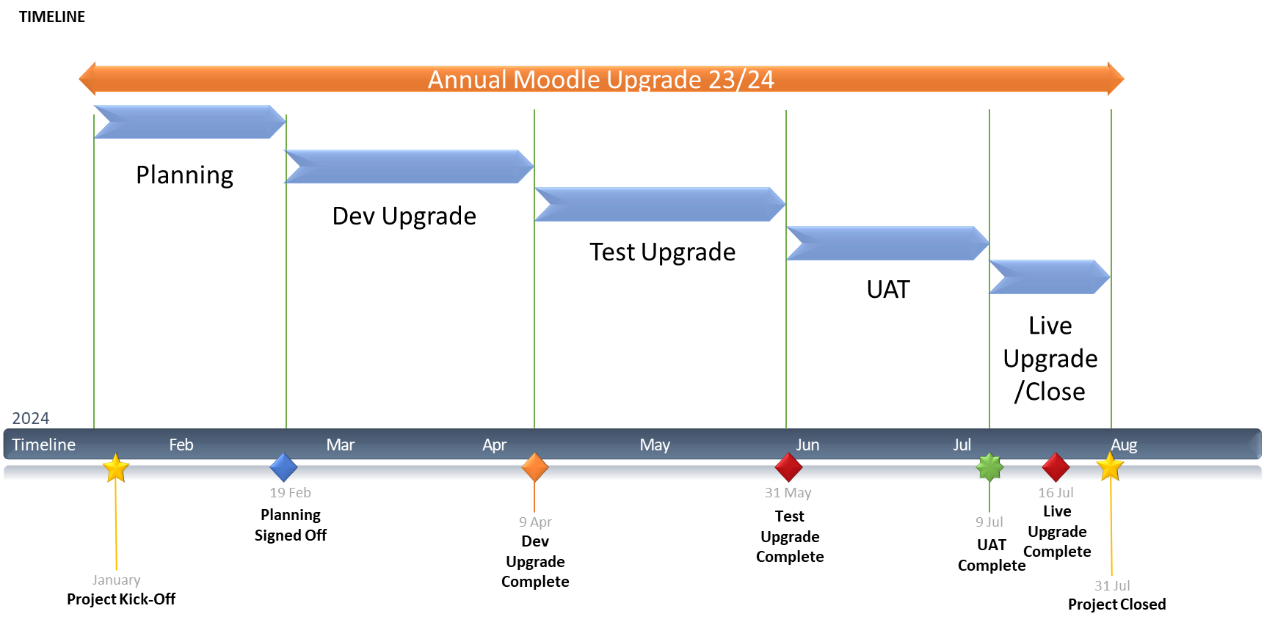



Hi Jackie, This sounds like an exciting creative project. Designing and animating custom stick figures from scratch is not that…
This is fascinating, particularly the idea of "coding without writing a single line." It really highlights the potential of prompt…
N.B. Closing date now extended to 23:59 on Wednesday, 4th of March.
Thanks Stewart for your encouragement!
Thank you Miki. I very much enjoyed reading this with my morning coffee. It was lovely to have such a…