
In this post, Nicole Dron, Elsbeth Dewhirst and Maggie Frej, from the Clinical Skills team at Edinburgh Medical School, share their experience of creating a medical education podcast: Beyond the Scrubs, designed to support students to develop the confidence and contextual understanding needed to apply clinical skills in practice. This post belongs to the Podcasting in Learning and Teaching series.
Podcasts are an increasingly popular learning tool due to their flexibility, accessibility, and ease of integration into everyday life. Within education, podcasts offer a valuable adjunct to traditional teaching, particularly when students are balancing multiple or competing demands. Medical students frequently find the shift from classroom-based learning to learning in the clinical environment an abrupt experience. While students may be prepared and fully versed in theory, when it comes to applying clinical skills, interacting with patients, managing clinical uncertainty and adapting to diverse clinical environments can be very daunting. To address these concerns, we – as colleagues from the Clinical Skills department at Edinburgh Medical School – set out to explore whether a podcast, formed from our lived experiences and those from our guests, could support current students in developing the confidence and contextual understanding needed to apply clinical skills in practice. This post describes how we created the podcast from scratch, and shares the lessons we learnt along the way about how to produce effective podcast episodes.
Starting from scratch
When we launched our podcast ‘Beyond the Scrubs’ in 2024, we had no prior experience of podcasting. What we did have was a clear aim to create something practical, relatable, and supportive for University of Edinburgh medical students who were entering clinical placements. Although there is no shortage of online guidance on how to create a podcast, applying this in practice required experimentation and adaptability. We used videos on LinkedIn Learning to get started, which we had access to through the University. We began with minimal equipment, using a laptop to record early episodes.
Learning as we went
As the podcast developed, we introduced USB microphones for in-person interviews and conducted remote interviews using Microsoft Teams. Our interviewing methods have developed further and we now use the U-Create Makerspace (Homepage | Makerspace) at the University’s Main Library, which has a full spec podcast set-up. Editing is carried out using free audio software, Audacity (Audacity ® | Downloads) or Descript (Drive View | Descript), with skills developed through tutorials, online resources, and practise. With the help of the IS department who sent us a guide on how to publish, the podcast is now hosted on the University’s Media Hopper Create platform and distributed via Apple Podcasts and Spotify, with promotion supported through Edinburgh Medical School’s social media Instagram – @medinburghskills.
Developing podcast content
In our episodes, we adopt a conversational, informal style rapport with regular guests including students, other University colleagues and NHS colleagues. This allows us to explore the most relevant and practical themes that can be applied in real time by our listeners as we would reference localities such as the Royal Infirmary of Edinburgh and speak with colleagues whose students would potentially be interacting with the podcast. Importantly, the content is created with students in mind because they are our intended audience. Topics such as “first day nerves” and “what to expect on placement” reflect common concerns about placements and working unfamiliar environments. This ensures that the podcast addresses real experiences rather than assumed gaps.
Challenges encountered
Developing the podcast alongside our current role responsibilities and without dedicated funding does present several challenges. These include: topic selection; content creation; content quality; and time pressures. Content quality also proved important. For a podcast to effectively support learning, content needs to go beyond the textbooks and explore the context in which it is applied. There is also an element of time spent researching a topic and contacting potential guests to arrange a time to record the episode, which is sometimes difficult to manage with our ongoing work schedules. Sound quality can vary depending on the recording set-up, and developing familiarity with equipment and software takes time. Audio editing, in particular, is more time-consuming than we anticipated. More broadly, the project highlights the importance of digital literacy. In a similar vein to learning clinical skills, developing competence in podcast production requires practice, patience, and a willingness to engage with unfamiliar tools.
Key learning points and reflection
Reflecting on our experience, several key learning points have emerged:
- Free podcasting tools: It is entirely possible to create an educational podcast without prior experience or significant financial investment. Freely available tools provide a solid foundation for getting started.
- Capturing the intangible: Podcasts can complement teaching by addressing aspects that are harder to capture in formal sessions, such as managing uncertainty, building confidence, and hearing how others approach real clinical situations.
- Careful planning: Success depends on careful planning. Selecting topics that resonate with students at different stages of their development is essential. Equally important is a willingness to invest time in developing technical skills and producing high-quality audio.
- Collaboration: Inviting other key education stakeholders to be part of the podcast is integral to successful content. Involving students and other professionals in shaping content helps ensure authenticity and relevance.
- Enthusiastic team work: It is easier if there is a small group of enthusiastic developers to share the work and help keep the momentum and motivation going forward, as well as learning from each other.
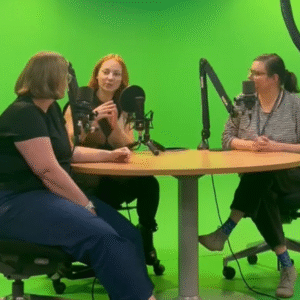
For educators considering a similar podcasting initiative, starting small and focusing on the learner experience is key. A podcast does not replace hands-on teaching, but it can enhance it by providing space for reflection, reassurance, and insight into the realities of your educational area from real people and authentic lived experience.
We have enjoyed creating the podcast, learning new skills and have received lots of enthusiasm from colleagues and students who have joined us on episodes. We have also had over 525 plays of our 15 published episodes. We hope that it has been helpful and informative for Edinburgh Medical Students from all years, as well as medical students from other universities and anyone with an interest in our discussions.
Beyond the Scrubs links
Beyond the Scrubs Podcast – Media Hopper Create
Beyond the Scrubs | Podcast on Spotify
Nicole Dron
Nicole currently works as a Clinical Skills Facilitator as part of the Clinical Skills team with Edinburgh Medical School as well as a Stroke Nurse Practitioner at the Royal Infirmary of Edinburgh. In addition to her formal roles, she has worked with Scottish Government to improve Women’s Healthcare in Lothian. Outside of work, Nicole enjoys keeping fit with poles and hoops.
Elsbeth Dewhirst
Elsbeth has been a clinical skills facilitator at Edinburgh Medical School since 2021. She helps deliver clinical skills and simulation teaching to all years of the medical programme. She previously worked as a nurse in the emergency department at the Royal Infirmary of Edinburgh. Outside of work, Elsbeth enjoys walking and gardening.
Maggie Frej
Maggie Frej is a Paediatric Registrar based in South East Scotland, currently undertaking an out of programme research year in medical education as a Simulation Fellow at the Edinburgh Medical School. Her interests include the role of emotions and mindset in simulation-based education, neonatology, and trauma-informed care. Outside of work, she enjoys knitting and spending time with her family.