by Chantal Stebbings,[1] Emeritus Professor of Law and Legal History, University of Exeter
In the second half of the nineteenth century in Britain, income tax was poised to dominate direct taxation in terms of revenue and potential for fiscal growth. The machinery of its administration was based entirely on that developed for the assessed taxes in the eighteenth century. The assessed taxes, which constituted the principal form of direct taxation prior to income tax, aimed at taxing the wealth of individuals through the outward signs of their establishment. The first was the window tax, and by the end of the eighteenth century it had been joined by several more, including taxes in respect of servants, carriages, horses and dogs.[2]
The assessed taxes and the income tax were administered under a localist system, whereby they were assessed and collected by independent, local, lay commissioners and their own appointed local officers. From the mid-nineteenth century the system in England was found to be incapable of keeping up with the increasing scope and sophistication of income tax, and the English revenue boards looked with envy to Scotland which had, by that time, developed a system for the administration of the assessed taxes which was markedly different, and significantly more efficient, to theirs and which they believed they could adopt for income tax. The Scottish system was essentially a modified version of the orthodox pure localist system in that it involved a greater degree of central government participation. The way in which Scotland altered the traditional system forms the subject of this piece.
The development in Scotland of a distinct administrative machinery for direct taxes was remarkable for two reasons. First, the English took the view that localism was ideologically, politically, practically and fiscally essential to the administration of direct taxes. Secondly, the fiscal aim of the Act of Union in 1707 was to achieve one single tax system: the same taxes, administered in the same way, throughout Great Britain. Yet, there were good reasons for departing from the English localist system.
The first real test of the English localist model in Scotland came when the window tax was extended to Scotland in 1709, to begin in 1711. The administration of the tax was at first, and as in England, given to the Justices of the Peace, but when it was recast in 1746[3] it was put in the hands of the Commissioners of Supply, local landowners representing every county who had been responsible for the cess and then the land tax.[4] They were to divide themselves into districts within their counties, and appoint local inhabitants as assessors and collectors of the tax. The assessors, whose area of responsibility was the parish, had to ascertain every house within the charge, count the windows, and record the tax due from each individual. The commissioners formally made the assessments and heard and determined all appeals against them, and the collectors gathered the tax and remitted it to the Receiver-General.
The window tax in Scotland was a failure, with only a small fraction of the due revenue being raised in its first fifty years. The principal reason was that the tax was unpopular, with legislative omissions and vague wording permitting many windows to escape the duty. Most of these lacunae were common to Scotland and England – windows in dairies and outbuildings, on landings and in attics for example, but some related specifically to Scottish practices. Examples include the common habit for some owners of large country houses to move to London for half the year, leaving their Scottish properties in the care of a servant, and again, the custom for people in Scottish towns to live in tenements, or ‘lands’, being large houses divided into separate dwellings though served by a common staircase and sharing the same roof. Such issues were, however, swiftly dealt with by successive amending Acts.
Of equal significance to inadequate legislation, and far more intractable, was that the localist machinery was entirely unsuited to Scottish conditions. Not only were many of the counties in Scotland extensive in area, the terrain, climate and demography all posed severe challenges to tax administration. Much of Scotland comprised hills and glens, rivers and lochs, bogs, moorland and over 800 islands of which more than 200 were then inhabited. The climate could be harsh, with high rainfall, bitterly cold winter temperatures in the central highlands, freezing rivers and often continuous winds. Travel was slow and dangerous, constructed roads were rare, and most rivers could only be crossed by fords. The demographic character of Scotland was also very different to England. The population was smaller, at about 1.5 million at the end of the eighteenth century, compared to England’s eight million at the same date. Furthermore the population was dispersed. While some 17% of the population lived in towns of more than 10,000 inhabitants, most of the rural population lived in small hamlets with no church or formal centre, or in single and often isolated dwellings.
In the towns, the task of administering the assessed taxes was as straightforward as it was in England, but in rural areas it was exceptionally difficult. To make twice-yearly circuits of this arduous terrain in all weathers, balancing the impossibility of visiting every hamlet and dwelling with ensuring that the assessments were accurate and defensible, was immensely challenging. Perthshire, for example, was over 2000 square miles in area, and consisted of 72 parishes, one of the largest of which, at 363 square miles, was Fortingall. In 1759 only seven individuals in the whole of the parish were liable to the tax, being assessed to £2 12s 3d for the second half of the year. Where the area of responsibility was the county, the task of revenue collection was even more challenging. A collector responsible for an unnamed county at the end of the eighteenth century reported that he had to collect the assessed taxes from 1,350 individuals, most of whom were liable to a single tax of 2s or so. He collected the carriage tax from 70 individuals, female servants tax from 140, house tax from 340, window tax from 370, cart tax from 79 and horse tax from 307 individuals. The total tax collected was about £1,300 sterling, and his allowance for his time and trouble was £16 5s.[5]
Extensive, remote and inhospitable areas of administration with a small and widely dispersed population often living in inaccessible areas placed such great physical demands on the unpaid parochial assessors and the poorly-paid collectors that it proved almost impossible to recruit them. Without local officials in place, the window tax, and all the other assessed taxes which joined it from the 1780s, could never succeed.
In relation to the collection of the assessed taxes, the bypassing of the localist system was more gradual. It began by allowing governmental involvement with the appointment of lay collectors. In 1753 the Treasury Board in Scotland was given the power in certain instances to appoint the lay collector of the land tax to collect the window tax also,[8] but the unequivocal change occurred in 1835 when lay collectors were abandoned entirely, and compulsorily, in favour of government officers. The local commissioners were expressly forbidden from appointing their own collector, and the power was transferred to the Treasury. The Distributors of Stamps, who were part-time, salaried Treasury officials, were appointed instead.[9]
These provisions, along with other more minor reforms of procedure, created the Scottish model. By 1835 government officials had, legitimately by statutory provision, entirely taken over the administration of the assessed taxes in Scotland – assessment voluntarily, collection compulsorily. The only remaining element of true localism was the commissioners’ jurisdiction to hear appeals against assessments. It was an extraordinary transformation producing a system of remarkable professionalism and undeniable efficiency.
This system was exactly that desired by the Board of Stamps and Taxes in London for the administration of the income tax in England in the mid-nineteenth century. The board was frustrated that it could not control the local commissioners, who were unable to keep up with an income tax law of growing complexity, assessors who too often were negligent or incapable, and collectors who were inclined to dishonesty.
From the 1860s the Board began a campaign to have assessment and collection placed in government hands, consistently advocating the Scottish system as both highly effective and immensely popular. It was indeed well-liked in Scotland, but not, as the Board believed, because the Scots regarded localism and its safeguards as unimportant. It was rather because it operated in the relatively uncontroversial sphere of the assessed taxes. These were not inquisitorial or sensitive taxes, because individual establishments were well known to their neighbours, and indeed the display of wealth was crucial to affirming social status. When it came to income tax, however, it was a different matter, and the Scots were not always willing for personal financial information to be divulged to a government official. Most valued the old, personal, sympathetic localist model. This was one of the limitations of the centralised system in Scotland despite its general acceptance there.
Despite the best efforts of the Board in London, every suggestion and every bill to adopt the Scottish system for the whole of Great Britain was rejected in favour of the orthodox safeguard of localism. English tax administration suffered as a result. Lacking the legitimacy of the Scottish model and yet aspiring to it, England could only achieve its advantages by covertly increasing the power of the surveyor and causing a destructive disjunction between the enacted law and tax practice.[10] Not until the middle of the twentieth century would England finally enjoy the efficient system of centralised assessment and collection which had prevailed in Scotland for well over 100 years.
The Scottish model constituted a powerful paradigm in the history of tax administration. It promoted the undermining of the principle of localism to create a government-based administrative structure better suited to the new economic and social order of an industrialised world. It demonstrated how a hybrid system could be constructed through clear and express legislation, and prove both effective and popular in practice. It provided the efficient administration of the assessed taxes in Scotland, and even though it was not embraced wholeheartedly for income tax, it undoubtedly ensured that Scotland was far better prepared than England for the challenges of income tax and an increasingly sophisticated fiscal landscape.
[1] Chantal Stebbings is Emeritus Professor of Law and Legal History at the University of Exeter and Visiting Fellow of the Centre for Tax Law at the University of Cambridge. For the full version of this piece see Chantal Stebbings, “The Challenges of Localism in Tax Administration: The Scottish Experience 1750-1850” in Peter Harris and Dominic de Cogan (eds) Studies in the History of Tax Law vol 12 (Hart, Oxford, 2025) 107-128.
[2] See House Tax Act 1803 (43 Geo III c 161).
[3] National Debt Act 1746 (20 Geo II c 3).
[4] The cess was a direct tax on land in the counties and burghs introduced to Scotland in the mid-seventeenth century to supply the king for the defence of the realm, and administered through localist machinery.
[5] Scotland, Papers Relating to the Revenue (nd), The National Archives PRO 30/8/317 fos 117-18.
[6] Taxation Act 1709 (8 Anne c 10) s 8 (Statutes of the Realm).
[7] Window Duties Act 1747 (21 Geo II c 10) s 27.
[8] Window Duties Act 1753 (26 Geo II c 17) s 5.
[9] Stamp Duties Act 1835 (5&6 Will IV c 64) s 10.
[10] See generally Chantal Stebbings, The Victorian Taxpayer and the Law (Cambridge University Press 2009) 90-92, 103-5, 181-2, 189-92.
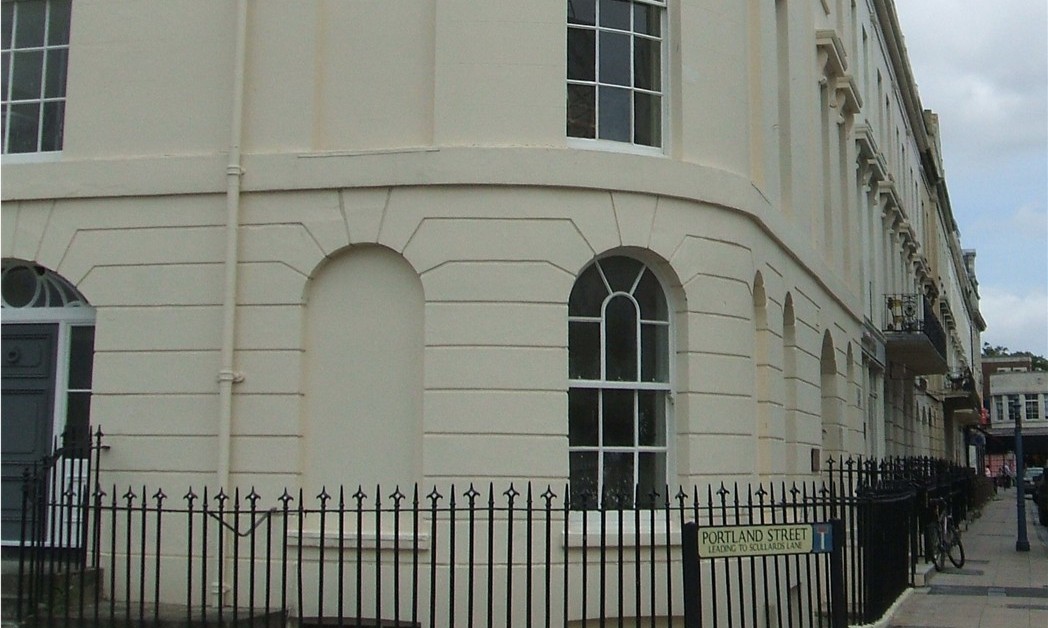
(Whilesteps, CC BY-SA 3.0
(Whilesteps, CC BY-SA 3.0
(Whilesteps, CC BY-SA 3.0