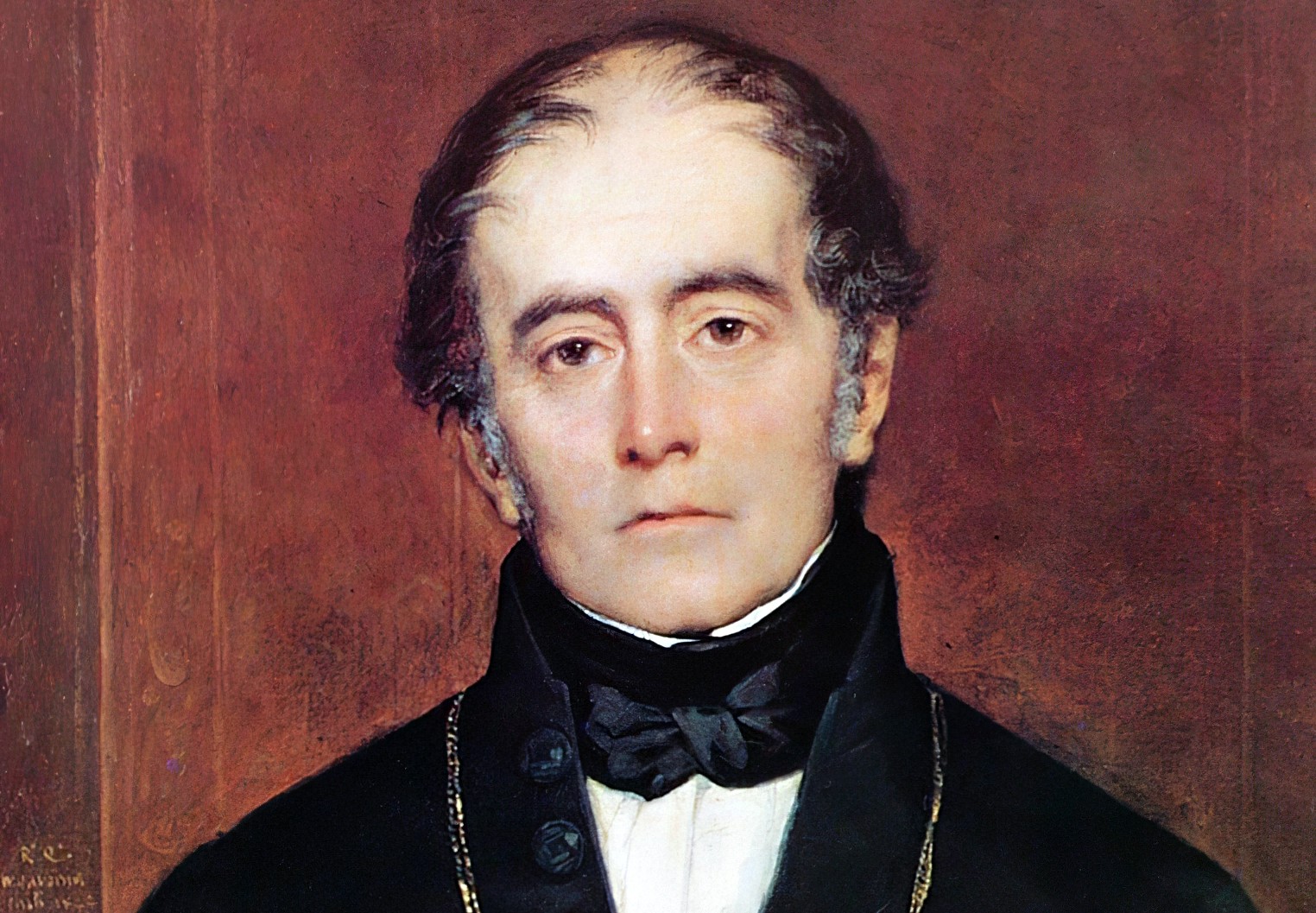
Part One: English influences in the Chilean Fideicomiso
By León Carmona Fontaine, Assistant Professor of Private Law at the Pontificia Universidad Católica de Chile.
Latin American and most European jurisdictions are commonly regarded as civil law jurisdictions. Yet one notable difference between the two is that trust instruments were introduced in Latin America much earlier than in Europe. Panama (1925), Mexico (1926), El Salvador (1926), and Puerto Rico (1928) were pioneers of this development, followed by Venezuela (1956) and Colombia (1971), whereas Argentina (1995) and Uruguay (2003) adopted such instruments at a later stage. By contrast, with the exception of Liechtenstein (1926), European civil law jurisdictions introduced trust instruments considerably later, and primarily due to the influence of the Hague Trusts Convention. Romania (2011), the Czech Republic (2014), and Hungary (2014) are examples of this much later development.
One explanation for this divergence between Europe and Latin America lies in the stronger influence of the United States in Latin America. However, there is also another factor that has received far less attention so far: the influence that English law may have exercised on the fideicomiso as regulated in the Chilean Civil Code of 1855, and the role that the Chilean fideicomiso played in the introduction of trust instruments in other jurisdictions of Latin America. As this entry and a forthcoming one argue, there are several reasons to believe that the fideicomiso provided for in the Chilean Civil Code was influenced by English legal ideas and later functioned as an important bridge for the introduction of trust instruments in Latin America.
By telling this story, these two entries aim to shed light on a largely overlooked episode in the trend toward introducing trust instruments in Latin America. They also illustrate how complex and multidirectional the interaction between civil and common law traditions can be—even in an area such as trust law, which is often regarded as one of the most distinctive institutions of the common law.
This argument is unpacked in three sections. Section One provides a general description of the Chilean fideicomiso. Section Two explores the reasons for believing that it was influenced by English legal ideas. Finally, Section Three, which is reserved for the second entry, demonstrates the extent to which the Chilean fideicomiso paved the way for, and contributed to, the introduction of trust instruments in Latin America.
- The fideicomiso as drafted by Andrés Bello
The Chilean Civil Code, enacted in 1855, does not contain any legal instrument noticeably equivalent, both in structure and function, to an English express trust. This is unsurprising given that the Chilean Civil Code emerged within the civil law tradition.[2] Yet the Chilean Civil Code provides for certain legal institutions that exhibit some similarities, at least in terms of structure, to the English trust. One of them is the fideicomiso.
The fideicomiso is defined by Article 733 of the Chilean Civil Code as the act by which certain property, labelled fiduciary property, is encumbered with an obligation of restitution to another person upon the occurrence of a specified condition. A fideicomiso, Article 735 adds, may be established either by an inter vivos act or by will.
An example of a fideicomiso constituted by an inter vivos act would be one in which A transfers one or more specific and individually identified assets (the fiduciary property) to B (the fiduciary owner) subject to an obligation of restitution in favour of C (the beneficiary or fideicomisario) if he or she graduates from university before reaching the age of twenty-five. In turn, a fideicomiso created by will would be one in which A bequeaths a sum of money to B in his or her will, subject to an obligation of restitution in favour of C if he or she enters holy orders. In both cases, the defining feature of the fideicomiso lies in the separation between the immediate attribution of ownership to the fiduciary owner, B, and the conditional obligation of restitution owed by B to the fideicomisario, that is to C.
To understand why the fiduciary owner acquires the fiduciary property subject to an obligation of what the Code calls ‘restitution’ in favour of the fideicomisario is important to clarify the effects triggered by the occurrence of the condition. Once the condition occurs, the fiduciary owner automatically ceases to be the owner; and the fideicomisario becomes the owner of the fiduciary property without the need for any conveyance or further transfer.[3] Therefore, once the condition occurs, the fiduciary owner is under an obligation of restitution (that is, to give back the property to its owner), rather than an obligation to transfer or convey it.
The fideicomiso bears certain similarities to an express trust and satisfies several features that the comparative literature often regards as essential to a trust.[4] First, the fiduciary owner is the legal owner of the fiduciary property and enjoys powers of management similar to those of a trustee. Second, the fideicomiso segregates the fiduciary property from the general patrimony of the fiduciary owner and therefore shields it from the claims of the fiduciary owner’s personal creditors and his or her spouse. Strictly speaking, the fiduciary property is not immune from the claims of the heirs of the fiduciary owner. However, in the case of the death of the fiduciary owner, his or her heirs may acquire the fiduciary property subject to the obligation of restitution in which the fideicomiso consists. Third, the fideicomiso is enforceable by the fideicomisario. Upon the occurrence of the condition, the fideicomisario acquires a right to the fiduciary property, while the fiduciary owner has the corresponding obligation of restitution. Finally, although prior to the occurrence of the condition, the fideicomisario holds only a spes to receive the property, he or she nevertheless enjoys certain safeguards designed to prevent abuse by the fiduciary owner. The fiduciary owner must keep an inventory of the assets forming part of the fiduciary property, owes a duty of care towards the fideicomisario, and the fideicomisario may apply to the court for protective measures to prevent detriment to the property.
Despite these similarities, the Chilean fideicomiso differs from a common law trust in two important respects, which considerably limit its practical utility. First, although the fiduciary property is immune from the claims of the fiduciary owner’s personal creditors and his or her spouse, this immunity extends only to the capital asset entrusted to the fiduciary owner.[5] It does not apply to the income—whether interest or fruits—generated by the capital asset, nor to its traceable substitutes or proceeds. Second, as a general rule, fideicomisos may not last for more than five years. According to Article 739 of the Chilean Civil Code, the condition upon which the obligation of restitution depends is deemed to have failed if it does not occur within five years. At that point the fiduciary property ceases to exist as such and the fiduciary owner becomes the absolute owner, free from any encumbrance.[6] Originally, however, the time limit was much longer. In its initial version, Article 739 provided that the condition would be deemed to have failed after thirty years. This period was later reduced by Law No. 6,162 of 1938 and Law No. 16,952 of 1968 to fifteen and then five years, respectively.
- English influence on the Chilean fideicomiso?
Of course, the similarities between the Chilean fideicomiso and the English trust—particularly the express trust for the benefit of a person—do not by themselves demonstrate any influence of English law on the drafter of the Chilean Civil Code of 1855 or the code itself. Nevertheless, I argue that this influence can be inferred from the following four elements.
First, Andres Bello was extensively exposed to English legal ideas. A poet, philosopher, and jurist born in Caracas, Venezuela, in 1781, he lived in England for nineteen years, from 1810 to 1829, before moving to Santiago, Chile, where he drafted the Chilean Civil Code and resided until his death in 1865. During the nineteen years Bello lived in England, he was extensively exposed to English legal thought and culture.[7] Evidence of this exposure includes his reading of, among other works, Sir William Blackstone’s Commentaries on the Laws of England, a copy of which he brought with him from London when he moved to Chile. Some scholars have even suggested that Blackstone influenced specific provisions of the Chilean Civil Code.[8] Bello was also influenced by Jeremy Bentham, for whom he worked as an assistant, translating some of his works.[9] This influence proved to be direct and enduring. When he moved to Santiago in 1829, the first course he taught was entitled Theory of Universal Legislation according to the Method of Jeremy Bentham.[10] Legal scholars have likewise identified Bentham’s ideas in several provisions of the Chilean Civil Code.[11]
Second, Bello’s decision to preserve the fideicomiso itself represented a departure from the dominant legislative trends of the nineteenth century. The French Civil Code, which was the most influential code of the time, abolished fideicomisos (fiduciary substitutions) on the ground that they impeded the free circulation of property.[12] Similar solutions were adopted in the Louisiana Civil Code (Art. 1507) and in García Goyena’s project for Spain (Art. 635). Bello, by contrast, deliberately chose to retain the institution in Chilean law. Interestingly, Bello himself explained this decision.[13] While he accepted that perpetual restrictions on property were undesirable, he did not regard all forms of fideicomisos as inherently harmful. Instead, he sought to reconcile freedom of disposition with concerns about excessive restraints on property by allowing fideicomisos subject to a temporal limit of thirty years. This solution seems to align with the rule against perpetuities found in English law at that time, and with which Bello was very likely familiar. The English rule against perpetuities imposed limits on the duration of trusts, although these were effectively longer than the thirty years duration chosen by Bello for the Chilean fideicomiso.
Third, and connected to the previous point, the way in which Bello structured the fideicomiso differs significantly from the Roman-—and thus civilian—understanding of the institution and is more closely aligned with the understanding of express trusts in English law. The Roman fideicommissum was confined to mortis causa dispositions,[14] and the same was largely true in the tradition of the ius commune.[15] The ius commune sources confined the fideicommissum to testamentary dispositions, although some admitted the possibility of constituting a fideicomiso by donation. For this reason, in many legal systems the fideicomiso was treated as a form of fiduciary substitution—a testamentary device allowing the replacement of the beneficiary upon the occurrence of a specified condition. This also explains why the abolition of fideicomisos in codes such as the French Civil Code (Art. 896) and the Louisiana Civil Code (Art. 1507) appears in sections devoted to testamentary dispositions and donations.
Bello, in contrast, adopted a markedly different approach. Rather than treating the fideicomiso as a purely testamentary device, he regulated it as a distinct form of ownership—propiedad fiduciaria—in the second book of the Civil Code, entitled ‘Of Property, and of Ownership, Possession, Use and Enjoyment,’ and specified that a fideicomiso may be established either by an inter vivos act or by will. This structure is not typical of the civilian sources Bello used in drafting the Code, and resembles the English trust more closely than the earlier Roman fideicommissum. Interestingly, Blackstone discusses the trust in the second book of his Commentaries, devoted to ‘the rights of things,’ and links the English trust with the Roman fideicommissum, suggesting that English uses were a notion transplanted from the civil law and ultimately derived from the Roman fideicommissum.[16] If Bello read this passage, it would help explain why he may have modified the Roman fideicomiso to make it more similar to an English trust but still referred to it as a fideicomiso.
Finally, the particular solution adopted by Bello—preserving the institution but restricting its duration to 30 years—is not typical of the preceding civilian tradition and again appears more aligned with English rule against perpetuities.[17] In civilian sources, fideicomisos were either permitted without a fixed temporal limit[18] or abolished altogether.[19] By contrast, in English law the rule against perpetuities sought to prevent property from being tied up indefinitely by future interests, and this rule and its rationale were explained in Blackstone’s Commentaries on the Laws of England.[20].
Individually, these elements may amount to little more than suggestive parallels. Taken together, however, they make it likely that Bello’s long exposure to English analyses of the trust influenced the way he conceptualised and regulated the fideicomiso. They suggest that some elements of the English trust may have migrated to Latin America as early as the mid-nineteenth century through Bello’s Code. The stages of that migration will be the subject of the second entry, which will be posted shortly.
[1] Alexandra Braun, ‘The framing of a European law of trusts’ in Lionel Smith (eds), The Worlds of the Trust (CUP 2013) 277, 278-283.
[2] Alejandro Guzmán Brito, Andrés Bello Codificador. Historia de la fijación y codificación del derecho civil en Chile (Editorial Jurídica 1982) 407-431.
[3] Luis Claro Solar, Explicaciones de Derecho Civil Chileno y Comparado. De Los Bienes III. Tomo Octavo (Ed Jurídica 2013) 103-105. Against this interpretation, Alejandro Guzmán Brito, De las donaciones entre vivos. Conceptos y tipos (Lexis Nexis 2005) 211.
[4] Lusina Ho ‘Trusts: the essentials’, in Lionel Smith (ed.), The Worlds of the Trust (COP 2013) 1-20. See also Maurizio Lupoi, Trust: A Comparative Study (CUP 2000) 271.
[5] Court of Appeal of Santiago, 31 March 1914, G. 1914, t. 1. No. 73, p. 155.
[6] The only exception is a lifetime fideicomiso established for the benefit of a specific individual, where the condition is satisfied if the fideicomisario survives the fiduciary owner.
[7] See Ivan Jaksic I, Andrés Bello. Scholarship and Nation-Building in Nineteenth-Century Latin America (CUP 2001).
[8] Javier Barrientos, ‘Blackstone y su uso por Bello en la formación del Código Civil de Chile. Un ejemplo en sede de nulidad del matrimonio’ Revista de estudios histórico-jurídicos 41 (2019) 305-315.
[9] Gerardo Caffera, ‘Anglo-American legal ideas in the formation of South American private law: 1820-1870’ (PhD Dissertation, Oxford University, 2017).
[10] The notes prepared by Andrés Bello for this course were published for the first time in 2021. See Andrés Bello, Teoría de la legislación universal según Jeremías Bentham (PUCV 2021).
[11] Caffera (n 9); Carlos Amunátegui Perelló, ‘¿Existen elementos de Bentham y Austin en la definición de ley en el Código Civil?’ Revista de Ciencias Sociales 86 (2025) 35.
[12] Jens Beckert, Inherited Wealth (trd. Thomas Dunlap, Princeton University Press 2008) 119-131.
[13] Mensaje del ejecutivo al Congreso proponiendo la aprobación del Código Civil de 22 de noviembre de 1855.
[14] David Johnson ‘Trust and Trust-like Devices in Roman Law’ in R Helmholz and R Zimmermann (eds), Itinera fiduciae – Trust and Treuhand in Historical Perspective (Duncker and Humbolt 2013) 45.
[15] Michele Graziadei ‘The Development of Fiducia in Italian and French Law from the 14t h Century to the End of the Ancien Régime’ in R Helmholz and R Zimmermann (eds), Itinera fiduciae – Trust and Treuhand in Historical Perspective (Duncker and Humblot 2013) 327. See also, Ley XIV, título V, Partida 6; Robert-Joseph Pothier, Traité des substitutions.
[16] William Blackstone, Commentaries on the Laws of England, vol 2, ch 20, 328.
[17] Duke of Norfolk’s Case (1683) 3 Cas. in Ch.1 at 20, 28 and 48.
[18] Justinian, Institutes 2.23–24; Robert-Joseph Pothier, Traité des substitutions; Joaquín Escriche, Diccionario razonado de legislación.
[19] French Civil Code of 1804, art. 896; Louisiana Civil Code, art. 1507; and García Goyena’s project for Spain, art. 635.
[20] William Blackstone, Commentaries on the Laws of England, vol 2, ch 11, 173–174.