
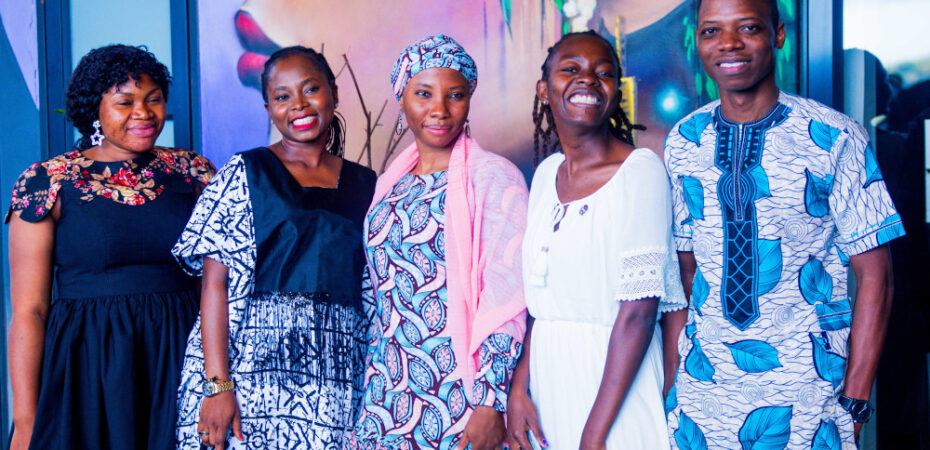
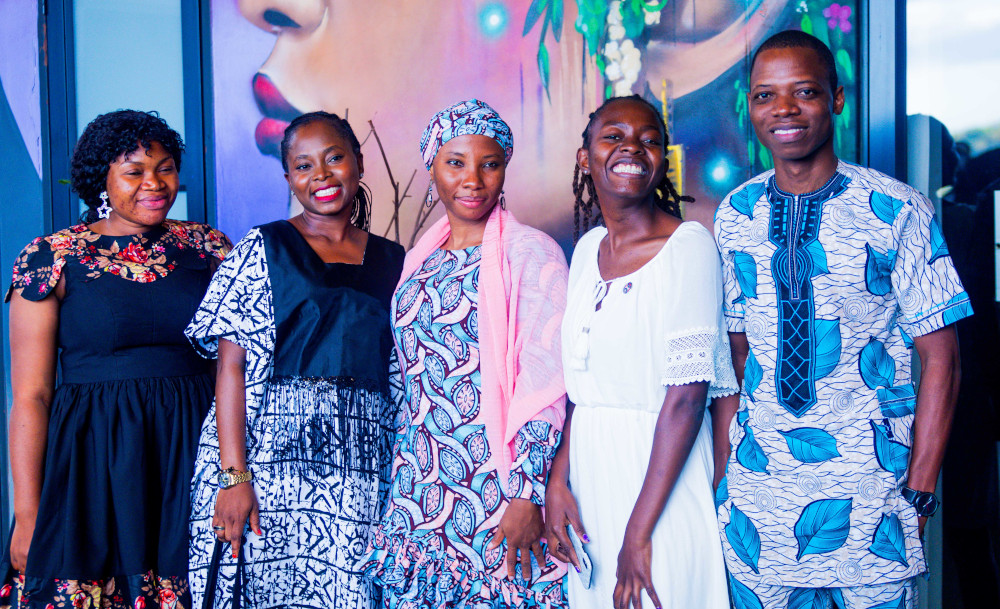
In this extra post, Edgar Onyango and Inga Ackermann reflect on how prioritising human connection transformed a learning programme: the Climate Enterprise School, run by the Mastercard Foundation Scholars Program at the University of Edinburgh. They also share practical approaches educators can adapt across online, in-person and blended settings.
What does it take to move from a group of strangers to a genuine learning community? As coordinators of the 2025 and 2026 Climate Enterprise Schools, we learned that meaningful learning does not begin with content or assessment. It begins with connection. Intentional community building was not a ‘nice-to-have’, but the essential foundation for trust, innovation, and interactive learning.
At the 2025 Climate Enterprise School, we learned something simple but powerful: real community doesn’t just happen. You build it-through laughter, through purposeful listening, through creating moments where people feel truly seen.
And when you build it right, everything else – ideas, trust, growth – follows naturally.
We came from across Africa and the world; strangers, full of ideas, hopes, and nerves. We were ready for learning, but deep down, we all hoped for something more. We didn’t know it yet, but something powerful was about to grow between us.
Beyond the screen
In summer 2024, the Mastercard Foundation Scholars Program at the University of Edinburgh ran its first Climate Enterprise School, a week-long training event in South Africa, organised through a partnership between the University of the Witwatersrand and the University of Edinburgh. The opportunity brought together postgraduate University of Edinburgh students – all Mastercard Foundation Scholars, studying both online and on campus. For most online students, this was the first time they had met each other or anyone from the University of Edinburgh in person.
Now, in February 2026, after four successful Climate Enterprise Schools, where students have received intensive entrepreneurial training, participated in reflection sessions, and team competitions, the intentional community building strand is firmly embedded in the program design, implementation, and evaluation.
The first shift
Our first session of the Enterprise School was dedicated to community building. This wasn’t about long speeches. It was about showing up as real people. We played, laughed, moved a lot, tried to get as many names as possible, and suddenly, something shifted.
We were letting go of the quiet uncertainty about whether we truly belonged.
Nobody remembers who ‘won’ the first few games. Everybody remembers how they felt.
Some things only play can teach, like how to meet someone not with facts, but with a laugh.
One Mastercard Foundation Scholar whispered, “This is the first time I’ve felt seen in years.”
Small moments, big meaning
Every day added something new:
- Quiet awe at the Nelson Mandela Foundation
- A failed first pitch ideation that sparked better teamwork
- Midnight pool table games, game nights and late-night laughter
- Team names like Blue Lasagna (don’t ask, just know they were iconic)
- Thoughtful breakfast table prompts like,snse “What’s something from home you carry with you?”
Joy showed up without asking permission. And once it did, it stayed.
The gift that became a lesson
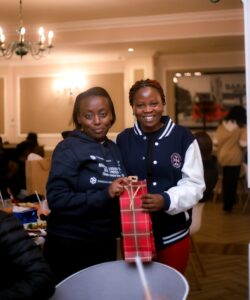
One of the most moving moments came during our Secret Santa. Every Mastercard Foundation Scholar brought a gift from their home country. These weren’t random souvenirs. Each was a piece of a story.
- A hand-beaded wallet from Uganda
- Black soap from Ghana
- A necklace with a note: “A reminder of your wholesomeness”
No one was left out. Everyone was seen. One Mastercard Foundation Scholar said: “Every time I see my gift, I remember: ‘I am because we are.’”
The dance of trust
On the last night, we danced, not just for fun, but to celebrate who we’d become.
On the rooftop, the music played and we all joined in. People who once stood shy at the edges were now in the middle, leading the vibe. Teams that had argued over pitch decks were now sharing mocktails and memes.
That night, we didn’t just hear rhythm. We felt it-in our bones, in our joy, in our belonging.

Building real community? Try this:
For educators looking to cultivate this in their own programmes, these design principles proved impactful:
- Make Culture Tangible: Invite participants to bring something from home to share or gift.
A gift. A story. A smell. Culture becomes a connection when it’s shared, not explained. - Create Space for All Voices: Notice who hasn’t spoken. Not all learners lead with volume, but when given time and safety, their contributions deepen the collective learning.
- Embrace Play and Silliness: Let people play. Games, dancing, silliness – it breaks tension and builds trust. Joy brings people in before ideas do.
- Value Presence Over Perfection: Community isn’t a one-time event. It’s a choice you make – again and again.
We built it by:
- Starting each day with structured but gentle conversation prompts at breakfast, creating low-pressure opportunities for connection
- Organising optional morning gym and movement sessions to build energy and informal bonding
- Designing inclusive activities in consultation with Student Disability Services
- Celebrating birthdays and personal milestones to acknowledge students as whole people, not just learners
- Using WhatsApp to share photos, humour, and informal reflections beyond the classroom
- Giving space to voices that needed time to speak
- Letting laughter lead the way, especially in moments of uncertainty or challenge
- Embedding student-staff partnership in the co-creation and delivery of the community building strand
As Inga reflected during one group challenge:
“It’s about teamwork. We needed each other to get through it. We needed patience, awareness, even silence.”
And as Edgar shared after a quiet reflection:
“There are always the loud ones. The confident voices. The ‘mostly seen’ ones. But sometimes, the most important move comes from someone quiet. A single choice, done with care, can help us all untangle.”
You could feel these words in how the group moved afterwards. Slower. Kinder. More connected.
Conclusion: What we will never forget
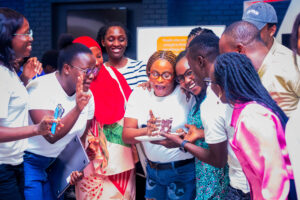
We didn’t just meet; we became. A network. A memory. A feeling that still lives in our WhatsApp chats, in shared photos, and in quiet moments of “I now know someone in that country.”
In a world where education often feels rushed or distant, this was something different.
It was honest. It was human. It stayed. Not because of the perfect structure. But because we gave ourselves permission to be present, to be free, and to truly belong. What we learned is simple but transformative: community building is not separate from learning. When learners feel they belong, they participate fully, take intellectual risks and support one another through failure and uncertainty. In an era when many students engage with universities through screens, hybrid or short-term programmes, designing for connection is no longer optional. When we build learning spaces where people feel seen, creativity, confidence and knowledge have room to evolve.
We didn’t just meet; we became.
Watch a video about the Climate Enterprise School 2025.
 Edgar Onyango
Edgar Onyango is a Mastercard Foundation Scholar at the University of Edinburgh. He co-led the community-building sessions at the 2025 and 2026 Climate Enterprise Schools in Johannesburg. He is passionate about building spaces where people feel safe to show up, speak freely, stay quiet, be seen, and connect.
 Inga Ackermann
Inga Ackermann is the Online Learning and Leadership Coordinator of the Mastercard Foundation Scholars Program at the University of Edinburgh, where she plays a key role in shaping high-impact, inclusive student development experiences. She leads the coordination and delivery of leadership and learning initiatives, with a particular focus on online Scholars and the programme’s digital learning ecosystem. She also coordinates face-to-face experiences, bridging digital and in-person engagement to create holistic, impactful learning journeys. She co-led the community-building sessions at the Climate Enterprise School, bringing together Scholars from diverse disciplines and countries. Grounded in the belief that curiosity, trust, and shared presence are the foundations of deep learning, Inga is committed to creating spaces where connection, leadership, and transformation can genuinely take root.