

In this post, Farah Akbar describes her involvement in designing the Challenge Course ‘Understanding Decolonisation in the Globalised World’ from a staff perspective. Farah is a Senior Lecturer and Director of Equality, Diversity and Inclusion at Moray House School of Education and Sport, with research and teaching interests in decolonising higher education, language education and inclusive curriculum design. This post is part of the ‘Creating a Challenge Course’ series.
I became involved in the Community of Practice (CoP) for ‘Understanding Decolonisation in a Globalised World’ after learning about it through Dr Omolabake Fakunle, who was then the Moray House School of Education and Sport Director of Equality, Diversity and Inclusion (EDI) and leading the development of the Challenge Course as part of the University’s Curriculum Transformation Programme. I joined the CoP several months after the group had already begun meeting. I assumed I’d feel slightly out of sync by joining late, but what I found instead was a genuinely open space where new voices could slot in naturally. No one was ‘the expert in the room’; everyone was learning with and from each other. That atmosphere mattered because it reflected the spirit of the course itself – that knowledge is something shared, not owned.
What stood out to me most about this CoP has been the richness that comes from bringing together academics from different Colleges and Schools. In a university as large as Edinburgh, its rare to have the time or space to pause and contemplate with colleagues outside our immediate disciplinary circles. The Challenge Course created the opportunity to come together, but it was the diversity of voices and experiences that made the work come alive. Every meeting expanded my understanding of decolonisation in a way textbooks alone never could.
A moment that stayed with me was when a colleague explained about race and genetics, not metaphorically, but as a reminder of how deeply colonial histories shape the structures we inherit. It caught me off guard in the best way. I’ve engaged with numerous decolonial scholarship but that framing made me realise how limitless the conversation becomes when different disciplines are in dialogue. Just when you think you have a handle on the concept, someone reveals another layer.
My own contribution to the course was developing Week 10, which focuses on emerging conceptual frameworks and moves students from critique to action. This week invites them to think about centrality, unlearning and disruptive reframing, not as abstract ideas but as practical tools for imagining fairer, more inclusive educational spaces. Designing this week allowed me to connect the dots across everything the CoP had surfaced. It also underscored something important, which is decolonisation is not a destination. It’s a practice shaped by the people willing to stay in the conversation.
Looking back, being part of this CoP has reminded me of what is possible when we make space for collective thinking. Universities often speak about collaboration but it is rare to experience it in such an honest and generative way, where people show up not to defend a discipline but to widen the lens together. In a world where higher education can feel stretched, pressured or overly individualised, this CoP has been a quiet reminder of why many of us came into academia in the first place: that is, to learn alongside others and to build something that matters.
If this course can offer students even a fraction of that, if it can give them the confidence to see themselves as active shapers of their learning, and give them the courage to question and reimagine the spaces they move through, then we will have achieved something meaningful. Because, at its heart, decolonisation asks us to believe that better futures are possible. And working with this CoP has shown me that those futures begin in rooms like ours, where people choose to think, listen and build together.
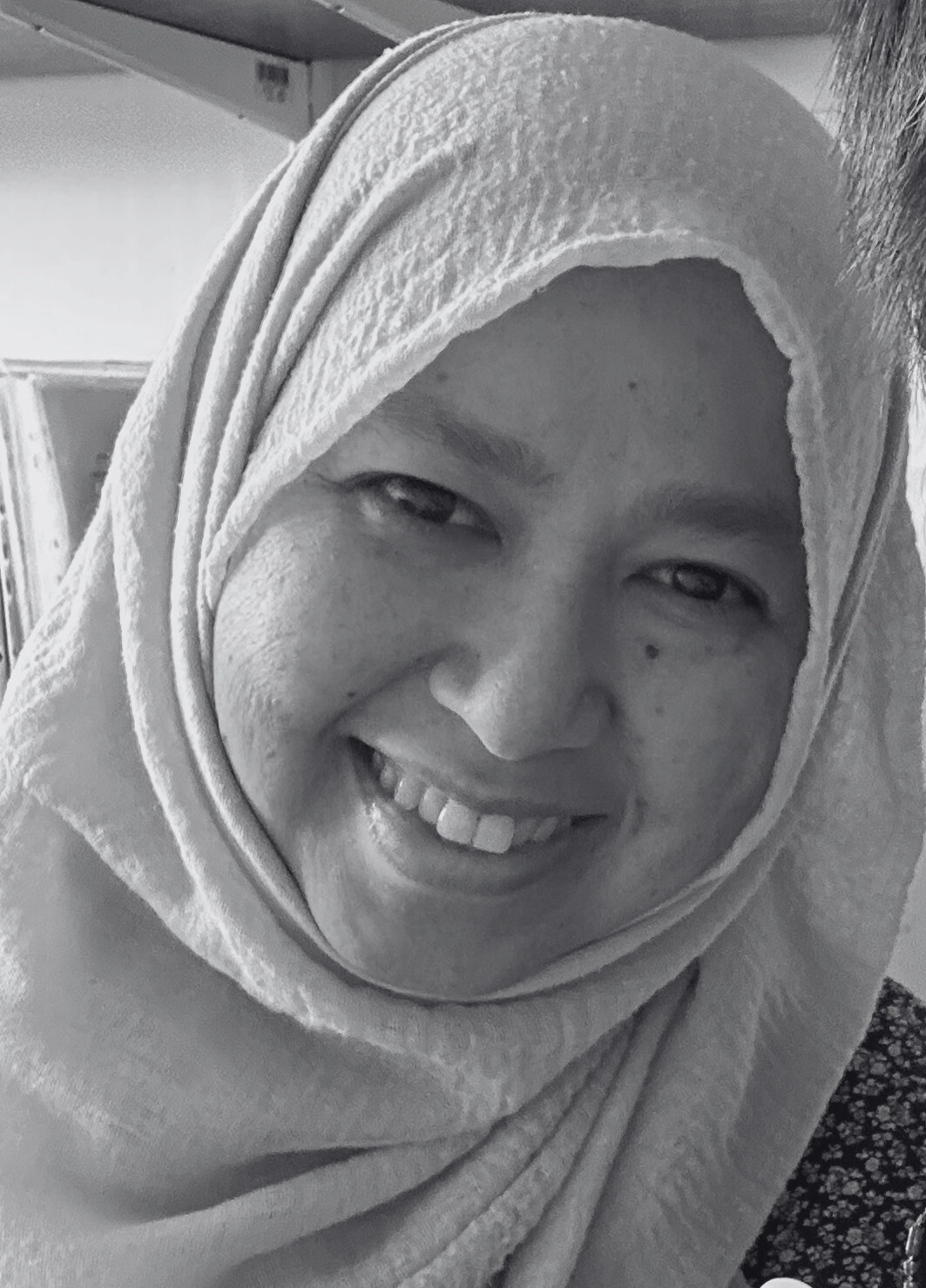 Farah Akbar
Farah Akbar is a Senior Lecturer at the University of Edinburgh and Director of Equality, Diversity and Inclusion at Moray House School of Education and Sport. She works closely with colleagues and students on initiatives that explore equity, belonging and curriculum change in higher education.