
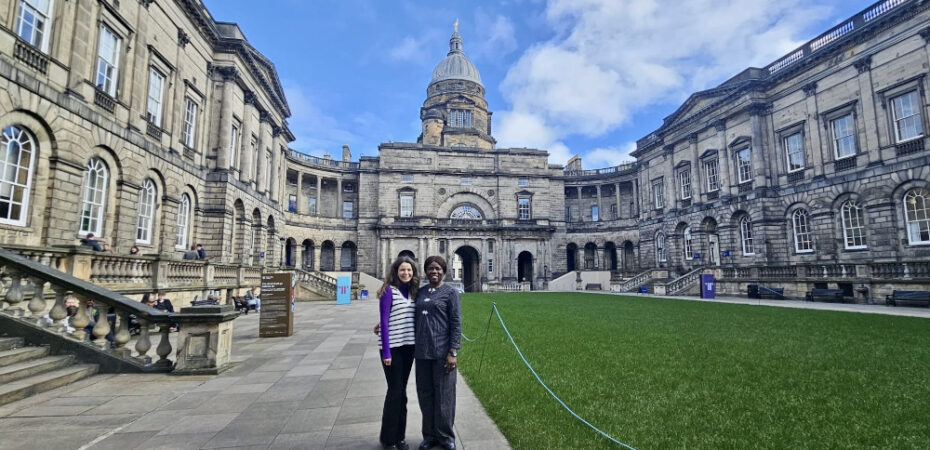
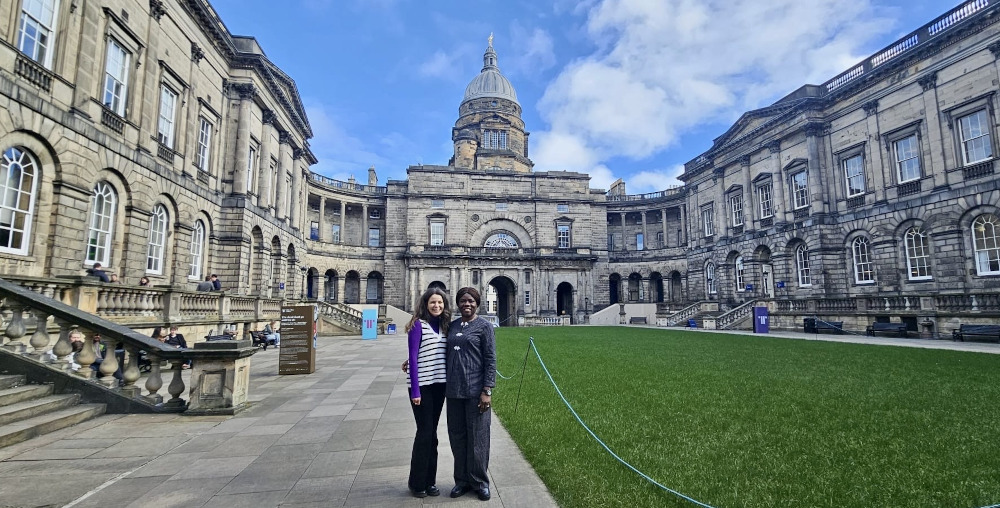
In this post, Laura Pilz González shares her experience of engaging with the Challenge Course, ‘Understanding Decolonisation in a Globalised World’, from the perspective of a visiting researcher with an interest in how questions of decolonisation are approached in international academic settings. Laura is on a short research visit from the Institute of Health and Nursing Science, Charité – Universitätsmedizin Berlin. This post is part of the ‘Creating a Challenge Course’ series.
Arriving in Edinburgh in early spring with a month of focused research ahead, I carried two intentions with me. First, to advance the final stages of my dissertation during a short research stay funded by the German Academic Exchange Service (DAAD), which supports international academic collaboration. The second was to step outside my immediate research environment at Charité – Universitätsmedizin Berlin and engage with conversations that might challenge and expand my perspective. It was this second intention that sparked my curiosity about the Challenge Course Understanding Decolonisation in a Globalised World.
My visit to the University of Edinburgh is hosted by Dr Omolabake Fakunle, whose work critically engages with questions of knowledge production, power, and global inequalities in higher education. While my primary goal during this month in Edinburgh is to write, revise, and reflect on my dissertation, academic work rarely develops in isolation. Sometimes what a project needs most is not more time alone with the text, but exposure to conversations that shift the angle from which we approach our own research questions. The Challenge Course offered precisely that possibility.
Although my stay coincides only with the final weeks of the course, it aligns with the course aims to facilitate ‘learning beyond borders’, between students and staff based in Edinburgh and other universities. In this regard, I will have the vantage point to encounter discussions that have already evolved through debate, disagreement, and moments of conceptual discomfort. This co-learning session offers a condensed glimpse into how ideas around decolonisation take shape through dialogue.
Coming from one of Europe’s largest medical and health research institutions, I am particularly interested in how questions of decolonisation are approached in international academic settings. My research explores how experiences of discrimination intersect with mental health outcomes, paying attention to overlapping identities such as race, gender, (dis)ability, and socioeconomic position. Intersectionality reminds us that systems of inequality rarely operate independently; instead, they reinforce one another through complex social structures. However, when the concept is applied without attention to its roots in Black feminist critique, colonial histories and global power relations can easily fade into the background.
This is where the themes explored in the Challenge Course connect directly to the questions that shape my research. Decolonisation asks us to question whose knowledge becomes dominant, whose experiences are marginalised, and how academic disciplines themselves participate in producing and sustaining global hierarchies of knowledge. Such questions are particularly relevant in global and public health research, where understandings of health, illness, and wellbeing are shaped by historically dominant institutions. Diagnostic frameworks, therapeutic approaches, and even the language used often reflect cultural and historical contexts rooted in Western epistemologies that continue to structure health research.
When studying discrimination and mental health, it therefore becomes necessary to ask: whose definitions of wellbeing are being centred? Whose experiences of discrimination are recognised as legitimate forms of harm? And whose voices remain absent from research design, data interpretation, and policy recommendations?
Engaging with a course dedicated to decolonisation offers an opportunity to revisit these questions from a broader perspective and to reflect on how universities themselves participate in shaping global knowledge hierarchies. It allows me to situate my own research within ongoing debates about global knowledge production and the responsibilities of academic institutions within these dynamics. Rather than treating discrimination solely as a contemporary social issue, decolonial thinking encourages us to examine the historical systems that shaped present-day inequalities, and to question how research itself may inadvertently (re)produce them.
There is also value in the interprofessional learning environment that Challenge Courses facilitate. Students from different disciplines approach decolonisation from different angles. For researchers working across disciplinary boundaries, this diversity of perspectives can be particularly enriching. Listening to how students interpret decolonisation through their respective fields can reveal unexpected connections: a political scientist might focus on institutional power structures; an education scholar might question curricular design; a public health student might examine global disparities in access to care. Each perspective reframes the question of how inequalities are produced and maintained in a globalised world. I am looking forward to making the most of my short encounter with such an environment, which can spark questions that continue shaping one’s work long after the visit ends.
This may be one of the quiet benefits of short research stays. They rarely transform a project overnight. Instead, they introduce small shifts: new references, new frameworks, and conversations that linger in the background while writing.
As I continue working on my dissertation here in Edinburgh, these reflections on decolonisation will sharpen how I think about discrimination and mental health, not as an additional theoretical layer added at the last moment, but as a reminder that research questions are always situated within broader histories of knowledge, power, and coloniality.
Even a brief glimpse into these discussions can shift how we think about the knowledge we produce and the institutions in which it is produced.
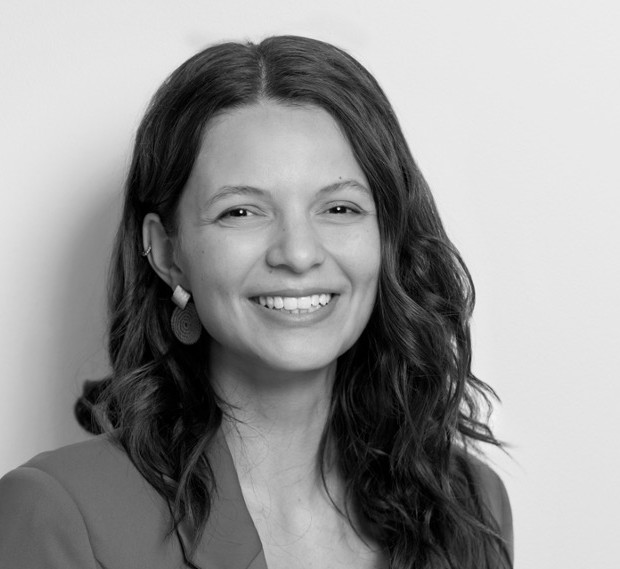 Laura Pilz González
Laura Pilz González is a research associate, junior lecturer, and doctoral candidate at the Institute of Health and Nursing Science, Charité – Universitätsmedizin Berlin. Her work focuses on healthcare equity, mental health, and equity-oriented practices in higher education, particularly how discrimination shapes the well-being and experiences of university students. She is currently a visiting researcher at the University of Edinburgh.