
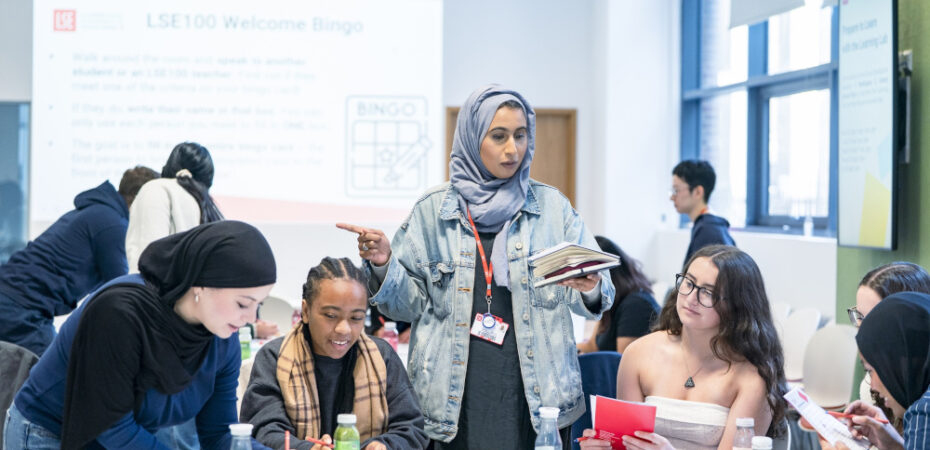
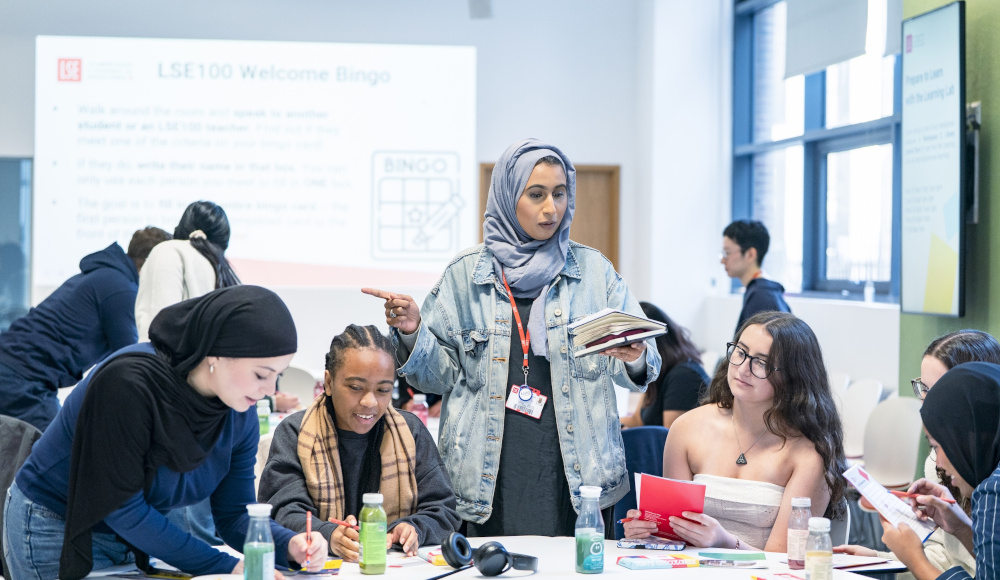
In this post, we share with you the Collegiate Commentary from the January 2026 Reflective Round-up: ‘Five reflections to carry forward from the ‘Navigating Complexity Through Interdisciplinary Learning and Teaching’ series’. In this commentary, Dr Jillian Terry muses on the similarities and challenges facing both the MA Interdisciplinary Futures programme at Edinburgh Futures Institute, and the flagship interdisciplinary course, LSE100, at London School of Economics and Political Science, which Jillian co-directs. Jillian is an Associate Professor (Education) at LSE.
The blog series ‘Navigating complexity through interdisciplinary learning and teaching’ arrived at a timely and critical moment for higher education. With universities worldwide grappling with curriculum reform, financial pressures, and questions about the purpose of undergraduate education, the authors’ honest exploration of interdisciplinary teaching is both important and necessary. As someone leading a large flagship interdisciplinary course, LSE100, taken by all first-year undergraduate students at my institution – London School of Economics and Political Science, I found myself nodding throughout the series. I could recognise the familiar tensions, celebrating the innovations, and wrestling with questions I encounter daily in my own practice.
Rather than offering neat solutions, the series does something more valuable: it captures the productive messiness of interdisciplinary work while refusing to shy away from institutional realities. Here are some reflections on the Reflective Round-up themes that resonated most strongly with my experiences and with the work we do at LSE100.
1. Interdisciplinarity as orientation, not just method
Professor Sabine Rolle’s observation that interdisciplinarity is ‘a contested term’ immediately connected with the work we do at LSE. At LSE100, we’ve discovered that interdisciplinarity isn’t simply about combining Economics with Sociology, or Politics with Philosophy. It’s fundamentally about cultivating a particular intellectual disposition – one characterised by curiosity about connections, comfort with ambiguity, and willingness to challenge disciplinary boundaries.
This distinction matters enormously for curriculum design. A course can feature multiple disciplines without being genuinely interdisciplinary if it lacks spaces for integration and reflection. LSE100 addresses this through our three thematic strands, which currently focus on AI, Climate, and Fairness. In the course, students don’t just learn about these topics from different angles, but actively practice synthesising perspectives. Our seminars create deliberate opportunities for students to surface tensions between disciplinary approaches and to develop their own integrative frameworks. We draw on existing interdisciplinary toolkits like systems thinking to hone students’ skills in becoming interdisciplinary.
Yet we’ve learned that even with careful design, this orientation doesn’t develop automatically. It requires sustained pedagogical scaffolding, regular opportunities for metacognitive reflection, and teaching teams who themselves embody interdisciplinary thinking. The series’ emphasis on mindset over method resonates deeply with our approach: we’re not just teaching content, we’re cultivating ways of thinking that students carry forward into their other courses and, eventually, their chosen career pathways.
2. Honouring what students bring to interdisciplinary classrooms
The blog series powerfully challenges deficit models of student readiness. As one student contributor observed, interdisciplinary classrooms thrive when we recognise that students “come into the lessons as our whole selves: with our interests; extra-curriculars; personal lives; academic backgrounds; cultural differences”. This reframing shifts our attention from what might prevent students from engaging with interdisciplinary learning to what their own lived experiences bring to enrich the educational environment.
At LSE100, we design seminars that explicitly value diverse perspectives. When discussing algorithmic bias, a Statistics student’s technical knowledge combines with a Sociology student’s understanding of structural inequality and an Anthropology student’s insights on cultural contexts. None of these perspectives is privileged, and each enriches the collective understanding. In my view, this reflection also supports arguments for introducing students to interdisciplinary learning early in their educational journeys – students need not be disciplinary experts in order to contribute meaningfully to interdisciplinary research and classroom discussion.
3. Navigating scepticism about legitimacy
The series doesn’t shy away from an uncomfortable truth: interdisciplinary courses and programmes still face scepticism about their academic legitimacy. Students described feeling their interdisciplinary degrees were dismissed as less rigorous compared to traditional pathways. This critique matters because it affects not just institutional perceptions but student confidence and identity.
LSE100 occupies an interesting position in this debate. As a compulsory course for all first-year students, we sometimes encounter scepticism from students and faculty alike about whether interdisciplinary learning can be rigorous and whether it truly prepares students for disciplinary depth at a research-intensive institution. Our response has been to make rigour visible and demonstrable throughout the course.
We achieve this partly through assessment design. Our group research projects require students to engage in meaningful social science research that synthesises multiple disciplinary perspectives, demonstrating that interdisciplinary doesn’t mean superficial. Our interdisciplinary commentary assessment, completed by students at the end of their first term on the course, demands critical engagement with scholarly literature and reflective insights from a conversation held with another student who is studying a different degree programme. The intellectual challenge is evident, but crucially, we make the distinctive value of interdisciplinary work explicit: the ability to see problems holistically, to identify blind spots in single-discipline approaches, and to propose more comprehensive solutions.
As Anthony Skerik noted in the Reflective Round-up, the ‘messiness’ of interdisciplinary work isn’t a weakness – it’s part of what makes it demanding. We’ve found that helping students recognise and articulate this complexity is essential for building confidence in their interdisciplinary capabilities, allowing them to speak intelligibly about what they’ve gained from the course in the future.
4. Preparing for futures we cannot predict
One of the most compelling arguments in the blog series concerns employability. Rather than preparing students for specific existing roles, interdisciplinary education cultivates skills in agile, adaptive thinking and embracing complexity and ambiguity that matter across uncertain futures. This reframing challenges narrow vocational conceptions of university education and meets the challenge of AI-driven labour market transformations head-on.
At LSE100, we embrace this future-oriented perspective while recognising that students need concrete language to articulate their capabilities to employers. We’ve therefore worked to help students recognise and name the transferable skills they develop: synthesising complex information, working effectively across differences, navigating ambiguity, and thinking systemically about interconnected problems.
Our teaching approach involves deliberate reflection activities where students identify how interdisciplinary skills apply across contexts. In a team charter exercise at the beginning of our interdisciplinary group research project, students don’t just establish group norms – they explicitly discuss how managing diverse perspectives prepares them for professional collaboration.
In his Round-up, Skerik rightly emphasises that interdisciplinary education isn’t about, “fitting neatly into today’s careers, but being prepared to step into or even shape the ones still to come”. This aspirational vision needs grounding in practical reflection that helps students recognise their evolving capabilities – a balance we are continually refining as interdisciplinary educators.
5. Working within and beyond institutional structures
Perhaps the series’ most valuable contribution is its unflinching examination of institutional barriers. The structural challenges are well-articulated: universities are organised around disciplinary silos, use budget systems which discourage cross-school collaboration, and create recognition mechanisms that privilege traditional work within disciplinary boundaries. The metaphor of ‘adding a spoke to the wheel’ rather than reinventing it captures both the pragmatism and ambition required to tackle these barriers.
At LSE100, we face many of these institutional challenges, though some rough edges are smoothed by the fact that we are an individual unit operating centrally within the School. Nevertheless, we navigate many complexities within the institution: standardising marking across diverse academic traditions involves negotiating between disciplinary norms, scheduling seminars across the School requires complex coordination, and opinions differ on what topics or themes we should take as our focus for undergraduates to encounter on the course.
To address these constraints, we invest heavily in relationship-building, cultivating spaces where colleagues from different departments and divisions in both academic and professional service roles can learn more about the work we do and how it benefits their students. LSE100 is seen as a laboratory for innovation at our institution, allowing us to trial and test new assessment approaches, pedagogical techniques, and learning technologies with a large cohort before sharing feedback and best practice with stakeholders across the university.
We’ve also learned that institutional change requires patience and pragmatism. We can’t dissolve disciplinary silos overnight, but we can demonstrate value through student testimonials about transformative learning experiences, through evidence of skill development, and through examples of innovative pedagogy that colleagues can adapt. Like this blog series suggests, we’re playing a long game of attitudinal shifts alongside our immediate work to teach interdisciplinarity to first-year students.
Jenny Scoles’ emphasis on interdisciplinarity as “messy, contested, and evolving” captures this reality perfectly. We’re not implementing a finished vision, but since LSE100’s creation in 2010 have iteratively developed approaches that serve students while working within and gradually reshaping institutional contexts.
Reflections on navigating complexity
Complexity is not a problem to solve but a reality to navigate thoughtfully. At LSE100, we’ve discovered that our most important work happens in these tensions: creating spaces where students can develop sophisticated understandings of complex problems, while equipping them with language to articulate their distinctive capabilities; honouring disciplinary expertise while fostering genuinely integrative thinking; working within institutional structures while working towards important changes.
The Reflective Round-up’s closing reflection – that these insights “don’t close the book on interdisciplinarity” but “open it wider” – beautifully captures the ongoing nature of this work. As universities face mounting pressures to demonstrate relevance and impact, interdisciplinary education offers not a cure-all solution but a productive orientation toward complexity.
This blog series provides an invaluable model for how we might discuss this work openly and collaboratively: celebrating innovations while acknowledging challenges, sharing practical strategies while wrestling with enduring questions. I look forward to watching Edinburgh’s future developments in interdisciplinary education and to continuing this conversation with colleagues at Edinburgh and beyond.
Read Anthony Skerik’s Reflective Round-up: Five reflections to carry forward from the ‘Navigating complexity through interdisciplinary learning and teaching’ series.
 Jillian Terry
Dr Jillian Terry is Associate Professor (Education) at the London School of Economics and Political Science and Co-Director of LSE100, LSE’s flagship interdisciplinary course taken by all first-year undergraduates. She is a Senior Fellow of the Higher Education Academy and writes about interdisciplinary learning and teaching, feminist pedagogies, and the role of generative AI in HE. Jillian regularly consults with universities across the UK and around the world who are interested in developing interdisciplinary education opportunities for students at scale.