In this extra post, Chorina Mega Noviana and Kania Ratna Arimbi write about how they are addressing imposter syndrome for international students at the University of Edinburgh, and how it is shaped by social, cultural, and institutional contexts. They describe an interactive and reflective seminar and workshop, which bought together students to create a safe space for conversation towards building more inclusive academic spaces. Chorina and Kania are MSc Advanced Nursing students from Indonesia.
Being international students from a global majority in the globally recognised university such as the University of Edinburgh is often seen as something to be proud of. Yet beneath that pride, there can also be a quiet and persistent feeling of questioning whether we truly belong here. At times, it can feel as though we are simply performing the fake role of a ‘clever academic’ while privately struggling to keep up with different cultures, languages and academic expectations.
As nursing students from different backgrounds, we – Chorina and Kania – encountered the concept of ‘impostor syndrome’ throughout our academic journeys and came to interpret these experiences in different ways. This term was first introduced in 1978 by psychologists Pauline Rose Clance and Suzanne Imes, who observed persistent self-doubt and feelings of intellectual fraudulence among high-achieving women despite clear evidence of their accomplishments. Their study showed that the feelings we often encountered as students are not merely individual psychological deficits, but part of a wider phenomenon experienced by many people.
This led us to reflect on a larger question: if impostor feelings are so commonly experienced among students, especially those from minoritised backgrounds, do these feelings truly reflect who we are, or are they shaped more by the broader academic contexts surrounding us?
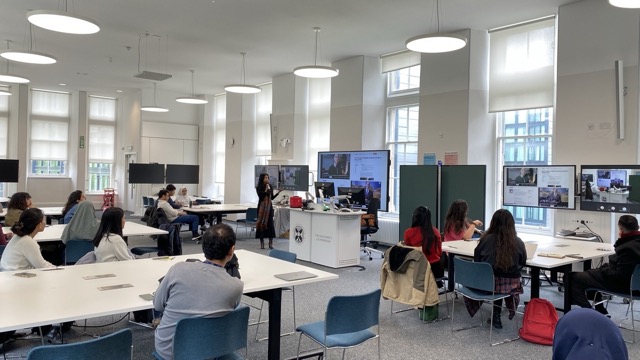
This question became the foundation for our Equality, Diversity and Inclusion (EDI) funded event from the School of Health in Social Science, ‘Beyond Self-Doubt: Reframing Impostor Syndrome in Academic Settings’. This one-off interactive seminar and reflective workshop created a safe space for students from the University of Edinburgh to reflect on experiences of self-doubt, belonging, and impostor syndrome within academia. More importantly, it encouraged us to move beyond viewing these feelings as purely personal failures and instead consider the social, cultural, and institutional contexts that may shape them.
The session was led by Tanishka Pillai, a psychodynamic therapist and doctoral student in psychotherapy and counselling. Throughout the workshop, she invited participants to reflect on the extent to which our feelings may actually represent responses to structures or power relations embedded within academic spaces. One idea that particularly resonated with many participants was the reframing of the ‘impostor’ not as someone who does not belong, but as an ‘infiltrator’ entering spaces that have historically excluded certain groups. This shifted the conversation from merely trying to fit in to foreign academic expectations towards reclaiming and transforming it.
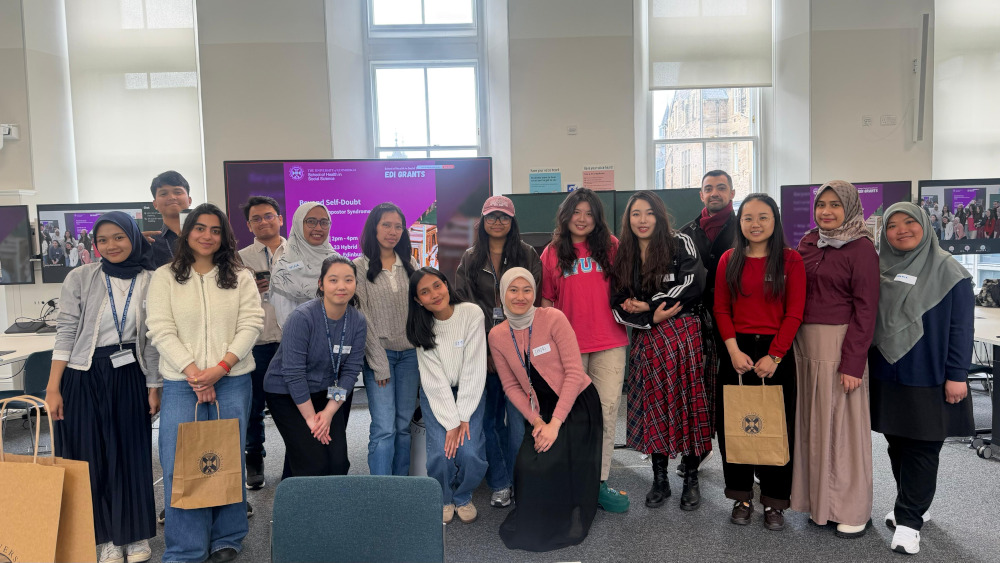
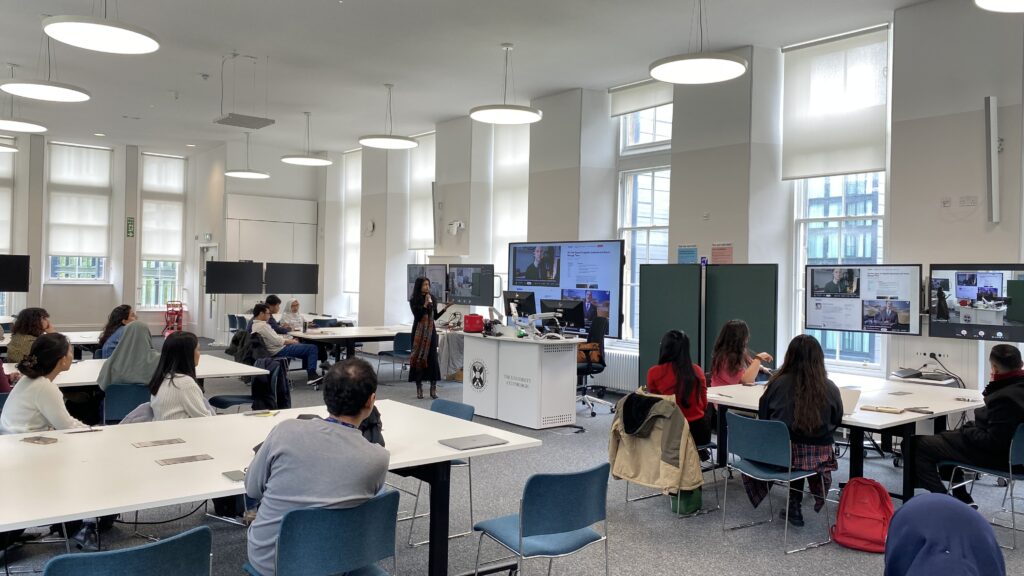
The event was attended by 20 postgraduate students from global majority background and was positively received, with active engagement throughout the seminar and reflective workshop. It was both comforting and emotional to realise how many of us shared similar experiences of impostor syndrome within academic settings. At the same time, participants actively reflected on what universities could do to create more inclusive and supportive learning environments.
These included the following suggestions:
“(It would be helpful if) staff got training for decolonising curriculum and EDI. I think those training/workshops could improve students’ sense of belonging and inclusiveness.”
“Maybe familiarise students with the expectations and reality of every course and provide more support for international students navigating different academic curricula.”
“For the uni, please give more counseling opportunities easier to access as much as (what) students need!”
This student-led event may not solve impostor syndrome among students, but we hoped that we created a safe space to foster conversations towards building more inclusive academic spaces. More importantly, as Clance and Imes (1978, p. 246) wrote, perhaps these conversations could help students to become more ‘fully participate in the joys, zest and power of (their) accomplishments.’
Read other Teaching Matters blog posts on imposter syndrome:
- Thoughts on impostor syndrome: Shifting focus from yourself to others, by Will Zhang;
- Mini-series: Imposter syndrome at university, by Harriet Harris;
- From the margins to the mic: Speaking as a dentist in global Health Professions Education,by Avita Rath.
References
Clance, P. R. and Imes, S. A. (1978) “The Impostor Phenomenon in High Achieving Women: Dynamics and Therapeutic Intervention,” Psychotherapy: Theory, Research and Practice, 15, pp. 241–247. Available at: https://doi.org/10.1037/h0086006
 Chorina Mega Noviana

Chorina is an MSc Advanced Nursing student from Indonesia. Living abroad as an international student for the first time has shaped her interests in equality, diversity and inclusion within academic spaces. Prior to her studies, she worked as an emergency nurse and an integrated emergency medical system officer. Through both her academic and professional experiences, she has become particularly interested in how power dynamics and institutional cultures shape experiences within healthcare and higher education.
 Kania Ratna Arimbi
Kania is an MSc Advanced Nursing student from Indonesia. Her experiences as an international student have fostered a strong interest in equality, diversity, and inclusion, particularly in academic settings. She has professional experiences as an anaesthetist nurse, tuberculosis research assistant, and undergraduate anaesthesiology nursing tutor. Alongside these roles, her academic interests focus on nursing curriculum development in higher education and the advancement of nursing profession through professional identity formation.