

In this post, Liam Hill describes his experience of tutoring on the ‘Understanding Decolonisation in a Globalised World’ Challenge Course using the Linked Teaching Approach as a basis for his reflection. Liam is a Teaching Fellow at Moray House School of Education and Sport and a developmental psychologist. This post is part of the ‘Creating a Challenge Course’ series.
This year, I’ve found tutoring on the Understanding Decolonisation in a Globalised World (UDGW) Challenge course to be a refreshing form of Continuing Professional Development (CPD). It’s giving me a much clearer understanding of what’s required to truly decolonise higher education, beyond my parent discipline – a process that will extend well beyond academics ‘tinkering with reading lists’[1] and their lecture content to address historic biases and inaccuracies.
Through delivering these workshops, I’m discovering several practical strategies to further decolonise my teaching of small groups. The Linked Teaching Approach (LTA) used in the UDGW course facilitates many of these ‘nudges’ to teaching practice, so I’ve used its five components (structure; linking; activity; feedback; inclusivity) below to reflect on how teaching and learning is developing within my workshop group, five weeks in…
Structure
With ELM, I was able to quickly allocate students into discussion groups in a way that ensured maximal diversity of the programs being studied by students within each group. To do this, I inputted a list of the students first names and their programs as a prompt into ELM and then asked ELM to randomly allocate the rows in this list into four equally-sized discussion groups, whilst stratifying this allocation process by the degree program. This ensured no more than two students per group were from the same program. Economists, Linguists, Psychologists, etc., are all actively conversing and sharing with each other, leading to two key benefits:
- Students are excited to share issues they’re finding within their disciplines with other group members.
- This sharing challenges preconceptions about the extent of coloniality in academia. Several students have expressed surprise at finding colonial influence in subject areas they’d previously considered ‘immune’. This is raising awareness amongst everyone of the systemic nature of the colonial legacy, prompting consideration of what steps are truly needed in order to tackle such deep-seated issues.
Linking
Engaging with pre-workshop course materials and lectures has helped me build rapport with my workshop groups and makes it easy for me to shore up links between their ideas, as discussed in the workshop, and points made in the lectures and key readings. I’m finding it important to remember that part of my role here is support learners to engage, perhaps for the first time, with misappropriated, silenced and othered knowledge within traditional academic spaces. I would suggest this course provides a critical opportunity to platform and give more time to discussion of such topics. It is also easy to underestimate how challenging it can be for learners to grapple with new knowledge, especially in this context of decolonisation. It is taking careful, patient, encouragement from me, to help students delve deeper into sensitive subjects raised in lectures and readings, within our workshop discussions.
Activity
Discussions in my workshop are lively, within groups and when sharing as a whole class. For example, in Workshop 4, there were productive disagreements amongst students about whether fusion between Western and Southern Epistemologies at Northern European universities was a realistic possibility. With two rather than four questions set for that week’s workshop, this perhaps also allowed more space for such disagreements to play out, leading to deeper, more reflective discussion too.
Feedback
I’ve been pleasantly surprised by how much the course readings have broadened my own understanding. I now understand the importance of decolonising Higher Education from a much more systemic, rather than discipline specific, perspective, and my feedback to students is richer for it. Peer feedback is also an increasingly important feature of our workshop discussions (see the ‘disagreements’ in Workshop 4 mentioned above).
Inclusivity
Emphasising a ‘Culturally Inclusive’ approach within workshops is proving invaluable. As part of this, week 1’s workshop involved an expectation-setting exercise, where we reviewed a code of conduct for discussing sensitive topics. As importantly, I took this as an opportunity to ask students their expectations of me, as their tutor. When this led to an awkward silence that I, serendipitously, flipped this into asking the course organiser their expectations of workshop tutors (Dr Fakunle). They encouraged me to ‘listen’, as an enabler of the student’s voice. On reflection, I think this interaction helped me immensely, and it was also important for the students to be part of it. It emphasised, from the outset, how important it was for the workshop to be an inclusive learning environment, within which learner’s voices are valued, respected, and central to the learning experience.
To summarise, I’m enjoying how this course promotes active collaboration between students and the teacher, with a shared understanding of this complicated topic developing from workshop discussions. I also see subtle changes emerging in my approach to teaching tutorials, which the LTA is giving me the tools to enact. Reflecting themes in the decolonisation literature, I’m becoming more comfortable ceding control of the lectern and giving priority to co-constructing understanding alongside my students. This seems like an especially appropriate approach to take when supporting students on this particular course, where they’re learning about how to decolonise and reform the Higher Education system they’re studying within.
[1] Quote from p8 in: Abu Moghli, M. & Kadiwal, L. (2021) ‘Decolonising the curriculum beyond the surge: Conceptualisation, positionality and conduct’. London Review of Education, 19 (1), 1–16. https://doi.org/10.14324/LRE.19.1.23
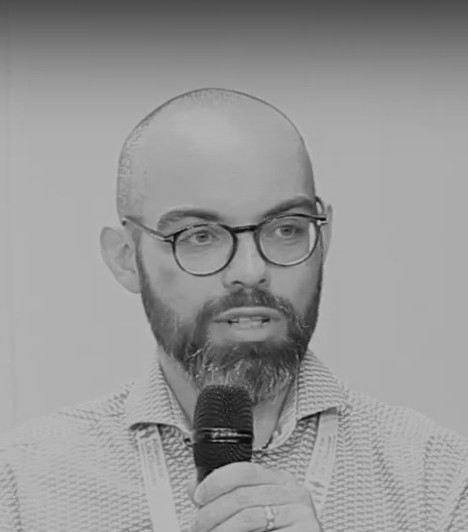 Liam Hill
Dr Liam JB Hill is a developmental psychologist with over a decade of experience of teaching and lecturing in Higher Education (HE). He joined Moray House School of Education and Sport in 2024, as a Teaching Fellow within the DPiE group. He is particularly interested in widening participation and fostering more inclusive practices within HE. For example, he has recently been working a lot on a multi-university project that is trying to improve guidance on how best to support Muslim students in HE during the month of Ramadan (more info here).