In this post, Simi Segun shares her insights into working from an interdisciplinary perspective in the development of the ‘Understanding Decolonisation in a Globalised World’ Challenge Course. Simi is a graduate of the Edinburgh Futures Institute with an MSc in Cultural Heritage Futures. This post is part of the ‘Creating a Challenge Course’ series.
Getting involved
My involvement in the Community of Practice (CoP) for the ‘Understanding Decolonisation in a Globalised World’ Challenge Course happened after a series of serendipitous interactions with the Course Organiser, Dr. Fakunle. I had never done anything like this before, so apart from my excitement at being on the creating rather than receiving end of a university course, I didn’t know what to expect.
I was very excited at the prospect of engaging with decolonisation as a course topic. Colonisation had a significant impact in shaping the country I call home, so the concept of colonisation and decoloniality are ones that I have wrestled with for years. This is especially the case when you consider decolonisation in education, and the importance of understanding how dominant worldviews continue to dictate our ways of seeing, knowing, and learning.
A key tenet of my MSc in Cultural Heritage Futures at the Edinburgh Futures Institute (EFI) was critical heritage studies, an approach that challenges authorised heritage discourses that privilege narrow assumptions about the meaning and values of heritage. My focus on Nigerian heritage exposed me to African Critical Heritage Studies (ACHS), which calls for a more inclusive approach to heritage in Africa that engages multiple worldviews and focuses on decolonisation, cited as the most critical of ACHS matters. This is especially pertinent, given that many African heritage institutions and policies stem from colonial processes. Since the late 1900s, there have been calls for African museums to eliminate the Western model of museums on the continent, confront colonial legacies, decolonise museum practice and create ‘African-based’ museums
Interdisciplinarity
As an EFI student, all my courses are in one building, and the unique nature of our timetable made it difficult to take classes at other schools, so this process also gave me the opportunity to interact with other schools within the university and gain insights into the breadth of disciplines and academic experiences that co-exist within the University.
My knowledge of decolonisation, academically speaking, is from a heritage perspective, but through this collaborative process I was also able to learn more about how it touches all academic disciplines. I think this was one of the most fascinating aspects of this process. From the first meeting, when I was introduced to faculty and students ranging from different backgrounds including the College of Art and School of Biological Sciences, every meeting of the CoP involved fascinating debates that further highlighted the interdisciplinary reach of the issue of decolonisation, which then requires an interdisciplinary approach to its teaching.
I think that’s one thing I’m really excited about for, outcome-wise, is the course finding a way to explore decolonisation from different disciplines in a way that makes it accessible and inclusive to the academic experiences of students from different schools. We discussed in the development sessions that decoloniality is often perceived as a humanities problem, when in reality it’s an issue that pervades all academic fields. I hope students are able to view the different components of the classes as a cohesive narrative showing how decolonisation affects different fields.
My experience
I’ll admit I was a little (or more than a little) intimidated on the day of the first meeting when I walked into the room — looking at professors and PhD students from across different disciplines, and… me? Feeling underqualified and uncomfortable, I resolved to sit quietly and soak up all I could while I observed the other CoP members deliberate over the minute details, content, structure etc. of the course. I was pleasantly surprised and appreciative of the inclusive approach of the course organiser, who actively sought not only student input but also our active participation, by encouraging us to take initiative on specific aspects of the course. This was a great opportunity to advocate for, and help with, crafting guidelines for student deliverables.
I drew from my experiences as a student and conversations with other students about preferences and pain points we encounter when deciphering assignment instructions. As a result, the key principle was clarity: ensuring that the language of the documents were simple, accessible and concise, and providing ample information so students know exactly what they need to do for their poster presentation. I also experimented with designing a digital collaboration space for group projects, to create a starting point for students who wanted more guidance on working, as well as provide an accessible platform that’s accessible to students who may have mobility issues, caring responsibilities or other factors that limit in-person interactions. My experience as an EFI student was helpful in designing this experience, as most of our classes are designed to be hybrid.
Final thoughts
Working on this project opened my eyes to the thorough and thoughtful nature of course development — it truly takes a village of collaborators to develop course content across various mediums, ensure accessibility adherence, and refine course structures and curricula — all working towards a finished course that students will be taught. As a student myself, this experience gave me a greater appreciation for the effort that goes into creating and vetting the content that eventually shapes my course curriculum.
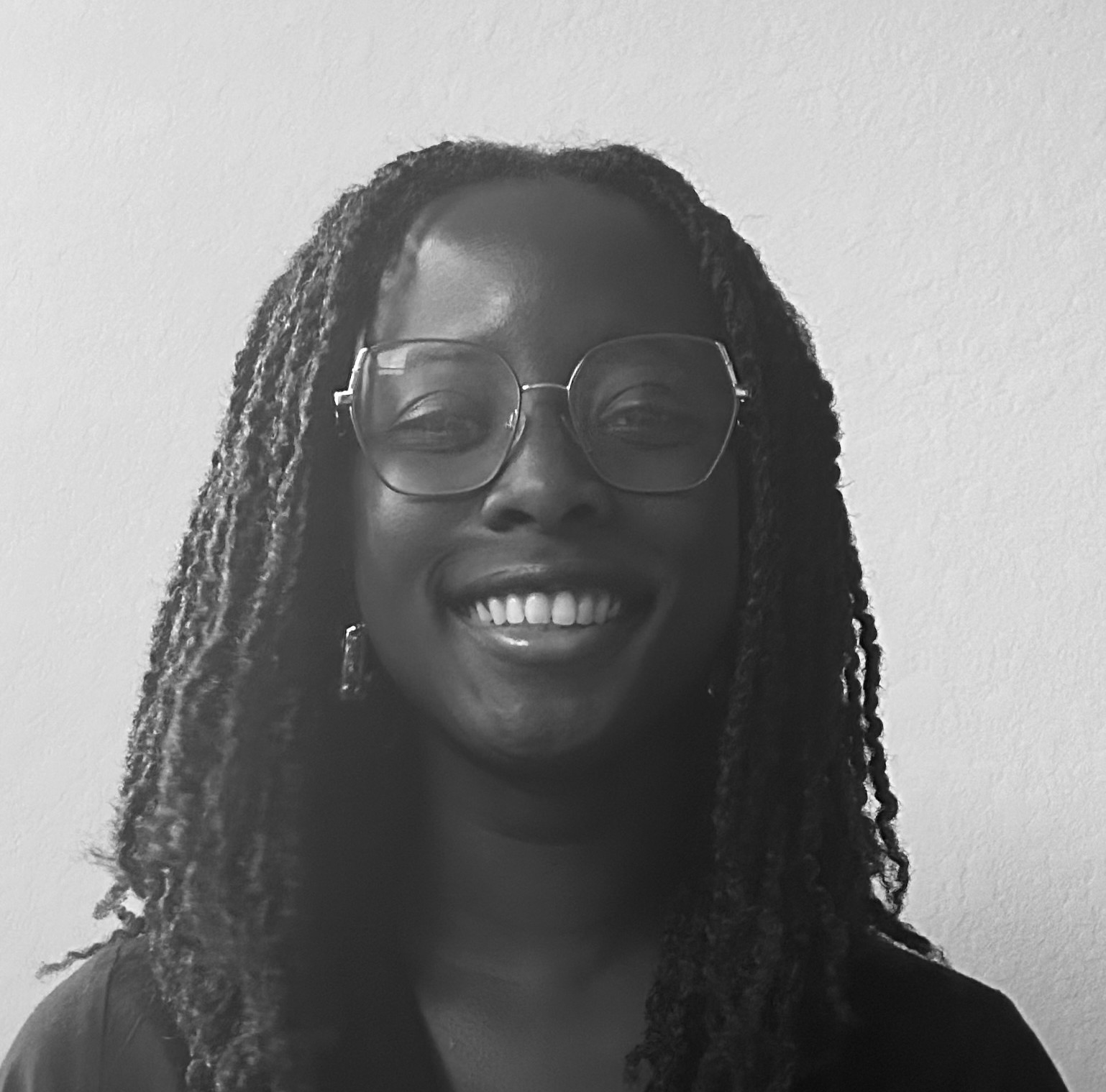 Simi Segun
Simi Segun is a graduate of the Edinburgh Futures Institute with an MSc in Cultural Heritage Futures. Her research interests include Nigerian museology and decoloniality, and urban heritage.