Any views expressed within media held on this service are those of the contributors, should not be taken as approved or endorsed by the University, and do not necessarily reflect the views of the University in respect of any particular issue.
Press "Enter" to skip to content

Category: Legal philosophy

The Second Edition of Personal Bar: Questions on Writing Legal Treatises in the 21st Century

by Elspeth Reid, Emeritus Professor of Scottish Private Law

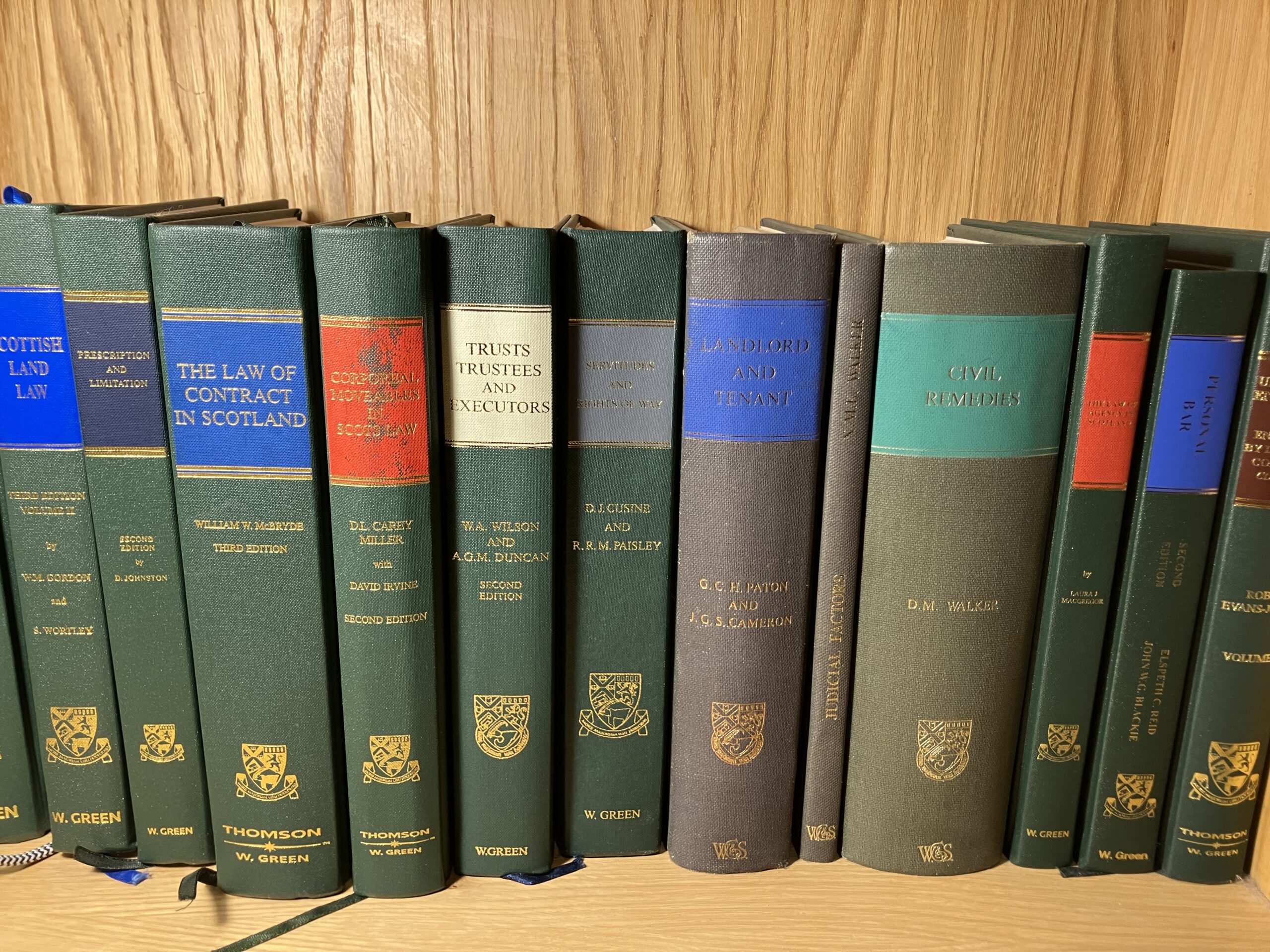
The publication of the second edition of Personal Bar has come nearly twenty years after the first, which these days is a long time in the world of academic writing. The transformed environment for the second edition has given me cause to reflect on the enterprise of writing a Scottish Universities Law Institute (SULI) text, or any “big” legal treatise for that matter. How has treatise writing altered, or how should it be modified, in response to the huge changes we have seen in the 21st century? I cannot pretend that I have answers to the questions raised here, but the following suggest themselves as concerns that might now usefully be considered in the wider legal community.

T B Smith’s vision for the SULI series when it was established in 1960 was much influenced by the Louisiana State Law Institute, as a model of what a smaller jurisdiction could do for itself. Scotland, like Louisiana, was a smallish jurisdiction which valued its distinctive identity, where publishing was expensive and challenging, and there were few publishing outlets available for texts specifically about that jurisdiction. The Louisiana State Law Institute was dedicated to “public service”, and that seemed to be part of Smith’s vision too. The Louisiana State Law Institute had broader ambitions of law reform, which in Scotland were hived off elsewhere, but its key mission, which SULI was to share, was carrying out “scholarly research and scientific legal work”, producing treatises which were directed at supporting the profession as much as the academic community. In 1961 Smith predicted that “Within ten years we may hope to see the main divisions of Scots law restated in up to twenty comprehensive treatises.”[1] SULI did not quite reach that ambitious target, but it has done a wonderful job with an impressive list of titles over the last 65 years, and also in energising academic writing in Scotland more generally, all the while observing T B Smith’s motto for the series, more majorum, usu hodierno – according to the custom of our ancestors, according to today’s practice. But “today’s practice” has changed hugely since the 1960s. To what extent does this mean that SULI texts or similar legal treatises should change too?

Leave a Comment

New insights through defamiliarization

By Anna Bleichenbacher, PhD student, University of Basel[1]

I. Prologue

Compare how it felt to speak your first words in a foreign language with how it feels now after years of practice. Once we can do things as a matter of habit, they start to become automatic for us. Deliberately framing something in a different perspective – what the Russian literary theorist Shklovsky said about the role of art in his concept of ‘defamiliarization’ (‘ostranenie’)[2] – challenges that automatic response. Defamiliarization is also possible in legal research. It enables us to take a new look at our own jurisdiction and how we work within it.[3] Studying and researching only in our home jurisdiction makes everything we do there feel natural to us – even inevitable. All that changes once we see it from the outside.

Breaking through this habituation and seeing familiar things with new eyes can be facilitated by a research stay abroad. In 2024 the author of this blog entry undertook a six-month research stay at the University of Edinburgh. This entry deals with the differences in the research and teaching between Edinburgh and Basel, as well as the new perspectives the author gained from her time abroad. She experienced an ‘ostranenie’ that challenged her automatic assumptions of how the law had to be.

Leave a Comment

Books – Part of Our Legal Culture

by Professor Reinhard Zimmermann, Emeritus (Director) of the Max Planck Institute for Comparative and International Private Law, Hamburg

“Mr. Booker, however, would review such a book as Lady Carbury’s ‘Criminal Queens’ without bestowing much trouble on the reading. He could do it almost without cutting the book, so that its value for purposes of after sale might not be injured”: Anthony Trollope, ‘The Way We Live Now’, Chapter 1. 

 (i) Modern academic life is characterized by an apparently unstoppable trend towards specialization. At the same time, we are faced with a proliferation of legal literature. It becomes more and more difficult to follow developments in areas not directly relevant to one’s own field of research. (ii) Contrary to the natural sciences and economics, law is a field of research where the writing of books constitutes a long-established and essential means of producing knowledge. In a number of countries (Germany and Italy among them) a scholar has to write two books in order to qualify for an academic career. In other countries (England and Scotland, for example) an aspiring academic usually has to write a PhD thesis which, in a revised version, is often subsequently published as a book. (iii) With so much writing going on, nobody can read all new law books, even those in a limited field such as contract law, or constitutional law. 

Leave a Comment

The Authority of Doctrinal Scholarship

by Claudio Michelon, Professor of Philosophy of Law, University of Edinburgh

Never has so much been written about the law by so many. This phenomenon can be perceived across many jurisdictions and in practically all areas of law. This growth results from the confluence of many factors, among which the fact that there is progressively more law to be explained, analysed and critiqued, and the broadened access to legal education which, in turn, allows for greater specialization in fields and subfields of the law. The structure of legal academia, in particular the imperative to “publish or perish” surely also plays a role here. But whatever the causes, we are left with a hefty corpus of legal literature. Thus, it is perhaps worth thinking about what, in this ocean of legal writing, could possess authority, and why.

Leave a Comment

Six things you should know about Stair’s theory of contract law.

by Dr Stephen Bogle, Senior Lecturer in Private Law, University of Glasgow

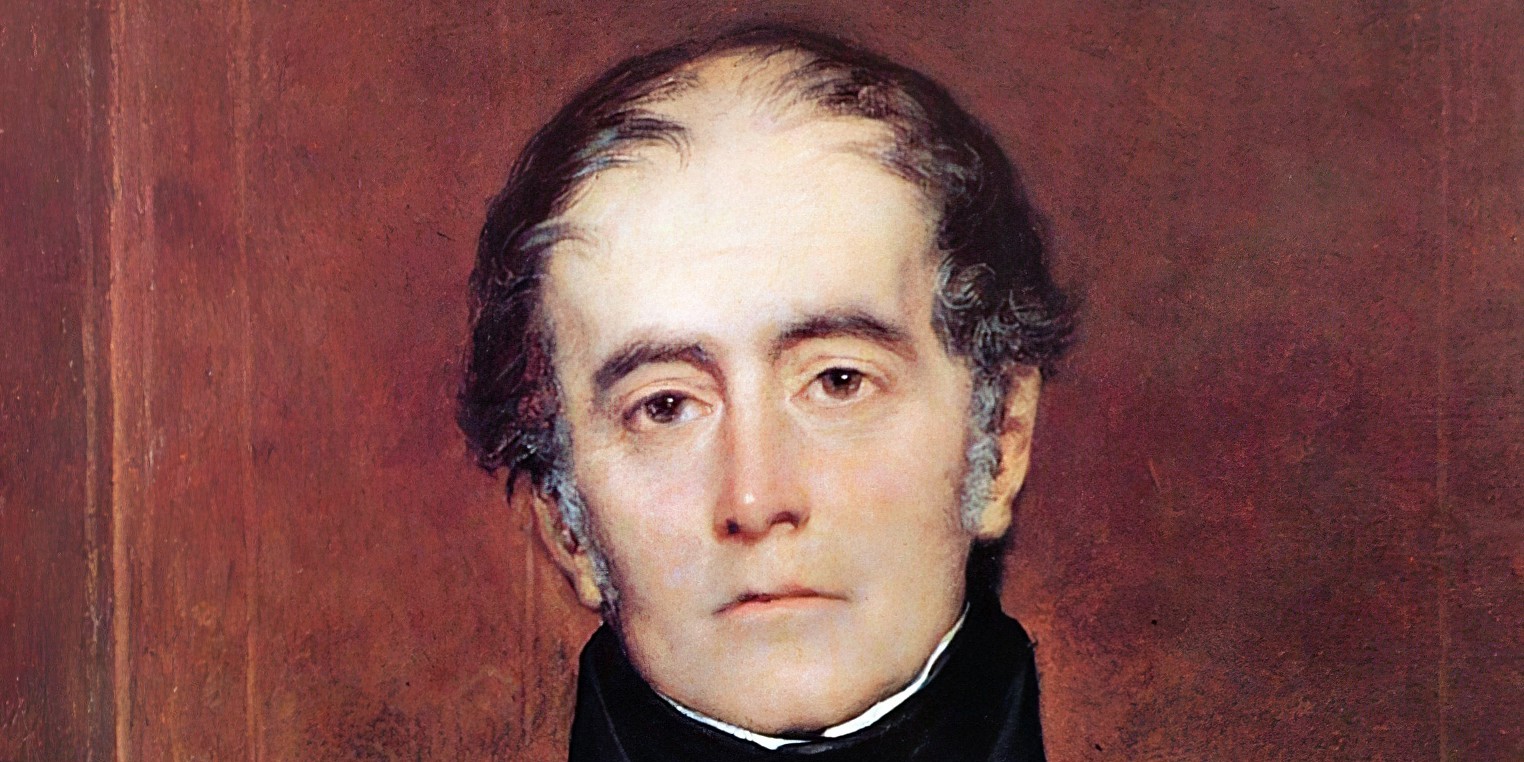
Contract before the Enlightenment: the ideas of James Dalrymple, Viscount Stair, 1619-1695 was published in March this year by Oxford University Press. It investigates the intellectual impulses which inspired Viscount Stair’s transformative account of the law of contract. In his wide-ranging, Institutions of the Law of Scotland first published in 1681,[1] Stair offers a specific title on ‘conventional obligations’, which includes an examination of contracts, unilateral promises, firm offers, acceptance, and third-party contracts, as well as remedies, followed by separate titles on nominate contracts (loan, mandate custody, sale, hire and society). It is seen as foundational to the law of contract in Scotland. As Martin Hogg said in his pioneering study of Stair, ‘Any understanding of the nature of the Scots law of obligations, including the theory of Scots contract law, must begin with the Institutions of the Law of Scotland.’[2] The book, therefore, offers a fresh examination of what inspired Stair to place the law of contract on a new philosophical basis. This post gives a summary of the book’s central themes. In other words, it tells you six things you should know about Stair’s account of contract law.

Leave a Comment
css.php

Report this page

To report inappropriate content on this page, please use the form below. Upon receiving your report, we will be in touch as per the Take Down Policy of the service.

Please note that personal data collected through this form is used and stored for the purposes of processing this report and communication with you.

If you are unable to report a concern about content via this form please contact the Service Owner.

Please enter an email address you wish to be contacted on. Please describe the unacceptable content in sufficient detail to allow us to locate it, and why you consider it to be unacceptable.
By submitting this report, you accept that it is accurate and that fraudulent or nuisance complaints may result in action by the University.

  Cancel