Any views expressed within media held on this service are those of the contributors, should not be taken as approved or endorsed by the University, and do not necessarily reflect the views of the University in respect of any particular issue.

I Canny Keep Up: What is Digital Humanities?

The introductory articles were interesting in that they identified DH as quite a fast-moving and responsive discipline, so it’s maybe not that easy to pin down an exact definition.


One theme that came up through the readings was accessibility, how can scholarly critical thinking be open to more people, and how can what is published or created through this scholarship be available for a wide range of people to read? There is of course a link to technology, although exactly what platforms are used can vary. Overall the discipline appears to be an intersection between newer technologies and forms of literary criticism that we might think of as more traditional or conventional.

Regarding the fast-moving and responsive nature of the discipline, the first article in particular did make me think about how quickly the functionality and context surrounding particular platforms (like twitter which was referenced in the first introduction and is now x and a very different platform to 10 years ago… grok!) can change, and how might this affect their relationship with scholarship?

This area came up during the class discussion, we talked about the legitimacy of different platforms like Substack or how the cultures around open-access journals compare to publications which are behind a paywall. Particularly in a ‘post-truth’ age, a couple of the Debates in Digital Humanities introductions emphasised the importance of accessibility, but this also intersects with peer-review systems which are kind of obstacles to publication or dissemination but are valuable too.

Thinking of DH as the ‘analysis of a complex problem into a data model’ (from the extract on the board in class) kind of echoes this sentiment, forming a multifaceted, slippery idea into a more rigid structure will really index the ways in which the politics and materiality of particular platforms affect how scholarship is constructed and disseminated.
An Initial, Uninformed View on Digital Humanities

Although it is as yet rather surface-level, my understanding of Digital Humanities is the manner in which the intersection of the digital revolution and the tools it affords us can change and assist our studies of the humanities.

I find its chronological scope in particular to be fascinating, as its nature allows for both a refreshing perspective on pre-digital works with entirely new tools (such as computational language analysis), alongside a more integrated philosophy of examining newer works released within digital infrastructure.

I am also appriciative of its meta-analysis capabilities, such as its scrutiny of the accessibility and functionality standards of academic circles. It encourages freer and more accessible knowledge sharing and support for those either in need or without access, and presents a framework through which disciplines can work to deconstruct the ‘ivory tower’ of academic resource and understanding. It also has the potential to provide accomodations for those who are disabled or otherwise require further infrastructure to participate, both widening access and the perspectives entering the field.

As also discussed briefly in the seminar (and relating somewhat to the broad temporality of the field), another point of interest is the incredible speed with which the discipline evolves alongside the medium. Particularly within the last half-decade or so, the conflict between Digital Humanities’ focus on freedom of knowledge and publication and ethical questions around data harvesting and misinformation provide even a possible avenue for philosophical discussion. At the risk of abstracting a legitimately pressing issue of legitimacy versus freedom, the ethical conundrums of implementing academic standards and frameworks within such a free field of study can encourage further questions of value and accessibility from an entirely different lens.


the effects of making choices in digital humanities

There are dimensions in text. They’re inherent to both the text and our interpretations of it. Layers, texture. But those dimensions are usually flattened in the way academics present our insights on our field to the public. Something that feels very vivid–the texture of miasma and contagion theories and the way they apply to Gothic literature–is something boring or flat to engage with as the average person. If you’re particularly lucky as an academic, someone might ask you a question. It’s far more likely that question will be “Why does this matter?” The texture is lost somewhere, in the translation between academics and the public.

Because Digital Humanities (DH) is a responsive field, this is where you can manage to retain some of that texture. In the methods of analyzing text, you can illustrate the texture of your intention. When you digitally map the occurrence of keywords in a piece of Gothic fiction and link those words to contagion and miasma, you begin to convey precisely what you mean to someone else. Your insights become visible and your choices become clearly political. And even beyond what dimensions are added through the additional choices you have to make, the choices you were already making become visible to both you and your audience. The process of translating insights about a piece of text into the digital realm forces a process of understanding the dimensions of that text. The layers stop being an assumption of the insight, and become the centrepiece.

That process of understanding is, in my opinion, the most valuable thing to come from DH. It’s impossible to control how people will respond to and interpret a thing that you make. DH puts you in a much better position to communicate your ideas more clearly, but that too can have flaws or gaps between academics and the public that are difficult to identify except through trial and error (although that process is also enabled through digital humanities in a way that is not possible through traditional methods of publishing academic ideas). However, it is certain that the process of thinking through what choices you are making and what elements you are communicating–what you care about and what you dismiss–is a process that results in a much more comprehensive understanding of what you are trying to say. That is how you understand the textures, dimensions, and layers you are playing with in humanities.

An Initial Reflection on the Digital Humanities

The digital humanities is an intersectional and constantly changing field that looks at the intersection between digital tools and its landscape and the humanities. because of this intersection, the field seems to be inherently political. It is also a field of constant communication and collaboration, differentiating it from many other academic disciplines. The peer review system in contrast to social media platforms such as substack or even the in-between of blogging is an interesting one as it brings out questions about legitimacy and authority within the field.  It seems to attempt to be academically inclusive to differing technical levels with digital tools. It is a Humanistic study of digital practices, digitising materials and objects, objects that might not exist outside of a computer and also the methods used perform analysis. It is also to disseminate ideas and present them in conversation with computational methods applied to humanistic study. It might include data bases for intellectual problems. Data structuring is political- Johanna Drucker. It helps us question what is at stake- when we use the rigid boxes of computers to analyse the world, often built by engineers who might not always think of the epistemological structures of these tools. The subject of the digital humanities introduces itself imperatively and through audacity (in a good sense or possibly bad as well- a different word could be used to described what I mean) , but the subject holds an intriguing ethical imperative.

How do I understand the field of digital humanities

Digital Humanities, is as Matthew K. Gold described, a continuation of New Media Studies, it is crucially about building things, with the potential to assist humanities advocacy and advance humanities teaching. Recently, in an increasingly charged technological environment, it is inextricably linked to contemporary political or cultural moments. In a digital space, there is the potential to create an equalising field for humanities, which endeavours to create greater transparency in access to institutions, methods of research, and the academy more widely. There is, despite this drive for ethical intellectual engagement with the humanities, a need for further diversity in research and a movement away from anglocentric positions of study.

Projects that employ some of the principles of digital humanities (e.g. available and accessible to the public, explorative engagement with primary texts) can widen the scope of interpretation available to traditional humanities. By adapting literary or written documents into visual resources, these projects can bring previously dense or obscure information to a wider audience.


Welcome to our class WordPress page!

For help and advice on getting started with a WordPress blog, see the Academic Blogging help pages.

Your blog is private by default

You can open your blog up to as many or as few people as you like in Dashboard > Settings > Reading > Site Visibility:

  • You can open your blog up to specific University members by adding them as users to your blog.
  • You can open your blog up to all University members who have an EASE login.
  • You can make you blog open to the world.

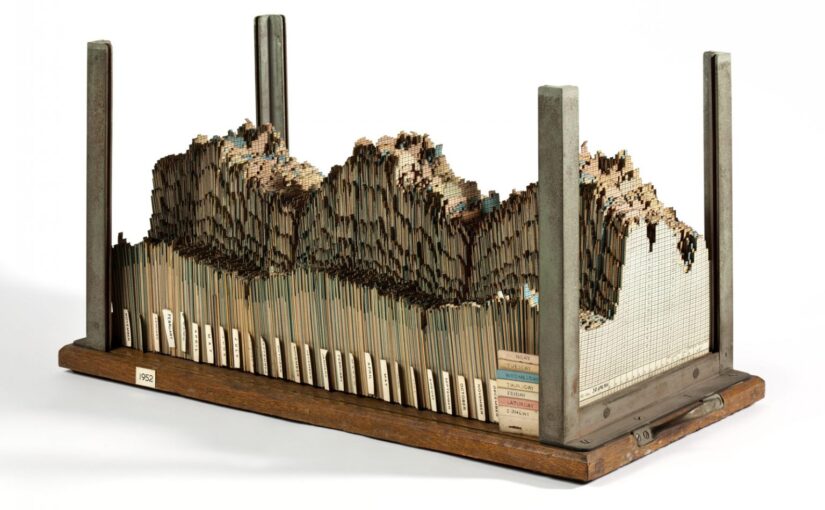
The featured image on this post comes from the University Collections. If you want to use more images in your blog posts, or perhaps use your own choice of image in your blog header, you can:


css.php

Report this page

To report inappropriate content on this page, please use the form below. Upon receiving your report, we will be in touch as per the Take Down Policy of the service.

Please note that personal data collected through this form is used and stored for the purposes of processing this report and communication with you.

If you are unable to report a concern about content via this form please contact the Service Owner.

Please enter an email address you wish to be contacted on. Please describe the unacceptable content in sufficient detail to allow us to locate it, and why you consider it to be unacceptable.
By submitting this report, you accept that it is accurate and that fraudulent or nuisance complaints may result in action by the University.

  Cancel