
In summer 2025, many of our School of Physics & Astronomy undergraduates took part in internships, both independently, and through industry and academic internships supported by the School’s Career Development scheme. Here, we highlight a few of their stories, recounting students’ impressions, experiences, and advice.
Amy Hall really enjoyed her time at the DESY (Deutsches Elektronen SYnchrotron) Summer School in Zeuthen, Germany. The program was split into lectures on the research topics at DESY, and a research project. Amy really enjoyed working as part of the Radio Neutrino Observatory Greenland (RNO-G) group. The lectures allowed her to learn about a wide range of topics including medical physics and quantum computing.
Another highlight was visiting the other DESY campus in Hamburg, which included a tour of experiments such as the European XFEL, PETRA, and HERA. Zeuthen’s location on the edge of Berlin was also ideal for exploring off-campus.

DESY Campus, Zeuthen
Maria Piwko worked in the Department of Nuclear Astrophysics here in Edinburgh to analyse data for a characterisation study of boron targets. The boron targets will be used to investigate the importance of certain nuclear reactions in the life of stars. While she says programming isn’t her strong suit, she still enjoyed the overall experience applying and developing her skills in programming, data analysis, and LaTeX.
Maria encourages everyone to apply for a summer scholarship, for the opportunity to advance research progress in a field, learn new skills, and to work with people. She recommends browsing existing scholarships, talking to professors, and reaching out to researchers via email to find a project. Maria says it’s important to get to know your supervisor and the tasks you’ll be doing, in advance.
Ella Marshall spent her summer doing an academic research project with the Astrophysics sub-department at the University of Oxford. She found the experience both intellectually stimulating and personally rewarding. Working on a project focused on modelling the RF environment on the lunar farside allowed Ella to apply her degree knowledge in a new context, while also gaining valuable hands-on research experience.
One of her highlights was being able to learn directly from and collaborate with world-leading researchers, whose expertise and passion for their work were truly inspiring. Beyond the research, there were unforgettable moments that made the experience truly special – including the surreal honour of sitting next to Professor Jocelyn Bell Burnell at dinner.
Overall, this internship gave Ella invaluable insight into academic research, strengthened her technical skills, and expanded her professional network. She’d recommend this kind of experience to anyone interested in exploring research or academia.

Denys Wilkinson Building, University of Oxford
JP Duminy interned with the Soft Matter Physics group, taking on an industrial project titled “The Physics of Chocolate Fountains,” supervised by Dr. David Fairhurst. This project was experimental in nature, seeking to characterise the radial flow patterns of molten solids because understanding the physics behind these flows has diverse applications, from volcanology to chocolate production. Over the course of eight weeks he not only explored a less-familiar area of physics, but also developed transferable skills beyond the lab. While initially intimidating, the level of independence he was given let him take the research in the direction he wanted to, exploring his own curiosities. At the same time, his supervisor provided careful oversight and useful guidance helping him to stay on track. In this way he was able to develop both his independence and communication skills, growing accustomed to requesting help from his supervisor and the post-docs.
He also gained familiarity with academia and graduate level-physics, by attending weekly meetings in the soft matter department and speaking to PhD students, post-docs and professors alike. JP says his eight weeks with the soft matter department gave him invaluable experience that will serve him well in the Senior Honours and MPhys projects, and in what lies beyond. He strongly recommends that other students to keep an eye out for these opportunities and take the time to email supervisors when they arise. He says that the internal application process was very straightforward, especially in comparison to the current hassle of applying to internships with multiple pre-assessments and interview rounds.
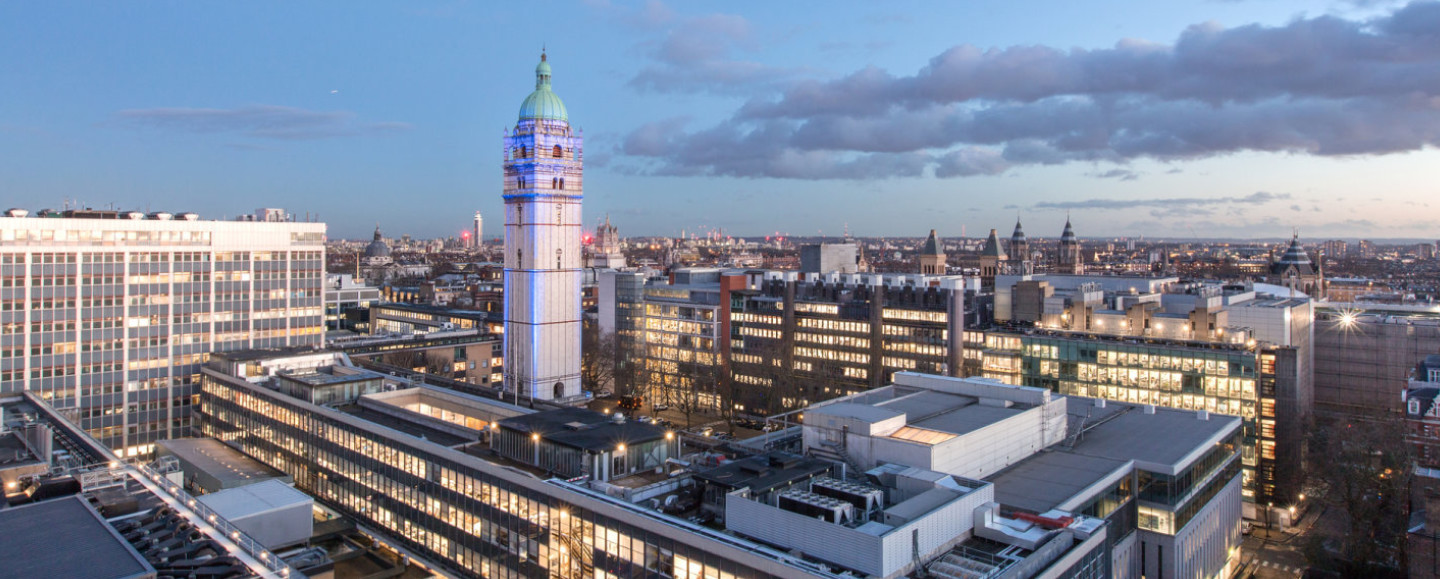
Jenna Padgett had a fantastic experience during her summer internship with Dr. Jess Wade at Imperial College London. Her project covered what universities could do to strengthen the sense of belonging among underrepresented students in higher education physics. The internship involved an extensive literature review, discussions with experts and interviews with undergrads, leading to an output of a paper and an article. A benefit was being able to complete much of the internship remotely. She gained academic writing skills, experience with writing and carrying out surveys skills and in the end truly found where her passion within physics.
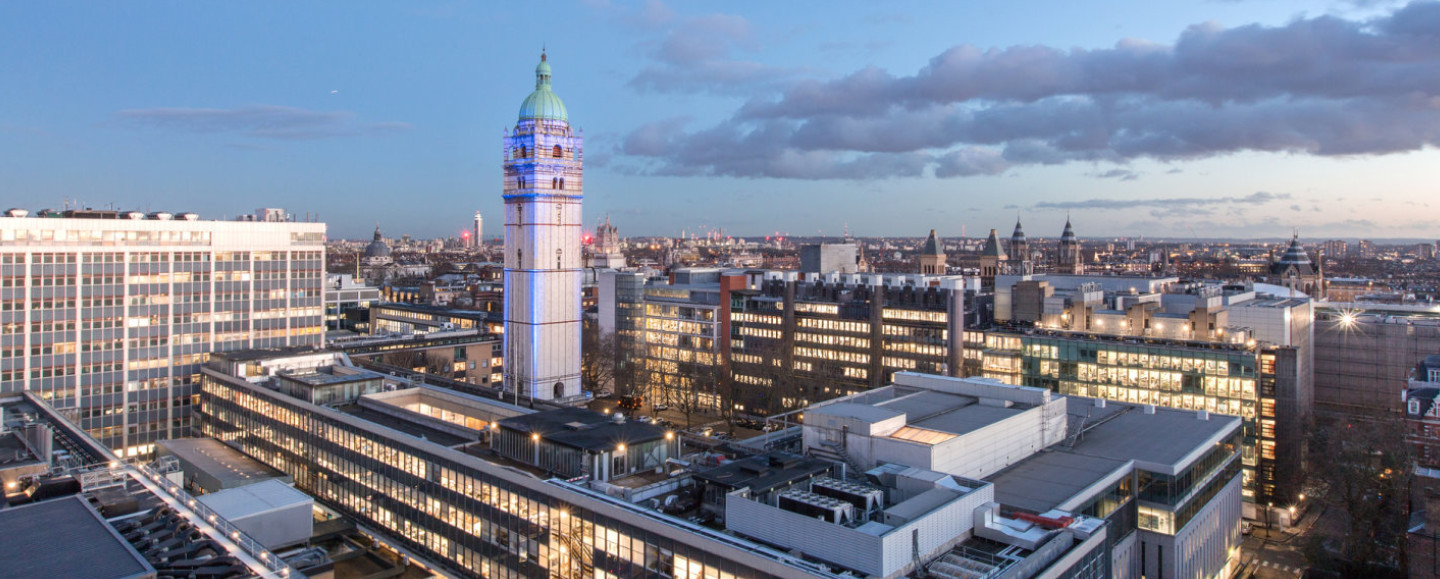
Imperial College London
Sean Wei undertook an internship with A.I.M. Research Lab, investigating image-to-image generation via Gaussian random bridges. He developed his understanding of neural networks, denoising diffusion probabilistic models, PyTorch, and the use of GitHub for collaboration. He recommends that students take advantage of opportunities to explore beyond what’s taught in courses.
Danny Markhoff completed an electronics project with Dr. Moritz Pascal Reiter and the Institute for Particle and Nuclear Physics team to design square-wave radio frequency (SqRF) drivers for quadrupole mass filters (QMFs). His work took him beyond just electronics, however, as he also developed his knowledge of coding, plasmas, vacuums, and quantum physics, even touching on quantum chromodynamics and CP-violation.
As a Physics with Year Abroad student, this internship prepared him well for the placement year he’s currently undertaking at GSI/FAIR’s PANDA department (the antiProton ANnihilations at DArmstadt experiment at the GSI Facility for Antiproton and Ion Research). He found the experience gained at Edinburgh over the summer priceless in helping him adjust to the research environment at GSI.
Nairne Gillespie studied the melt-processability of polymers, working with the Edinburgh Complex Fluids Partnership and the sustainable packaging company Notpla, who explore natural polymer sources for producing bioplastics. She developed a range of new skills, both transferable and laboratory-based, such as differential scanning calorimetry. She was pleased to find a particular improvement in her presentation and communication skills, which were enhanced through weekly meetings with her advisors, and through sharing her progress with the company. A highlight was touring the Notpla laboratories in London with her supervisors, where she presented her research findings to Notpla’s research scientists.
She found her project very fulfilling, and really enjoyed the opportunity to focus on one area of physics without the pressure of multiple deadlines. The experience has also prepared her well for her senior honours project. Her advice is to fully embrace the experience, as it is a rewarding way to learn new physics and to develop valuable skills.
Wladek Zawadzki simulated interatomic potentials, working with Prof. Andreas Hermann, whose group is currently engaged in simulating the extreme environments found inside planetary interiors. The goal of the project was to modify density functional theory data, obtained from an existing calculator, so that a neural network potential could successfully extrapolate the forces and energy in a structure of hydrogen atoms. As well as learning to use Linux and the command terminal, Wladek also felt that the project prepared him well for his Senior Honours Project. He also says it felt inspiring to experience real physics research without the pressure of exams and other deadlines.
He heartily recommends this programme to other students as it made him feel more engaged with the physics department, and considers this experience a very valuable asset when applying for future internship opportunities.