

Unleash Your Natural Impulse
Summary
Let learners unlock creativity based on pre-verbal impulse through an experience of body improvisation in 20 minutes, repeat the practice of this toolkit, and continuously reflect in subsequent self-albums to witness the value of confidence in deepening body expression skills.
Introduction video
“Creativity is not far away, not in the mind of a genius, but in everyone’s body, waiting to be awakened by the impulse.”
Are you feeling drained of creativity and struggling to come up with good ideas? Do you think creativity is the privilege of genius and has nothing to do with you? Or do you have good ideas in your mind but are unable to express them accurately? Keep reading, and this toolkit will provide you with a 20-minute exercise to help you reconnect with the original wisdom of your body, let creativity flow naturally, and let confidence flow freely.
Project Overview
This open educational resource toolkit aims to guide learners in 20 minutes to explore and unleash their inner creativity by activating latent language impulses – physical responses that arise spontaneously before conscious thinking. By randomly combining three types of prompts – location, character, event – into a performance scene, the learner will undertake a purely improvisational physical performance. This creative journey combines classic performance training with the ideas of modern drama education methods, cognitive neuroscience, and open educational resources, hoping that every ordinary person can experience that creativity is not out of reach; it stems from our innate physical instincts.
Learners need to know
Please confirm and agree to the following statements before use:
- I understand that there is no “right or wrong” or “good or bad” performance in the practice, and the sole aim is to respond sincerely to the impulses of the body.
Materials Needed
- Three lottery boxes (or envelopes or hats), marked respectively as: location, character, event.
- Notes and pens for writing hints.
- A safe space where you can move freely.
- A mobile phone or camera for documenting the process to form your creative growth photo album.
- Any props that might help your improvisation
Assistive feature support: If you have limitations in terms of activity, you can adjust the practice to focus on gestures, facial expressions, voice, or sitting improvisation. We encourage any form of expression.
Let’s get started!
Step 1: Warming up the body and refocusing attention
(2 minutes)
Take 2 minutes to get your body and mind ready before you start performing.
“Choose as much or as little movement as feels comfortable.”
- Light Warm-Up (30 sec): deep breathing, wrist/ankle loosening.
- Moderate Warm-Up (1 min): head-to-toe relaxation scan, gentle rotations.
- Optional Activation (30 sec): drawing shapes in the air, micro-movements for hesitant learners.
Step 2: Prepare Your Lottery Box
(5 minutes)
When creating your lottery prompts, you are free to use your imagination to choose locations, characters, and events yourself. Write each option on a small piece of paper, then place them randomly into a box, hat, or any container you like. This completes your own lottery box, and you are ready to start the exercise.
If you are unsure where to begin with selecting these three types of prompts, you can skip this step entirely and use the prepared document provided below. You can just print it out, cut the prompts into pieces, and begin using the toolkit as soon as you can.
Step 3: Draw inspiration from a random combination
(3 minutes)
Randomly draw a piece of paper from each lottery box. Put them together to form a performance scene. Don’t judge whether the scene is “reasonable” or “meaningful”; absurdity often acts as a catalyst for creativity.
Example:
- Location: McDonald’s
- Character: Sloth
- Event: Order
Your scene: A sloth ordering food at McDonald’s.
Step 4: Let impulses lead the performance
(5 minutes)
This is the core 5 minutes. Don’t plan actions or plots in advance. Let the scene cues you see act directly on you, and let your body’s instinctive reactions dominate the performance.
Key tip:
-
There is no right or wrong way to perform—respond honestly to your body’s signals.
-
Small, subtle movements are equally valid if you do not feel ready for large actions.
-
If you prefer not to be watched, you may practice in a private space or use only voice/gestures.
-
If you have limited mobility, you may perform seated, or use eye focus, breath, voice, small gestures, or objects as alternatives.
To avoid awkward pauses, add simple fallback tools such as:
-
slow down,
-
repeat the previous movement,
-
change one variable (speed, height, force),
-
add a sound,
-
shift gaze direction.
Step 5: Recording and Reflecting (optional but recommended
(5 minutes)
If conditions permit, record your performance with your mobile phone. Once done, take 5 minutes to reflect on the following questions or record them in your “Creative Photo album” :
REFLECT Template
-
Reaction – What moment felt most natural?
-
Emotion – What emotions arose when the body moved first?
-
First Impulse – What was the initial impulse?
-
Let Go – How did you overcome hesitation?
-
Evidence – What unexpected actions appeared on video?
-
Connection – What links did you notice to daily life?
-
Try Again – What would you explore next time?
Step 6: Repeat or share with others(Extended Training)
Creativity needs to be exercised like a muscle.
- Repeat practice: Try the same scenarios and see what’s different; Or draw new combinations of scenes.
- Group collaboration: Practice with friends, each drawing a character and building an impromptu short play together.
- Share Feedback: We encourage you to provide your anonymous episodes or learning reflections to the toolkit creators to work together to refine this resource.
Most accurate & professional
If you’d like to share any thoughts about your experience with this toolkit—whether it’s feedback, ideas, or even a small photo album of your creative process—I’d really love to hear from you.
Feel free to email me anytime at jun00005@163.com.
Hearing how people use this toolkit helps me keep improving it and makes the project even more meaningful.
Extended Reading
Here are some supplementary reading materials to help you gain a deeper understanding of the theories, methods, and related topics behind this toolkit.
Benedetti, J. (1998). Stanislavski and the Actor: The Final Acting Lessons. Methuen.
Grotowski, J. (1968). Towards a Poor Theatre. Odin Teatrets Forlag.
Bartenieff, I., & Lewis, D. (2002). Body Movement: Coping with the Environment. Routledge.
Libet, B., Gleason, C. A., Wright, E. W., & Pearl, D. K. (1983). Time of conscious intention to act in relation to onset of cerebral activity (readinesspotential). Brain, 106 (3), 623-642.
Burgoyne, S. (Ed.). (2018). Creativity in Theatre: Theory and Action in Theatre/Drama Education.
Wei et al. (2025). “The Effect of Drama Education on Enhancing Critical Thinking Through Collaboration and Communication.” Education Sciences, 15(5), 565.
“Fostering Creative Thinking Skills Through the Unconscious: A Novel Approach.” (2025). Journal of Cognitive Enhancement.
Open up educational resource platforms
- OER Commons: A public digital library curating and hosting global open educational resources.https://oercommons.org/
- OpenLearn: offers interdisciplinary free online courses and learning materials.https://www.open.edu/openlearn/
(
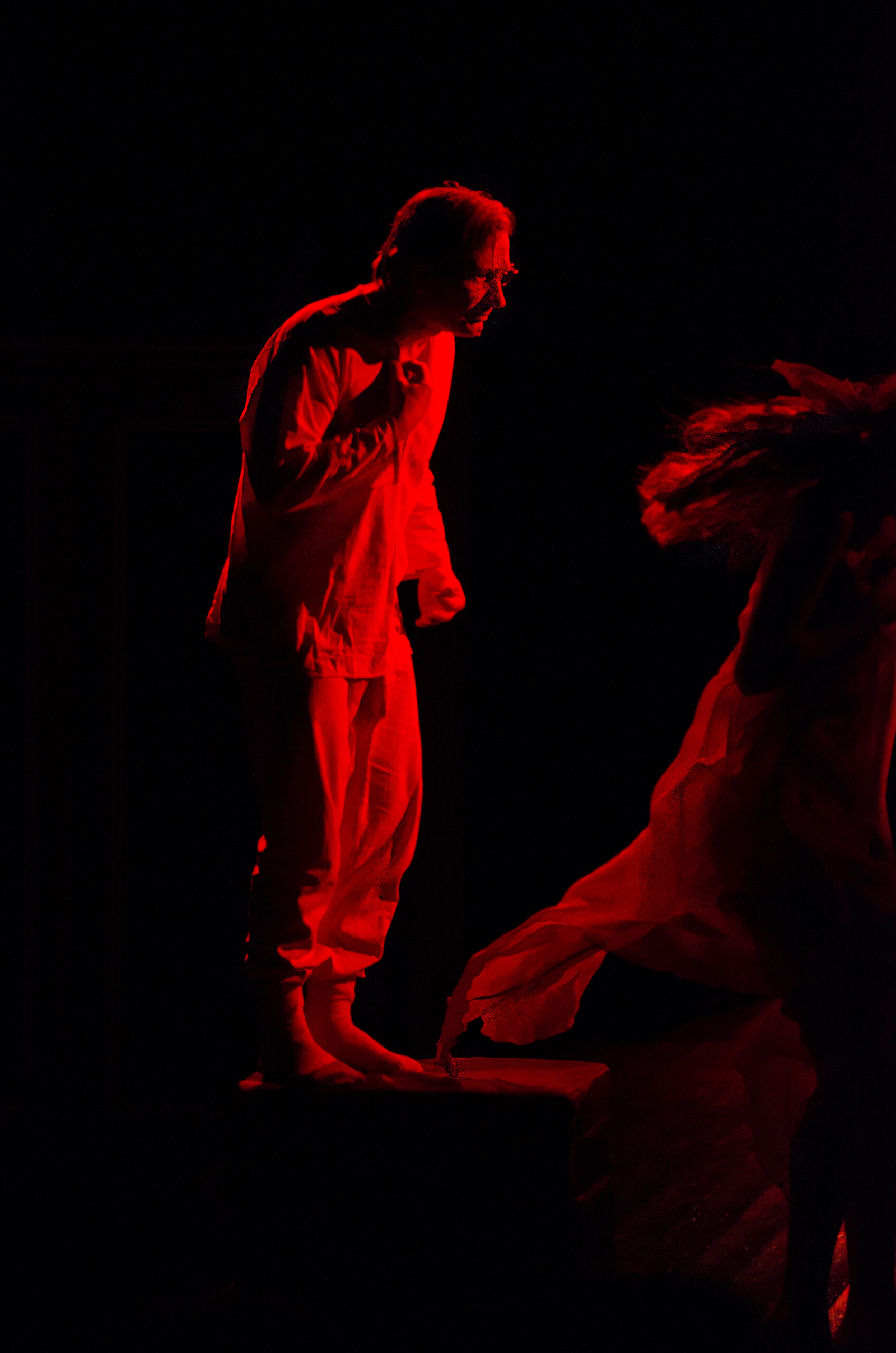
"“Cherry Orchard” Perfomance" by Pavel K is licensed under CC BY 2.0 
 .
.