The Democratic Intellect: Scotland and her Universities in the Nineteenth Century by George Elder Davie (first edition 1961; second edition later), Edinburgh University Press.
The Scottish system of education differed markedly from that of England; it prioritised broad general education:
- Four years at university (typically from about age 15–16), providing a general education in classics, mathematics, sciences, and culminating in compulsory philosophy (moral and natural).
- Specialist or professional training (from about age 19–20), usually accessible only after completing the general foundation.
The English system (contrast):
- Entry to university from age 18.
- University education was more advanced and specialist in nature from the outset, without the same emphasis on compulsory broad philosophy.
Universities (Scotland) Act 1889 (following the Commission):
- Raised entrance standards via matriculation examinations; average entry age to Scottish universities now ~18.
- Introduced parallel streams: a specialised Honours route (for more able students) and a general/ordinary degree (for others).
This reform accelerated the move toward specialisation and helped align Scottish universities more closely with English models, a development Davie sees as a decline of the older democratic tradition.
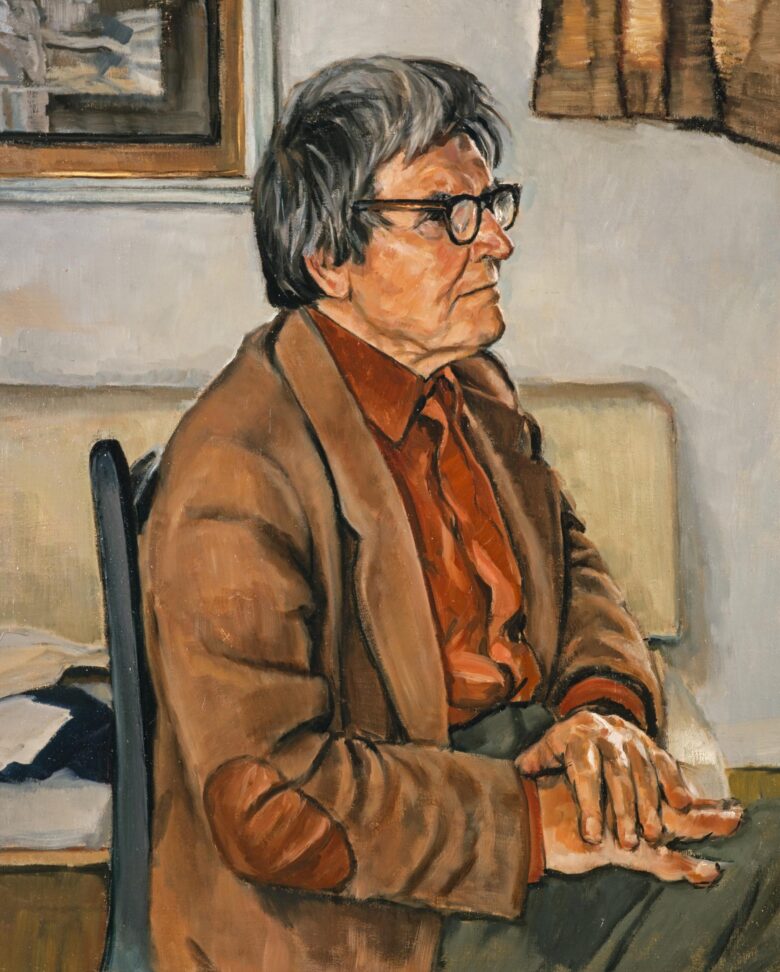
(Michael Knowles (born 1958), George Elder Davie, 1912 - 2007. Philosopher, writer and historian, about 1990. Oil on canvas. Presented by Dr George Elder Davie 1998. © The Artist. Photography by Antonia Reeve. National Galleries of Scotland. https://www.nationalgalleries.org/art-and-artists/52221 )