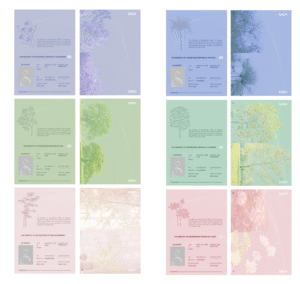
After finalizing the passport covers, I moved on to designing the inner pages, focusing on making them feel closer to real passports. I wanted the passports to function not only as visual props, but as believable objects participants could interact with. To achieve this, I referenced the layout and structure of actual passports, including personal information fields, issuing authority, and identification details.
One important decision was to leave the photo section blank so participants could attach their own portrait. Rather than using a generic placeholder, I designed a white bubble-like form inside the grey photo box. This was intended to mimic a human silhouette, but it also connects conceptually to the white balloons used in our installation. Since the balloons represent air and movement in the physical space, echoing them in the passport became a small design detail that ties the graphic and spatial elements together.
I also developed the fictional issuing authority for the passports — The Ministry of Atmospheric Affairs — which appears on each country’s information page. This helped reinforce the idea that these virtual nations are governed through atmospheric conditions rather than conventional political structures, making the passports feel part of a coherent fictional system.
Another interactive element was leaving the name field empty, allowing participants to write in their own names. Similar to signing a real passport, this gives the object a more personal and participatory quality, encouraging users to imagine themselves as citizens of these air-defined countries.
Originally, I also designed a second inner page for visa stamps, inspired by the stamp pages found in real passports. However, after considering how the passports would function within the final exhibition, this began to feel redundant. Following further refinement, I removed the separate stamp page and instead moved the stamping interaction onto the first information page. This simplified the design while keeping the travel metaphor intact, and made the interaction clearer during the exhibition.