Any views expressed within media held on this service are those of the contributors, should not be taken as approved or endorsed by the University, and do not necessarily reflect the views of the University in respect of any particular issue.
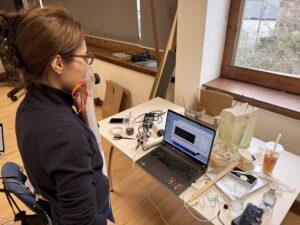
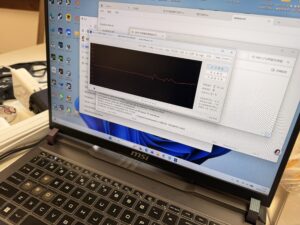
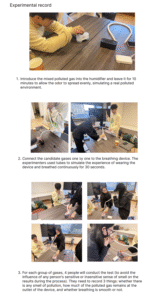
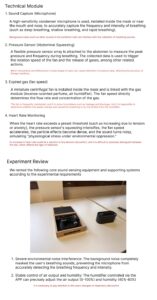
On March 18th, the functional test of the breathing device was completed, and at the same time, the assembly and debugging of the device were also carried out.
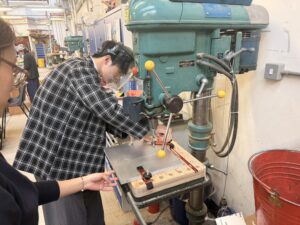
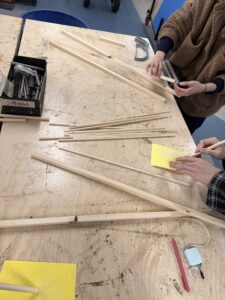
Xiaoyu Liu, Keye Huang, Tinglan Ma, and Drew Yang conducted comprehensive performance tests and parameter verifications on the breathing device, ensuring its stable operation and normal functions. At the same time, they completed the structural setup, component assembly, and overall trial run of the device, successfully completing the two related tests and setup tasks for the device today.
One of the least discussed aspects of DMSP is semantic conflict. Everyone agrees on: “we want something immersive” No one agrees on what immersive means.
Language as Problem. Words like: immersive, interactive, narrative are dangerously vague. In our group: one member imagined theatre, another imagined game design, another imagined data visualization. We were using the same words to describe different worlds.
A useful example of how meaning is not fixed but negotiated can be seen in the interactive installation Tall Ships by Gary Hill. In this work, visitors walk through a dark corridor where projected human figures slowly approach them in response to their movement. While the system behaviour is technically consistent, the interpretation is not. Some viewers experience intimacy, others discomfort, and some even fear.
As critics have noted, the installation produces an “uncannily real exchange” that makes viewers aware of their own psychological state This highlights a crucial issue in collaborative design: even when the system is stable, meaning is not. In our group, we assumed shared understanding when using terms like “immersive” or “interactive”. However, as with Tall Ships, interpretation is shaped by individual perception rather than shared definition. This suggests that meaning in design is not transmitted — it is constructed.
I would like to show our resolution Strategy to solve such questions. We introduced reference mapping. Each member brought: one artwork, one film, one interaction example. We compared them. This externalised assumptions.
In terms of my insight. I think meaning in collaborative design is negotiated, not given. Language is not neutral. It is a design material.
Public exhibition changes everything. In studio, we control lighting, sound, behavior. In public: people interrupt children run through sensors phones flash someone will ask “what does this do?” Looking at installations like Rain Room by Random International, the audience completes the work. Without participants, it is just plumbing. Testing with Humans We ran informal user testing with classmates. Unexpected findings: They didn’t read instructions. They preferred playful ambiguity. They touched what we told them not to. This forced us to design for behaviour, not ideal use. Insight Audience is not passive. They are unpredictable co-authors.
I insert a link named Rain room. The system does not simply react to the audience — it requires them to exist. The audience doesn’t just experience the work — they perform it. Interactive installations shift authorship from designer to system + audience.
In DMSP course we talk a lot about tools: Touch Designer, Arduino, projection mapping, sensors. But collaboration itself is a technology. It requires, for example: protocols, debugging, version control, user testing, maintenance. When collaboration fails, the “system” crashes.
Moreover, I am willing to discuss that the course suggests modelling ourselves like a production company. We tested this. We assigned roles: Director, Technical Lead, Media Designer, Sound Designer, Documentation Lead.
Initially, this clarified responsibility. But we noticed something interesting: Roles created ownership, but also territorialism. The media designer began defending visual decisions as if they were intellectual property. The technical lead became gatekeeper of feasibility.
In terms of ‘comparison’,Looking at collective practices like team Lab, their work appears seamless. But interviews reveal a highly structured internal communication system. They don’t just make immersive work. They engineer collaboration.
In that case, We introduced rotating critique sessions where each role critiques their own domain publicly. This flattened hierarchy.
The result for instance: less ego, more shared language, more integrated design.
In a nutshell, I think collaboration isn’t soft skill. It’s infrastructure.
Passport
Edinburgh → East Asia → Shanghai → South Asia → India → Europe → Berlin → Africa → Cairo → Americas → Rio de Janeiro
Technology
– Sound capture (microphone)
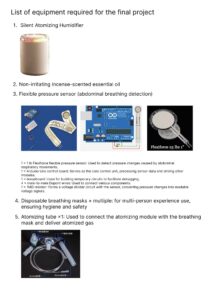
– Pressure sensor (abdominal compression)-Depends on which modules are purchased
– Exhaled gas (fan speed)
– Heart rate
Gas
– Incense perfume
– Air humidifier – output intensity controllable via app
Particles
– Visual effects (available for purchase via Tb)
– Data input for post-production debugging
Mask
– Selection and purchase of styles
– Flexible tube
Region
– Dynamic video
Note
The airbag section is temporarily removed as a reflection, and additional content will be added to the report.
Issues to be resolved in the next group meeting:
1. How to connect the passport performance art, and what is the overall process? Need a clear text description.
2. How to arrange the actual interactive area of the customs device, and how to set up the backstage?
3. Produce a complete user experience flow sketch.(Customs area / Backstage / Interactive area)(Three regional lines?)
4. Whether to include images of the generated particle effects in the final output: select 5–10 images for each region to make a zine or poster for comparison.What is the goal of our project to make users feel?
2026/3/6
This meeting focused on discussing the progress, existing issues, and subsequent plans of the art project related to air pollution. The specific contents are as follows:
Project concept and visual presentation
1. Dynamic simulation:
2. Color expression effect: Adjusting the color of the simulation effect can convey different visual images, such as presenting a healthy and vibrant state of the lungs, or visual effects of damage and deterioration.
Sensor selection
1. Alternative options: The team has proposed two sensor solutions. The first is an electronic flexible sensor patch that can be attached to the abdomen, and the second is a breathing sensor that is compatible with the face mask.
2. Recommendation: It is recommended to choose the face mask-based breathing sensor. This solution has a higher alignment with the project theme and fewer practical issues compared to the chest patch solution.
3. When purchasing sensors, consider the logistics cycle (delivery takes 5-8 days). Additionally, a backup plan should be formulated to handle situations where the sensors cannot be used after arrival.
Odor Design
1. Design Concept: The odor design aims to recreate the sensory experience of air pollution. All odor selections must closely align with the core theme of the project.
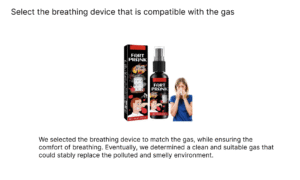
2. Experimental Direction: The team is currently attempting to combine prank-specific fragrances with incense odors. At the same time, multiple people’s odor perception tests are required to ensure that the selected odors have sufficient sensory impact.
3. Odor Dispersal: The initial plan was to use small fans to disperse the odor within the enclosed container. However, the actual effectiveness of this plan still needs to be verified through experiments. (The plan has been completed)
Project Implementation Coordination
1. Division of Labor and Schedule: The team needs to formulate a detailed work schedule, clearly defining the responsible persons for each task, including passport issuance, odor dispersion, odor blending, etc.
2. Form Submission: The team must complete the form filling by Monday to reserve the project exhibition venue. They can note their preference for the venue on the form, such as preferring a location near a window.
Subsequent Work Plan
1. Core tasks for next week: Complete the printing of the project-specific passport, receive and inspect the purchased materials, and finally determine the type of odor to be used in the project.
2. Core objective of the project: Focus on the issue of air pollution, allowing the audience to truly perceive the impact of this problem; all design and implementation aspects of the project must be carried out in line with the core concepts such as “air poverty” and “individual behavior impairment”.
The group discussions on February 27th and March 2nd were an unexpectedly exciting yet highly rewarding exploration journey. It not only enabled us to confront the shortcomings in the technical selection, but also solidified the direction for the core experience of the project. Moreover, it allowed us to have a more concrete thinking about the core issue of “equal breathing”.
At the beginning of the experiment, we were highly enthusiastic about focusing on the sound capture module, hoping to build an immersive experience with multi-sensory interaction by real-time collection of breathing sounds and environmental sounds. However, during the actual testing, the strong interference of environmental noise, the limitations of the device recognition algorithm, and the instability of wireless transmission completely failed the testing of this module. The breathing sounds were drowned out by background noises, triggered frequently, and other problems not only disrupted the continuity of the experience but also made us realize that not all technical concepts can be adapted to actual scenarios. Over-reliance on complex real-time collection technologies might even deviate from the core goal of “allowing users to feel the breathing itself”. This failure was not completely without value; it taught us to stop prematurely, abandon unrealistic technical routes, and instead focus on the verified effective modules.
Furthermore, during the experiment, we also paid attention to the importance of details. Considering the hygiene needs of multiple users, we changed the single breathing mask to multiple disposable masks. This adjustment not only solved the hygiene issues in actual use but also made us realize that the implementation of technology should not only focus on functional realization, but also take into account the basic experience and safety of users. This is the foundation for the project to gain recognition.
Looking back on the entire experiment, from the initial conception to its implementation, to the unexpected setbacks in the middle stage, and then to the direction calibration in the later stage, each step has given us a clearer understanding of the project. Technology is never the goal; it is a tool to serve the narrative and experience.