Any views expressed within media held on this service are those of the contributors, should not be taken as approved or endorsed by the University, and do not necessarily reflect the views of the University in respect of any particular issue.

Work Instructions for Airbag Repair, Interface and Video Optimization

During the critical project push over the past two weeks, we have focused on advancing three core optimization tasks.

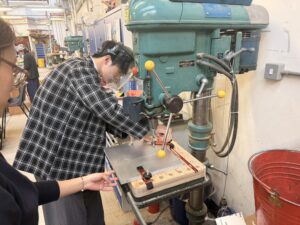
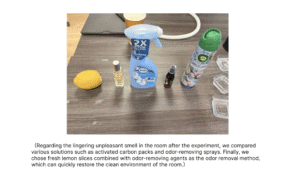
In response to the potential hazards existing in the airbag system, the team conducted comprehensive testing and repair work. Through multi-step operations such as disassembly inspection, seal reinforcement and pressure testing, the airbag is ensured to respond stably under various working conditions and fully comply with safety standards.
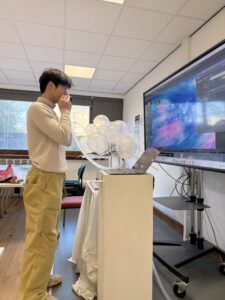
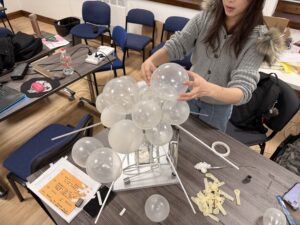
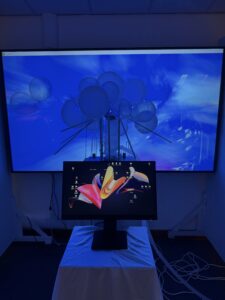
Meanwhile, we have actively adopted David’s professional advice — combining user visual experience research data with interface interaction logic, we have precisely adjusted the key components to the visual center of the screen, which not only improves operational convenience but also optimizes the overall visual balance.
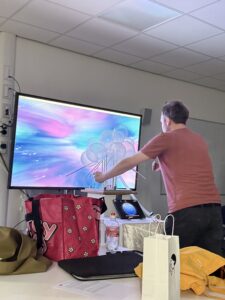
Furthermore, for the presentation effect of the video section, we have made systematic modifications, including optimizing the main visual colors, adjusting the narrative rhythm, adding key information annotations, and resolving the audio-video synchronization issues. Through multiple rounds of refinement, the video content has become more in line with the usage scenarios, and the information transmission has become more intuitive and efficient. All the optimizations have been repeatedly verified to ensure they meet the requirements of project progress.
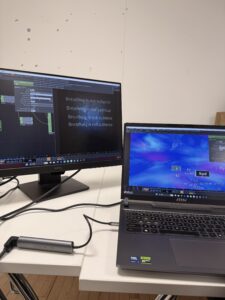
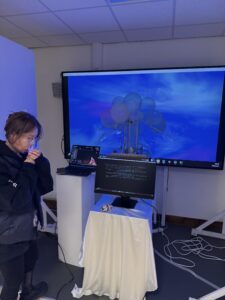
 

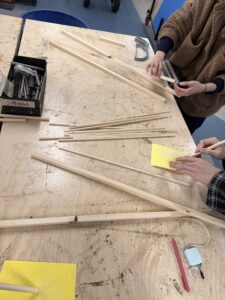
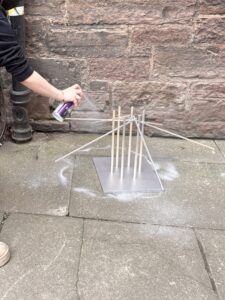
The assembly and debugging work of the device

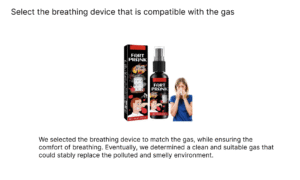
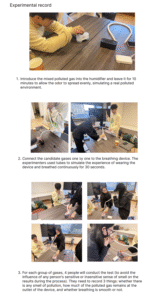
On March 18th, the functional test of the breathing device was completed, and at the same time, the assembly and debugging of the device were also carried out.

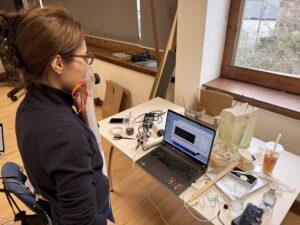
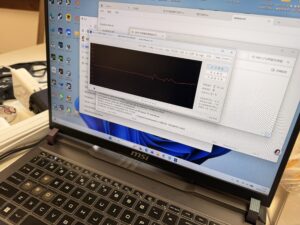
Xiaoyu Liu, Keye Huang, Tinglan Ma, and Drew Yang conducted comprehensive performance tests and parameter verifications on the breathing device, ensuring its stable operation and normal functions. At the same time, they completed the structural setup, component assembly, and overall trial run of the device, successfully completing the two related tests and setup tasks for the device today.

Overall Reflections on the Experiment

The group discussions on February 27th and March 2nd were an unexpectedly exciting yet highly rewarding exploration journey. It not only enabled us to confront the shortcomings in the technical selection, but also solidified the direction for the core experience of the project. Moreover, it allowed us to have a more concrete thinking about the core issue of “equal breathing”.

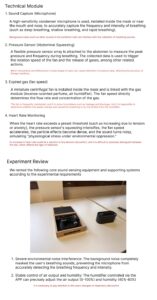
At the beginning of the experiment, we were highly enthusiastic about focusing on the sound capture module, hoping to build an immersive experience with multi-sensory interaction by real-time collection of breathing sounds and environmental sounds. However, during the actual testing, the strong interference of environmental noise, the limitations of the device recognition algorithm, and the instability of wireless transmission completely failed the testing of this module. The breathing sounds were drowned out by background noises, triggered frequently, and other problems not only disrupted the continuity of the experience but also made us realize that not all technical concepts can be adapted to actual scenarios. Over-reliance on complex real-time collection technologies might even deviate from the core goal of “allowing users to feel the breathing itself”. This failure was not completely without value; it taught us to stop prematurely, abandon unrealistic technical routes, and instead focus on the verified effective modules.

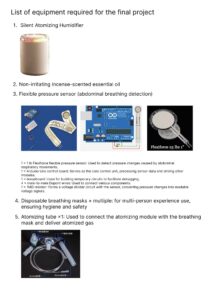
Furthermore, during the experiment, we also paid attention to the importance of details. Considering the hygiene needs of multiple users, we changed the single breathing mask to multiple disposable masks. This adjustment not only solved the hygiene issues in actual use but also made us realize that the implementation of technology should not only focus on functional realization, but also take into account the basic experience and safety of users. This is the foundation for the project to gain recognition.

Looking back on the entire experiment, from the initial conception to its implementation, to the unexpected setbacks in the middle stage, and then to the direction calibration in the later stage, each step has given us a clearer understanding of the project. Technology is never the goal; it is a tool to serve the narrative and experience.


Case Study on Air Pollution Visualization Device – Thijs Biersteker

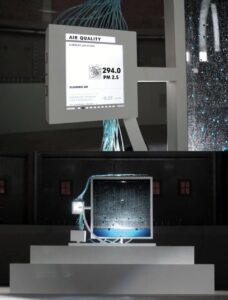
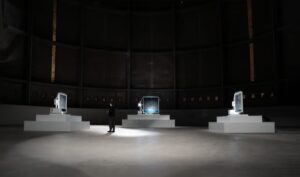
The GASP art installation, which focuses on air pollution, is an outstanding interdisciplinary design work that combines visual expressiveness, scientific support, and social value. It does not convey environmental protection concepts through cold science explanations or radical appeals. Instead, it transforms the intangible air pollution into a visual experience that is visible, tangible, and empathetic, allowing viewers to directly confront the hazards of air pollution from their own experiences. This not only achieves the uniqueness of artistic expression but also effectively disseminates social issues. It is an excellent example of how art design can empower the resolution of real problems.
From the perspective of the work itself, its ingenuity and impact lie in three core aspects: Firstly, it translates abstract data into concrete forms, using the dynamic changes in the number of oil droplets to correspond to the real-time PM2.5 concentration monitored by sensors, turning the obscure environmental monitoring data into visual symbols that the audience can intuitively perceive, breaking the barrier between professional data and the general public in terms of understanding; Secondly, it evokes emotional resonance by using the cost of reality to trigger empathy. It does not simply list the hazards of PM2.5, but ties it to specific health issues such as lifespan loss, stroke, and heart disease, and even quantifies the lethality of pollution through comparisons with the number of deaths from the novel coronavirus, making viewers shift from an indifferent “not concerning me” state to a concern for their own health. This emotional impact based on reality is far more persuasive than simple textual explanations; Thirdly, it strengthens action awareness through contrast, juxtaposing polluted air with clean air, and visualizing the harm of “every polluted breath”, making the work no longer just an information output but a strongly guiding call to action, naturally prompting viewers to think and discuss air pollution issues, achieving a value upgrade from “expression” to “connection” in the artistic work. Overall, the GASP installation not only successfully achieves the core goal of “turning intangible pollution into tangible” but also shows me the power of design ,  design can not only be works that pursue visual beauty, but also can carry real issues, connect the public and society, and promote thinking and action. This also sets an important direction for my subsequent design practice: to make design rooted in reality, with both beauty, warmth, and practical significance.
css.php

Report this page

To report inappropriate content on this page, please use the form below. Upon receiving your report, we will be in touch as per the Take Down Policy of the service.

Please note that personal data collected through this form is used and stored for the purposes of processing this report and communication with you.

If you are unable to report a concern about content via this form please contact the Service Owner.

Please enter an email address you wish to be contacted on. Please describe the unacceptable content in sufficient detail to allow us to locate it, and why you consider it to be unacceptable.
By submitting this report, you accept that it is accurate and that fraudulent or nuisance complaints may result in action by the University.

  Cancel