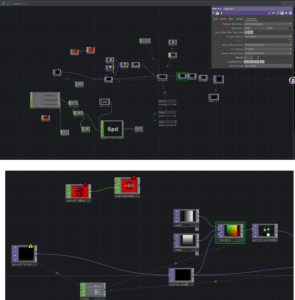
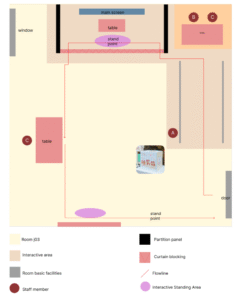
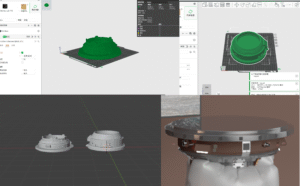
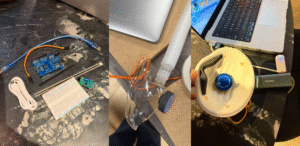
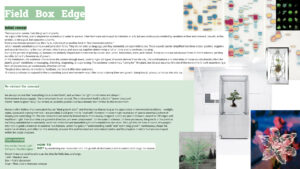
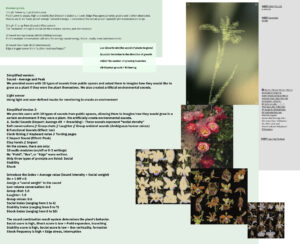
A complete introduction to the exhibition process
CORE CONCEPT
Regarding breathing
On average, humans take 23,000 breaths each day of their lives. Yet this most essential life-sustaining physiological activity has become a background sound we tend to ignore most easily. We care about our physical health and muscle fatigue, but we forget the most direct and fragile connection between our lungs and the outside world.
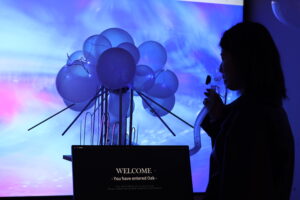
This installation is designed to break this physiological inertia. By providing the audience with a closed and pure 90-second immersive space, it draws breathing out from the subconscious and turns it into a visible form. Combined with performing arts, it simulates the breathing rhythm of the world and offers the audience an immersive performance experience.
Breathing is not a choice.
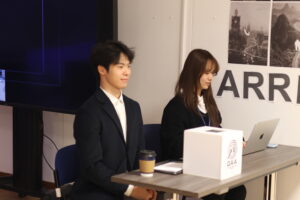
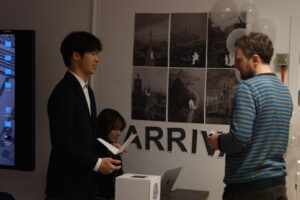
We set up a lottery box to randomly assign identities and countries. This aims to simulate the reality that people cannot choose their own birth, origin, or social background. Through this random mechanism, participants are encouraged to directly experience the fact that identity is not a matter of personal choice, thereby reflecting on issues of fairness and the randomness of fate.
Focus on breathing.
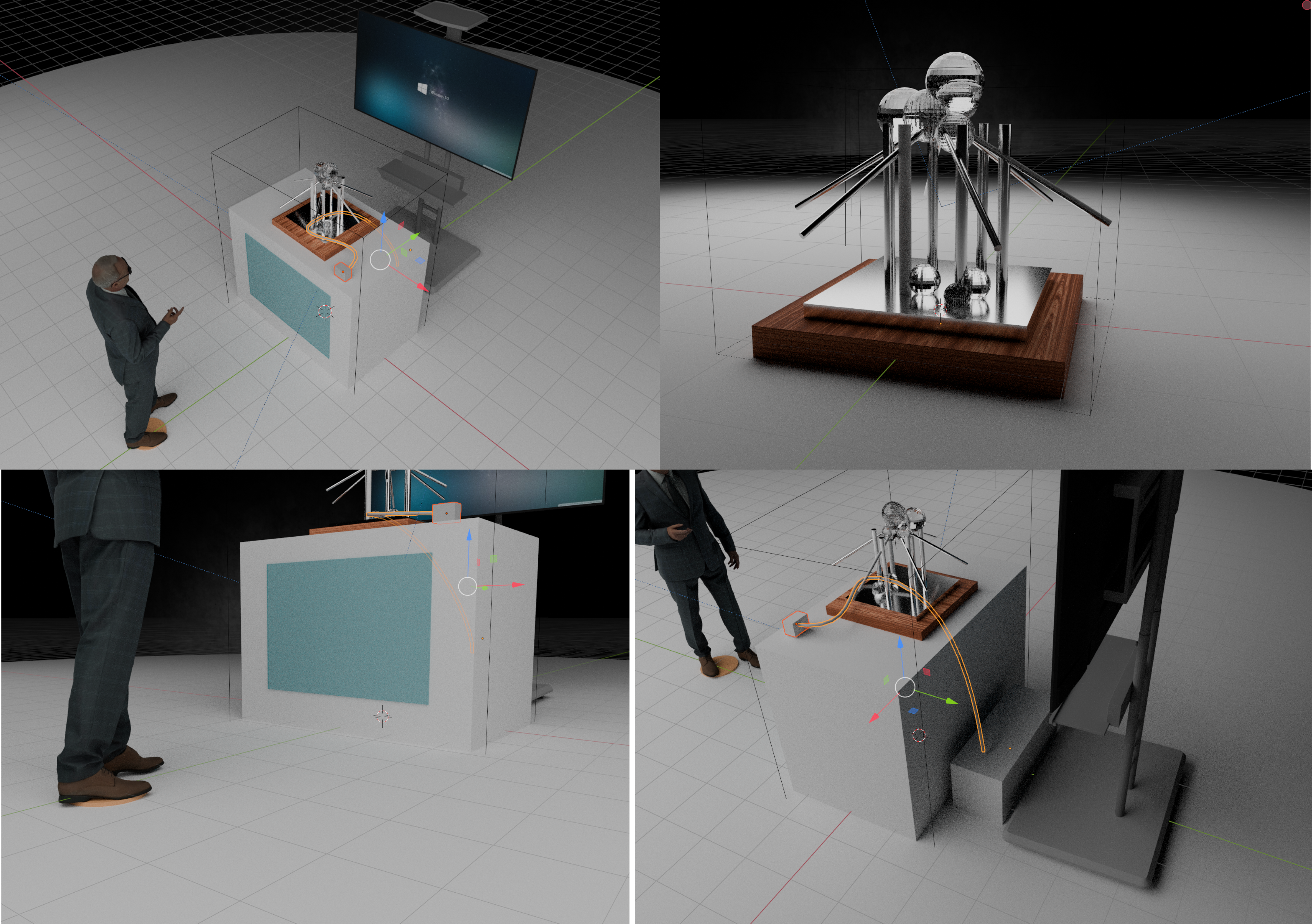
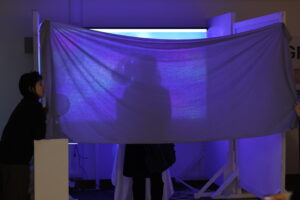
For the 90-second enclosed environment experience, we specifically designed a small, confined space to eliminate visual distractions. Surround sound is used to create an immersive environment for the audience.
Feel the breathing.
feel about breathing.
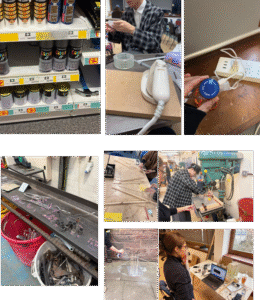
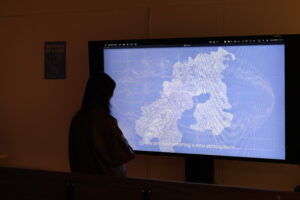
We used six different concentrations of safe odor solutions, diffused through air humidifiers so that the scents spread with visible mist in the space. By visualizing the “air,” participants can not only smell the scents but also see the movement of their breath, enhancing both sensory perception and immersion.
See the breath.
Thinking about breathing
In this part, we added a reflection on breathing, encouraging the audience to feel the meaning of each breath. At the same time, it invites gentle awareness that people live in different environments and experience air quality in different ways.
Key words: Device Design
Immersion
Scene recreation
Interactivity
Narrative
Spatial flow
Sensory experience
Atmosphere
Tech integration
Multimedi
Spatial layering
Visual guidance
video
The video provides a complete introduction to our process
photo
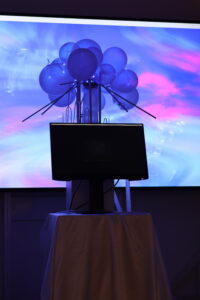
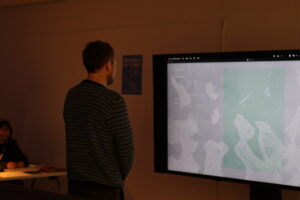

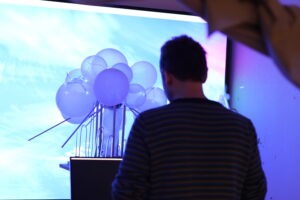
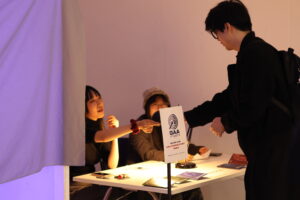

FUTURE PLAN
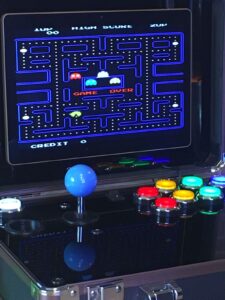
Gameification development
By introducing a “Challenge-Reward” mechanism, the installation transforms the audience from passive observers into active participants:
1. Stability Quest
Goal-Oriented: Sets an ideal breathing range to provide clear operational guidance.
Flow Feedback: Uses visual purification (color shifts) to induce a “Flow” state, enabling proactive physical and mental regulation.
2. Energy Collection
Embodiment: Translates abstract breath into physical “thrust,” making the interaction feel tangible.
Immersion: Particle explosions upon hitting targets create “peak experiences,” ensuring high engagement throughout the 90-second session.

Immersive Scenarization
Multi-sensory Immersive Environment Construction
Enhancing user presence within specific narrative scenarios through visual interference and ambient soundscapes.
1. Visual Feedback: Screen Flash
Trigger: Linked to peaks in breathing frequency or system anomalies (e.g., hyperventilation).
Function: Establishing physical-grade sensory pressure to reinforce the real-time feedback of respiratory actions.
2. Spatial: Urban Ambience
Soundscape Design: Introducing authentic urban samples, including industrial noise floor, distant sirens, and wind.
Dynamic Control: The urban ambient sound scales dynamically according to the user’s respiratory state:
Focus State: Background noise gradually fades out, leaving only the user breath.
Anxiety State: Urban ambience volume rises , creating a “swallowed” environment.
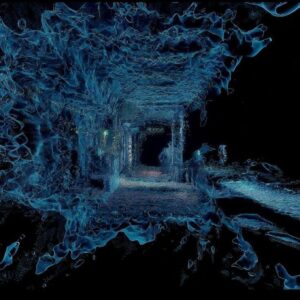
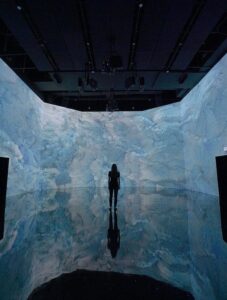
After this exhibition, I began to consider the relationship between the interaction of the field space and people.
Because this exbihition, i further realized that audience participation is not an optional addition to an exhibition, but a crucial element that enables the entire event to take shape and become complete. It is precisely the audience’s engagement within the space that activates what would otherwise be a static display, transforming it into a continuous process of meaning-making. Interaction itself becomes part of the content, and in some ways even goes beyond the intended expression of the exhibits.
At the same time, this participation is not merely a form of physical involvement; more importantly, it generates focus and reflection throughout the process. As viewers pause, experience, and respond within the space, an internal awareness is gradually awakened—they begin to reflect on their relationship with the environment and recognize themselves as both participants and constructors of meaning. It is through this focused engagement that thought deepens and emotions begin to settle.
Therefore, the value of an exhibition lies not only in its visual or formal impact, but in its ability to encourage viewers to enter a state of active perception and reflection. The interaction between space, installations, and people forms an open system in which each act of participation continuously enriches its meaning. In this sense, the understanding and experience generated through the process are often more significant than the final outcome itself.
REFERENCE:
Classen, C., Howes, D. and Synnott, A. (2002) Aroma. Routledge. Available at: https://doi.org/10.4324/9780203428887.
Smells can awaken people’s self-awareness, environmental awareness and reflection on social identity
《Notes on Sculpture Part I & II》
The better new work takes relationships out of the work and makes them a function of space, light, and the viewer’s field of vision. The object is but one of the terms in the newer aesthetic.
Art and Objecthood
Theatricality as the essence of installation