This blog documents the layout process of our final report, focusing on how I organised a large amount of material into a coherent visual structure. Rather than treating the report as a collection of separate outcomes, I approached it as an extension of the installation itself — using layout, hierarchy, and pacing to communicate the project’s atmosphere, system logic, and sensory experience.
One of the main layout decisions was to organise the report by project logic rather than by team member contribution. I wanted the reader to move through the report in the same way they would move through the installation: first understanding the problem, then encountering the framework, then seeing how the device, interaction, video, and graphic systems work together.
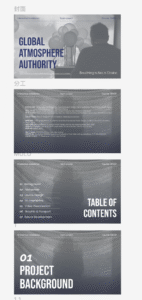
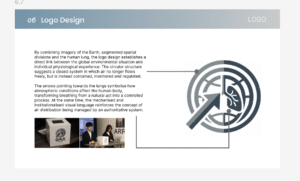
A key priority in the layout process was visual consistency. Because the project involved multiple outputs — installation, sensor testing, TouchDesigner, video, passport and poster design — the report could easily become fragmented. To avoid this, I used repeated layout structures, consistent header positioning, section title pages, and a restrained visual palette to make all parts feel like they belonged to the same project world.
Another important challenge was hierarchy. The report contains conceptual writing, technical explanations, diagrams, process screenshots, and visual outputs. I had to decide what should be read first, what should function as support, and what should remain secondary. For this reason, I used different layout densities across the report: more spacious pages for concept and atmosphere, and more structured pages for technical systems and process documentation.
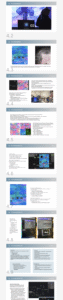
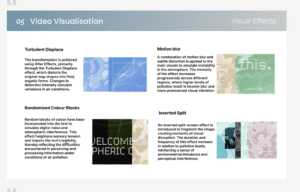
In the sections I was most involved in, especially video visualisation and graphic output, I tried to avoid presenting only final images. Instead, I structured these pages around process: from visual references, to pattern generation, storyboard development, text variation, effects testing, and final screenshots. This made the report feel more reflective and transparent, rather than simply outcome-based.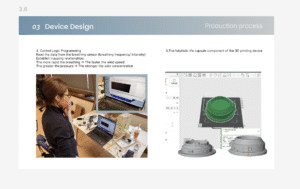
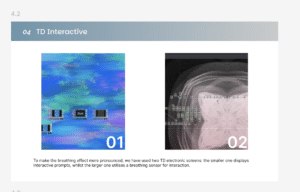
Through this process, I realised that report layout is not just about arranging content neatly. It is also a way of constructing meaning. In a team project especially, layout becomes the tool that turns separate outputs into one coherent narrative. Designing the final report helped me understand how graphic structure, pacing, and visual consistency can extend the experience of the project itself.