Any views expressed within media held on this service are those of the contributors, should not be taken as approved or endorsed by the University, and do not necessarily reflect the views of the University in respect of any particular issue.

Minutes of the Visual Group Discussion

On March 10, our group had a detailed discussion about how to divide the work. We clarified each person’s role and made sure that both the visual and technical parts of the project can move forward smoothly. The video will be one of the main outputs.

The very important part of our discussion was developing the concept of six virtual countries based on different air quality conditions. Instead of using real-world countries, we decided to create fictional ones.

Each country represents a different type of air environment. For example, some countries have clean, fresh air, while others are polluted, heavy, or artificial. We also started to connect these air qualities with emotions and lifestyles. For instance, a country with “living air” might feel open, natural, and healthy, while a country with polluted air might feel oppressive and industrial.

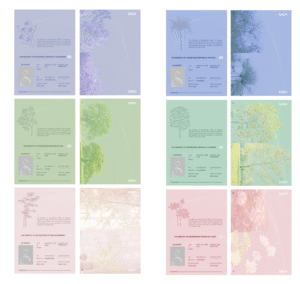
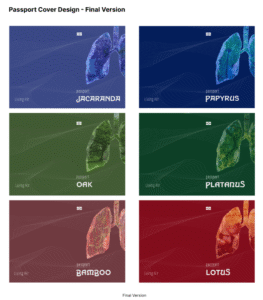
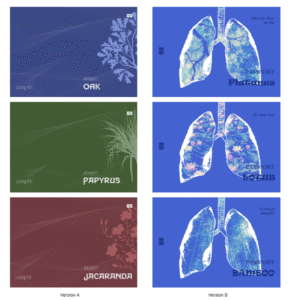
Based on these ideas, we began designing passports for each country. The passports are not just visual objects, but also part of the storytelling. Each one reflects the identity of its country through color, symbols, and typography. We aim to keep a consistent design system across all six passports, while still giving each country its own unique feeling.

We also plan to include a universal stamp system, similar to customs stamps, to strengthen the idea of “traveling” between different air conditions. This helps turn the project into an immersive experience rather than just a visual presentation.

Personal Contribution to the First Submission

In this project, I was mainly responsible for the research related to the target participant group. I took part in discussions about the overall theme at the early stage, especially how air, breathing, and environmental difference could become the core idea of our project. During these discussions, I helped connect the topic of air pollution to people’s daily experiences and body feelings, so that the theme would not stay abstract but relate to real life.

For the research part, I focused on analysing the participant group. I helped design and structure the interview questions, making sure they could guide participants to talk about their personal experiences, daily routines, and body sensations. I also worked on defining the selection criteria, deciding who would be suitable for our research and why. I explained why people who have experienced relocation are important for our topic, because they have lived in different environmental conditions and can compare changes in air quality and atmosphere.

In addition, I analysed how different backgrounds—such as country of origin, climate, and length of stay in Edinburgh—may influence how people feel about the air and their physical condition. I tried to understand how environmental changes can slowly affect breathing, comfort, and energy levels, even when people are not fully aware of it. I also helped link these research findings to the theme of air pollution and environmental inequality, so that the participant analysis could support the concept and direction of the final installation.

Through this work, I contributed to building a clearer connection between research and design, making sure that our project is based on real experiences rather than only theoretical ideas.

css.php

Report this page

To report inappropriate content on this page, please use the form below. Upon receiving your report, we will be in touch as per the Take Down Policy of the service.

Please note that personal data collected through this form is used and stored for the purposes of processing this report and communication with you.

If you are unable to report a concern about content via this form please contact the Service Owner.

Please enter an email address you wish to be contacted on. Please describe the unacceptable content in sufficient detail to allow us to locate it, and why you consider it to be unacceptable.
By submitting this report, you accept that it is accurate and that fraudulent or nuisance complaints may result in action by the University.

  Cancel