DMSP Blog 01 — Initial Proposal Reflection
My initial proposal focused on visualizing the invisible social structures within public space. I was interested in how everyday environments such as streets, studios, or cafés contain constantly shifting patterns of interaction, which are difficult to perceive directly but strongly shape our experience of a place.
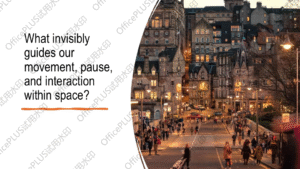
The project explored two possible directions:
one looking at collective relational patterns (how people gather, disperse, or form spatial configurations).
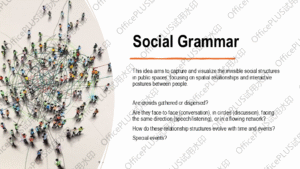
And the other focusing on individual “body grammar”, examining how emotions subtly influence movement, attention, and behavior while navigating the city.

This perspective was largely informed by my background in architecture, where spatial perception and human behavior are often considered together. Instead of treating space as static, I approached it as something continuously produced through movement and interaction.
Although this proposal was not selected for further development, it helped me identify an ongoing interest in how invisible dynamics shape spatial experience, which I aim to carry into future work.
DMSP Blog 02 — Research on “Breathing Rights”
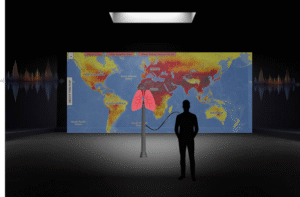
Following the establishment of our theme “Breathing Rights”, our focus shifted from abstract ideas to grounding the project in real-world conditions. We aim to explore air not only as an environmental issue, but as something deeply connected to health, inequality, and lived experience. e also looked into the primary sources of pollution, including traffic emissions, industrial activity, and urban density, as well as historical trends showing how air quality has evolved in different regions.
Case Studies:
Air of the Anthropocene — Robin Price & Francis Pope
By using a custom-built LED “pollution painter” that links light density to real-time sensor data, this project translates invisible particulate matter into luminous patterns in long-exposure photography, making microscopic pollution tangible and visible.
https://stuffwhatidid.com/air-of-the-anthropocene
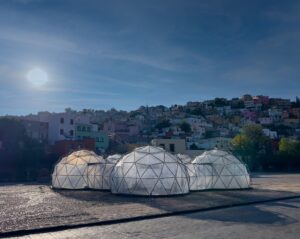
Pollution Pods — Michael Pinsky
A series of interconnected domes that simulate the distinct smells and temperatures of polluted cities worldwide, forcing visitors to physically experience the inequality of air quality.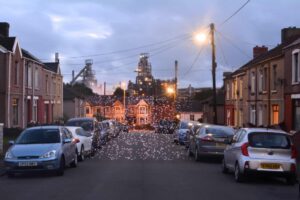
https://www.michaelpinsky.com/portfolio/pollution-pods-2/
DMSP Blog 03 — Collaborative Ideation
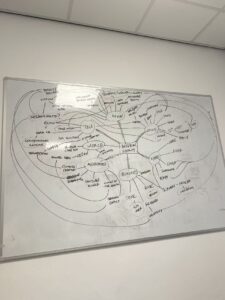
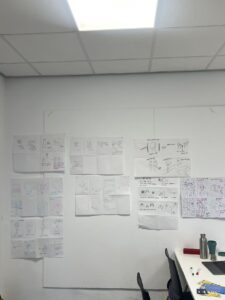
Our team brainstormed how to address air pollution and the unequal distribution of clean air. We used mind mapping to break down themes then moved into rapid sketching to explore potential formats. Our ideas ranged from recording the sound of breathing to using physical objects (like filters) to make the invisible nature of air more tangible and interactive.