DMSP Blog 06 — Collaborative Development in TouchDesigner
I was assigned to the TD building group. As I had no prior experience with TD, my role was to support my teammates by using AI tools to troubleshoot logic errors and optimize data flows.
Effect Before Connecting the Sensor:
A key turning point in our project was moving from static data mapping (color/brightness) to motion-based mapping. We discovered that technical accuracy does not always guarantee a meaningful user experience. By utilizing GLSL ripples and Displace TOP, we successfully translated raw breathing waveforms into a fluid, temporal experience.
After Connecting with the Sensor:
Since the raw sensor data was processed via Python, we dedicated significant effort to establishing a stable bridge between the Python environment and TouchDesigner. And after observing the visual outcomes of other groups, we also refined our color palette.
Real-time TD Output With Breathing Mask Integration:
DMSP Blog 07 — Visualizing Air through Sound
Since I played a supporting role in the TouchDesigner setup, I also focused on developing the back ground sound track individually. I explore the ambient soundscapes I created for our six regional zones using AI.
Using prompts focused on breathing-like pulses and cinematic textures, I designed six distinct soundtracks. From the peaceful clarity of Edinburgh (Oak) to the suffocating, glitch-heavy distortion of Delhi (Lotus), these soundscapes move from “clean air privilege” to “toxic atmospheric inequality.”
1. Edinburgh — Oak (The Privilege of Clarity)
-
Prompt Key: Clean air, soft, high clarity, minimal noise, peaceful.
-
The Narrative: This represents the highest level of air privilege. The sound is nearly empty and stable, creating an atmosphere that encourages slow, effortless, and deep breathing.
2. Berlin — Platanus (The Controlled Environment)
-
Prompt Key: Light industrial tone, low-frequency hum, stable, less natural.
-
The Narrative: While the air is breathable, it feels artificial. I introduced a subtle mechanical hum to evoke a sense of a “controlled” urban environment—breathable but detached from nature.
3. Rio — Jacaranda (The Density of Humidity)
-
Prompt Key: Humid, dense, soft granular texture, slow fluctuation, sticky.
-
The Narrative: As moisture and pollution accumulate, the air becomes lingering and heavy. The sound uses granular textures to make breathing feel physically slower and less comfortable.
4. Shanghai — Bamboo (The Visible Haze)
-
Prompt Key: Polluted, noise layer, reduced clarity, subtle tension.
-
The Narrative: Here, pollution becomes a persistent presence. The introduction of noise layers reflects decreased visibility and begins to interrupt the natural rhythm of breathing.
5. Cairo — Papyrus (The Abrasive Aridity)
-
Prompt Key: Dry, rough texture, low-frequency pressure, harsh.
-
The Narrative: The sound captures the particulate matter of the desert air. By incorporating a “leaking airflow” sound, I wanted to communicate the physical weight and resistance felt with every breath.
6. Delhi — Lotus (The Toxicity of Inequality)
-
Prompt Key: Toxic, distorted, chaotic, glitch noise, high tension, suffocating.
-
The Narrative: This represents the extreme of atmospheric inequality. Moving beyond “music,” the sound is a chaotic system of glitches and distortion, creating a fragmented and unsafe experience that mirrors a state of suffocation.
DMSP Blog 08 — Visualizing Poster
After using AI to complete the sound design for six zones, my next challenge was to transform these “sensory narratives” into intuitive visual posters.
I utilized desaturated and blurred architectural photos to prioritize atmospheric texture and mood over geographical recognition. Incorporating my AI-generated sound keywords like distorted and weightless as linear elements and complementing them with simulated real-time air data, I aimed to visualize the tangible feel of different air quality levels.
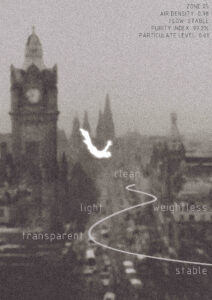
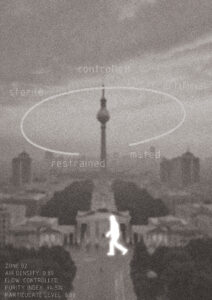
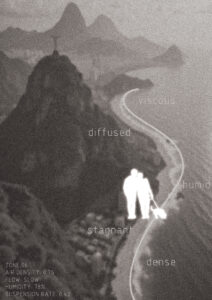
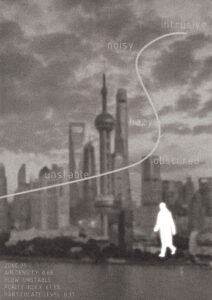
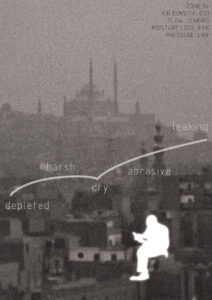
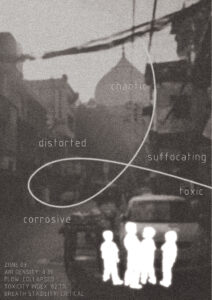
I intentionally omitted city names, challenging participants to identify the locations based on sensorial cues—guiding their imagination of who they would be under these differing atmospheric conditions. This transformed the posters from static displays into active tools for sensory perception and reflection on the right to breathe.