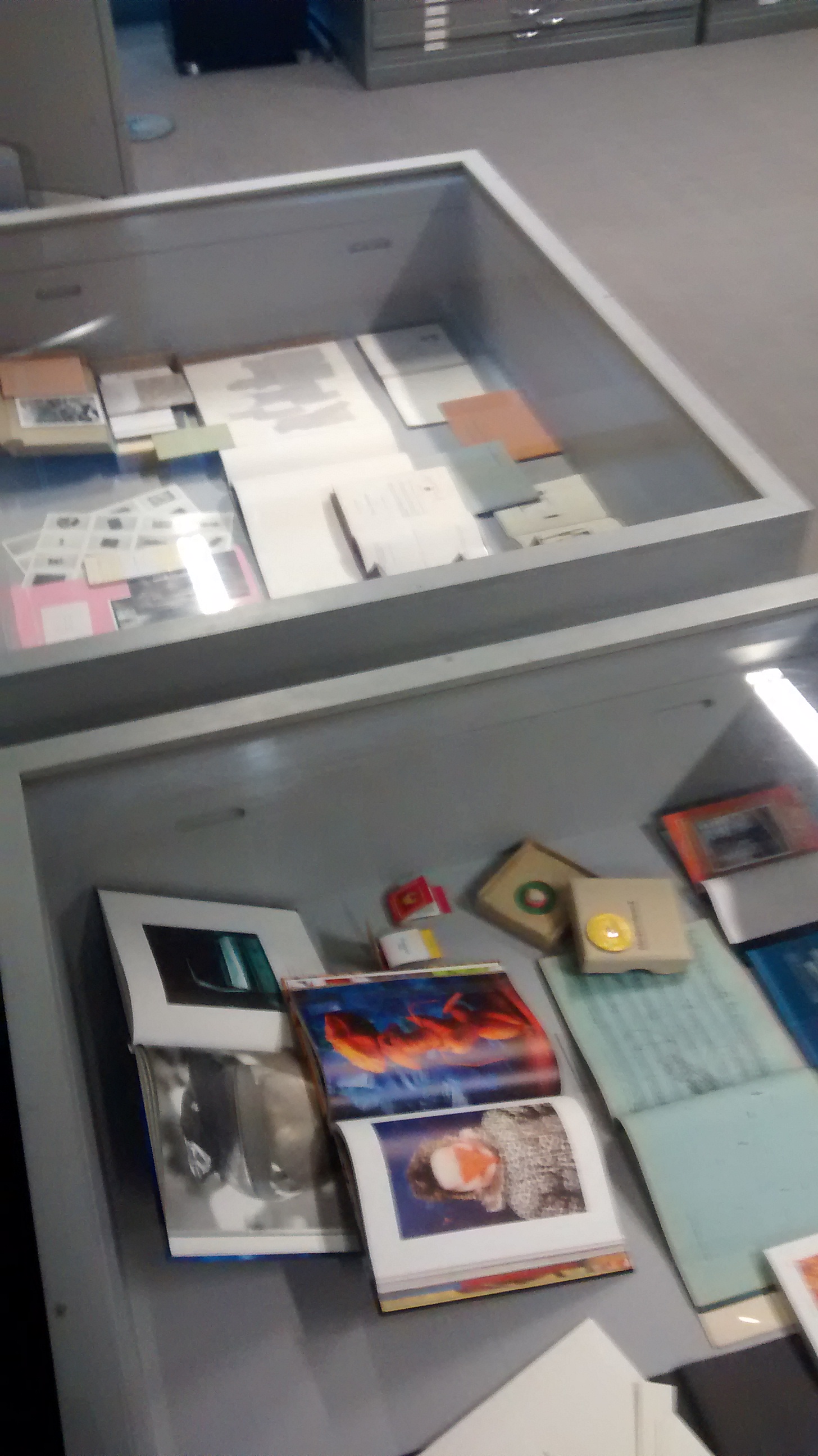
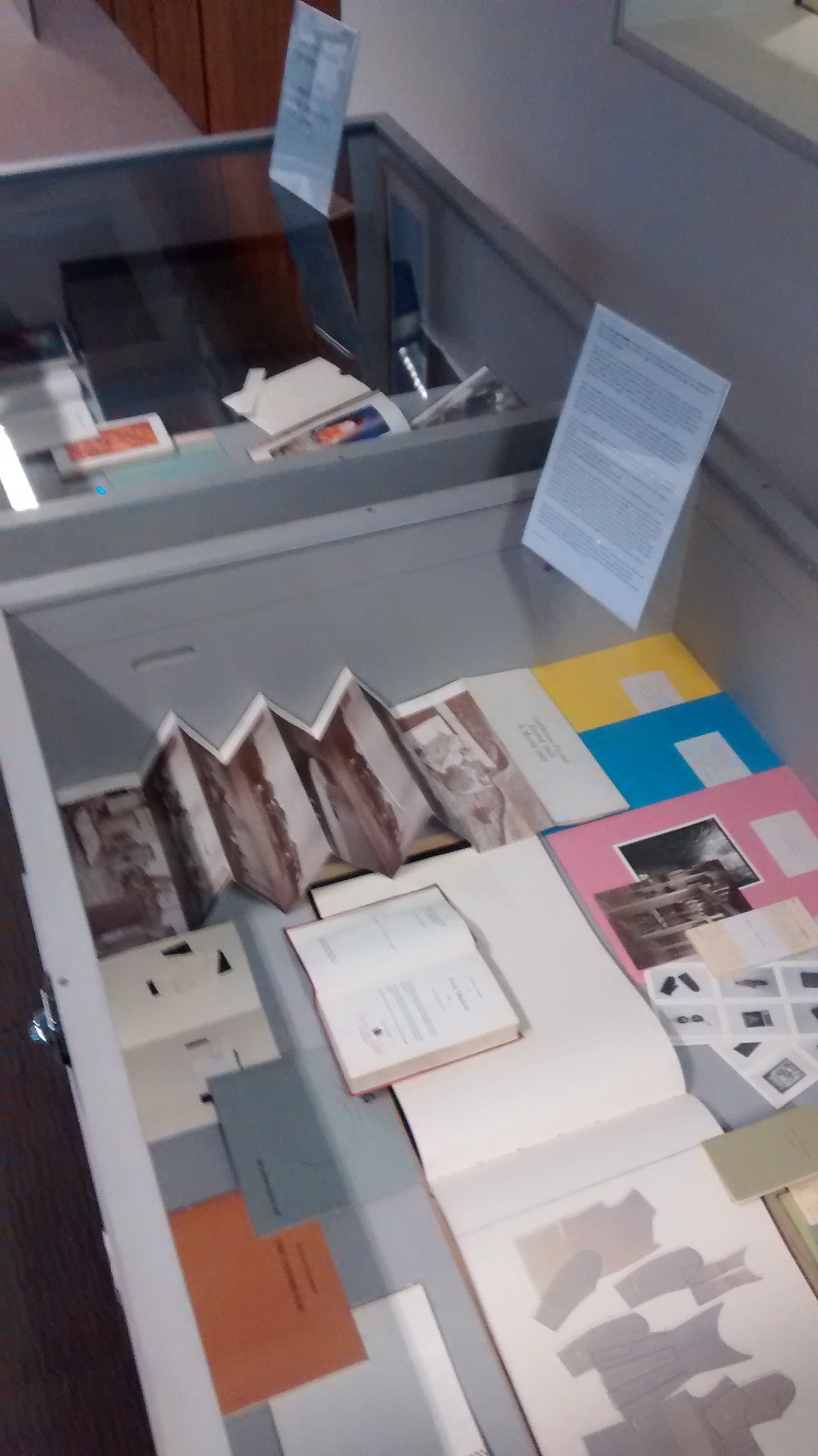
We are pleased to announce the opening of an exhibition of works on paper and artist’s books by Laurie Clark. The show has been curated by Laurie Clark and David Bellingham.
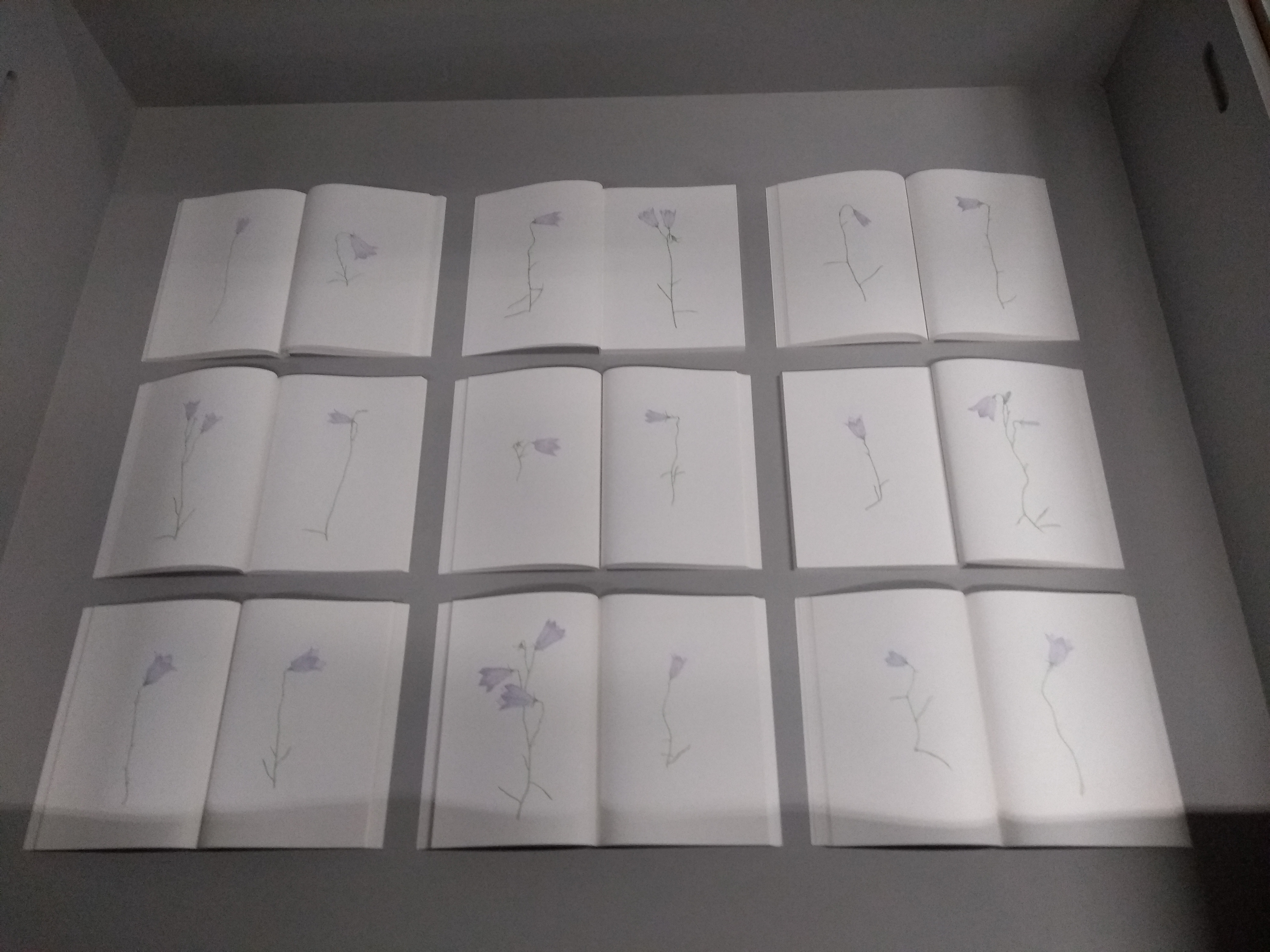
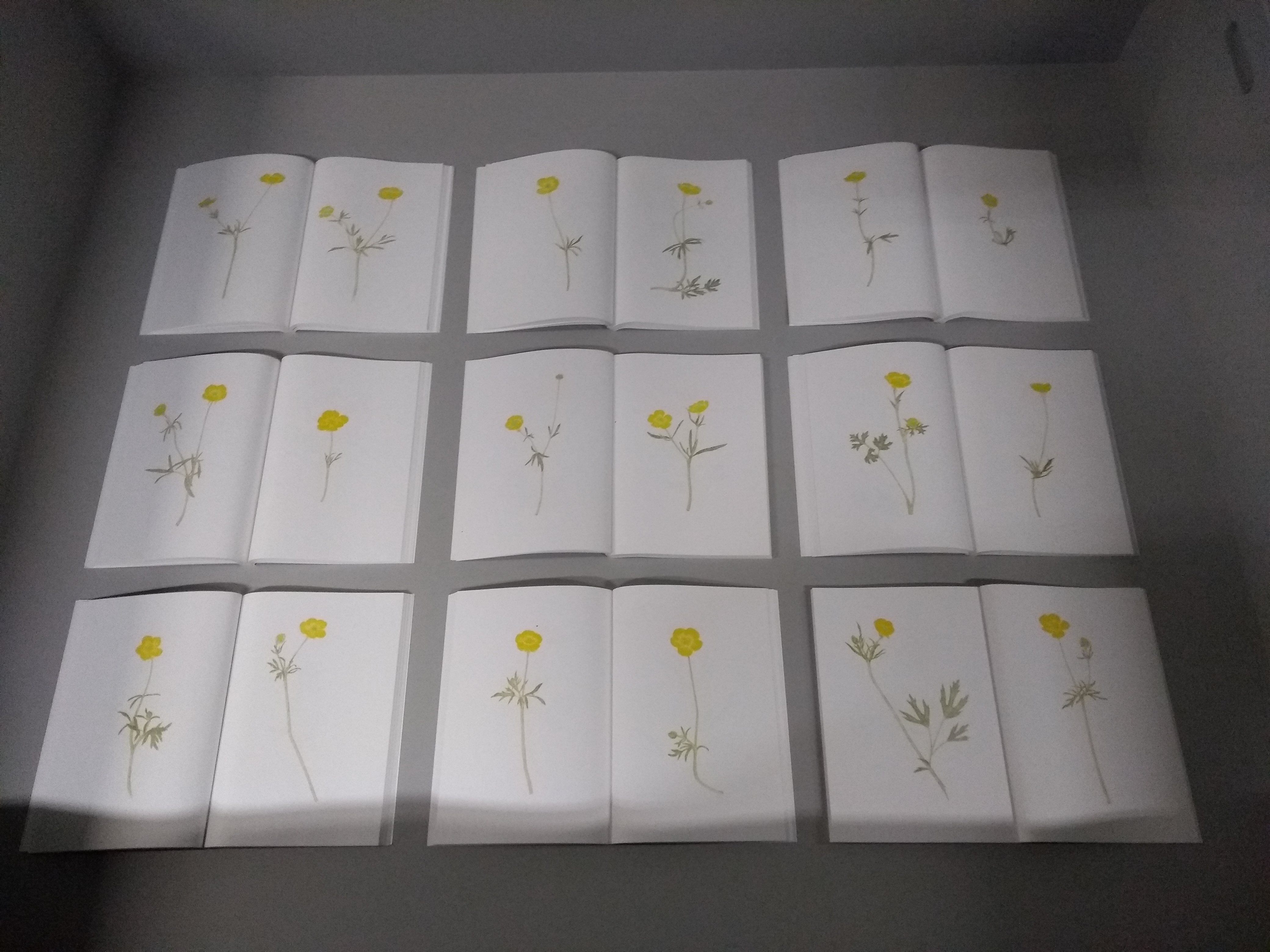
Laurie Clark: buttercups and harebells will run until 15th November 2017, and is located in ECA Library, on level 1 of Evolution House, West Port, Edinburgh.
Laurie Clark, Tom Clark and David Bellingham are also working on a project with other Cairn Gallery artists, called Pages and Walls: http://pagesandwalls.com
Dominic McIvor wins the RSA Open ECA Library Prize 2017
Artist Dominic McIvor has been chosen as the winner of this year’s RSA Open ECA Library Prize, for his work “Thumbnail Testers”. The prize is one year’s free borrowing membership of ECA Library.
We look forward to welcoming Dominic to the Library!
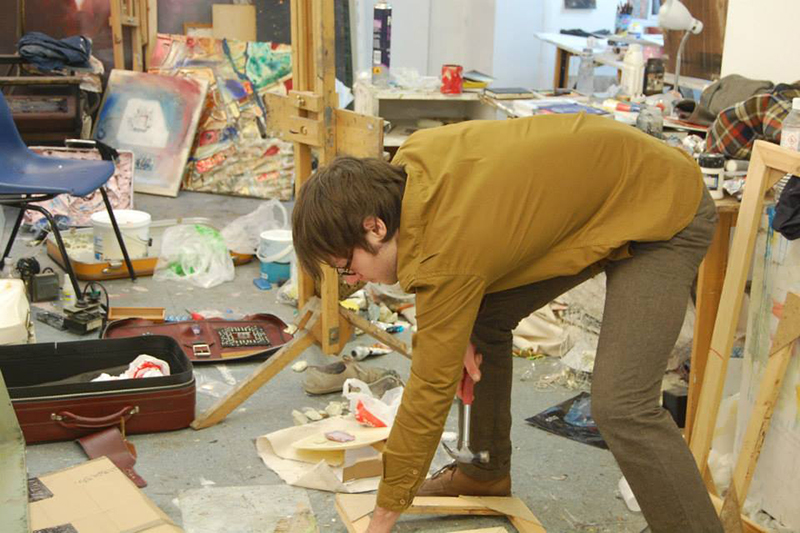
Forthcoming exhibition: Laurie Clark bookworks
We are delighted to announce that poet, illustrator and book artist Laurie Clark will be our special guest exhibitor later this summer! Laurie Clark is a well known book artist based in Scotland, and one half of the genius behind Moschatel Press, and the Cairn Gallery, Pittenweem, along with partner Thomas A. Clark, poet.
ECA Library holds several works by Laurie Clark, such as the exquisite 100 Harebells (2012), and 100 Buttercups (2010), artist’s books, and many works by Moschatel Press such as A Box of Landscapes, (2010, and 2016).
We look forward to welcoming Laurie to ECA Library, Evolution House, and will post images and information about the exhibition later in the summer.
Reproduction of a painting of Adoxa moschatellina by the Swedish botanist C. A. M. Lindman (1856–1928), taken from his book Bilder ur Nordens Flora.
[Sourced from Wikimedia Commons.]
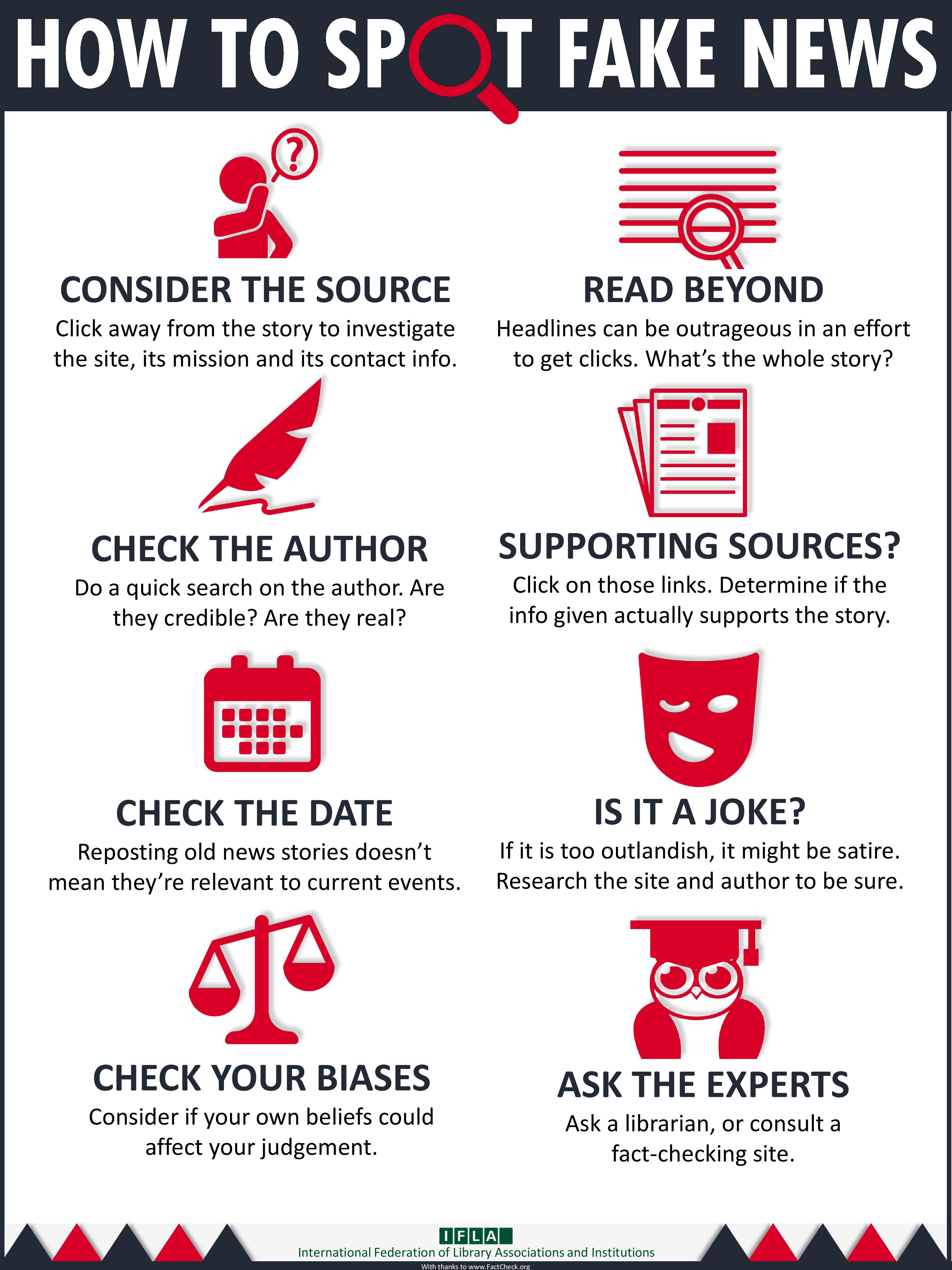
How to spot fake news
"What can I access once I have left ECA?"
As a graduate of ECA and the UoE, you will still be able to access various services and resources of the ECA and UoE libraries. For example, you will have access to databases such as Jstor, and you can register as an Alumni library user.
For more information, see
http://www.ed.ac.uk/alumni/services/benefits/stay-connected/library
and
http://www.ed.ac.uk/information-services/library-museum-gallery/using-library/join-the-library/graduates-edinburgh
We wish you all the best for your future!
Extra study space in the central area during April and May
Looking for study space in the University central area for revision? The Main Library, George Square, will be busy but there are alternative spaces available.
At the Main Library the Lower Ground Floor, Ground Floor and Floor 1 are open 24/7: in addition, Floors 2, 3, 4 and 5 will also remain open 24/7 from 07:30 on Saturday 22 April to 23:59 on Sunday 14 May.
The four teaching rooms on Floor 1 of the Main Library can be used (79 seats) from Saturday 8 April to Sunday 21 May, as well as the Centre for Research Collections Research Suite on Floor 6 (12 seats) from Monday 17 April to Wednesday 17 May.
Look out for the library helpers in purple t-shirts who can assist you in finding a space.
As an alternative to the Main Library, why not try the 200 additional study spaces which are available from Monday 17 April to Friday 19 May in the David Hume Tower (DHT) Hub (rooms LG06-LG11).
Or use other libraries and open open access computing spaces.
The Law Library and David Hume Tower Ground Floor computer lab are open longer on 5 Sundays: 23, 30 April; 7, 14, 21 May 12:00-19:00.
Please also take a look at the interactive study spaces map at: http://www.ed.ac.uk/is/study-space
The Grey People curate book display for ECA Library
A display of artists’ books from the ECA Library collection was curated by The Grey People and was on show at ECA Library, Evolution House from 13th March to 4th April 2017.
The books chosen were examples which the three students found particularly interesting in their cross-disciplinary approach: whether due to the aesthetic experience they provide, their content and context, or their position on the border of book-making.
“We are The Grey People, a collective and platform for interdisciplinary and collaborative practice at ECA. Our aim is to encourage and celebrate work that falls between and transcends disciplines.
Over the course of the Festival of Creative learning we, as a collective, were given the opportunity to curate a selection of books from the Edinburgh College of Art Library artists’ books collection, as part of a micro-residency, running parallel to an exhibition we are putting on at the end of March. To get the chance to get an in-depth insight into the range of books archived here has been a wonderful experience, and has helped us consider many questions regarding the inevitably vague – and grey – area of the Interdisciplinary.”
The display complemented the BookMarks Bookfair at the ECA Sculpture Court on 29th March.
Main Library at George Square to go 24/7!
The University Main Library at George Square will be opening 24/7, from 20th March 2017. A lot of work by Library, Security and Estates staff behind the scenes has gone into making this possible.
For more information, please see the announcement at
http://www.ed.ac.uk/news/2017/main-library-to-open-24-7
and the Main Library webpage at
http://www.ed.ac.uk/information-services/library-museum-gallery/using-library/lib-locate/main-lib
Artists' books micro-residency at ECA Library
The Grey People undertook their residency in ECA Library from 20th – 24th February, exploring the artists’ books collection, and making a selection of books to feature as part of the BookMarks Bookfair on 29th March 2017, and in a display in ECA Library which opens on 14th March.
A total of 25 books have been selected as fitting with their cross-disciplinary theme.
More news about the project soon!
University PhD theses digitisation project
The University Library PhD digitisation project will complete the digitisation of the University of Edinburgh’s collection of roughly 25,000 PhDs.
Approximately 10,000 PhDs are already accessible online through the Edinburgh Research Archive, our institutional repository, and this project will digitise the remaining 15,000, thereby making unique Edinburgh research available to all.
The collection dates from the early 1600s to the present day and includes theses of varying sizes, styles and formats. Duplicate theses will have their spines removed using an IDEAL 4705 Guillotine and will then be fed through the 100-page-per minute Kodak i4250 document scanner. These copies will be recycled, freeing up around 500 linear metres of storage space in the Main Library building.
Unique theses will be scanned manually using a Copibook Cobalt flatbed scanner and any items in poor condition will receive conservation treatment.
Following scanning, digital images will undergo several post-processing procedures, such as de-skewing, cropping and de-blurring, and will also be OCR-ed to enable keyword searching. Fully processed files will be uploaded to ERA as searchable multipage PDFs.
All files are due to be made available online by the end of 2018. For further information, please contact Gavin.Willshaw@ed.ac.uk
You can find more information on the project blog at:
http://libraryblogs.is.ed.ac.uk/phddigitisation/
To search our databases for other PhDs and dissertations from across the world, go to our webpage for theses databases at: http://www.ed.ac.uk/information-services/library-museum-gallery/finding-resources/library-databases/databases-subject-a-z/database-theses