Any views expressed within media held on this service are those of the contributors, should not be taken as approved or endorsed by the University, and do not necessarily reflect the views of the University in respect of any particular issue.
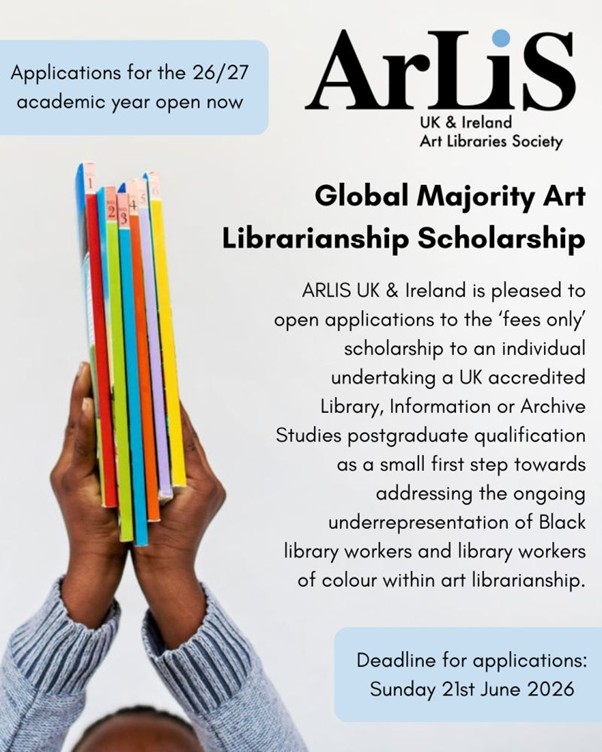
ARLIS UK & Ireland is offering ‘fees only’ scholarship to an individual undertaking a UK accredited Library, Information or Archive studies postgraduate qualification as a small first step towards addressing the ongoing under-representation of Black library workers and library workers of colour within art librarianship.
The application form and full scholarship guidelines can be found on the ARLIS UK & Ireland website: Awards – ARLIS
BFI Player is a video-on-demand service from the British Film Institute, streaming acclaimed, landmark and archive films. BFI Player’s focus is on British and European independent films, as well as international releases. If you haven’t used BFI Player before, follow the instructions on DiscoverEd or the Library webpages to set up your account.
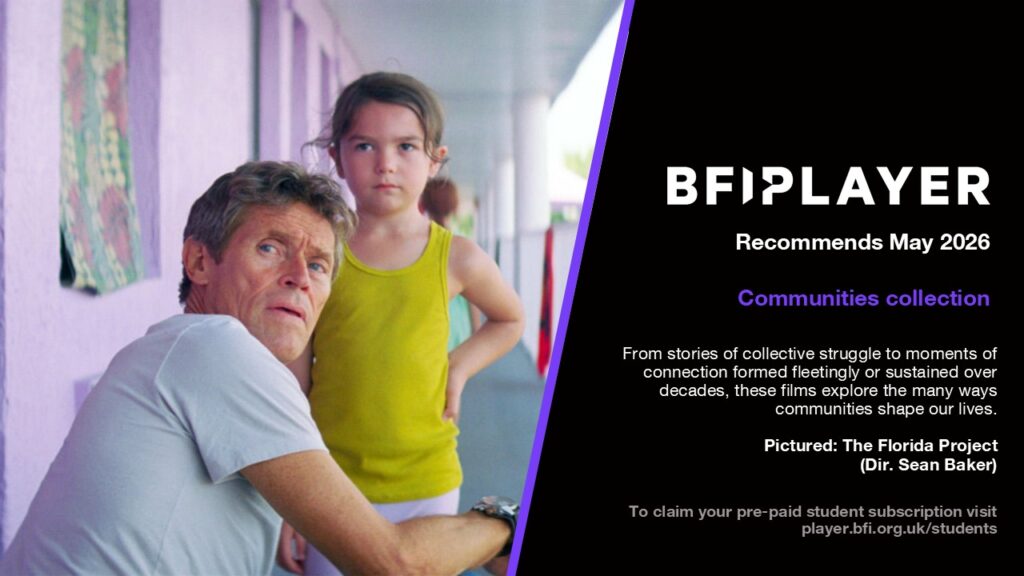
Highlighting this month : Communities collection
From stories of collective struggle to moments of connection formed fleetingly or sustained over decades, these films explore the many ways communities, in all their diverse forms, shape our lives. Across families, geographies, shared spaces and chosen networks, they speak to ideas of unity and belonging, inviting audiences to see the world through the eyes of others with empathy, understanding and compassion.
Image from Music Online : Classical Scores Collection
Access to Classical Scores Library, Volume 7 is now available in DiscoverEd. It consists of 1142 titles, featuring classical scores from the medieval, baroque, classical, romantic, modern, and contemporary periods. All the major classical music genres are included – orchestral, chamber, opera, vocal, solo instrumental, and choral. Composers included range from contemporary figures such as Chiel Meijering and Katia Tiutiunnik, to Edvard Grieg and Maurice Ravel. These newly digitized scores support musicology, performance studies, and composition research.
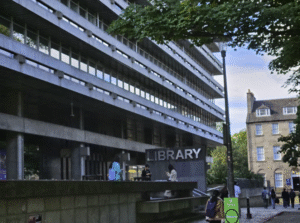
The Art & Architecture Library will be closed from Monday 25th May until Friday 4th September inc. The library will re-open on Monday 7th September at 9am.
From Monday 25th May, you will be able to place online requests for Art & Architecture Library books for pickup at the Law Library, across Chambers Street in Old College. More details will be published here soon: https://library.ed.ac.uk/using-library/lib-locate/art-and-architecture-library. We will also be offering our Scan and Deliver service as normal from 25th May.
Art & Architecture Library books borrowed either before or during the closure will be due back on Monday 7th September (**NB Reserve books will be due by 10:30am on this date**), but can be returned sooner if you wish.
If you need to return books previously borrowed from the Art & Architecture Library while it is closed, please return them at the nearby Law Library in Old College (location details here:https://library.ed.ac.uk/using-library/lib-locate/law-lib).
The Edinburgh College of Art Library will retain normal opening hours to assist with any enquiries. We can be contacted also via email at library.account@ed.ac.uk.
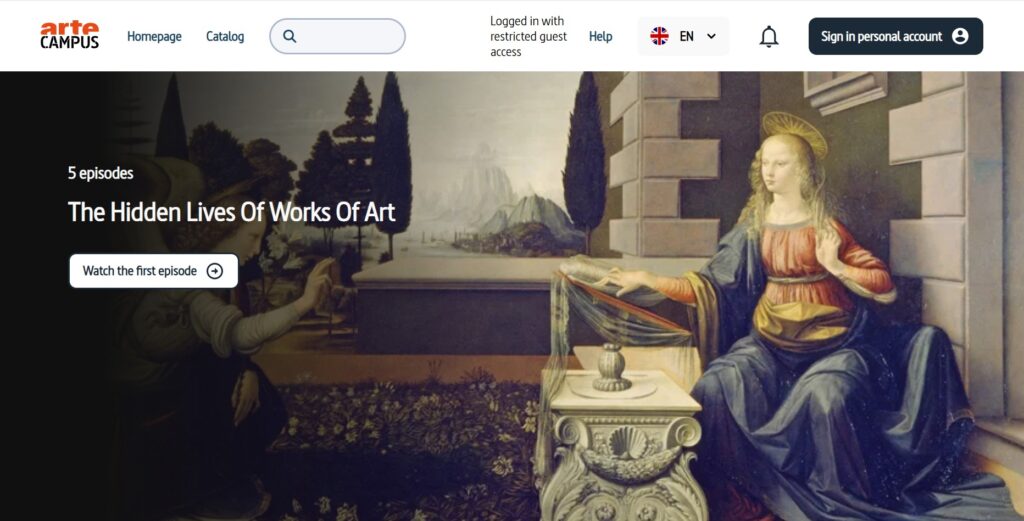
Have you seen Arte Campus? It’s an educational platform created by the European TV Channel ARTE for higher and adult education. It provides access to over 2000 ARTE videos (documentaries and magazines) across multiple subject areas, including Art History, Visual arts, Cinema and photography, Architecture and Design and Music and Dance.
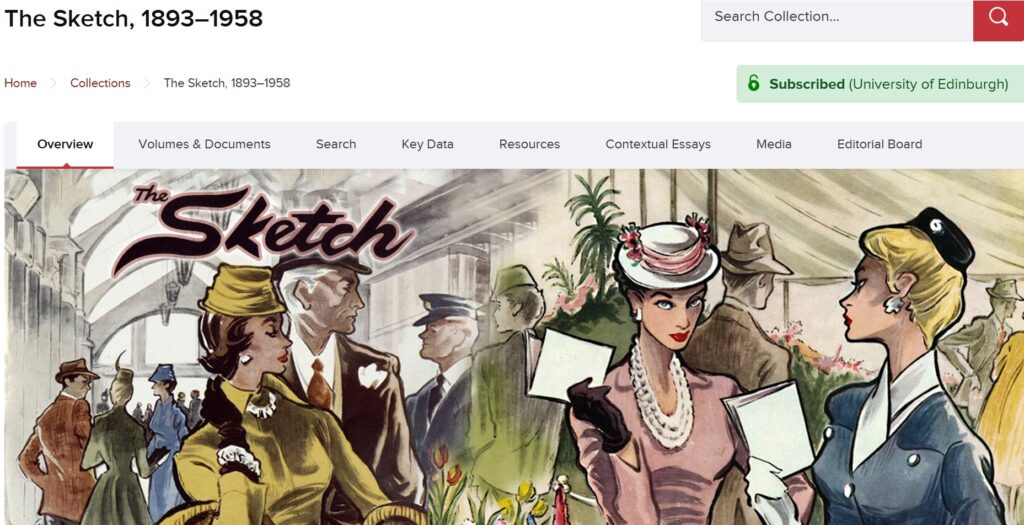
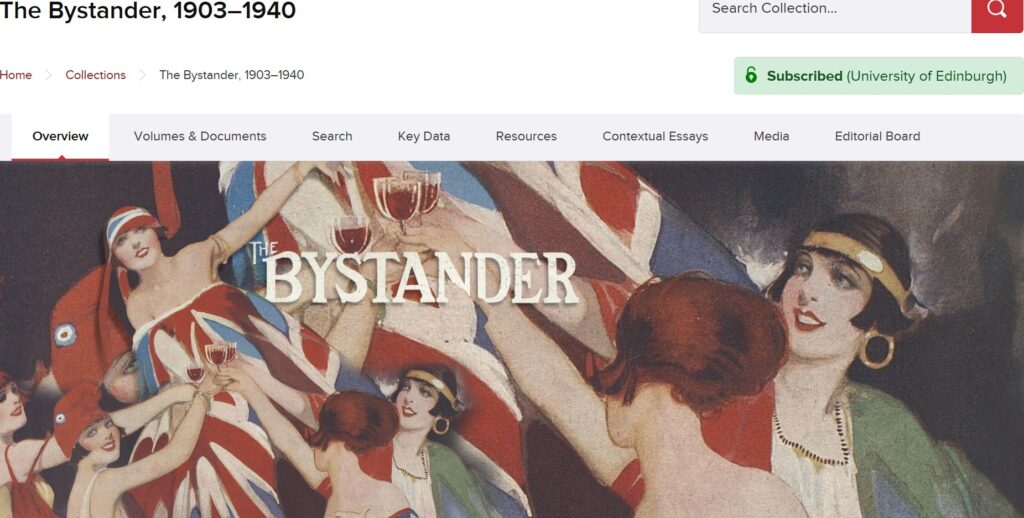
The next week is your last chance to access trials to digital archives of The Sketch & The Bystander – trials close on 19 April. Information and access links for the trials are at E-Resources trials. If you like what you see, please give us feedback via the trial feedback link, to help to build a case for purchase.
The Sketch began publication in 1893 as a light-hearted sister paper to The Illustrated London News and described itself as ‘A Journal of Art and Actuality’. It was published weekly and was for ‘the cultivated people who in their leisure moments look for light reading and amusing pictures, imbued with a high artistic value’. The Sketch was the first newspaper to publish the short stories of Agatha Christie, who wrote 49 stories for the paper between 1923 and 1924.
Established in 1903, The Bystander joined a series of publications belonging to The Illustrated London News (ILN). In 1940 The Bystander merged with its sister title: The Tatler. It thus became known as The Tatler and Bystander. Much like its successor, The Bystander focused on British “high society”, thereby appealing to a conservative, affluent readership. Publishing articles on fashion, theatre, and sports, this publication reflected everyday life amongst Britain’s social elite, its coverage typically defined by a suitably whimsical, satirical tone. This collection includes over 136,000 images collated from nearly 2,000 issues of The Bystander, published between December 1903 and October 1940.
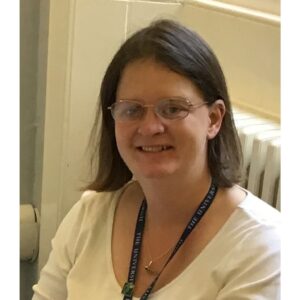
Following the retirement of my colleague, Jane Furness, I have now taken on Academic Support Librarian responsibilities for the Edinburgh School of Art. I’m looking forward to getting to know the staff and students of this large and diverse School. I have worked as an Academic Support Librarian within CAHSS for over twenty years now, and in recent years have had additional responsibilities as College Lead for Library Academic Support. I feel in some ways that I’ve come full circle – I began my library career working with exhibition catalogues and exhibition ephemera in the National Art Library at the V&A, and I still get a warm glow as I walk past the exhibition catalogues in ECA Library. I was also previously Liaison Librarian for the School of Arts, Culture and Environment before the ECA merger in 2011.
I have a regular office day at ECA Library on Mondays when I’m available for student appointments, and of course I’ll also be available throughout the week. I am currently recruiting for the new role of Library Academic Support Officer, who will also be coming to ECA Library to provide general support with collections and teaching tasks.
From 13th March 2026 there will be changes to academic library support staffing for ECA. If you need to contact the academic support librarian team regarding anything to do with the ECA or A&A libraries, their collections or services, please email library.academic.support@ed.ac.uk
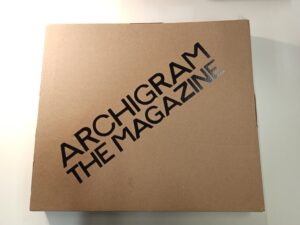
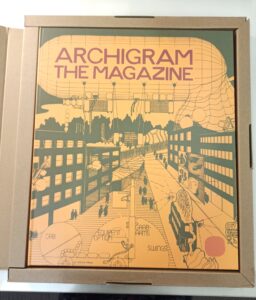
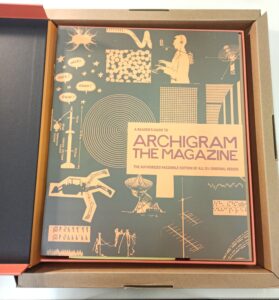
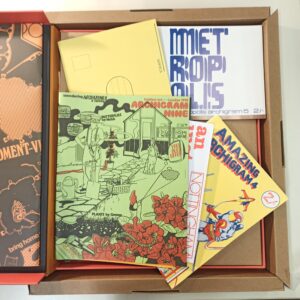
Architecture’s most influential, innovative and beloved underground magazine, reissued for the first time in a handsome clamshell box!
Published by Designers & Books.
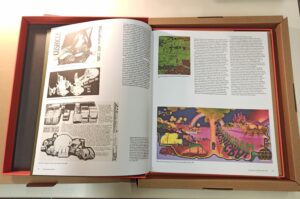
Inspired by comic-book culture, Pop art, psychedelia, the space race, sci-fi, Constructivism and Buckminster Fuller, the hugely influential British collective Archigram was the epitome of 1960s avant-garde architecture. Their self-published, lo-fi but materially ingenious magazine Archigram, begun in 1961, announced their ideas for such visionary concepts as “Walking City,” “Plug-In City” and “Instant City.” It also served to connect the international avant-garde of the 1960s. Archigram forged links with the Metabolists in Japan, Frei Otto, Utopie and Haus-Rucker-Co in Europe, and Buckminster Fuller in the US. They were also championed by critics such as Charles Jencks and Reyner Banham, who brought Archigram‘s famous fourth pop-up issue to the US in 1966.
You can consult our Reference Only boxed set at the ECA Library Helpdesk, it is listed on our catalogue DiscoverEd here.
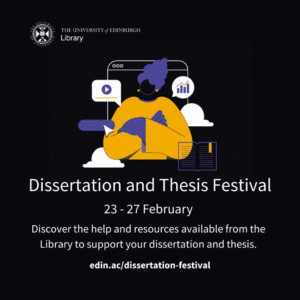
Spring Dissertation and Thesis Festival 23-27 February 2026:
We have an exciting week of events planned for the Library’s Dissertation & Thesis Festival this February to highlight how the Library can help students succeed with their dissertation or thesis.
Our programme includes a Discovery Day on Monday 23 February, when the Main Library (at George Square) will feature stalls from digital resource publishers and our own library teams highlighting our huge range of library research resources.
New sessions include: Exploring social history: An introduction to Mass Observation Online & Mass Observation Project, 1981-2009 and How to reference social media, podcasts and online content
Enhancing Your Dissertation Literature Search With GenAI: our popular session will guide students to use Gen AI responsibly and effectively for your dissertation literature search
Library Visits: opportunities to discover the research resources of the National Library of Scotland.
Find full programme details and booking links here.