From “tradition” to “language”: the turn of curatorial problems
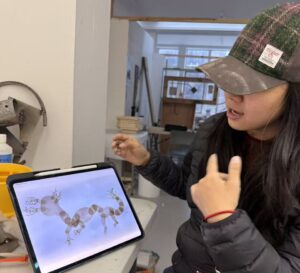
This week, my curatorial research shifted from the analysis of theoretical texts to direct dialogue with the artist Eryao, which not only deepened my understanding of the works but also prompted me to rethink the position of “tradition” in contemporary art.
Contemporary expression and display of traditional narrative: from symbol to experience structure

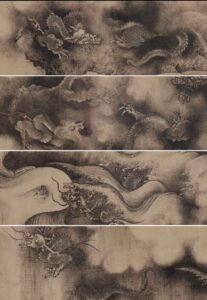
Focusing on “Wish your child becomes a dragon”, the interview further revealed how traditional narratives participated in the discussion of contemporary issues. In Chinese culture, “dragon” symbolizes success, power, and achievement. Historically, this idea is rooted in the Confucian family system and the imperial examination system, where education was the main path for social mobility. In contemporary China, this expectation has intensified under the Gaokao system, a highly competitive national exam that strongly determines life opportunities. As a result, the phrase today is closely connected to educational pressure, parental expectations, and the intense competition faced by students.
link: Nine Dragons, painted in 1244
At the same time, artists believe that myths and traditional images still have realistic power. The mythical animal “dragon” did not stay in history but accumulated new meanings in the ever-changing context and continued to participate in contemporary people’s identity cognition and value imagination. Therefore, traditional narrative can not only respond to contemporary anxiety but also become an important medium to understand social structure and individual situations.
At the level of media and exhibition, eryao’s idea provides a more specific direction for curation. She stressed that the audience should not just pass by in a hurry, but should enter a watching state where they can stay, feel and think. Works do not rely on strong visual stimuli, but more on the gradual understanding in the process of watching. Therefore, she prefers a display mode with atmosphere, such as a space with immersion, so that the audience can slowly enter the work in time and space.
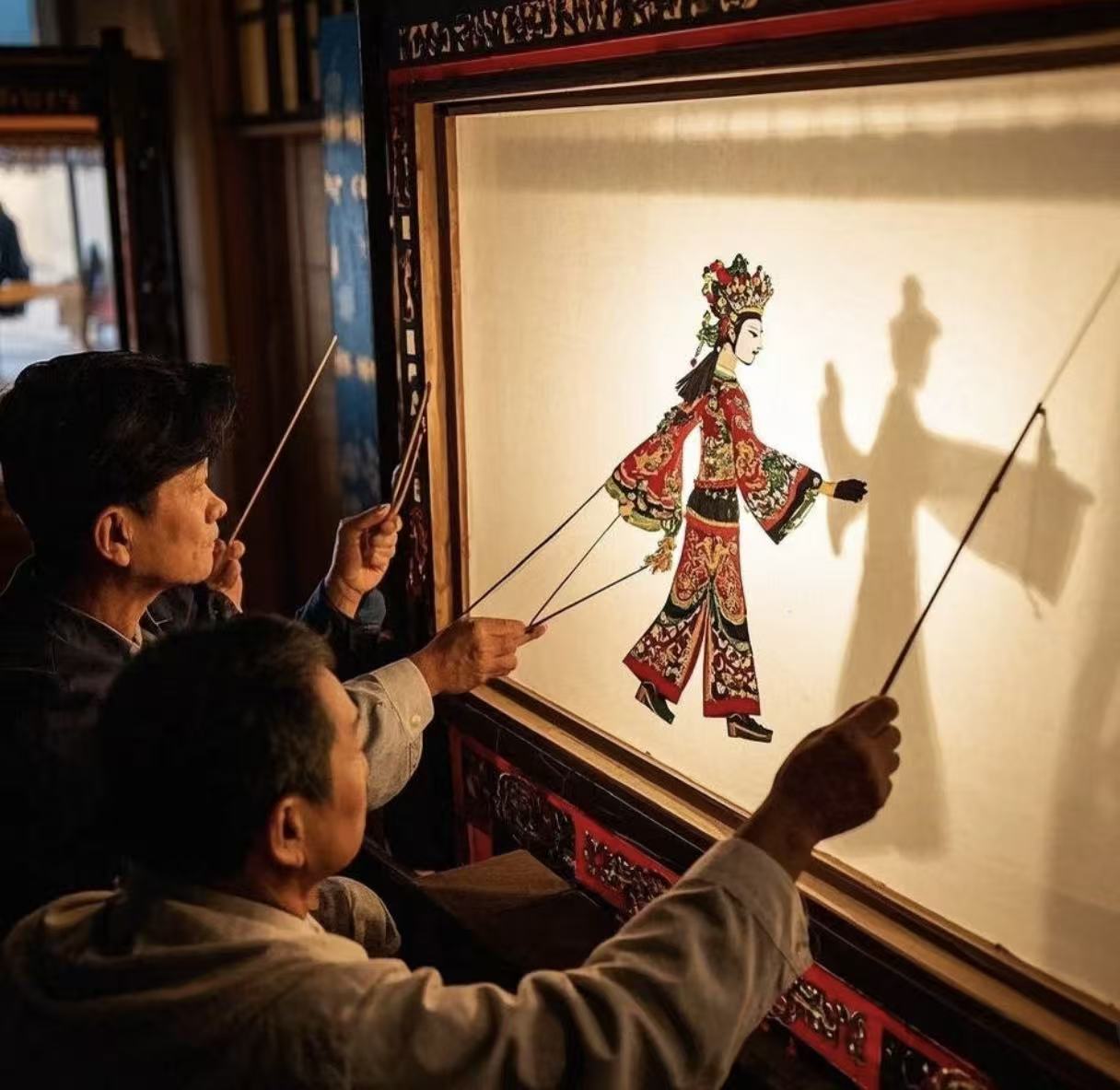
Because the work itself involves themes such as “manipulation” and “body domination”. If the audience can participate or operate to some extent, they can more directly perceive this relationship.
On the whole, this interview not only deepened my understanding of the works but also gradually shifted my curatorial thinking from “presenting the works” to “constructing the experience structure”. As a curator, I will think carefully about how to reorganise tradition into a contemporary experience that can be perceived, participated in, and reflected through space, media, and viewing methods.
Bibliography
Chen Rong. Nine Dragons (九龍圖卷). 1244.
Museum of Fine Arts Boston. “Nine Dragons.” Accessed April 1, 2026. https://en.wikipedia.org/wiki/Nine_Dragons_(painting)