Introduction
This paper focuses on a core issue: in the practice of curation, how can I change the exhibition from “reproducing cultural content” to “generating meaning structure”? This change can be understood by Roland Barthes’ analysis of “myth”: myth is not a narrative content, but a continuous meaning production system (Barthes 1972).
At the beginning of the project, I paid attention to the relationship between “tradition and contemporary” and tried to translate the form through “translation of traditional media”. However, with the deepening of research, I realized that this method stayed at the formal level and did not touch the generation of meaning. This limitation urges me to turn from “tradition” to “myth” and further focus on “mythical animals” as a structural mechanism. This change is not only due to theoretical reflection, but also influenced by practical conditions.
The practice of JIJU Collective provides a path for collaboration to generate meaning, echoing the collectivization turn of knowledge production in contemporary curation (O’Neill and Wilson 2010), and prompting me to rethink the relationship and structure in curation.
This paper will discuss how curating changes from content presentation to meaning generation by combining individual projects with collective practice.
Part I: personal curatorial project
1. From “translation tradition” to re-understanding the relationship between tradition and the contemporary
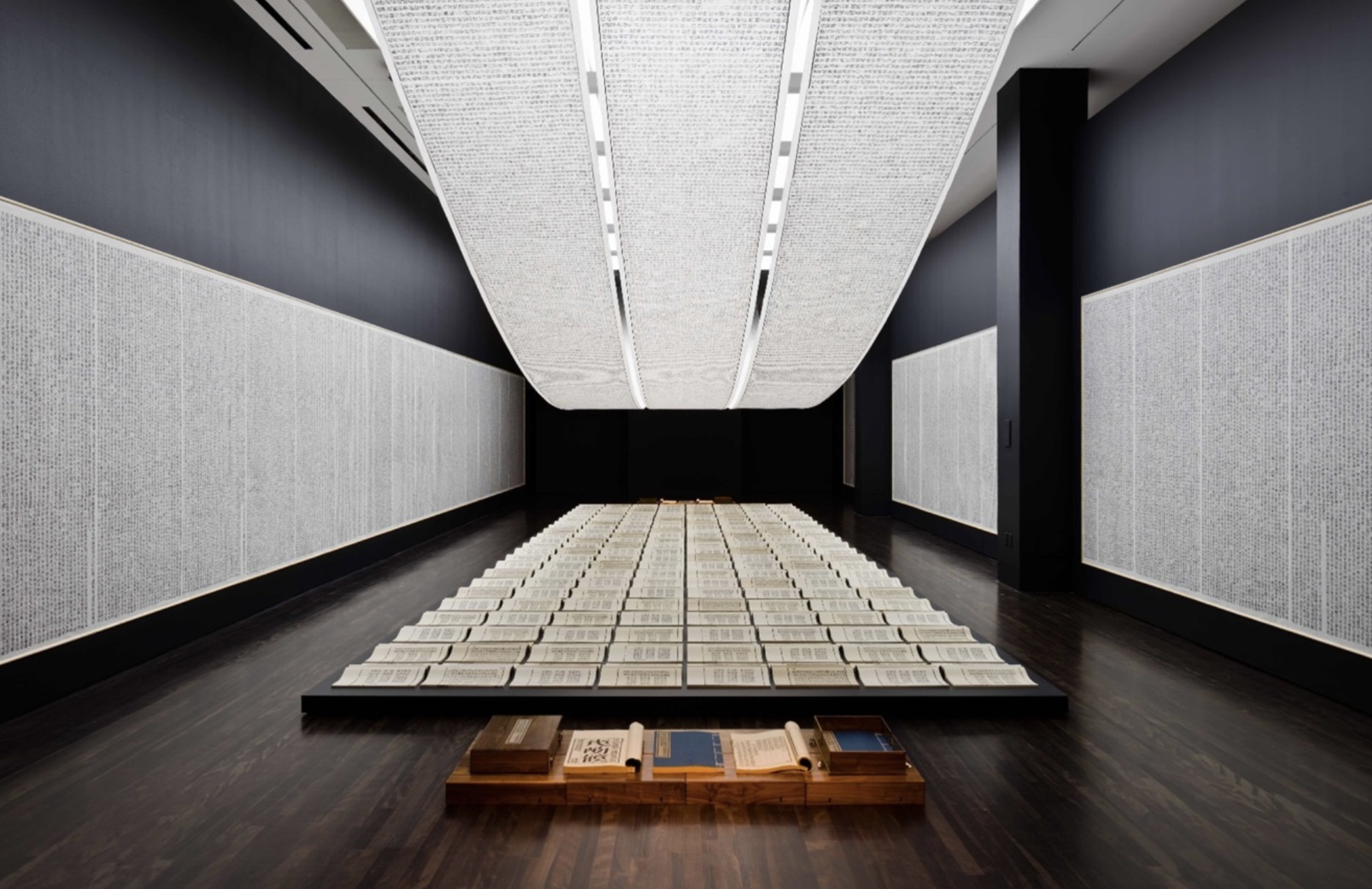
At the beginning of the project, my curatorial ideas revolved around “how to establish the connection between tradition and contemporary”. Influenced by the artist Xu Bing, I tried to transform the traditional visual language into a contemporary exhibition experience through the way of “translation of traditional media”. At this stage, I understand curation as a “translation mechanism”, which echoes Carolee Thea’s view that curators act as intermediaries, that is, curation generates an understanding path between works and audiences by constructing context, rather than neutral presentation (Thea 2009). However, this method soon exposed its limitations: it mainly stayed at the formal level, such as transforming calligraphy lines into spatial paths, or visually reproducing traditional images, but it did not touch the problem of how meaning was generated. As Terry Smith pointed out, “contemporariness” is not a single time point, but the coexistence and interlacing of multiple time layers, so the continuous generation of meaning does not depend on formal translation, but depends on how the work continues to operate in different time structures (Smith 2009).
This problem was further strengthened after I came into contact with the works of artists such as John Tunnard. I gradually realized that some paintings with a historical background can still respond to contemporary social problems. This connection does not depend on formal translation, but stems from the continuous operation of meaning in different contexts. Therefore, I began to reflect on the limitations of the original method and tried to shift from “formal translation” to “meaning mechanism”.
2. From “historical materials” to “traditional stories”: attempts and limitations of narrative methods.
Based on the above reflection, I gradually shifted my research focus from specific historical images to “traditional stories”, trying to establish the connection between tradition and contemporary through narration. At this stage, I began to understand curation as a narrative organization. Although narrative enhances the readability of the exhibition, it still stays at the content level and fails to explain why these stories continue to have an impact. This made me realize that the problem is not “what to say” but how the narrative is constantly reproduced. This corresponds to the operation mode of Barthes’ myth as a “secondary symbol system” (Barthes 1972). Therefore, the attempt at this stage further pushes me to ask new questions: Is there a deeper mechanism than “stories” that enables these narratives to span time and continuously influence reality?
3. From “story” to “myth”: the key change to the structural level
It is under the impetus of this problem that I shifted my research object from “traditional story” to “myth” in the middle of the project. This change marks the beginning of my understanding of myth as a continuous meaning structure. In Barthes’ theoretical framework, myth is a mechanism to naturalize historical construction, which makes a particular ideology seem “taken for granted” through repetition and dissemination (Barthes 1972). For example, “looking forward to one’s success” is no longer regarded as a simple cultural expression, but a mechanism for shaping behavior patterns and social expectations for a long time. In practice, I gradually realized that it is difficult to directly translate this concept into specific curatorial strategies, such as artist selection or space design. However, this turn also leads to the enhancement of concept and the decline of operability, exposing the fracture between theory and practice.
4. The introduction of Eryao’s works: from abstract theory to concrete mechanism.
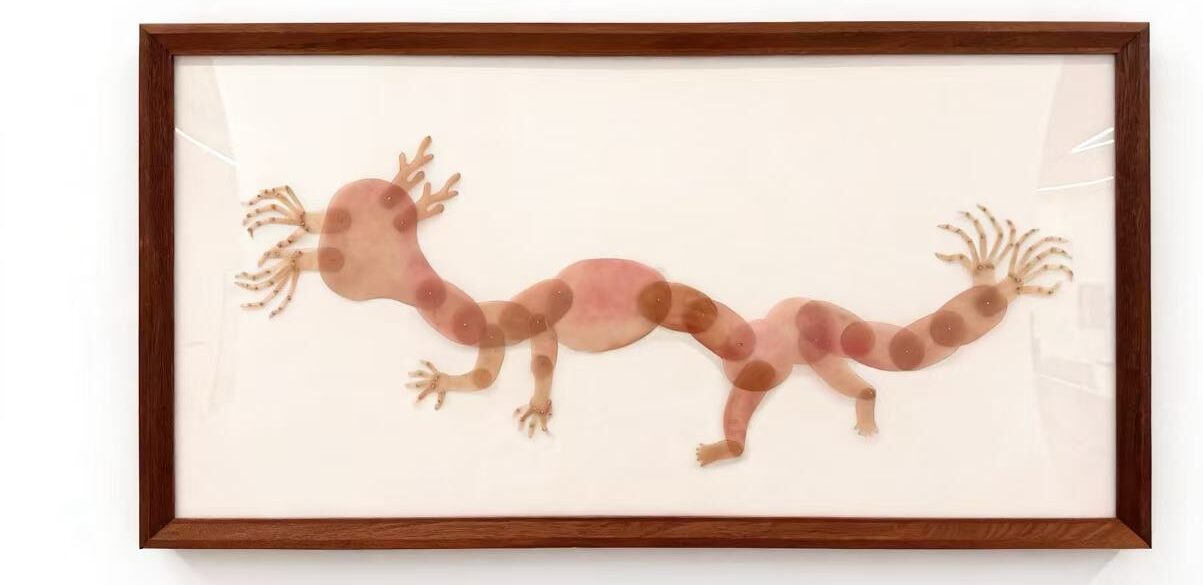
This problem is embodied in Eryao’s work Wish Your Child Becomes a Dragon. It combines the traditional media of shadow play and the mythical image of “dragon”. However, in the process of communication with artists, I gradually realized that the core of this work is not to reproduce tradition, but to reveal how myths continue to play a role in contemporary society. Digital communication has strengthened the continuous operation of images as a meaning structure (Cook et al. 2014). For example, it is not only a cultural language, but also shapes educational pressure, family relationships, and individual identity in reality. This understanding has made an important change for me: I began to understand “mythical animals” as a structural mechanism rather than a cultural symbol. Dragon is no longer just a “symbol of Chinese culture”, but a system that continuously produces social expectations. This node not only gives the theory a concrete fulcrum but also urges me to further expand my research to other mythical animals, thus laying the foundation for the subsequent cross-cultural development.
5. Pitch feedback: Cultural differences promote the adjustment at the audience level
In the pitch stage of the project, my curatorial logic was challenged again. Through feedback, I realized that the expression “Looking for a Dragon” has a direct cultural understanding path for the audience in China, but it is difficult for the audience with a non-China background to enter this context. This also made me realize that the audience is not a unified whole. Therefore, I began to adjust the method of exhibition, from “text interpretation” to “space experience”, which can also be related to Erika Balsom’s exposition of exhibition as a “temporal structure”, that is, the meaning is not directly conveyed through the text, but gradually generated during the audience’s continuous watching and moving (Balsom 2013).
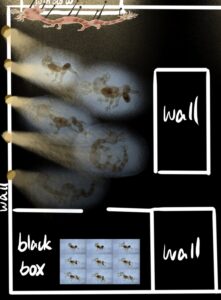
Specifically, by designing oppressive spatial paths, narrow passages, and circular images, I make the audience feel power and pressure at the physical level, not just relying on language understanding. At the same time, I add relevant idioms and cultural background descriptions to lower the threshold of understanding. The change at this stage marks my shift from “explaining myths” to “letting the audience experience the myth mechanism”.
6. From single culture to cross-cultural structure: the introduction of multiple mythical animals
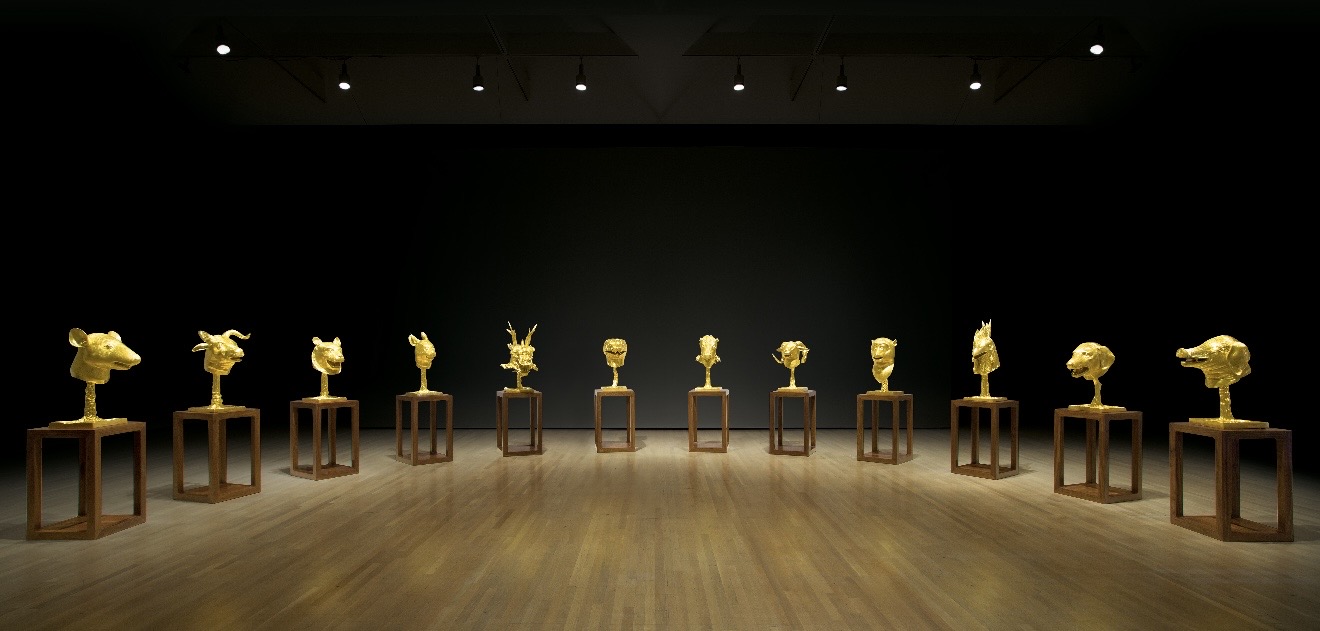
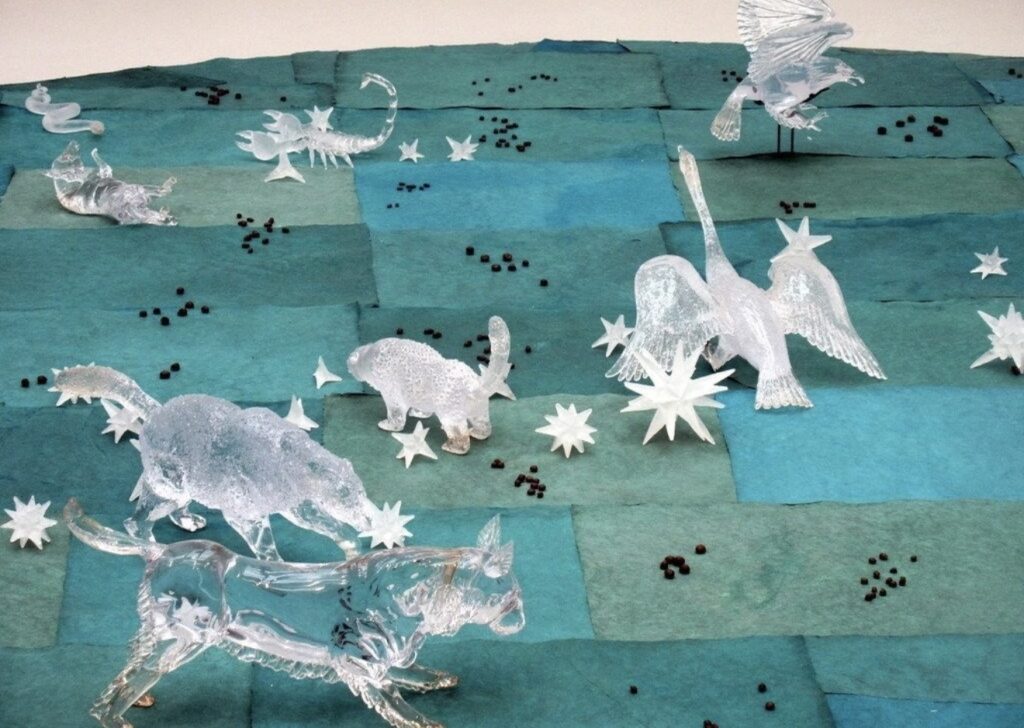
In order to further respond to the audience differences, I began to introduce mythical animals with different cultural backgrounds, such as Ai Weiwei’s Zodiac Heads and Kiki Smith’s constellation. This adjustment has expanded the exhibition from a single cultural case to a cross-cultural structure. I have constructed a hierarchical structure from the individual, the country, to the whole world. Through this structure, mythical animals are no longer limited to a certain cultural context, but become a cross-cultural meaning mechanism.
7. Realistic limitation and method crisis: from “great artist” to media reflection
However, this cross-cultural program soon encountered practical limitations in the actual promotion. Limited by resources, it is difficult for me to cooperate with famous artists such as Ai Weiwei, and at the same time, I can’t bear the cost of transportation and exhibition of my works. Faced with this problem, I initially tried to replace physical work with images, such as playing videos about interviews or production processes.
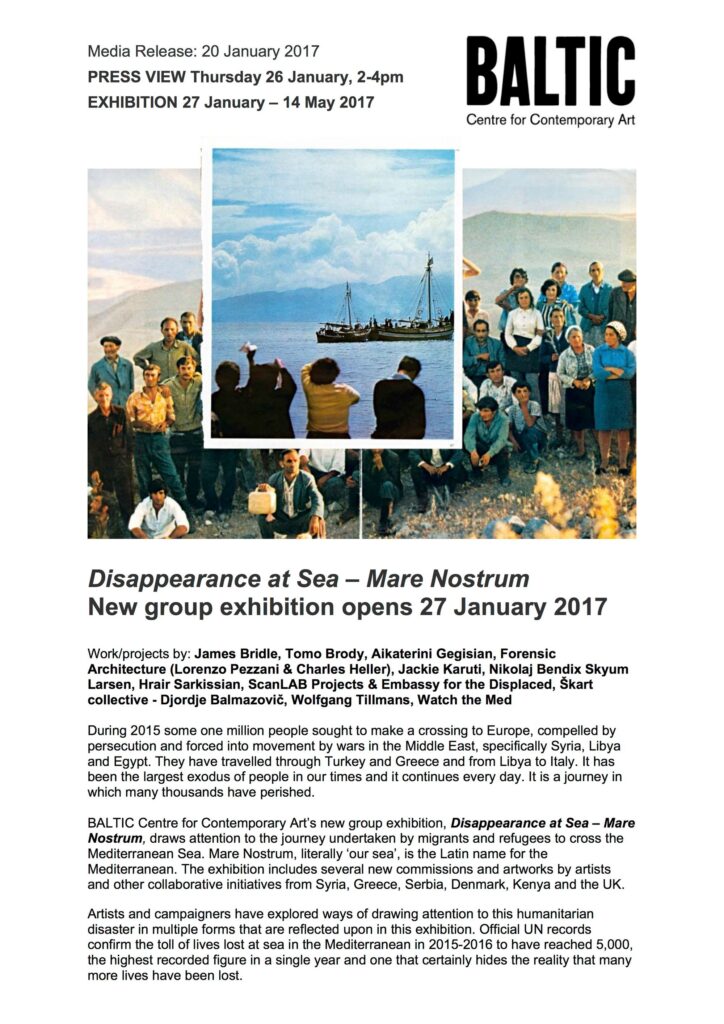
However, after studying the exhibition Disappearance at Sea, I realized that digital media can’t replace the materiality and spatial influence of physical works, so this scheme failed. This failure became a key turning point, which made me start to reflect on my own choice logic: I chose these artists not because of their fame, but because their works can express the power structure through “animals”. This understanding prompted me to turn from resource dependence to method reflection.
8. Method reconstruction: from artist fame to concept matching.
Based on the above reflection, I gave up the dependence on “great artists” and turned to “concept matching” as the selection criterion. For example, I chose Waeyen Song’s work on microorganisms, which further strengthened the concept of “animals” and the theme of “power is everywhere”. I finally decided that the theme of the exhibition was “When Animals Speak the language of Power.”
9. From exhibition deepening to audience reconstruction: public projects and barrier-free turn
In the later stage of the project, influenced by the collective curatorial experience, I began to realize the limitations of a single exhibition form, and tried to expand the project into a series of public projects, such as a dialogue with Eryao, a shadow play workshop and a book club, so that curation changed from “showing content” to “building a platform for discussion and participation”. At the same time, I further reflected on the audience problem and realized that the default audience was “a sound and understanding individual”, which was implicitly exclusive.
Access-centred practice emphasizes that accessibility is not a supplement to the existing structure, but a curatorial method that can reorganize the relationship between experience and society (MacBride 2025). Therefore, I began to introduce barrier-free design, such as visually impaired audio navigation, Braille materials and easy-read text, to respond to the needs of different audiences. The transformation at this stage marks my transition from “ideal audience hypothesis” to “diverse audience reality”, which makes curation gradually move from conceptual design to more social practice.
Part II: JIJU Collective Practice
The group practice of JIJU Collective constitutes another important dimension of my curatorial learning, especially in the re-understanding of collaboration, authorship and meaning generation. The members of the group come from different backgrounds, and their common experience in Edinburgh has contributed to the concern about “non-belonging” and formed the “JIJU Collective”.
However, in the process of transforming this concept into an exhibition form, we have experienced several key changes. Initially, the group planned that each member would show his or her undergraduate works. This scheme emphasizes individual expression, but it soon exposes problems: on the one hand, this “collage” presentation cannot reflect the common experience implied by “sojourning”; On the other hand, the transportation and exhibition costs of some works are too high to be realized. Therefore, we began to reflect on whether it is necessary to shift from “individual display” to “co-creation”.
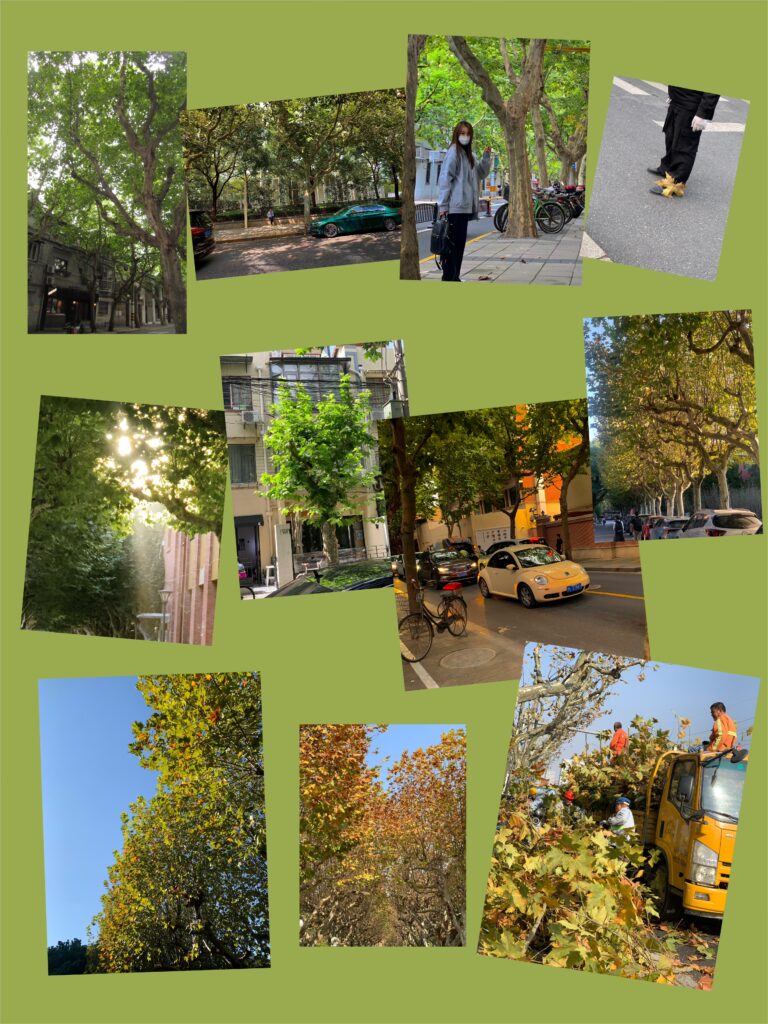
The original plan is to let each member share an object that can evoke memories of the member’s hometown, such as a tree, food, or animals. However, this method still stays too much in “recalling the past” and lacks connection with Edinburgh where we are now, and it is easy to become a personal narrative rather than a structural expression.
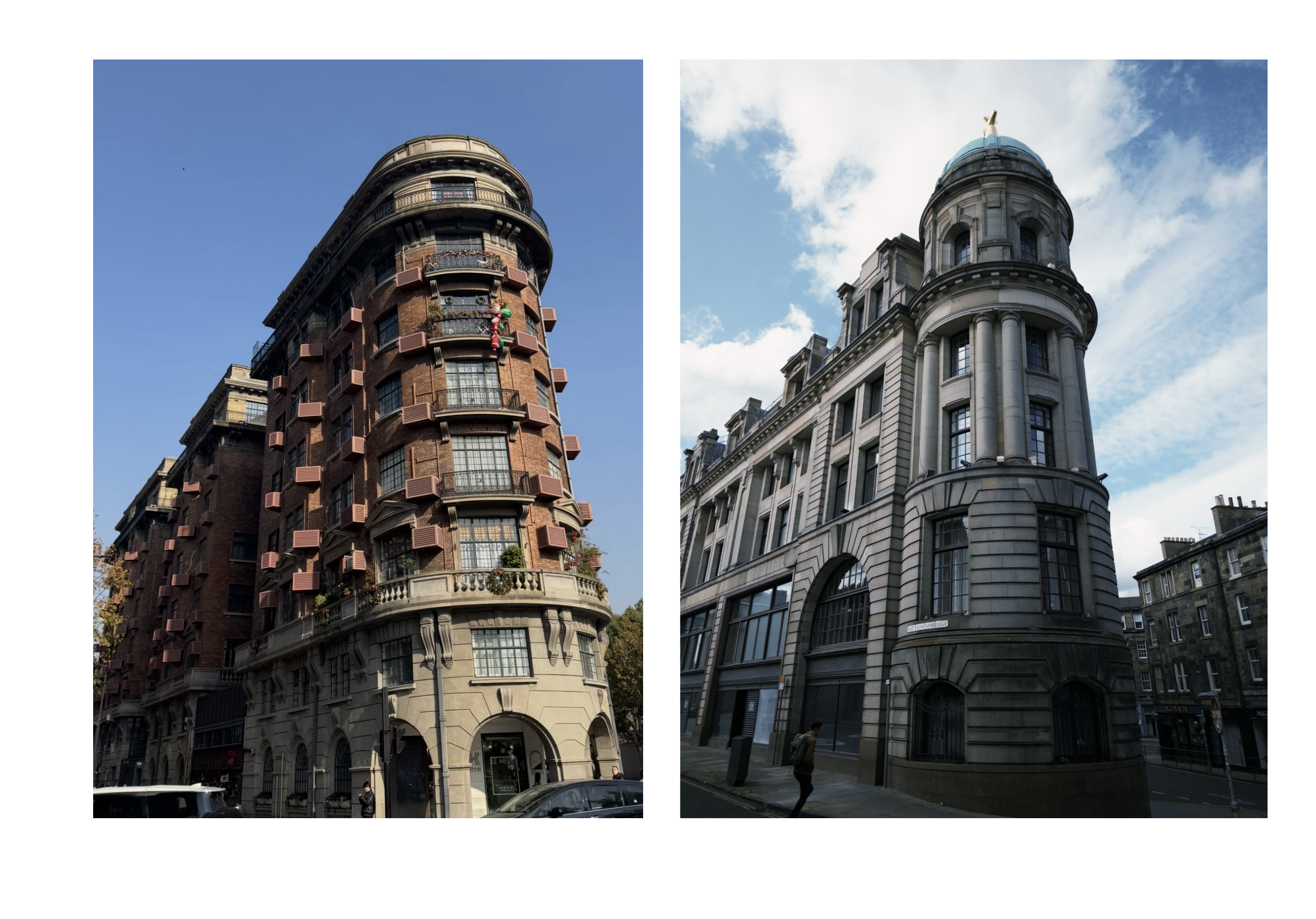
The real turning point comes from a concrete experience sharing. During the discussion, I mentioned that in my daily life in Edinburgh, I met a hotel with a very similar architectural appearance to that in Shanghai. This instant familiarity made me feel “at home” for a short time in a foreign land. Other members also realize that they have experienced similar moments in the city, such as finding the corresponding relationship with their hometown in the street, food, or space atmosphere. Therefore, we have shifted the direction of curation from “presenting hometown” to “rediscovering hometown in a foreign land”, emphasizing the generation of relationships rather than the reproduction of memory.
Based on this change, the exhibition “Our Shell” gradually took shape. We transform each member’s experience into a set of image pairs: one from Edinburgh and one from his hometown, and establish a connection through visual similarity. However, in further discussion, we realize that only the juxtaposed images are still relatively thin and lack the expression of space and structure.
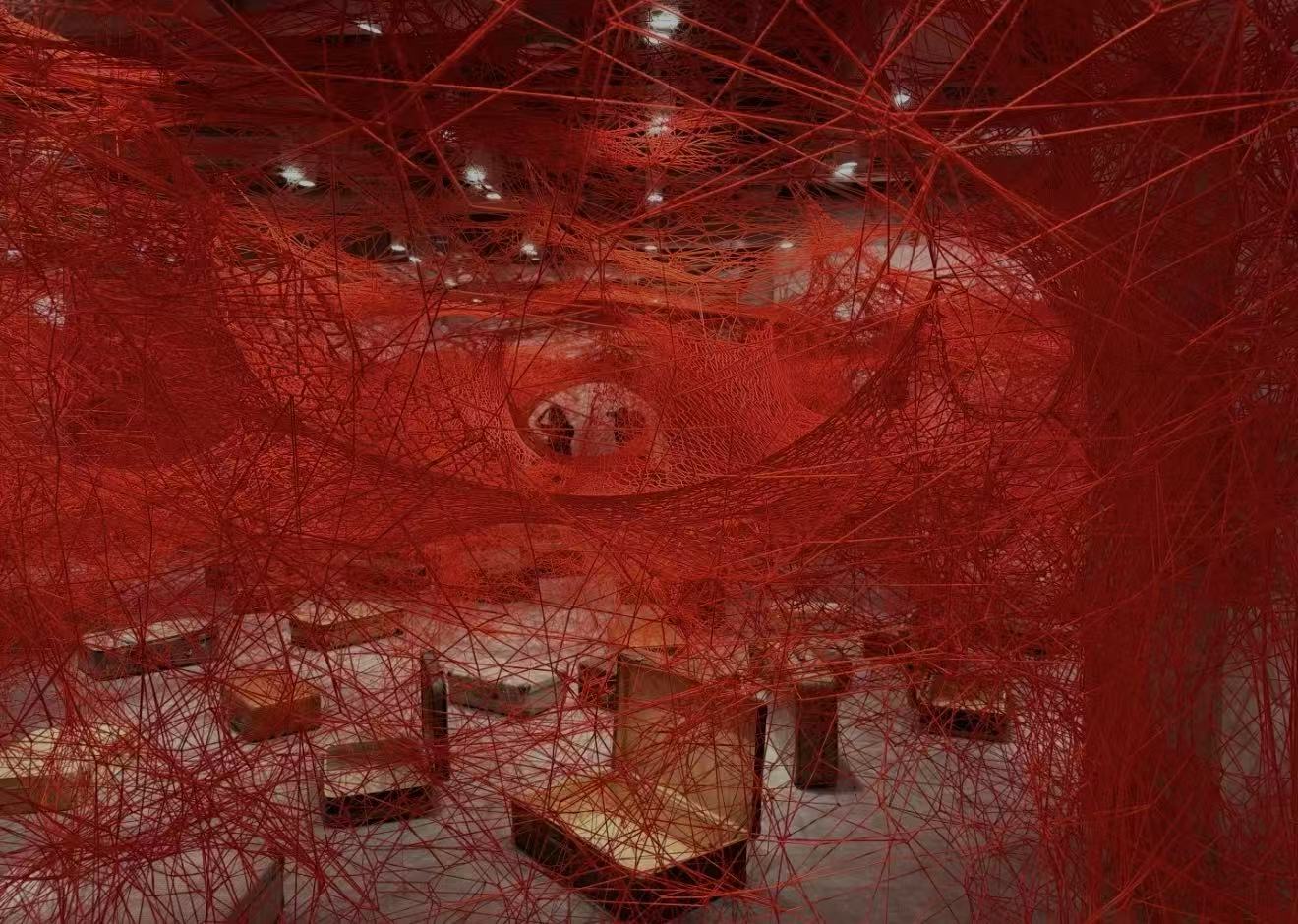
Therefore, I introduced a new method in space design, inspired by the use of “line” in Chiharu Shiota’s The Key in the Hand, and transformed the relationship between images into spatial structure. Specifically, we put the paired images on the walls on both sides of the exhibition hall and connect them with red lines, which form a network structure in space. This structure, composed of lines, not only connects images but also symbolizes the relationship between members, making the exhibition space itself a “shell” and reflecting the temporary ownership of the collective in different places.
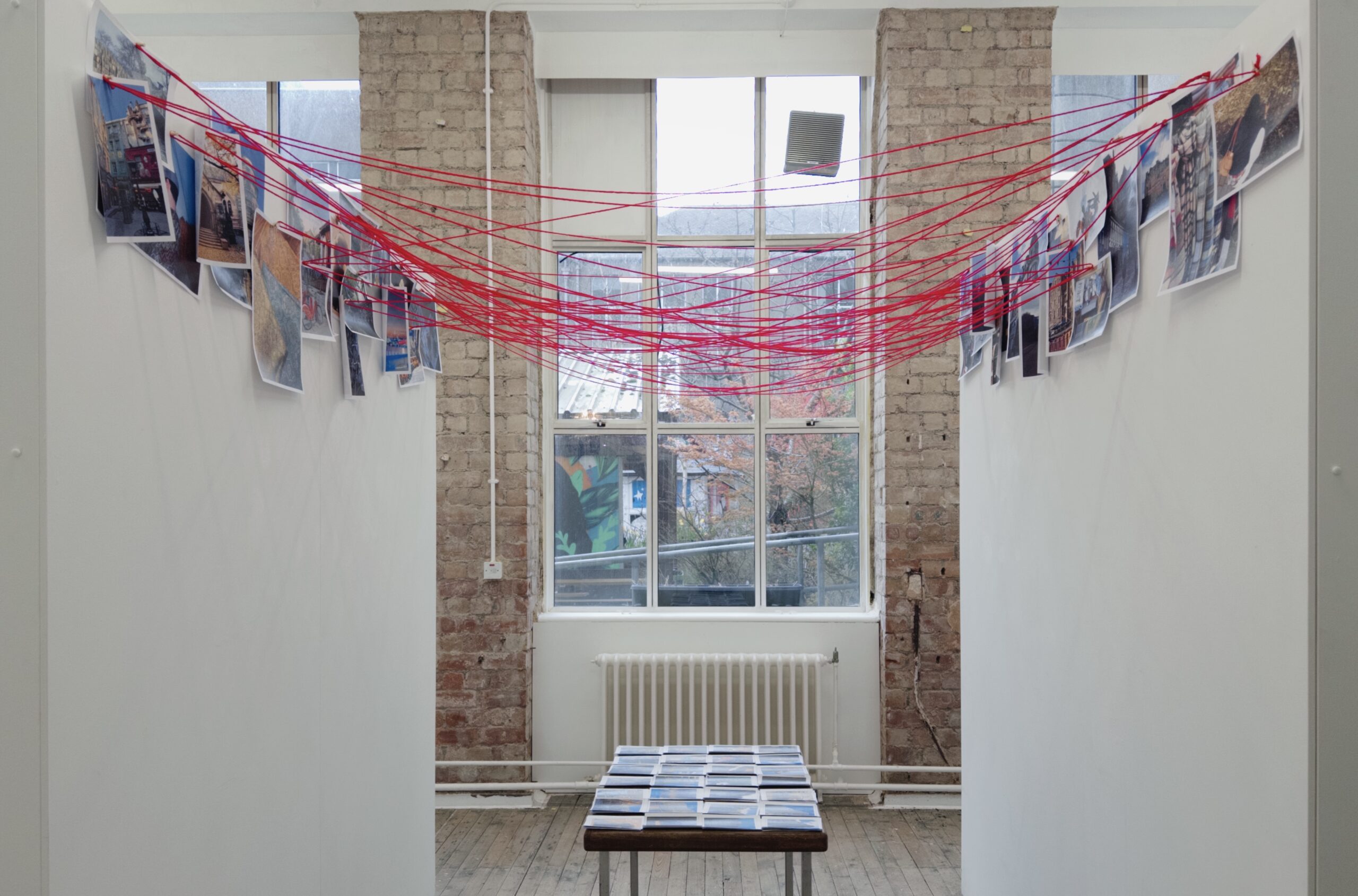
This change from “image display” to “spatial structure” is one of the most critical method adjustments in this project. It makes the exhibition no longer just present the content, but generate meaning through the structure itself. At the same time, this process also made me realize that curation is not only a concept expression, but also how to concretize the relationship into a perceptible form.
At the same time, the collaborative process itself has also brought new critical understanding. Group decision-making needs constant consultation; the ideas of different members are not always completely unified, and some concepts are weakened or adjusted in the discussion. This made me realize that collective curation is not an idealized equal cooperation, but a process involving compromise and power distribution. As Jean-Paul Martinon emphasized, curation is always an ethical practice, and its core lies in how to take responsibility in the relationship and deal with differences (Martinon 2020). Compared with the strong control in individual projects, I need to constantly adjust my role in the collective, from leading to negotiation.
In addition, my experience in designing exhibition posters and brochures in the group also made me realize the importance of publications in curation. These visual and textual materials are not only auxiliary information, but also directly affect how the audience understands the exhibition content. This experience was subsequently introduced into my personal project to make it more complete in audience communication.
Conclusion
The reflection of this project shows that curatorial practice is not only an exploration of concepts and forms, but also always embedded in a wider industry structure. From personal experience, the process of curating from “content presentation” to “meaning generation” is deeply influenced by the allocation of funds, the accessibility of resources and institutional conditions. For example, the adjustment of artist selection not only stems from theoretical reflection but also is directly limited by budget and execution conditions, which reveals the close relationship between curatorial judgment and realistic structure.
At the same time, audience positioning is no longer an abstract setting, but a practical issue that needs constant consultation between cultural differences and accessibility. In the contemporary context of curation, with the increase of cooperative modes and the development of barrier-free practice, curation has gradually changed from author-centered expression to a process of generating meaning in multi-party relations. Therefore, this study not only reflects the change of personal methods, but also points to the overall trend of contemporary curatorial continuous adjustment between system, audience and production conditions.
References
Barthes, Roland. 1972. Mythologies. Translated by Annette Lavers. New York: Hill and Wang.
Balsom, Erika. 2013. Exhibiting Cinema in Contemporary Art. Amsterdam: Amsterdam University Press.
Ben Cook,, et al. 2014. “Roundtable Discussion: Distribution after Digitization.” The Moving Image Review & Art Journal 3 (1): 73–81.
Taraneh Fazeli, and Cannach MacBride. 2025. “Means Without Ends.” In As for Protocols. Amherst: Amherst College Press.
Martinon, Jean-Paul. 2020. Curating as Ethics. Minneapolis: University of Minnesota Press.
O’Neill, Paul, and Mick Wilson. 2010. “Curatorial Counter-Rhetorics.” Journal of Visual Art Practice 9 (2): 177-193.
Smith, Terry. 2009. What Is Contemporary Art? Chicago: University of Chicago Press.
Thea, Carolee. 2009. On Curating: Interviews with Ten International Curators. New York: D.A.P./Distributed Art Publishers.