


From Eryao to multi-scale power
link: Week 5 | Shadow puppetry, Images and Dragon Myth

link: Reading week | Understanding Tradition in Dialogue: An Artist Interview

link: Curatorial Pitch
Expand research and management objectives
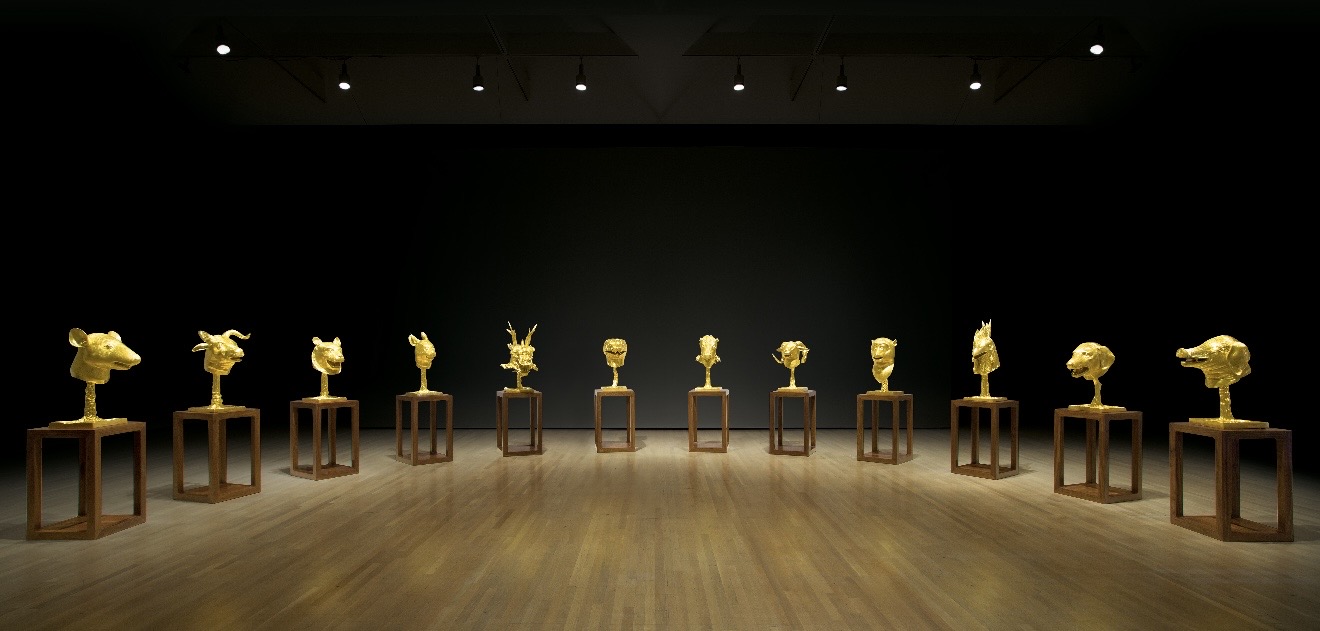
Artist: Ai Weiwei
Date: 2010
Materials: Bronze (gilded bronze in some versions)
Dimensions: Life-size; set of 12 sculptures
link: Zodiac Heads, Ai Weiwei
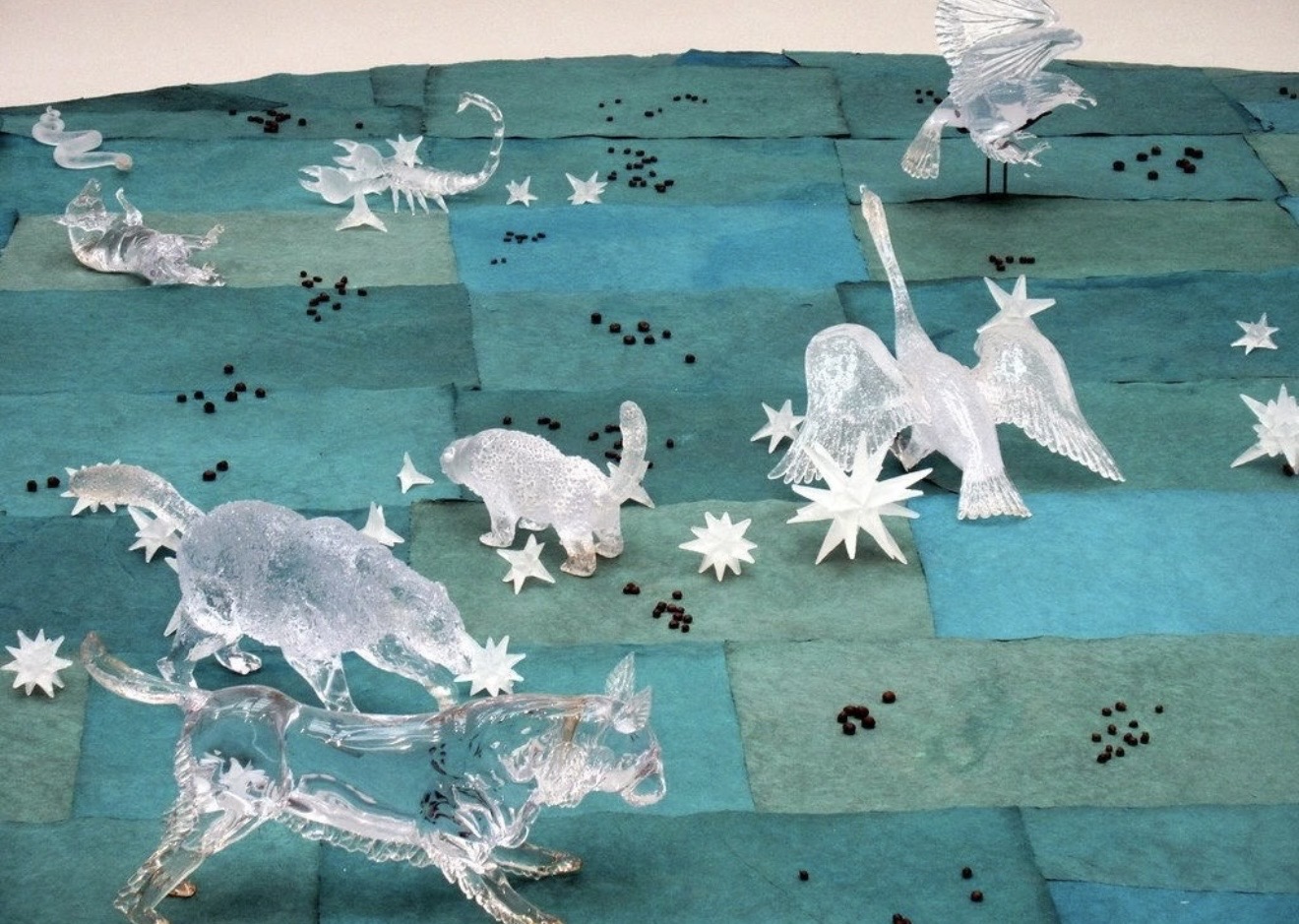
Artist: Kiki Smith
Date: 1996
Materials: Glass, ink on Nepalese paper
Dimensions: Variable installation
link: Constellation, Kiki Smith
JIJU Collective Curator: Hometown and the Structure of “Shell”
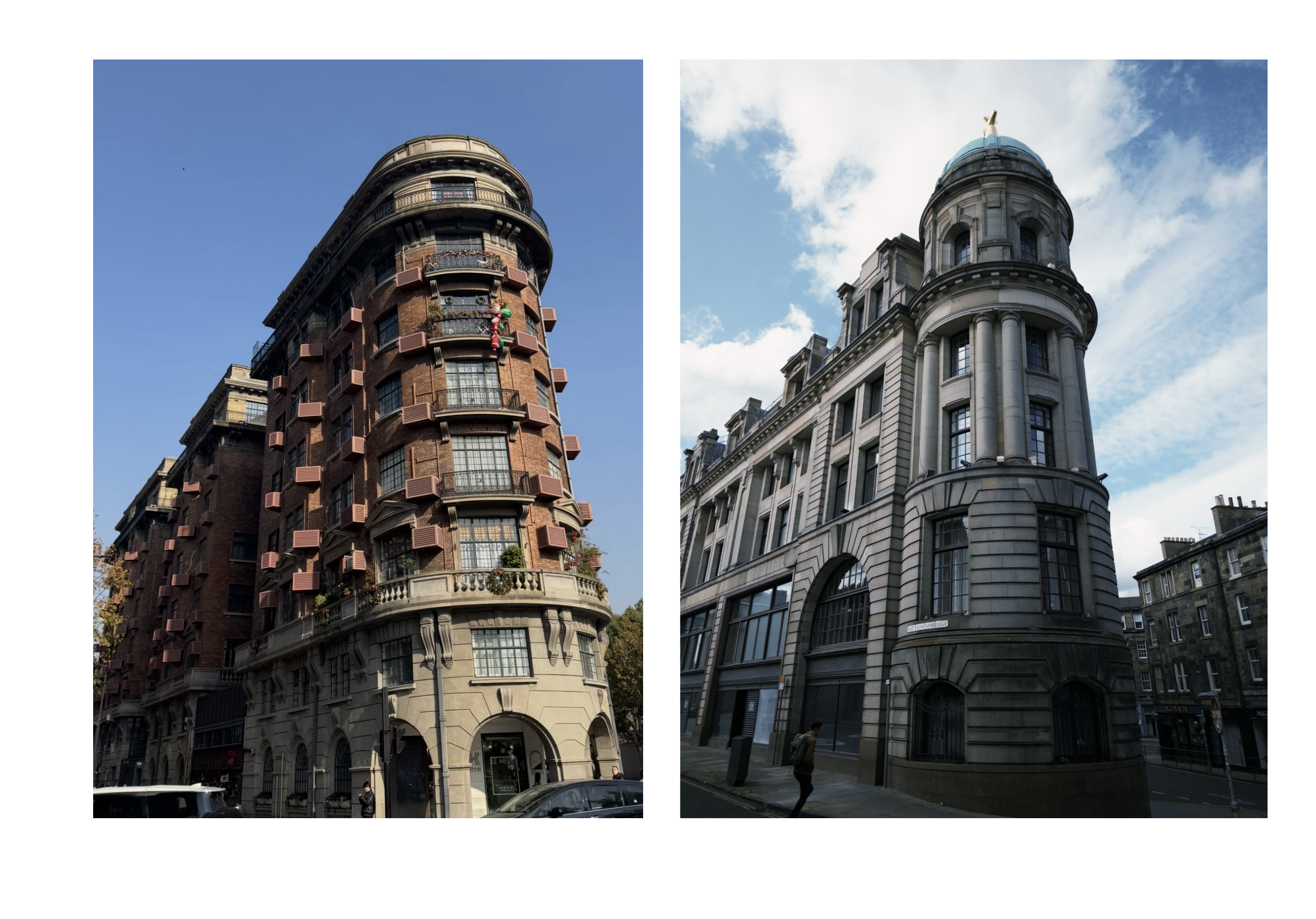
Doubletree by Hilton in Edinburgh (right)
In the group project of JIJU Collective, I led the collective members to determine the theme of our curation and the design of the main work of the curator. The curatorial mode of “image matching”: each person chooses two pictures, one from their original hometown and the other from Edinburgh (as the new “hometown”), and the two need to form emotional or memory connections. For example, I paired the Wukang Building in Shanghai with a similar building in Edinburgh.
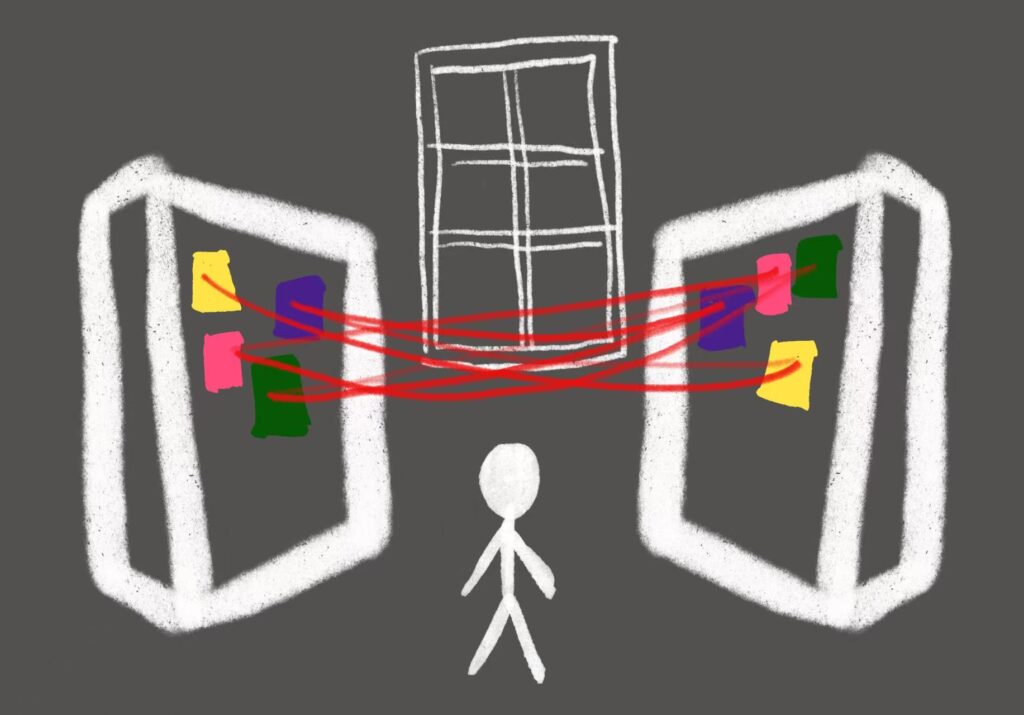
In space, we plan to put the images on two opposite walls and connect each pair of images with red lines, hanging above the audience, forming a structure similar to a “shell”, implying the relationship between protection and connection. However, while developing this display strategy, it also prompted me to consider the feasibility of the exhibition, particularly in terms of spatial constraints, installation methods, and audience movement within the space, which is prepared for my next week’s research.
Bibliography
Eryao. Wishing Your Child Becomes a Dragon. 2024. https://youtu.be/MxdBKNgKI3s.
Roland Barthes. Mythologies. Paris: Éditions du Seuil, 1970.
Ai Weiwei. Circle of Animals / Zodiac Heads. 2010. https://www.seattleartmuseum.org/whats-on/exhibitions/ai-weiwei-circle-of-animals-zodiac-heads.
Kiki Smith. Constellation. 1996. https://www.nelson-atkins.org/art/exhibitions/kiki-smith-constellationJIJU Collective. OUR SHELL Exhibition Project. 2026.



Hi Luosijie, your new posts show evidence of SICP development which is good, however more work is needed on the content and particularly the logic of your ideas, and research supporting your commentaries.
In Week 4, you ask “How can narrative itself continue to operate in contemporary curation”…the question is not entirely clear, continue in relation to what? Also, narrative is a fundamental part of human perception…if you are making a point about conditions in which storytelling etc have changed (eg in an age of globalisation Week 1 course, saturation, etc) , be much more explicit, add research. Same for your comments on curation as more than fact or opinion, the nature of myth, and the role of ethics in your practice: ground this in texts/references/specifics. More reflection (LO3) on “non-belonging”?
Week 5: there is a lot of promising reflection (LO3) and research (LO1) in this,you’re your message needs work, you are covering such a lot of ground it’s hard to follow your thread. ‘Dragon narration’ does not make sense. So look at the logic of the ideas you present to make your argument. Contextualise shadow-play (shadow-puppetry is clearer) as a medium, culturally. The term ‘twinkling myth’ is not quite the right language, in the planning meeting outline what you mean so we can discuss. Add bio info where you can eg the film theorist Erika Balson, based at (provide link/insert hyperlinks). Good you reference the course in Week 5, more details, or something on folk heritage of shadow-puppetry. Add images to help communication.
Reading week and Interview posts can be combined into one (give clear simple post titles): who treats “tradition as a static inheritance”? Where is the outcome of the interview?
In your Pitch, it is not clear who the artists are apart from Er Yao? Be careful not to make an exhibition illustrate theory on myth, allow space for a range of audience experiences. Put your ideas in more research/context, what is ‘traditional art’ for eg.
In Week 6, it is good to see some more artist research, be careful not to duplicate any content (eg images) from other posts (the pitch). Make clearer the curatorial process that is going on here, what are you developing, how (where are you researching), what are the goals.
1) No separate posts for Ji Ju, look at the Blog Toolkit, it indicates you should integrate commentary in your post where relevant (some weeks will have less than others), use subheadings.
2) Summarise your research interview.
3) List references at the end in a full, standard format (does not have to be Chicago, that is one), including exhibitions.
4) Image choice directly relates to the contents/commentary, and connects with the need for extra research I mention: so in Week 5, for eg, what research could you do into “Traditional shadow play is rooted in folk performance and oral culture, but in contemporary times, it is often transformed into digital image form” (exhibitions that show this, images of those).