Project Overview
This curatorial project explores how traditional mythological imagery can operate within contemporary exhibition frameworks—not as preserved heritage, but as an active narrative structure that continues to organise perception, identity, and social expectation.
Drawing from Roland Barthes’s proposition that “myth is not a story, but a system of communication,” the exhibition approaches myth not as narrative content, but as an ideological mechanism.
From Symbol to Structure: Re-reading the Dragon
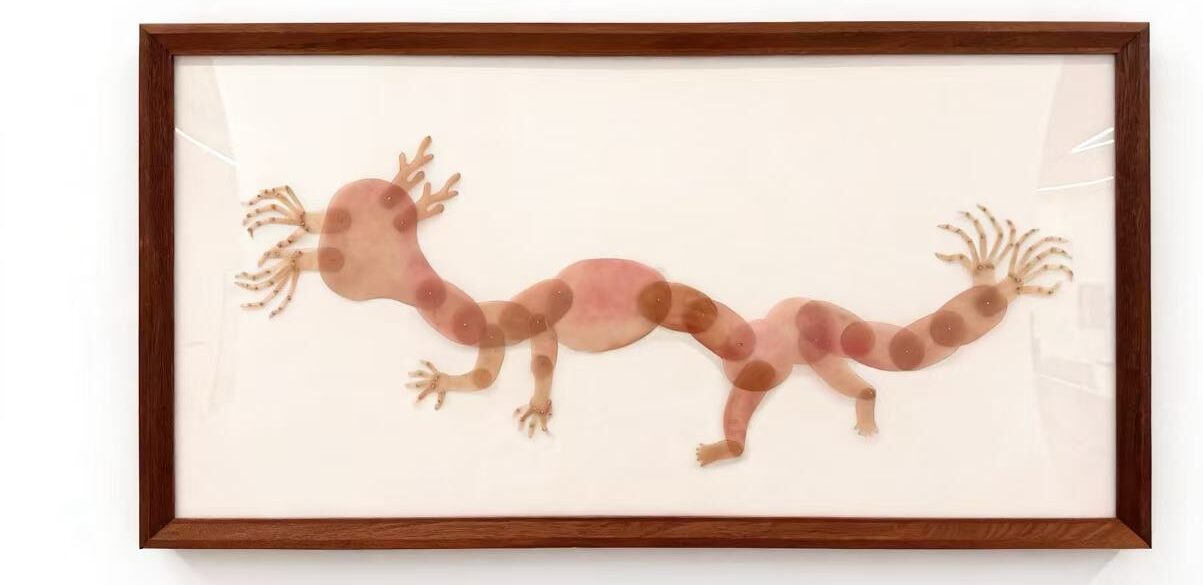
Wishing Your Child Becomes a Dragon
70 × 10 cm
Leather, metal, and mixed media
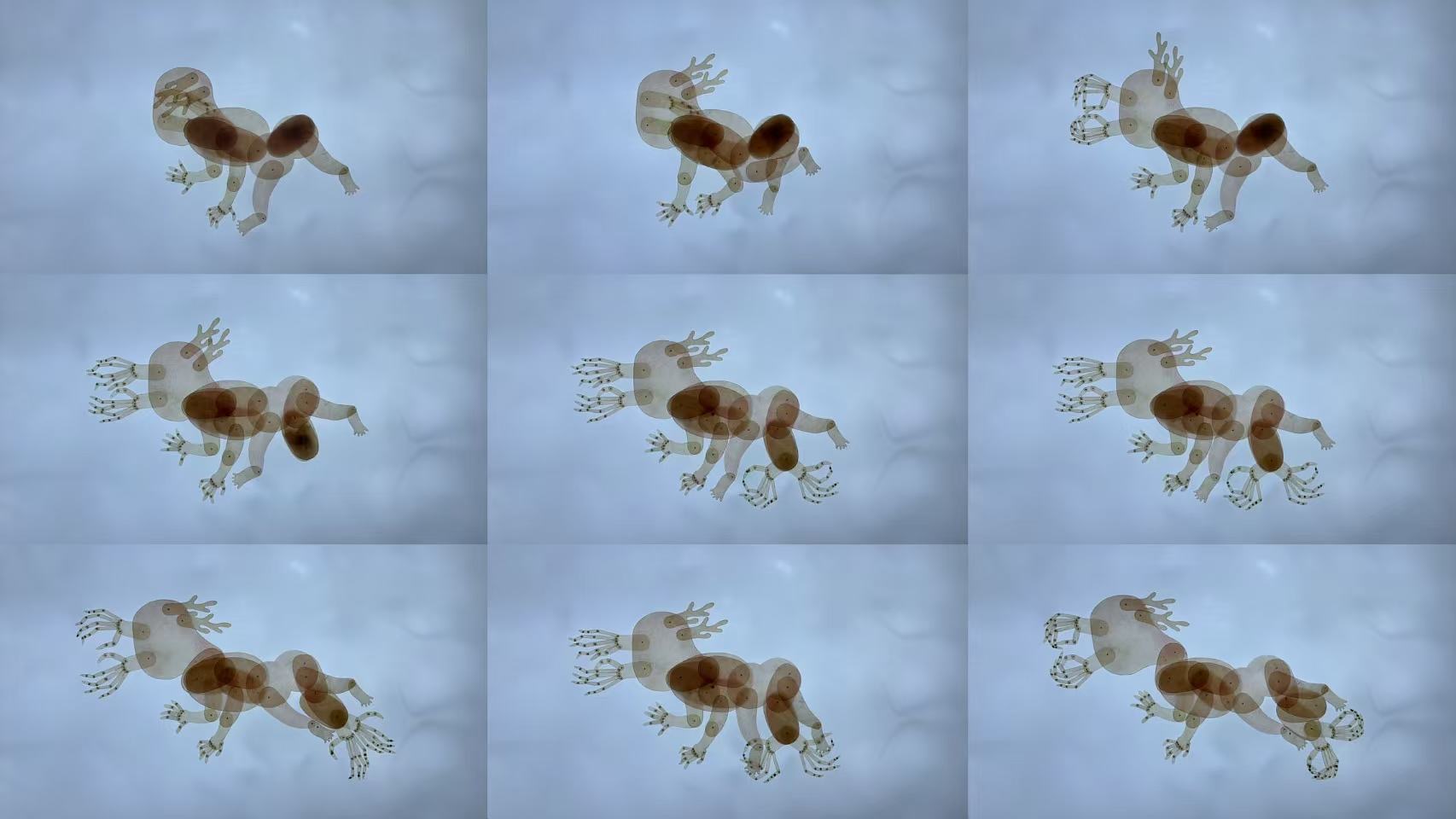
Wishing Your Child Becomes a Dragon
58 seconds
Stop-motion animation
link: Eryao, Wishing Your Child Becomes a Dragon, 58 seconds, Stop-motion animation
At the centre of the curating project is Eryao’s shadow play work, Wishing Your Child Becomes a Dragon
Traditionally in China, the dragon signifies fortune, authority, and success. However, through Barthes’ framework of second-order signification, the dragon is reinterpreted here not as folklore imagery, but as a cultural structure
The idiom “Wish your child becomes a dragon” becomes more than parental aspiration—it means intergenerational pressure, mobility anxiety and identity shaped through expectation. Within the exhibition, the dragon operates as a mechanism that normalises these structures across the process of visiting the exhibition.
Curating as Cultural Translation
Extending Carolee Thea’s notion of the curator as mediator, this project positions curating as an act of cultural translation rather than preservation.
Tradition is not displayed as authenticity; it is re-articulated within a new perceptual and discursive system.
The exhibition does not “present” myths. It restructures how myth is experienced.
Spatial Realisation: Summerhall as Site
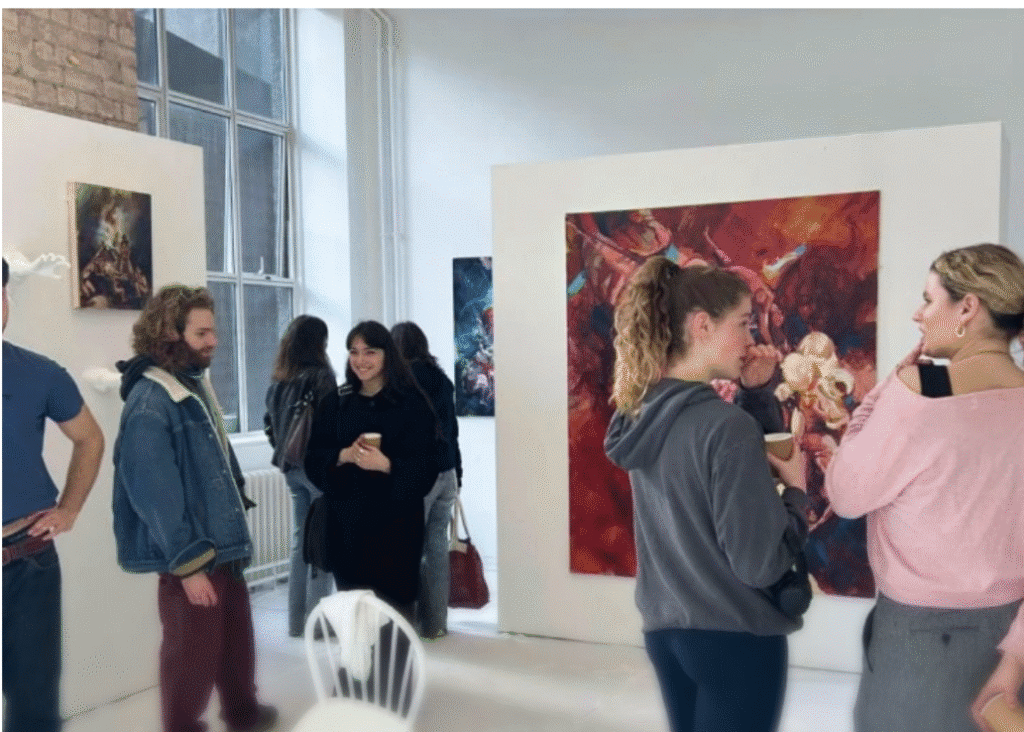
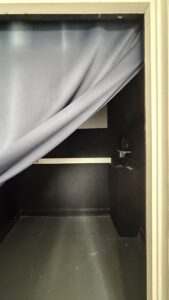
This site is particularly suitable because the Sciennes Gallery in Summerhall has two large windows, which allow natural light to enter and also allow necessary controlled lighting conditions for shadow projection and moving images. The black box structure of this space supports the immersive display of Eryao’s stop-motion animation film and television devices. In addition, Summerhall itself provides a variety of space types, including not only a gallery for exhibitions but also places that can be used for public activities, such as reading clubs, film screenings, and exchange activities. This provides strong support for expanding the exhibition form and enriching the audience experience. Its close ties with the University of Edinburgh make the site geographically accessible, academically consistent, and economically feasible.
link: Summerhall's overview
Spatial Structure
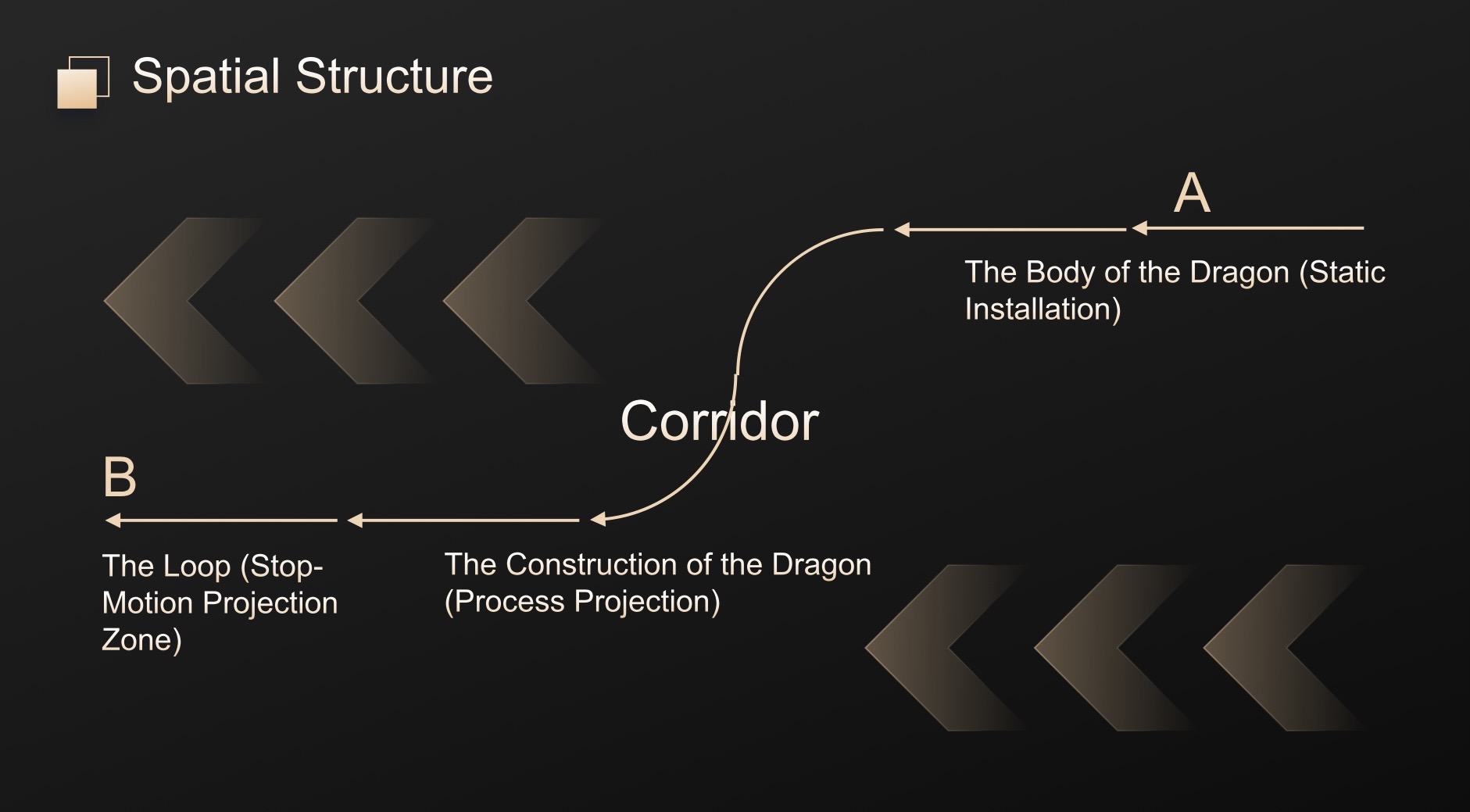
Rather than retelling this narrative, the exhibition spatialises it. The exhibition was held in three interconnected areas in the environment.
SPOT A —— Readable and touchable Tradition
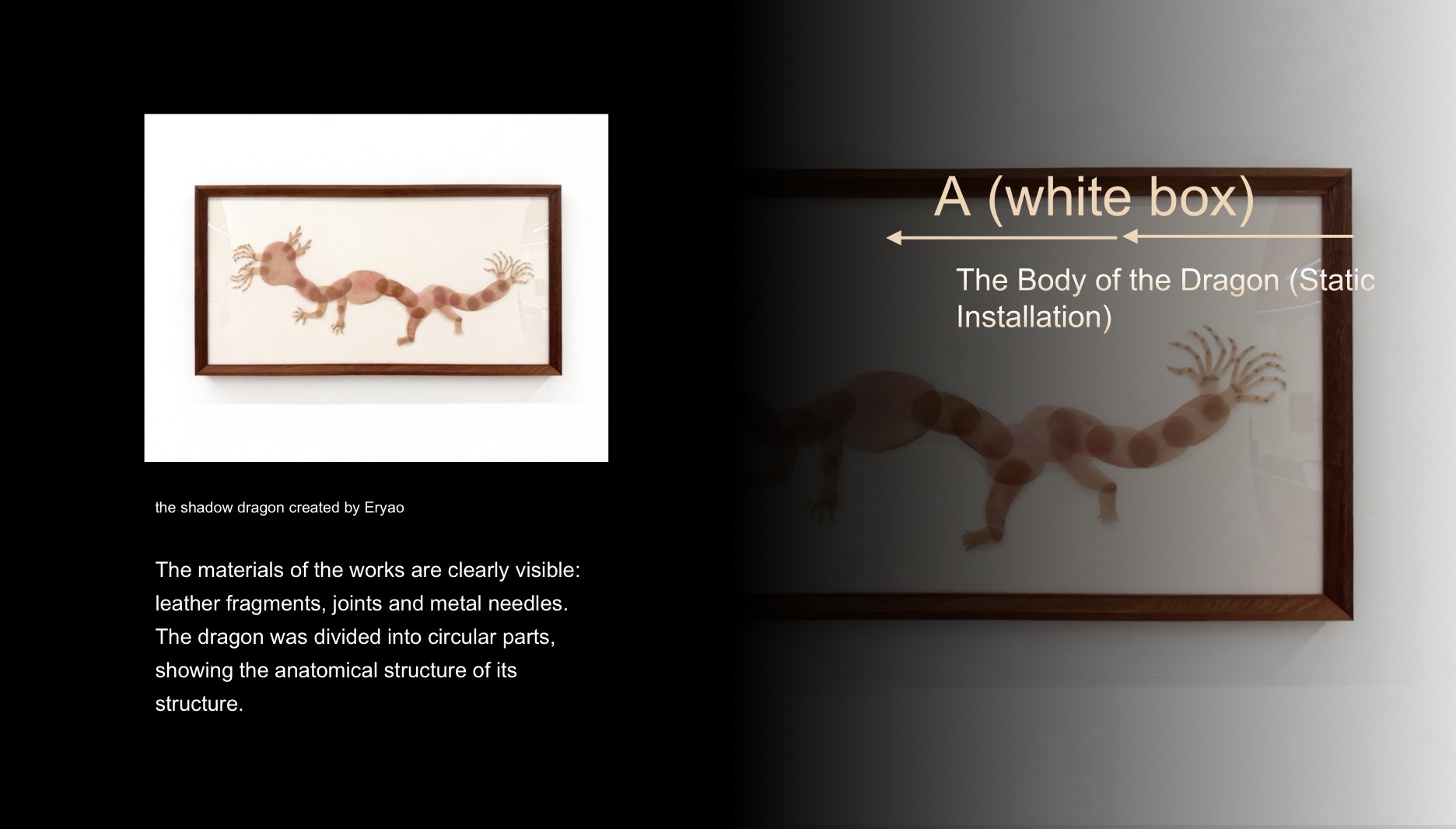
At the entrance, the audience will see the shadow dragon created by Eryao hanging on the glass window. The sunlight just outside the window can be used as the light source for shadow play works, which makes the materials of the works clearly visible: leather fragments, seams, and other structures.
At the same time, before the beginning of Eryao’s works, the curatorial text was provided, and the cultural meaning of the dragon and the idiom “Wishing Your Child Becomes a Dragon” were introduced, which provided a convenient introduction for international audiences.
At Spot A, tradition is readable and touchable, and the audience is allowed to interact with the shadow play works installed on the window.
Corridors —— Myth in Process
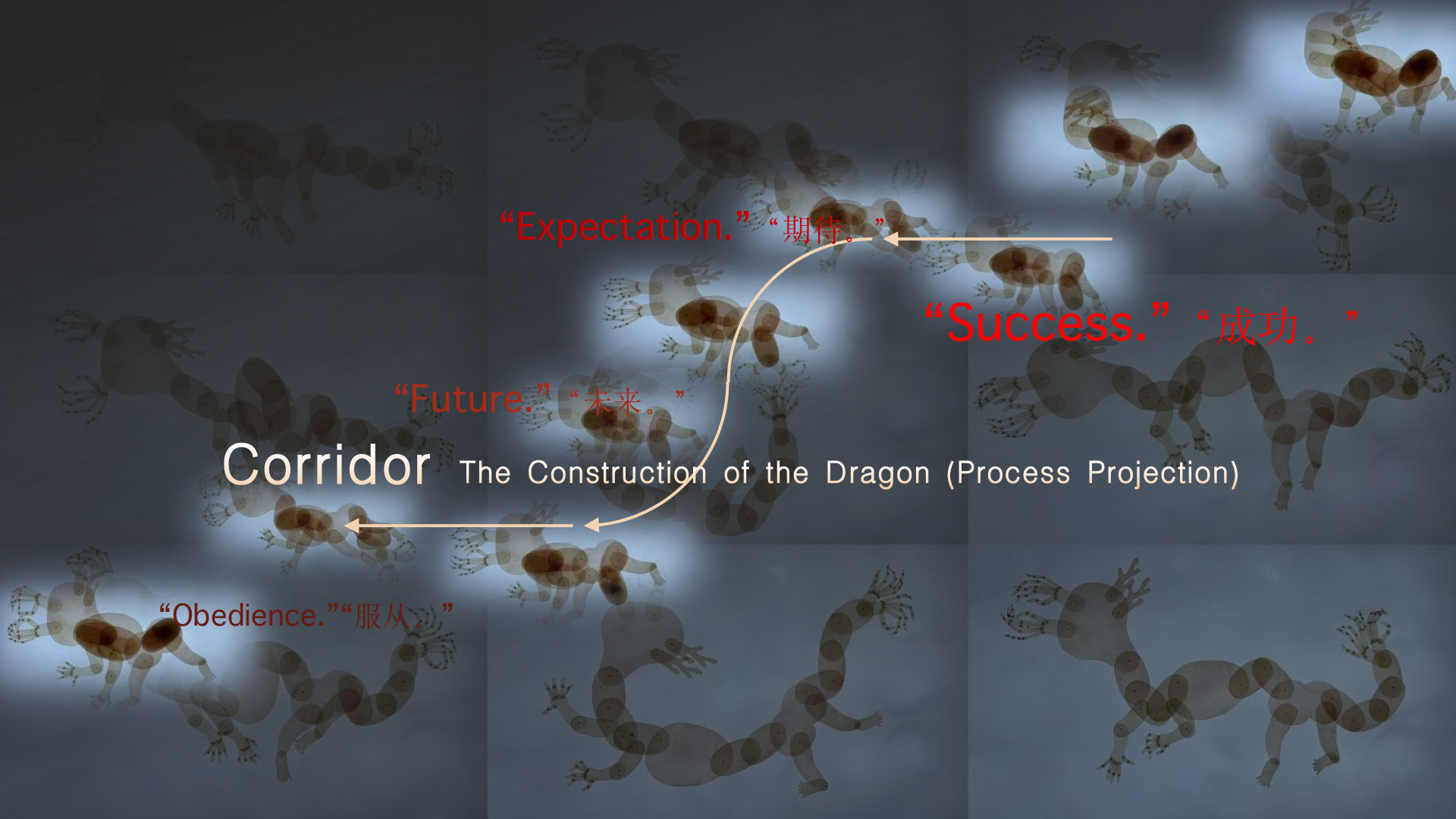
From this still dragon body project, the audience enters a narrow corridor. In this transitional space, the single-channel projection displays the stop-motion animation sequence frame by frame.
Dragons slowly assemble themselves through obvious repetition. Limbs can change. The body will get longer. Movement is mechanical, not smooth. The projection scale is slightly enlarged, so that the shadow goes beyond the picture and overflows the wall and floor.
The corridor acts as a compression. The audience must personally experience the transformation of the dragon. Here, myth becomes a process.
Scattered phrases appeared faintly on the wall, almost illegible: “Expectation.” “Success.” “Obedience.” “Future.”
SPOT B —— Myth as Endless Cycle
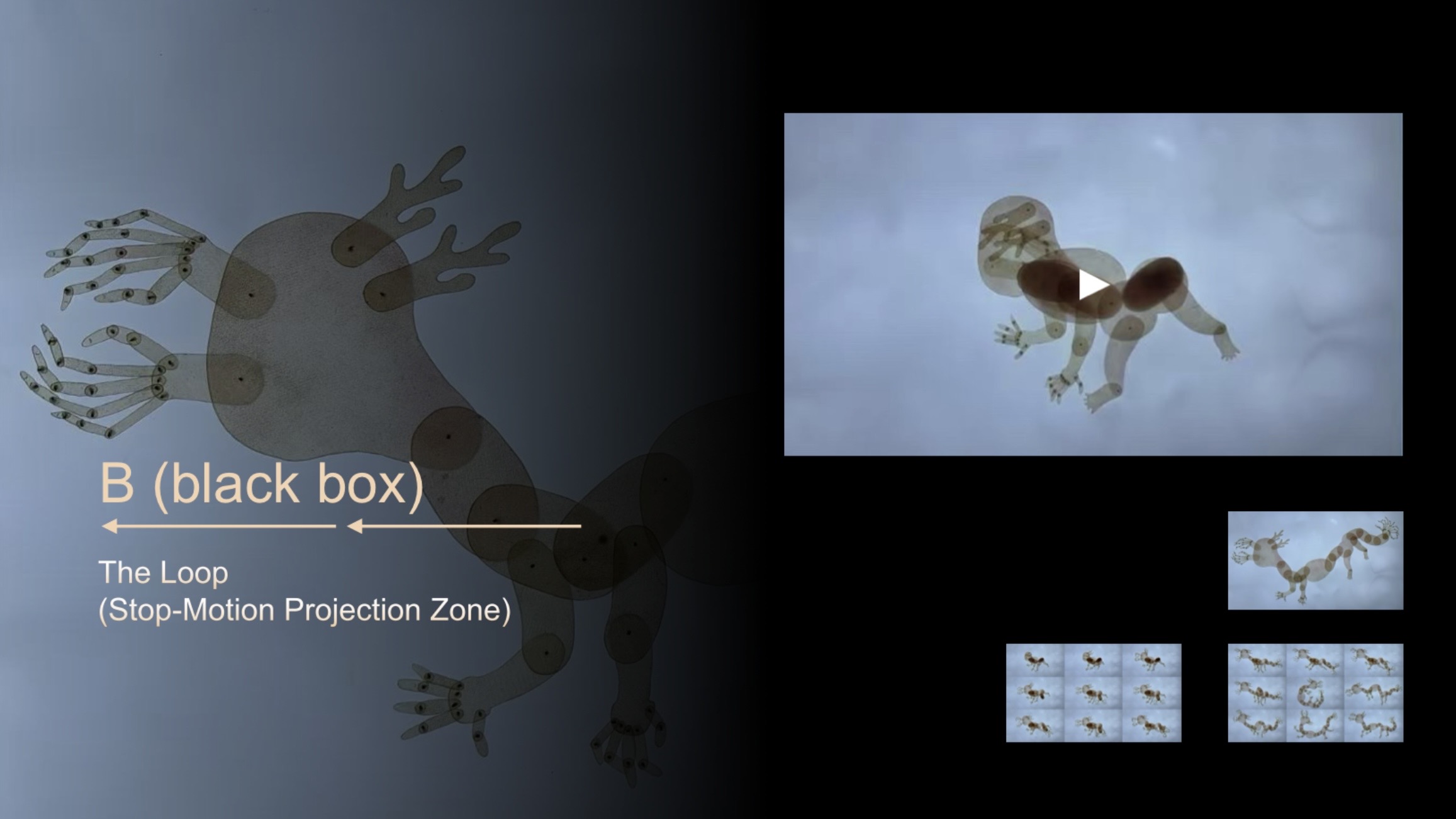
The last area leads to a darker projection space. This one-minute stop-motion animation is played continuously and circularly on a big screen. There are no seats. Visitors are free to come in and out.
The dragon’s movements are unstable. Its segmented body bends awkwardly, becoming less proud and more like a monster. There is no narrative climax. No transformation is complete. The cycle starts again.
The time of this exhibition is cyclical and nonlinear. The lack of a fixed starting point reinforces the concept that cultural expectations are inherited rather than chosen.
Engaging with moving image exhibition theory, particularly the writings of Erika Balsom, this project imagines the exhibition space as a temporal architecture rather than a static display.
Time in this exhibition is not only media duration. It is cultural persistence—the long repetition of expectation across generations.
Academic Framework: Integrating Chinese and Western Theory
To strengthen theoretical grounding, the project integrates both Western critical theory and Chinese mythological scholarship.
Western theoretical framework
- Roland Barthes — myth as ideological system
- Erika Balsom — exhibition as temporal
- Carolee Thea — curatorial mediation
Chinese theoretical framework
- Yuan Ke — systematic construction of Chinese mythological frameworks
- Mao Dun — classification and cultural interpretation of myth
- Ye Shuxian — myth as cultural coding and archetypal structure
This dual framework ensures that Chinese myth is not reduced to a visual motif, cultural interpretation retains local epistemology and subjectivity, and the exhibition avoids purely Western theoretical dominance.
Ethical Scale
If myth influences how we understand the world, and exhibitions influence how we understand myth, then curating is never neutral.
Instead of celebrating the dragon as cultural heritage, this exhibition questions how such narratives shape identity and expectation in contemporary society.
The project, therefore, operates not as cultural nostalgia but as a speculative curatorial method testing how traditional narrative forms continue to organise contemporary life.
Bibliography
Eryao. Wishing Your Child Becomes a Dragon. 2024. https://youtu.be/MxdBKNgKI3s.
Roland Barthes. Mythologies. Paris: Éditions du Seuil, 1970.
Carolee Thea. On Curating: Interviews with Ten International Curators. New York: D.A.P./Distributed Art Publishers, 2009.
Summerhall. “Sciennes Gallery / Exhibition Spaces.” Accessed April 1, 2026. https://www.summerhallarts.co.uk.