Black box as a method
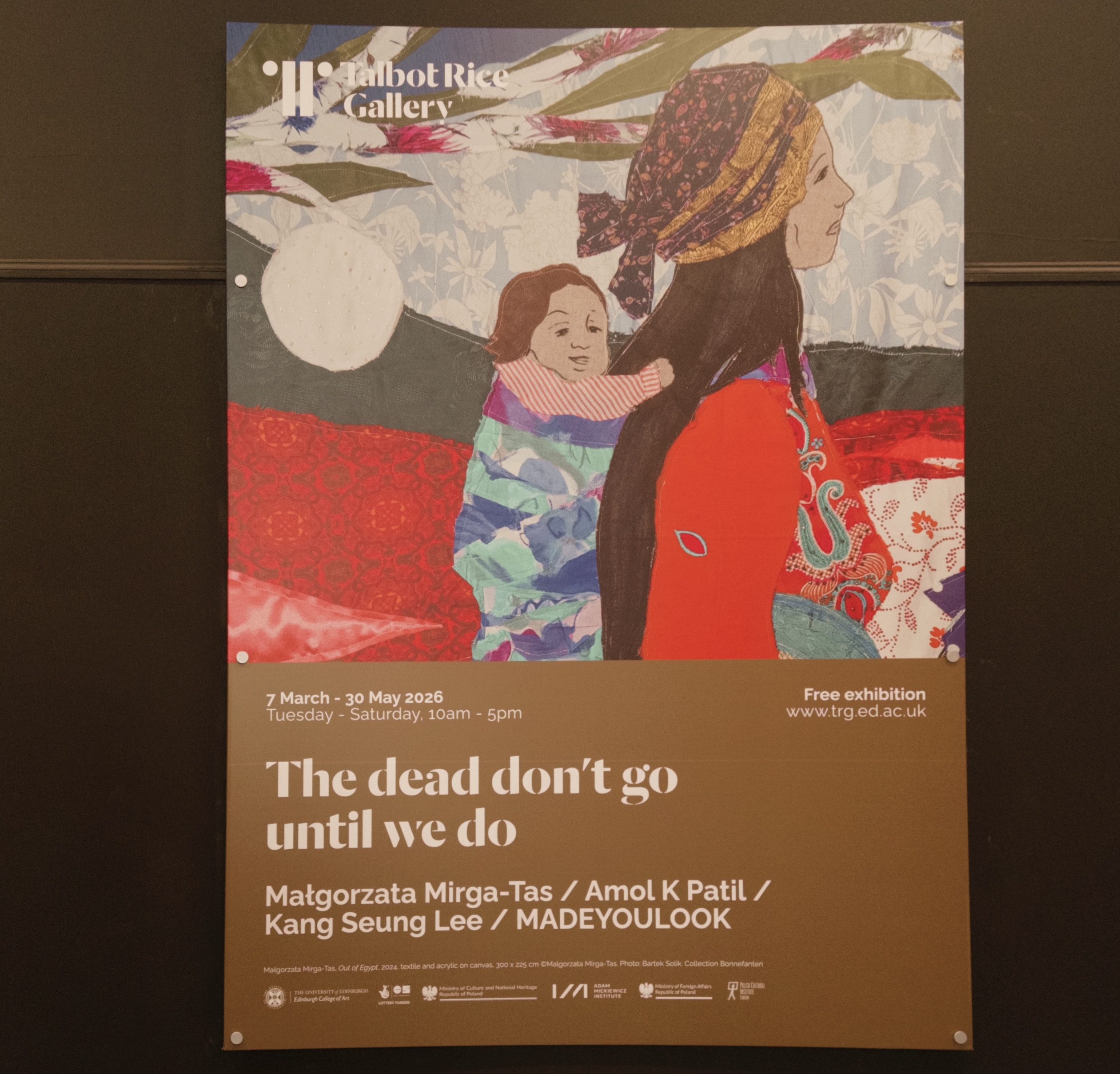
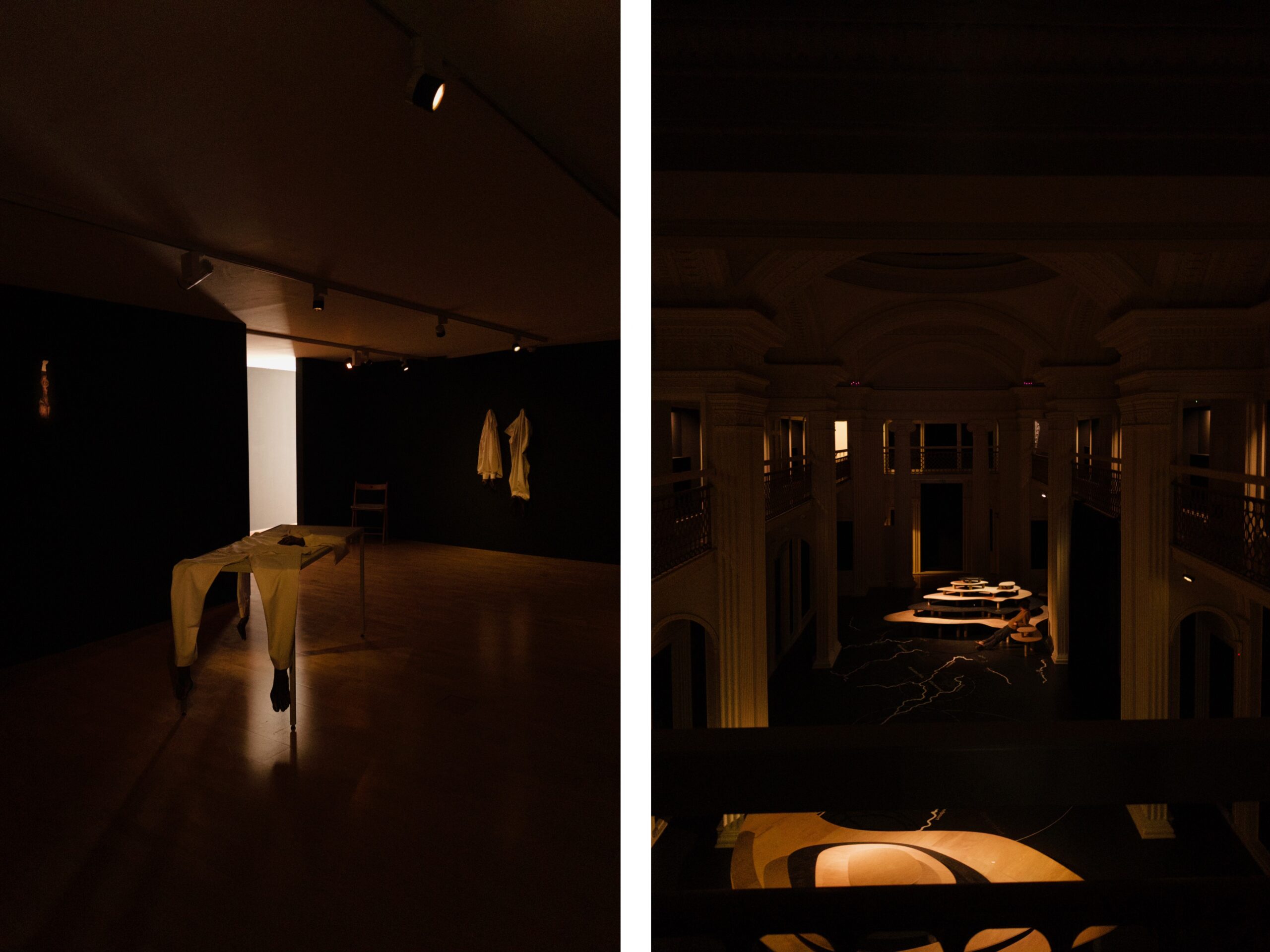
After visiting the exhibition of Talbot Rice Gallery, my most direct gain is not from a specific work but from the way it uses the “black box space.” Through the treatment of black shading cloth, a local spotlight, and overall dimming, the exhibition wraps the audience in low illumination and a highly controllable environment. This kind of space does not depend on complex architectural transformation but establishes an immersive viewing mechanism by scheduling light, materials, and viewing paths.
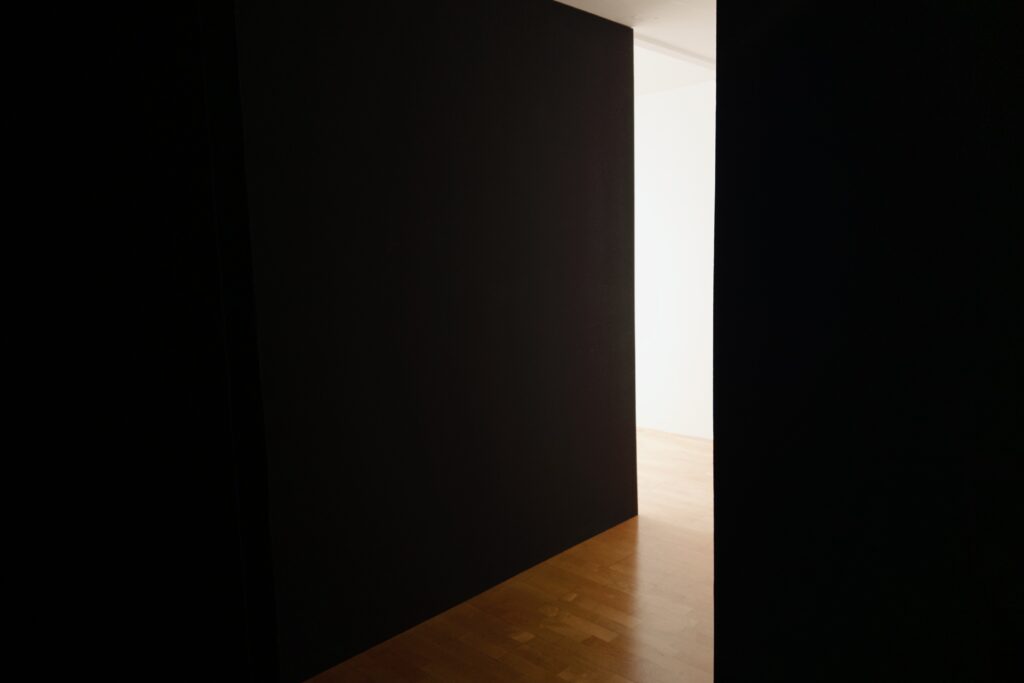
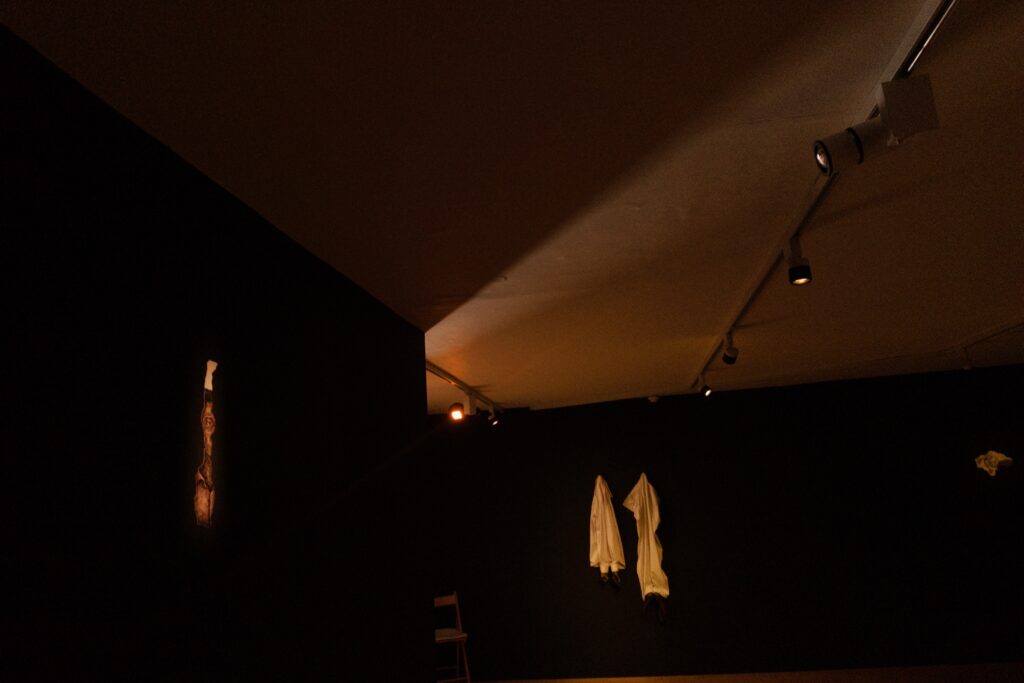
The black background weakens the spatial boundary and makes the transition between works more fluid. I gradually realised that a “black box” is not only the technical condition of image display but also a curatorial method, which reorganises the audience’s attention and watching rhythm by controlling visibility and invisibility.
link: The dead don't go until we do, Talbot Rice Gallery
Spatial transformation: from viewing to practice
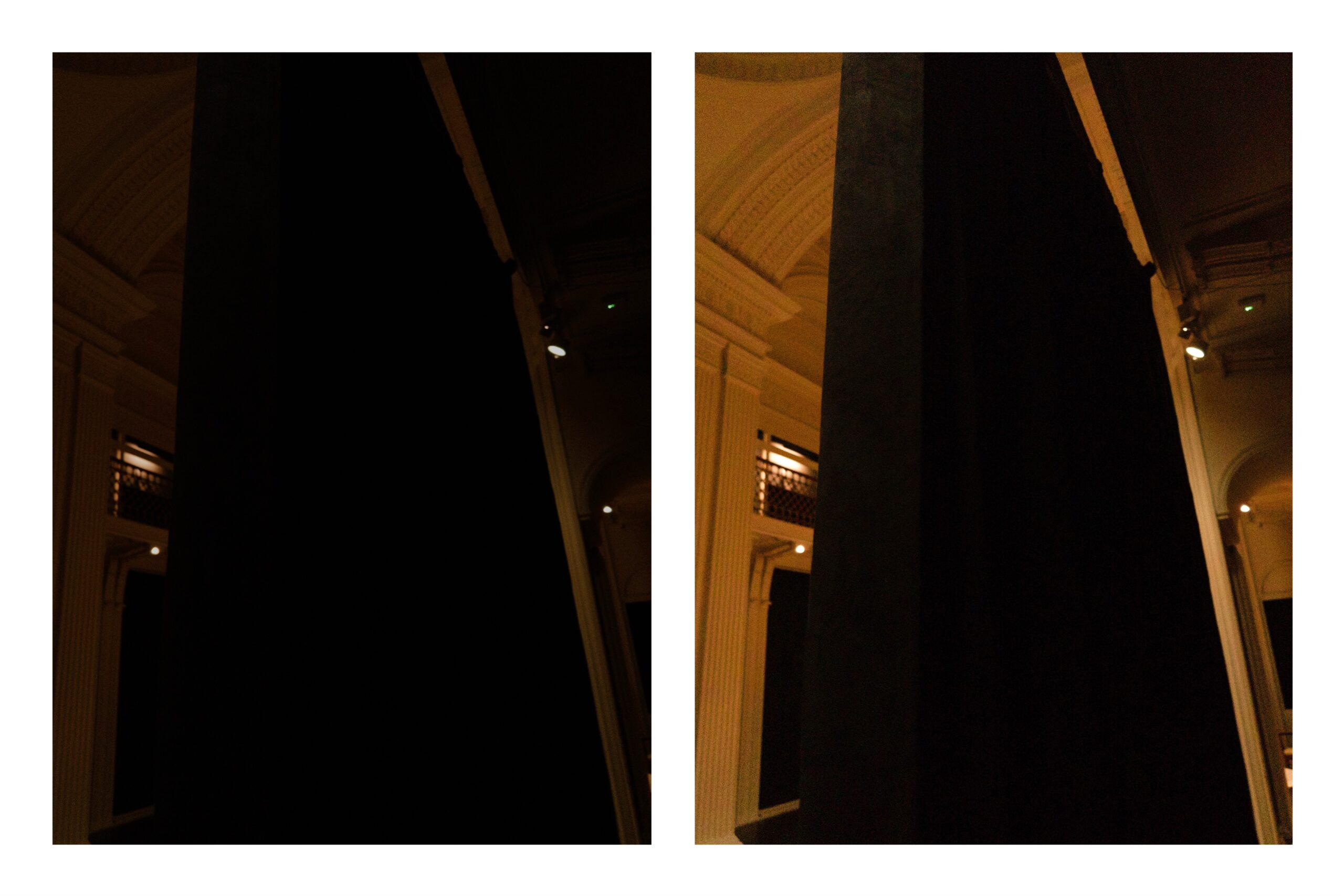
In my exhibition design, I try to translate this method into a concrete space, rather than simply copying a closed black box environment. I will control the overall light through shading cloth and artificial lighting so that the exhibition hall presents a unified dark tone; black fabric is not only used to shield excess light but also used as a space material to weaken the boundary of the wall and make the visual attention focus on the work itself.
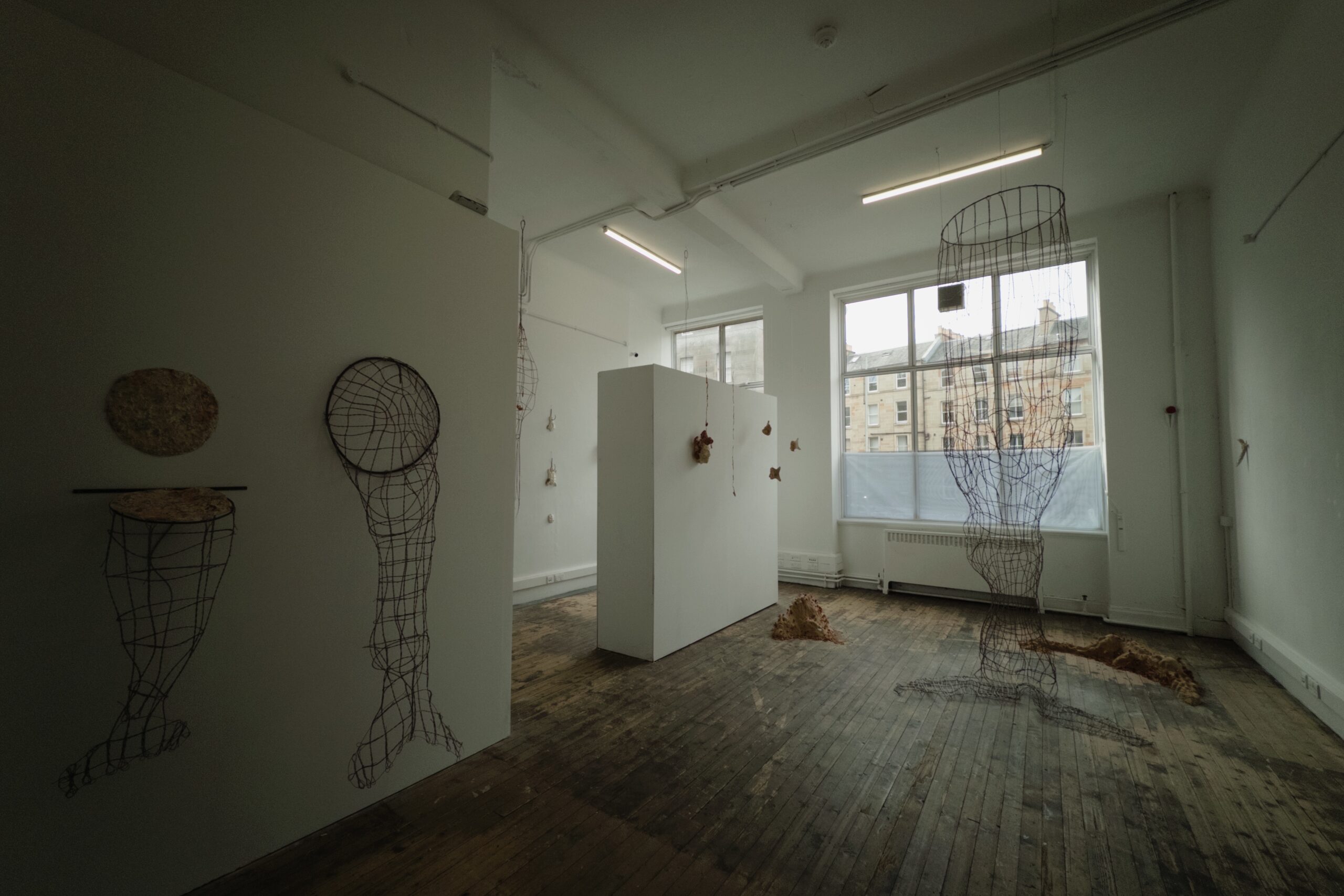
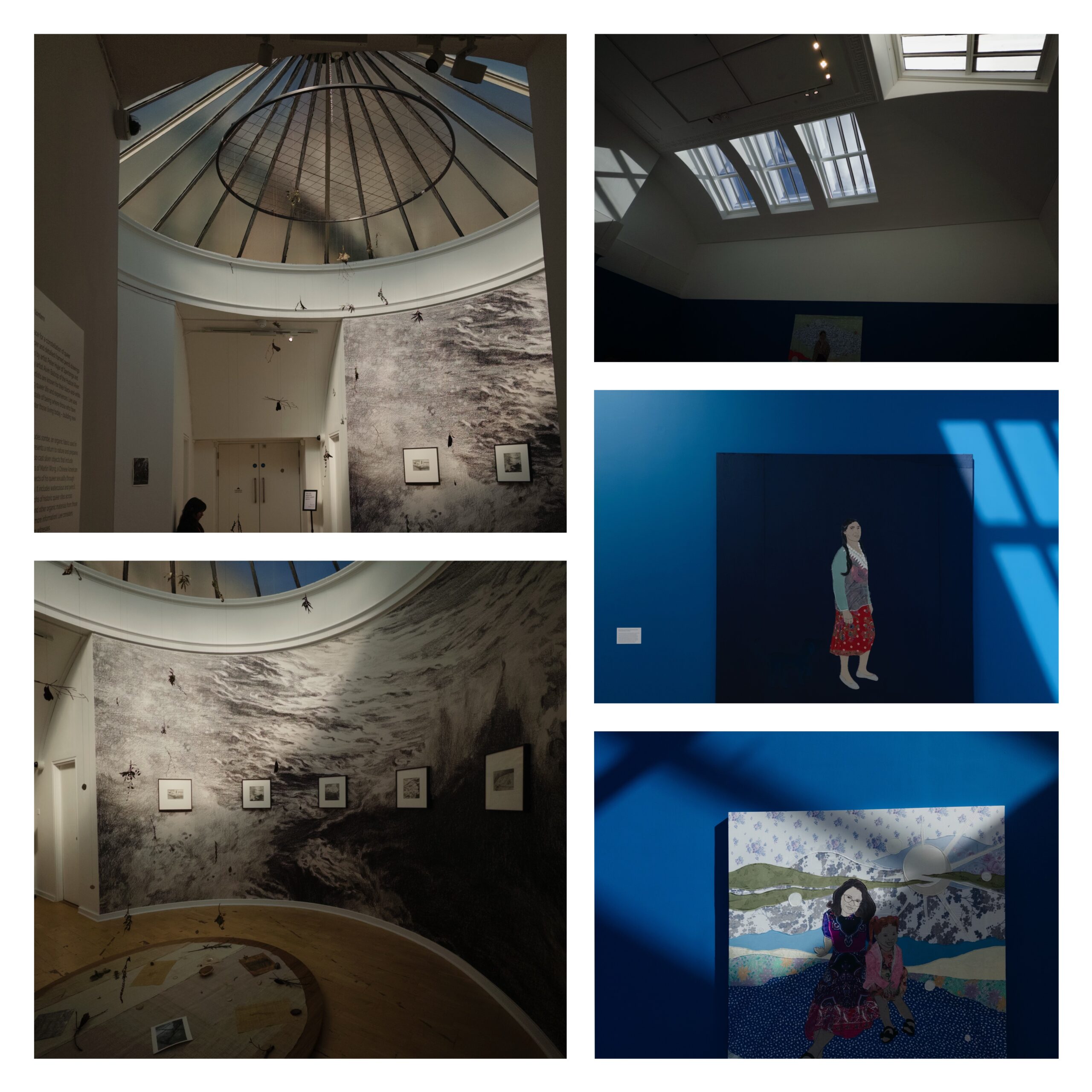
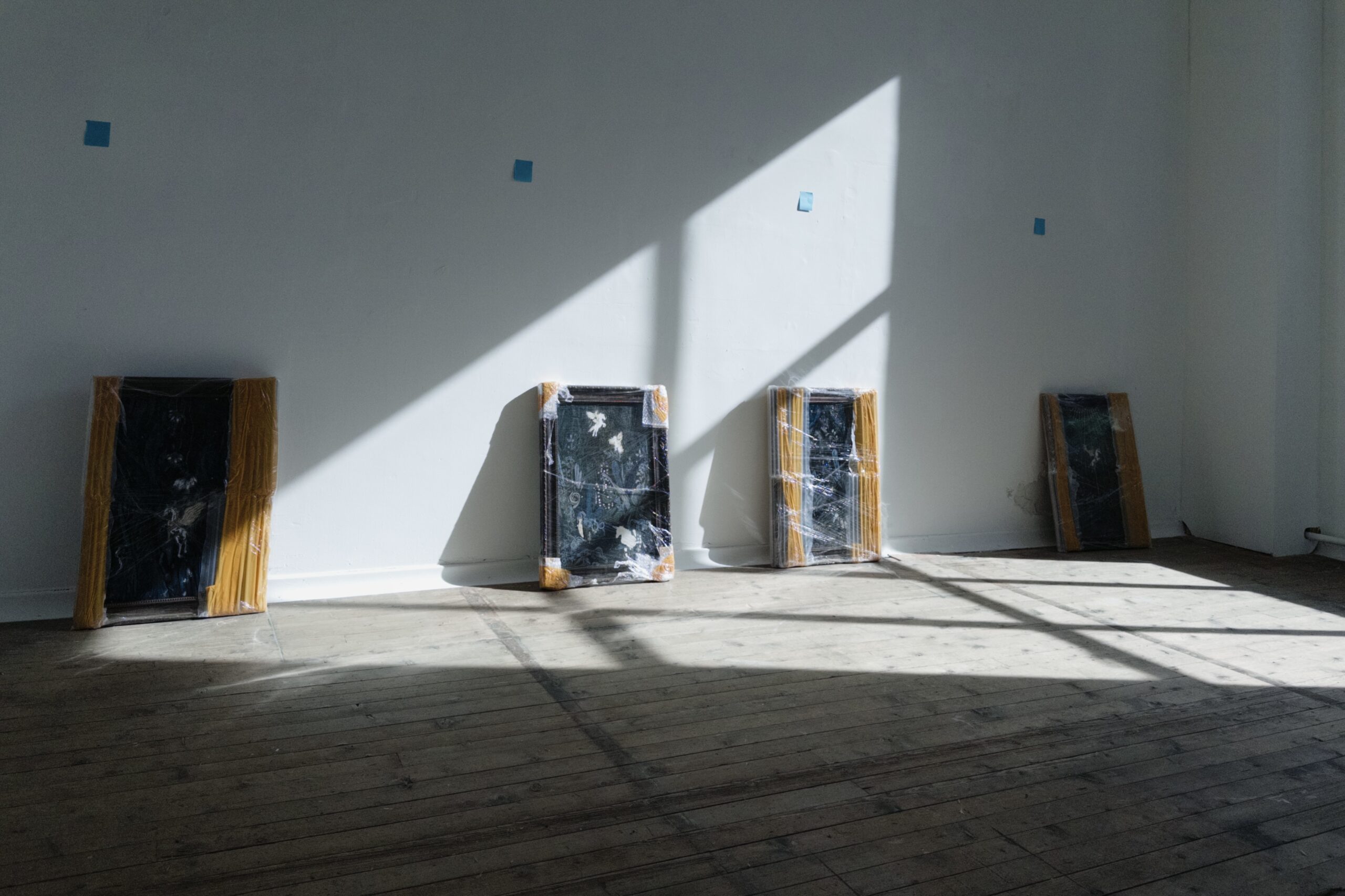
At the same time, the original two glass windows in the space will be preserved as the source of natural light. This treatment makes the exhibition hall between “controllable” and “uncontrollable”: the overall light environment is artificially constructed, but the change of natural light in a day will continue to intervene, forming a temporal atmosphere change. In addition, only partial lighting is necessary for some works so that the space remains hierarchical in the unified darkness.
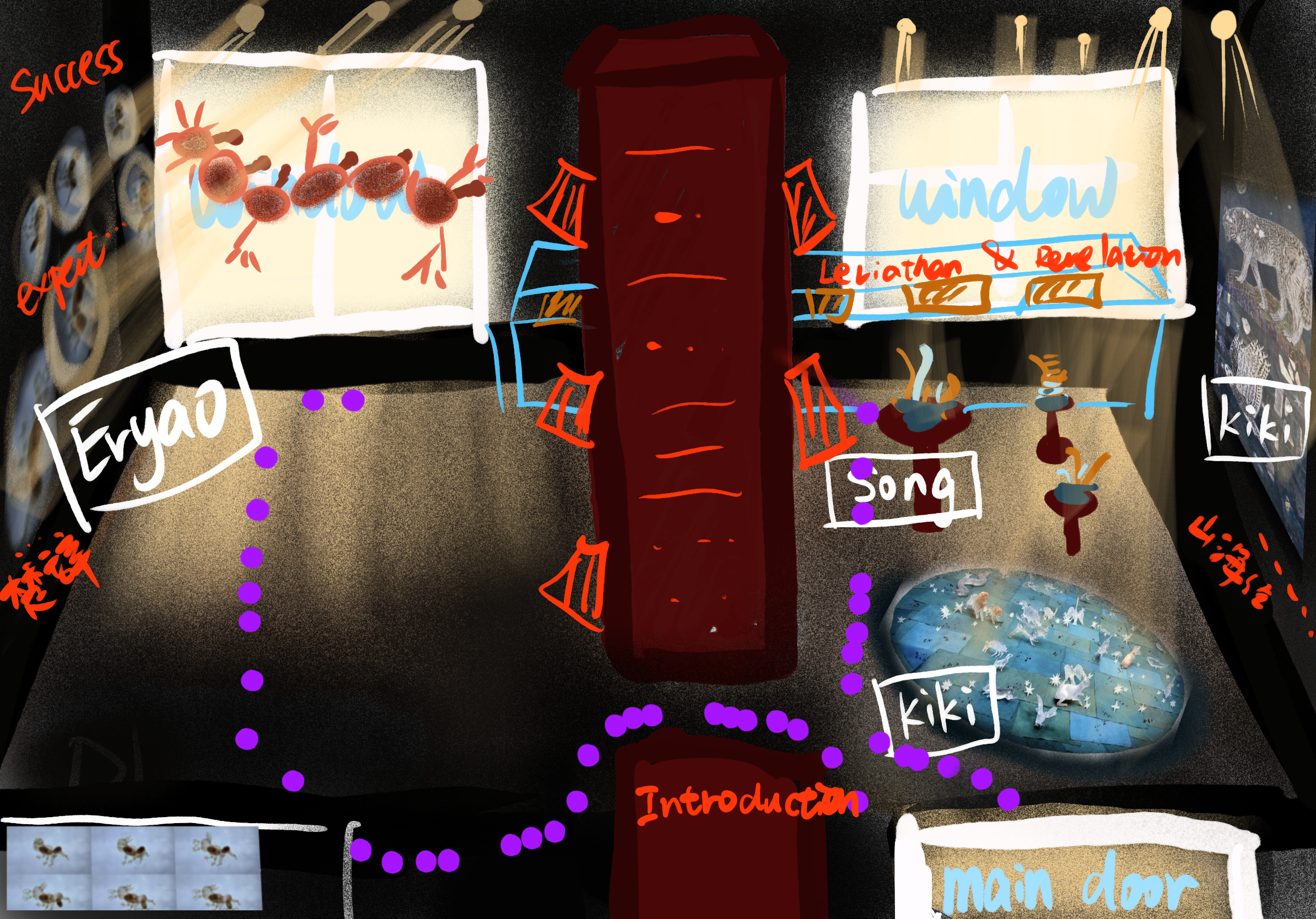
On the moving line, Kiki Smith’s constellation installation sculpture will be presented at the entrance, combined with wall illustrations, as the visual starting point for the audience to enter the exhibition. Then enter Song’s work. Then, a “research corridor” to display archival materials and publications, making the curatorial research process itself visible. Then, enter the relevant area of Eryao’s work, establish a cultural background through shadow play materials and images, and finally transition to a completely shaded black box space to play its stop-motion animation.
link: week6| Mythical Animals and Power Structures (Eryao and Kiki Smith's works)

link: Week 8|When Animals Speak the Language of Power (Raeyen Song's works)
Through this series of spatial arrangements, I am no longer concerned with the presentation of a single work but with how to gradually guide the audience into different levels of viewing experience through the design of light, materials, and paths. The black box is therefore not just a closed space, but a curatorial tool that can be dismantled and reorganised.
link: Transdisciplinary Curation in the Performing Arts
Bibliography
Talbot Rice Gallery. “The Dead Don’t Go Until We Do.” Accessed April 1, 2026. https://www.trg.ed.ac.uk/exhibition/dead-dont-go-until-we-do
Kiki Smith. Constellation. 1996. https://blogs.ed.ac.uk/s2800142_curating-2025-2026sem2/2026/03/03/week6/
Raey Yeen Song. ••••song~xian••••. 2025. https://rae-yen-song.com/projects/song-xian/
Eryao. Wishing Your Child Becomes a Dragon. 2024. https://www.youtube.com/watch?si=FNpP08jbcY1CG5wh&v=MxdBKNgKI3s&feature=youtu.be