From “Translation of Traditional Media” to “Collocation of Time”
Curating does not change the traditional media itself but, through the reorganising of space, narrative, and viewing mode, makes historical works enter contemporary perception. This idea mainly discusses how the media can be reorganised. However, the core question is, why can some historical works or historical images themselves still enter the context of contemporary art and contemporary curation?
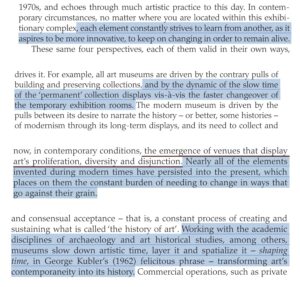
Terry Smith’s understanding of contemporaneity is needed here. What Is Contemporary Art? He described “contemporariness” as “multiple ways of being in time at once”, that is, multiple time states coexist. Thus, “contemporary” is not just the present in time but a state in which different historical levels meet, overlap, and continue to function in the present. In other words, whether a work is “contemporary” depends not only on when it was created, but also on whether it can still respond to today’s problems and be reactivated in the new context.
How historical images are reproduced in contemporary times
The significance of John Tunnard lies in providing an earlier reference: his works show that historical works may continue to be related to contemporary issues because of their treatment of landscape, psychological experience, and modernity’s tension.
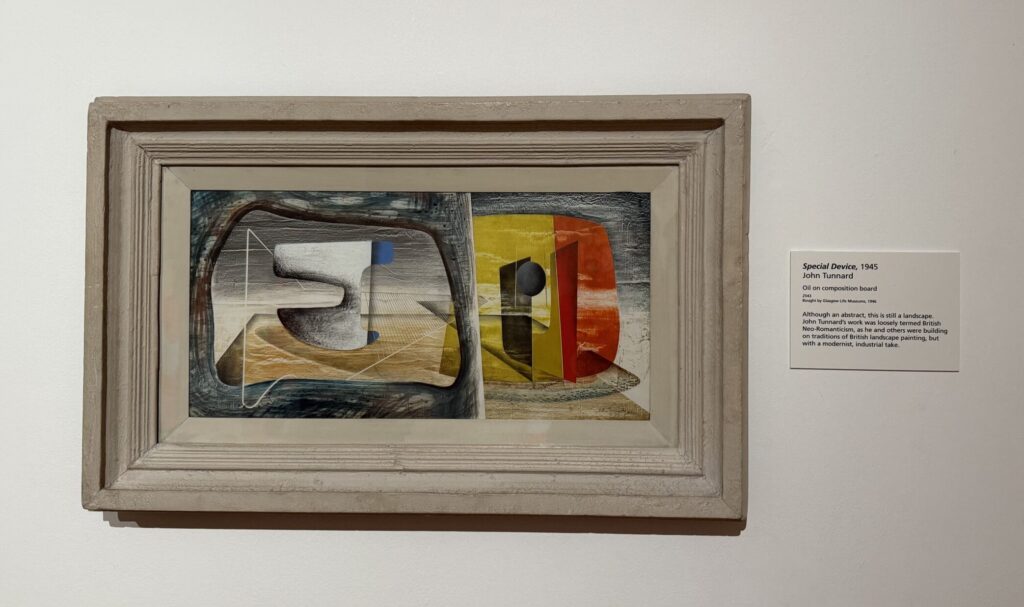
link: Special Device (1945)John Tunnard
But if Tunnard emphasises the conceptual continuity of historical works, Rego further shows that historical images can be rewritten directly by contemporary art.
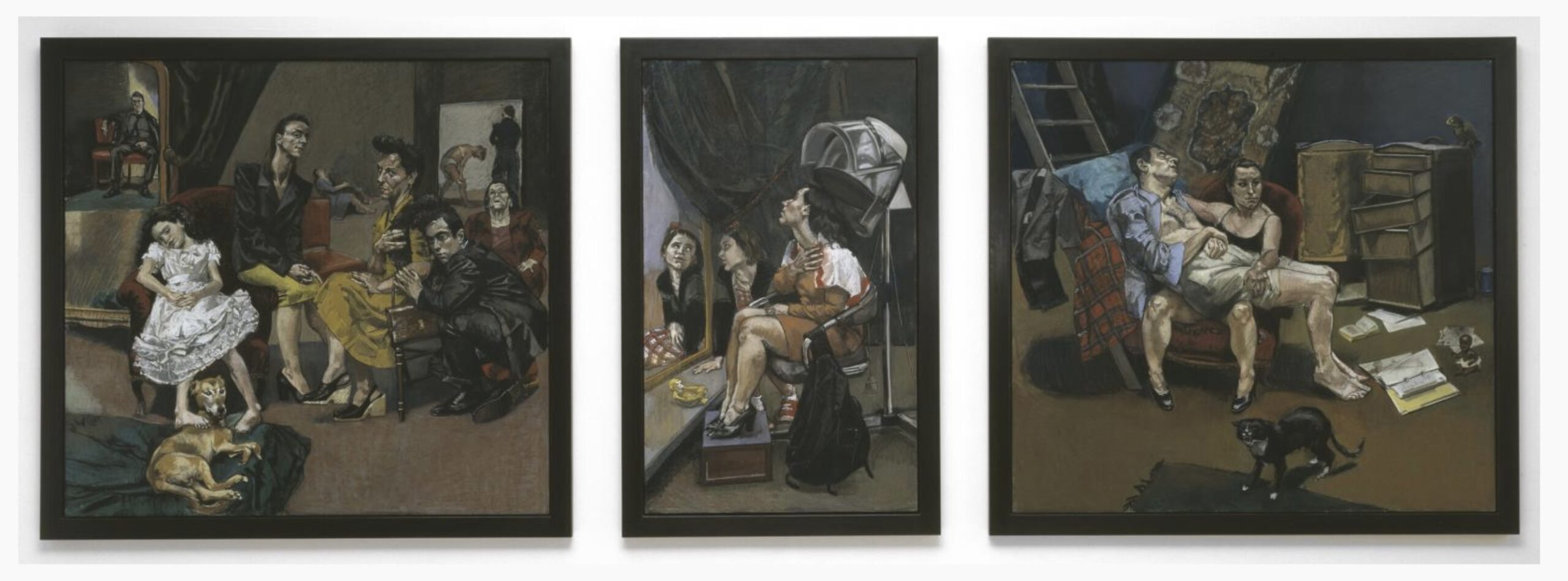
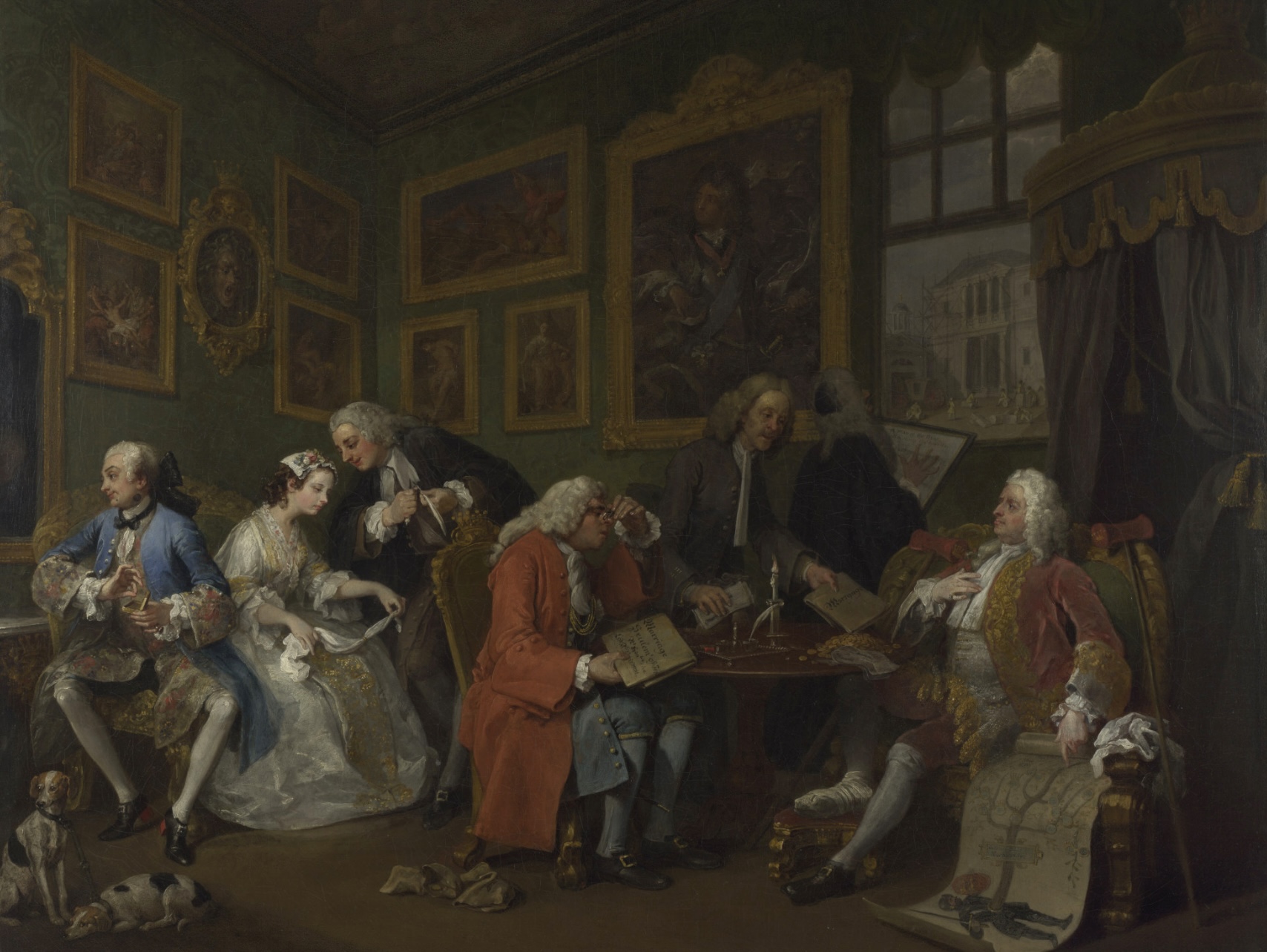
Paula Rego is a clear example. Her “The Betrothal: Lessons: The Shipwreck is clearly based on Hogarth’s Marriage à la Mode; that is, it is not simply a reference to historical style but a recreation of historical narrative structure. Historical images are no longer preserved objects here but have become materials for contemporary artists to speak again.
link: The Betrothal: Lessons: The Shipwreck, after ‘Marriage a la Mode’ by Hogarth 1999 by Paula Rego born 1935

link: Marriage à la Mode, Hogarth
Under this framework, contemporary art does not always create brand-new images, but it can also generate new social significance by misappropriating, rewriting, and recounting historical works.
Historical art can not only be re-displayed but also really participate in the generation of contemporary art because of its conceptual continuity and image reproducibility. Traditional art is no longer just a legacy of the past but a part of the current cultural production.
Bibliography
Smith, Terry Smith. “Mapping the Contexts of Contemporary Curating: The Visual Arts Exhibitionary Complex.” Journal of Curatorial Studies 6, no. 2 (2017).
Glasgow Museums. “Special Device (1945), John Tunnard.” Accessed April 1, 2026.
Paula Rego. The Betrothal: Lessons: The Shipwreck, after ‘Marriage à la Mode’ by Hogarth. 1999. https://hazelstainer.wordpress.com/2018/04/20/all-too-human/the-betrothal-lessons-the-shipwreck-after-marriage-a-la-mode-by-hogarth-1999-by-paula-rego-born-1935/
William Hogarth. Marriage à la Mode. 1743–1745.
National Gallery. “Marriage A-la-Mode.” Accessed April 1, 2026. https://www.nationalgallery.org.uk/paintings/catalogues/egerton-2000/marriage-a-la-mode.