Any views expressed within media held on this service are those of the contributors, should not be taken as approved or endorsed by the University, and do not necessarily reflect the views of the University in respect of any particular issue.

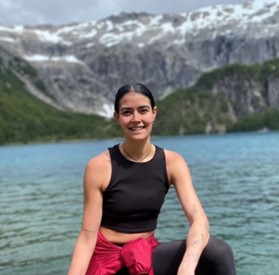
CEID Featured Alumni: Nan Li


Nan Li, CEID Class of 2020
Nationality: Chinese
Current Position: Teacher at Hangzhou Youth & Children’s Center

I currently work as an educator at Hangzhou Youth & Children’s Center, a public welfare institute supported by both the Zhejiang Provincial and Hangzhou Municipal governments. With a mission to provide high-quality extracurricular education, the center offers a variety of classes in fields such as sports, arts, and more.

Since graduation, I’ve been a teacher in the International Culture School at the Hangzhou Youth & Children’s Center. My role involves teaching English to students, primarily minors, to build a strong language foundation for their future and develop their cross-cultural communication skills. Additionally, I oversee teaching administration and participate in curriculum research and development, creating new extracurricular programs that align with China’s Double Reduction Policy. On top of that, given my workplace’s focus on activity-based education, I also organize various thematic educational activities.

While this job may seem unrelated to CEID on the surface, when I reflect on my journey, it’s clear that studying CEID in Edinburgh provided me with the skills and knowledge necessary to excel in my current role. One of the courses I took, Youth Studies, sparked my passion for working with teenagers. I realized that a job in a youth-centered environment would provide the opportunity to gain practical experience and make a difference in the lives of young people. The transferable skills honed in CEID courses, such as critical thinking, cross-cultural understanding, and policy interpretation, also gave me the edge I needed to secure this position.

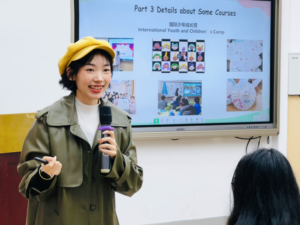
Another key difference between my current workplace and the public education system in China is the level of flexibility and autonomy we have in developing new curricula. Thanks to the theories and knowledge I gained in The Curriculum: Context, Change and Development course, I was able to work with my team to navigate the complexities of designing new programs. One of our latest curricula, the International Youth and Children’s Camp, is a speaking-focused program designed to develop teenagers’ intercultural communication skills. The program is designed to expose students to a wide range of cultures, including Hangzhou local culture, Chinese culture, and worldwide culture. The goal is for students to learn to confidently introduce their hometown culture in English, promote Chinese culture, foster patriotic sentiments, and ultimately develop an international perspective. Being able to apply the theories I learned to practical situations has been incredibly rewarding. The analytical skills I gained in the Education Policy and Politics of Education course were also invaluable in the development of this program, as they enabled me to delve into the Double Reduction policy and create an off-campus program that aligned with the policy’s principles.


This is a no-brainer to say that what I have gone through in CEID in Edinburgh has made who I am for the time being. The experiences I had in CEID courses, townhalls and related events as well as the skills I gained were like puzzle pieces, each one forming a part of the bigger picture of who I am today.


For more alumni posts

Featured Alumni: Mengqi Sun

CEID Featured Alumni: Mengqi Sun

Mengqi Sun, CEID Class of 2021
Nationality: Chinese
Current Position: Assistant Lecturer in Primary Education Faculty at Shijiazhuang Preschool Teachers College

My main responsibility in my current position is to teach the course Primary Education to the students in Primary Education Faculty of Shijiazhuang Preschool Teachers College. In China, college belongs to the level of higher education, but due to the fact that students entering college generally have lower scores in the college entrance examination than those entering university, the recognition of college is not as good as that of university. The students in this college are going to be primary school teachers after three-year study. And most of them are going to work in schools located in relatively less economically developed areas due to the educational level limitation.

On my career journey, CEID helped me a lot, especially in terms of courses and events. Regarding courses, the CEID and Education Policy and Politics of Education (EPPE) courses had a great impact on me. CEID helped me realize that education is such a grand concept that it is not equivalent to teaching or pedagogy. In the CEID course, I explored the relationship between education and culture, education and economy, education and gender equality and issues of concern for NGOs and the GEM Report. In the EPPE course, I found my interest in the field of comparative education, which is policy analysis. When you are conducting policy analysis, you will find that the reasons and purposes for some phenomena in the field of education are not as simple as they appear on the surface. And my dissertation also focused on this point, I studied socio-economic inequality in China’s HE internationalisation policy by doing critical policy analysis.

In terms of events, what impressed me the most was the PhD Panel and Career Panel. During my studies, whether to continue pursuing further studies and pursuing a doctoral degree was also a question that I considered. After participating in PhD Panel, I thought I should figure out whether I want or I really need a doctoral degree. After careful consideration, I gave up the idea of directly pursuing a doctoral degree after graduating with a master’s degree. For me, pursuing a PhD is to research specific issues that interest me, not just to improve my academic qualification. However, I had almost no experience working in the field of education, as a result, I had not yet gained a deep understanding of some phenomena or issues. It might be more meaningful for me to pursue a PhD when I discover some phenomena and issues through my work experience and aspire to study them.

Since I decided to work after graduation, the Career Panel helped me a lot. I really appreciate that Career Panel provided us with lots of practical skills such as CV writing and ways of searching career for opportunities.

In pursuing a position after the master’s degree, the biggest challenge for me was to make clear what kind of job I would like to do. Ultimately, what motivated me to make up my mind to work in college is my interests in policy analysis. But when I search for those recruitment positions, I found all of them requires at least three-year teaching experiences in school or colleges, and most of them require a doctoral degree. Then I thought if I am unable to secure my ideal position for the time being, I should at least do a job that will help me achieve my future career plan. Working in college first is very suitable for me at present. Compared to those who work in enterprises, those who work in universities have a relative advantage in applying for a PhD. At the same time, working in college can also help me accumulate work experience.

Preparing for an Academic Conference: Advice for MSc Students

CEID student Ijaaz Jackaria presenting at the 2023 GINTL Seminar: International Education Development and Internationalisation of Education

Masters students are often left behind in the world of academic research. Conferences, if open to them, often position masters students as part of the more passive audience – there to absorb knowledge – with little opportunity to share their experience and practice communicating their research. That is part of what makes the Global Innovation Network for Teaching and Learning (GINTL) events so unique. Here masters students are seen as junior researchers and provided the opportunity and support to improve their skills. Four students in our MSc in Comparative Education and International Development (CEID) took advantage of one of GINTL’s recent events, with two presenting online and two in-person in at the University of Jyväskylä in Finland. The hybrid event allowed students to share the in-process work on their master’s dissertation in a traditional academic format with other graduate students and faculty present to add comments and probing questions. Given the unique opportunity, we asked students to share advice for other master’s students that might be preparing for an academic conference. Their insights are below. You can also find Sydney Harrington’s story – with all the tech challenges, anxiety, and relief you would expect from a first-time presenter – here.

GINTL Research Seminar 2023

Peer Recommendations on Preparing, Engaging, and Navigating an Academic Conference

  • I have five pieces of advice: (1) It’s better to be overdressed than underdressed. That being said, sensible shoes are a must. Trust me on this one, your feet will thank you. (2) Make sure your name tag is easily visible and smile when you make eye contact with people. (3) Don’t feel that you need to change who you are to fit into academia; I have a southern accent, use the word y’all in every other sentence, and speak at 150 miles per hour. It didn’t mean that I was any less qualified to be there. Trust yourself.  (4) You know your research better than anyone in the room, take constructive criticism but don’t take it personally. Use what you think will be helpful and leave the rest behind. (5) Make sure you write down both people’s names and how you know them. Writing down “John Smith, GINTL, education and food presentation” is going to be a lot more helpful than just “John Smith”.                      – Sydney Harrington
  • Practise giving your presentation. The more often you practise, the more confident you will be on the day. Also, have fun with the experience and be open to accepting any feedback from staff and peers- they may give you advice that you would otherwise not have considered!Niamh Ni Iceadha
  • When you prepare for a presentation, it’s essential to keep it brief and relevant to the theme of the conference. Don’t feel the need to convey all the details of your research; rather, focus on the core elements, e.g. your research questions, your methodology, and your findings and main arguments.                         – Ijaaz Jackaria
  • Presenting at a seminar, online or in-person, is a great opportunity to network with peers and gain more clarity about our thoughts through interaction with scholars from the same discipline. It would be great to focus on the main parts of the research such as the research questions, methodology, and data collection methods for ongoing research. However, it is crucial to present the results/findings of the research if you are presenting a completed presentation. A good PowerPoint presentation will help you communicate effectively with the audience.Chinchu George


css.php

Report this page

To report inappropriate content on this page, please use the form below. Upon receiving your report, we will be in touch as per the Take Down Policy of the service.

Please note that personal data collected through this form is used and stored for the purposes of processing this report and communication with you.

If you are unable to report a concern about content via this form please contact the Service Owner.

Please enter an email address you wish to be contacted on. Please describe the unacceptable content in sufficient detail to allow us to locate it, and why you consider it to be unacceptable.
By submitting this report, you accept that it is accurate and that fraudulent or nuisance complaints may result in action by the University.

  Cancel