Any views expressed within media held on this service are those of the contributors, should not be taken as approved or endorsed by the University, and do not necessarily reflect the views of the University in respect of any particular issue.

CEID Alumni Contribute to UNESCO’s Global Education Monitoring Report

With UNESCO’s 2026 version of its flagship Global Education Monitoring (GEM) Report launched this week, we took a moment to connect with CEID Alumni Michael Cairney and Emily Goldstein who have been contributing behind the scenes. As the inaugural Moray House-GEM Report interns Michael and Emily are near the completion of their six month internships with the GEM Report. We asked them each five questions about their experience at the GEM Report, UNESCO, and in Paris!
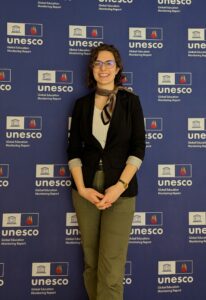
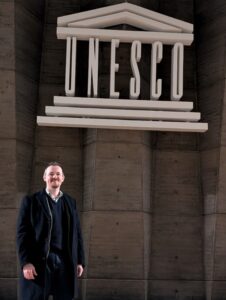
What have been your overall responsibilities or activities with the GEM Report?

EG: As an intern, I have been fully integrated into the GEM team, carrying out the same research and advocacy activities as staff members. The team has put a lot of trust in us to independently deliver rigorous inputs while also providing support and mentorship where needed.

MC: I’ve been mostly working with the Profiles Enhancing Education Reviews (PEER) which is a massive database containing profiles on every single country, which underpins the findings of the report. It’s a marvellous research resource and updating it is a mammoth undertaking. Working on the profiles involves a lot of research and communication with local experts.

How have you contributed to the 2026 GEM Report?
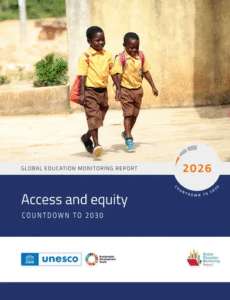
EG: One of the most exciting projects I’ve contributed to the 2026 GEM Report was drafting a country case study evaluating contextual factors that affected education completion. I have also interviewed students, parents, and activists all over the world to provide stories that emphasize the human impact of education policies. The majority of my time has been spent developing PEER profiles, documenting equity measures in education finance systems and verifying data used for analysis.

MC: I’ve written profiles, contributed some paragraphs for the report and DJed for the Christmas party. I’ve also spent a lot of time puzzling out anomalies on spreadsheets.

What has been the most illuminating or surprising part of your work at the GEM Report?

EG: The UNESCO name goes a long way in opening doors. Whether interviewing a mother of a student with disabilities for a research profile or networking with experts in the development field, it’s amazing how many people are willing to share their time and perspectives with you when you’re working with UNESCO. Being part of the organization has also provided access to a plethora of events and learning materials.

 

MC: I had no idea it would be so close to the centre of Paris! A view of the Eiffel tower from the window! The building itself is a mid-century modern classic. It was also great to be given so much responsibility early on.


What are the other benefits you’d enjoyed as part of your internship experience?

EG: It’s been an immense learning opportunity to peek behind the scenes and see the real processes of data analysis and reporting at an international institution that we studied in CEID. Statistics and country comparisons take on a whole different meaning when you see how they are made, and there’s no better way to learn than jumping into the fray.

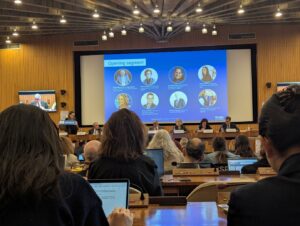
MC: Being at UNESCO is a great way to see how these international systems operate. I attended a Global Citizenship Education awards ceremony and learned vastly more from a few chats than I could from looking at the website. There’s nothing like human connection.
Anything else you’d like to add?

EG: I would be remiss if I didn’t mention another outstanding benefit which is access to all of the delectable pastries of Paris.

MC: Big thanks to the Korean delegation for the cookery lesson!


CEID Visiting Scholar: Professor Soo-yong Byun

The CEID Research Group is delighted to  host Professor Soo-yong Byun for the first six months of 2026. Professor Byun is a Professor of Education, Demography, and Asian Studies at Penn State University. His research interests encompass sociology of education, international comparative education, rural education, and educational policy analysis and program evaluation. Professor Byun’s research has made him one of the world’s leading scholars in shadow education, where he often uses national and international datasets to evaluate cross national differences and explore non-academic outcomes. You can find his work on the Global Patterns of the Use of Shadow Education here and his just released examination of the role shadow education plays in behavioral (dis)engagement of South Korean elementary students here. Professor Byun has over 100 publications, including multiple books published in both Korean and English, and is invited to talk on his areas of expertise by universities around the world. To see more about Professor Byun please visit his Google Scholar page and personal website.
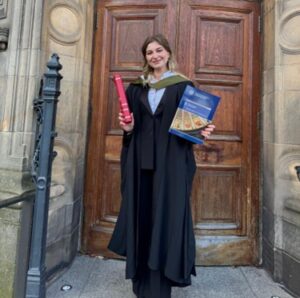
 

To get to know Professor Byun a bit better we recently asked him five questions about his stay at Moray House School of Education and Sport, his research, and his view on important areas of research for the next 10-15 years. During his time with us he has graciously agreed to contribute to our lecture series on comparative analysis, lead a workshop on propensity score matching for the Advanced Quantitative Research in Education hub and host a public lecture on his work in shadow education (details coming soon!). Now onto the questions.

Question 1: What are your primary research areas and why do you think they are important?

My primary research areas are the sociology of education, international comparative education, and educational policy analysis. Guided by an institutional perspective—which emphasizes that patterns of social stratification vary across countries depending on the institutional arrangements of national education systems, cultural norms, and policy environments, I investigate how the mechanisms and processes of stratification differ across national and geographic contexts, using large-scale national and international datasets. In addition, my research places strong emphasis on the rigorous evaluation of educational policies and school-based interventions, particularly as they affect historically underserved populations, including socioeconomically disadvantaged students. I view these two strands of research as deeply interconnected. This is because a clear understanding of the institutional mechanisms that generate and sustain inequality is essential for designing and implementing effective educational policies and programs that are responsive to diverse populations and contexts.

Question 2: What do you hope to work on during your time at the University of Edinburgh?

During my time at the University of Edinburgh, I plan to focus on several research projects.

First, I aim to complete a book manuscript that I have been developing since last year. The book examines elite education pathways in South Korea—from English-language kindergartens to prestigious universities—and how these sequential pathways shape and reproduce educational inequality. It brings together six peer-reviewed journal articles I have previously published and integrates them into a cohesive and accessible volume. Second, I am working on several manuscripts for journal submission and conference presentations. One manuscript investigates how socioeconomic disparities in adolescents’ occupational aspirations have changed over time in the United States and the United Kingdom, using PISA data. A related manuscript extends this analysis to Germany. I will present this work at the Spring Meeting of the International Sociological Association’s Research Committee on Social Stratification and Mobility (RC28), to be held on May 20–22, 2026, in Seville, Spain. Finally, I am developing a manuscript that examines how parents’ own experiences with private supplementary education—commonly known as shadow education—are transmitted to their children, using longitudinal data on elementary school students in South Korea. This project is particularly significant because it is, to my knowledge, the first study to explore the intergenerational transmission of shadow education, conceptualizing it as a form of cultural capital in the Korean context.

Question 3: Why did you choose to spend your sabbatical at the University of Edinburgh?

The University of Edinburgh has an outstanding global reputation in educational research, and I wanted to build networks with world-renowned colleagues both at the University of Edinburgh and across the UK. Fortunately, Dr. William Smith, one of my former graduate students at Penn State, is now based here, and with his generous support, I was able to make this visit possible. In addition to my academic interests, I have a deep appreciation for history. In that sense, Edinburgh was my first choice, as it offers a unique opportunity to pursue rigorous research while also immersing myself in rich historical and cultural experiences beyond academia.

Question 4: What has been your favorite non-academic experience in Scotland or the UK so far?

I love reading books, playing golf, and traveling. However, because of the rainy and windy weather, I haven’t been able to play golf or travel much since arriving in Edinburgh. On the bright side, I’ve discovered many cozy cafés near where I’m staying and throughout the city, and I’ve truly enjoyed spending time there reading.

Question 5: What is an area of research that you think will be really important for comparative education in the next 10-15 years?

I think that shadow education is a particularly important area of inquiry within comparative education. It has expanded rapidly across the globe, and many countries with emerging tutoring markets share common concerns about its potential unintended and adverse consequences. Although scholarly interest in shadow education has grown substantially in recent years, important gaps remain in the availability of high-quality data and rigorous empirical evidence. Consequently, much is still unknown about its broader effects—not only on cognitive outcomes such as academic achievement, but also on non-cognitive outcomes, including creative thinking, mental health, and classroom engagement.


CEID Featured Alumni: Dilara Keven


Dilara Keven, CEID Class of 2024
Nationality: Turkish
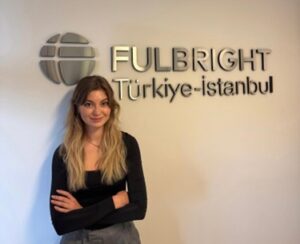
Current Position: Education Adviser at The Turkish Fulbright Commission

Making the Most of a Second Chance

When I first applied to the CEID programme, I was not accepted. However, when I applied again the following year, this time more prepared and intentional, and received an offer, I knew I did not want to take this opportunity lightly. This second chance came with a strong sense of responsibility, and I was determined to make the most of it from the very beginning.

With this mindset, I tried to be as involved as possible in the CEID programme. In addition to the core coursework, I took on the student representative role and actively participated in activities beyond the classroom. Being part of these spaces allowed me to meet new people, engage with different perspectives, and become more familiar with the wider academic and professional environments surrounding the programme.

However, there were also moments during the programme that were challenging, where I felt overwhelmed and unsure whether I was fully keeping up with the complexity of what we were studying. Moreover, like many of my peers, I was navigating this experience as an international student away from home. Studying in a new country often requires balancing academic responsibilities with emotional, financial, and personal pressures, adding another layer to the learning process.

Despite these challenges, I gradually learned that discomfort is often an essential part of growth. While anything new can feel frightening at first, working through these difficulties helped me develop a strong sense of resilience. Learning to ask for support and trusting the learning process became central to my development, making the experience more meaningful and reinforcing how much strength we build when we step outside our comfort zones.

As I approached the end of the programme, transitioning into professional life felt like a natural continuation rather than a significant challenge. Shortly after graduating, I began working at Fulbright Türkiye, where I am currently involved in higher education and international academic exchange. I regularly engage with data, policy documents, and institutional frameworks, contributing to analytical reports that support programme development and informed decision-making. On a daily basis, I actively use the research skills, comparative perspective, and critical thinking approach I developed during CEID. Whether analysing higher education trends, contributing to institutional reports, or working within international and multicultural contexts, the ability to question assumptions, synthesise information, and present findings clearly remains central to my work.

Starting this role shortly after graduation made it clear how well the CEID programme had prepared me, not only academically but also in professional judgment, adaptability, and confidence in international settings. The programme’s emphasis on reflection, analysis, and global perspectives continues to shape how I approach my responsibilities today.

While much of CEID’s impact is visible in my professional life, it also shows itself in more personal and reflective moments. When I mention that I completed my Masters degree at the University of Edinburgh, I still notice people’s reactions. These moments are small but meaningful reminders that this journey was about more than earning a degree. It was also about belonging to a community and an institution that I am proud to be part of.

Overall, the CEID programme helped me become more intentional in how I learn, work, and make decisions about my career. Looking ahead, my motivation to continue improving and working towards my long-term goals stems from the resilience I built throughout this journey. From the application process to graduation and beyond, my experience with the CEID programme reinforced the value of persistence, hard work, and trusting second chances.

For current and future CEID students, my advice is simple: get involved, even when you feel unsure or not fully ready. Say yes to opportunities, show up, ask questions, and give yourself time to learn. Often, it is the second chance, approached with intention and care, that allows the most meaningful growth.

For more alumni posts


css.php

Report this page

To report inappropriate content on this page, please use the form below. Upon receiving your report, we will be in touch as per the Take Down Policy of the service.

Please note that personal data collected through this form is used and stored for the purposes of processing this report and communication with you.

If you are unable to report a concern about content via this form please contact the Service Owner.

Please enter an email address you wish to be contacted on. Please describe the unacceptable content in sufficient detail to allow us to locate it, and why you consider it to be unacceptable.
By submitting this report, you accept that it is accurate and that fraudulent or nuisance complaints may result in action by the University.

  Cancel