Shadow puppetry as a time medium
From the translation of traditional media to the reactivation of historical works in the contemporary context, and then to myth as a narrative structure that is constantly restated. Along with this clue, the research object gradually converges from generalised traditional images to mythical images and then further focuses on mythical animal images.
During a discussion session with students from Contemporary Art Practice (CAP), I was introduced to the work “Wish Your Child Becomes a Dragon” by the Chinese artist Eryao. In this exchange, the artist presented how shadow puppetry could be reconfigured through stop-motion animation and digital imagery. This encounter made me realise that the transition from traditional media to contemporary moving image is not only a formal transformation but also a shift in how narrative and temporality are constructed.
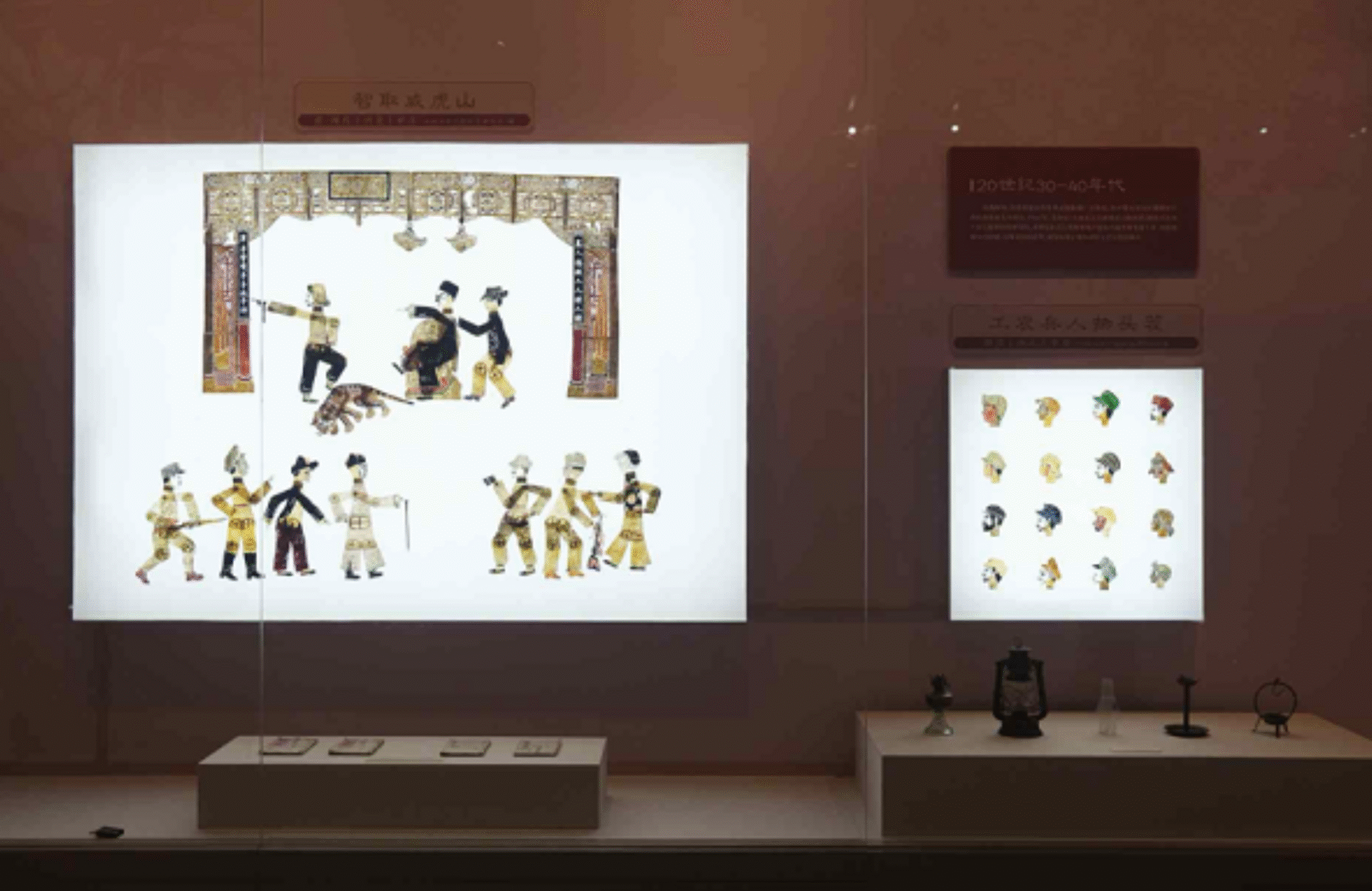
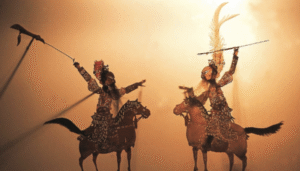
Shadow puppetry is not only a traditional folk art or a static cultural heritage but also a medium established by light, projection, manipulation, and duration. The image of the dragon is not a fixed object but is watched and perceived in the process of movement, flashing, and disappearing.
link: 700 shadow puppets tell China's stories at Zhejiang Provincial Museum
Dragon myth in digital communication
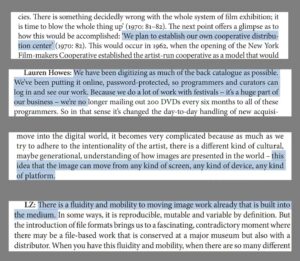
Curators in the post-media era should not only discuss the exhibition but also discuss how the works circulate. Ben Cook and others proposed in Distribution After Digitisation (2014) that digitalisation has changed the propagation path of images and redefined who can watch and how to watch. For shadow play, this means that it is no longer limited to live performances but has entered the digital screen, network platform, and exhibition space, becoming a dynamic image that is constantly translated and recirculated.
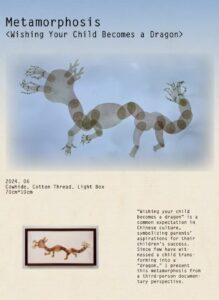
In Eryao’s project, the dragon myth has become a narrative structure that has been repeatedly activated in the digital image era. It bears not only the imagination of traditional culture but also the intergenerational expectation and growth pressure of Chinese families. It also shows how the dragon continues to become a symbol of identity building, social expectation, and cultural memory in the display of dynamic images and digital communication from the traditional media of shadow play. From this, we can find that the myth of curation is not only presenting the content but also planning a way of watching it in terms of time, media, and communication.
Therefore, I chose Eryao’s work, Wishing Your Child Becomes a Dragon, not only because it employs shadow puppetry and dragon imagery but also because it concretely demonstrates the process I am investigating: from traditional medium to moving image to digital circulation and, finally, to myth as a contemporary narrative structure.
Bibliography
Eryao. Wishing Your Child Becomes a Dragon. 2024
Zhejiang Provincial Museum. “700 Shadow Puppets Tell China’s Stories.” Accessed April 1, 2026. https://www.ehangzhou.gov.cn/2026-01/04/c_296142.htm
Cook, Ben Cook, et al. “Roundtable Discussion: Distribution after Digitization.” The Moving Image Review & Art Journal 3, no. 1 (April 1, 2014): 73–81.