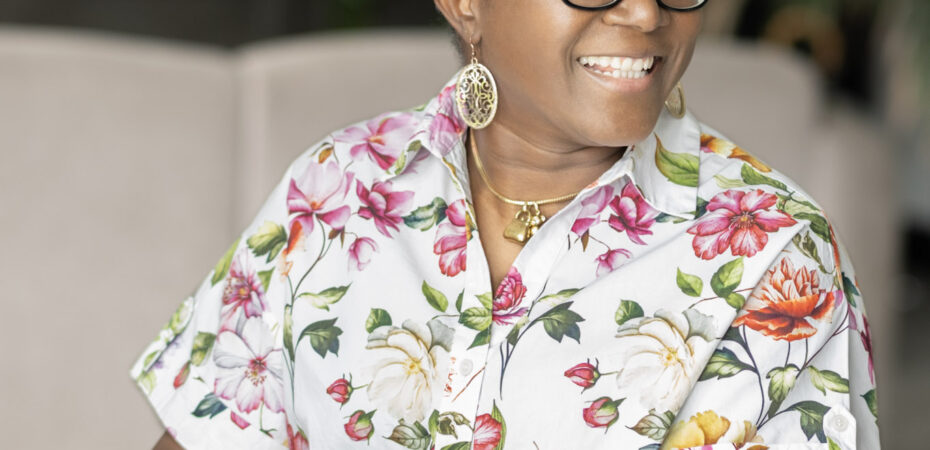
Adepeju(Peju) Adeyemo, is a third-year HCP-Med student at the University of Edinburgh, currently working as a Primary Care Physician Assistant. Her interests lie at the intersection of compassionate clinical practice, mental health and the evolving role of humanity in healthcare. Read on to learn about her experiences as a mature student studying towards a medicine degree.
When people think about studying medicine, they imagine anatomy labs, OSCE examinations, long nights of revision and the satisfying click of a differential diagnosis falling into place. And yes, all of that is very much part of it.
But over time, I’ve come to understand that medicine is something far deeper than that. It’s deeply human work. It asks things of you that no textbook can fully prepare you for.
Medicine was a childhood dream I carried for years, quietly, and eventually in secret. I was drawn to the science of the human body, but more than that, to the privilege of being present with people during some of the most vulnerable moments of their lives. The ability to weave genuine care together with clinical knowledge felt meaningful to me in a way I couldn’t quite articulate at the time.
Like many graduate entrants, though, life didn’t follow a straight path. Family responsibilities, motherhood and the realities of adulthood meant I gradually veered away from that dream. Medicine became something I carried within me rather than something I believed was still possible.
Then the HCP-Med programme at the University of Edinburgh appeared and with it, the possibility that it wasn’t too late.
For me, HCP-Med represented far more than a graduate entry route. It represented the acknowledgement that people take unconventional journeys into healthcare, and that lived experience can be an asset rather than a limitation.
Before medical school, I worked as a Physician Assistant. I also became a mother, navigated hardship, and rebuilt parts of myself I didn’t know needed rebuilding. These experiences fundamentally shaped how I see people, suffering and resilience. They taught me that often, the most important part of a consultation isn’t what’s being said, it’s what remains unspoken.
Patients rarely arrive carrying only symptoms.
Behind chest pain may be loneliness. Behind poorly controlled diabetes may be grief. Behind anxiety may be fear, shame or exhaustion. Sometimes patients aren’t simply looking for a diagnosis; they’re looking to feel seen.
Medicine gave me the scientific language to understand disease. Life taught me how to recognise humanity within illness.
This feels increasingly important in an era where AI is transforming healthcare at speed. AI is already exceptionally capable at generating differentials, synthesising clinical data and proposing evidence-based management plans. In many areas, it may eventually outperform clinicians in pattern recognition and data processing.
But I don’t believe the future of medicine is becoming less human. If anything, it will require us to become more human.
Patients will remember whether they felt heard during a frightening diagnosis. They’ll remember whether compassion accompanied clinical competence. They’ll remember whether the person opposite them recognised their dignity beyond their disease. There’s something in that exchange that technology cannot replicate; the ability to sit with uncertainty, to deliver difficult news with wisdom, to catch the tremor in someone’s voice when they say I’m fine.
I’ve come to call this Spiritual Intelligence and I want to be clear about what I mean by that, because it goes beyond managing emotions. The term Spiritual Intelligence has been explored academically notably by Zohar and Marshall. However, I use it here in my own clinical context, shaped by lived experience and practice. For me, Spiritual Intelligence is the capacity to acknowledge our own limitations honestly and without shame. It means accepting, safely and with wisdom, that not every patient can be helped, and that medicine and science do not yet hold all the answers. It is the ability to carry that truth without being crushed by it; to understand where our responsibility ends, so that we can continue showing up fully for those we can reach. It transcends feelings. It is an orientation toward human suffering, uncertainty and limitation that allows clinicians to remain present, compassionate and whole.
A spiritually intelligent clinician doesn’t over-promise or over-treat out of an inability to accept limitation. They don’t quietly absorb the weight of every outcome that wasn’t within their power. And paradoxically, that makes them safer, steadier and more genuinely present for their patients.
To any graduate entrant considering medicine: please don’t underestimate the value of your previous experiences. The years spent raising children, working in another field, caring for relatives, navigating failure or rebuilding your life; these may one day help you connect with patients in ways no lecture can teach.
Medicine needs academic excellence and scientific innovation. But it also needs spiritually intelligent clinicians; people who can bridge science with humanity, knowledge with wisdom, and clinical competence with the grace to accept what lies beyond it.
Studying medicine while raising three children and working part-time has not been easy. But the support I’ve found on this programme has made a profound difference. Sometimes all people need is an opportunity, some belief, and the right environment to flourish.
That, I’m learning, is the deeper study of medicine.