

Based on my tutor’s feedback, I developed a subtitle for my personal project—Design Answers Rural—to explain and expand my exhibition title, Peripherial Future. I also created a poster.
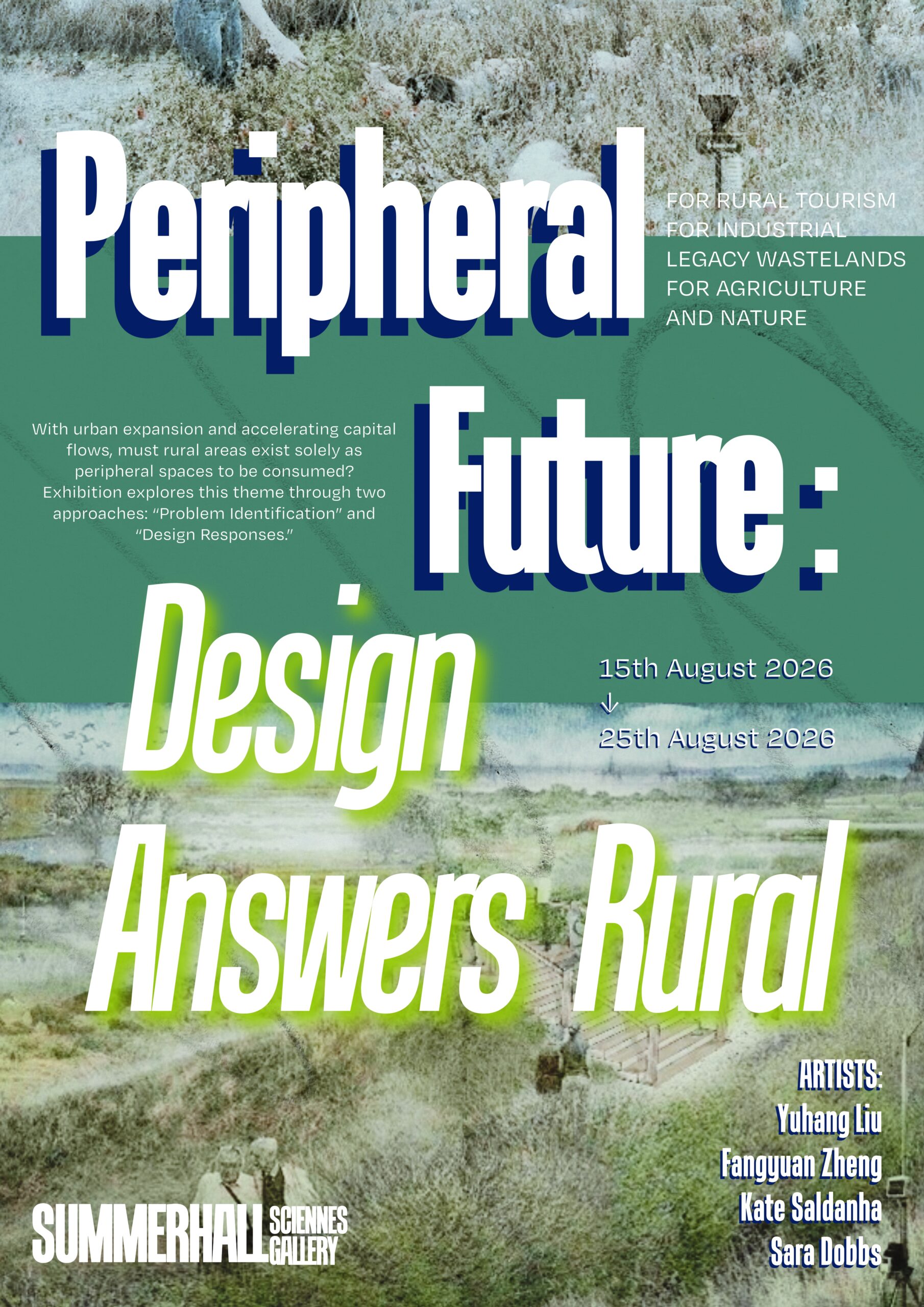
Figure 1: Peripheral Future: Design Answers Rural, a poster designed by Xinger Gao in 2026; variable dimensions
Based on the lectures and pre-class readings, I believe my project requires an archive. This is because I can use archive to present my personal observations of the current state of rural China—historical information that is often lost or displaced[1].
I plan to adopt a “radical care” archival approach[2]. I will incorporate my own photographic and interview materials, shot in Huge village, rural Hebei, China, into the exhibition. This will allow audiences to empathize with the residents and deeply understand my exhibition concept. I anticipate setting up the exhibition using table and chair(accessible facility); the estimated costs include table and chair rental at Summerhall (0), printing costs (0), and the purchase of photo albums (£5 in kind). I will place the photographs I took during my fieldwork and the texts obtained from interviews with locals in an album for visitors to browse. With tables and chairs provided, I believe interested visitors will be encouraged to explore my archives.
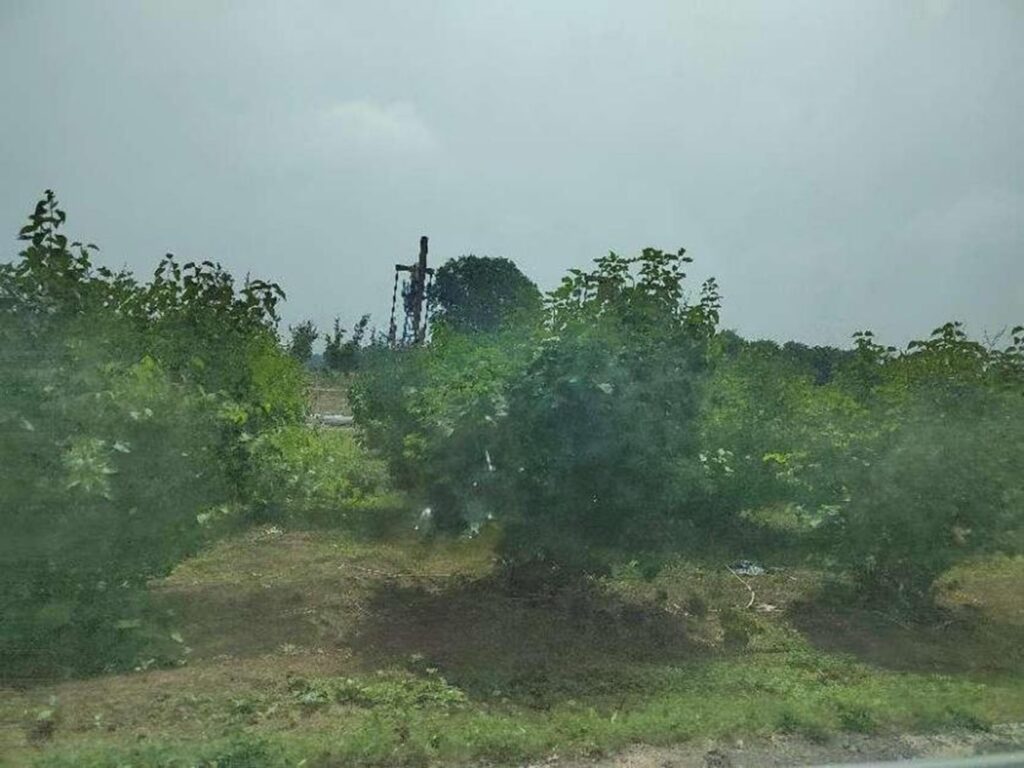
Figure 2: A photograph taken by Xinger Gao in 2025 in Huge Village, Hebei Province, China; dimensions variable; used for archival display. Oil extraction rigs are located on the western side of the village and are scattered throughout the outskirts.
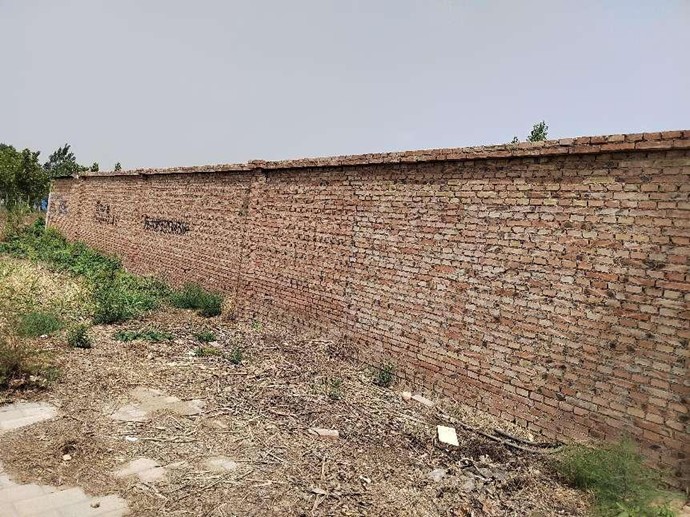
Figure 3: A photograph taken by Xinger Gao in 2025 in Huge Village, Hebei Province, China; dimensions variable; used for archival display. The walls in Huge Village reflect the local standard of building construction.
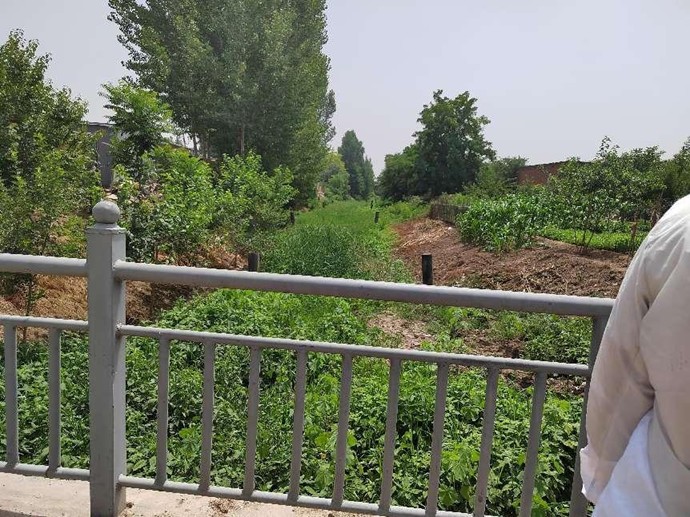
Figure 4: A photograph taken by Xinger Gao in 2025 in Huge Village, Hebei Province, China; dimensions variable; used for archival display. The Dry Lusun River serves as an example of the local standards for water management and nature conservation.
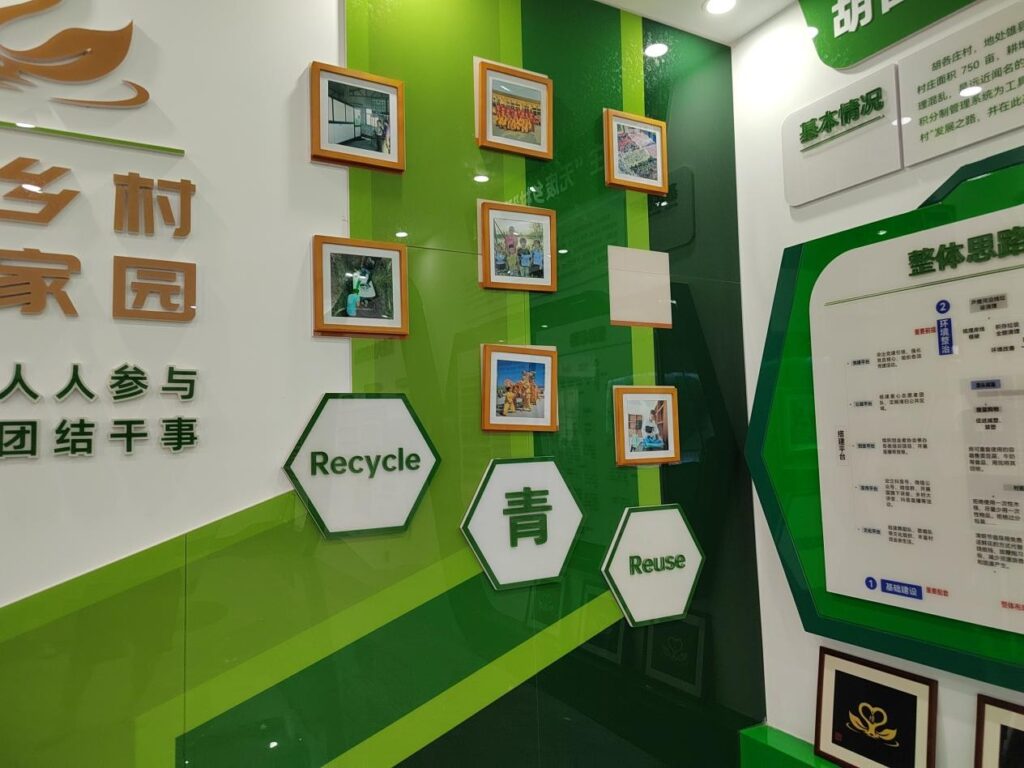
Figure 5: A photograph taken by Xinger Gao in 2025 in Huge Village, Hebei Province, China; dimensions variable; used for archival display. The exhibition boards on “zero-waste village” projects displayed by the local government reveal that the local contemporary art foundation is virtually absent, with only exhibitions for political propaganda purposes.
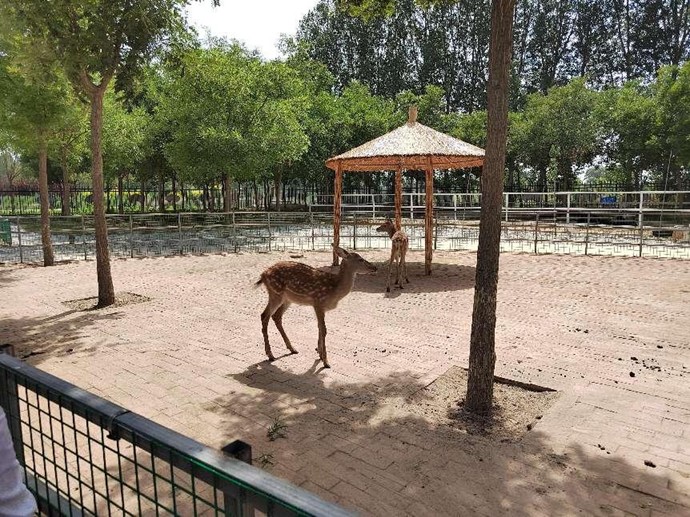
Figure 6: A photograph taken by Xinger Gao in 2025 in Huge Village, Hebei Province, China; dimensions variable; used for archival display. A small local zoo where local children can play reflects the limited recreational facilities and activities available to residents.
At Summerhall, I used tape and a tape measure to measure and arrange the artwork. I raised concerns about the installation’s placement; I noticed that positioning it in the center would block two walls, so I moved it to a corner where it would not obstruct the audience’s movement or block the walls.
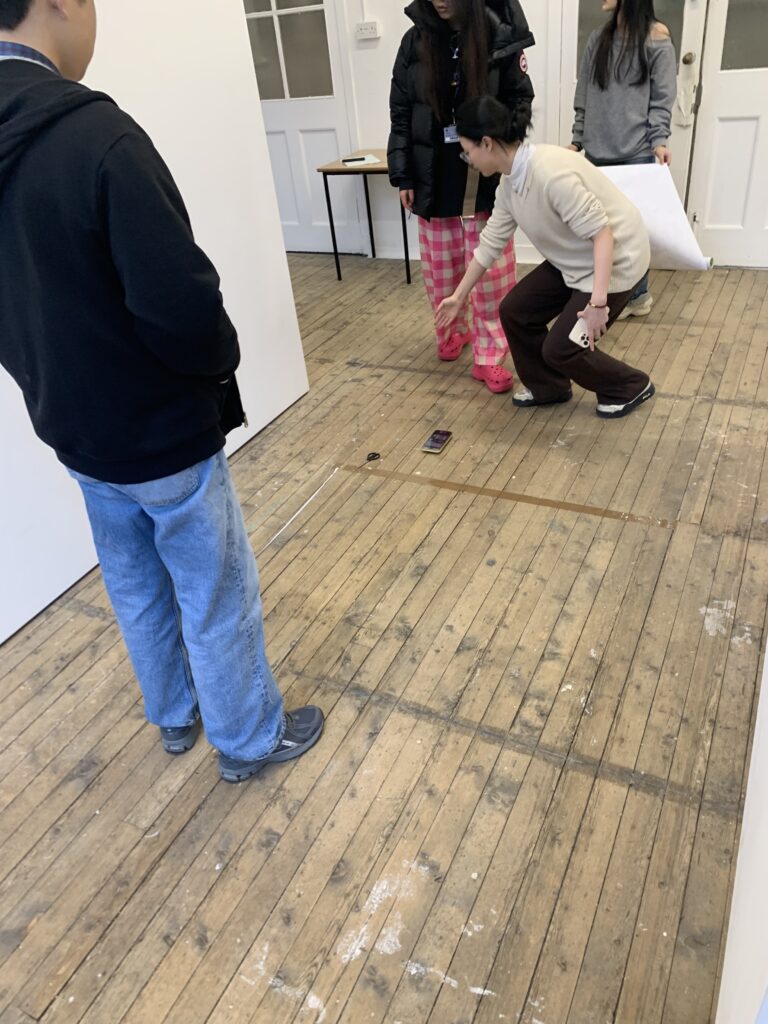
Figure 7: A photograph I took in 2026 of our collective setting up an exhibition at Summerhall; untitled; dimensions variable.
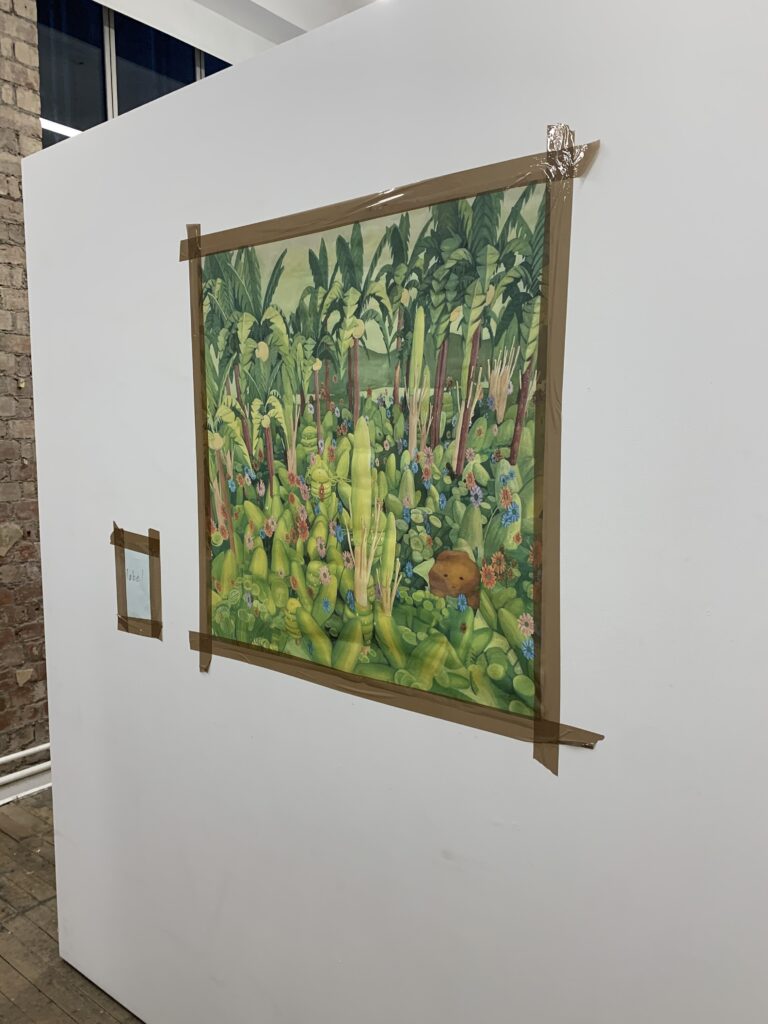
Figure 8: A photo I took in 2026 of our collective setting up an exhibition at Summerhall. We printed some of the works and attached them to the exhibition walls with tape. Untitled, variable dimensions.
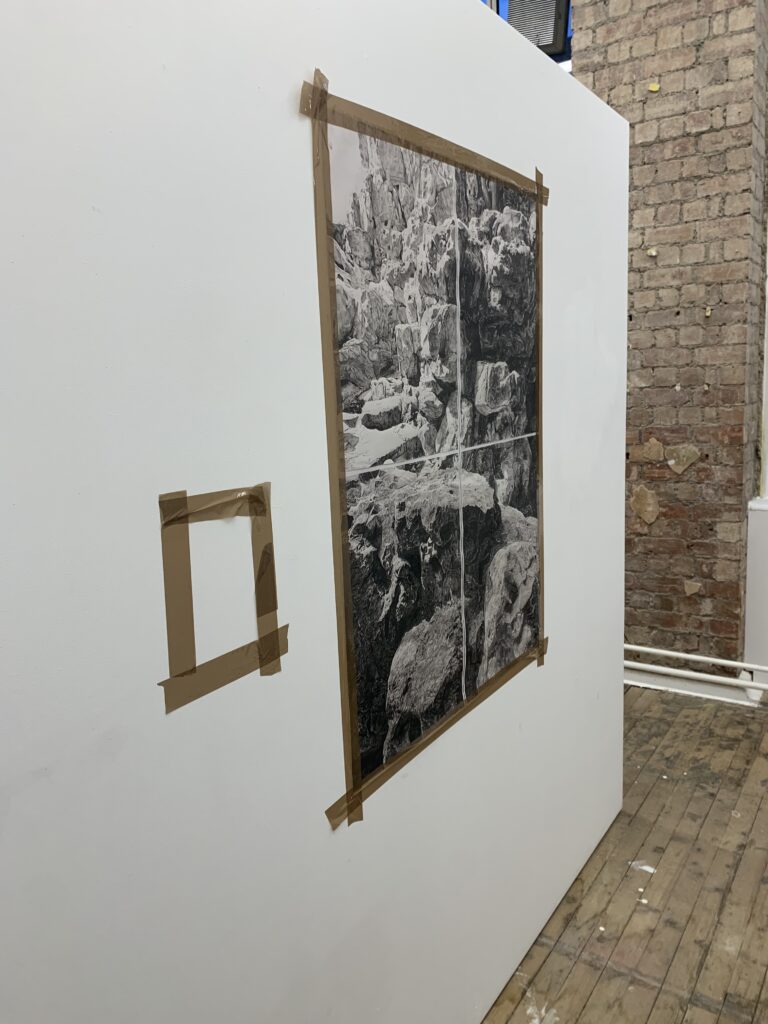
Figure 9: A photo I took in 2026 of our collective setting up an exhibition at Summerhall. We printed some of the works and attached them to the exhibition walls with tape. Untitled, variable dimensions.
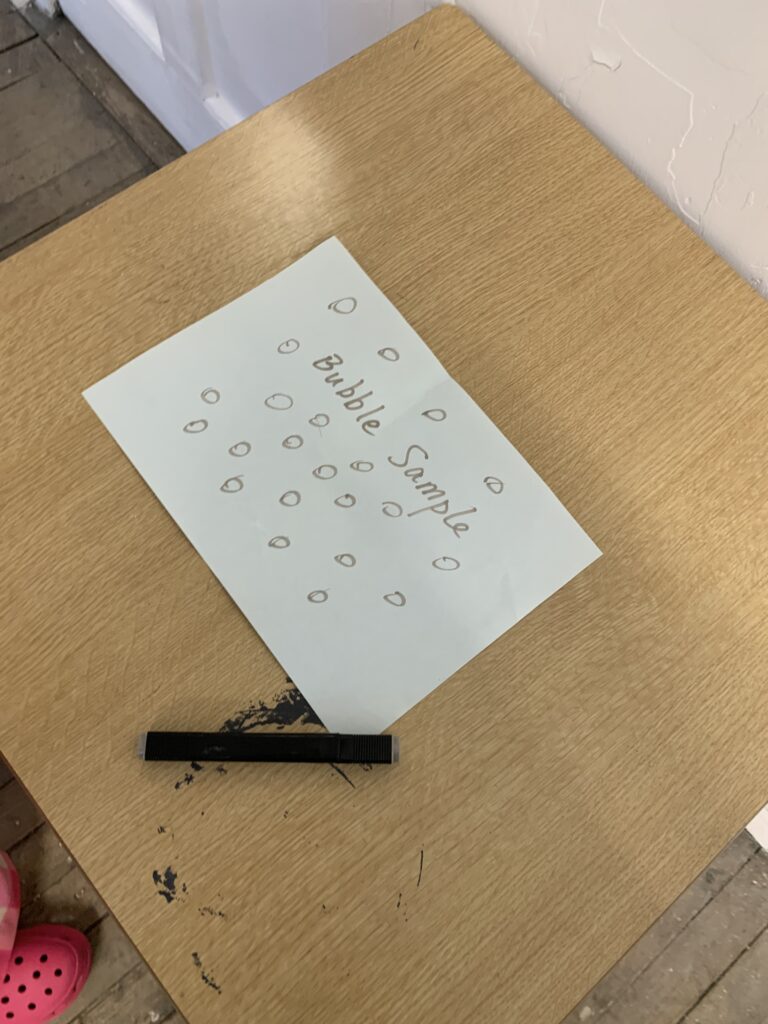
Figure 10: A photo I took in 2026 of our collective setting up an exhibition at Summerhall. I arranged the space to mimic the form of a small installation piece titled Bubbble Sample. Untitled, dimensions variable.
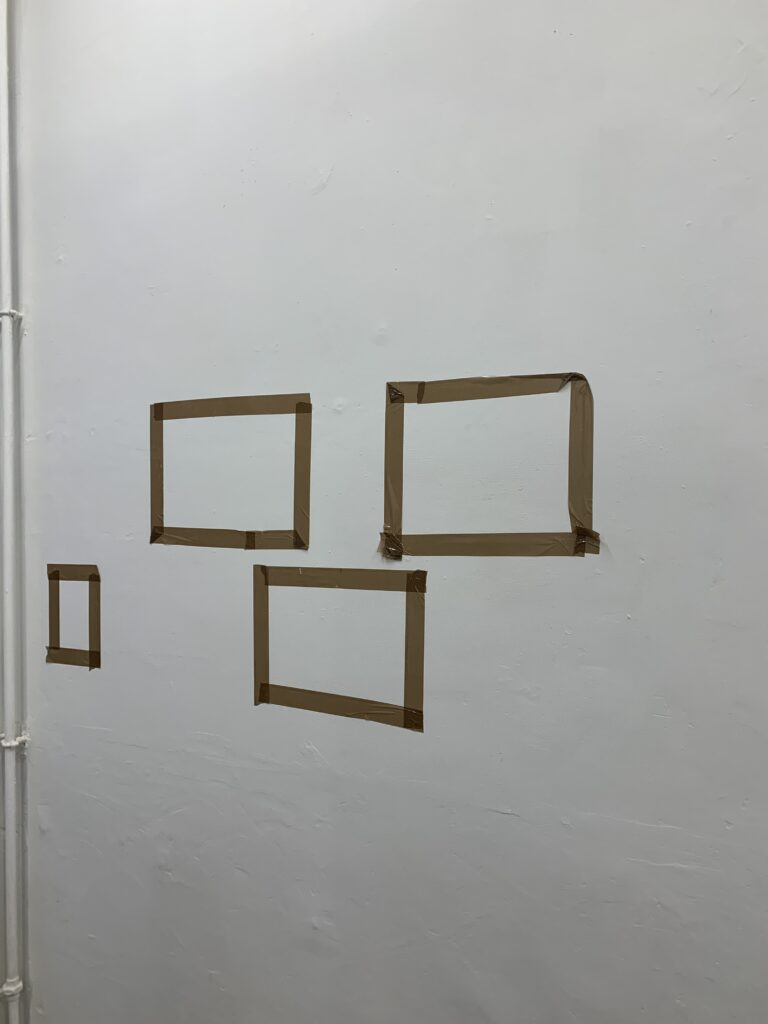
Figure 11: A photo I took in 2026 of our collective setting up an exhibition at Summerhall. I used tape to outline the approximate location of my work, because my piece is a variable-dimension photograph titled Wood and Tree.
For long-form video art installations, I proposed adding a chair as an accessible facility for viewers who have difficulty staying standing continuously. After consulting with Yufan, I selected a 19-inch monitor available for rental from ECA for my video installation.
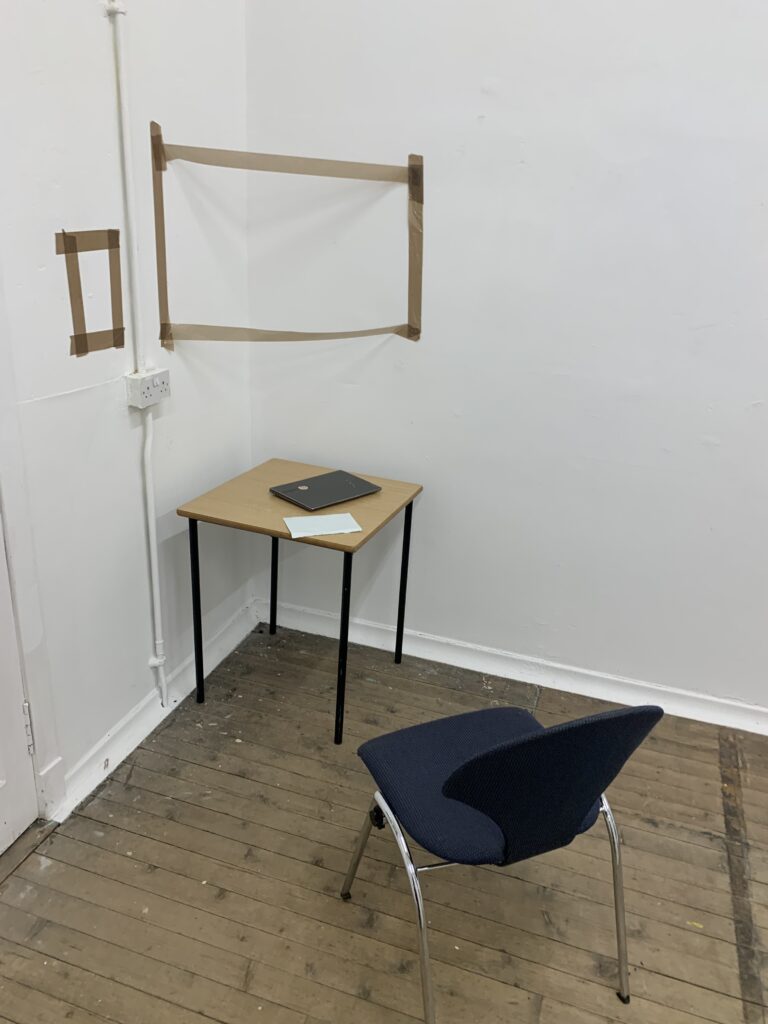
Figure 12: A photo I took in 2026 of our collective setting up an exhibition at Summerhall. I suggested setting up a video-viewing area and adding chairs for viewers who are tired or unable to stand for long periods of time.
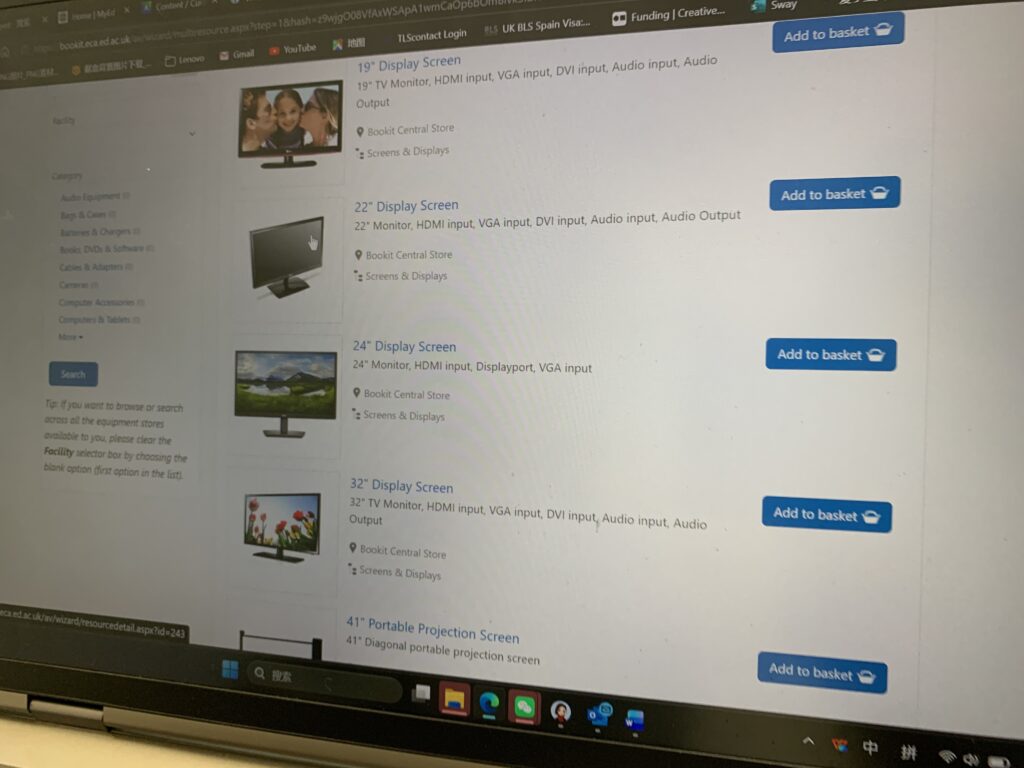
Figure 13: A photo I took in 2026 of our collective setting up an exhibition at Summerhall. My classmate Yufan and I accessed the school’s website to look up the sizes of the display screens available for loan.
In this week’s collective task assignment, I volunteered to create the captions for artworks. I am responsible for editing and refining the text submitted by everyone, as well as finding high-resolution images of the corresponding artworks and researching their detailed dates, materials, and dimensions.
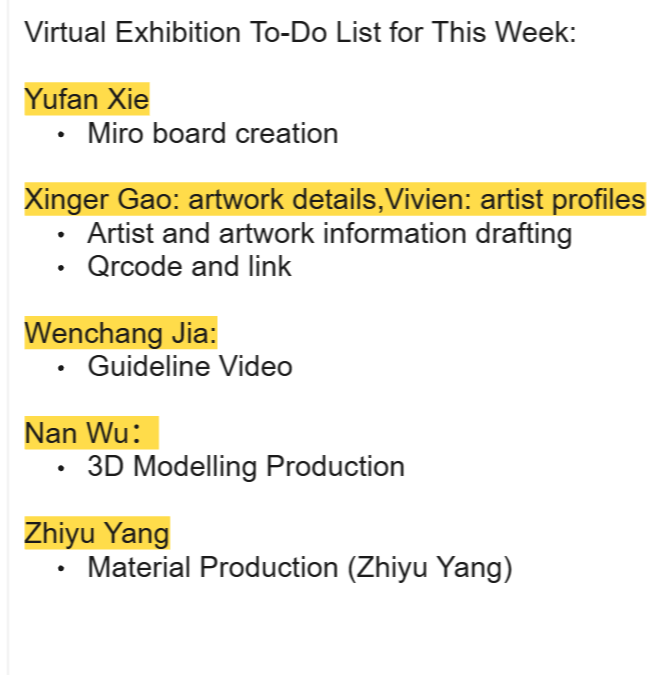
Figure 14: This is our collective division of tasks for this week.
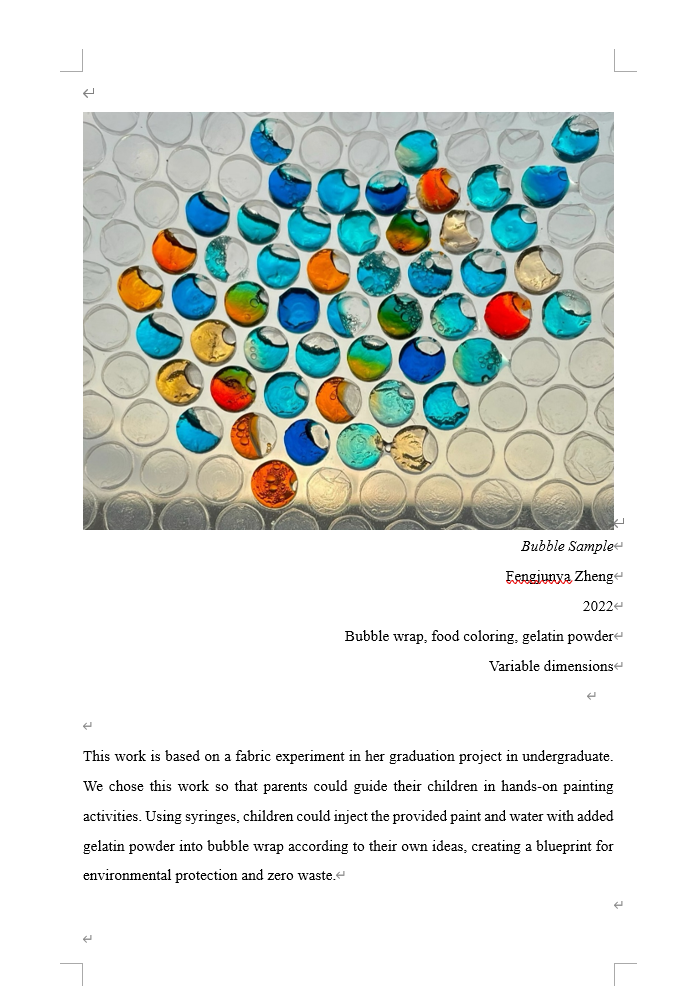
Figure 15: The caption I created for the collective exhibition can be used to produce a guidebook and promotional materials.
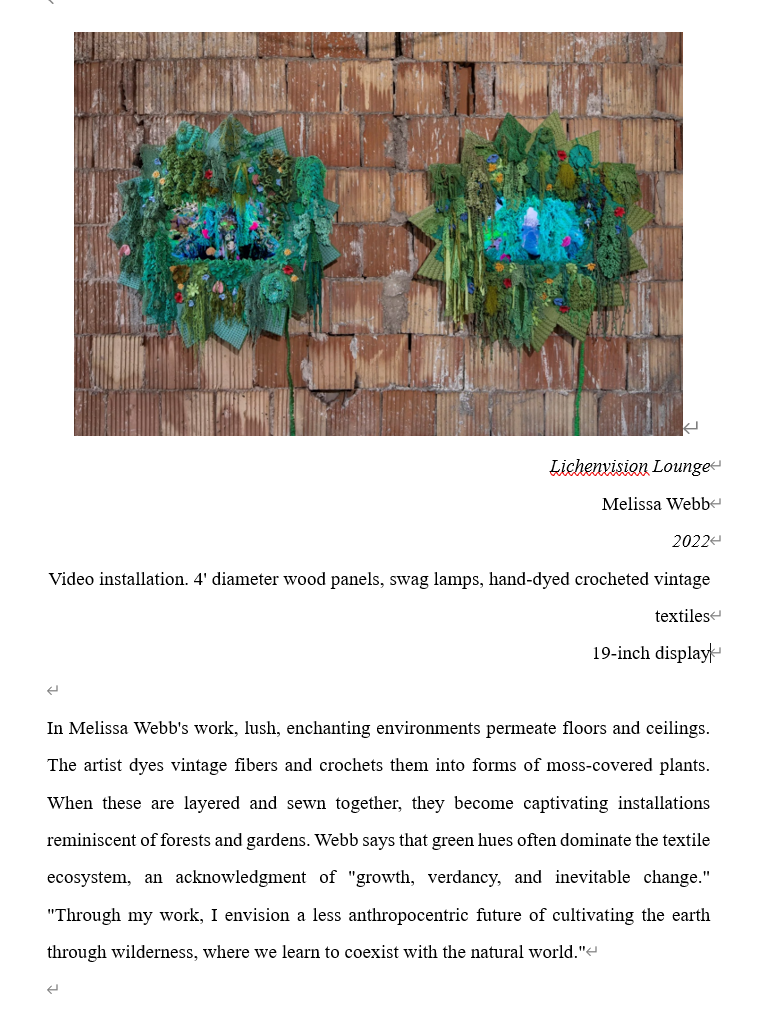
Figure 16: The caption I created for the collective exhibition can be used to produce a guidebook and promotional materials.
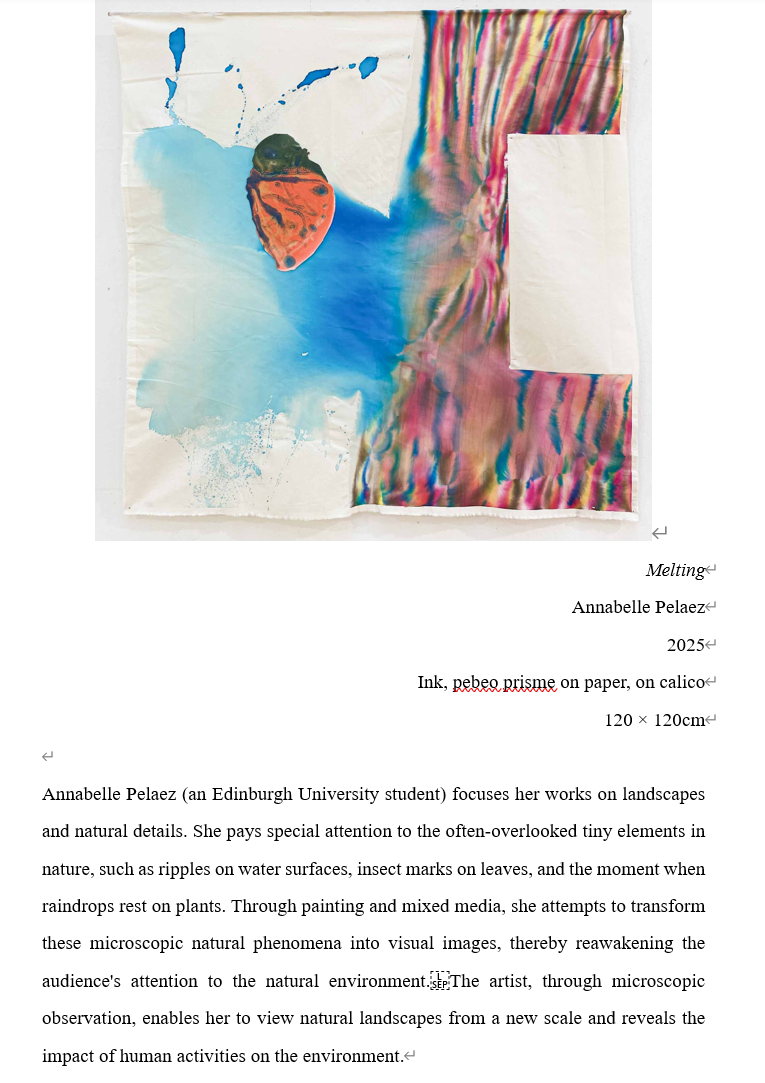
Figure 17: The caption I created for the collective exhibition can be used to produce a guidebook and promotional materials.
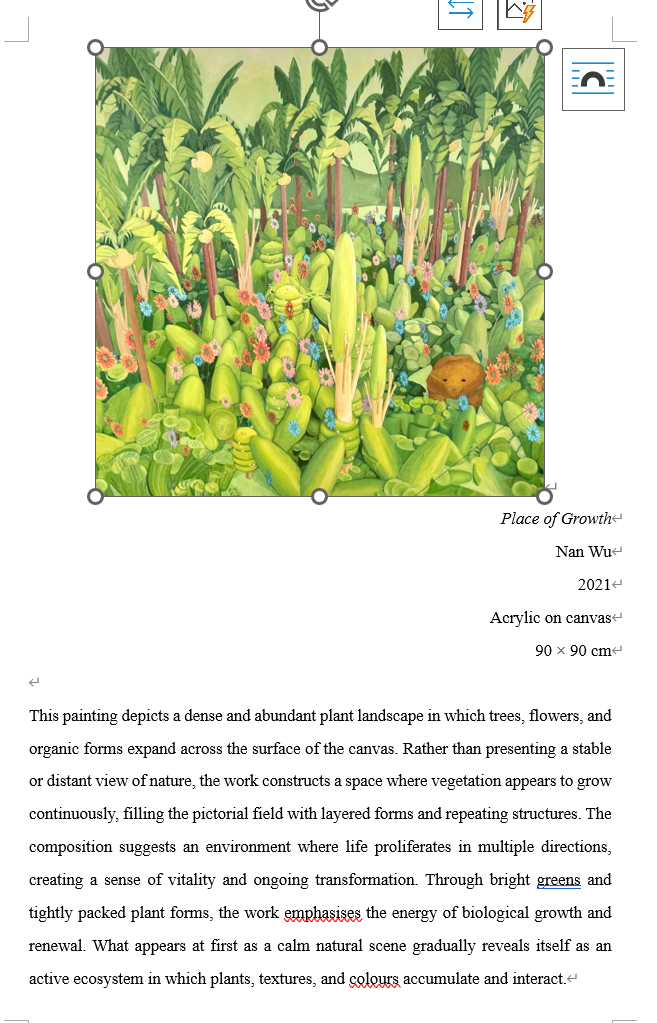
Figure 18: The caption I created for the collective exhibition can be used to produce a guidebook and promotional materials.
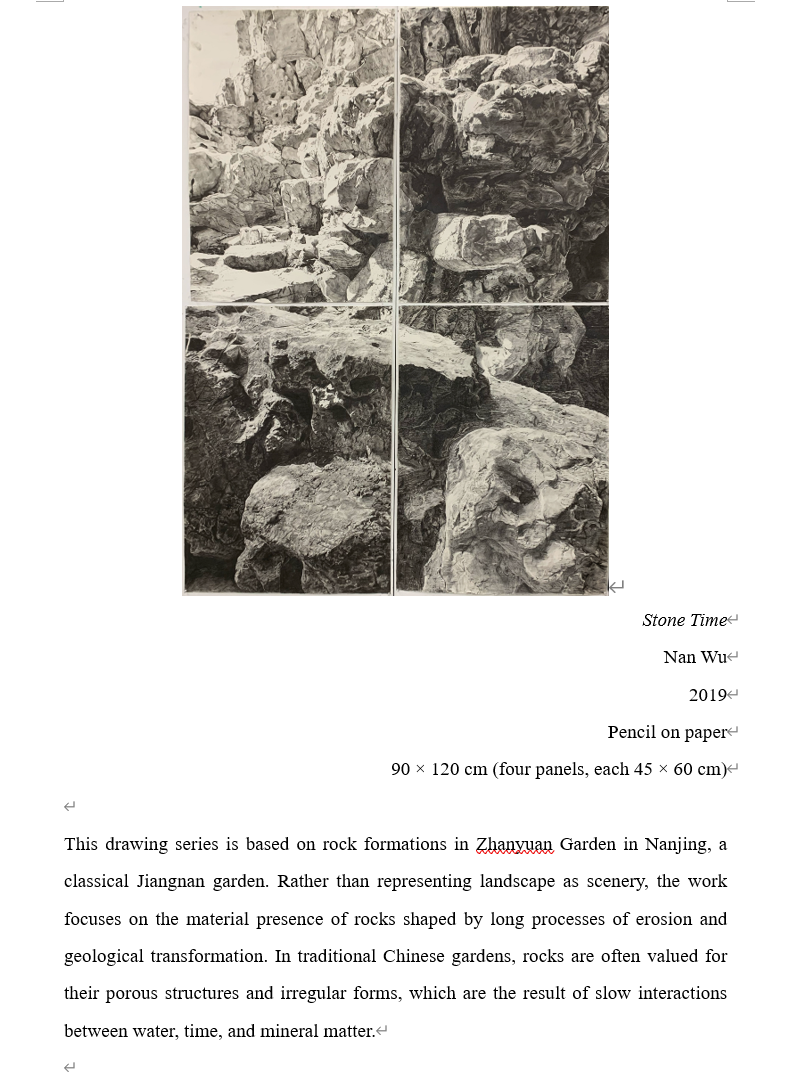
Figure 19: The caption I created for the collective exhibition can be used to produce a guidebook and promotional materials.
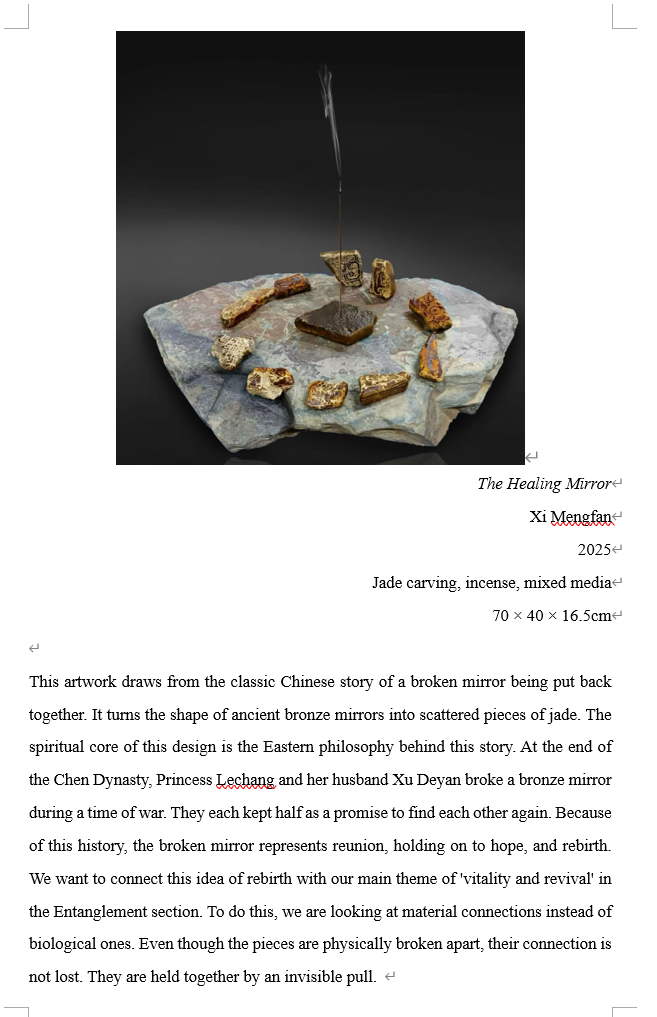
Figure 20: The caption I created for the collective exhibition can be used to produce a guidebook and promotional materials.
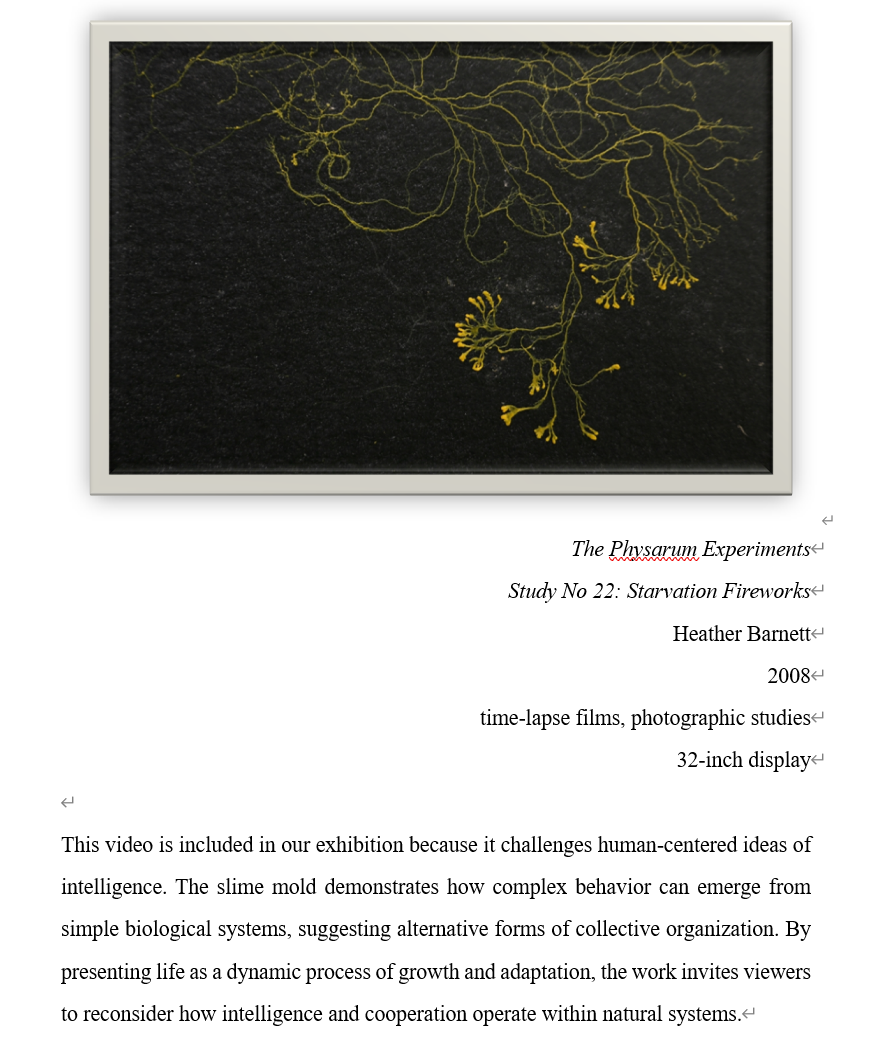
Figure 21: The caption I created for the collective exhibition can be used to produce a guidebook and promotional materials.
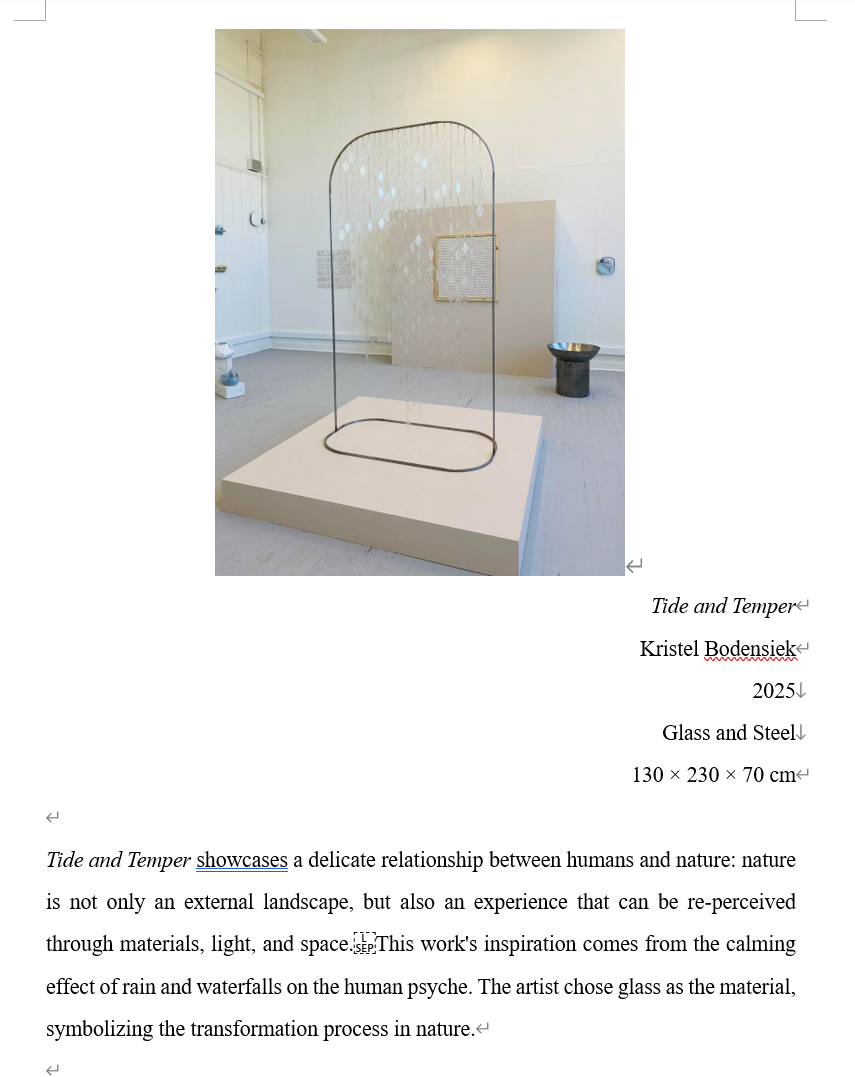
Figure 22: The caption I created for the collective exhibition can be used to produce a guidebook and promotional materials.
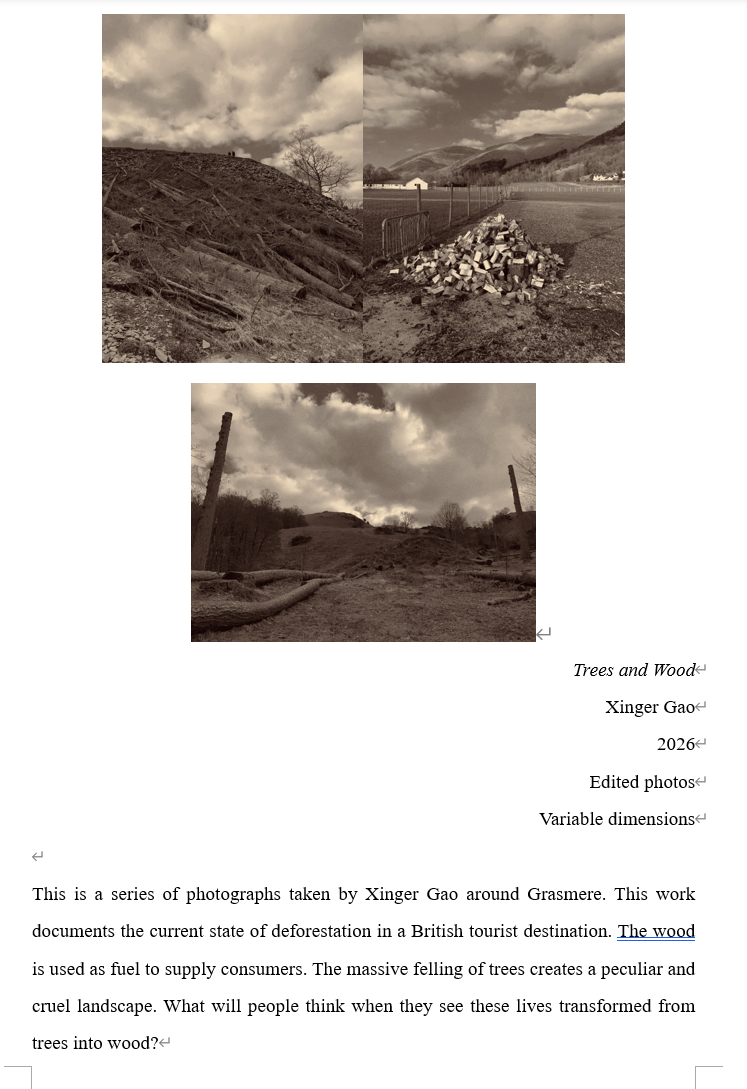
Figure 23: The caption I created for the collective exhibition can be used to produce a guidebook and promotional materials.
[1] Hal Foster, ‘An Archival Impulse’ in October Vol. 110 (Autumn, 2004), pp. 4, The MIT Press
In the first instance archival artists seek to make historical information, often lost or displaced, physically present. To this end they elaborate on the found image, object, and text, and favor the installation format as they do
[2] Alasdair Gray Archive – a generative ‘living’ archive – curated through ‘radical care’ by Custodian Sorcha Dallas.
Sorcha Dallas chose the title of Custodian because she believes caring, and relationship building is central to creating an equitable resource and a horizontal community. This is a feminist approach to archiving called radical empathy, which is the “ability to understand and actively consider another person’s point of view in order to connect more deeply with them.”



Leave a Reply