

1. Peripheral Future: Design Answers Rural
Title: Peripheral Future[1]: Design Answers Rural
Date: 15th August 2026 – 25th August 2026
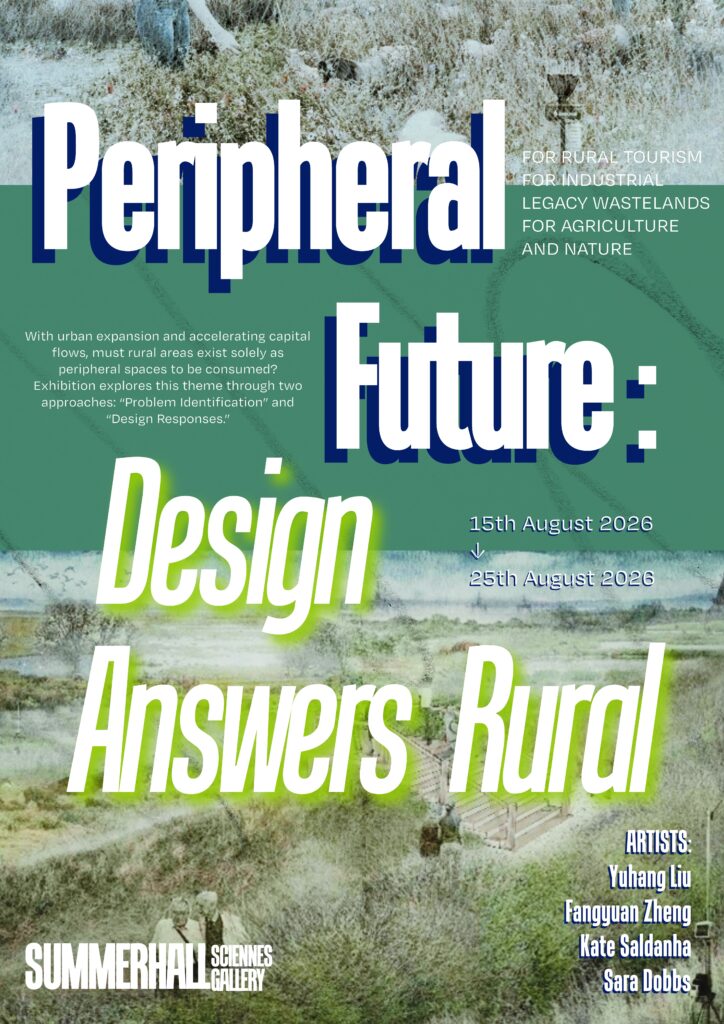
I designed the exhibition poster using Adobe Express.
2. Curatorial Narrative Text (For Publics)
Where are you all coming from to see this exhibition? Most of you are probably residents of Edinburgh. I’m sure many of you have visited the villages surrounding the city more or less. Or perhaps your hometowns are in these peripheral areas, relative to the central areas. Some of you view these rural areas as leisure destinations to escape the monotony city life, as places to witness natural wonders, or as agricultural regions that provide you with daily necessities[2]. As for the rest of you who have come to Edinburgh from the villages, have you compared the development of the city’s and the countryside’s pillar industries? Have you reflected on issues related to immigration and education for newcomers?
Now, I’d like to ask all of you to think about a few questions: Do industries in village truly serve the local residents, or are they primarily serving the cities near them? Has the migration of young people to work in cities led to a decline in village’s youth population, hindering labor supply and economic growth? In the era of modernization, are rural areas being drained by surrounding metropolises[3]?
If you have a vague answer to these questions, then please view Peripheral Future: Design Answers Rural. This exhibition explores the central question: With urban expansion and accelerating capital flows, must rural areas exist solely as peripheral spaces to be consumed? It explores this theme through two approaches: “Problem Identification” and “Design Responses.”
Periphery Future does not regard the countryside as a place of decline, but rather as a pioneering frontier for experimenting with future social structures. Here, art and design become tools for reimagining the possibilities of rural life. The artworks in this exhibition address and explore rural issues from multiple perspectives, such as rural tourism, industrial legacy wastelands, and agriculture and nature. Rather than viewing the countryside merely as a place for sketching landscapes, these artists design projects that benefit local development and the lives of residents, drawing on the perspectives of the local community.
3. Artists and Artworks
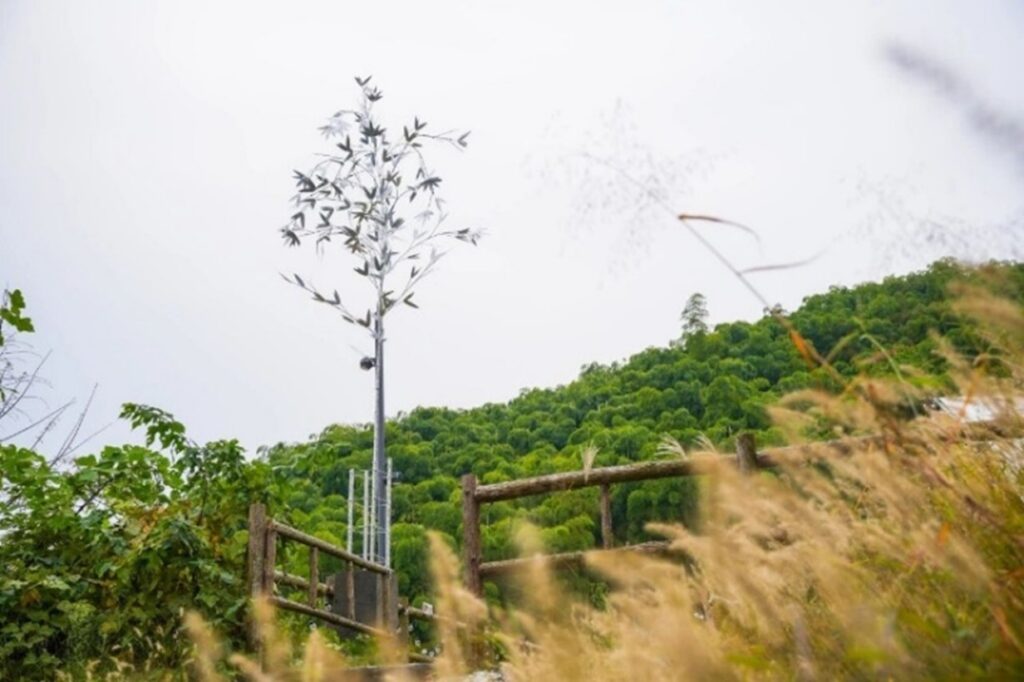
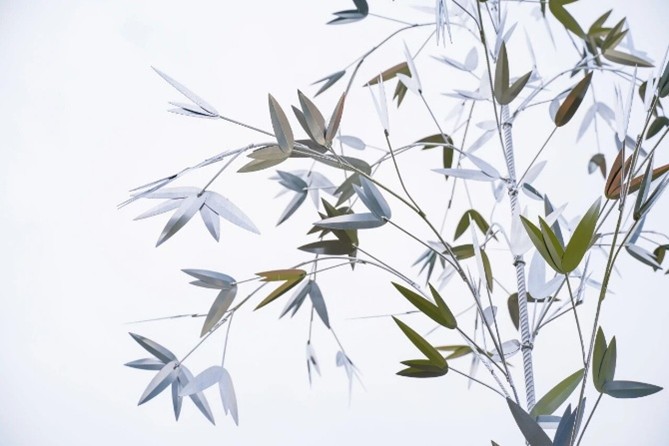
Concrete Bamboo
Yuhang Liu
2023
180 × 100 × 70cm
Weathering steel, mirror-polished stainless steel
Yuhang Liu
Associate Professor and Master’s Advisor at Guangxi Arts College; Ph.D. candidate in Fine Arts at Tsinghua University; Visiting Scholar at the Central Academy of Fine Arts
Artwork Introduction
Yuhang Liu’s Concrete Bamboo reveals the reality of contemporary rural areas being replaced by industry amid urbanization. Bamboo—a material symbolizing nature and locality—is substituted by concrete, serving as a metaphor for the power relations between urban and rural areas. The work no longer presents romantic nostalgia but exposes how industrial materials invade and reshape the rural landscape[4].
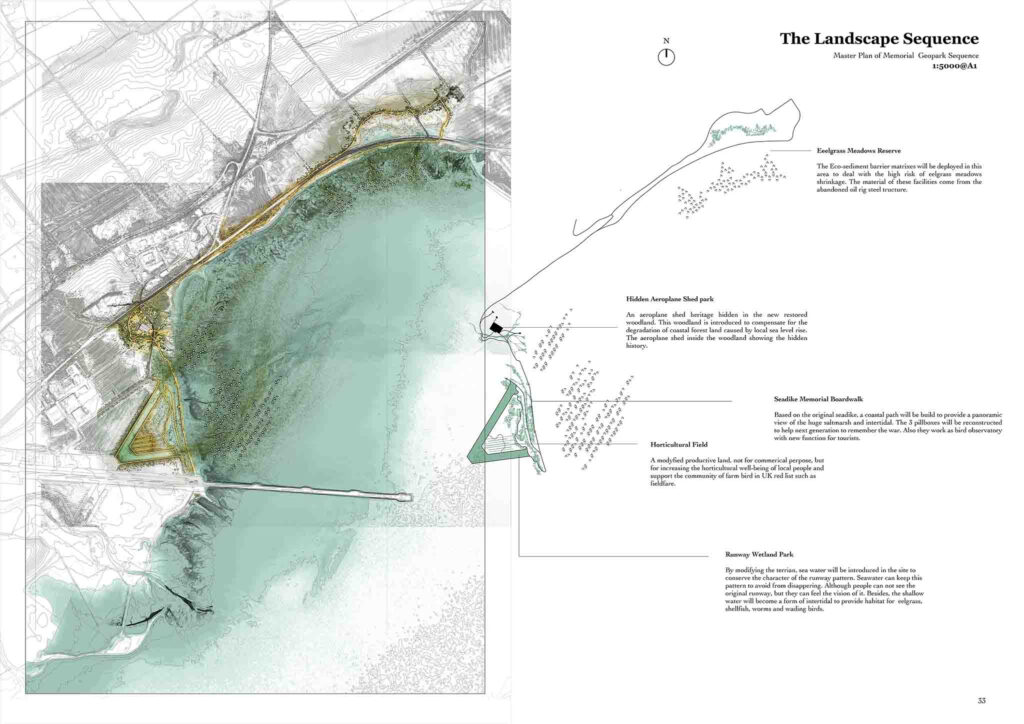
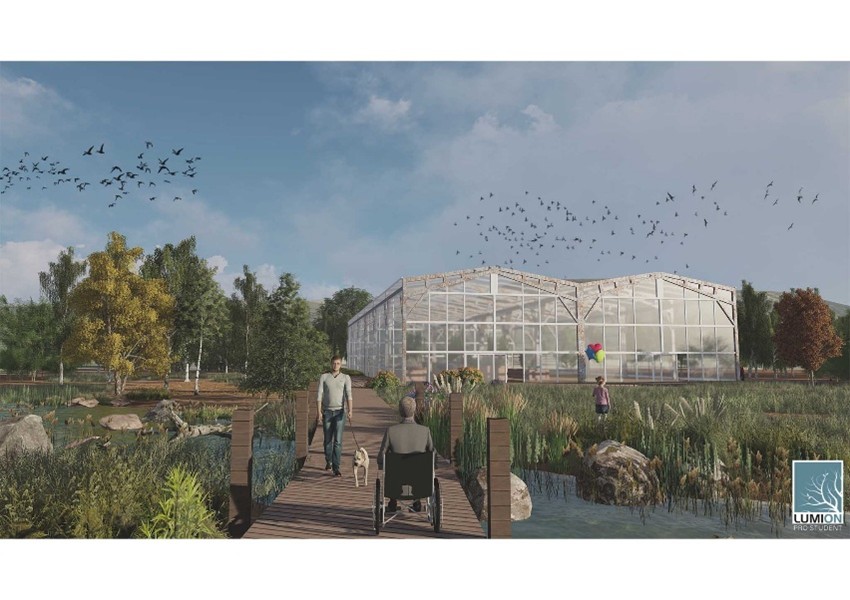
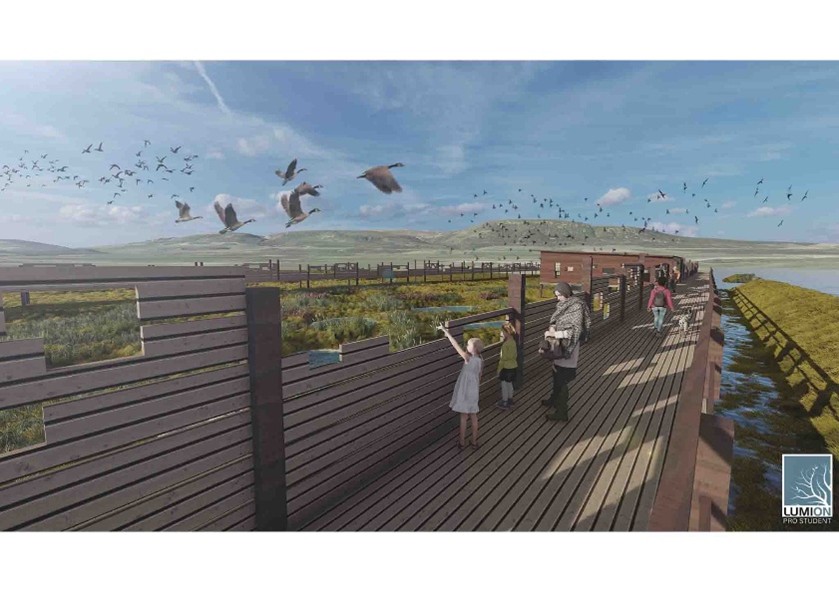
Alness Memorial Geopark Sequence
Fangyuan Zheng
2021
Digital Painting and Modeling
Variable dimensions
Fangyuan Zheng
Fangyuan Zheng is a landscape architect who graduated with an Master of Landscape Architecture (MLA) from the ECA. Her design practice focuses on the relationship between coastal ecosystems and the heritage preservation in rural areas.
Artwork Introduction
Fangyuan Zheng’s Alness Memorial Geopark Sequence proposes a spatial design solution that balances the needs of local residents with tourism appeal. The artist seeks to address the issue of rural tourism focusing on “serving outsiders” while neglecting local livelihoods[5].
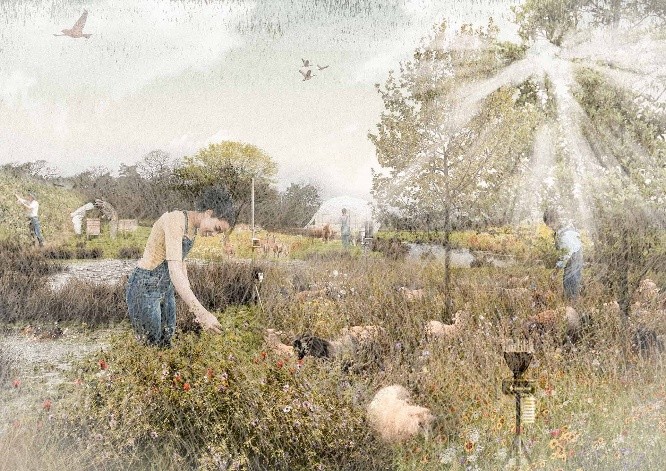
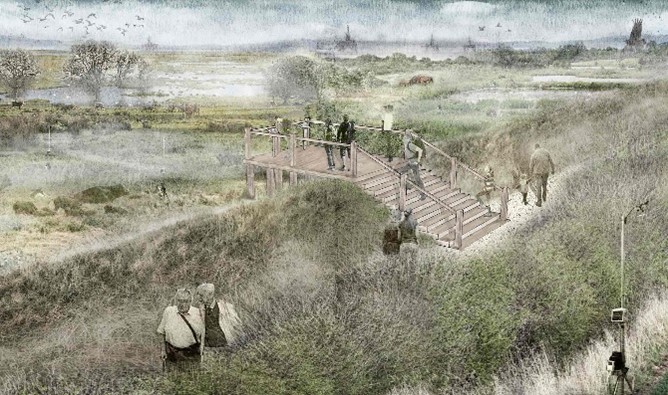
Intelligent Wilderness
Kate Saldanha
2021
Digital Painting
Variable dimensions
Kate Saldanha
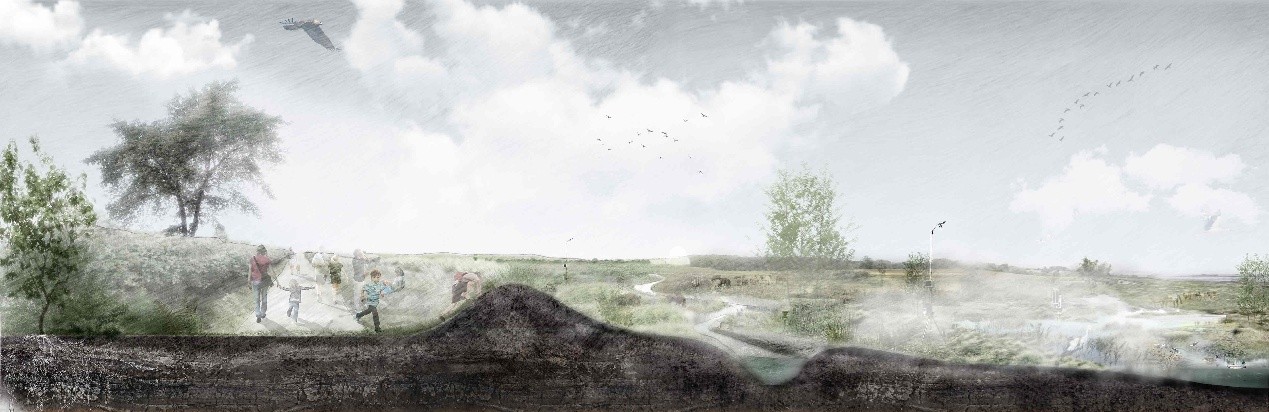
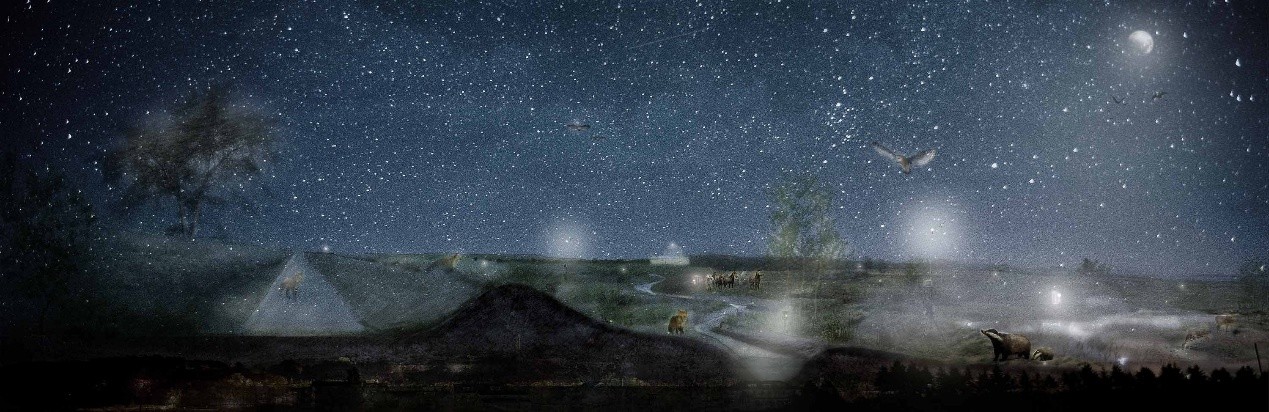
Kate Saldanha have been selected for the ECLAS 2021 Award for masters students of Landscape Architecture for her graduation work; the ‘Intelligent Wilderness’ which offers an individual take on tackling climate crisis issues through landscape design and intervention[6].
Artwork Introduction
Kate Saldanha’s Intelligent Wilderness addresses the damage caused by industrial sites to agricultural and natural environments. Through landscape design, the artist reestablishes a balanced relationship between agricultural production and wild ecosystems.
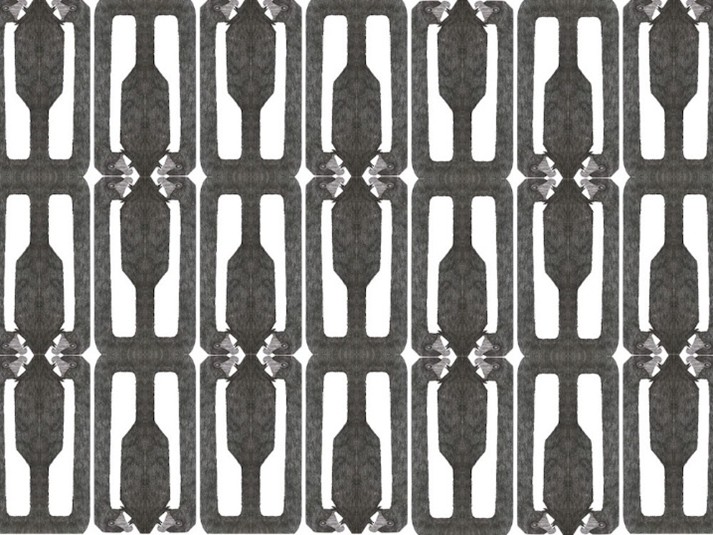
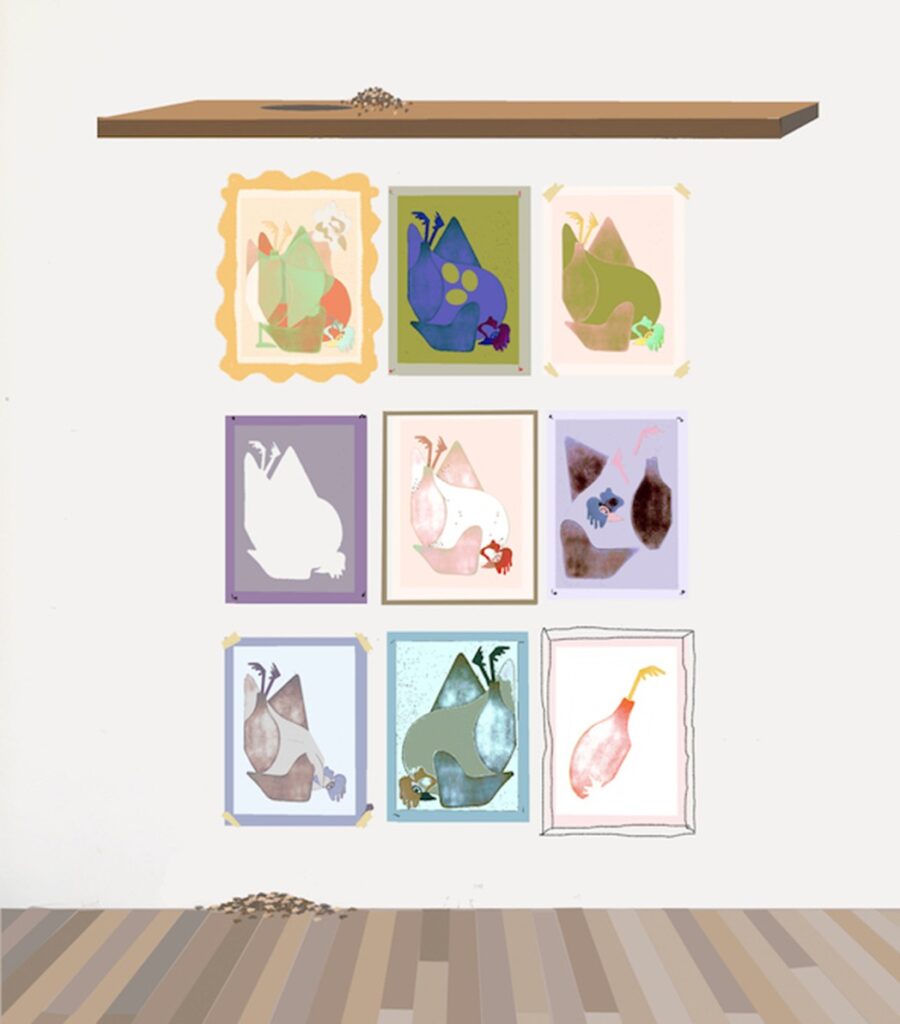
Cooped . Farmed . Displayed
Sara Dobbs
2021
digital drawing made from paper collages
Variable dimensions
Sara Dobbs
My creative practice has two main facets. The first is as a visual artist, working primarily in paint, textiles, and installation. The second is as a farmer. During 2020, I co-founded Wilbie Farm with my sister. It is a project based on our interest in regenerative agriculture practices that work in conjunction with the environment, instead of against. The farm has taken years to plan and is deeply embedded into my artistic research, subject, and approach. Farming, like art, is a practice of balance and problem solving. Both are human constructions that are influenced by and responsive to the surrounding environment, situation, and people. Farming is a grounding force, while art allows me to re-envision the patterns around me[7].
Artwork Introduction
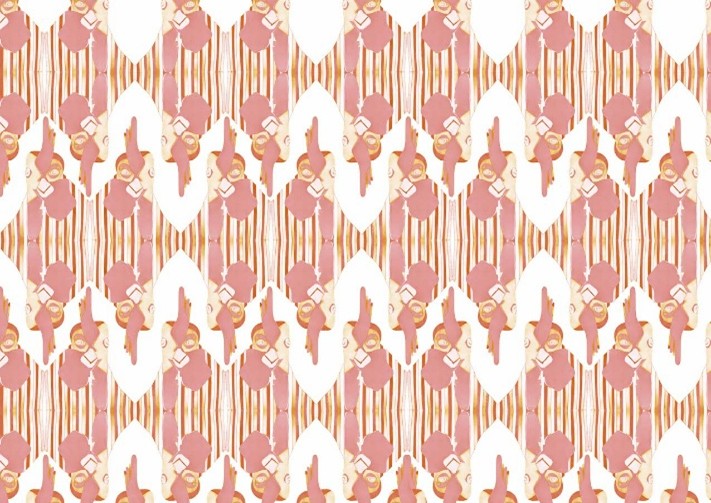
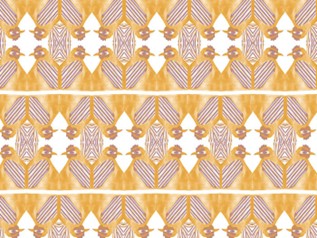
Sara Dobbs’s Cooped. Farmed. Displayed examines how rural areas are “displayed” within consumer culture, exploring the dynamics between agricultural production and exhibition mechanisms.
4. Location and Outline
Sciennes Gallery, Summerhall, Edinburgh EH9 1PL, UK
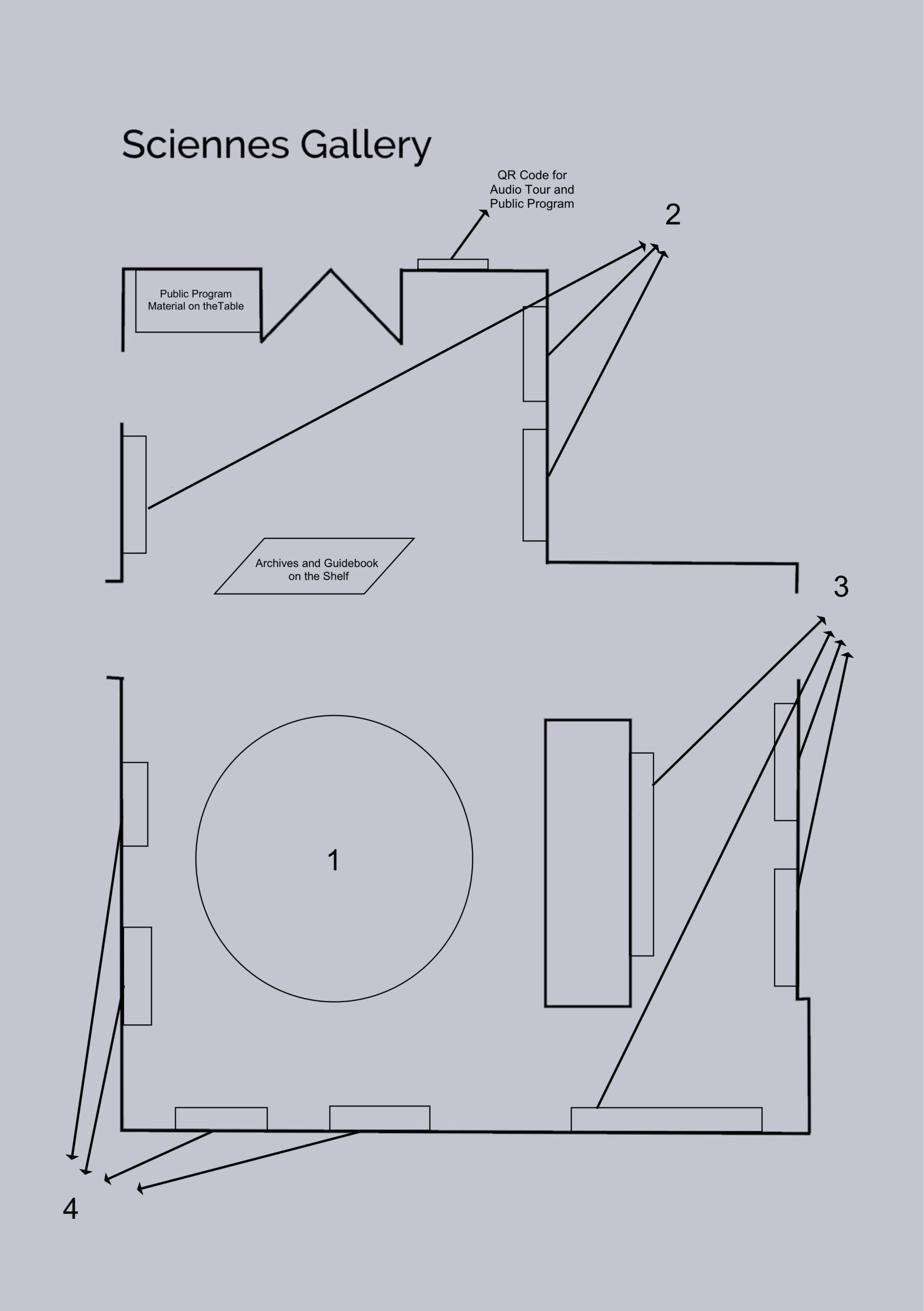
1. Concrete Bamboo
2. Alness Memorial Geopark Sequence
3. Intelligent Wilderness
4. Cooped . Farmed . Displayed
I chose this venue for my exhibition for several reasons. First, Summer Hall’s audience is primarily young people living in Edinburgh, and this is an excellent opportunity for them to gain a proper perspective on the rural areas and begin thinking about how to address the problems rural communities face. My exhibition encourages city residents to reflect on the urban exploitation of the countryside, preventing them from viewing rural areas solely as vacation destinations attached to cities. Second, Summer Hall is a vibrant, multidisciplinary arts platform capable of hosting my exhibition, which focuses primarily on digital painting and design.
Second, Summer Hall is a vibrant, multidisciplinary arts platform[8]. It is not a museum-like space where traditional paintings are displayed in a formal setting. Therefore, my exhibition—which primarily features digital paintings and design work—can be shown here without seeming out of place. This also presents an excellent opportunity to engage artists from other disciplines in contributing ideas for the development of peripheral areas and the lives of their residents. Furthermore, Summer Hall is a venue where new artists can host exhibitions by paying a fee. Consequently, it does not discriminate against new curators or emerging artists.
Third, the size and location of the Sciennes Gallery are ideal for my exhibition. The smaller gallery space is well-suited for a new curator like me with a limited number of works. The ceiling height allows for the installation art I have selected. The gallery I chose is located on the ground floor, and Summerhall has a tradition of accessibility—for example, QR codes for audio tours are posted at the entrance. Therefore, this location is ideal for me to conduct my accessibility public project.
Fourth, the gallery’s exit connects directly to the souvenir shop area in Summer Hall. I plan to design hats, scarves, and canvas bags featuring artwork patterns as exhibition souvenirs. This way, visitors can see the souvenirs I’ve designed immediately after viewing the exhibition, which will encourage purchases and boost income for my exhibition.
Here are my gallery layout and the placement of items excluding artworks. QR codes for the audio guide and public projects will be posted at the entrance to my gallery. I will install freestanding plastic display cases on the wall near the entrance so that visitors can view the archives I wish to showcase.
The archive primarily consists of photographs and interview materials I collected in the rural village of Huge Zhuang in Hebei, China. It is a small village located on the periphery of the capital, Beijing, and is also situated near the Xiong an New Area, a new political hub currently in development. “So close, so beautiful, weekend trip to Hebei!” is a local slogan known to almost everyone in northern China. This slogan essentially welcomes Beijing residents to Hebei for tourism and vacation. I believe this is a form of objectification of the region for tourism promotion and commercialization. This slogan turns Hebei Province into Beijing’s backyard and resort, losing sight of Hebei’s unique characteristics. So I interviewed local residents to gather their views on industrial facilities and their suggestions regarding the current living environment and educational opportunities.
I will also place text descriptions related to the exhibition in another display case. As for the space for my workshop, “Create Your Tiny Village,” it will require only a single table, which will be placed on the right-hand side as you enter.
5. Public Program
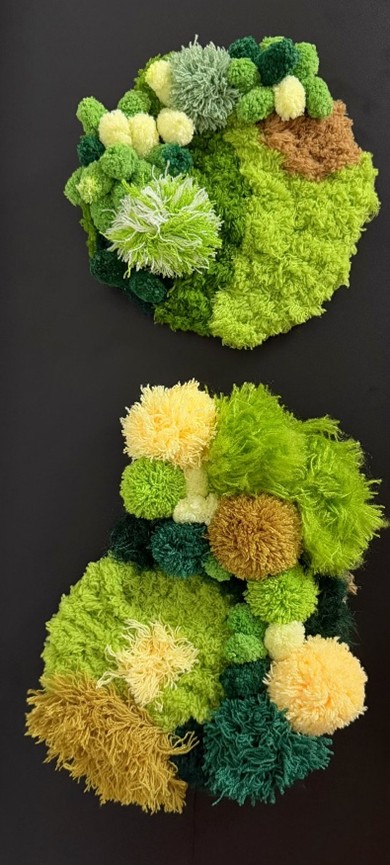
Untitled Kefan Zhang 2026 Yarn, cotton thread, pom-poms, etc. Variable size
My first public project is a workshop called “Create Your Tiny Village”. I will invite Kefan Zhang, a student in the ECA CAP program, to lead a handmade workshop at the Summer Hall Sciennes Gallery on the first day of the exhibition—August 15—from 2:00 to 5:00 p.m. We will invite visitors to design a model of the countryside that leaves the strongest impression. This model can be a sketch or a handmade object. For visitors who wish to draw, we will provide colored pencils and paper. For participants interested in handmade crafts, we will provide a limited supply of coral fleece, mohair, organza, yarn, cotton thread, and glue.
Since this workshop was inspired by a project Zhang is currently working on, I have invited Zhang to lead the workshop and guide participants to complete their artworks. I chose August 15th as the date for the workshop because it is the Chinese Mid-Autumn Festival, a holiday associated with missing one’s hometown and reuniting with family. Consequently, some international students from rural areas may find this event particularly moving.

The Padlet QR code I created includes an online audio tour, an EasyRead text, and a communication platform where users can upload audio. [1] Fazeli, Taraneh, and Cannach MacBride. “Means Without Ends: Learning
My exhibition is intended to serve oppressed groups—residents of peripheral communities, sexual minorities, people with disabilities, and ethnic minorities—rather than the art market controlled by a select few[12]. I will reallocate power and direct funds toward artists and communities in peripheral regions[13]. The products I design and sell are not intended to serve the cultural capital of the art market; instead, I will discuss with the artists who provide the patterns how to donate the funds earned from these products to peripheral regions. Since sources of income have a variety of impacts, including strengthening public programs, I have chosen to sell these products so that the profits can be used to expand future public programs.
6. Curatorial Rationale
Peripheral Future: Design Answers Rural offers a space where audiences, artists, and residents of peripheral regions in need of support can all become participants, positioning themselves as interlocutors of the contemporary[14].
The archives, artworks, and public projects in the exhibition form a chain that begins with questioning and ends with solutions. The archival material in my exhibition documents the local industrial landscape, living conditions, and educational environment from the perspective of radical empathy, raising the specific issue of rural areas losing their identity as they are viewed by urban residents as mere vacation destinations[15]. This leads to a major section of the works I selected for the exhibition: how to develop tourism while making these landscapes and initiatives beneficial to local residents[16].All the works and artists I have selected accept the similar complexities between rural and urban contexts and propose solutions[17]. In the public projects, my accessible online communication platform will showcase a relationship between city and countryside that is no longer defined by a binary opposition of center and periphery, but rather by a mutually dependent relationship with access intimacy[18].
7. Basic budget
| Income | Description | Amount£ |
| ECA Career Development Bursary ECA Career Development Bursary (for final year UG & PGT) | The ECA Equality, Diversity, and Inclusion (EDI) Directorate is happy to announce the ECA Career Development Bursary for the academic year 2025-2026. This bursary will provide up to £500 for the final year Undergraduate and Postgraduate Taught students towards ONE relevant activity or event that can help explore career options or develop a current career path. | 500 |
| The Student Experience Grants Guidelines | Student Experience Grants | Student Experience Grants | We award grants of up to and including £5,000 to support activities, which enhance students’ social, academic, entrepreneurial, sporting or cultural development. | 5000 |
| Souvenir Sales Summerhall Arts Boutique – Summerhall Arts
|
I’m selling my exhibition’s merchandise at Summerhall Arts Boutique—canvas bags, hats, and scarves that I designed with the artist Sara Dobbs’s permission. I’ll be using patterns from her artwork to create these items. | 1000 |
| Open Fund for Individuals Open Fund for Individuals | Creative Scotland | The Open Fund for Individuals is one of Creative Scotland’s key funding programmes, supporting the wide range of activity initiated by artists, writers, producers and other creative practitioners in Scotland. Fund open. | 820 |
| Total: 7320 |
| Expenditure | Description | Amount£ |
| Artist Fees Recommended Rates of Pay (RRoP) | Scottish Artist Union | Fees calculated according to Scottish Artists Union (SAU) Recommended Rates of Pay, based on artists’ experience levels and duration of work. £1,796.00 (Five Days, Five Years Artist) + £179.60 (Half-Day Five-Year Artist) + £117.20 (Half-day newly graduated artist) + £117.20 (Half-day newly graduated artist) = £2,210.00. | 2210 |
| Venue Hire | I need to rent the Sciennes Gallery at Summerhall for 14 days, including four days for setup and takedown and ten days for the exhibition. I asked Summerhall staff and received a daily venue fee of £250. | 3500 |
| Shipping and Insurance | All works except for Yuhang Liu’s installation are prints. Therefore, I would like to invite Liu to bring his work to Edinburgh, so the shipping costs would actually consist of Liu’s travel and accommodation expenses. It also includes insurance for the installation. | 1000 |
| Installation costs | Including the framing of printed works and the arrangement of installation artwork. | 50 |
| Cost of space renovation | I will borrow a table from Summerhall to use as a venue for the public project “Create Your Tiny Village.” | 0 |
| Printing costs Print Credit Explained – ECA IT Help – Wiki Service | I’ll use my student account to print at the ECA Library, so there’s no extra charge. | 0 |
| Lighting costs ECA Bookit | Renting school lights for lighting design | 0 |
| Exhibition Text Display Materials | Includes a freestanding display case fixed to the wall to hold the guidebook (with the QR code for the audio guide displayed directly on the wall at the entrance), and a shelf for storing archives. | 10 |
| Public Project | I invited Fefan Zhang to host the public program “Create Your Tiny Village” on the opening day of the exhibition. Since we are friends, I didn’t have to pay her a salary for that day; I only had to cover the cost of the materials. | 50 |
| Souvenir Production | Production of hats, scarves, and canvas bags | 200 |
| Emergency Fund | 300 | |
| Total: 7320 |
Footnotes
[1] Ronald Kolb, Camille Regli, and Dorothee Richter, “Centres ⁄ Peripheries– Complex Constellations,” Notes on Curating 41 (June 2019): 3.
Referring to the Centre–Periphery (or the Core–Periphery) model, one must be aware of its origins in economics: Centre–Periphery basically describes an (unequal) relationship between places. It is used as a spatial description of a relation between a so-called “advanced“ (or dominating) place and its allegedly “lesser developed“ (or serving) periphery. In this model, the centre is the place of power (of law, of trade, of military force) and is a door to the rest of the world. The periphery is a remote, rural place, and it delivers raw materials, food, and other resources to the centre under the condition of exploitation.
[2] Kathrin Bohm and Wapke Feenstra, “Introduction,” in MyVillages, ed., The Rural (London: Whitechapel Gallery, 2019), 16.
An endless stream of images of the rural enters our imaginations through multiple screens and printed matter. This intense objectification of the rural is alarming and splits our roles into spectators and dwellers. The transition from an agricultural and mining economy to a service, and above all non-land-based, economy has fixed our view of the landscape. We see the rural environment as an image that serves us. We build the picture that we long for.
[3] Bohm and Feenstra, “Introduction,” 15.
The rural is equally shaped by industrial production both within the rural and the cities. Industrial and technological revolutions/infrastructures in urban areas offered overcrowded and economically weak rural communities a new home, causing depopulation and a new urban working class, while industries that rely on ground and soil resources dig up rural landscapes and spit them out as hubris and holes.
[4] Academy of Arts & Design, Tsinghua University, “Opening of ‘Art Towards Mountains and Rivers: 2023 Anji Youth Art Creation Camp Achievement Exhibition’,” Tsinghua University Academy of Arts & Design, October 27, 2023, accessed March 25, 2026, https://www.ad.tsinghua.edu.cn/info/1389/30427.htm.
[5] Fangyuan Zheng, “Alness Memorial Geopark Sequence,” 2021 Graduate Show, Edinburgh College of Art, accessed March 25, 2026, https://www.2021.graduateshow.eca.ed.ac.uk/portfolio/fangyuan-zheng.
[6] Kate Saldanha, “Kate Saldanha | LinkedIn,” LinkedIn, accessed March 25, 2026, https://www.linkedin.com/in/kate-saldanha-052b0a166/. [7] Sara Dobbs, “Cooped . Farmed . Displayed,” 2021 Graduate Show, Edinburgh College of Art, accessed March 25, 2026, https://www.2021.graduateshow.eca.ed.ac.uk/index.php/portfolio/sara-dobbs.
[8] Summerhall Arts, “Our Vision,” Summerhall Arts, accessed March 25, 2026, https://summerhall.co.uk/vision.
[9] Taraneh Fazeli and Cannach MacBride, “Means Without Ends: Learning How to Live Otherwise Through Access-centered Practice,” in As for Protocols, ed. Re’al Christian, Carin Kuoni, and Eriola Pira (Amherst, MA: Amherst College Press, 2025), 140.
The intersectional disability justice movement, with origins in San Francisco Bay Area organizing broadly and the collective Sins Invalid specifically, takes up the limits of disability rights. This framework addresses the intersection of oppressions according to identities and experiences of race, ethnicity, gender, class, sexuality, citizenship, housing status, and more.40 It is led by those most impacted (disabled LGBTQIA+ and BIPOC people), centers non-hypothetical body minds, focuses on immediate access formations and relationship building, and seeks to dismantle institutions while investing in community-focused solutions.
[10]Bohm and Feenstra, “Introduction,” 12.
The rural and the urban are interdependent, and the current dichotomy has always been false but was maintained because power could be gained from playing down and denying the actual relationship between city and countryside.
[11] Fazeli and MacBride, “Means Without Ends,” 144.
Mingus emphasizes the possibility for access intimacy to occur instantaneously between people without shared experience or political identity. This intimacy need not be communicated linguistically, offering an intuitive, non-identity based, affective lens onto modes of relation beyond policy.
[12] Alistair Hudson, Building a User-Generated Museum: A Conversation with Alistair Hudson, openDemocracy, 5 May 2017, https://www.opendemocracy.net/en/building-user-generated-museum-conversation-with-alistair-hudson/ (accessed 30 March 2026).
So I’ve been interested in that trajectory within the history of art, which is not the one we’re told – which has been defined by the market and by capital – and we should instead reclaim art as a much more all-encompassing, ordinary activity for everybody, rather than something for the elites or the 1% or for those that have, as opposed to those that don’t.
[13] Alistair Hudson, Building a User-Generated Museum.
So the ambition – and this is why I talk about ‘usership’ and the useful museum – is that you create an institution that is created by and through its usership, so that the content and the function is increasingly less determined by those in power, but rather you redistribute authorship, you redistribute power, to make the institution the true manifestation of its community.
[14] Papastergiadis, “What Is the South?” 141.
The little public spheres play a crucial role in the delivery of this option. They require participants to position themselves as interlocutors of the contemporary. What counts is not whether you are based in New York or Melbourne, but how you follow the flows.
[15] The Alasdair Gray Archive, The Alasdair Gray Archive Curatorial Commission Brief 2025 (Glasgow: The Alasdair Gray Archive, 2024), 1.
She chose the title of Custodian because she believes caring, and relationship building is central to creating an equitable resource and a horizontal community. This is a feminist approach to archiving called radical empathy, which is the “ability to understand and actively consider another person’s point of view in order to connect more deeply with them.” Such empathy is radical if it is directed precisely at those, we feel are least worthy and least deserving of it.
[16] Bohm and Feenstra, “Introduction,” 17.
Villages were never hermetic communities, they are, just like cities, made by migration and changing production. It is not a set situation or frozen image that you enter, even when the village is a landmark, conserved and seemingly static with some preserved traces of farming and residues of authentic industrial production, since that is obviously seen as attractive for tourists, and brings new income.
[17] Bohm and Feenstra, “Introduction,” 12.
This requires a newly de-urbanised and un-nostalgic attention to the rural, a commitment to accepting similar complexities to those which are acknowledged for the urban and taking an emancipatory step to undermine the preconceptions of the rural as backwater.
[18] Bohm and Feenstra, “Introduction,” 16.
The rural and the urban are interdependent, and the current dichotomy has always been false but was maintained because power could be gained from playing down and denying the actual relationship between city and countryside.
References
Kolb, Ronald, Camille Regli, and Dorothee Richter. “Centres ⁄ Peripheries– Complex Constellations.” Notes on Curating 41 (June 2019): 3.
Bohm, Kathrin, and Wapke Feenstra. “Introduction.” In The Rural, edited by MyVillages. London: Whitechapel Gallery, 2019, 12-17.
Academy of Arts & Design, Tsinghua University. “Opening of ‘Art Towards Mountains and Rivers: 2023 Anji Youth Art Creation Camp Achievement Exhibition’.” Tsinghua University Academy of Arts & Design, October 27, 2023. Accessed March 25, 2026. https://www.ad.tsinghua.edu.cn/info/1389/30427.htm.
Zheng, Fangyuan. “Alness Memorial Geopark Sequence.” 2021 Graduate Show. Edinburgh College of Art, 2021. Accessed March 25, 2026. https://www.2021.graduateshow.eca.ed.ac.uk/portfolio/fangyuan-zheng.
Dobbs, Sara. “Cooped . Farmed . Displayed.” 2021 Graduate Show. Edinburgh College of Art, 2021. Accessed March 25, 2026. https://www.2021.graduateshow.eca.ed.ac.uk/index.php/portfolio/sara-dobbs.
Saldanha, Kate. “Kate Saldanha | LinkedIn.” LinkedIn. Accessed March 25, 2026. https://www.linkedin.com/in/kate-saldanha-052b0a166/.
Summerhall Arts. “Our Vision.” Summerhall Arts. Accessed March 25, 2026. https://summerhall.co.uk/vision.
Fazeli, Taraneh, and Cannach MacBride. “Means Without Ends: Learning How to Live Otherwise Through Access-centered Practice.” In As for Protocols, edited by Re’al Christian, Carin Kuoni, and Eriola Pira, 140-144. Amherst, MA: Amherst College Press, 2025.
Papastergiadis, Nikos. “What Is the South?” Thesis Eleven 100, no. 1 (2010): 141–56. https://doi.org/10.1177/0725513609353708.
The Alasdair Gray Archive. The Alasdair Gray Archive Curatorial Commission Brief 2025. Glasgow: The Alasdair Gray Archive, 2024.



Leave a Reply