

This week, I focused on two questions: how can the title clearly reflect the argument of the exhibition, and how can the budget move from an idealised figure to a realistic funding logic?
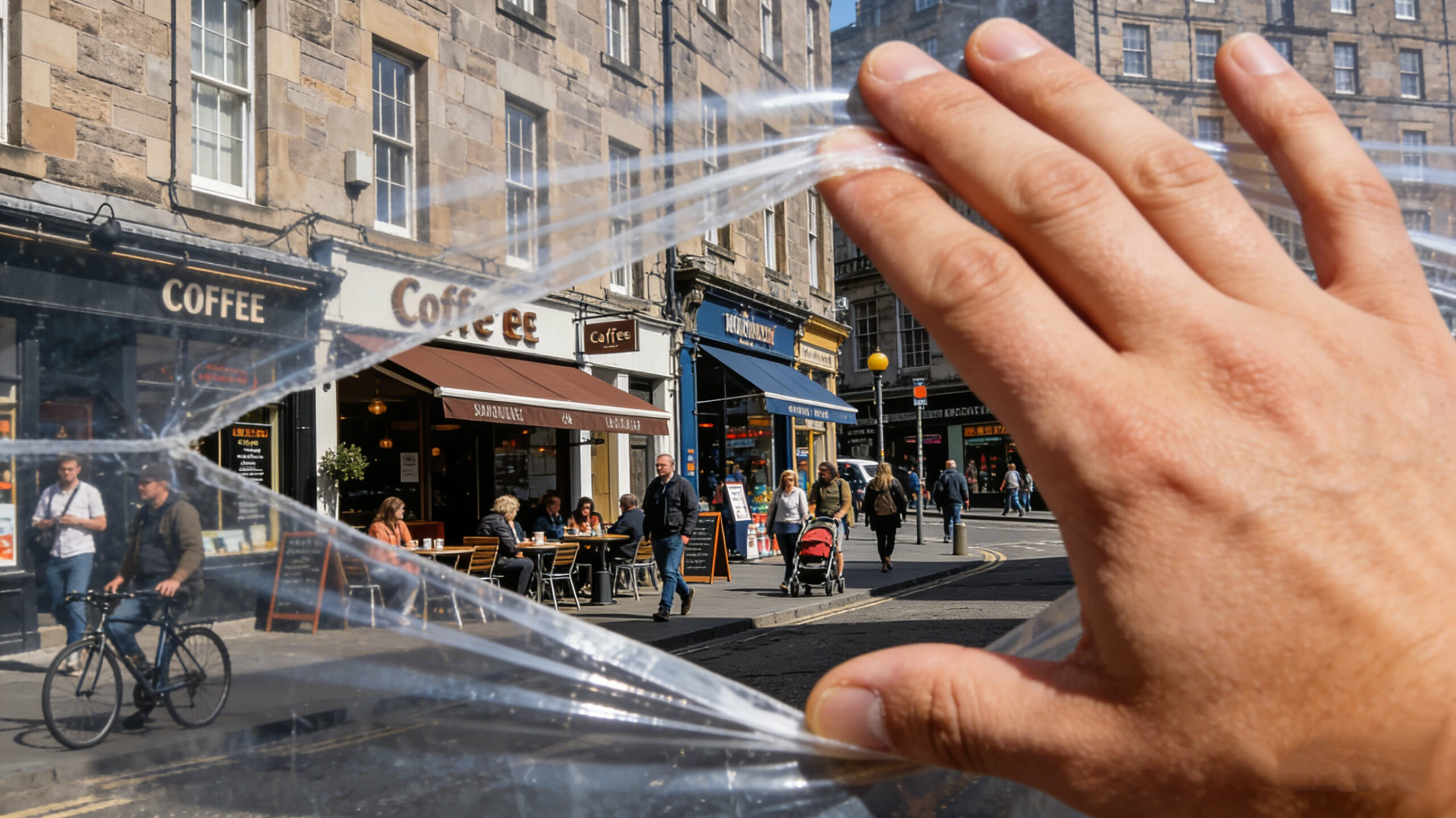
After discussions with my tutor and group members, I finalised the title Whose Space? Invisible Boundaries in Edinburgh’s Public Life. I became more certain that a title should not aim for obscure metaphor, but should allow a first-time reader to grasp the content and direction of the project.
The budget needed deeper work. An initial upper figure of around £10,000 forced me to distinguish between what is genuinely necessary and what still remains at a conceptual stage. Three artist residencies, several commissions, a complete AR system, public events, security, and documentation all seemed reasonable when taken separately, but clearly too large when placed within the framework of an emerging curator’s project. I therefore had to prioritise those elements that most directly support the argument of the exhibition: site interpretation, basic accessibility measures, essential documentation, and AR as a key interpretive tool. Because of cost, AR cannot be developed as a full-route system. Instead, it needs to be retained as an interpretive device for only a small number of key sites. Princes Street and Waverley Bridge are the most suitable places for this, because they most clearly show how commercial visibility and infrastructural movement shape spatial use. Other sites can instead be addressed through performance or rhythm-based interventions. The result is that AR remains central, but with a more clearly defined role: it serves spatial interpretation.
In terms of funding routes, the City of Edinburgh Council’s Local Events Open Fund currently appears the most suitable primary option. The Council’s 2026/27 overview shows that the fund is divided into three bands—£20,000, £12,000, and £5,000—and gives priority to commitment to communities, environmental responsibility, fair work, and equality, diversity and inclusion, while supporting activities with public cultural value in Edinburgh. A strong supplement to this is Creative Scotland’s Open Fund for Individuals, which supports research, development, and project delivery, with grants between £500 and £50,000.
I also researched local precedents in Edinburgh related to public-space commissions. The Council’s grant register specifically mentions the Edinburgh Art Festival – New Waverley Commission 2017 project, aimed at producing a work that directly responded to the New Waverley environment. The Edinburgh Art Festival 2017 Commissions Programme also describes its publicly sited works as opening overlooked urban spaces. This shows that site-responsive, public-facing commissions connected to specific city environments are not exceptional or unimaginable within Edinburgh. Even though my project remains a speculative proposal, it is not detached from the reality of the city.
References
City of Edinburgh Council. “Local Events Open Fund 2026/27.” Accessed April 16, 2026. https://consultationhub.edinburgh.gov.uk/sfc/local-events-open-fund-2026-27/.
City of Edinburgh Council. Local Events Open Fund Overview. Accessed April 16, 2026. https://consultationhub.edinburgh.gov.uk/sfc/local-events-open-fund-2026-27/supporting_documents/local-events-open-fund-overviewpdf.
City of Edinburgh Council. “Live Grant Register.” Accessed April 16, 2026. https://www.edinburgh.gov.uk/downloads/file/38021/grant-register.
Creative Scotland. “Open Fund for Individuals.” Accessed April 16, 2026. https://www.creativescotland.com/funding/funding-programmes/open-funding/open-fund-for-individuals.
Culture & Business Scotland. “C&BS Fund.” Accessed April 16, 2026. https://cultureandbusiness.scot/cbs-fund/.
Edinburgh Art Festival. “Edinburgh Art Festival 2017 Commissions Programme.” Accessed April 16, 2026. https://www.edinburghartfestival.com/edinburgh-art-festival-2017-commissions-programme/.
University of Edinburgh. Week 7 SICP Toolkit. MA Contemporary Art Theory: Curating course document, 2026.