

This week the project began to shift from a set of separate ideas into a structural problem. The real question was no longer how to add more content, but whether the parts already in place could be organised into a sequence that others could enter and read. In my case, the six sites, routes, interpretive tools, and public materials all have to be designed as one integrated system of reading.
The week’s discussion of archives and exhibition history helped me think this through more clearly. In her work on “remembering exhibitions”, Reesa Greenberg argues that the reappearance of an exhibition does not mean bringing the past back intact, but reorganising experience through forms such as replica, riff, and reprise. This was important for my project because what I am examining is not a one-off event, but a spatial structure that recurs across the city. Routes, stopping points, entrances, and patterns of use all form their own order within everyday practice. What curating can do, then, is rearrange these naturalised traces so that they no longer operate simply as background.
This also forced me to correct my own language. “Outdoor wandering” is not accurate enough. The project is closer to an organised critical route than to wandering in any simple sense. That matters to me because the route is one way in which the project argues for its own question. Viewers do not first see the works and then understand the route; the route itself actively shapes how they understand both the works and the city
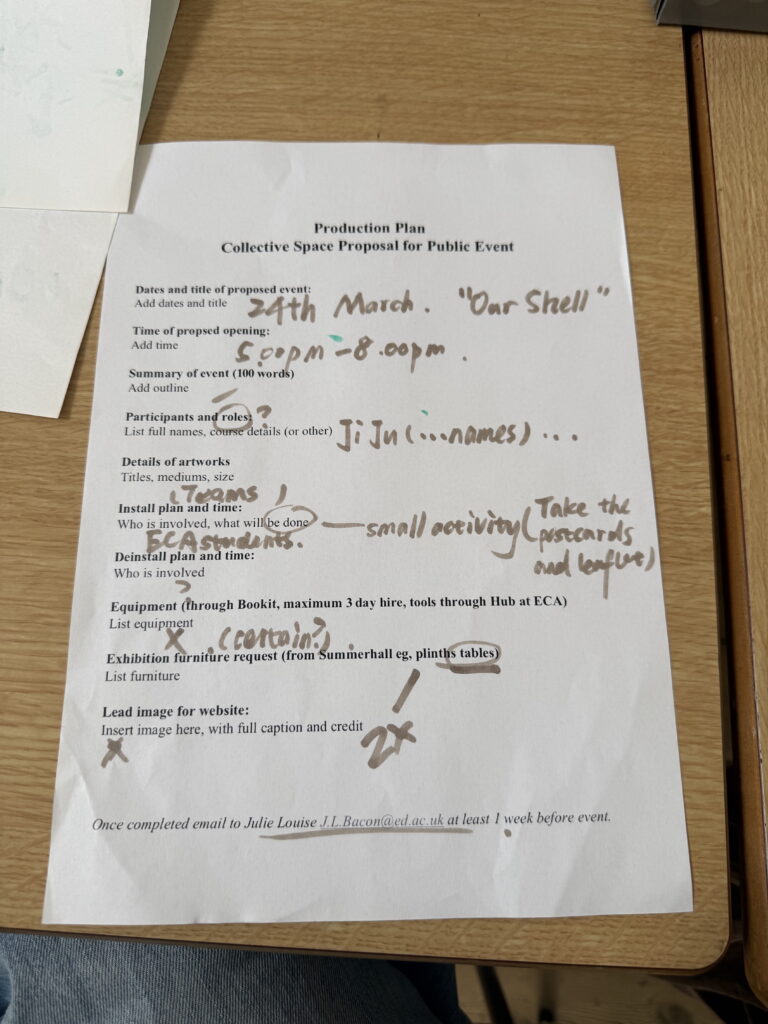
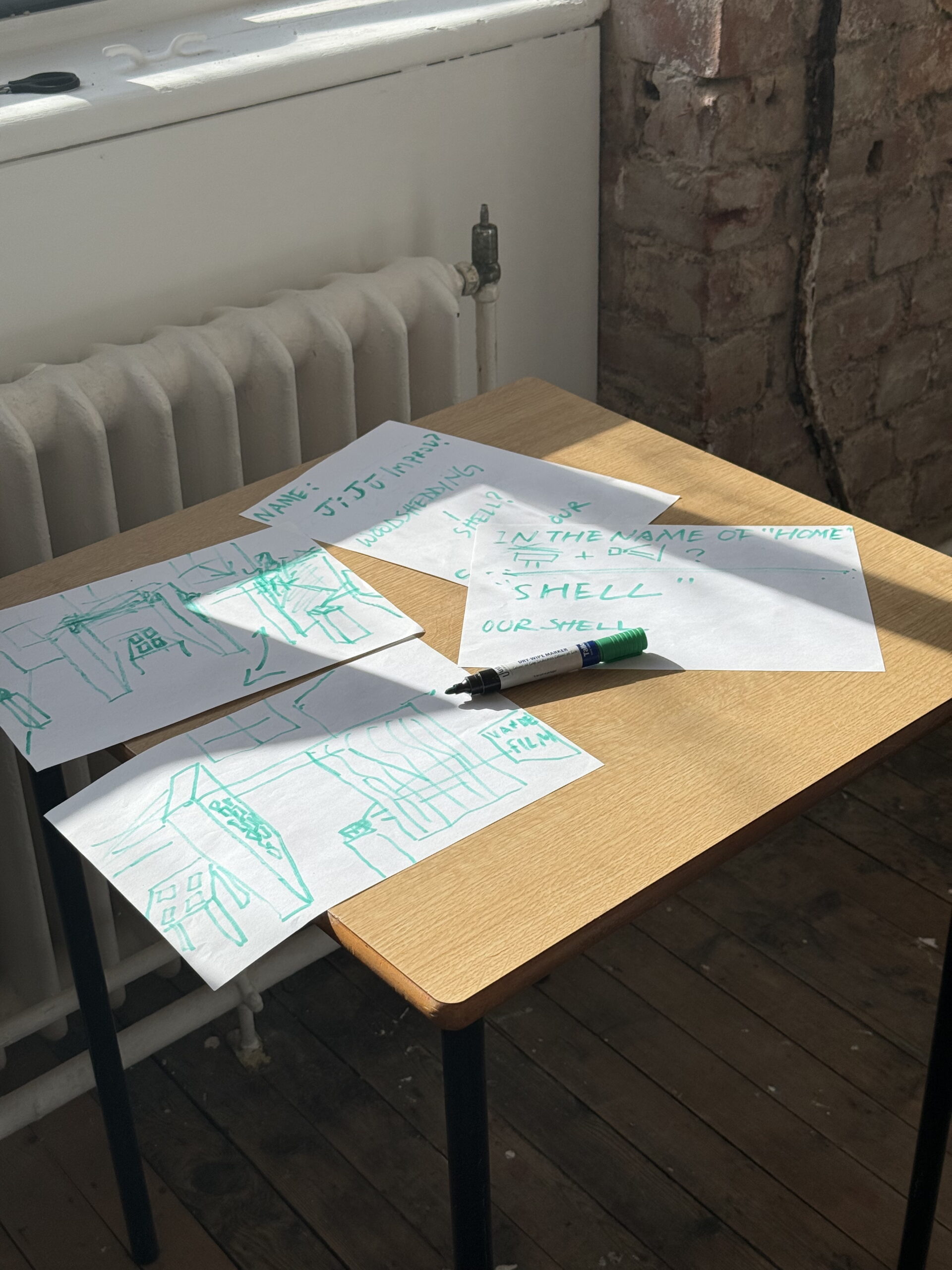
The collective practice at Summerhall also made me aware of another issue: publics do not begin with the work itself. Posters, pamphlets, layout, and spatial sequence all influence the way viewers first approach a project. Promotion and entrance design, therefore, have to be taken seriously. This also led me back to my own project: the six sites cannot be linked merely through thematic similarity. Their relation has to be concretely supported through maps, on-site texts, booklets, and other devices, so that the project can truly function as a readable whole.
References
Brauner, Maren, and Irene Grillo. “Walking as a Form of Critical Curating.” OnCurating, no. 8. Accessed April 16, 2026. https://www.on-curating.org/issue-8-reader/walking-as-a-form-of-critical-curating-1132.html.
Lewis Jacob, Adam. Underground, Overground, Inside and Out: Exploring the Dynamics of Artist-Run Spaces. MA Contemporary Art Theory: Curating course presentation, University of Edinburgh, 2026.