

Week 9 – Exhibition Viewing Strategies and Audience Definition
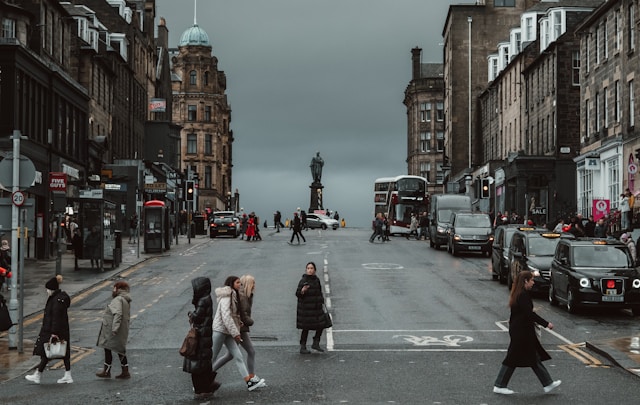


In the initial plan, I focused on the route design. However, after walking through the entire route myself this week, I discovered many areas that needed adjustment. The four-hour exhibition duration made me realize that what I truly needed to establish might not be a “complete route”, but rather a curatorial approach that responds to urban experiences. Therefore, I reflected on the construction of the non-linear exhibition strategy and the redefinition of “locals” and “tourists”.
Firstly, in terms of the exhibition viewing format, I transformed the original linear six-site path into a non-linear structure. Viewers no longer need to complete all the sites in the prescribed order but can choose their own viewing method based on their own time, interests, and physical condition. This structure is divided into three types: the complete path (which is used for exhibition promotion as a one-day tour, and is the most in-depth and complete viewing form), the selection path (selecting two to three exhibition points nearby based on interests, distance, and personal circumstances), and the fragmented participation (designing the viewing route by oneself according to the exhibition route map during the exhibition period). These three designs not only solve the problem of the long duration of the original path but also help expand the source of viewers. It is also closer to the real experience mode of urban space, fragmented and highly accidental, and constantly reconstructed by individual actions.
At the same time, I adopted a strategy that combines “partial guidance and partial non-guidance”. Only brief connectivity guidance was provided at key nodes to establish a critical framework and viewing perspective. At other nodes, the audience’s autonomous exploration was retained, allowing the audience to maintain a dynamic relationship between understanding and experience, and providing freedom for the audience to actively construct their own paths.
Secondly, in terms of audience definition, I re-examined the overly simplistic classification of “locals and tourists”. My initial division was merely at the level of stereotypes, but through research, it was discovered that this binary structure was overly simplistic. Edinburgh receives over 5 million tourists each year, far exceeding the permanent population. Most of the tourists are short-term visitors, and their activities mainly concentrate in iconic areas such as Princes Street and the old town. “Locals” are not a single group; they include long-term residents, students, commuters, and community members affected by tourism. The movement paths and space usage patterns of these groups in the city are also very different.
Inspired by “The Lure of the Local”, I attempted to interpret “local” as a dynamic position composed of memories, experiences, and social relationships, rather than a fixed identity. In this project, “locals and tourists” are no longer regarded as two fixed groups of people, but rather are continuously constructed roles through movement paths, stay methods, and the way they use the space.
Based on this, the questions raised by the exhibition also require more careful consideration: Who is seen in public spaces? Whose actions are ignored or marginalized? And how are these aspects of visibility and invisibility constantly generated and strengthened in daily movement and space usage? These questions no longer have fixed answers; instead, they will be constantly triggered and reconstructed as the audience participates and makes choices in the path.
VisitScotland. “Edinburgh and Lothians Tourism Statistics.” 2024.
https://www.visitscotland.org/research-insights/regions/edinburgh-lothians
Hillhead Review. “Is It Time to Talk About Edinburgh’s Tourism Problem?” 2023.