Any views expressed within media held on this service are those of the contributors, should not be taken as approved or endorsed by the University, and do not necessarily reflect the views of the University in respect of any particular issue.
🙌Participated a Workshop and Developing My Workshop Idea
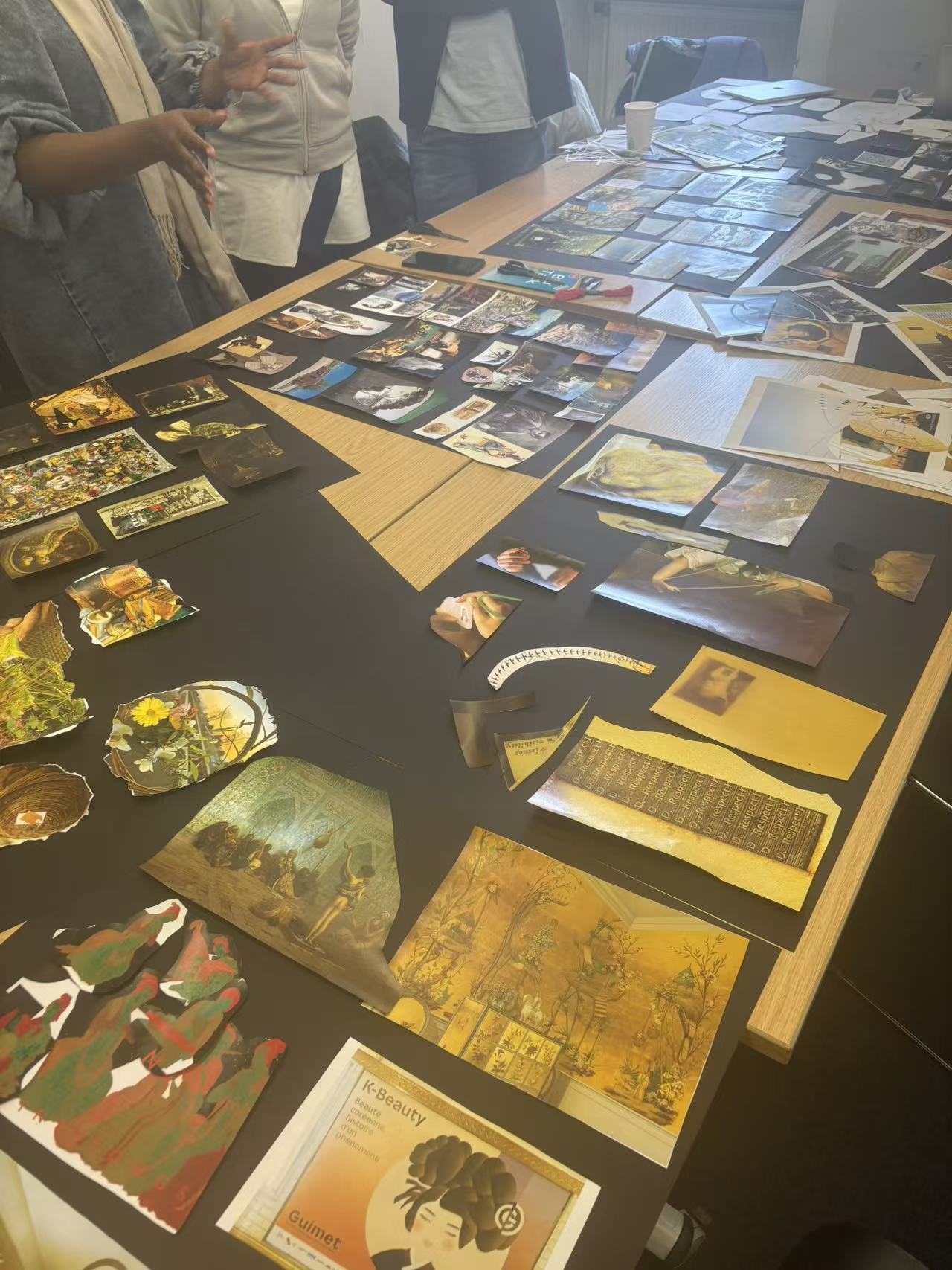
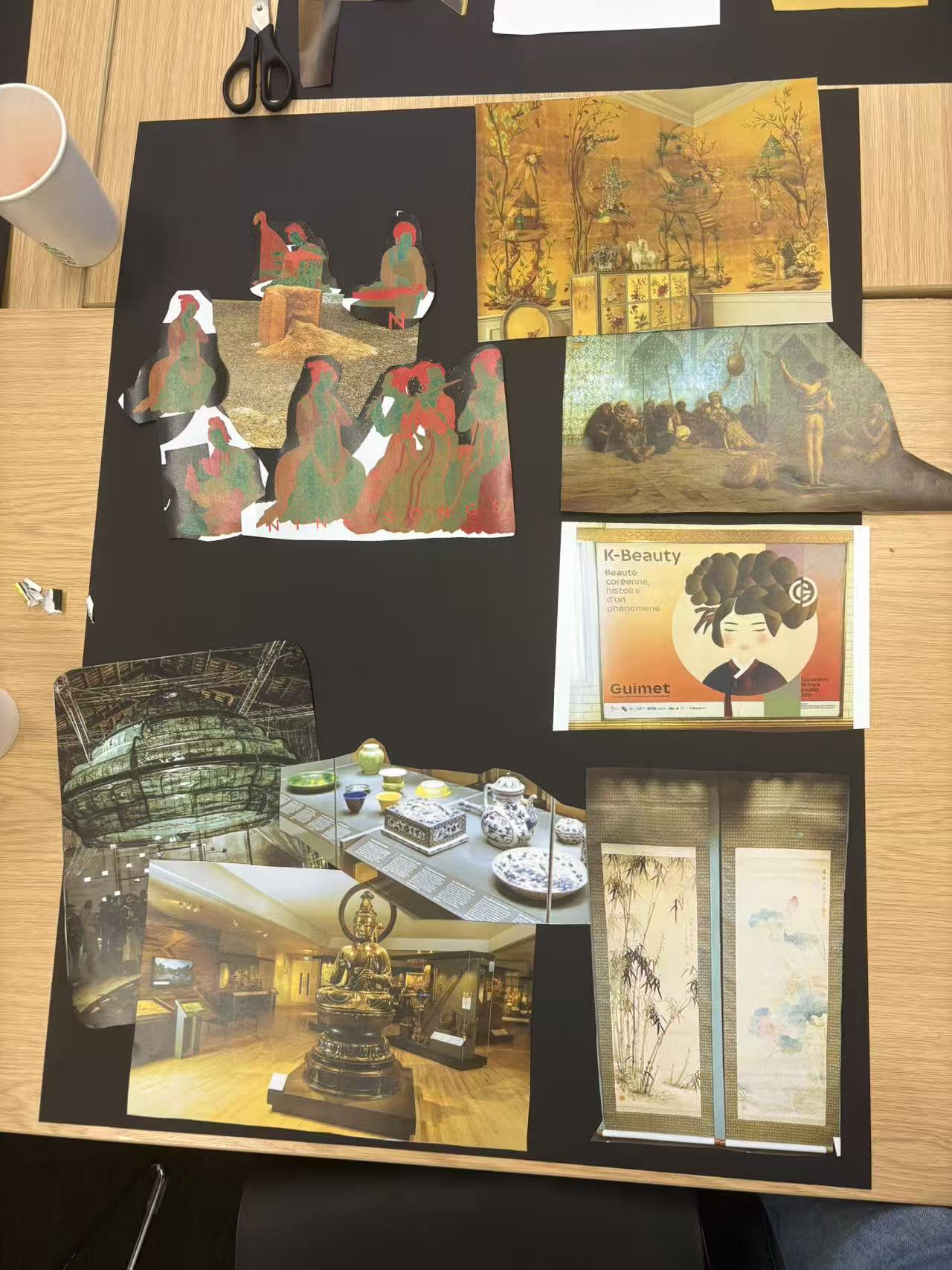
This week, I participated in a workshop based on Mnemosyne Mapping, which explored research through a combination of theoretical concepts and artistic practice. The workshop was intellectually engaging and demonstrated how complex ideas can be translated into visual and spatial methods. However, it was primarily designed for participants already familiar with academic research, which limited its accessibility to a broader audience. This experience helped me understand that a workshop should not only communicate a concept, but also create an accessible structure through which participants can test that concept in their own way.
(Cross-Cultural Art Writing & Making Workshop, “The Researcher as Detective: Mapping Visual Constellations”, Edinburgh College of Art, Photograph by Xiaobao Ye, 2026)
This experience informed the development of my own workshop design, Circular Writing: The Writing Loop. As my exhibition is intended to be open to all visitors, I aim to create a form of participation that does not require specialised knowledge. Instead of simplifying content, I focus on creating an accessible structure through which participants can engage intuitively.
I therefore developed the idea of a circular writing workshop. Circular writing is a structure in which the beginning and end of a text connect, allowing writing to loop rather than progress linearly. This reflects the spatial logic of my exhibition, which is organised around circular movement. In this way, writing becomes an extension of the exhibition experience.
✍️Circular writing
Circular writing can be linked to a range of literary practices.
For example, Finnegans Wake presents a narrative that loops rather than progresses linearly,
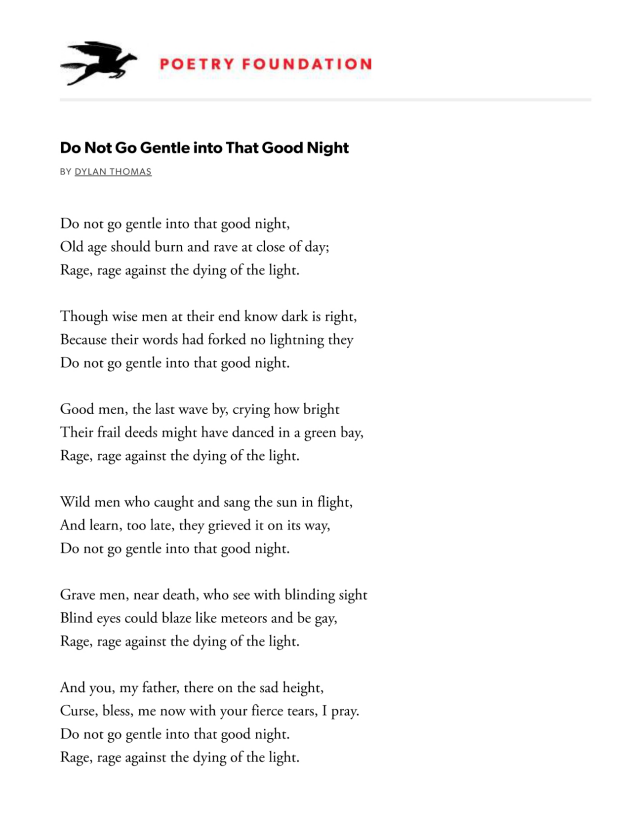
Poetic forms such as the villanelle in Do Not Go Gentle into That Good Night create a sense of repetition and return.
(Dylan Thomas, “Do Not Go Gentle into That Good Night”. Source: English Literature)
Collaborative traditions such as Renga and experimental practices associated with Oulipo show how writing can be structured as a chain or loop, allowing meaning to emerge collectively. To support participation, I will provide simple prompts, such as beginning the next sentence with the last letter of the previous one. The workshop will be embedded within the exhibition space rather than delivered as a separate event: a small writing corner with paper and pens will allow visitors to contribute at any moment, while still engaging with sound or video from the exhibition. In this way, writing becomes both a reflective and spatial activity. Visitors do not only view the exhibition, but also leave a trace of their experience within an evolving textual loop.
Reference
Joyce, James. 1939. Finnegans Wake. London: Faber and Faber.
Thomas, Dylan. 1951. Do Not Go Gentle into That Good Night. In In Country Sleep, and Other Poems. London: J. M. Dent.
Oulipo. 1960. Ouvroir de littérature potentielle. Paris.
Week 12 Simplifying the Framework and Redesigning the Workshop
🤔Rethinking the Theory
As the project developed, I realised that Nietzsche’s eternal recurrence and Marx’s circulation of capital were no longer the most useful framework for the exhibition. Although they sound ambitious, and the idea of eternal recurrence initially helped me think about circularity, it gradually became too abstract and concept-heavy for the direction I wanted to take. Therefore, my project has shifted towards everyday experiences of repetition and circular forms, which are more immediate and accessible to visitors. However, Nietzsche is not entirely absent, but a part of the workshop, just no longer functions as the central framework. In a word, the exhibition now focuses more on how recurrence can be noticed and experienced in daily life, and I plan to use Nietzsche’s idea in the workshop to invite the audience to reflect on repetition in their own daily lives.
🧶Updating the Workshop: From Circular Writing to Mapping My Circles
My earlier idea, Circular Writing was focused on a looping writing structure, but I started to question whether it was genuinely accessible, or whether it repeated the same issue I noticed in the Mnemosyne Mapping workshop: a format that assumes comfort with literary or academic practices.
If the exhibition is about noticing repetition in everyday life, then the workshop should start from lived experience. I therefore redesigned it as Mapping My Circles, inspired by Circulation (Zhen Shang Jia Jia Peng, 2022). Participants document circular forms from a single day — a clock, a coffee cup, a commute — through drawing or writing, any form. The session closes with a shared discussion around Nietzsche’s question: if today repeated forever, would you embrace it? The workshop will be held on the first day of the exhibition, and selected outcomes will become part of the workshop archive and be shown in the exhibition.
🐻 Add an Interaction Section in Exhibition Space
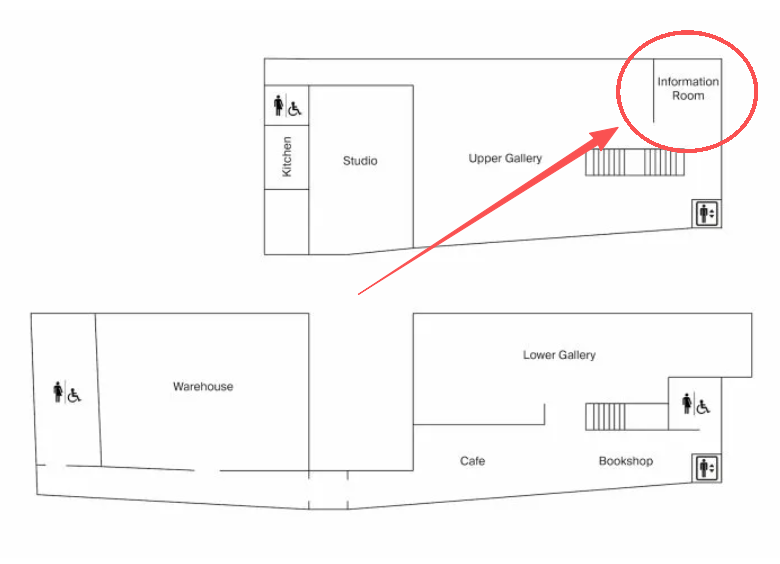
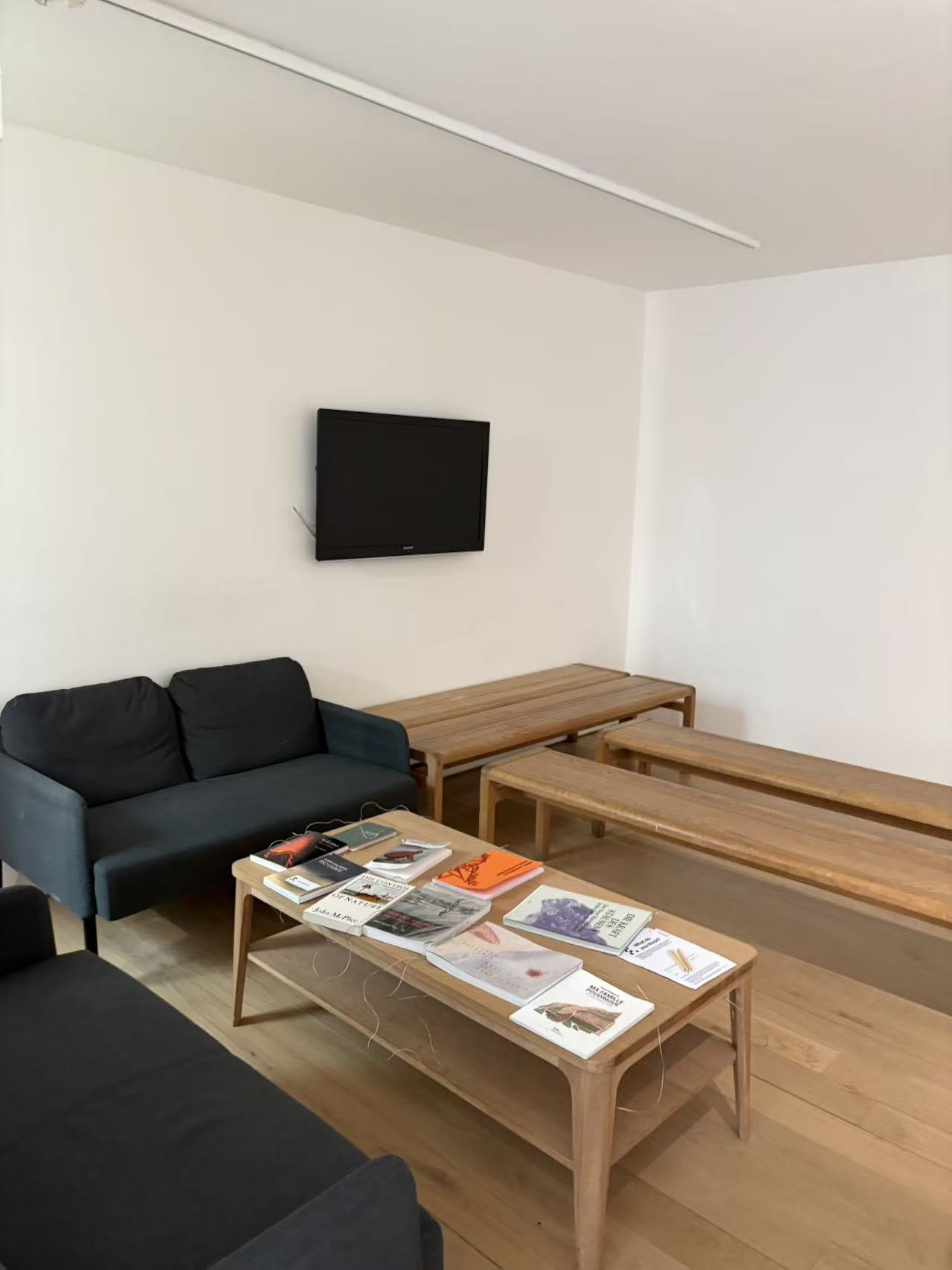
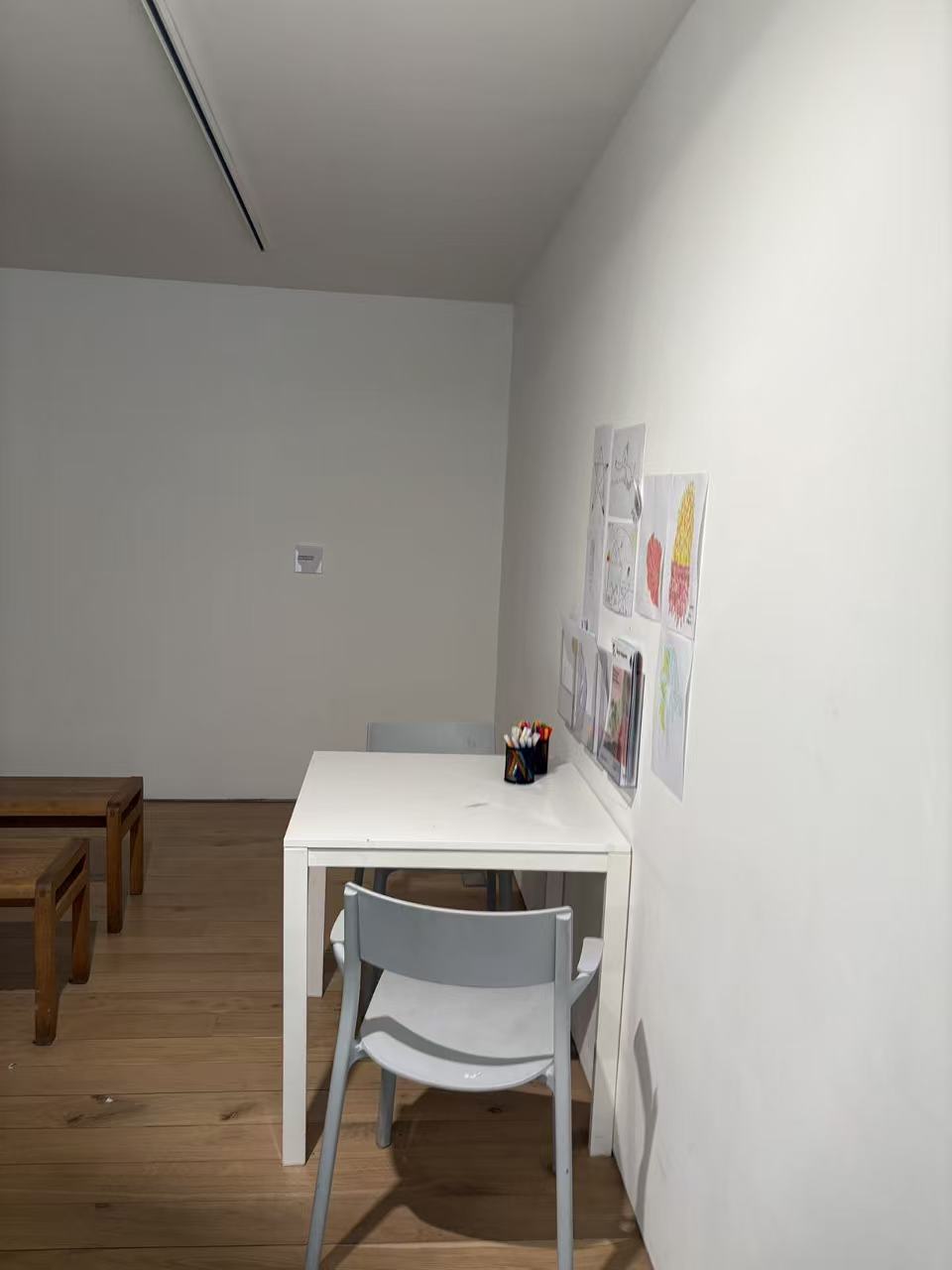
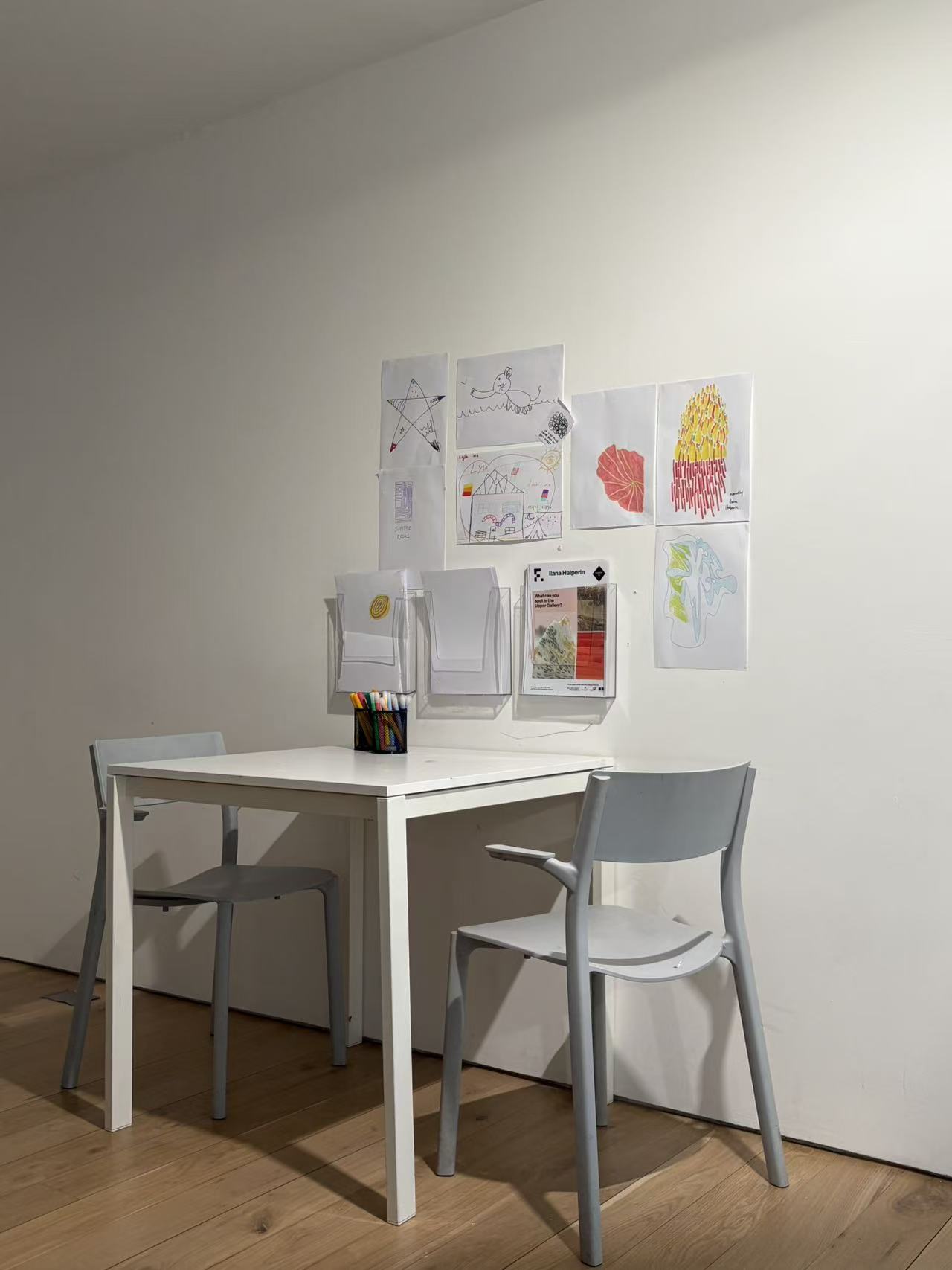
At The Fruitmarket, the Information Room in Ilana Halperin’s What Is Us and What Is Earth offered a quiet space for drawing, resting, and leaving responses.
(Floor plan of Fruitmarket, Edinburgh, showing the Information Room location (highlighted). Source: Fruitmarket Gallery)
(Information Room in Ilana Halperin’s What Is Us and What Is Earth, Fruitmarket Upper Gallery, Edinburgh. Photographs by Xiaobao Ye, 2026)
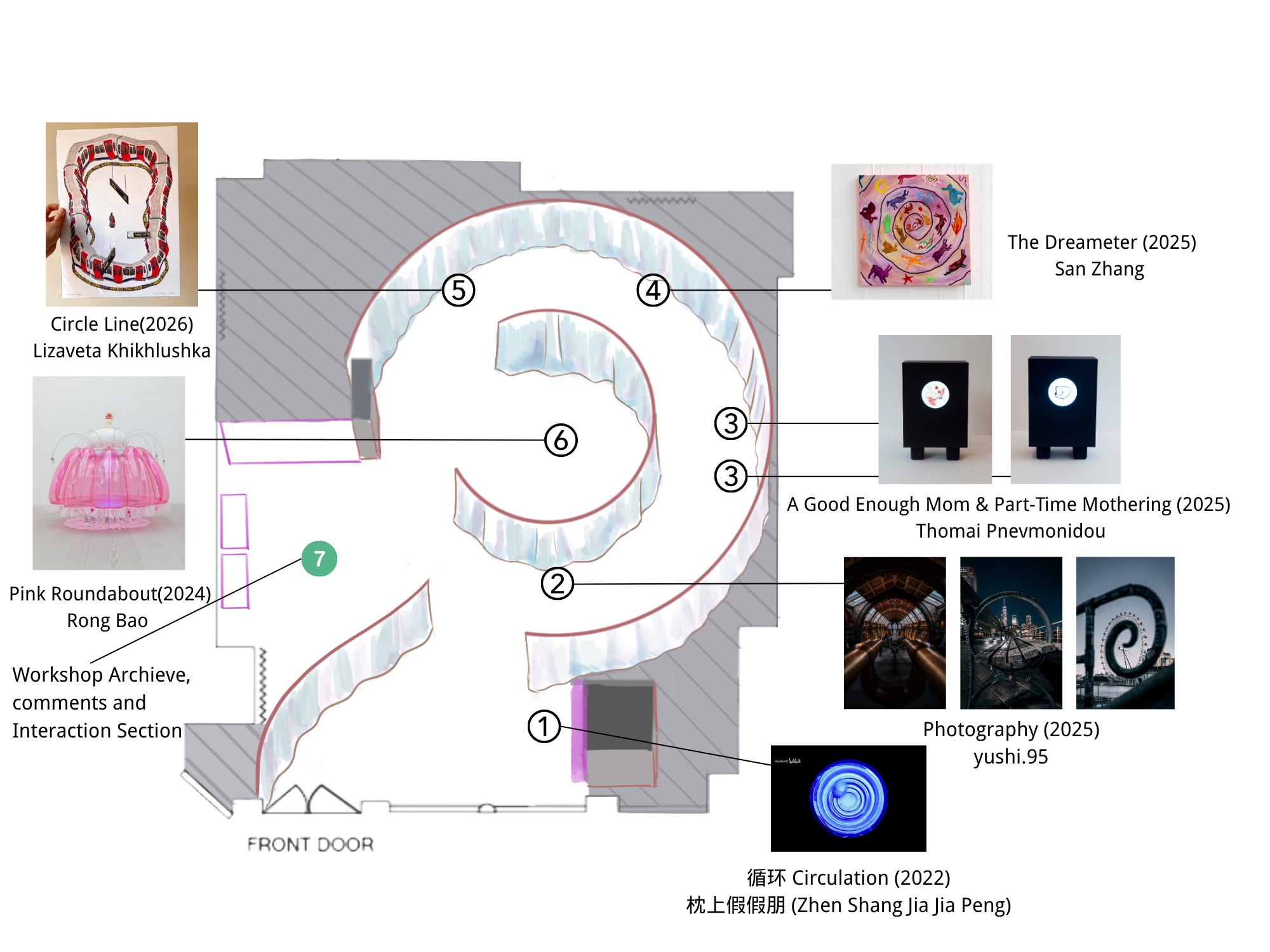
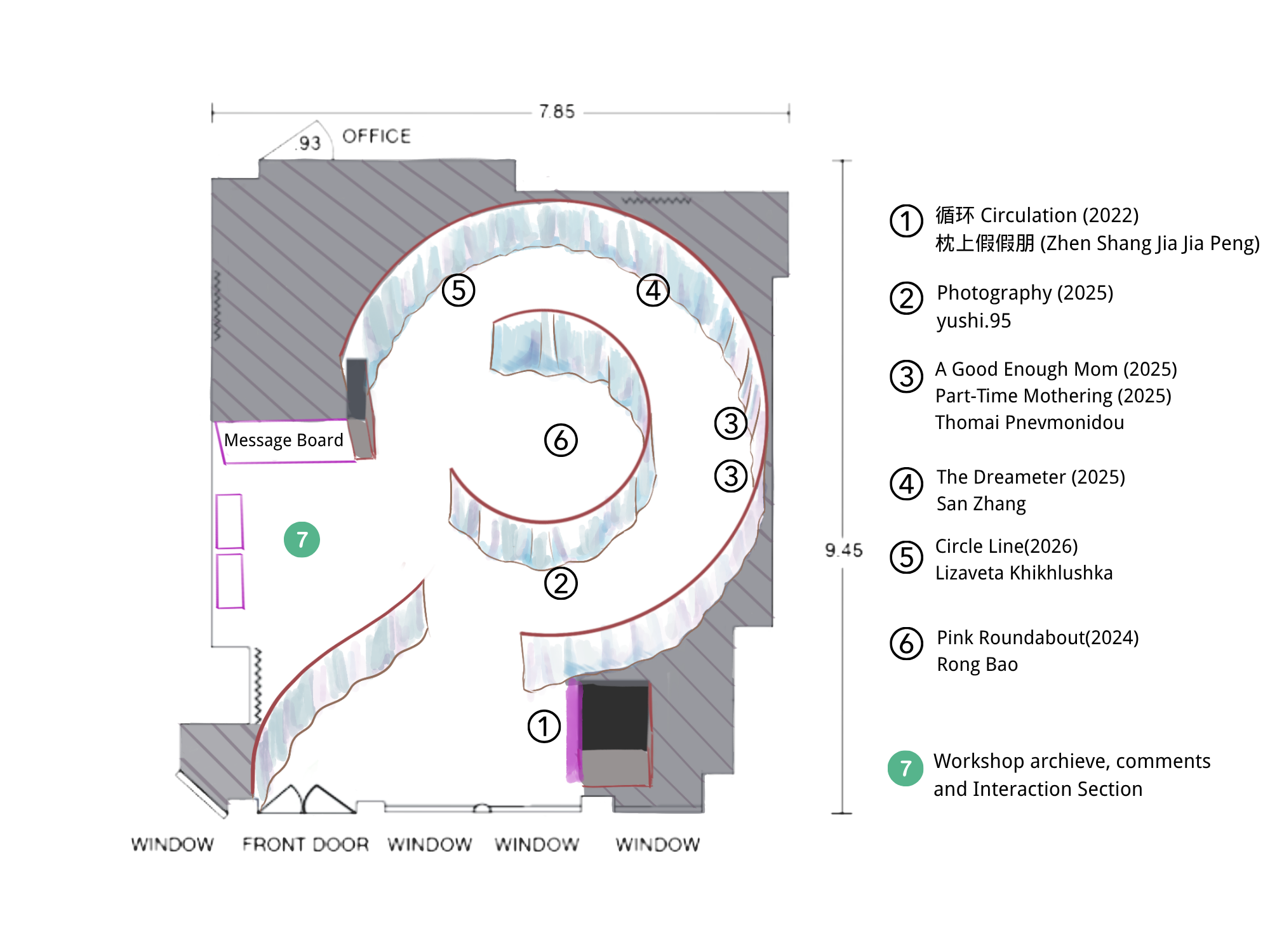
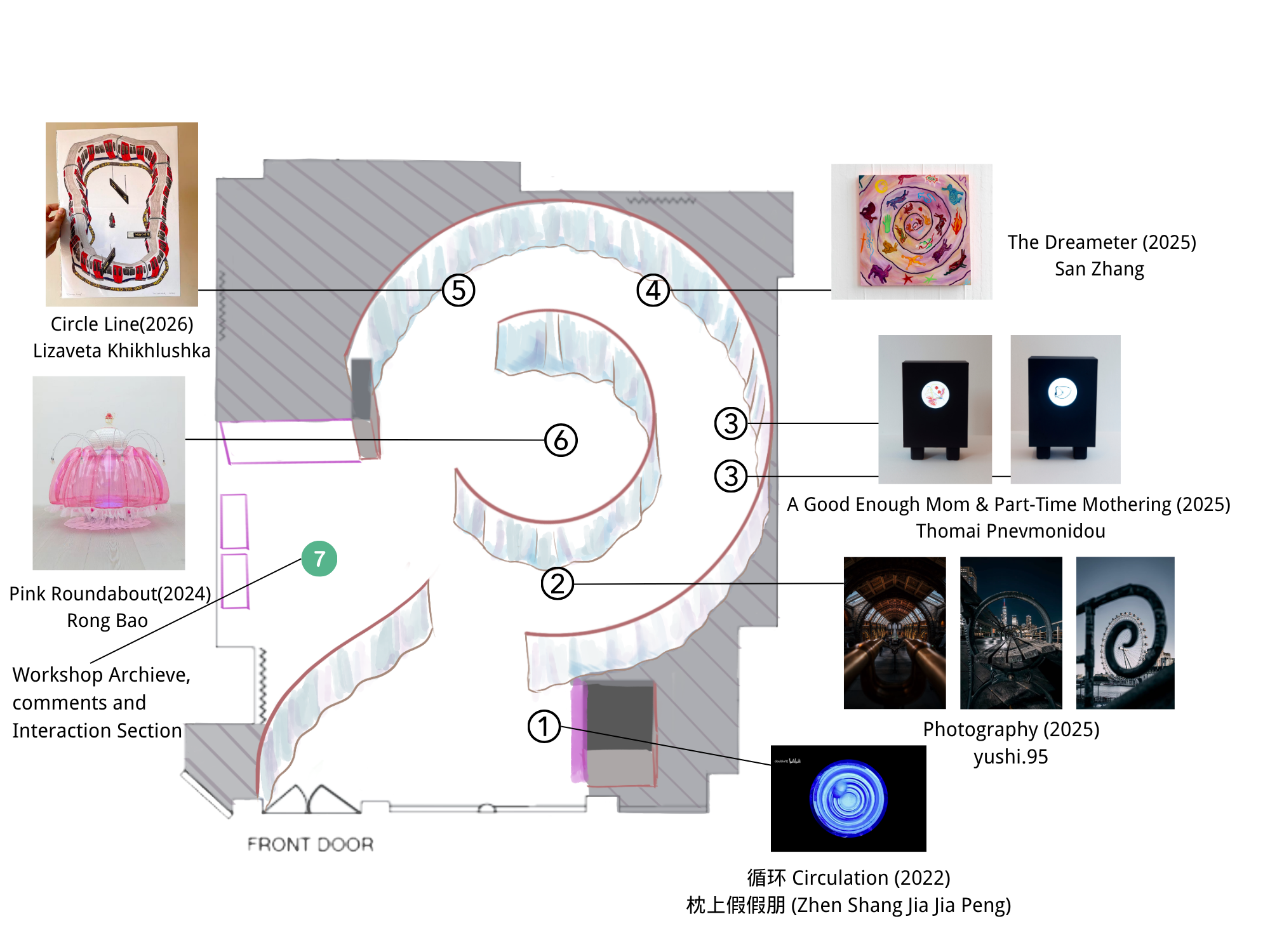
I want to create a similar area at the end of my exhibition(site 7), with desk, sofa, bench, paper, prompts, and selected workshop outcomes as workshop archieve, my worshop will run in the first day of the exhibition. In the site 7, visitors can write or draw, leave their responses, or take them away.
The workshop would conclude with responses displayed on a message board. This also connects to Grant Kester’s idea that meaning can emerge through dialogue and exchange, not only through objects (Kester, 2004). In this way, the workshop extends the exhibition through participation and reflection.
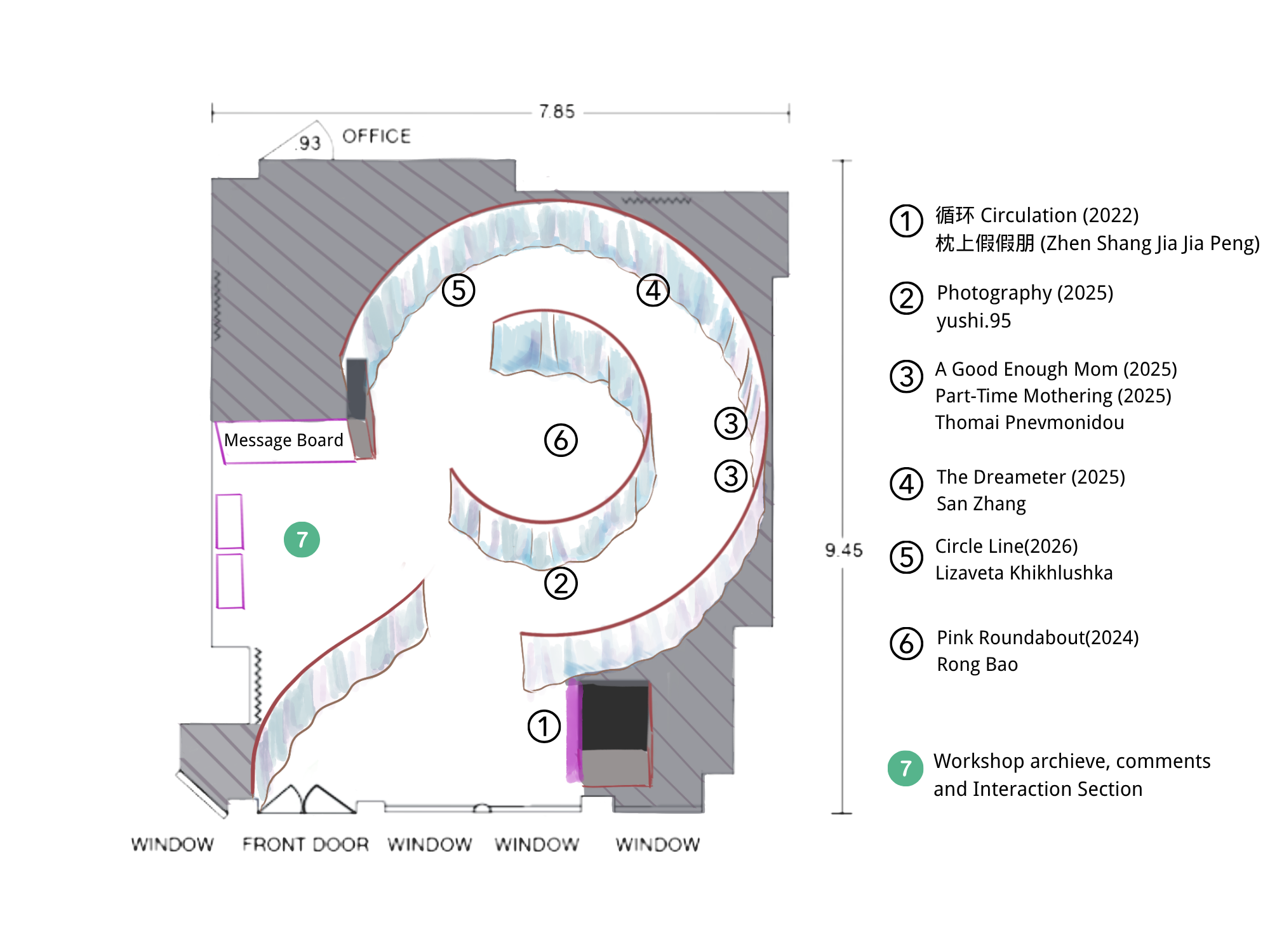
(Exhibition layout for Endless Circulation, The Dundas Street Gallery, Edinburgh. Floor plan by Xiaobao Ye, 2026)
(Proposed exhibition layout for Endless Circulation with artwork references, The Dundas Gallery, Edinburgh.
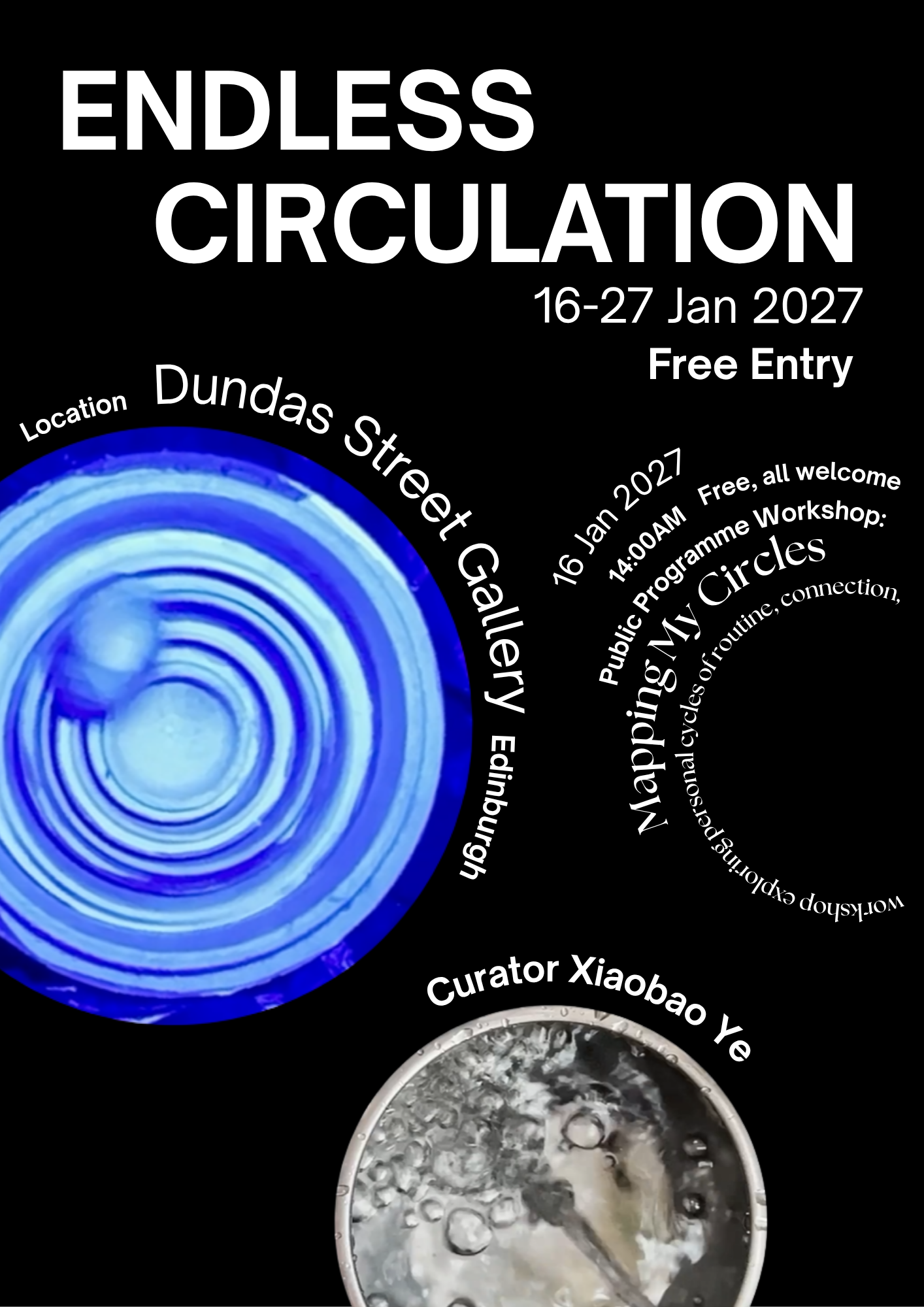
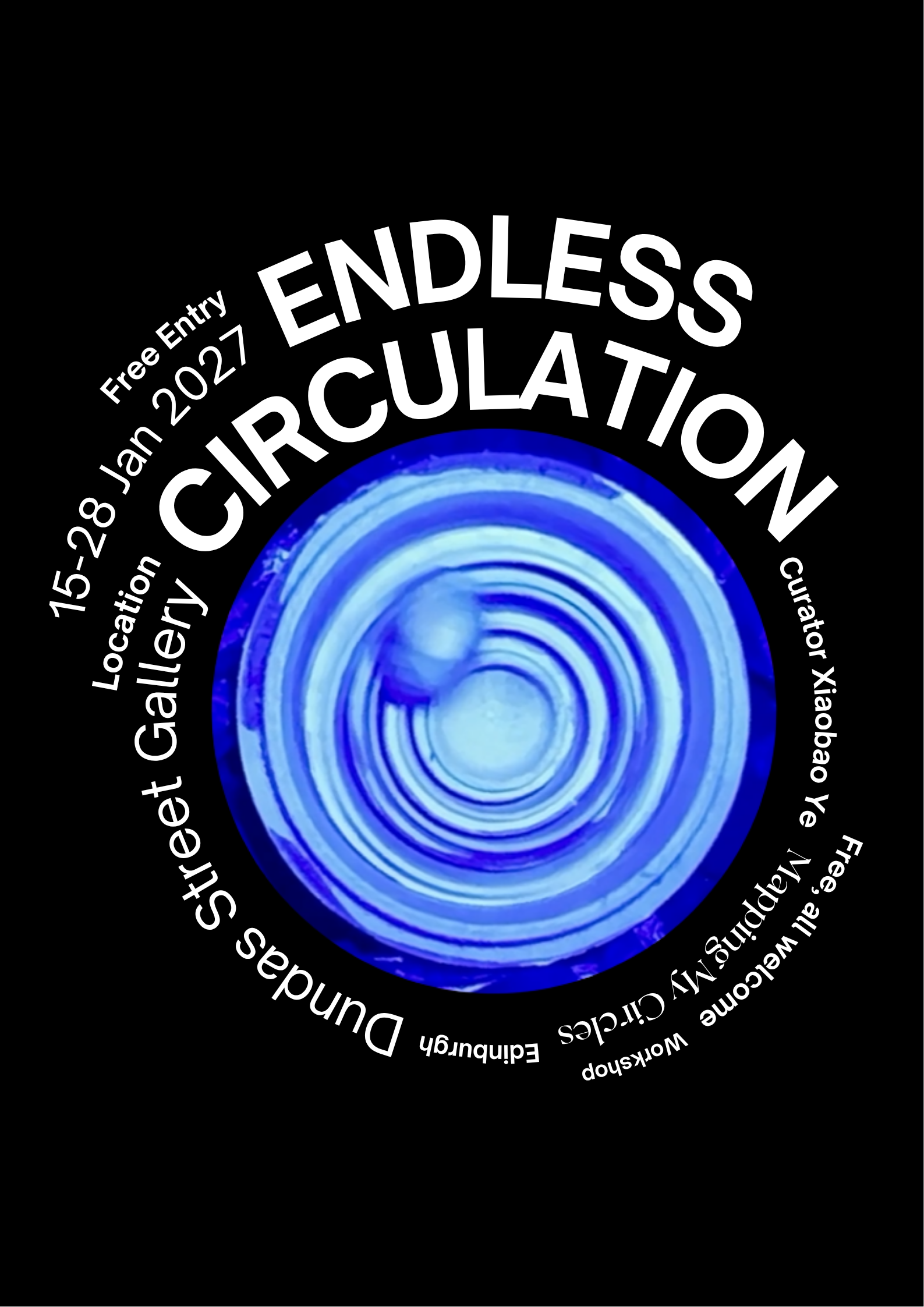
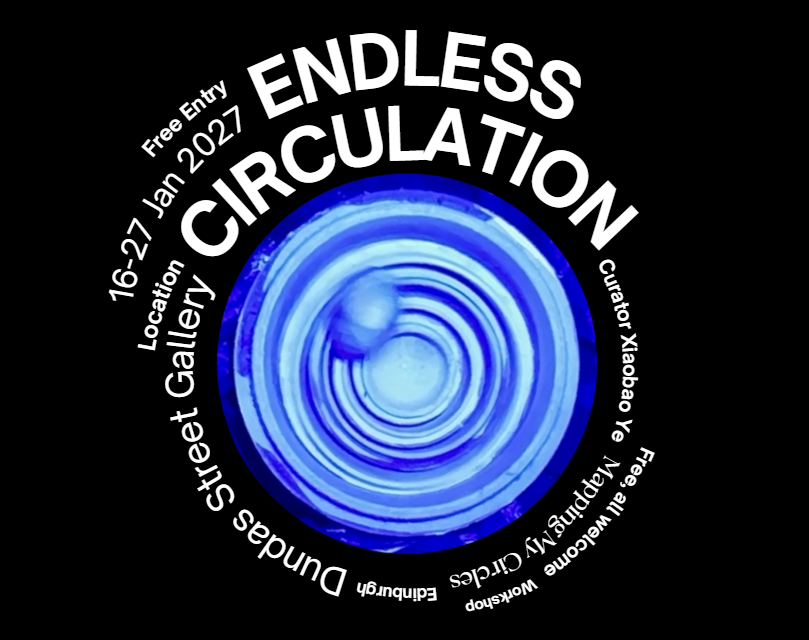
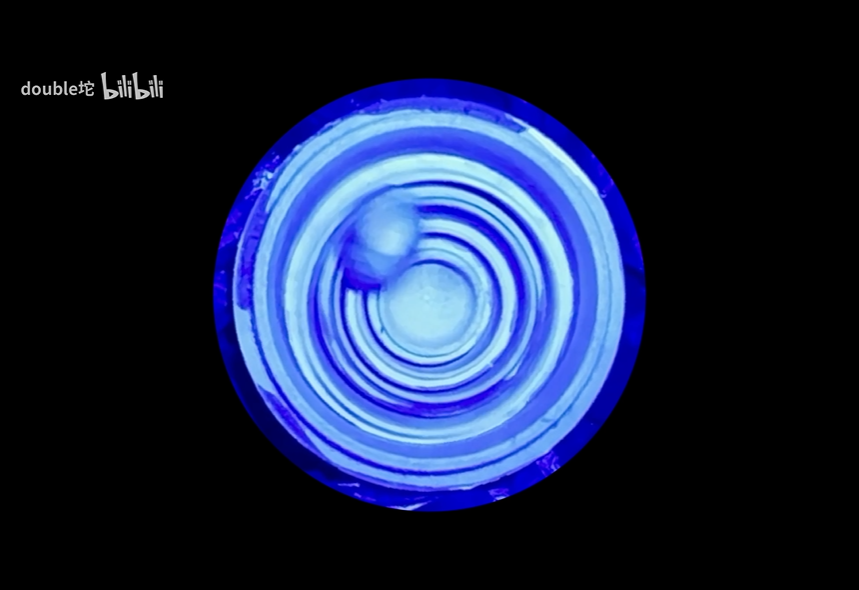
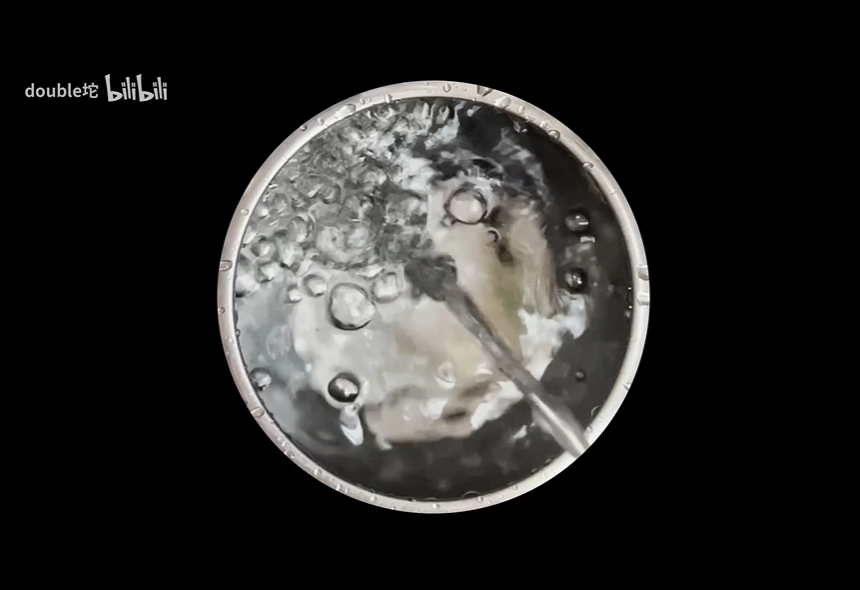
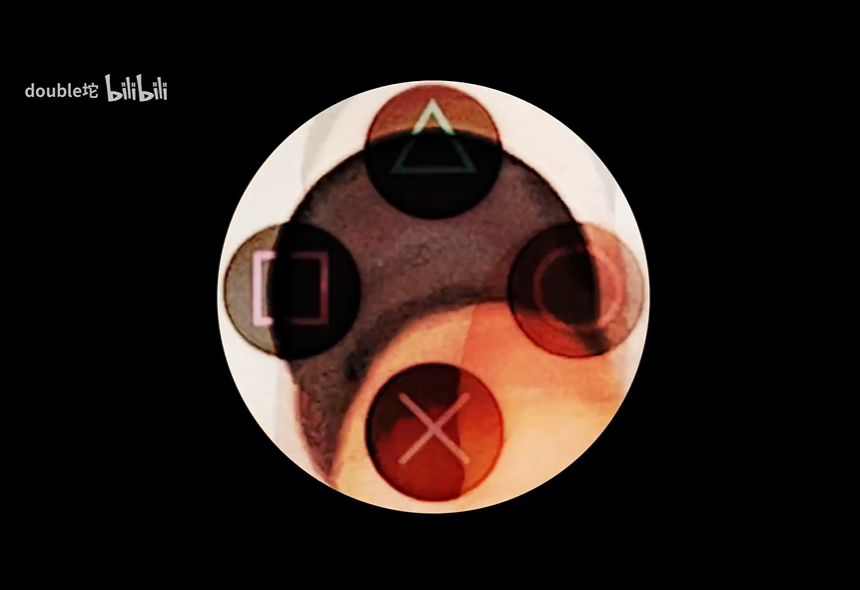
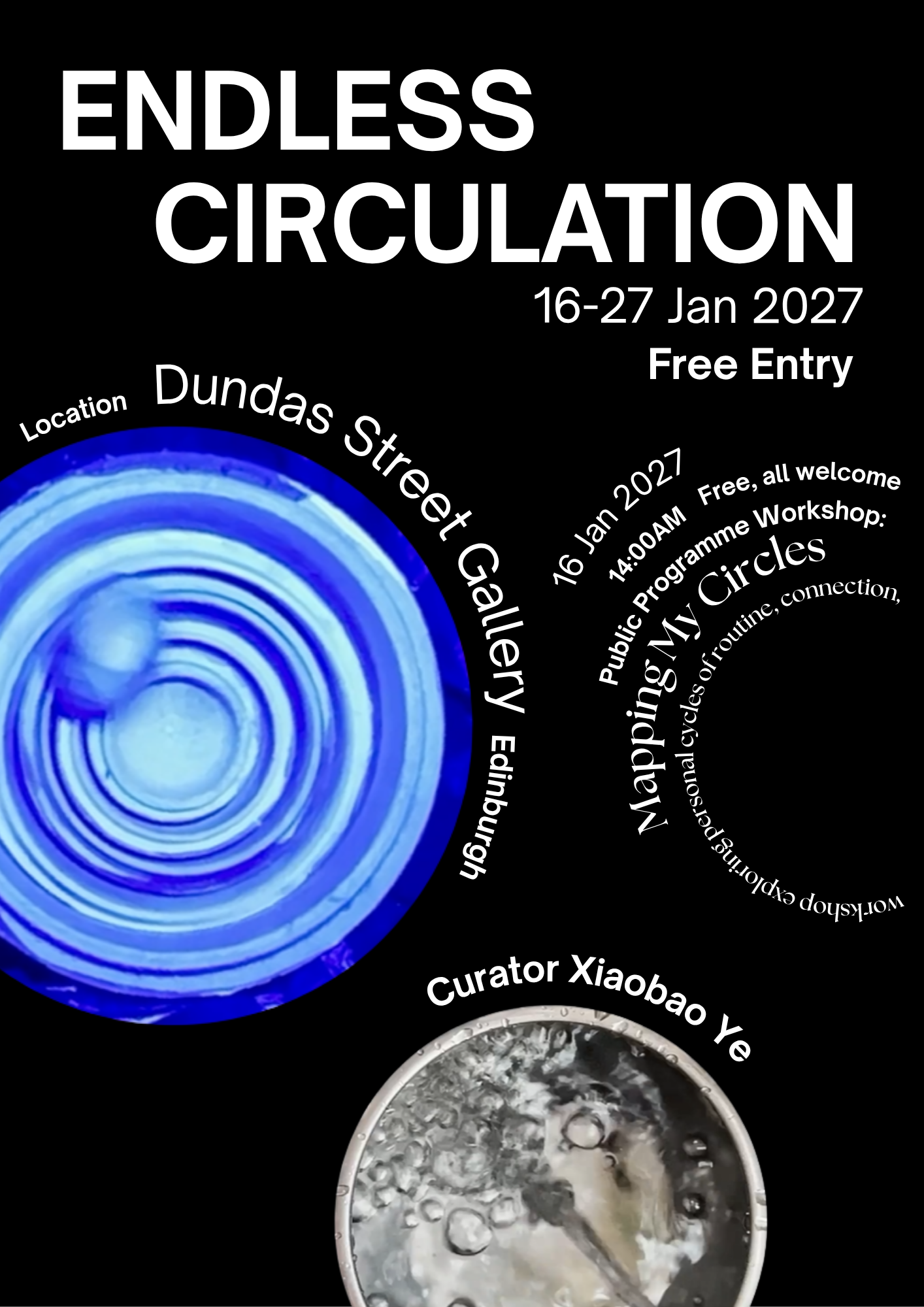
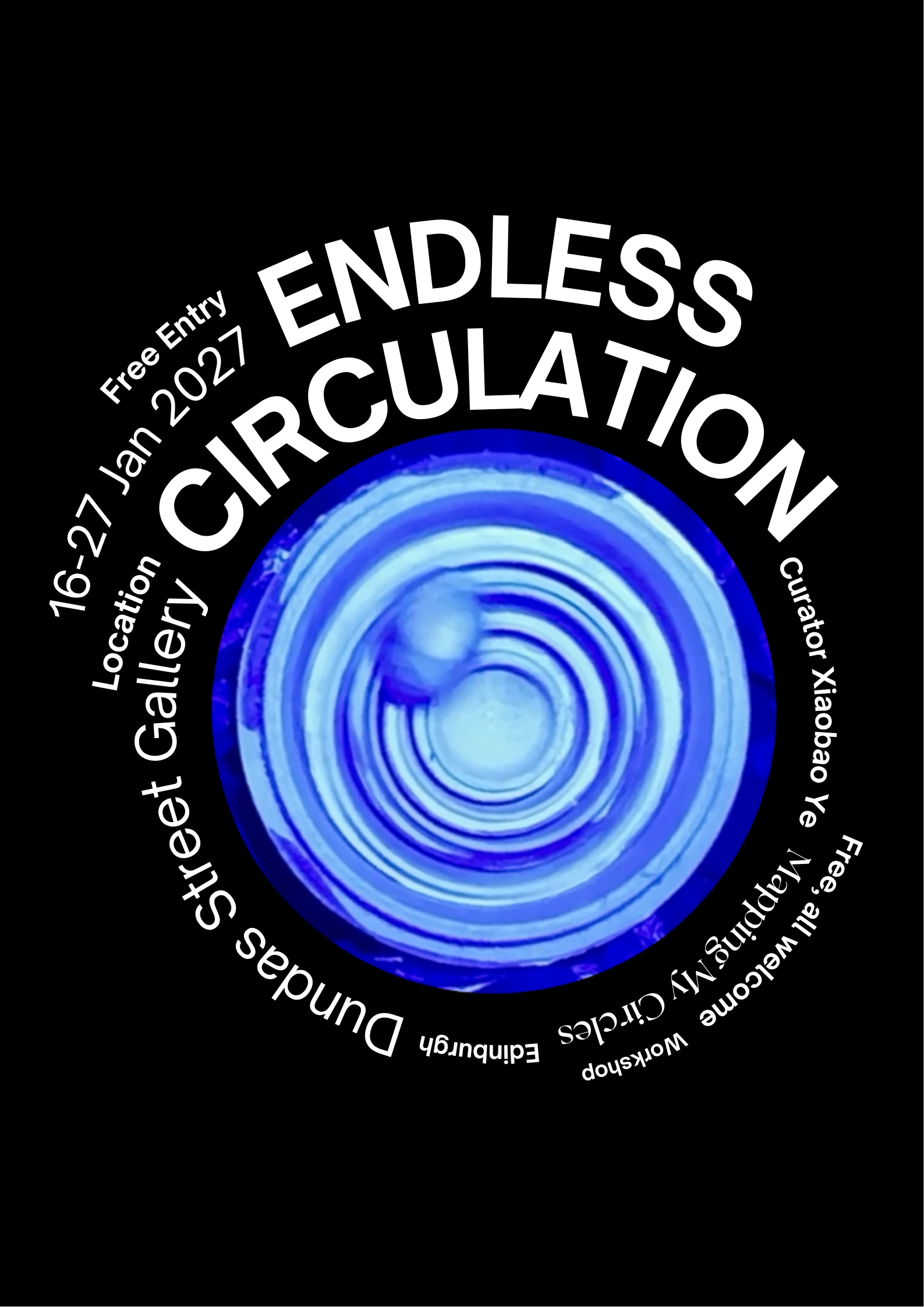
I designed two posters for Endless Circulation, using stills from the video work Circulations, the film artwork from the exhibition which documenting every circle the artist encounters in a single day — as the central imagery. This video also inspired the workshop Mapping My Circles, making it a fitting visual anchor for the posters. Both posters designed with bold white typography on a black background, with exhibition information arranged along curved text paths that spiral around the circular imagery. This layout choice mirrors the exhibition’s theme: the typography itself becomes an act of circulation, inviting viewers to engage with the information in a non-linear, cyclical way.
(Endless Circulation Exhibition Poster. Designed by Xiaobao Ye, 2026)
🌈Finalisation
After the workshop redesign in Week 12, the final structure of Endless Circulation has been resolved. The exhibition is set in The Dundas Street Gallery, Edinburgh, structured around a one-way circular route using translucent curtain installations to guide visitors through six artworks. The spiral layout mirrors the exhibition’s central question: are we progressing, or simply circulating? The workshop and interaction area (Site 7) is positioned near the entrance, where visitors can engage with prompts, paper, and selected workshop outcomes. This space invites visitors to pause and reflect — drawing on Nietzsche’s concept of eternal recurrence, which asks whether we would choose to live the same life endlessly, the interaction area encourages audiences to consider their own relationship with cycles of consumption, repetition, and meaning (Nietzsche, 1882).
🌷 Exhibition Budget
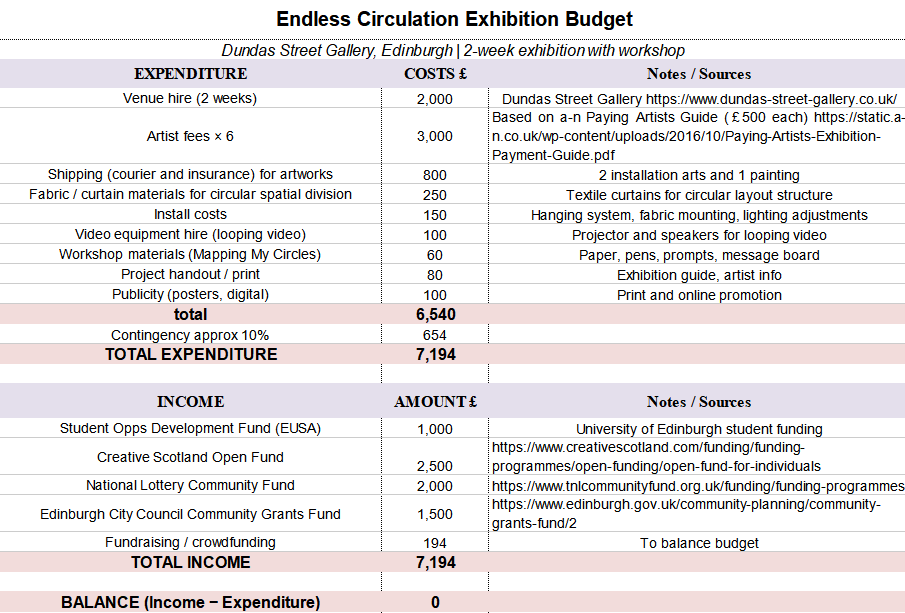
The finalised budget
(Exhibition budget for Endless Circulation. Designed by Xiaobao Ye)
Since the draft budget in Week 10, I added a line for workshop materials (£60) to cover paper, pens, prompts, and the message board for the “Mapping My Circles” activity, which was finalised after the workshop redesign in Week 12. The fundraising amount was adjusted accordingly to keep the budget balanced. Artist fees follow the Scottish Artists’ Union’s Recommended Rates of Pay guidelines. The budget remains balanced between income and expenditure, with funding sourced from university grants and a Creative Scotland Open Fund application.
References
Nietzsche, F. (1882) The Gay Science. Translated by W. Kaufmann. New York: Vintage Books, 1974.
We live inside circles without knowing it. The rim of a coffee cup, the turn of a roundabout, the loop of a commute, the repetition of a mother’s day. Circles are everywhere, quietly holding our lives together.
Endless Circulation gathers six artists who notice these shapes and rhythms. Their work spans video, photography, painting, installation, and sculpture, each offering a different way of looking at the loops we move through every day. The exhibition is structured as a circular route through the gallery, guiding visitors on a journey from the tangible to the abstract — from the physical loops of daily life to deeper, more conceptual forms of repetition.
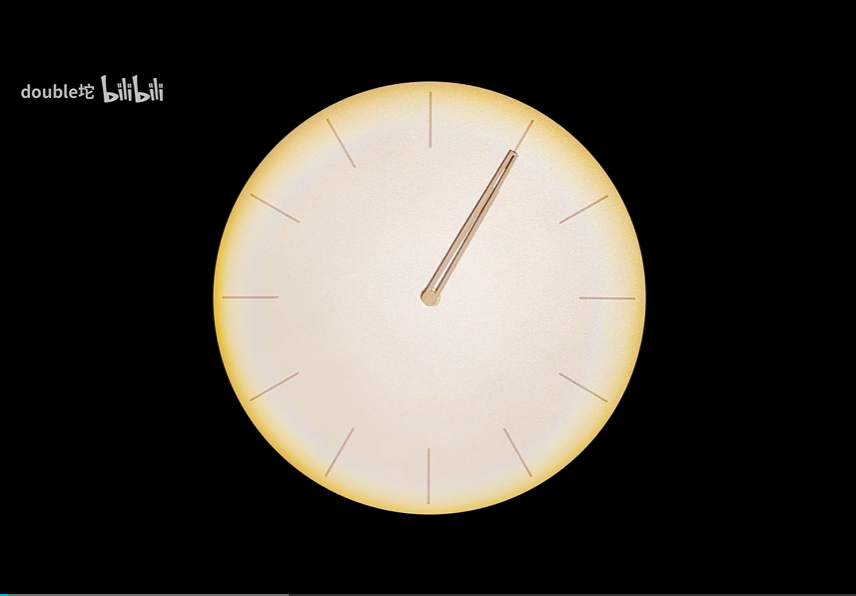
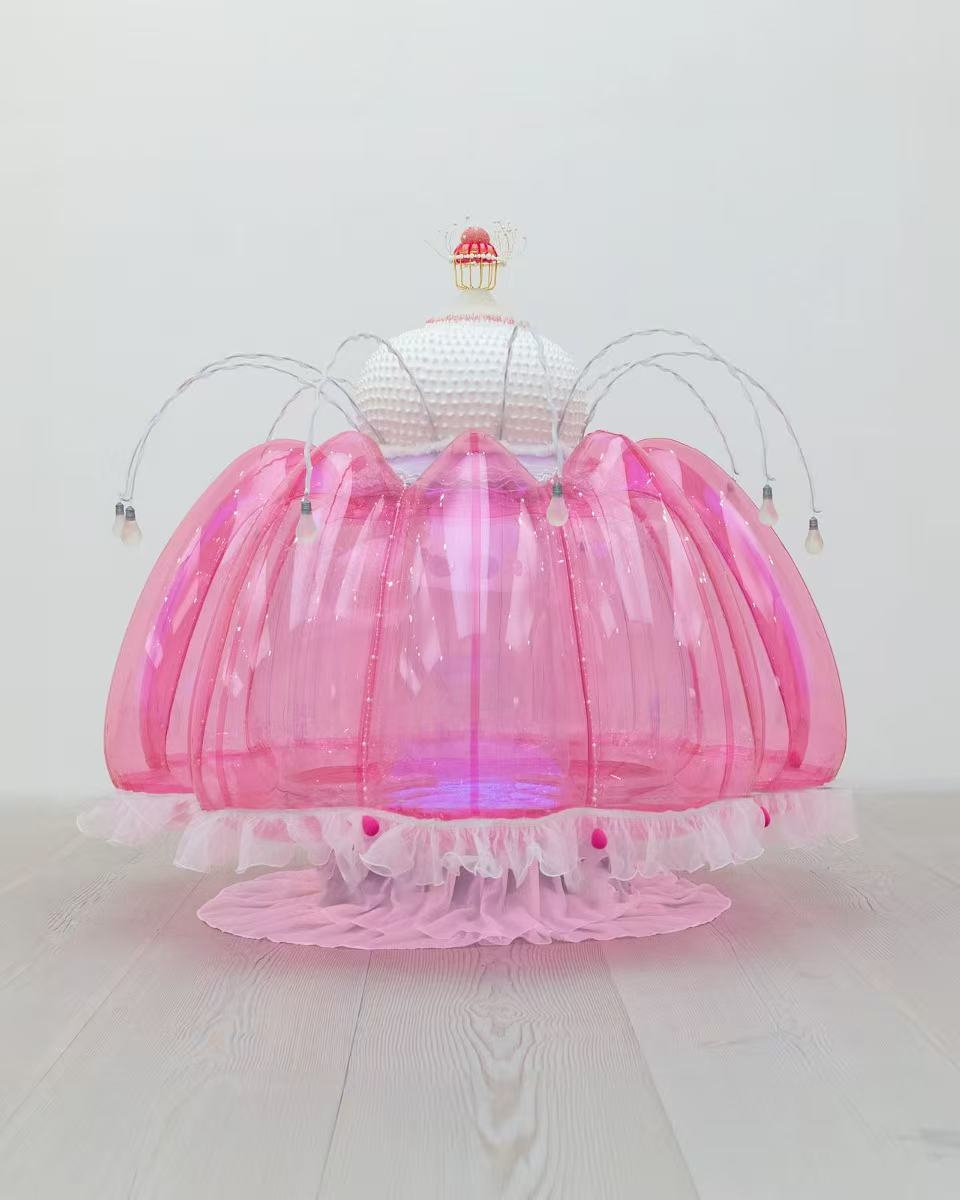
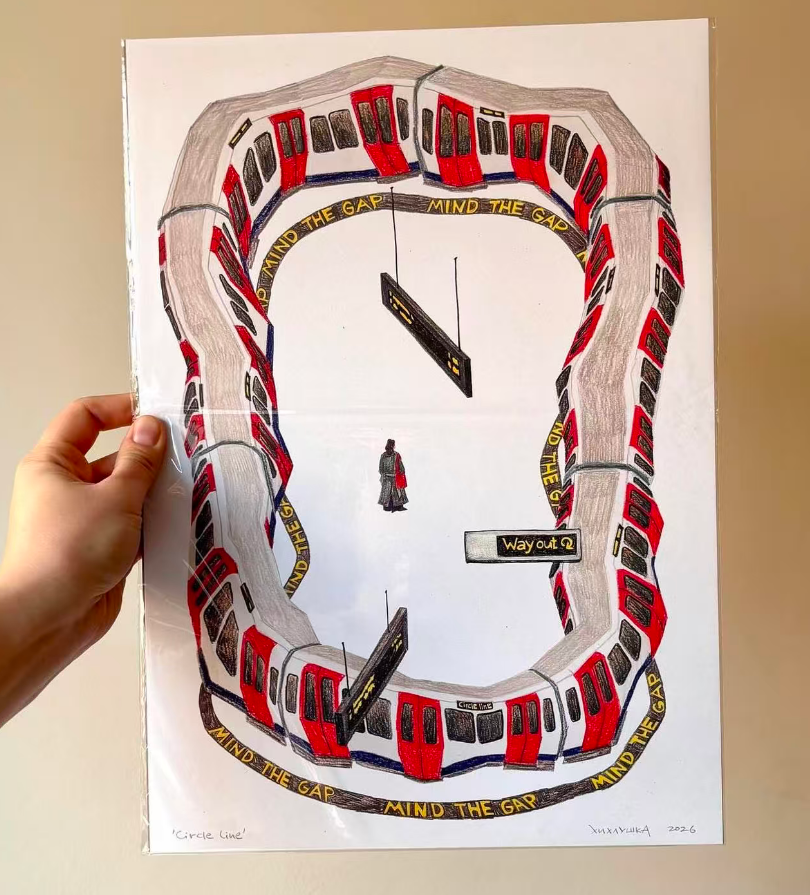
In Circulations — Mapping the Circles of a Day (2022), the artist records every circle she encounters from morning to night — coins, clocks, drains, eyes — turning an ordinary day into something unexpectedly poetic. yushi.95’s urban photography captures circles found in city architecture and streetscapes, revealing a geometry that is always present but rarely seen. San Zhang’s painting The Dreameter (2025) takes the circular canvas itself as a starting point, layering oil and acrylic into a vivid, dream-like space where measurement and imagination merge. Thomai Pnevmonidou’s A Good Enough Mom & Part-Time Mothering (2025) looks at motherhood as a cycle — the same tasks, the same care, the same exhaustion, returning each day without end. Rong Bao’s Pink Roundabout (2024) brings a large-scale installation into the gallery, turning the familiar traffic structure into something strange and playful. Lizaveta Khikhlushka’s Circle Line (2026) reimagines London’s Circle Line as an actual circle, depicting a train and its passengers trapped in an endless loop.
Together, these works do not explain what a circle means. They simply ask us to pay attention — to the repetitions we live inside, the routines we take for granted, and the quiet beauty of going around again.
Artists/Participants
1. 枕上假假朋(Zhen Shang Jia Jia Peng)
枕上假假朋 is a Chinese video and media artist working under Waterrhino Studio (水犀工作室). Her practice uses the camera as a tool for quiet, personal observation, finding visual poetry in the textures of daily life. In Circulations — Mapping the Circles of a Day (2022), she documents every circular shape encountered throughout a single day, from cups and coins to wheels and drains. What begins as a simple exercise in noticing gradually reveals just how deeply the circle is embedded in our everyday surroundings, transforming the mundane into something unexpectedly poetic.
(枕上假假朋, Circulations — Mapping the Circles of a Day, 2022, video still)
2. Rong Bao
Rong Bao is a London-based artist working with inflatable structures, PVC, and everyday plastic objects to create playful, surreal, breathing sculptures. She studied Public Sculpture at the China Academy of Art, received her BFA from the School of the Art Institute of Chicago, and completed her MA in Sculpture at the Royal College of Art. Her solo exhibition Rong Bao is Me at Saatchi Gallery (2024) was the first by a female Chinese artist at the venue. Her work for Endless Circulation, Pink Roundabout (2024, PVC fabric, wire, mesh tube, toys, yoga ball, glass, rotate plate, W170×L170×H150cm), reimagines the everyday traffic roundabout as a vibrant, looping structure of endless motion. (Source: https://www.baorongstudio.com/general-5)
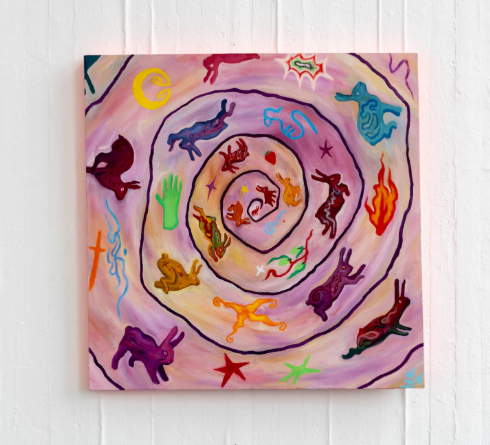
San Zhang is a Chinese multidisciplinary artist born in Spain and based in Scotland, working across painting, ceramics, textiles, and performance. Her practice draws on ancestral memory, speculative mythologies, and the subconscious dream realm, exploring cycles of consumption and regeneration. Her work for Endless Circulation, The Dreameter (2025), is an oil and acrylic painting on a 100×100cm canvas. The title merges “dream” and “diameter,” creating a space where measurement meets the unconscious — layered colour and intuitive mark-making loop back on themselves, mirroring the endless cycle of destruction and renewal at the heart of her practice. (Source: https://www.graduateshow.eca.ed.ac.uk/portfolio/san-zhang)
(San Zhang, The Dreameter, 2025, oil and acrylic on canvas, 100×100cm)
4. Thomai Pnevmonidou
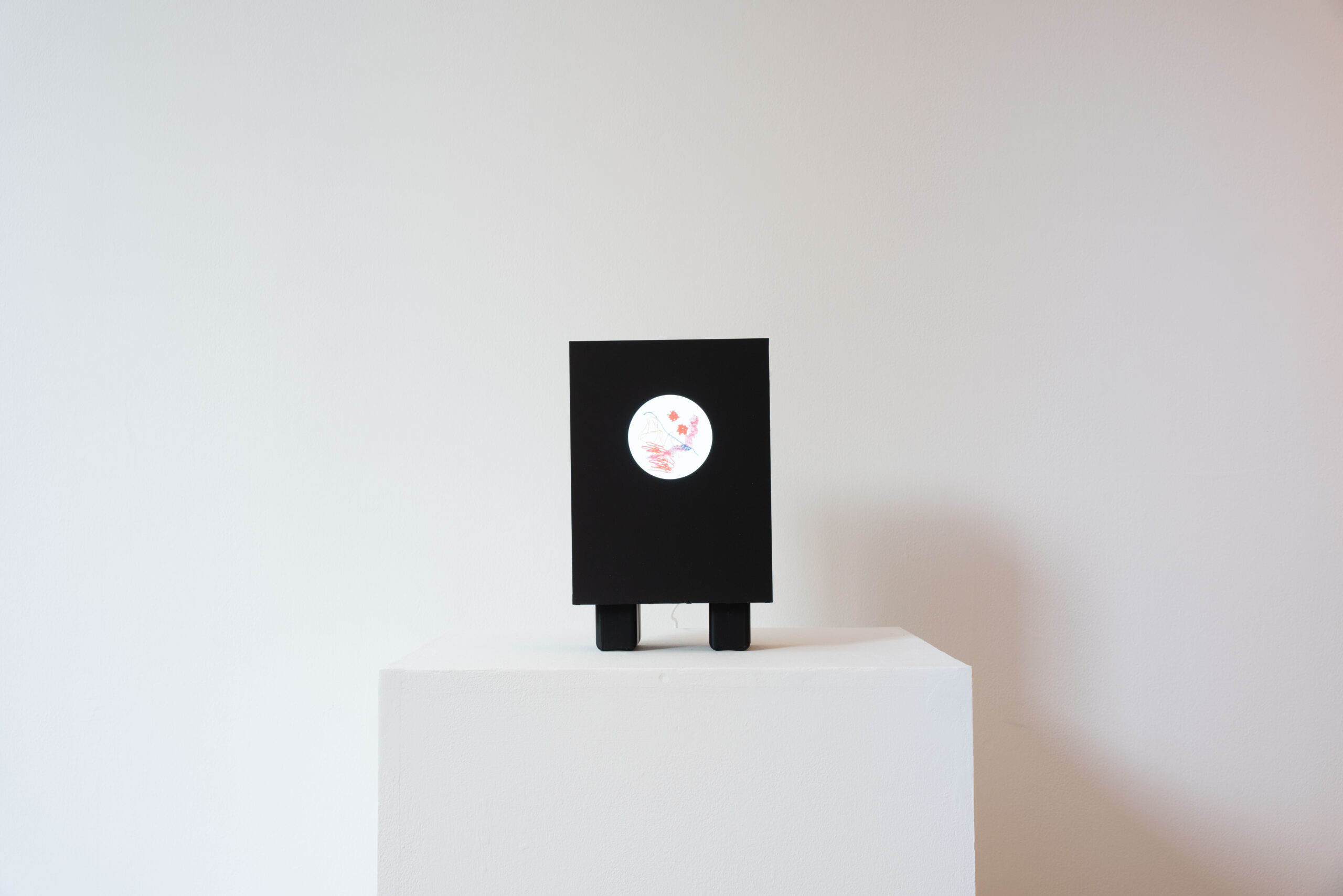
Thomai Pnevmonidou is a Glasgow-based artist, researcher, and Programme Leader in MDes Interior Design at The Glasgow School of Art. Her research explores the interplay of identity, culture, and material expression, focusing on how objects and everyday practices shape our sense of self and belonging. Her work for Endless Circulation, A Good Enough Mom & Part-Time Mothering (2025), reflects on the cyclical nature of maternal labour — the repeating routines of feeding, cleaning, and caring that loop without pause, making visible the quiet rhythms of domestic life. (Source: https://radar.gsa.ac.uk/profile/793)
(Thomai Pnevmonidou, A Good Enough Mom & Part-Time Mothering, 2025, W15 x L6 x H27cm)
5. Lizaveta Khikhlushka
Lizaveta Khikhlushka is a London-based illustrator and graphic designer whose work spans fashion prints, packaging, editorial illustration, and visual storytelling. Her practice is characterised by vibrant colour and a playful, observational eye for everyday life. For Endless Circulation, she presents Circle Line (2026, mixed media on paper, 29.7×42.0cm), a work that poses a simple question: what if the Circle Line was actually a circle? The piece depicts a train travelling in a continuous loop, with pedestrians trapped within it, revealing the absurdity and poetry hidden in the transport systems we use without thinking.
(Lizaveta Khikhlushka, Circle Line, 2026, 29.7 × 42.0cm (A3))
6. yushi.95
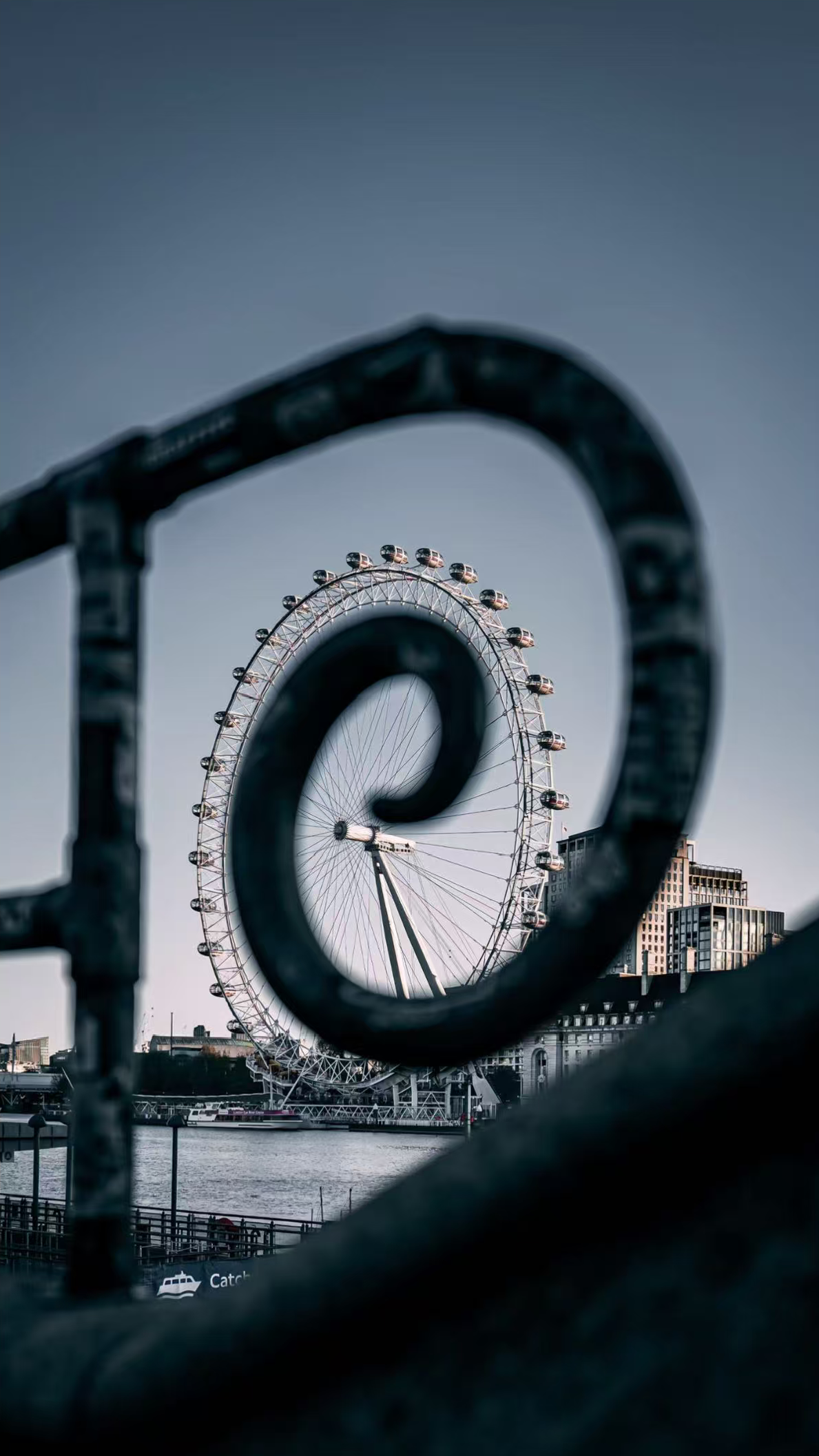
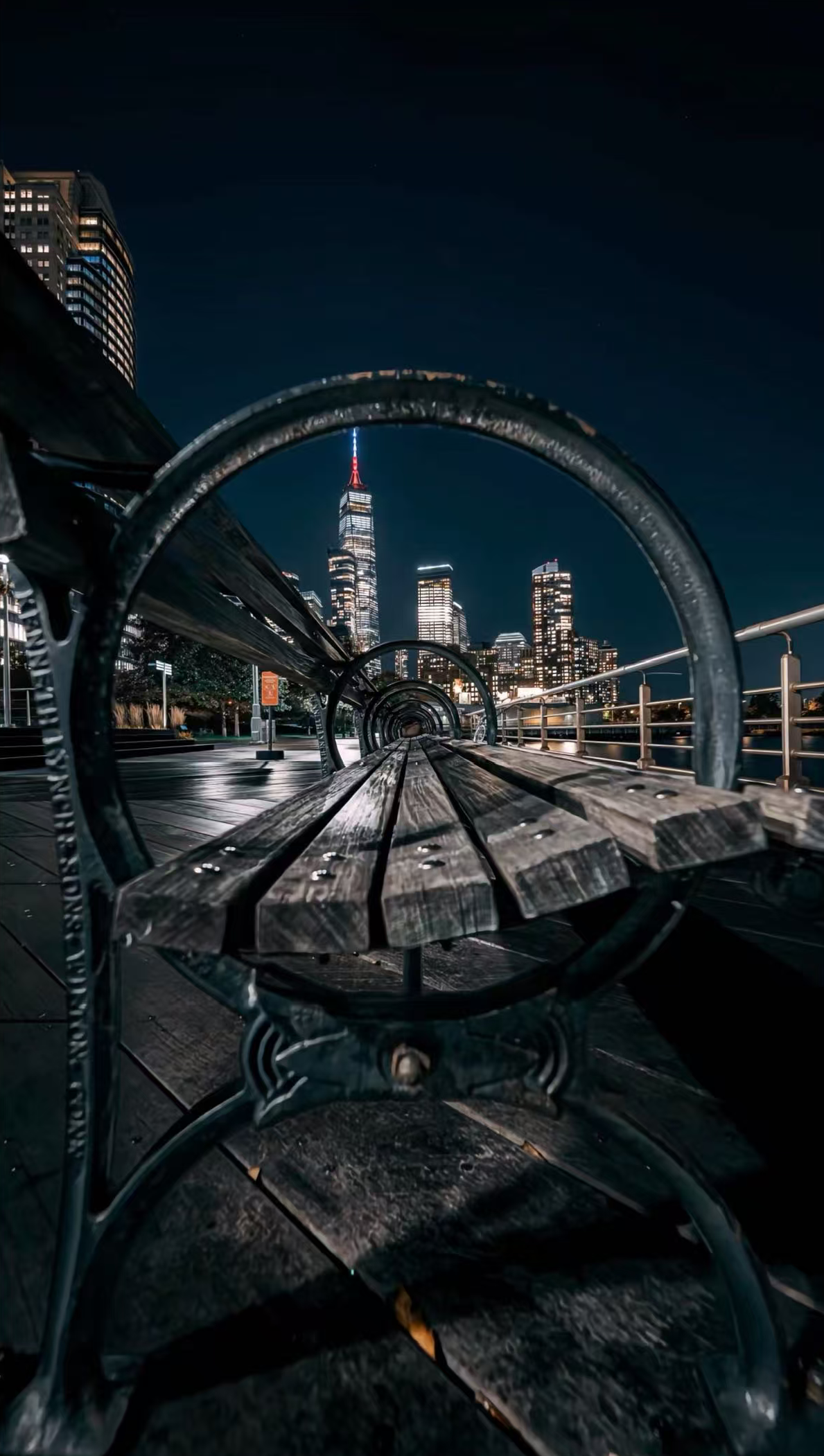
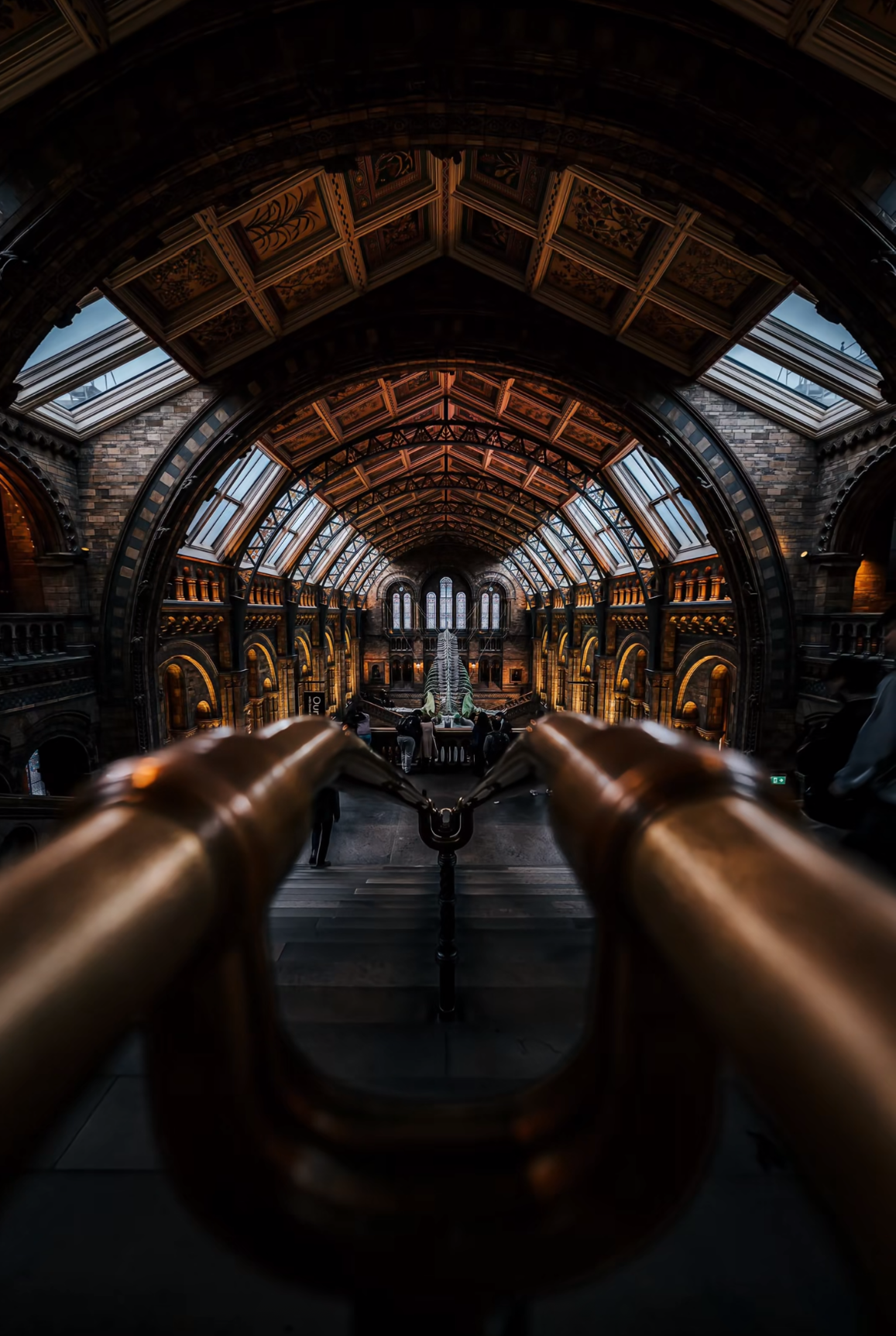
yushi.95 is an Instagram-based photographer whose work explores urban landscapes through geometry, pattern and the unexpected beauty of built environments. Working primarily with city scenes, yushi.95 captures moments where architecture, infrastructure and everyday street details form visual rhythms, including circular shapes, repeated lines, reflections and spatial echoes. The three photographs selected for Endless Circulation draw attention to the circles and recurring forms embedded in the city around us, which we often pass without noticing. In the exhibition, these images connect the idea of circulation to everyday urban experience, inviting viewers to reconsider the city as a space shaped by repetition, movement and visual return. (source:https://www.instagram.com/yushi.95/)
(yushi.95, Untitled, 2025, digital photograph)
Space & Locaction
The Dundas Street Gallery, Edinburgh
The exhibition occupies Dundas Street Gallery for a two-week period, 15 January 2027 to 28 January 2027. Installation takes place on 15 January, with the exhibition open to the public from 16 to 27 January 2027. Deinstallation is scheduled for 28 January. The opening reception and public workshop Mapping My Circles will be held on 16 January.
The exhibition follows a three-part spatial narrative. Visitors move from works exploring physical circles and loops, through pieces addressing abstract and emotional cycles, to a workshop and archive space centred on the concept of eternal recurrence.
Public Programme
Opening Reception
6:00 PM, 16 January 2027
Join us for the opening of Endless Circulation on the evening of 16 January 2027 at Dundas Street Gallery, Edinburgh. Meet the curator and explore the exhibition for the first time, with drinks and conversation. The evening offers an opportunity to experience the circular route of the exhibition and engage with the works in an informal, social setting. Free and open to all. No booking required.
Workshop: Mapping My Circles
3:00 PM – 5:00 PM, 16 January 2027
Free, open to all
Led by curator Xiaobao Ye
This workshop Inspired by the video work Circulations — Mapping the Circles of a Day, participants are invited to document and map the circular patterns within their own daily routines through drawing, writing, and conversation. What circles do you move through each day? What loops do you return to without noticing? The workshop is open to all ages and backgrounds. No materials or experience needed.
Interactive Reflection Board
Located at the end of the exhibition route
The reflection board is an ongoing, open invitation for visitors throughout the duration of the exhibition (16–27 January 2027). After experiencing the journey from physical to abstract cycles, visitors are invited to pause and respond to a question inspired by Nietzsche’s idea of eternal recurrence: If you had to live this life, with all its repetitions, over and over again, would you embrace it? Leave a note, read others’ reflections, and carry the question with you.
Curatorial Rationale
Endless Circulation uses a thematic curatorial approach, centred on the circle as both a visual form and a conceptual starting point for exploring repetition, routine, and cyclical experience in everyday life. The project asks: how do circles, so easily overlooked in our daily surroundings, connect to broader patterns of labour, movement, and perception?
The six selected works include video, photography, painting, and installation, reflecting an interdisciplinary curatorial strategy that brings together artists working across different geographies, from China to Greece to the UK. This range is intentional: circularity is something everyone experiences, and the variety of mediums and cultural backgrounds invites audiences to find their own cycles within the exhibition. The pairing of Thomai Pnevmonidou’s work on a mother’s repeating daily life with 枕上假假朋’s lighthearted recording of circles in a single day creates a conversation between emotional depth and everyday playfulness.
The Dundas Street Gallery in Edinburgh was selected for its accessible, human scale and its position within a culturally active area, making it possible to reach both art audiences and the general public. The spatial design uses fabric curtain dividers arranged in a circular path, mirroring the exhibition’s theme and guiding visitors through a looping, non-linear route. This layout draws on site-responsive curatorial thinking, allowing the physical space to reinforce the conceptual framework of the project.
The public programme, including the participatory workshop Mapping My Circles and the Volunteer Reflection Board, extends the curatorial vision beyond passive viewing, encouraging audiences to reflect on their own patterns of circulation. These elements support accessibility and inclusion by welcoming participation regardless of prior art knowledge. The exhibition offers free entry, and all printed materials will be available in both English and Chinese, reflecting a commitment to cross-cultural communication and linguistic openness.
Endless Circulation is a speculative curatorial project that explores circular movement, repetition and return through installation, video, photography and participatory workshop practice. Rather than presenting circulation as a fixed symbol, the project gradually developed into an investigation of how spatial movement, artwork selection and audience participation can transform circularity into a curatorial experience.
This reflection examines the development of the project alongside my work within the Collective. I begin by reflecting on my shift from viewer to curator, before discussing how the formative Curatorial Pitch helped me refine the conceptual framework of Endless Circulation. I then consider spatial ambition and practical feasibility, followed by collective work and cultural translation. Finally, I reflect on peer review and identify the curatorial skills and professional questions I will carry forward.
From Viewer to Curator: A Shift in Perspective
One of the most significant shifts I experienced during this course was learning to look beyond artworks themselves and toward the spatial, structural and ethical decisions that shape how they are encountered. During fieldwork visits in Edinburgh, I began to distinguish between the artist’s practice and curatorial decision-making: the sequencing of works, wall space, lighting, interpretive text and the choreography of audience movement. This was a form of what Rogoff describes as “turning”, a movement away from passive reception and toward a critical awareness of how knowledge is produced within cultural contexts (Rogoff 2008). Rogoff’s point is not only that one changes position, but that one becomes conscious of the conditions that make seeing and knowing possible. For me, this idea helped name what was happening in my own learning process: I was no longer asking only whether I liked an artwork, but how the exhibition had taught me to look at it.
This shift was particularly important because, in my previous experience of exhibitions in China, the curator often appeared as an invisible figure. Their name was not always foregrounded, and audiences rarely discussed the decisions that structured their viewing experience. O’Neill describes the curator’s traditional role as a “behind-the-scenes organiser”, whose labour was often hidden behind the artwork and the institution (O’Neill 2012). He also argues that contemporary curating has increasingly repositioned the curator as a visible cultural producer who generates meaning through selection, arrangement and framing. This helped me understand that curatorial visibility is historically and culturally uneven. My own background confirmed that the older model of curatorial invisibility still persists in many contexts, while this course introduced me to curating as an independent creative and critical practice.
Through this process, I came to understand curating as the management of attention. Crary argues that attention in modern culture is actively structured and contested, rather than simply a natural act of looking (Crary 1999). This means that the way an audience looks is shaped by systems, technologies and cultural arrangements. In exhibition-making, the curator becomes one of the agents who organises this attention through route, lighting, rhythm and interpretation. This made me more aware of curatorial responsibility. Deciding who sees what, in what order, and under what conditions is not neutral. It is also an ethical and political act. This shift directly shaped Endless Circulation: I began to understand the circular route not as a visual motif, but as a way of organising attention, movement and responsibility within the exhibition.
Refining the Concept: From Ambition to Clarity
The formative Curatorial Pitch in Week 6 was a turning point for Endless Circulation. In the early stages, I attempted to build a broad theoretical framework around circulation, combining Nietzsche’s eternal recurrence with economic theories of repetitive capitalist movement. Although this felt intellectually ambitious, it made the project too heavy and unfocused. The feedback I received during and after the pitch made me realise that the concept was trying to do too much. The theoretical references were not strengthening the project; they were making the curatorial narrative harder to read.
This feedback prompted an important act of subtraction. I removed the economic framework and repositioned Nietzsche’s eternal recurrence as a conceptual prompt for the public workshop rather than as the main explanation of the whole exhibition. After this, the exhibition became clearer: it would guide visitors from physically circular forms toward more abstract experiences of repetition, return and daily cycles. O’Doherty argues that the gallery is never a neutral container, but a space with its own ideological and spatial logic (O’Doherty 1999). His argument made me realise that my problem was not only theoretical excess, but also a failure to respect the limits of what an exhibition space can hold. A curatorial project cannot simply carry every interesting idea. It has to shape ideas into an experience that audiences can physically and conceptually follow.
The workshop design changed in a similar way. My first idea, Circular Writing, asked participants to write in circular patterns. However, after attending several workshops in Edinburgh, I realised that this format was too dependent on literacy, confidence and conceptual understanding. It risked becoming a performance of intelligence rather than an accessible public programme. I therefore redesigned it as Mapping My Circles, a workshop in which participants collect, draw or photograph circular forms and repetitive patterns from everyday life. This lowered the threshold for participation while still connecting to the exhibition’s central theme.
Kester’s discussion of dialogical aesthetics was useful here. He argues that some forms of socially engaged art create meaning through conversation, duration and exchange, rather than through the immediate transmission of an artist’s or curator’s singular vision (Kester 2004). This does not mean removing structure completely; rather, it means designing a situation where participants can contribute their own knowledge and experience. I applied this to my workshop by shifting from asking participants to “understand” Nietzsche to inviting them to notice the cycles already present in their own lives. Looking back, the formative pitch was not simply a presentation. It taught me that curatorial practice is iterative, and that feedback can reveal when an idea is conceptually attractive but publicly or practically unworkable.
Spatial Testing: Curtains, Scale and Feasibility
The spatial design of Endless Circulation underwent the most significant transformation of any element in the project. From an early stage, I imagined a circular exhibition route formed by hanging curtain walls. Visitors would move from the outer edge inward, physically enacting the project’s theme of circulation. At first, I imagined a dense, immersive exhibition with around twenty artworks related to circles, loops and cycles. This felt exciting because the form of the exhibition seemed to match the concept directly. However, as the project developed, I realised that formal consistency is not the same as curatorial clarity.
The first major challenge came through the Collective Space work at In Vitro Gallery in Summerhall. Measuring and planning within that space made me aware of how strongly architecture limits curatorial imagination. Two central structural walls disrupted movement and made my ideal spiral layout impossible. O’Doherty’s argument about the white cube helped me understand this experience more critically. He suggests that the gallery presents itself as neutral, but actually imposes particular conditions of looking and meaning (O’Doherty 1999). In my case, this was not only an abstract ideological point. The physical infrastructure of the gallery, including walls, entrances and circulation routes, directly shaped what could and could not be curated. What I had imagined as a flowing spiral was interrupted by the material reality of the building.
I then researched alternative venues in Edinburgh and found that many affordable spaces contained columns, narrow entrances or fixed architectural interruptions. The ideal open gallery I had imagined was difficult to find. Klonk’s study of gallery interiors shows that exhibition spaces have historically been shaped by changing theories of perception, politics, commerce and display (Klonk 2009). Her argument helped me see that space is never only a practical issue. It carries histories of how audiences are expected to move, look and behave. My own search for a venue confirmed this. The space available to a curator is not simply a backdrop, but an active participant in the exhibition’s meaning-making.
Eventually, I selected Dundas Street Gallery as the most suitable speculative venue. Its proportions allowed a modified curtain structure, but the smaller scale forced me to reduce the number of artworks from twenty to six. Initially, this felt like a compromise, as if the project had become less ambitious. In reflection, however, it strengthened the proposal. Obrist suggests that curating depends on creating meaningful connections rather than simply accumulating works (Obrist 2014). This helped me rethink selection not as a loss, but as a curatorial method. With six works, each piece could breathe within the space, and the relationships between Bao Rong’s rotating installation, the looping video work, photography and smaller installations became more deliberate.
There are still unresolved practical questions, including whether the gallery’s hanging systems can support the curtain structure and how the scale of prints and video screens should be determined. However, these uncertainties do not weaken the proposal. They show that curatorial work is not the execution of a fixed vision, but a continuous process of testing, adjusting and making decisions within material constraints.
Collective Work and Cultural Translation
Working within the Collective was one of the most practically grounding parts of the course. The Collective Space was important because it allowed curatorial decisions to be tested materially rather than only discussed verbally: measurements, floorplans and graphic proposals made the limits of the exhibition visible. My roles included measuring the exhibition space, contributing to artist selection, discussing artwork placement, designing graphic materials and helping with exhibition text. These tasks developed my understanding of curating as collaborative labour rather than individual authorship. The course’s emphasis on the Collective also made me realise that curatorial practice is not only about having ideas, but about negotiating those ideas with other people, spaces and responsibilities.
The most important learning point for me was cultural translation. Our Collective developed a solo exhibition around San Zhang, a Chinese-heritage artist based in Scotland. One selected work, The Dreameater, refers to 兔儿神 (Tu Er Shen), a figure from Chinese folk religion and often connected with rabbit imagery. In a Scottish context, however, a rabbit can easily be read through the Easter Bunny or other local associations. Because Zhang’s painting style is contemporary and does not rely on stereotypical “Chinese” visual markers, this gap in interpretation became especially important.
This made me realise that exhibition text cannot simply describe content. It must mediate between the artwork’s references and the audience’s existing cultural assumptions. Bal argues that the exhibition is not merely a site for displaying objects, but a medium that constructs cultural experience through narrative, framing and interaction (Bal 2007). This means that interpretation is not secondary to the exhibition; it is part of how the exhibition works. In our Collective project, wall text and sequencing became curatorial tools for reducing misreading without over-explaining the work. My contribution to cultural translation therefore felt actively curatorial, not simply linguistic.
This experience directly influenced Endless Circulation. My own project includes artists from different cultural backgrounds, including Chinese and European practitioners. I became more aware that curatorial framing must consider not only what the work means in relation to the artist, but also how local audiences may interpret it. Collective work taught me that curating involves building routes of understanding between artists, artworks, space and publics.
Reflecting Through Peer Review
Reviewing Zhenwu Zhang’s blog from around Week 9 onward was not only an exercise in evaluation, but also a mirror for my own curatorial development. What struck me most was the clarity of his conceptual framework. His project, which investigated visibility through responsive lighting, followed a focused line from research question to spatial outcome. Each weekly post built on the previous one with a clear sense of development. His blog made the process visible, not only the final idea.
This made me recognise a weakness in my own process. My thinking often moved outward in many directions at once. I was drawn to multiple theories, references and possible artworks, but this sometimes produced overcomplication rather than depth. Understanding peer review as a professional curatorial skill rather than a student exercise, I became more capable of identifying where a project was clear, where it needed more explanation, and how a curatorial narrative develops over time.
The process also turned back onto my own blog. As a curator, it is easy to become absorbed in one’s own conceptual logic and lose sight of how the project appears to others. Reviewing another student’s work from the position of a fellow curator in the same Collective helped me practise an external critical eye. It encouraged me to simplify the framework of Endless Circulation and make the relationship between theme, works, space and workshop more legible. In this sense, peer review functioned not as a one-directional assessment, but as a reciprocal process of learning.
Conclusion
Endless Circulation began with my attraction to Pink Roundabout, a rotating pink installation that seemed to contain the visual and affective energy of circular movement. At the beginning of the course, I tried to expand this fascination into an ambitious exhibition of circular forms, philosophical references and immersive spatial design. Through the semester, however, the project became stronger by becoming smaller. I learned that curating is not the accumulation of ideas, artworks or references, but the careful organisation of relations between works, spaces, publics and practical conditions.
The most important lesson I take from this process is that constraint is not the opposite of creativity. Spatial limits, budgetary questions, audience accessibility, peer feedback and collective negotiation all forced the project to become more precise. In the future, I want to continue developing curatorial practice through this balance between research and production: using theory as a tool for shaping experience, while remaining attentive to the material, ethical and cultural conditions through which exhibitions are actually made. My strongest skills have emerged in visual communication, spatial thinking and cross-cultural mediation, and I hope to apply these in future exhibition-making contexts where curating is understood not simply as display, but as the organisation of attention, movement and understanding. The sentence I kept returning to was: “Do not trouble troubles until troubles trouble you.” At first, it calmed me when the project felt difficult. By the end, I understood it as a curatorial attitude: planning requires risk-awareness, but practice also requires the courage to move before every uncertainty is fully resolved.
References
Bal, Mieke. 2007. “Exhibition as Film.” In Exhibition Experiments, edited by Sharon Macdonald and Paul Basu, 71–93. Malden, MA: Blackwell Publishing.
Crary, Jonathan. 1999. Suspensions of Perception: Attention, Spectacle, and Modern Culture. Cambridge, MA: MIT Press.
Kester, Grant H. 2004. Conversation Pieces: Community and Communication in Modern Art. Berkeley: University of California Press.
Klonk, Charlotte. 2009. Spaces of Experience: Art Gallery Interiors from 1800 to 2000. New Haven: Yale University Press.
O’Doherty, Brian. 1999. Inside the White Cube: The Ideology of the Gallery Space. Berkeley: University of California Press.
O’Neill, Paul. 2012. The Culture of Curating and the Curating of Culture(s). Cambridge, MA: MIT Press.
Obrist, Hans Ulrich. 2014. Ways of Curating. London: Penguin Books.
Zhenwu Zhang’s blog records a clear process of curatorial growth from Week 1 to Week 13. One of the strongest aspects is that it shows how his position gradually shifts from viewer to curator. In the early weeks, his reflections on exhibitions such as the SSA show were mainly based on careful observation. But later he started to think from multiple positions (Quoting his original text from week 2: “From the institution’s perspective,… For the participating artists…, from the audience’s perspective…”). This multi-layered observation became a foundation for his later curatorial thinking, which gradually developed around his key question: what makes visibility possible?
A key turning point happens in week 8. A peer pointed out that Zhenwu’s role should be that of a curator rather than an artist. He further writes this feedback “pushed me to re-evaluate the practical possibility of my curatorial theme.” This led him to narrow his focus toward how text in contemporary art can function as both medium and subject. This shows how collective feedback can productively redirect individual curatorial direction. Also in week 11, Zhenwu re-examined his artist selections, he explains that Jack Hinks’s Psychomythology in Music did not fit because “music does not exist as a narrative mediation,” so he replaced it with Shona Brien’s Ambient Drone Piece. This willingness to revise earlier choices shows strong critical judgement.
This development is especially clear in his use of lighting (in week 12), which makes the idea of visibility perceptible: the artwork appears only when the viewer’s presence activates the system. In this way, light is not only technical support, but also a curatorial method. This connects to O’Doherty’s argument that the gallery is an ideological space shaping how art is seen (1999), and to O’Neill’s understanding of curating as meaning-production (2012).
At the same time, the project could benefit from a clearer public-facing narrative, a precise curatorial text would help audiences enter the exhibition without reducing its complexity. Zhenwu categorised his four artworks by medium, but did not explain why these specific four media were chosen for the project, which would strengthen the curatorial rationale. Also, he reflected a lot about our collective project(especially in week 10 and 12). However, the connection between the collective and his individual SICP is weak, they appear as two parallel systems. Little information shows how working collectively shaped his understanding and curatorial decision.
The use of responsive lighting is conceptually strong, but it would be useful to clarify more practically. What kind of sensing technology would be used? Such as motion sensors or floor-based triggers? Each system would shape the audience’s movement differently and may produce different practical issues, including accidental activation, delayed response or overlapping triggers in a crowded gallery.
Overall, Zhenwu’s blog is thoughtful, visually rich and conceptually ambitious. It documents the development of his SICP and shows strong awareness of curating as a practice that produces conditions of visibility. With clearer links between theory, collective practice and audience experience, the project could become even more convincing.
References
O’Doherty, Brian. 1999. Inside the White Cube: The Ideology of the Gallery Space. Berkeley: University of California Press.
O’Neill, Paul. 2012. The Culture of Curating and the Curating of Culture(s). Cambridge, MA: MIT Press.