Week 11 Workshop, Accessibility, Circular Writing
🙌Participated a Workshop and Developing My Workshop Idea
This week, I participated in a workshop based on Mnemosyne Mapping, which explored research through a combination of theoretical concepts and artistic practice. The workshop was intellectually engaging and demonstrated how complex ideas can be translated into visual and spatial methods. However, it was primarily designed for participants already familiar with academic research, which limited its accessibility to a broader audience. This experience helped me understand that a workshop should not only communicate a concept, but also create an accessible structure through which participants can test that concept in their own way.
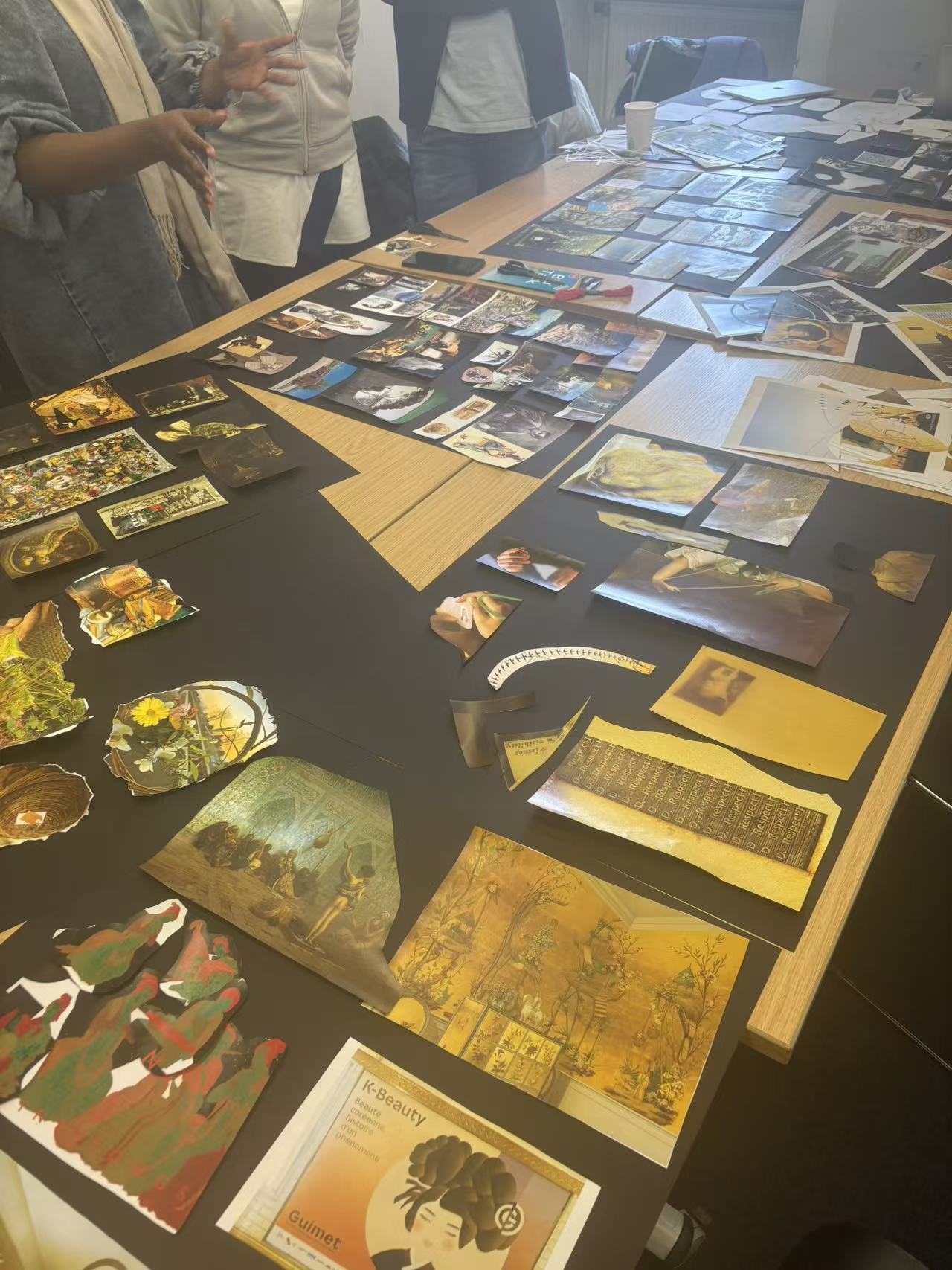
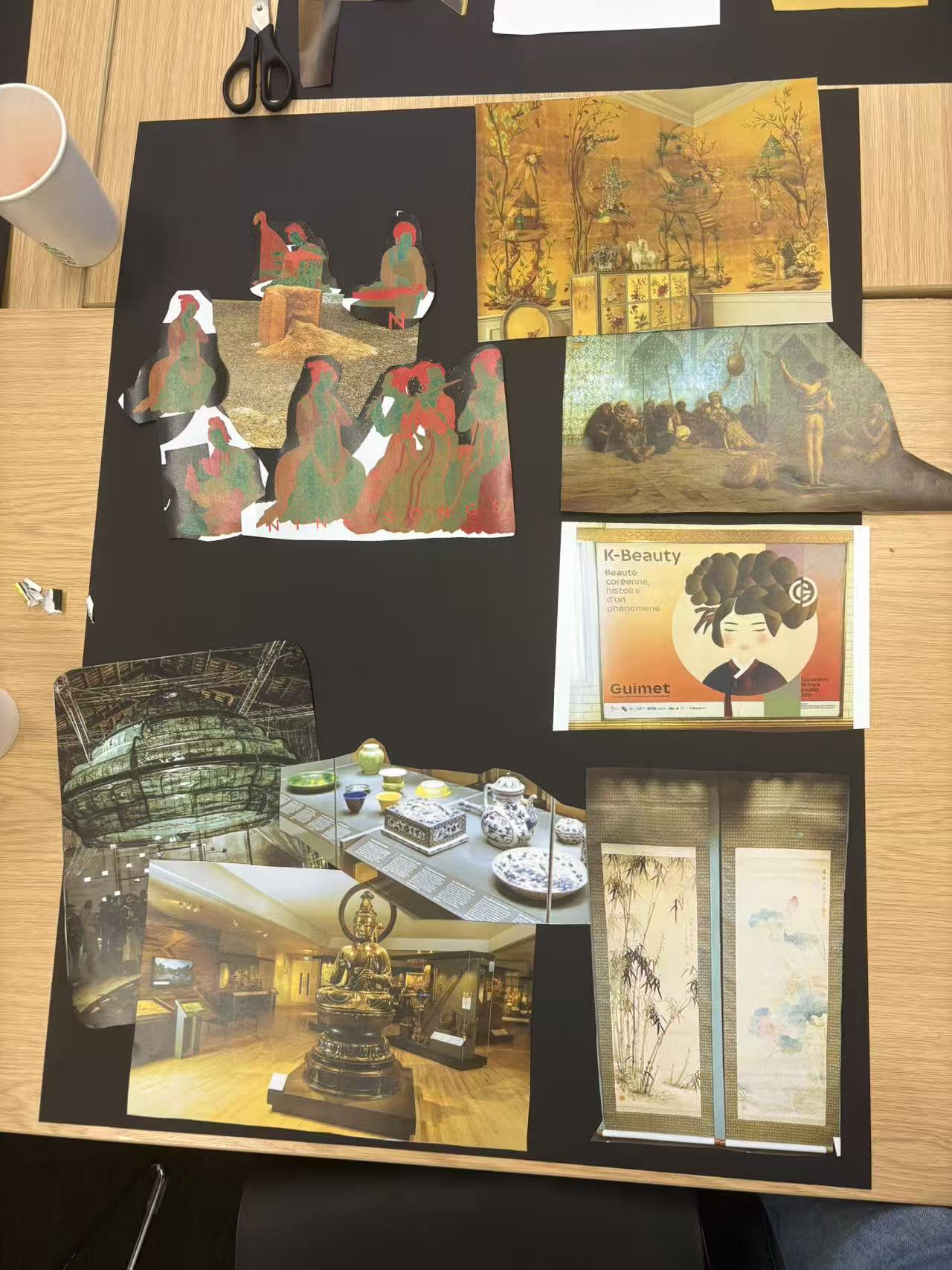
(Cross-Cultural Art Writing & Making Workshop, “The Researcher as Detective: Mapping Visual Constellations”, Edinburgh College of Art, Photograph by Xiaobao Ye, 2026)
This experience informed the development of my own workshop design, Circular Writing: The Writing Loop. As my exhibition is intended to be open to all visitors, I aim to create a form of participation that does not require specialised knowledge. Instead of simplifying content, I focus on creating an accessible structure through which participants can engage intuitively.
I therefore developed the idea of a circular writing workshop. Circular writing is a structure in which the beginning and end of a text connect, allowing writing to loop rather than progress linearly. This reflects the spatial logic of my exhibition, which is organised around circular movement. In this way, writing becomes an extension of the exhibition experience.
✍️Circular writing
Circular writing can be linked to a range of literary practices.
For example, Finnegans Wake presents a narrative that loops rather than progresses linearly,
Poetic forms such as the villanelle in Do Not Go Gentle into That Good Night create a sense of repetition and return.
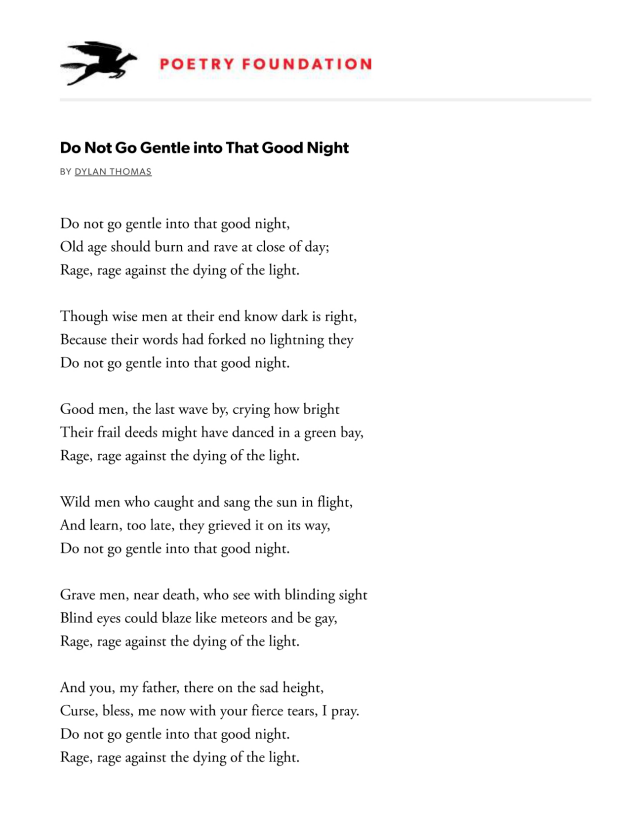
(Dylan Thomas, “Do Not Go Gentle into That Good Night”. Source: English Literature)
Collaborative traditions such as Renga and experimental practices associated with Oulipo show how writing can be structured as a chain or loop, allowing meaning to emerge collectively. To support participation, I will provide simple prompts, such as beginning the next sentence with the last letter of the previous one. The workshop will be embedded within the exhibition space rather than delivered as a separate event: a small writing corner with paper and pens will allow visitors to contribute at any moment, while still engaging with sound or video from the exhibition. In this way, writing becomes both a reflective and spatial activity. Visitors do not only view the exhibition, but also leave a trace of their experience within an evolving textual loop.
Reference
Joyce, James. 1939. Finnegans Wake. London: Faber and Faber.
Thomas, Dylan. 1951. Do Not Go Gentle into That Good Night. In In Country Sleep, and Other Poems. London: J. M. Dent.
Oulipo. 1960. Ouvroir de littérature potentielle. Paris.
Poetry Foundation (n.d.) Do Not Go Gentle into That Good Night by Dylan Thomas. Available at: https://www.poetryfoundation.org/poems/46569/do-not-go-gentle-into-that-good-night