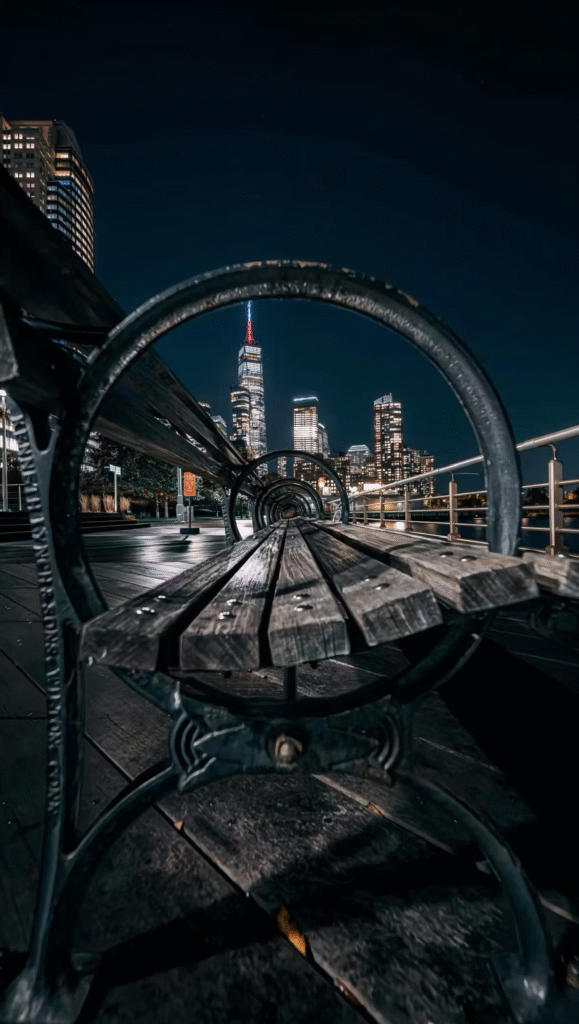
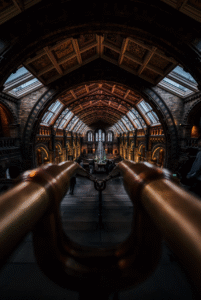
Curating Blog|🍒Week 2

Week 2    Thoughts On Aesthetics and Politics

🐦Reflections following the lecture and the exhibition

This week’s lecture on aesthetics and politics remind me of an exhibition I visited recently, Resistance, at Modern Two in Edinburgh. The exhibition focus on “How protest shaped Britain and photography shaped protest”. It brought together works by thousands of photographers and was curated by a well-known filmmaker, Steve McQueen. It focused on political and social struggles across different decades, including workers’ rights, racial quality, environmental protection, LGBTQ+ liberation, anti-war protests and so on.
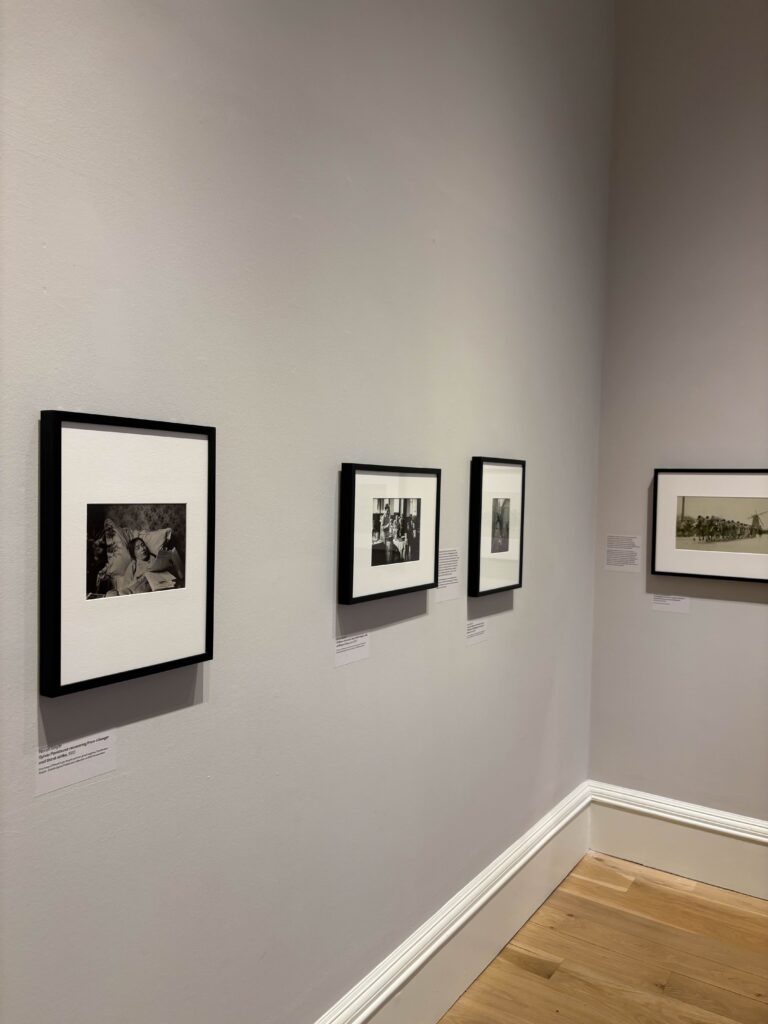
 

(Resistance, installation view at the Scottish National Gallery of Modern Art, Edinburgh. Photograph by Xiaobao Ye, 2025)

One of the most striking curatorial decisions was the exclusive use of black-and-white style photography, provid very strong and powerful visual experience. The exhibition combined with the classical setting of the National Gallery, created a solemn and powerful atmosphere that felt appropriate for the whole political theme content. A similar strategy shown in other engaged exhibitions. such as the exhibition about African soldiers at GoMA in Glasgow, it’s clearly that seriousness and restraint are often favoured when curating political exhibitions.
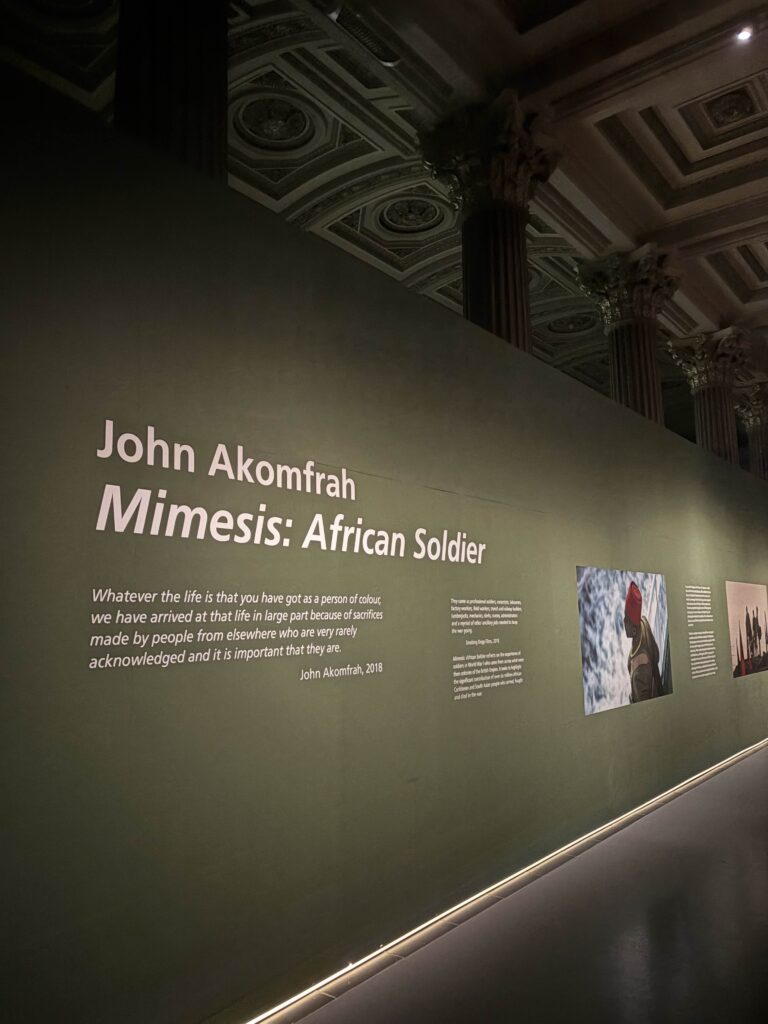
(John Akomfrah, Mimesis: African Soldier, installation view at Gallery of Modern Art, Glasgow. Photograph by Xiaobao Ye, 2026)

However, in Resistance, the strong visual unity also made me question about the limitation in some cases. We can see all the photographs were presented in similar sizes and tones, no any single work was particularly emphasised. such setting did created a sense of equality, and also flattened the differences between specific historical moments and struggles. I began to wonder whether prioritising an unified aesthetic might reduce the urgency and violence of certain events. This experience made me reflect on how curatorial choices shape not only what political histories are shown, but how strongly they are felt by the audience.

🪐Collective Planning Meeting

This week, I also met up with the members of my collective during planning meeting, we introduced ourselves to one another, and decided to call ourselves the 404 Collective. Our goutp members include painters, graphic designers, music producers  and ceramic artists, we exchanged ideas about exhibitions and curation. 


Reference

https://www.nationalgalleries.org/exhibition/resistance

https://www.iwm.org.uk/events/mimesis-african-soldier
Curating Blog|🐋Week 3

Week 3    Thinking Through Curatorial Power and Ethics

🫧Thinking Through Lecture and Workshop 

This week’s lecture and workshop helped me understand curatorial structure and ethics more clearly. When curating, we often begin with basic questions: what, why, when and how. However, beneath these practical concerns are deeper issues of influence and responsibility. Curating is not only about planning and control; it shapes how the public receives artworks, what messages they take away, and what power the curator holds in structuring that experience.

I now understand how strong curatorial influence on the public can be. As Maura Reilly argues, curatorial decisions are never neutral: “the decision to participate in such initiatives is, in essence, a political act” (Reilly 2018, 215). Martinon further expands this idea by defining curating as an act of selecting and critically evaluating culture itself (Martinon 2020, ix). Through deciding what content audiences encounter, how it is presented, and which artists are made visible, curators shape public understanding in ways far greater than I had previously realised.

This raised an important question for me: what kind of content is appropriate for public display? It becomes essential for curators to establish their own ethical standards through critical reading, dialogue with peers and mentors, and ongoing self-reflection. Curatorial practice should not simply add diversity to existing white male-dominated frameworks, but actively question the structures of exclusion behind them. Because curators influence what others see and what messages they receive, ethics becomes central to curatorial responsibility.

If an exhibition fails to fully engage diverse artists, or continues to reproduce racism and sexism, it risks reinforcing global injustice. From this perspective, curators cannot claim neutrality. This also changed how I began to think about my own curatorial project: selecting works and designing routes are not neutral choices, but decisions that shape what audiences notice, how they move, and whose meanings become visible.

Reference

Reilly, Maura. Curatorial Activism: Towards an Ethics of Curating. London: Thames & Hudson, 2018.

Martinon, Jean-Paul. “Introduction.” In Curating as Ethics, ix–xii. Minneapolis: University of Minnesota Press, 2020.


Curating Blog|🐣Week 4

Week 4    Planning for The Curatorial Project

🐸Thoughts on My Curatorial Project

This week’s visit to Summerhall shifted my thinking from having ideas to understanding structure. Listening to the talk and learning about how the institution operates made me realise that curating is not only about concepts, but also about space, funding, audiences, and feasibility. Also, if I want an institution like Summerhall to accept my proposal, I need to articulate clearly why my exhibition belongs there? Why should this exhibition happen here? How will space be used? Who is the intended audience? How will resources be justified?

To solve the problems, I began reflecting on Harold Lasswell’s 5W communication model(Lasswell, 1948).

        Who

        Say What

        In Which Channel

        To Whom

        With What Effect

Furthermore, I started translating this into curatorial terms:

        Who is speaking?

        What is the central question?

        Through what spatial and material form?

        For which audience?

        And what kind of impact do I hope to create?


⚖️Two Ideas for The Project

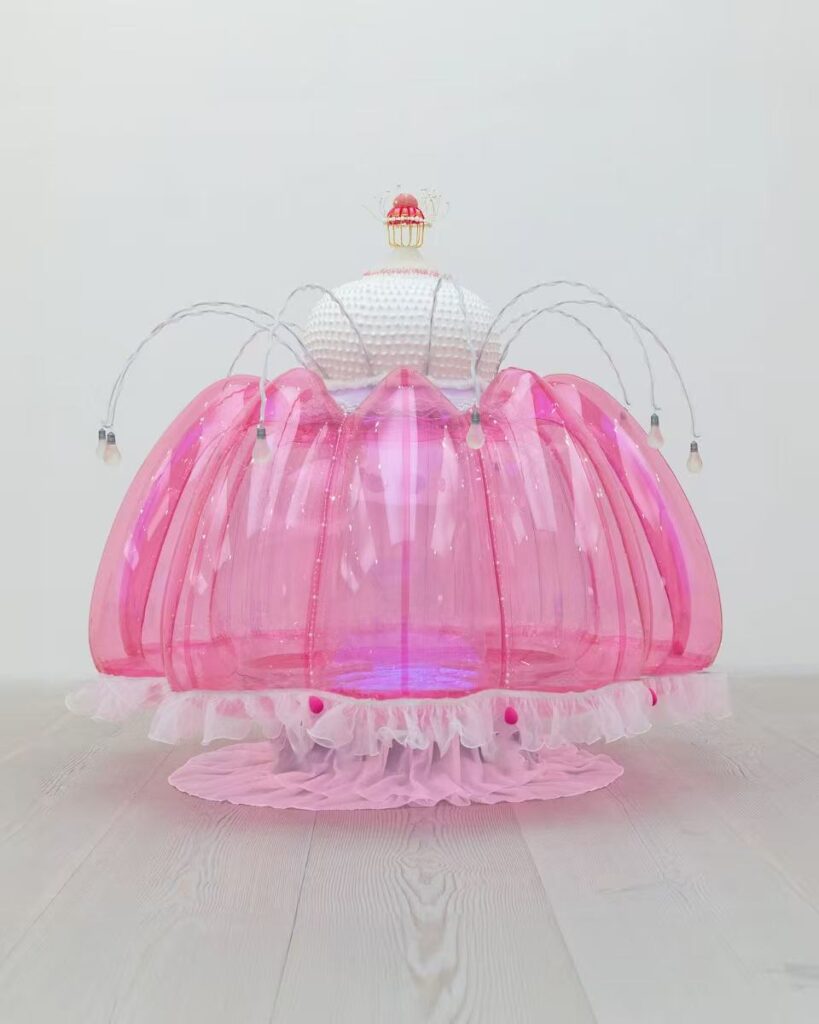
My current project inspired by Bao Rong’s Pink Roundabout, a continuously rotating pink installation. The meaning of this  work lies in bodily politics, fluid gender, and the fluidity of materials. Consequently, I have conceived two different plans for my own curatorial project.

PINK ROUNDABOUT(2024)

  Bao Rong

London

W170 x L170 x H150 cm

PVC fabric, wire, mesh tube, toys, yoga ball, glass, rotate plate

1.Endless Circulation/Rotating

#rotation #mechanical motion #looping systems #guided movement

Looking for other art works about cycles of consumption, desire, pleasure… Time goes on, but the Earth rotating, water  recycle system..things keep moving yet structurally stuck/ rotating.

Consumer culture, commodified happiness and the feeling of “living in a bubble.” Like scrolling endlessly, shopping for pleasure, or participating in entertainment systems. Comfort, softness and playfulness function as a kind of trap, make people stuck… etc.

I am interested in rotation not only as physical movement, but as a structural condition of contemporary life. We are constantly moving, scrolling, consuming, working, yet often feel stuck within invisible systems.

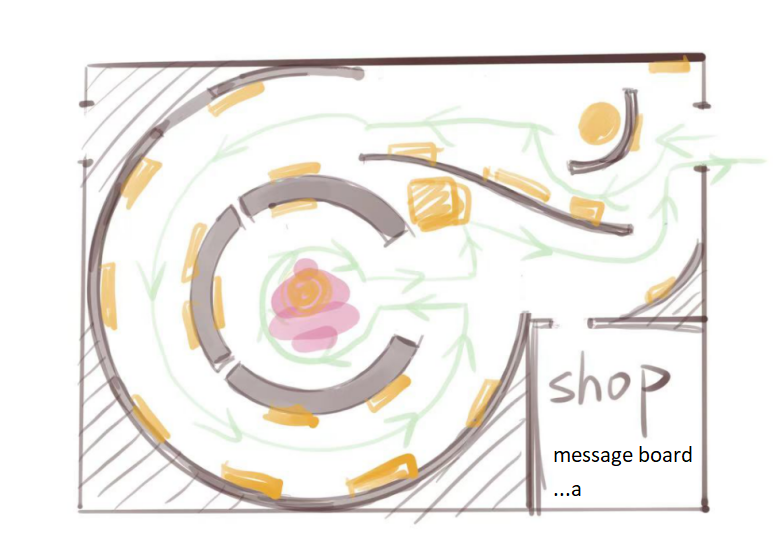
(Concept sketch for exhibition layout, sketched by Xiaobao Ye)

I am developing this into an exhibition structured around a one-way circular route. The audience would physically move in loops, guided through rotating installations and looping video works, mirroring systems of consumption and desire. My exhibition asks all the audience one question: Are we progressing, or simply circulating?

2.Fluid Gender/combines gender, organs, and different materials/ form a body/ body politics

#boundaries of material fluidity #mutability #the concept of material gender.

Looking for the works about Gender/body politics. Build around LGBTQ+ and gender equality


Reference:

Lasswell, Harold D. 1948. “The Structure and Function of Communication in Society.” In The Communication of Ideas, edited by Lyman Bryson, 37–51. New York: Harper & Row.

https://www.baorongstudio.com/portfolio-collections/floating/pink-roundabout

Curating Blog|🫎Week 5

Week 5   Collective Project Development

Progress on the Collective Project

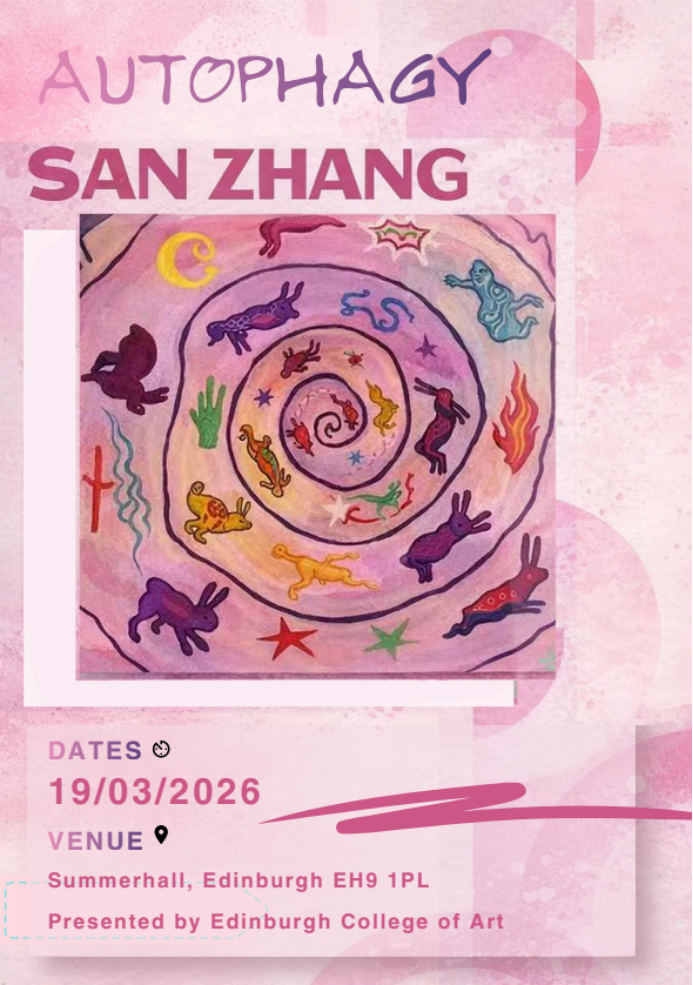
This week, our collective decided to develop a curatorial project in the form of a solo exhibition. As all of our group members are Chinese, we chose to work with San Zhang, a Chinese artist who is practising in Scotland. Her artwork features a wealth of elements from Chinese culture. This decision felt meaningful, as it followed one of our collective manifesto——supporting young Chinese artists based in Scotland. Also, it allows us to reflect our own position as Chinese curators working within a Scottish context and thinking through questions of cultural translation, identity, and representation. 

(San Zhang, artist profile. Screenshot from ECA Graduate Showcase)

We further discussed about visitor circulation. As we are considering dividing the exhibition into three sections, we talked about encouraging the audience to move through the space in a 1-2-3 sequence. This conversation also made me reflect on my own curatorial project. Since I want visitors to move in a circular way, I began to think more carefully about whether circulation needs to be explicitly guided. At first, I considered adding signs on the walls or floor, but later I felt this might be unnecessary. If the spatial structure already suggests circular movement, visitors may be able to explore the exhibition more freely without following a fixed route.


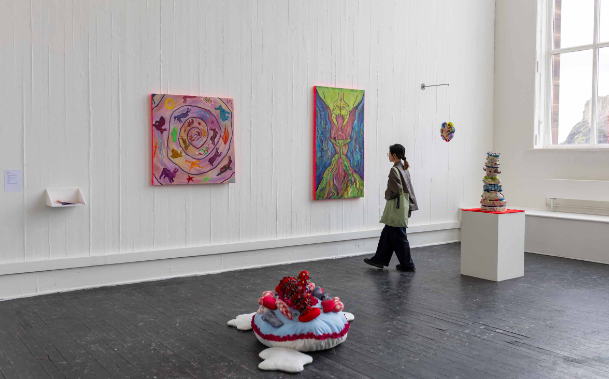
(Installation view of works by San Zhang. Source: ECA Graduate Showcase)

💡Choosing Artworks

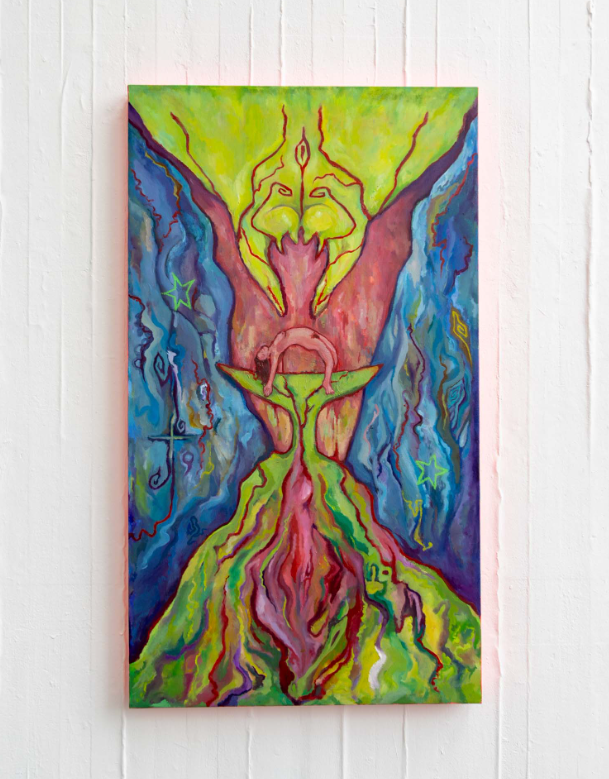
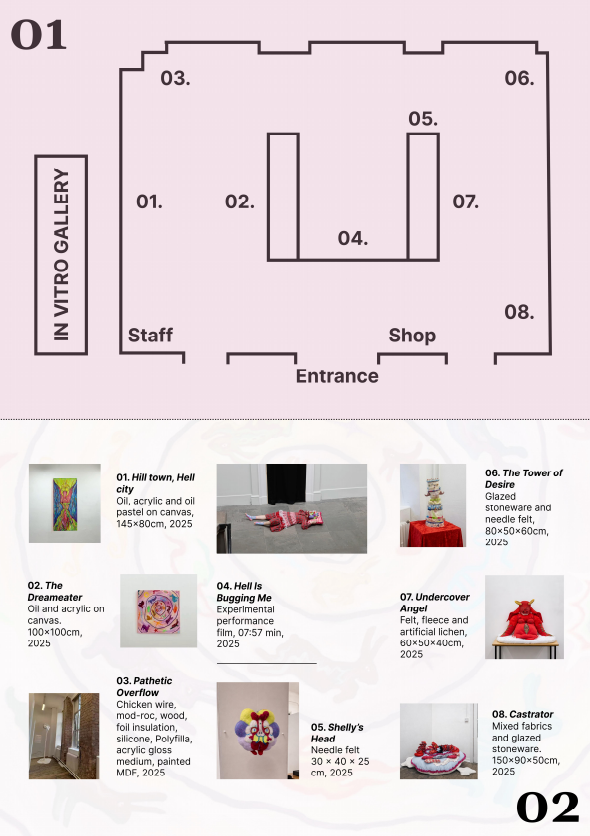
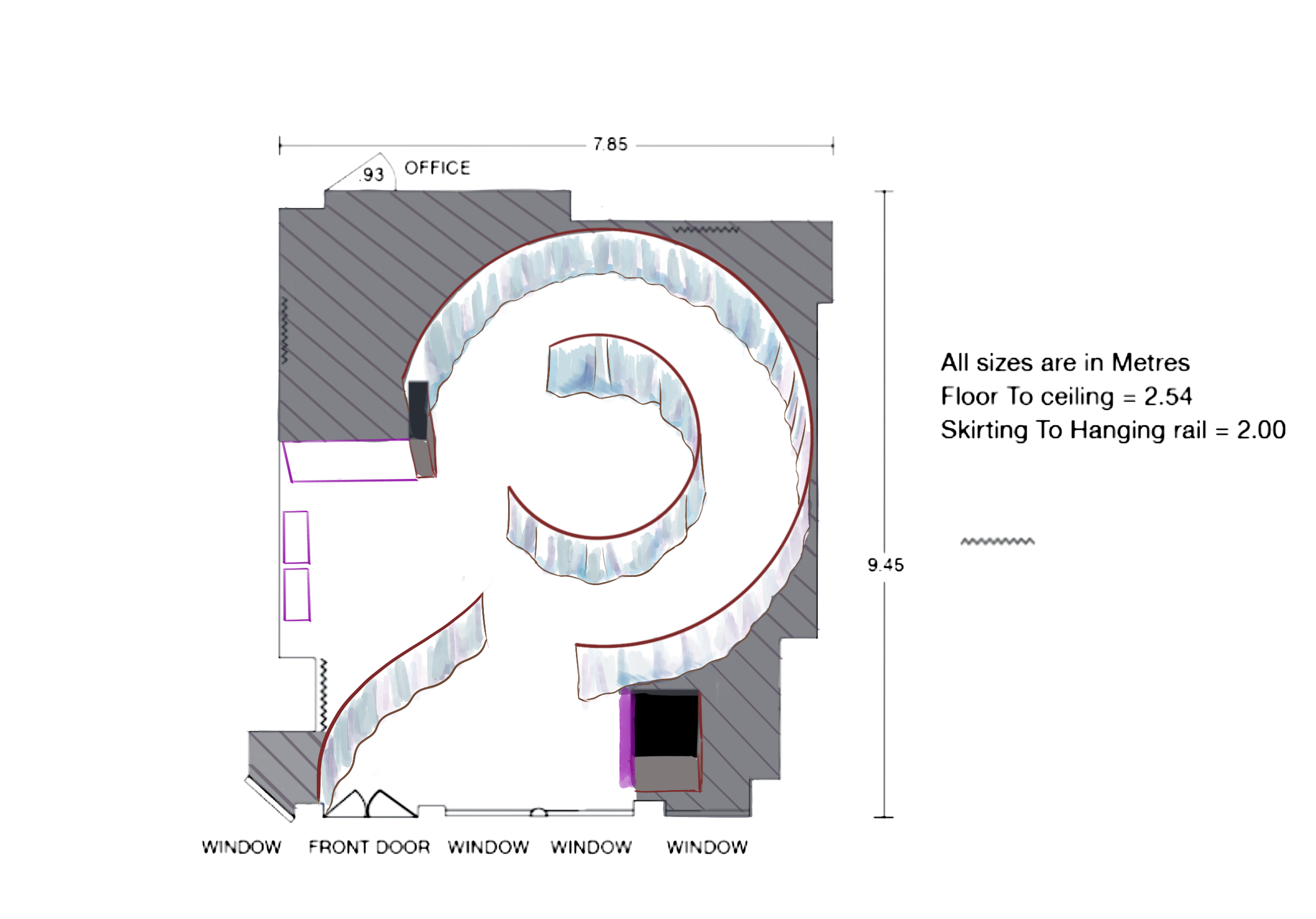
We have taken measurements of In Vitro Gallery. As there are two fixed exhibition walls in the centre, the gallery is naturally unsuitable for large-scale installations. We have therefore decided to select approximately six to eight works by the artist San Zhang, according to the space limitations. 

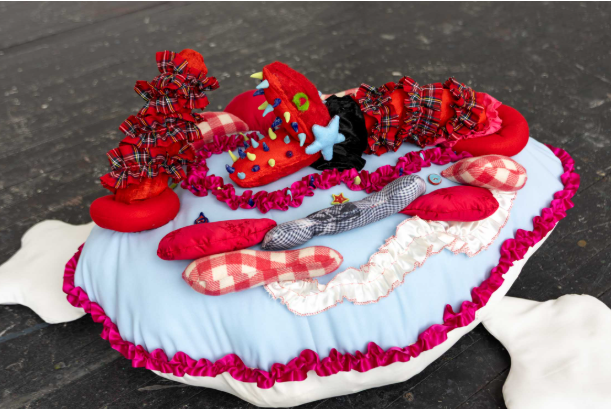
Castrator 

Mixed fabrics and glazed stoneware. 150x90x50cm

Hill town, Hell city

Oil and acrylic on canvas. 145x80cm

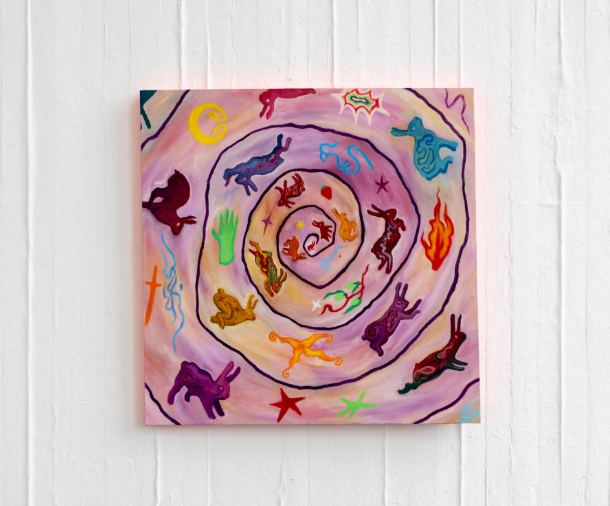
The Dreameater

Oil and acrylic on canvas. 100x100cm

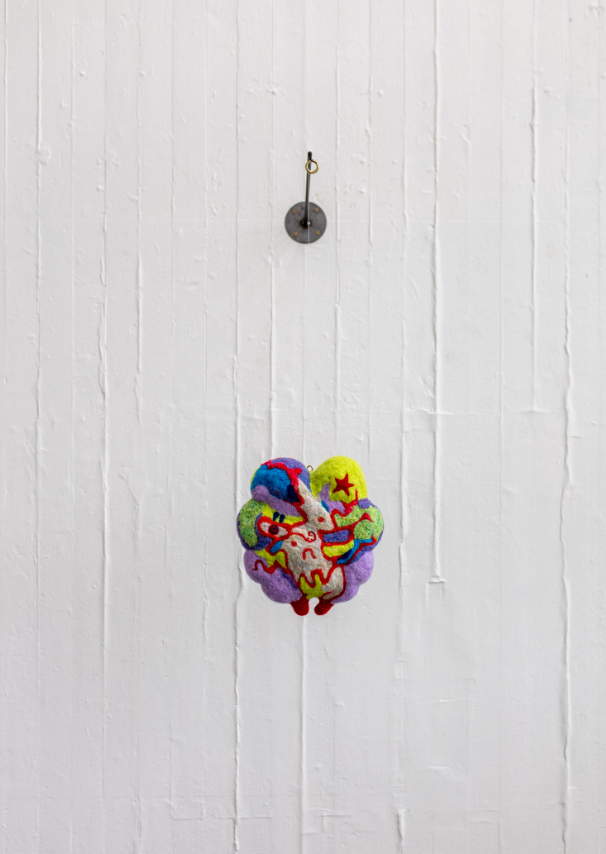
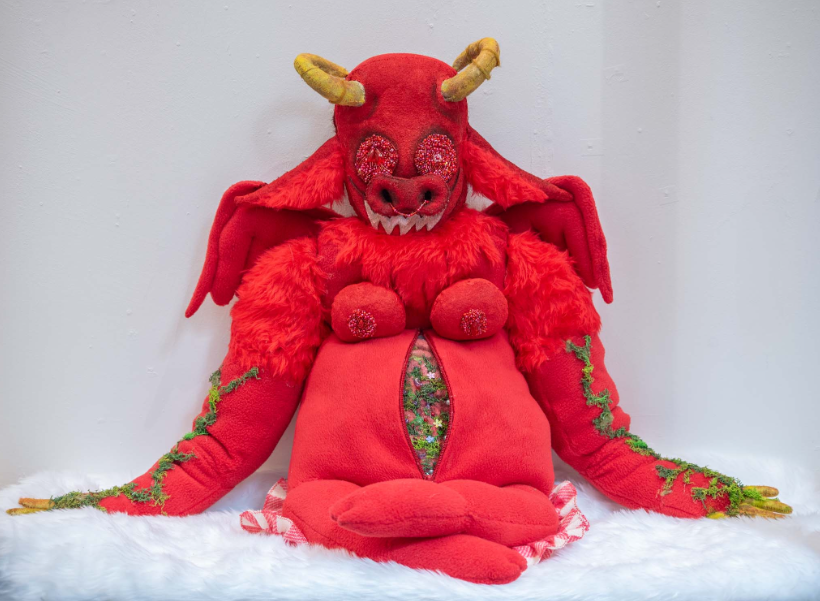
Shelly’s Head 

Needle felt. 30x40x25cm

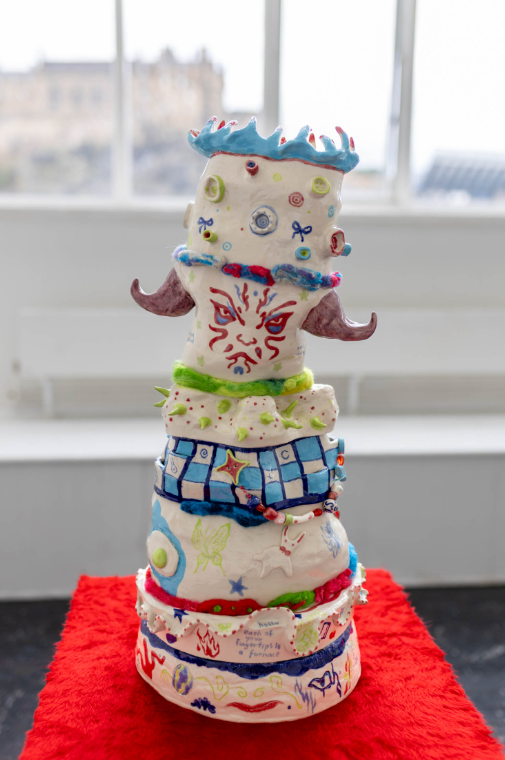
The Tower of Desire

Glazed stoneware and needle felt

Undercover Angel

Felt, fleece, beads and faux lichen. 50x60x25cm

Hell Is Bugging Me

Performance with sound by Pete McConville (@pete_illiop)

https://www.youtube.com/watch?v=ANodQ2BvHSk/


Reference

https://www.graduateshow.eca.ed.ac.uk/portfolio/san-zhang

https://www.youtube.com/watch?v=ANodQ2BvHSk/

🐧Curatorial Pitch🌟

Endless Circulation/Rotating

#rotation #mechanical motion #looping systems #guided movement

#circulation #repetition


🍄The Central Theme of the Exhibition

Friedrich Nietzsche – Eternal Recurrence

“History may not be linear progress, but repetition”

Looking for other art works about cycles of consumption, desire, pleasure… Time goes on, but the Earth rotating, water recycle system..things keep moving yet structurally stuck/ rotating.

Consumer culture, commodified happiness and the feeling of “living in a bubble.” Like scrolling endlessly, shopping for pleasure, or participating in entertainment systems. Comfort, softness and playfulness function as a kind of trap, make people stuck… etc

🐾Exhibition Space and Route Design——Physically Embody The Loop

Drawing on Claire Bishop’s discussion of participatory structures, where the viewer is not merely a spectator but an active component of the work, this project treats the audience as part of the exhibition system itself. The circular route ensures that visitors do not simply observe circulation, but enact it. By walking through the loop, they become structurally embedded in the exhibition’s logic of repetition.

I am interested in rotation not only as physical movement, but as a structural condition of contemporary life. We are constantly moving, scrolling, consuming, working, yet often feel stuck within invisible systems.

(Concept sketch for exhibition layout, sketched by Xiaobao Ye)

I am developing this into an exhibition structured around a one-way circular route. The audience would physically move in loops, guided through rotating installations and looping video works, mirroring systems of consumption and desire. My exhibition asks all the audience one question: Are we progressing, or simply circulating?


Artworks Selection


1. PINK ROUNDABOUT

London

W170 x L170 x H150 cm

PVC fabric, wire, mesh tube, toys, yoga ball, glass, rotate plate


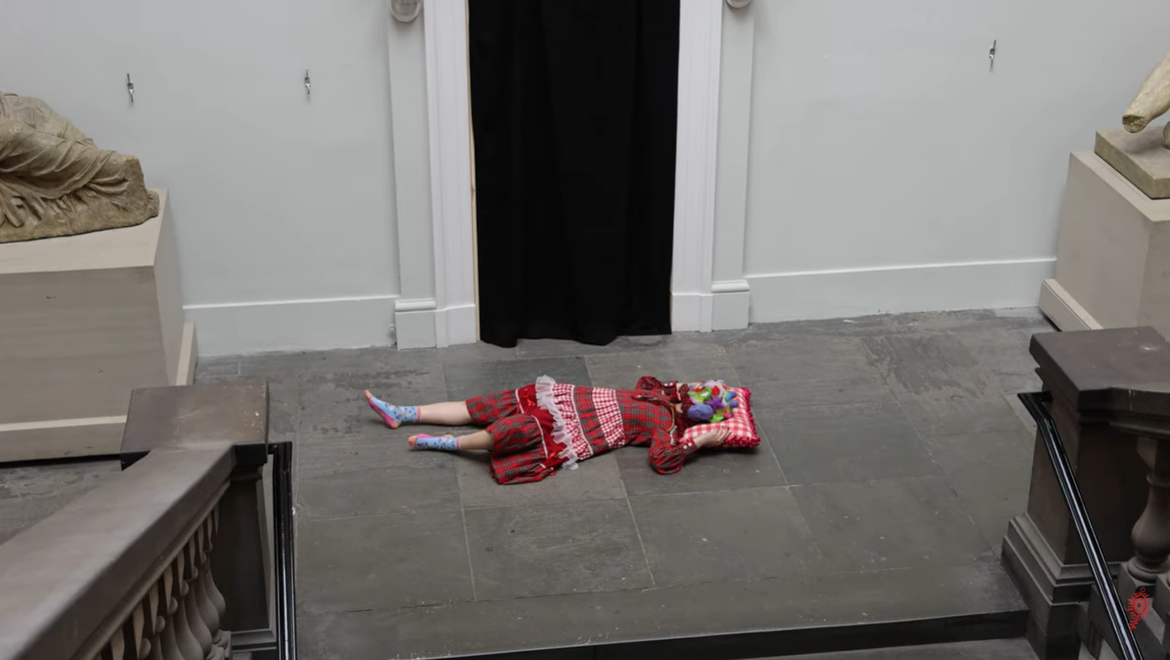
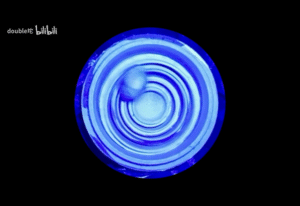
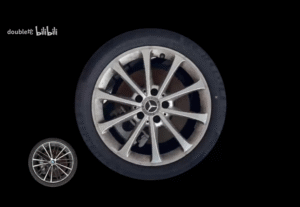
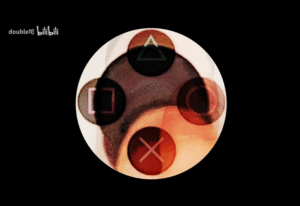
2. Circulation — Mapping the Circles of a Day

枕上假假朋(Zhen Shang Jia Jia Peng), 2022


https://www.bilibili.com/video/BV1ca411X7hp/?share_source=copy_web


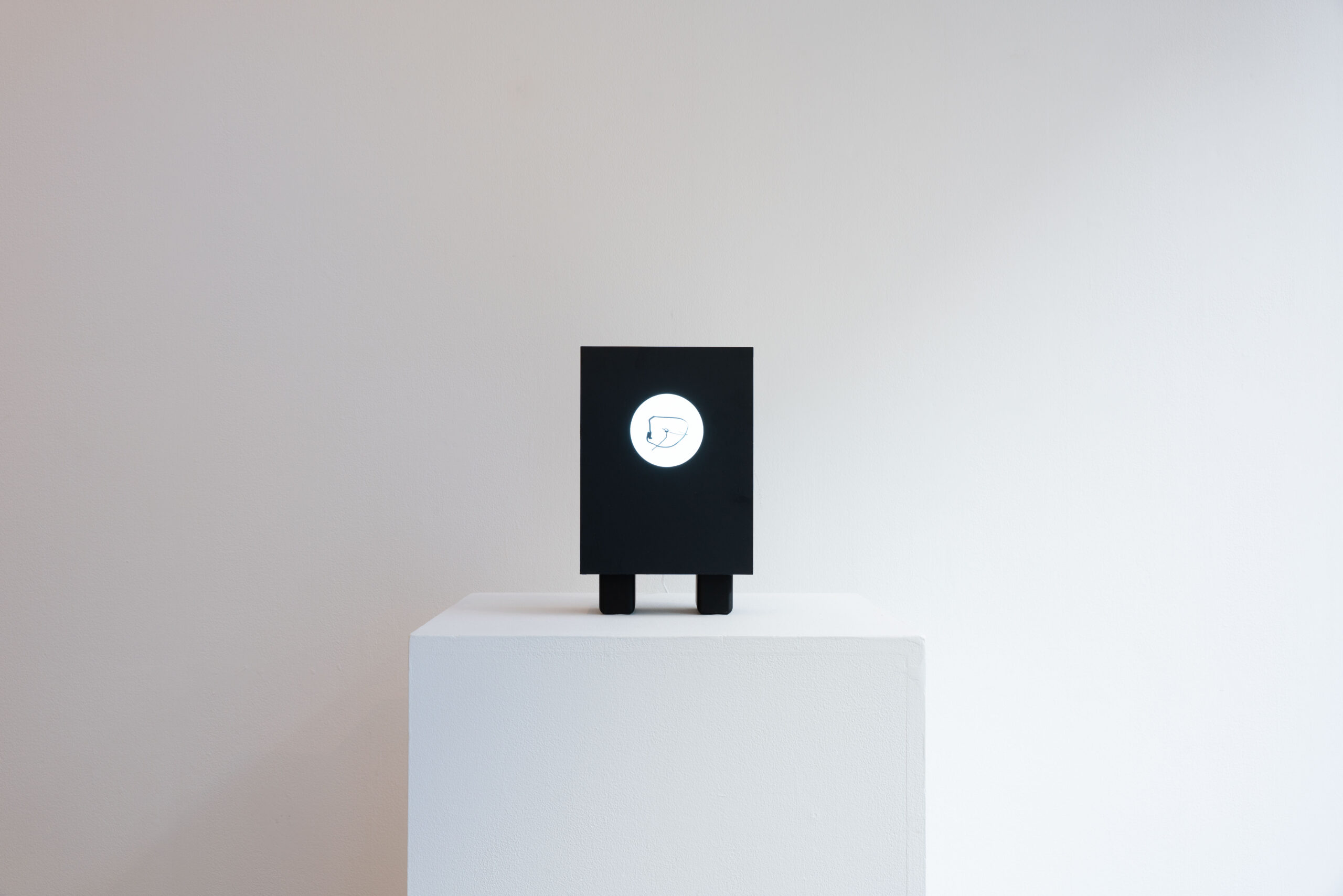
3. A ‘Good Enough’ Mother & Part-Time Mothering

Thomai Pnevmonidou, 2025


(Part-Time Mothering, Thomai Pnevmonidou, 2025)


(A ‘Good  Enough’ Mom, Thomai Pnevmonidou, 2025)

Installation art, W15 x L6 x H27cm, Glasgow, last exhibition: Mother Curator


 4. Photography

yushi.95, 2025


Reference

Bishop, Claire. Artificial Hells: Participatory Art and the Politics of Spectatorship. London: Verso, 2012.

https://www.bilibili.com/video/BV1ca411X7hp/?share_source=copy_web

https://www.baorongstudio.com/portfolio

Nietzsche, Friedrich. Thus Spoke Zarathustra. Translated by Walter Kaufmann. New York: Penguin, 1966.

https://xhslink.com/m/4L6kAceIMON


Curating Blog|🍄Week 6

Week 6   Refining the Curatorial Structure Through Feedback

🌟Clarifying the Concept

During this week’s collective discussion, I realised that my own project was still too loose. The works were interesting and well received, but I lacked a clear theoretical spine. My proposal included Pink Roundabout, urban-style photography, a looping video and several installations. Although they all related to “endless circulation,” they still felt disconnected. I needed more than a shared visual effect.

I also decided not to continue the second direction on fluid gender and body politics. Although this theme was interesting, it opened a separate ethical and theoretical field that I could not responsibly develop within the scale of this SICP. If I kept it, the project would risk becoming too broad: half about circular movement and repetition, half about gendered bodies and identity. This decision helped me focus the exhibition more clearly on circulation, repetition, spatial movement and everyday cycles.

To clarify my thinking, I turned to theories of circulation. Karl Marx’s concept of the circulation of capital, M–C–M’, showed me that circulation is not only physical movement, but also a structural logic. This helped me see my urban photographs and looping video as reflections of everyday repetition, such as consumption, labour and scrolling: forms of constant motion without real progress.

At the same time, Friedrich Nietzsche’s idea of Eternal Recurrence reshaped my understanding of the exhibition route. If everything returns, then “moving forward” may simply be repetition in another form. This changed how I designed the layout: instead of arranging works in a simple linear order, I wanted visitors to follow a circular path where returning close to the starting point becomes part of the exhibition experience.

🔎Spatial Structure and Looping Time

To strengthen the project, I divided the exhibition into two zones. The first focuses on physical and everyday cycles, such as urban rhythm and repeated movement. The second moves toward more psychological and existential forms of return, asking how repetition shapes memory, desire and daily experience. In this structure, Pink Roundabout no longer functions as an illustration of gender fluidity, but as a rotating installation that connects bodily movement, childhood play and circular desire.

I also added a looping video to bring more dynamism into the space. Erika Balsom (2013) argues that viewers rarely engage with moving images in galleries through uninterrupted viewing, but more often through partial and fragmented encounters. I therefore began to see the looping video not only as content, but as a time mechanism that reinforces repetition and suspended progression.


References 

Balsom, Erika. Exhibiting Cinema in Contemporary Art. Amsterdam: Amsterdam University Press, 2013.

Marx, Karl. Capital: Volume I. Translated by Ben Fowkes. London: Penguin, 1976.

Nietzsche, Friedrich. The Gay Science. Translated by Walter Kaufmann. New York: Vintage, 1974.

Curating Blog|🧩Week 7

Week 7  Updating my curatorial project

🧱Idea for the Exhibition Wall

Following last week’s feedback, I began to reflect on the practical challenges in my curatorial proposal. One key piece of feedback was that my idea of a circular exhibition layout was interesting but may be too ambitious, especially because it would require constructing custom-built round walls, which could be physically not feasible, or too pricy to build.

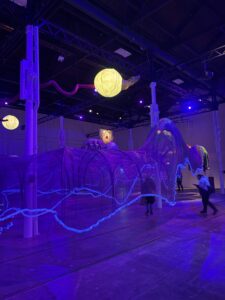
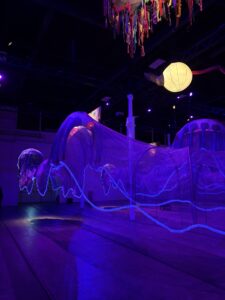
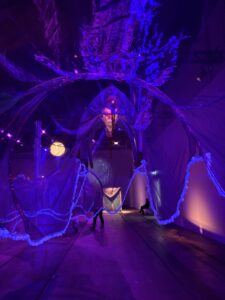
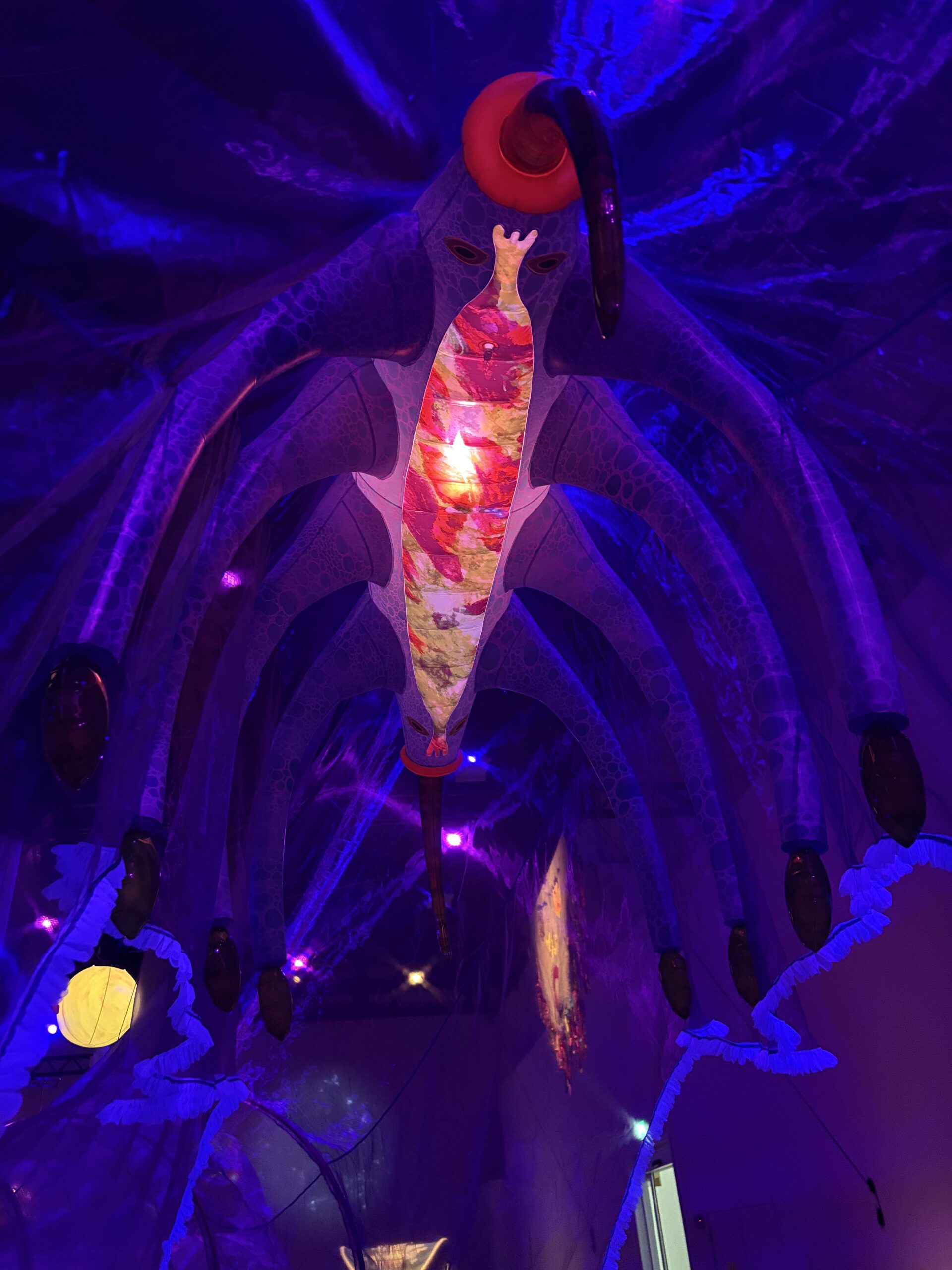
In response, I remembered that exhibition I’d once visited earlier this year at Tramway, •~TUA~• 大眼 •~MAK~• by Rae-Yen Song, which gave me some inspirations. In this exhibition, there was a passage-like structure made of fabric material, which guided visitors through a space that felt like moving inside a creature’s body. The material was soft, yet it still created a clear spatial experience and directed movement, and most importantly——such material is very easy to shape.
(Rae-Yen Song, •~TUA~• 大眼 •~MAK~•, installation views at Tramway, Glasgow. Photographs by Xiaobao Ye, 2025)

🧣Curtain as Wall

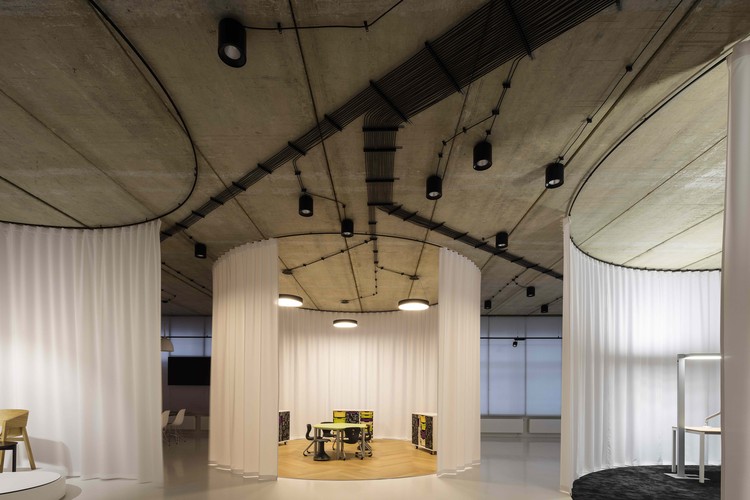
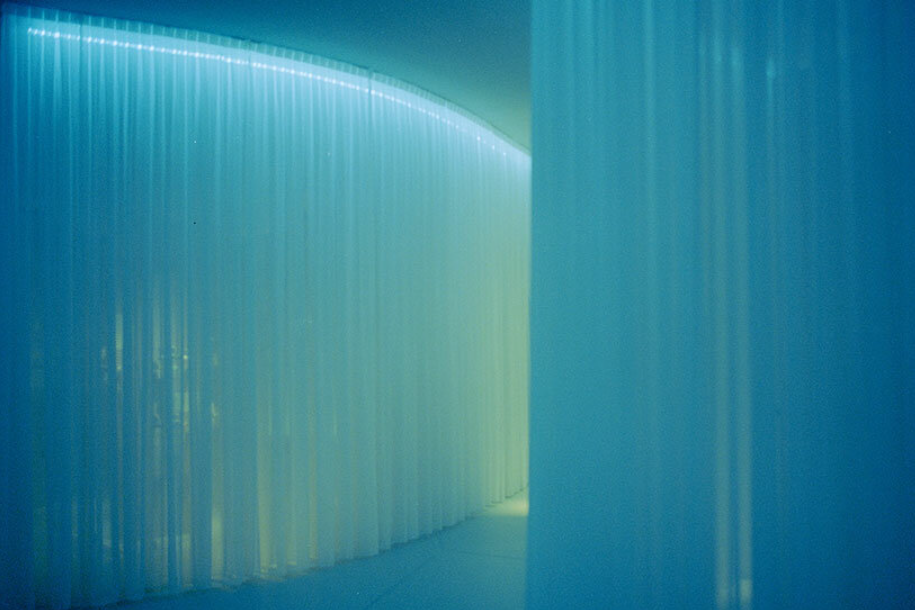
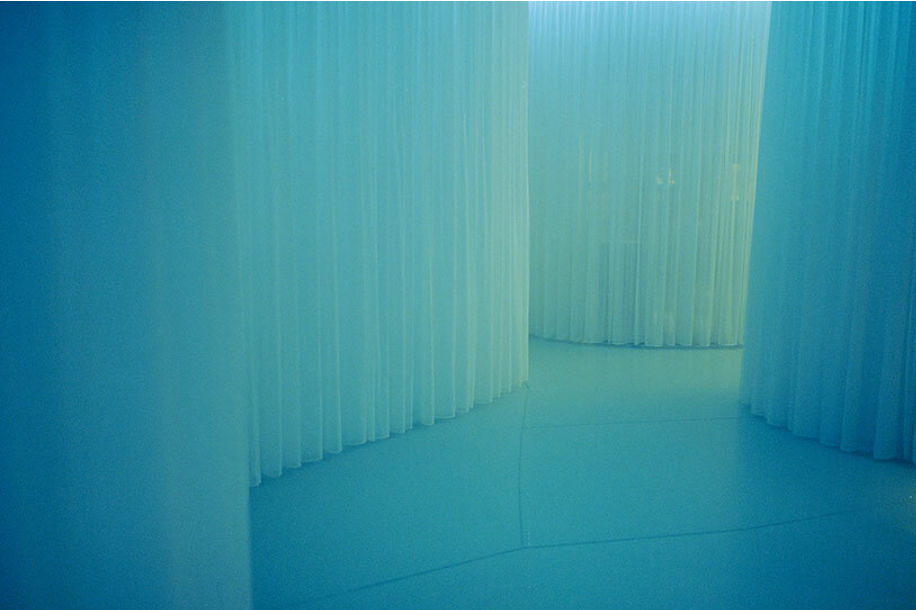
This led me to further research spatial design using fabric. In the project Gallery of Furniture by CHYBIK + KRISTOF, circular cutouts are defined by full-height textile curtains, which can be either closed or left open. As the designers describe, the space functions as a gallery that can be easily adjusted according to different needs.
This example is particularly relevant to my project, as it shows how curtains can be used to construct circular spatial divisions without relying on fixed walls. More importantly, the ability to open and close the curtains introduces flexibility into the exhibition layout, allowing the space to shift between enclosure and openness. This made me realise that using fabric not only solves practical constraints, but also enables a more adaptable and fluid spatial structure, which aligns closely with my idea of a circular and continuous movement.

(Curtains used as spatial dividers in architectural design. Source: ArchDaily, 2020)

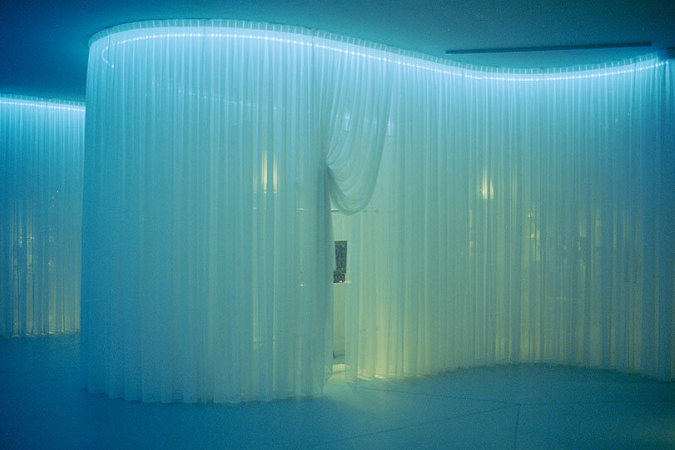
Also, in the exhibition Behind the Curtain at the Groninger Museum, large curtains are used to replace traditional walls, partially concealing the works and structuring the space. Rather than seeing everything at once, visitors are encouraged to move through and around the curtains to access the exhibition.

(David Altrath, Curtains, installation view at Groningen Museum. Source: Designboom, 2024)

This approach creates a more fluid circulation, as movement becomes a natural way of navigating the space. It also showed me that using fabric as a spatial device can guide visitors more smoothly, while being easier to install and shape according to the needs of the exhibition, which I plan to apply to my own circular layout.


 Reference

 https://www.archdaily.com/936540/curtains-as-room-dividers-towards-a-fluid-and-adaptable-architecture/

.https://www.designboom.com/art/curtains-david-altrath-blue-hued-atmosphere-groningen-museum-exhibition-03-14-2024/

.

Curating Blog|🪼Week 8

Week 8 Site and Spatial Conditions

🌚Observations from the Exhibition Hall

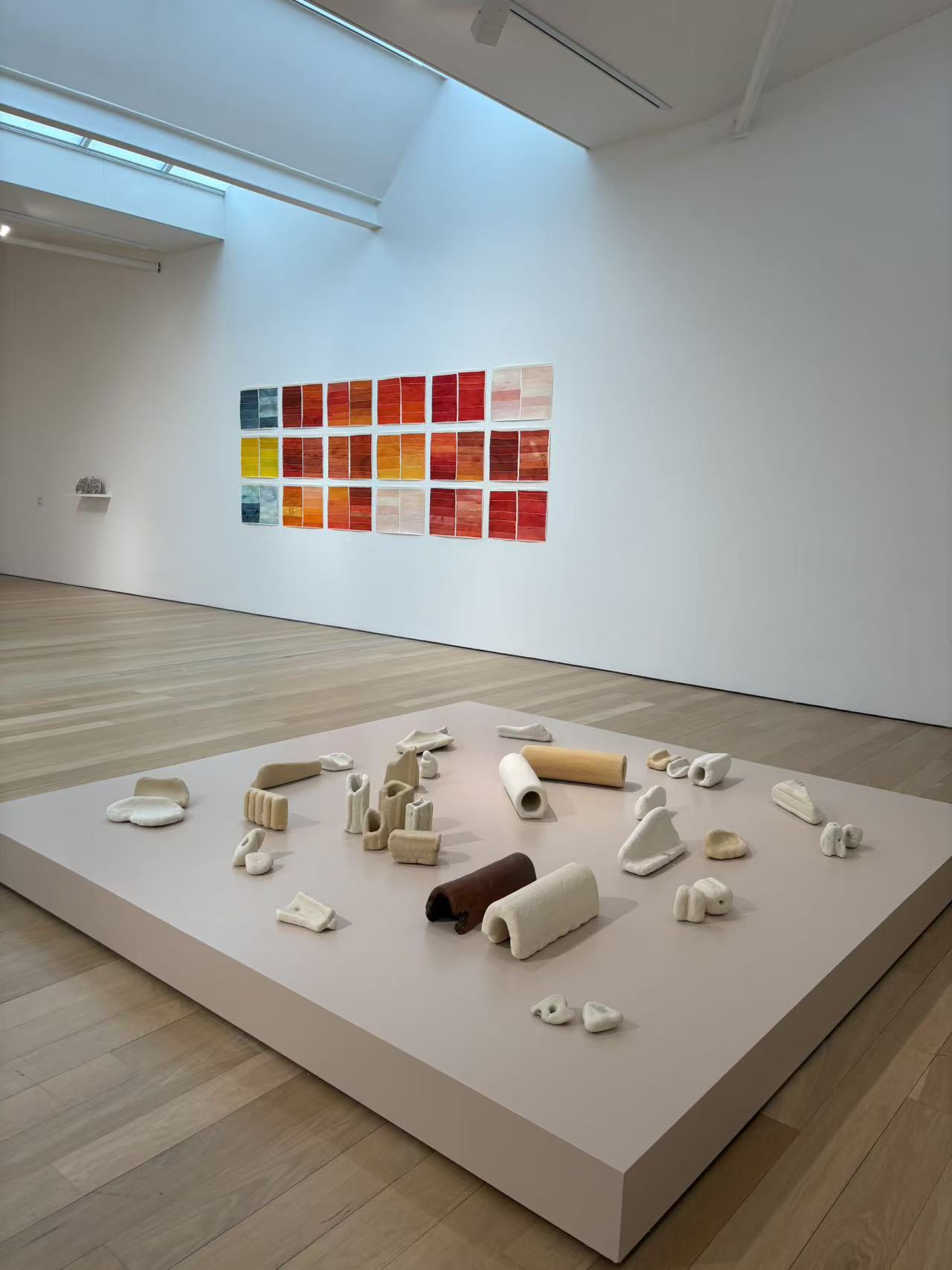
This week, I visited What is Us and What is Earth by Ilana Halperin at the The Fruitmarket. The exhibition spans both the upper and lower galleries, creating a large and open spatial environment. I visited the exhibition twice at different times of day, which made me more aware of how the site conditions shape the viewing experience.


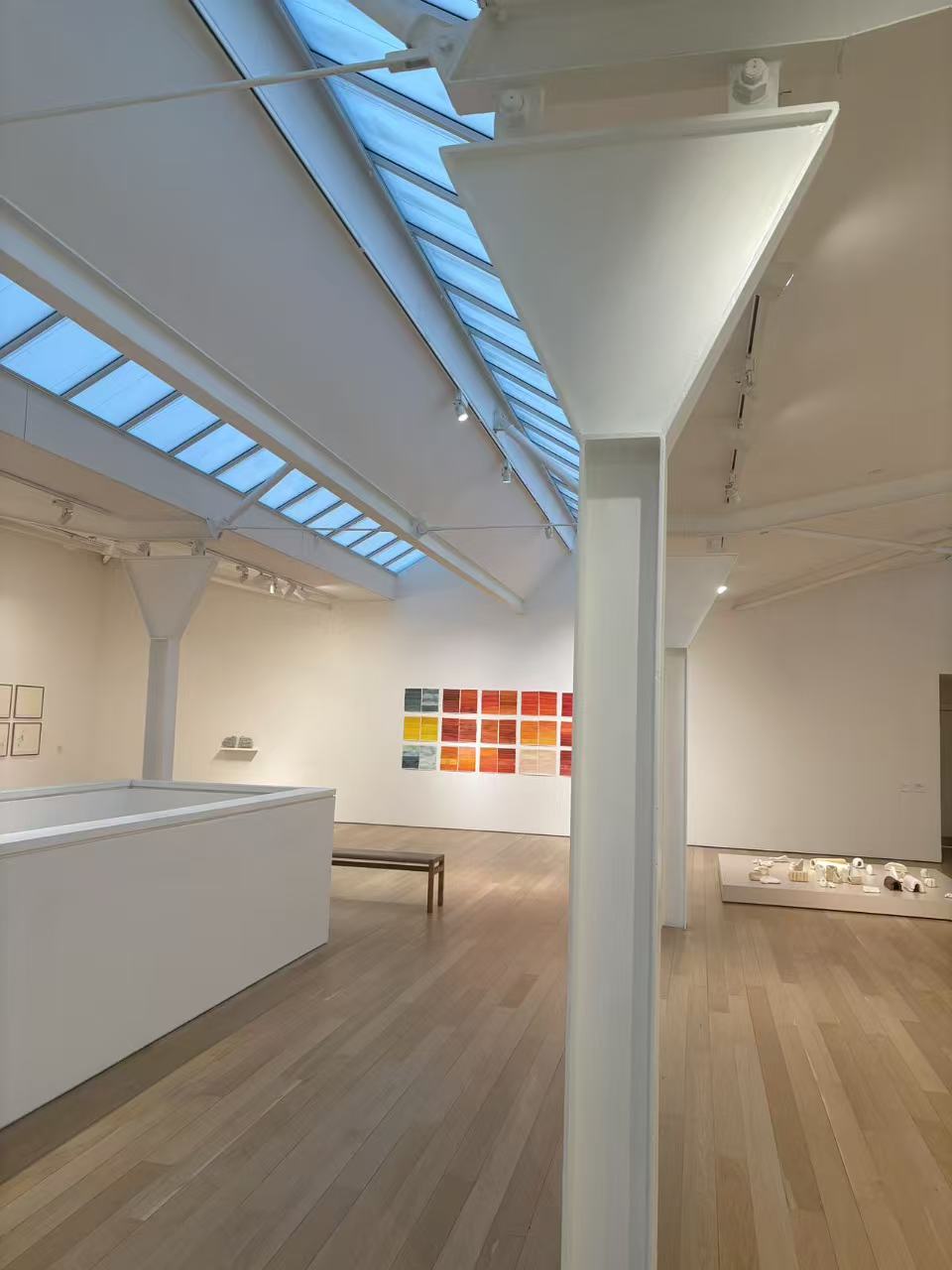
During my first visit at midday, natural light entered the upper gallery through the ceiling, making the stone works appear more vivid and detailed. In contrast, my second visit took place in the evening, when the weather was darker and artificial lighting was used instead. The atmosphere became more controlled and slightly subdued. Although the works themselves did not change, their appearance and impact shifted noticeably. This made me realise that lighting is not simply a technical support, but an active element in shaping how the exhibition is experienced.

(Natural light in the gallery space. Ilana Halperin, What Is Us and What Is Earth, Fruitmarket Upper Gallery, Edinburgh. Photograph by Xiaobao Ye, 2026)


(Artificial light in the gallery space. Ilana Halperin, What Is Us and What Is Earth, Fruitmarket Upper Gallery, Edinburgh. Photograph by Xiaobao Ye, 2026)

I also noticed that the ceiling structure is irregular, with skylights and uneven surfaces. While visually interesting, this creates practical limitations, as some areas are not suitable for hanging. This observation made me more aware that the site is not neutral, but directly affects how an exhibition can be installed.

🐏My Choice of Exhibition Space

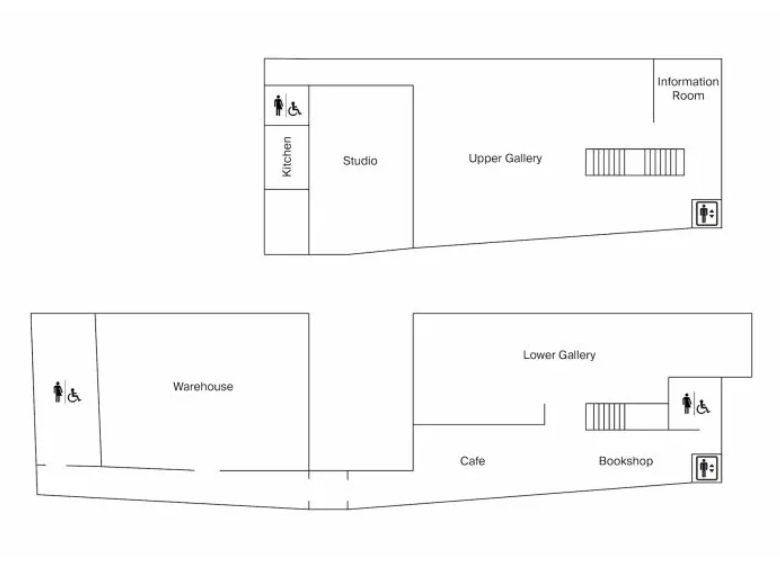
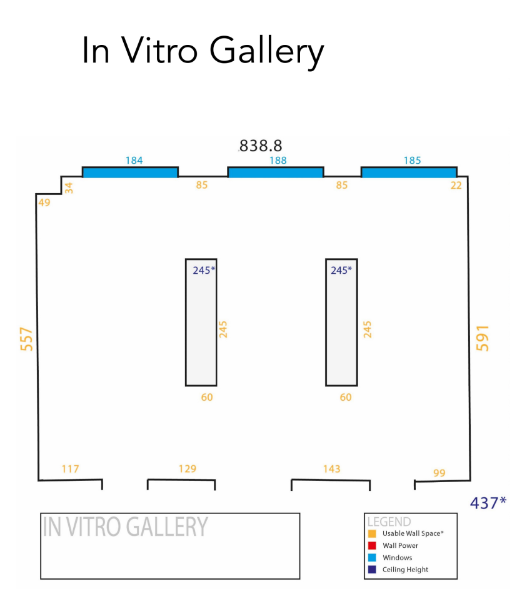
Reflecting on my own project, I realised that my idea of a circular viewing structure relies heavily on suspended fabric. This means the exhibition space must support hanging, have a relatively regular layout, and avoid central obstacles that interrupt movement. Compared to the Fruitmarket, where the upper gallery ceiling is complex and the lower level does not fully support a circular flow, and also the collective space In Vitro Gallery at Summerhall, which includes fixed walls, these conditions are not ideal.

(Fruitmarket Gallery floor plan. Source: Fruitmarket Gallery website)


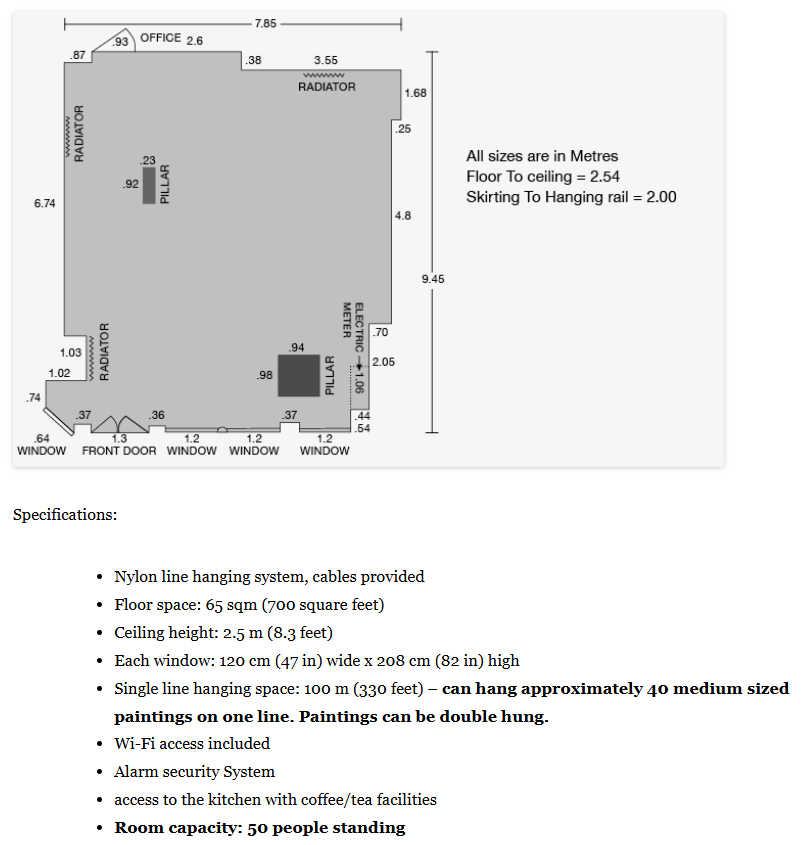
(In Vitro Gallery floor plan. Source: provided by course tutor)

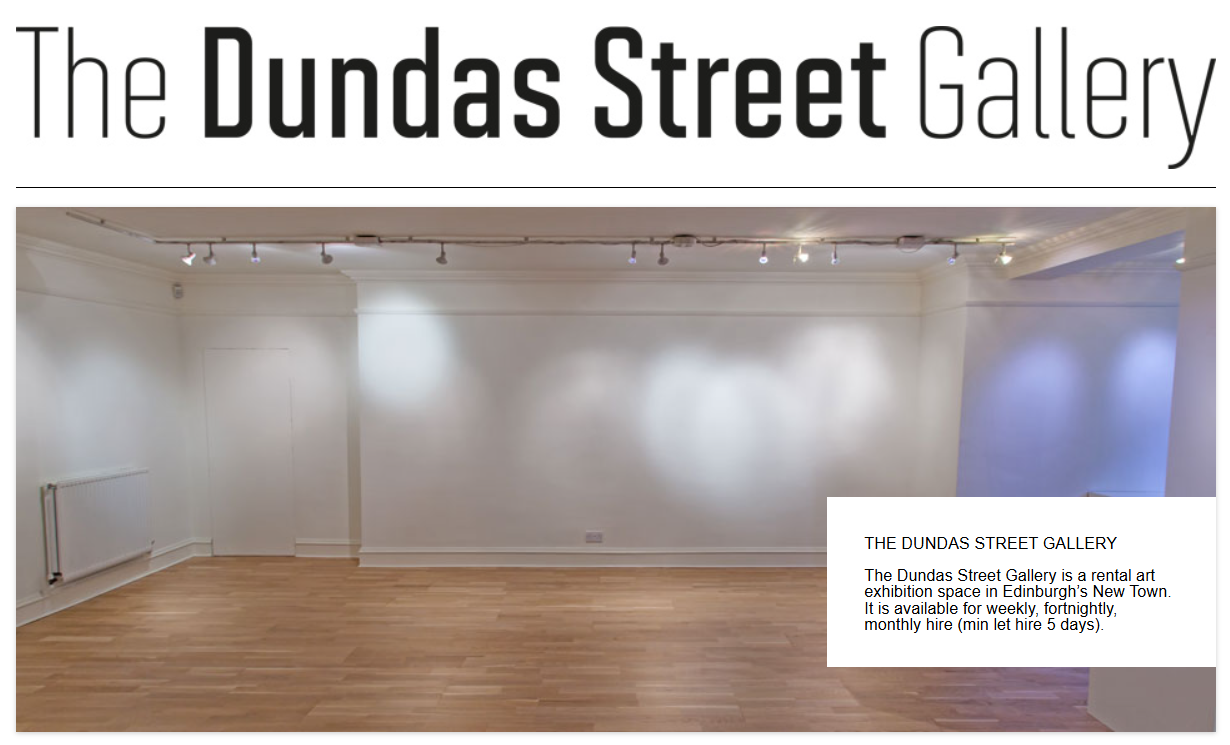
Through further research, I identified the Dundas Street Gallery as a more suitable space. The gallery is approximately 65 square metres, with a 2.5 metre ceiling height and a built-in hanging system, making it well-suited for suspended fabric installations. Its scale also supports a circular layout, allowing for a clear yet fluid movement through the space.


(The Dundas Street Gallery, Edinburgh. Source: The Dundas Street Gallery website)


This process made me realise that curating is not only about developing ideas, but about adapting them to the specific conditions of a site.

Reference

https://www.dundas-street-gallery.co.uk/

       .https://www.fruitmarket.co.uk/hold-your-event-with-us


Curating Blog|🦔Week 9

Week 9 Collective Practice and Curatorial Development

🐱Developing Collective Curatorial Project

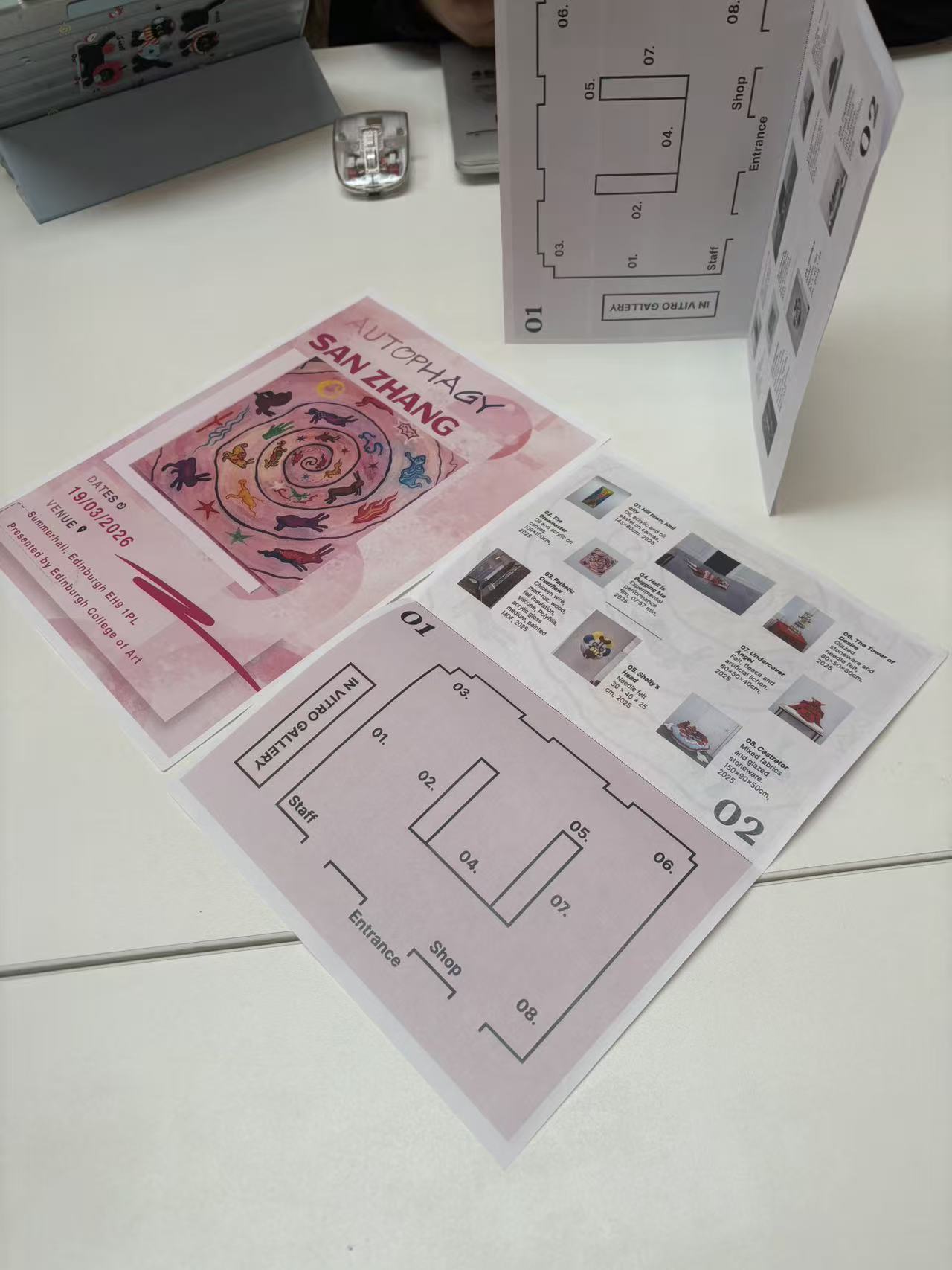
This week focused on the development of our collective project, including early curatorial planning and the production of the final visual outcome. Through this process, I became more aware of how collaborative work can shape curatorial thinking in a different way from individual projects. It helped me understand that collective curating is not only about dividing tasks, but about negotiating how an artist’s work should be translated into space, text and visual identity.

During the collaborative process, we spent significant time researching the artist and the selected works. This made me realise that a curatorial idea should not be developed independently from the artwork, but grounded in the artist’s practice and intentions. Rather than selecting works through visual preference, we needed to consider how meaning was constructed through the artist’s materials, imagery and references. This reflects O’Neill’s idea that curating involves the interpretation and mediation of artistic practice (O’Neill, 2012).

Within the group, I was responsible for measuring the exhibition space and recording spatial data at In Vitro Gallery, which helped us understand how the exhibition could be installed. I also contributed to early creative discussions, developed a proposal for a solo artist exhibition, and offered suggestions for the curatorial direction of The Tower of Autophagy. In the later stages, I worked on the final graphic layout, including the main image, colour palette and overall visual presentation.

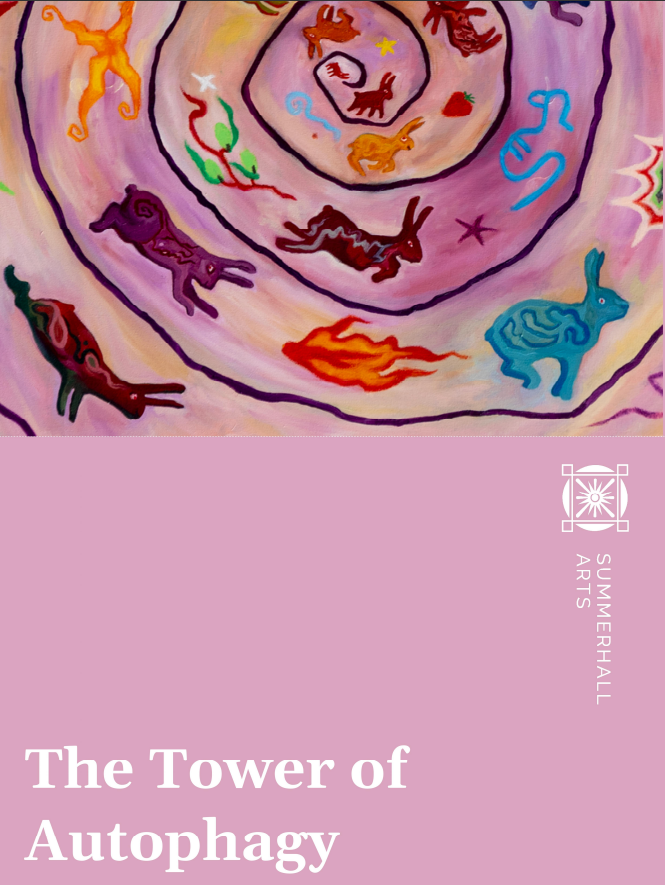
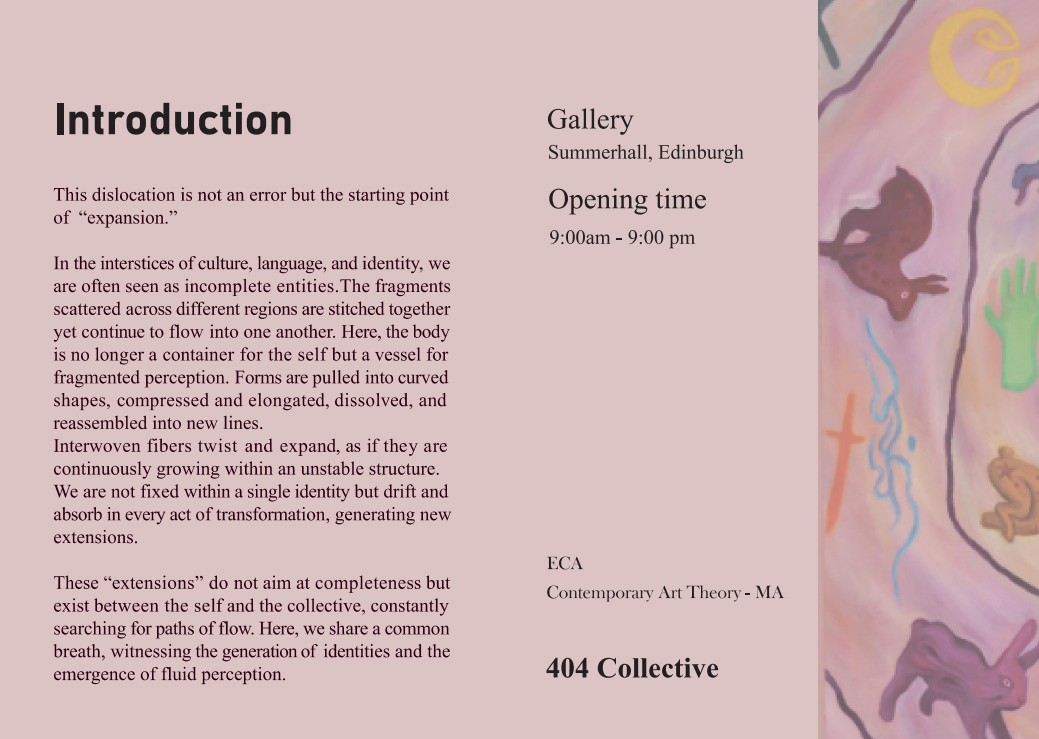
(Designed by Xiaobao Ye, 404 Collective)


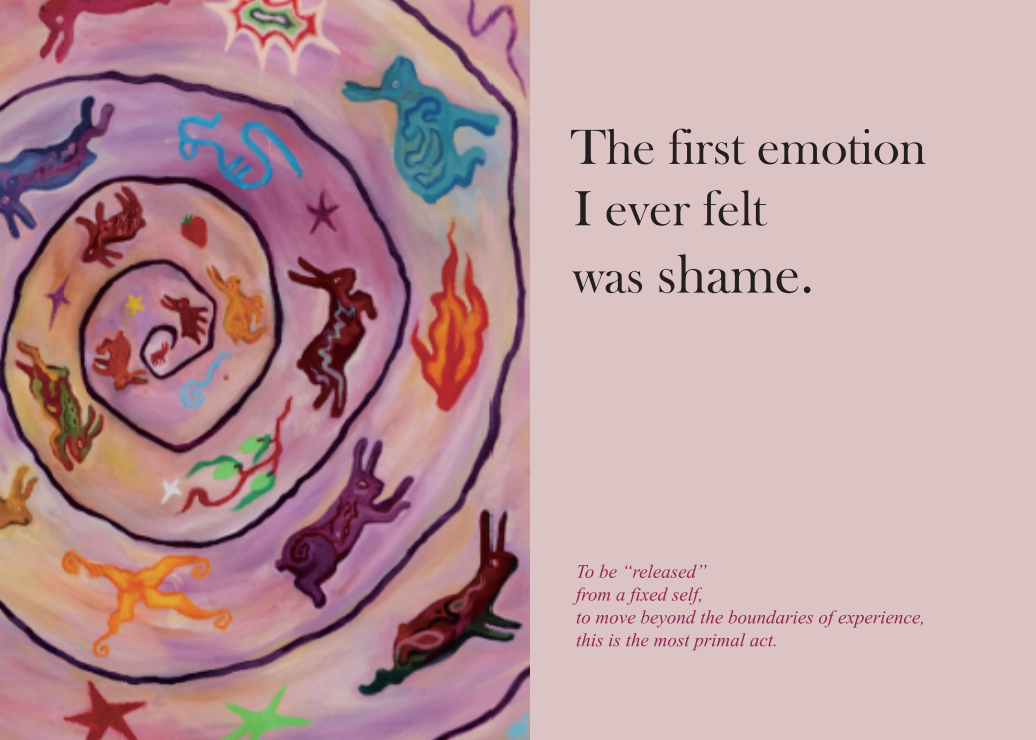
(Designed by Yi Yao, 404 Collective)


(Designed by Angxuan Li, 404 Collective)

During the early stage of selecting artworks, I chose The Dreameater, which was later agreed upon by the group and developed into the main visual of the exhibition. Through discussing this work, testing its placement and researching the artist, I gained a deeper understanding of how a single artwork can function within a broader curatorial context. I also decided to include this work in my own SICP project, which made me consider how the same artwork can be presented differently depending on the exhibition structure.

This experience changed how I understand visual design. As someone with a graphic design background, I initially saw visual identity as a way to make the exhibition look coherent. Through this collective process, I began to see it as a curatorial tool that shapes how audiences enter the artist’s world before they encounter the works. This also influenced my individual SICP, where I now think more carefully about how artwork selection, spatial order and visual communication work together.


Reference

O’Neill, Paul. The Culture of Curating and the Curating of Culture(s). Cambridge, MA: MIT Press, 2012.

Curating Blog|🪅Week 10

Week 10    Developing the Exhibition Layout, Budget, and Artwork Selection

👁Exhibition Layout Design

(Proposed curtain installation layout for Endless Circulation, The Dundas Street Gallery. Designed by Xiaobao Ye, 2026)

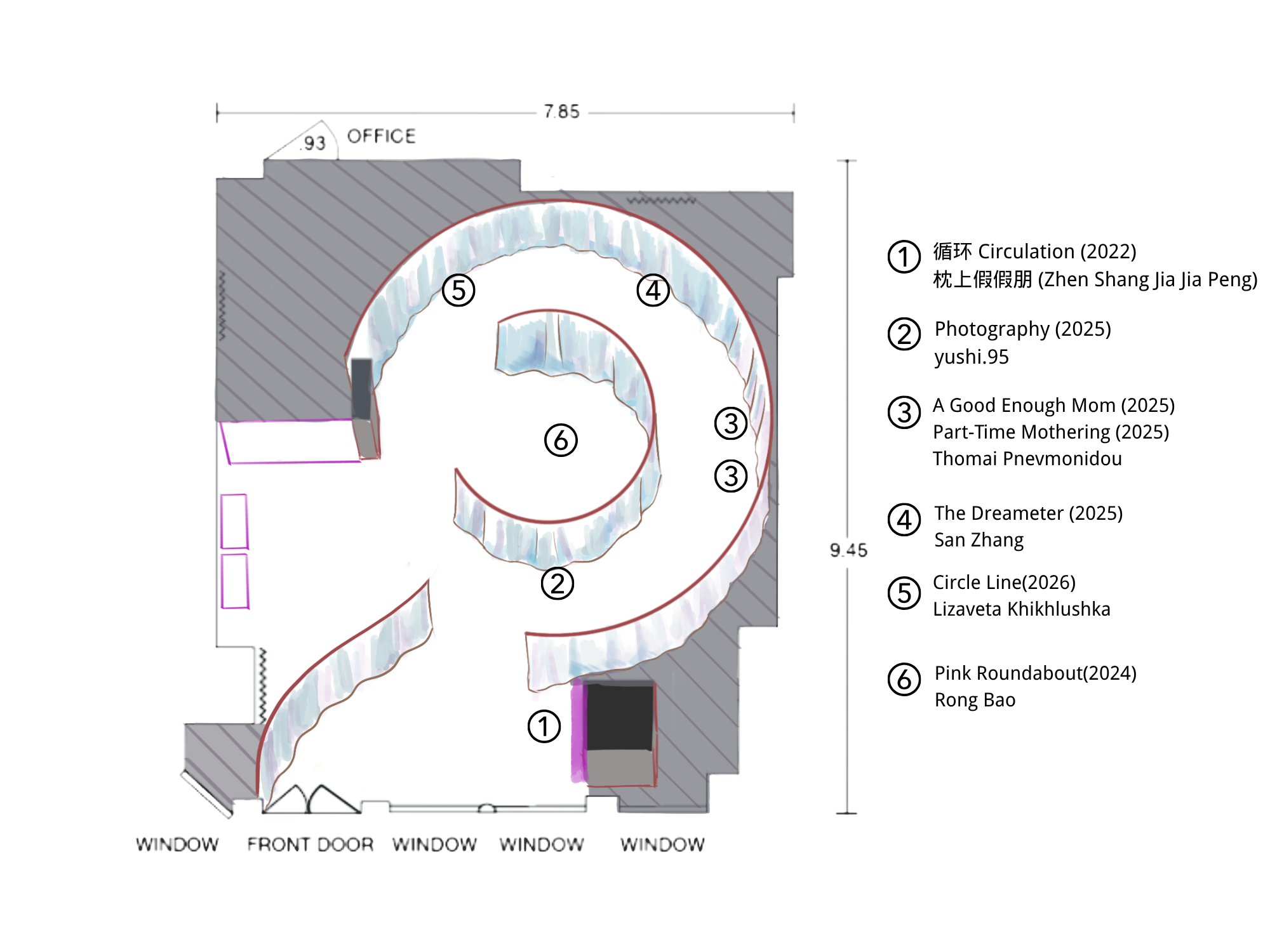
In the space at The Dundas Street Gallery, I designed a circuit with curtains for visitors to walk around a circular frame, guiding them to walk a full circle during the visit of the exhibition.

Looking back at the collective curatorial plan, I realised that comparing spaces helped me understand the practical limits of my own project. In the collective curatorial project, we planned around eight artworks within the In Vitro Gallery, a space of approximately 8.5 x 6 metres. My chosen gallery, The Dundas Street Gallery, is slightly different in proportion at around 7.5 x 9.5 metres, but not necessarily larger in practical terms. Part of the gallery will be used for a final interactive area, and the curtain structure of the circular layout will also take up space. Because of this, I think a realistic number for my exhibition is around six works.

👋🏼New art work selection 


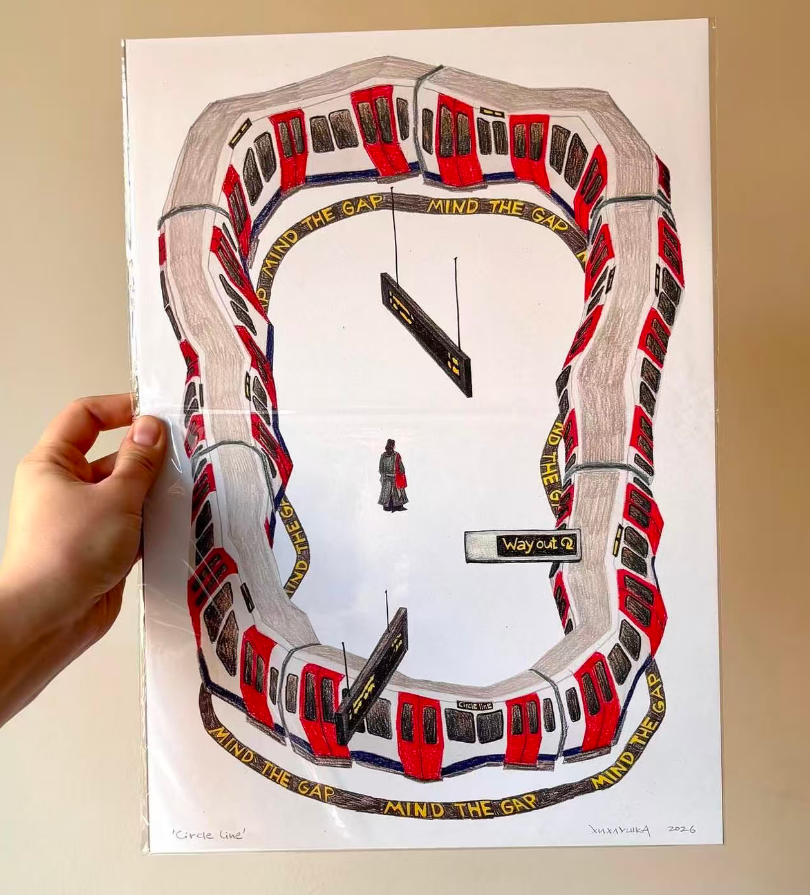
Circle Line (2026)

Lizaveta Khikhlushka

Lizaveta Khikhlushka is a visual artist based in London. Her art, Circle Line, asks a question——What if Circle line was actually a circle?

It depicts a train travelling in a loop and the Circle Line itself as a loop, with pedestrians trapped within it. I chose this as the 6th art for my SICP Endless Circulation.

🌍Exhibition Layout Map

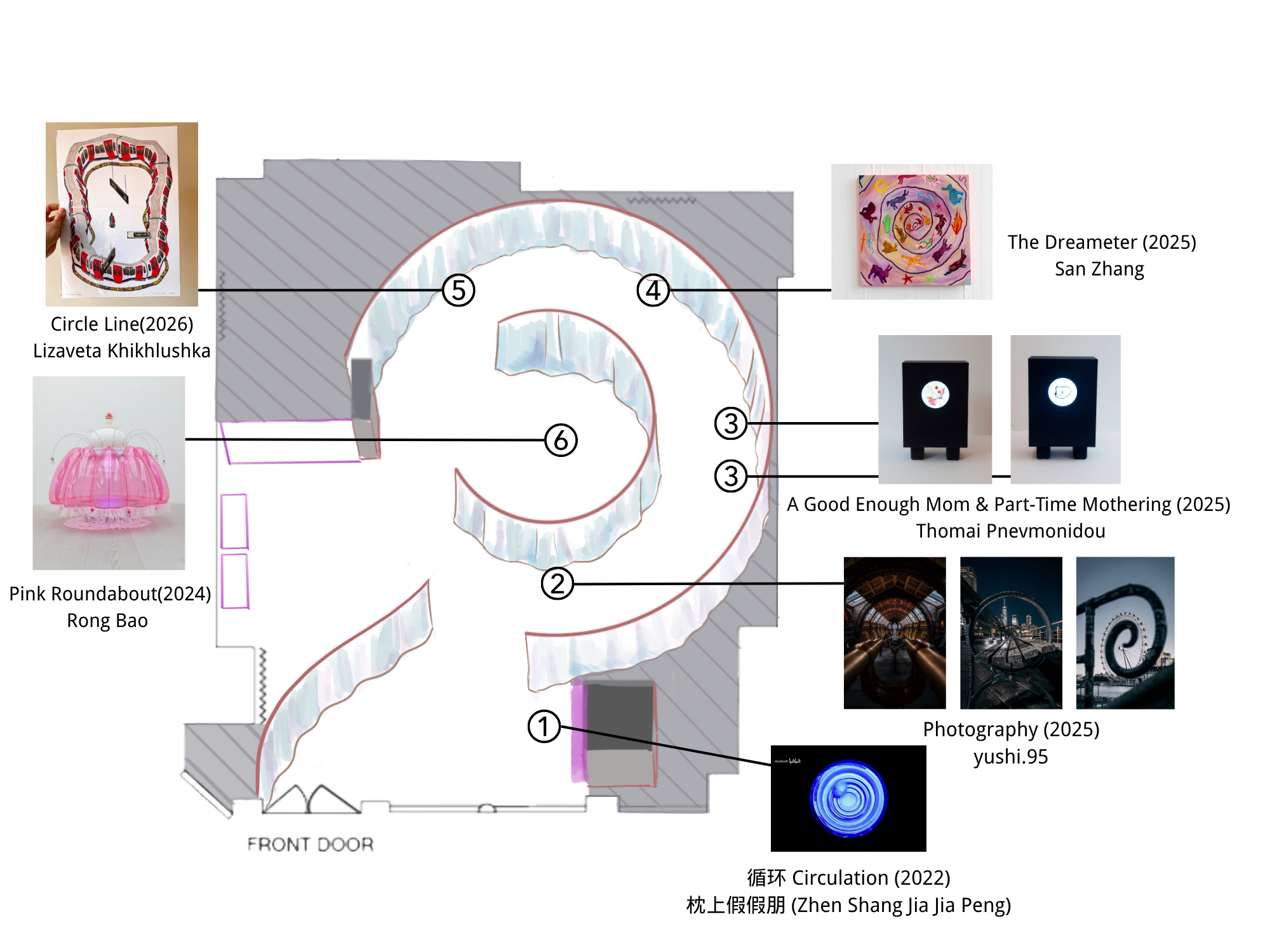
Based on the existing artworks, I have completed the exhibition layout map. It guides visitors from a physical circuit, step by step, into a more abstract theoretical circuit.

(Proposed exhibition layout for Endless Circulation, showing artwork positions (1–6), The Dundas Street Gallery. Designed by Xiaobao Ye, 2026)

🦥Budget Draft

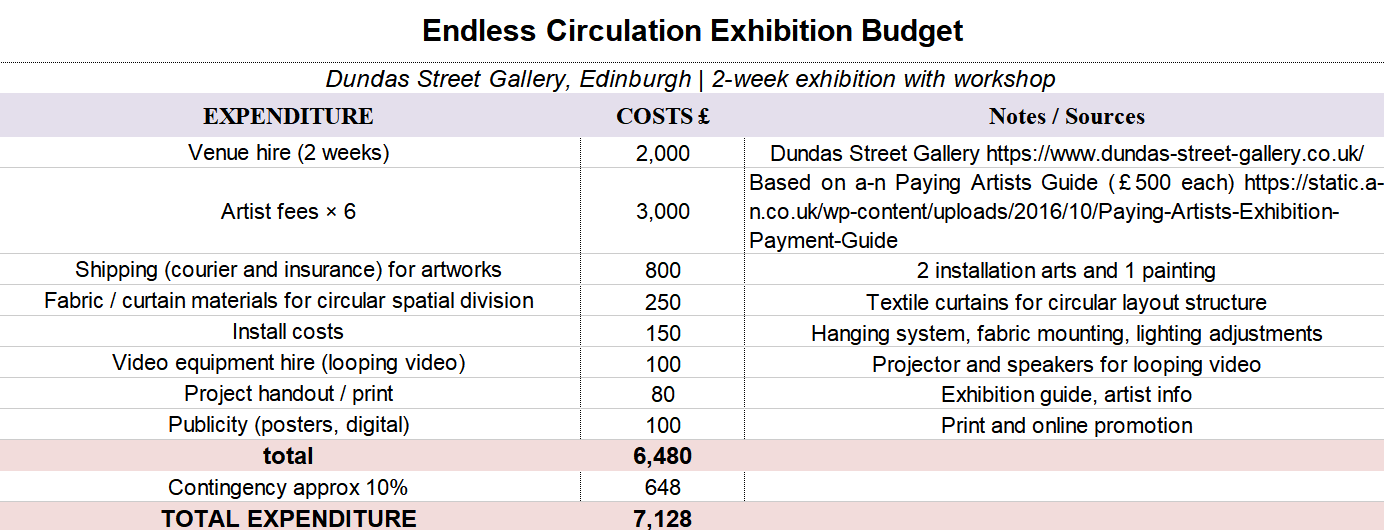
(Draft exhibition budget for Endless Circulation. Designed by Xiaobao Ye)

To develop the budget, I began by researching the actual venue hire rate on The Dundas Street Gallery website, which charges £1,000 per week during October–April (the cheapest months. And the recent available time is Jan 2027). For artist fees, I referred to the a-n Paying Artists Exhibition Payment Guide, setting £500 per artist as a fair exhibition fee for six emerging practitioners. Shipping costs were estimated based on the need to transport two installation works and one painting, factoring in courier and insurance. I also allocated costs for the curtain materials that form the spiral spatial structure, which is central to the exhibition’s concept.


Reference

https://www.dundas-street-gallery.co.uk/

https://hihlushka.myportfolio.com/work?utm_source=ig&utm_medium=social&utm_content=link_in_bio&fbclid=PAdGRleARVzOlleHRuA2FlbQIxMQBzcnRjBmFwcF9pZA8xMjQwMjQ1NzQyODc0MTQAAacYlyIJgESCVzpSbpx2qA2d5lk0gK43WMjOZw3Szx0uWXXqCoIFqlnMb5bwgQ_aem_2Gpe_IpzdrSF4gaLNYinhQ

https://static.a-n.co.uk/wp-content/uploads/2016/10/Paying-Artists-Exhibition-Payment-Guide.pdf