Week 9 Collective Practice and Curatorial Development
🐱Developing Collective Curatorial Project
This week focused on the development of our collective project, including early curatorial planning and the production of the final visual outcome. Through this process, I became more aware of how collaborative work can shape curatorial thinking in a different way from individual projects. It helped me understand that collective curating is not only about dividing tasks, but about negotiating how an artist’s work should be translated into space, text and visual identity.
During the collaborative process, we spent significant time researching the artist and the selected works. This made me realise that a curatorial idea should not be developed independently from the artwork, but grounded in the artist’s practice and intentions. Rather than selecting works through visual preference, we needed to consider how meaning was constructed through the artist’s materials, imagery and references. This reflects O’Neill’s idea that curating involves the interpretation and mediation of artistic practice (O’Neill, 2012).
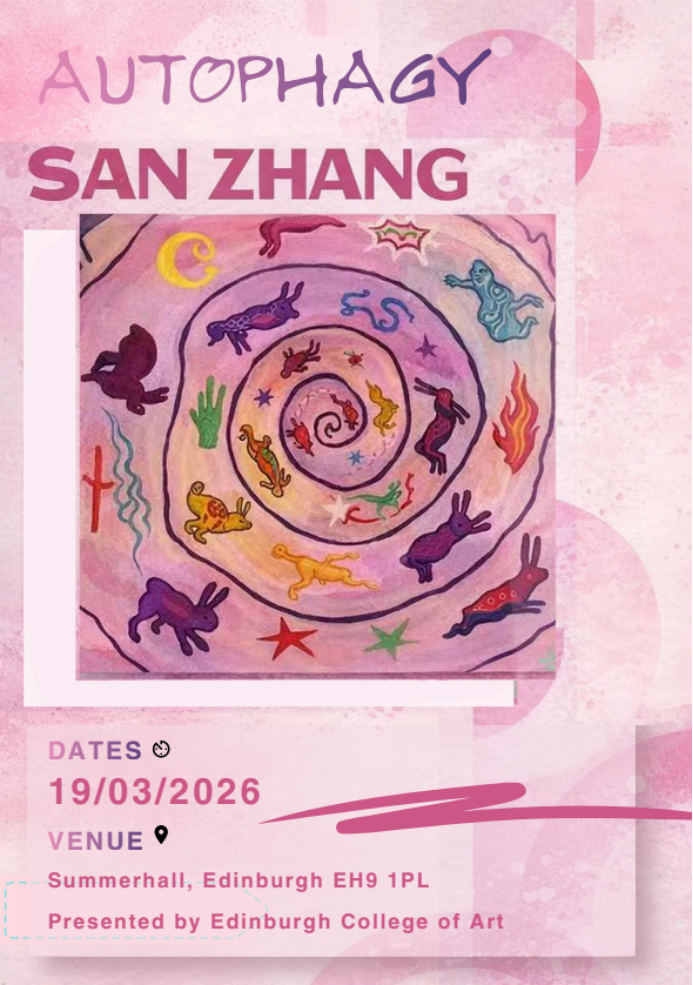
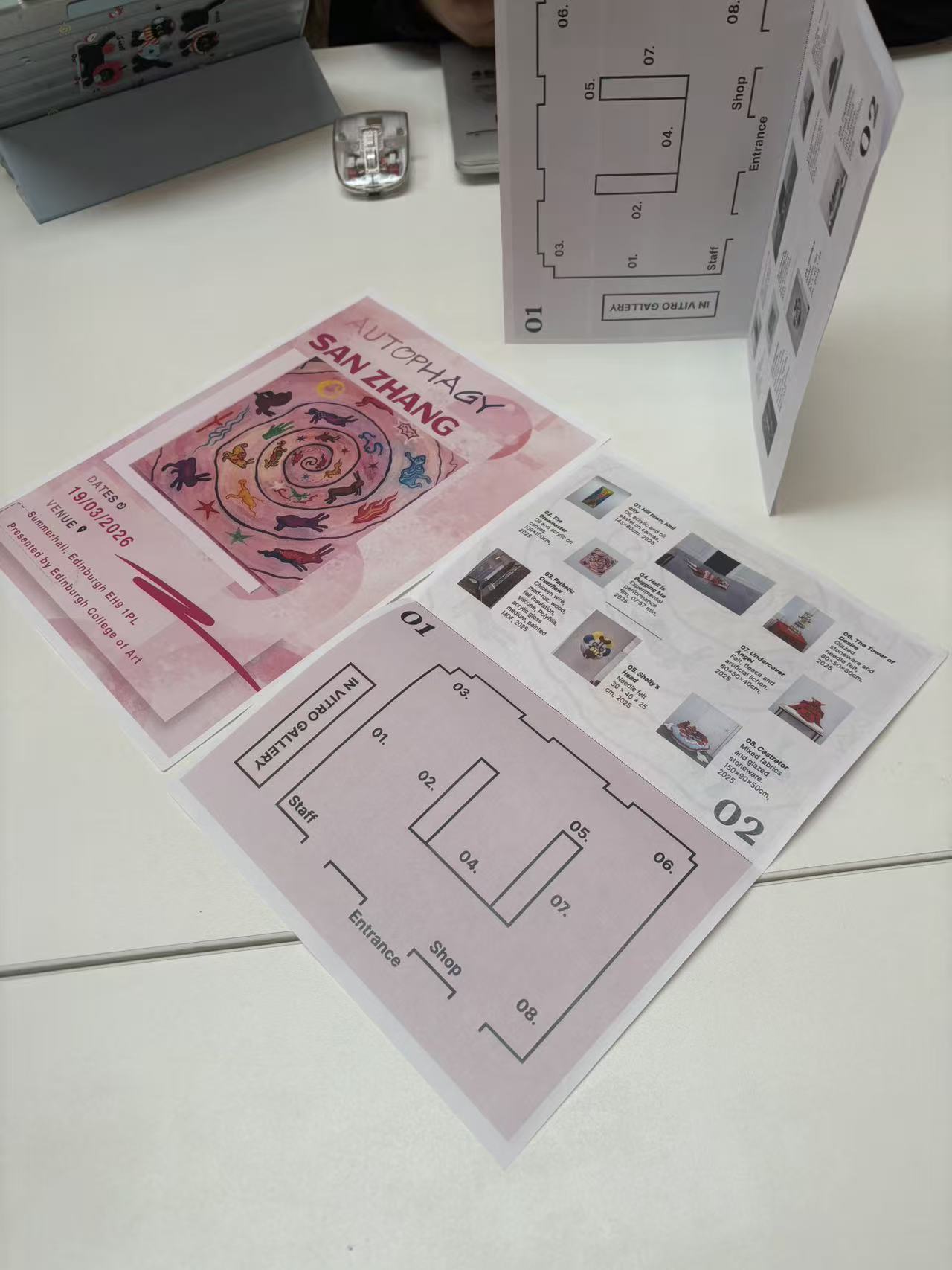
Within the group, I was responsible for measuring the exhibition space and recording spatial data at In Vitro Gallery, which helped us understand how the exhibition could be installed. I also contributed to early creative discussions, developed a proposal for a solo artist exhibition, and offered suggestions for the curatorial direction of The Tower of Autophagy. In the later stages, I worked on the final graphic layout, including the main image, colour palette and overall visual presentation.
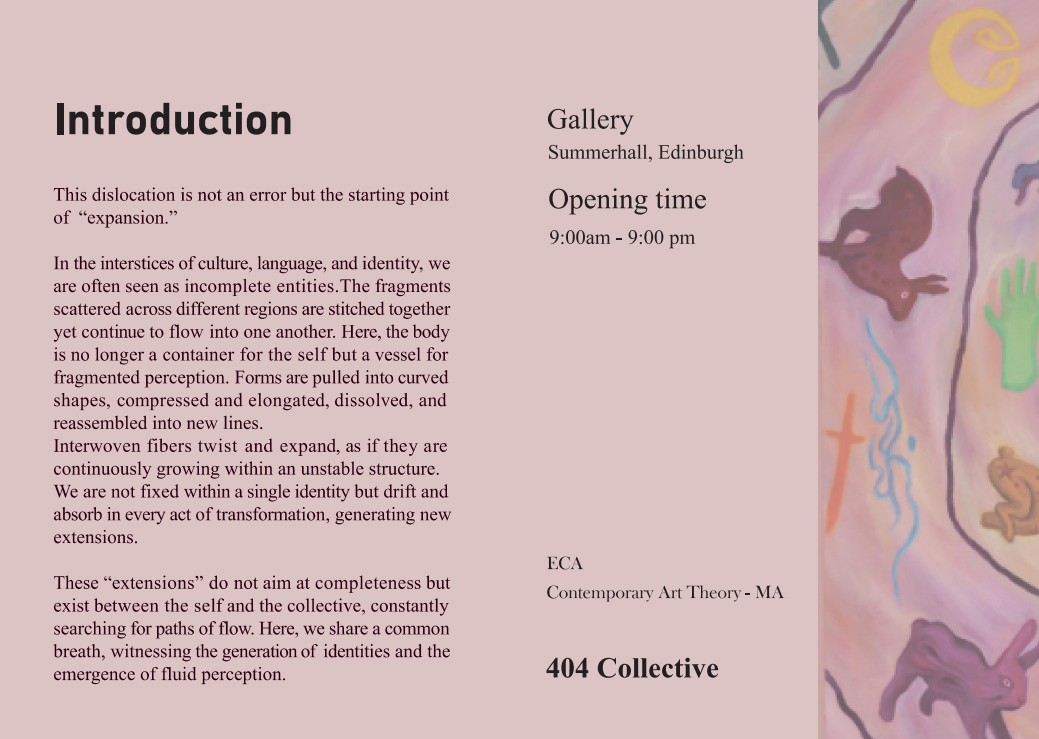
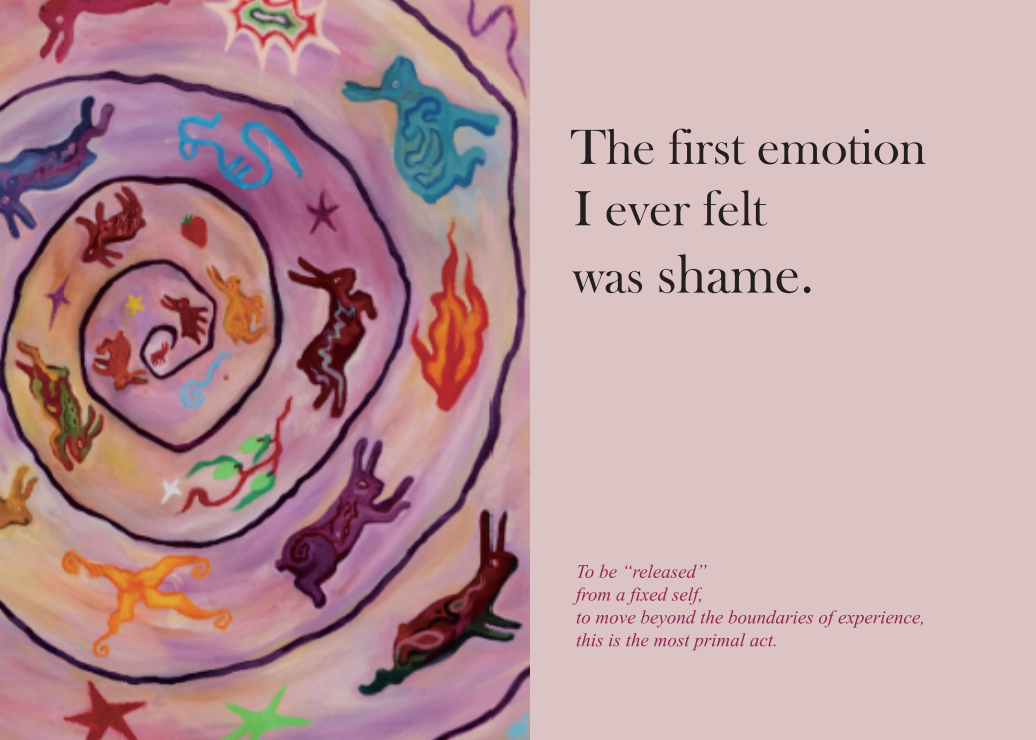
(Designed by Xiaobao Ye, 404 Collective)
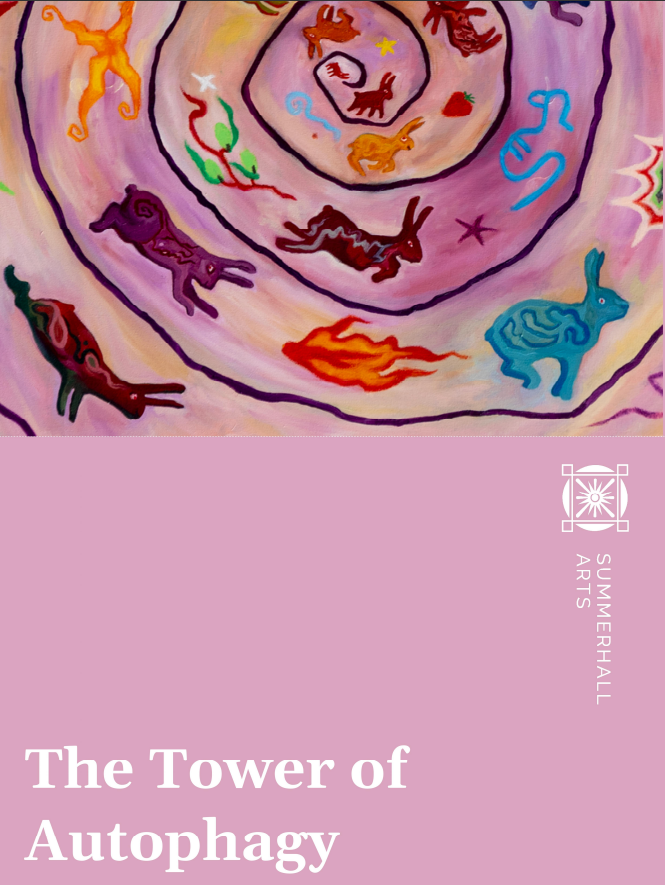
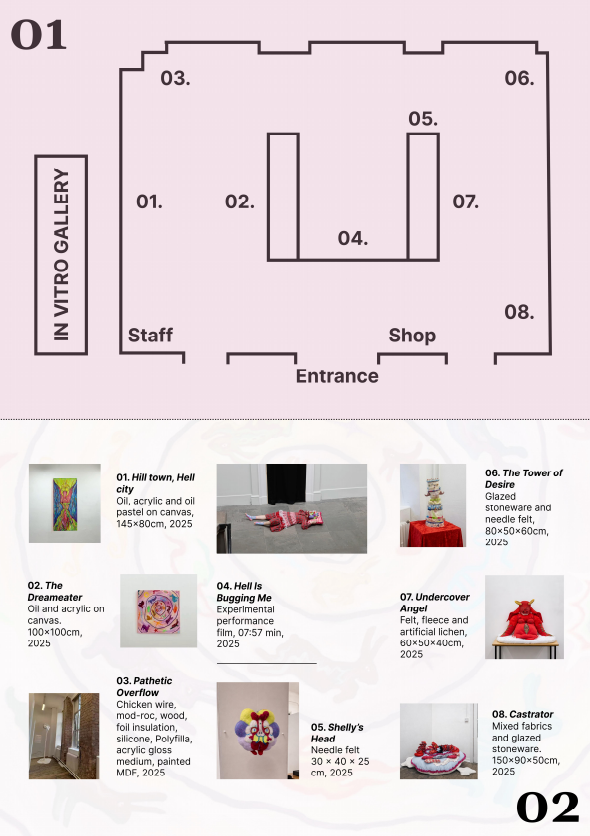

(Designed by Yi Yao, 404 Collective)
(Designed by Angxuan Li, 404 Collective)
During the early stage of selecting artworks, I chose The Dreameater, which was later agreed upon by the group and developed into the main visual of the exhibition. Through discussing this work, testing its placement and researching the artist, I gained a deeper understanding of how a single artwork can function within a broader curatorial context. I also decided to include this work in my own SICP project, which made me consider how the same artwork can be presented differently depending on the exhibition structure.
This experience changed how I understand visual design. As someone with a graphic design background, I initially saw visual identity as a way to make the exhibition look coherent. Through this collective process, I began to see it as a curatorial tool that shapes how audiences enter the artist’s world before they encounter the works. This also influenced my individual SICP, where I now think more carefully about how artwork selection, spatial order and visual communication work together.
Reference
O’Neill, Paul. The Culture of Curating and the Curating of Culture(s). Cambridge, MA: MIT Press, 2012.