

The Musée d’Orsay in Paris, France, is known as the “Hall of Impressionism,” Its galleries and exhibitions are organized according to the historical periods in which the artists lived and the artistic movements to which they belonged. The museum is divided into three levels: the ground floor features paintings and sculptures from 1850 to 1870; the middle level showcases Symbolism, Academic art, Art Nouveau, and Art Deco from 1870 to 1914; and the top floor displays Impressionist and Post-Impressionist works. This structure is not merely a classification but rather a form of “temporal curation” (Bennett, 2013). Its most intuitive feature is its spatial layout, which stems from the building’s conversion from a former railway station dating back to 1900. Consequently, the museum features an axial layout, allowing visitors to naturally follow a path while viewing the artworks.
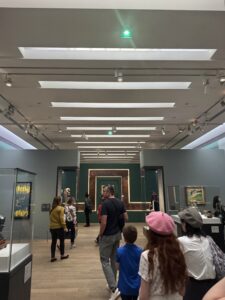
Fig 1 :Spatial Layout of Museum Exhibition Hall
In such large-scale museums, there are numerous artists and artworks on display. However, the arrangement of the exhibition is not chaotic but follows a clear narrative thread of the development of art history. Different exhibition halls not only showcase works but also tell the story of the changes in artistic styles in different periods and how artists responded to their times. As Brian O’Doherty mentioned in “Inside the White Cube”: “What we first see is not the art but the space itself.” (O’doherty, 1999); the way of exhibition itself is part of the artistic expression. The lighting design (brightness and color temperature) in different exhibition halls enables the works to present different moods. The spatial layout and arrangement of the works by the curators create an invisible viewing path. Artworks of different schools are arranged in chronological order and connections between the works are established, which can trigger the audience’s thinking: why is this work placed in this exhibition hall, and whether there is any connection between adjacent works, etc. Important works such as Monet’s “Water Lilies” are placed at the visual focus of the exhibition hall. The blank spaces between the works enhance the concentration on the appreciation of the artworks. Sculptures are placed outside the corridors of the exhibition hall or interspersed with the paintings inside, creating a rhythm of variation.
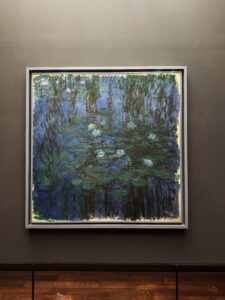
Fig 2 :Monet’s Painting: Water Lilies

Fig 3 :Monet’s Painting: Woman with a Parasol
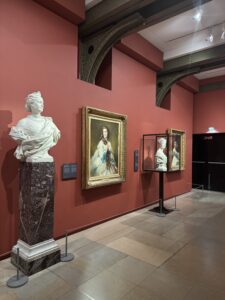
Fig 4 :The Arrangement of Paintings and Sculptures in the Exhibition Hall
Inspiration for Personal Curation: The curator is the organizer of the exhibition’s concept, not just someone who gathers works together. Prioritize the audience’s viewing flow to determine where works should be placed. Organize the selected artists’ works into distinct narrative zones, using the spatial structure to reinforce emotional progression. Define the exhibition’s narrative path: Pressure Arises → The Body Under Scrutiny → Identity Conflict → Self-Expression. This approach allows the audience to immerse themselves in the exhibition rather than merely viewing the works. The details within the exhibition also silently guide the audience. Lighting strategies can be designed for each zone, the density of works can be controlled, and blank spaces can be incorporated to provide the audience with more room for reflection.
References:
Bennett, Tony. The birth of the museum: History, theory, politics. Routledge, 2013.
O’doherty, Brian. Inside the white cube: The ideology of the gallery space. Univ of California Press, 1999.



Leave a Reply