

This week I examined the project again in relation to the real conditions of Edinburgh. The exhibition strategy for public space cannot rely only on a single route. It has to be adjusted according to spatial density, systems of management, and patterns of movement. In other words, the question becomes how the exhibition can actually take shape under different urban conditions.
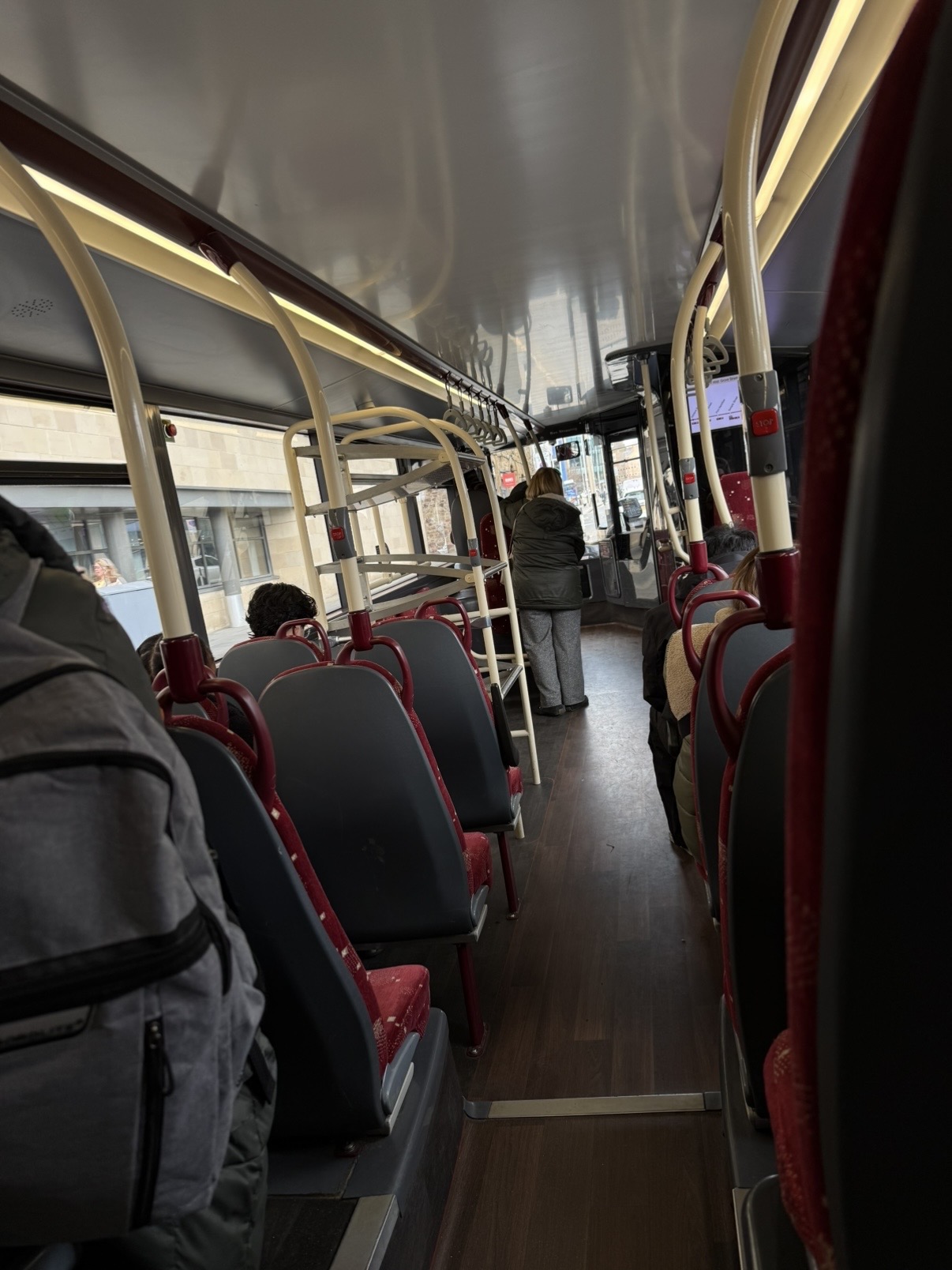
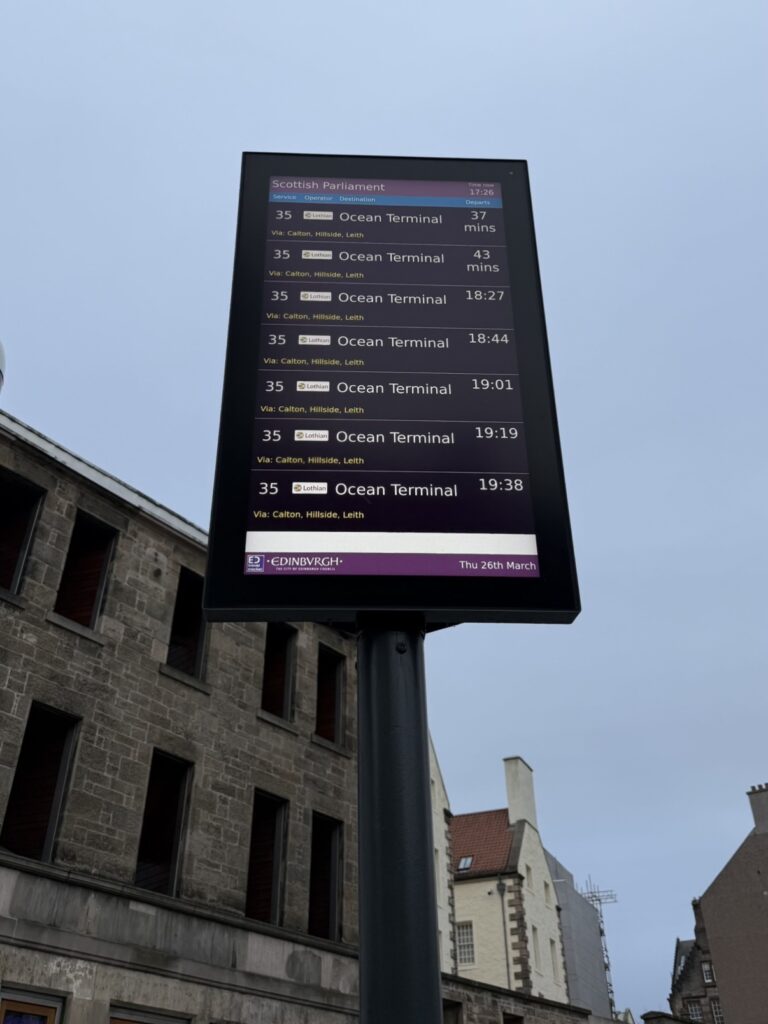
Tourist activity is concentrated in the city centre, especially around Princes Street, Royal Mile, and Waverley Bridge, all of which are marked by high footfall, high consumption, and high visibility. By contrast, Leith Walk, Ocean Terminal, and Holyrood function more as spaces of local everyday life. On this basis, I adjusted the mobility strategy. The earlier plan of linking all sites by bus is not appropriate in high-density areas, where it would increase transport pressure in already crowded conditions. Princes Street, Royal Mile, and Waverley Bridge are therefore now connected by walking, without direct use of the bus system. Holyrood, Leith Walk, and Ocean Terminal still retain the 35 bus as a link during off-peak hours. Because buses are already heavily used in Edinburgh—with Lothian Buses carrying over 100 million passengers each year—avoiding peak times is necessary. At the same time, the project still treats movement as a curatorial condition, so I have not removed the bus completely, but instead limited it to the 10am–4pm off-peak period. The shift between walking and bus travel can itself become part of how audiences understand spatial difference in the city.
The pedestrian routes in high-density areas do not involve steps, so they are fully suitable for wheelchair access, while the 35 bus offers connection across the lower-density sites without creating extra burden for viewing.
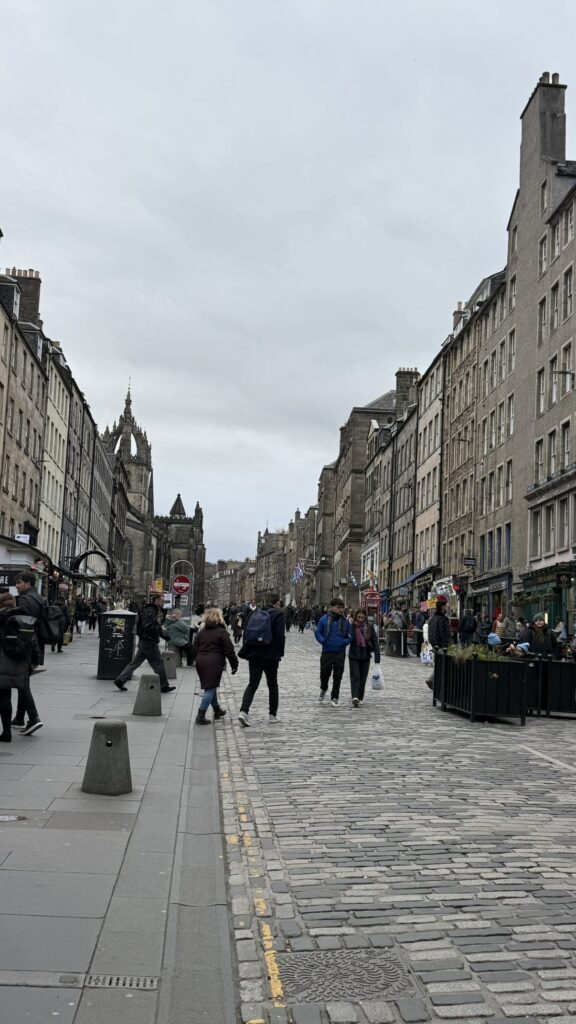
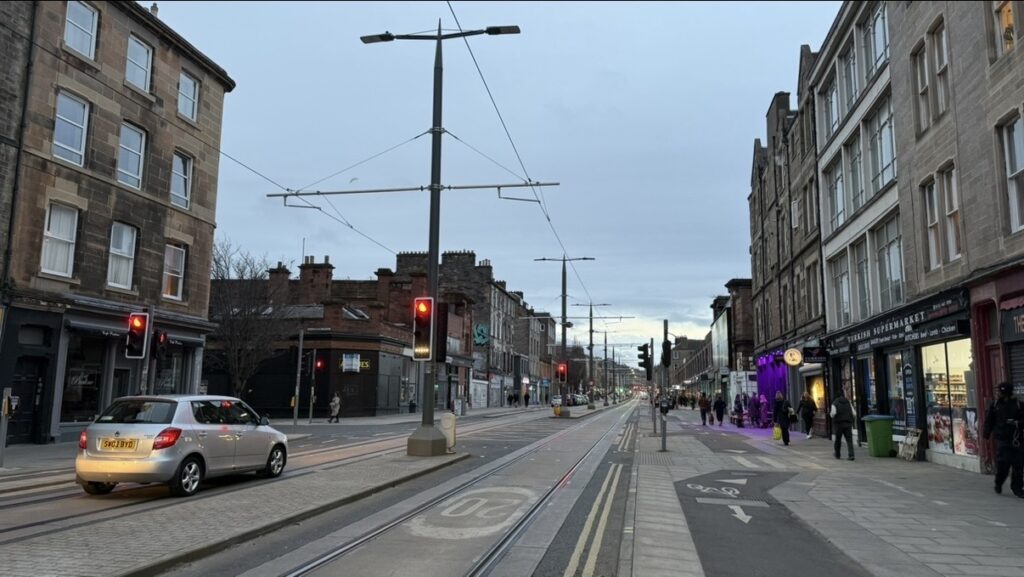
This adjustment also made the relationship between artists and sites clearer. Toby Paterson suits Princes Street because the issue there lies in how commercial frontage, pedestrian flow, and urban surfaces organise movement and looking. Holyrood Park does not require a stronger visual centre, so Clara Ursitti’s sensory intervention is more appropriate. Her work can draw viewers out of the compressed speed of the city centre and make entry into space slower and more bodily aware. Leith Walk is better suited to Chris Johanson’s text-based or light graphic intervention, because the issue there is not tourist spectacle, but the continuing relations between stopping, passing through, watching, and being overlooked within everyday circulation.
I also looked at precedents for linking transport and culture in Edinburgh. Travelling Treasures embedded cultural content into transport experience, making movement itself part of the narrative. Fringe Days Out used buses to enable more community groups to take part in cultural events. Both cases suggest that public transport can function not only as infrastructure, but also as a means of cultural organisation and public connection.
Because the project uses a graded intervention strategy in relation to permission, activities are matched to spatial conditions. Low-intensity interventions such as walking, QR codes, signage, and non-gathered experiences are more easily aligned with ordinary spatial use. Medium-intensity interventions require case-by-case evaluation. High-intensity activities such as performance or clear forms of gathering require formal permission. At present, everything in the project is low-intensity except for the slow-walk performance at Royal Mile.
References
City of Edinburgh Council. “Use of Public Spaces for Events and Filming Policy.” October 5, 2023. https://democracy.edinburgh.gov.uk/documents/s61901/Item%207.3%20-%20Use%20of%20Public%20Spaces%20for%20Events%20and%20Filming.pdf.
City of Edinburgh Council. “Use of Public Spaces for Events and Filming: Final Report.” May 11, 2023. https://democracy.edinburgh.gov.uk/documents/s57266/8.3%20-%20Use%20of%20Public%20Spaces%20for%20Events%20and%20Filming_Final.pdf.
Edinburgh Festival Fringe Society. “Fringe Days Out.” Accessed April 16, 2026. https://www.edfringe.com/experience/school-and-community-engagement/school-and-community-projects/fringe-days-out/.
Edinburgh Festival Fringe Society. “Fringe Days Out Returns in 2024 to Help Edinburgh Communities Engage with the Fringe.” April 30, 2024. https://www.edfringe.com/about-us/news-and-blog/fringe-days-out-returns-in-2024-to-help-edinburgh-communities-engage-with-the-fringe/.
Le Lieu, centre en art actuel. Manœuvres – Le Lieu, centre en art actuel. Edited by Richard Martel. Dijon: Les presses du réel, 1992. Accessed April 16, 2026. https://www.lespressesdureel.com/EN/ouvrage.php?id=2298&menu=0.
Lothian Buses. “Public Transport Use in the Capital Continues to Grow.” January 9, 2026. https://www.lothianbuses.com/news/2026/01/public-transport-use-in-the-capital-continues-to-grow/.
Lothian Buses. “Lothian City Buses: Service 35.” Accessed April 16, 2026. https://www.lothianbuses.com/our-services/lothian-city-buses/.