


From viewing experience to ethical issues of curation
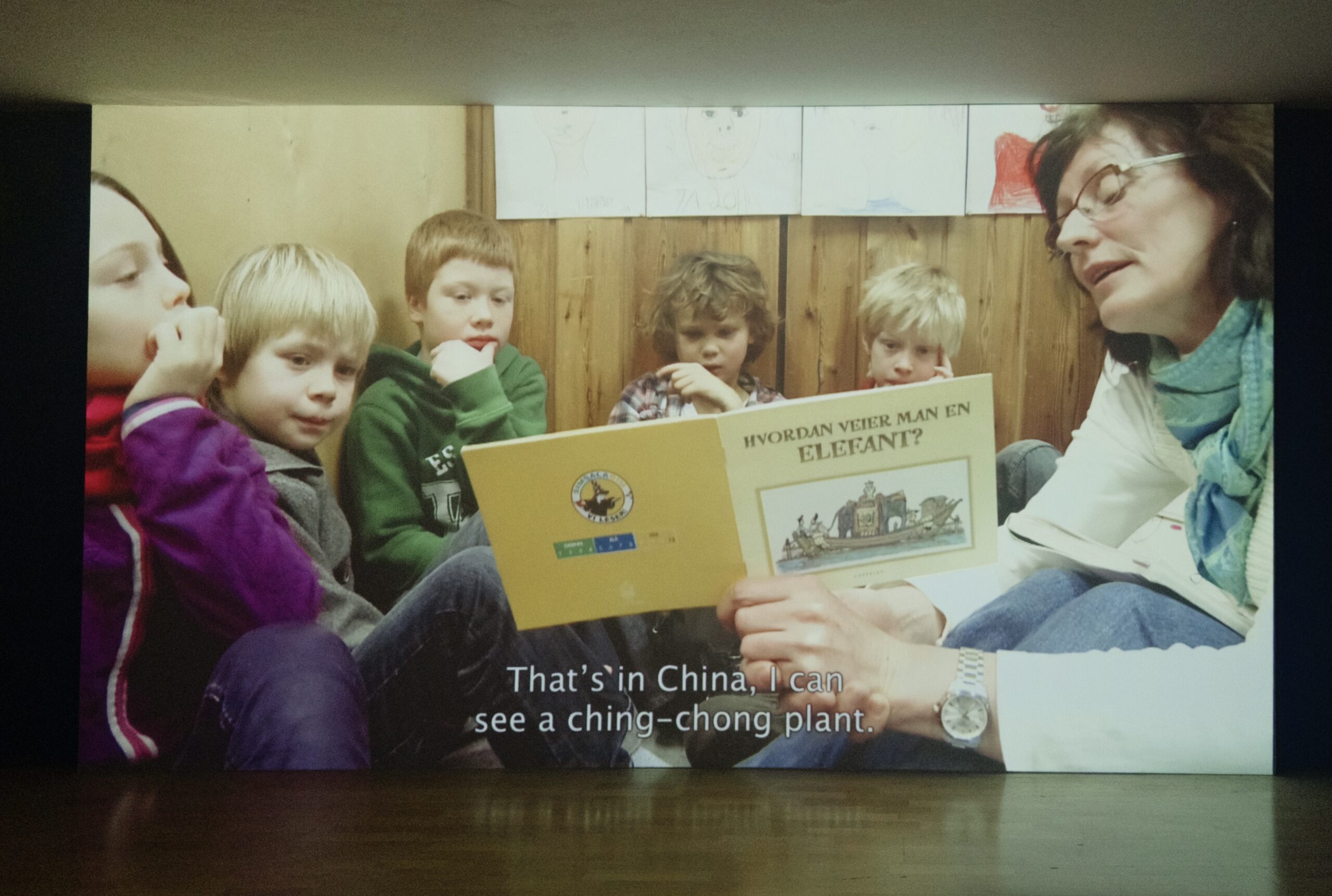
This week, I visited The Children are Now, an exhibition in Talbot Rice Gallery in Edinburgh, and watched Children’s Rights: What’s Right? The video prompted reflections on curatorial ethics. In the work, a boy makes a discriminatory remark about a Chinese person in a school setting. Although the work aims to reveal how children absorb and reproduce social language and power structures, as a Chinese audience member, I still felt uncomfortable. This made me realise that the critical intention of a work does not automatically translate into a critical effect for all audiences. Whether a work is understood as critical depends not only on the artist’s intention, but also on the display context and the audience.
link: The Children Are Now
Curator’s responsibility in the theoretical framework
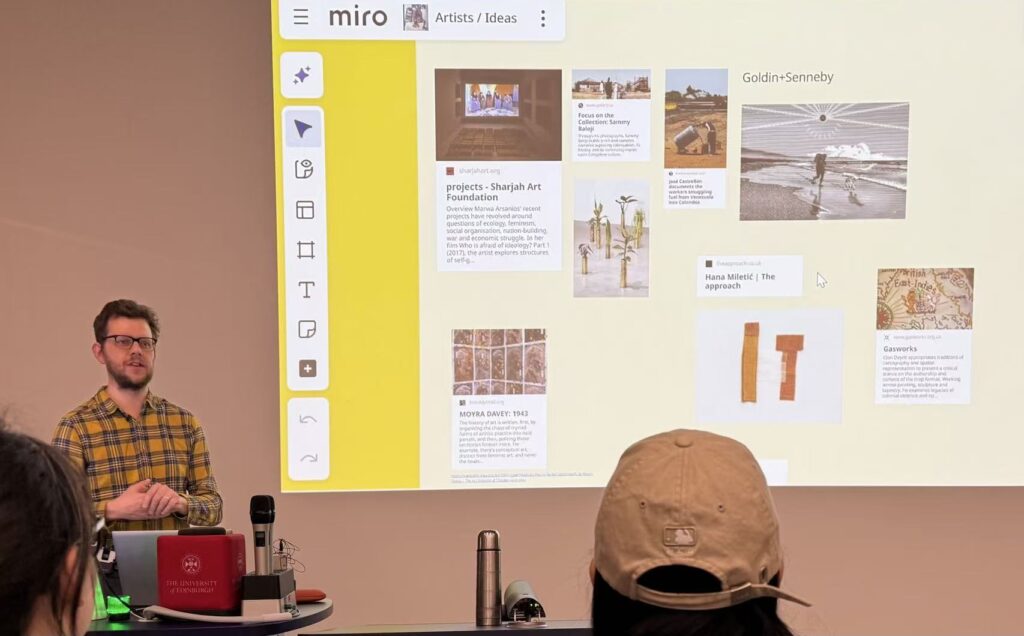
This experience led me to consider the target audience of the exhibition. As a public exhibition, The Children Are Now faces a wide audience, including adults and children. In a workshop, curator James emphasised that contemporary curatorial practice should balance creative expression and political sensitivity and guide audiences to think rather than impose conclusions. However, when works involve language prejudice and power structures, different audiences interpret them differently. For critically informed viewers, such content may provoke reflection; for children or those without background, it may be misread as acceptable language. Therefore, curators must consider not only “whether to exhibit” but also “for whom” and construct interpretive frameworks through spatial design, texts, or education.
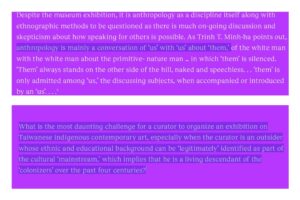
This can also echo the curriculum literature. In Ethics of Curating, Meng Shichen pointed out that curatorial ethics is not only a matter of institutional norms but also involves “who is speaking for whom” and how curators face others. This view helps me understand that the curator should not only stay at the level of “the original intention of the work is not malicious” but also must think about the possible secondary harm caused by the work in the exhibition.
Enlightenment to future practice and JIJU Collective
If the future curatorial project is related to traditional art, historical images, or traditional visual images, the curator should not only present their form and history but also be wary of being simplified into a single cultural symbol in the contemporary context.
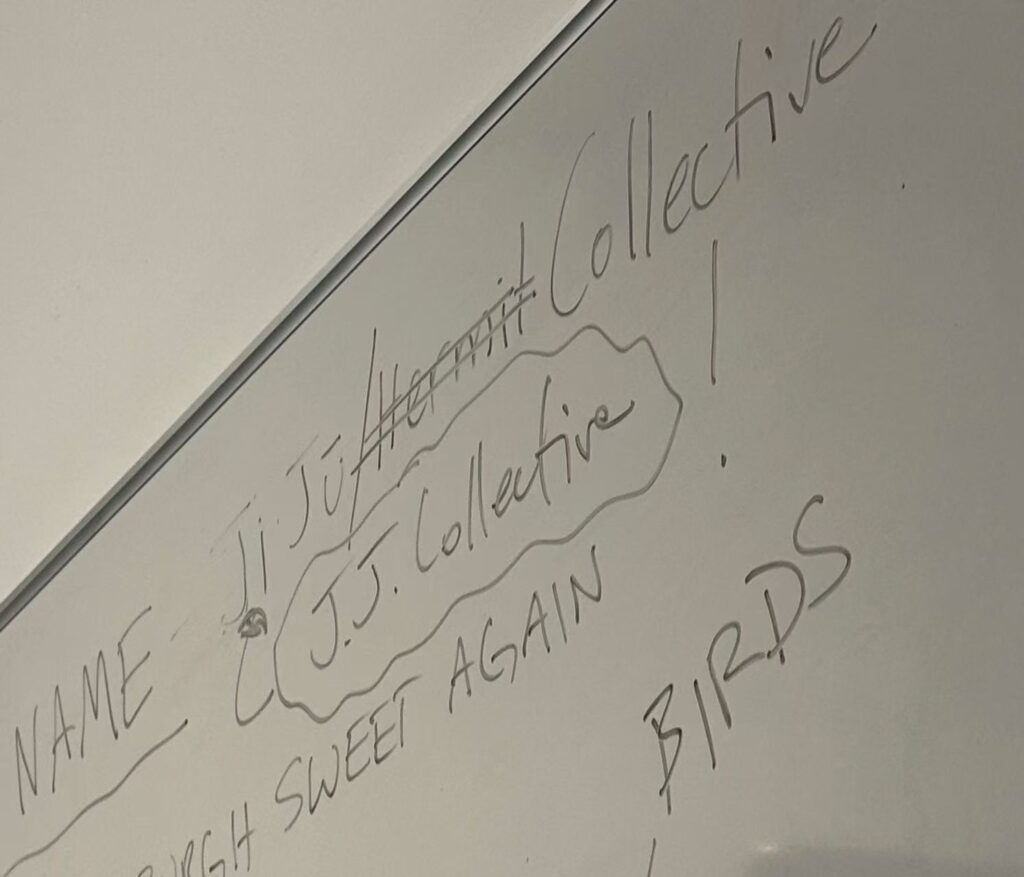
This is also related to the formation of the group JIJU Collective. “JIJU” comes from the pronunciation of “sojourning” in Chinese, reflecting the shared cross-cultural condition of members living and studying in Edinburgh. It reminds me that audiences are never homogeneous; cultural differences shape interpretation. Curatorial ethics, therefore, is not about finding a single correct answer but about sustaining a reflective and responsible practice within diverse viewing contexts.
Bibliography
Talbot Rice Gallery. “The Children Are Now.” Accessed April 1, 2026. https://www.trg.ed.ac.uk/exhibition/children-are-now.
Ane Hjort Guttu. Children’s Rights: What’s Right?
Chen, Meng-Shi Chen. “Ethics of Curating.” Curatography: The Study of Curatorial Culture 5 (2021). https://curatography.org/5-3-en/.



Hi Luosijie, good to look at your Blog so far. Overall, there is some interesting reflection on course ideas, SICP content, and some reference to course resources. But more research content is needed and/or examples of curatorial practice fully communicate and support the points you make. Use strong direct quotes also where you can, and show where they come from.
It is important to have streamlined use of formatting/structuring headings, and to create narrative flow and critical connections between points/subheadings, and between separate posts.
Use short effective headline/titles for Blog posts that communicate your key content, W1 for example is too long. Cut all sections ‘Call to duty’, they are not relevant and repetitive
You don’t need Introduction or Conclusion (which repeats content, avoid this without adding any new idea/synthesis/research) in such short posts, but do use subheadings to help editorialise your content. Currently, you have too many in your posts! The content from Thea in the Introduction is however quite good, but explain more clearly how you use the idea of ‘traditional art’ because it is not clear what you mean when you say “rather than simply updating traditional art forms”: Thea uses this idea to express traditional mediums such as painting, sculpture: adding follow on research about this idea and direct quotes can help eg Dorothea von Hantelmann How to Do Things with Art (2010). This would clarify the way you want to revisit a Chinese art medium through the more contemporary lens of questions of time and labour. Give examples of exhibitions with this method of the contemporary-historical to show independent research. Draw on texts on art, medium and technology, critical thinking and quotes on installation. Weave back in content from later weeks (Week 2 lecture talked about the shift to curating as experience, Art and attitudes).
The Week 2 post needs a lot of revision: where does the quote “bridge between tradition and contemporaneity” come from? You don’t establish the framework for the post, ie. Terry Smith’s idea of contemporaneity. There is some potentially interesting independent research on Tunyard and modernism, etc but it’s really not clear what you are trying to say: how does this relate to your idea of reframing lacquer painting? How does British neo-romanticism and the Anthropocene come in. It feels like ingredients that need a recipe.
You use quotes again in Week 3 with no source, avoid this. You discuss ethics in relation to the TRG exhibition, but with no mention of the Week 3 lecture. You also don’t address James’ workshop (the curator of Children Now). It’s not clear how this fieldwork related to your own SICP: it is important to create narrative flow and critical connections between points/subheadings, and between separate posts. The Conclusion is vague: use all words to show you are addressing the learning outcomes.
A key gap: you need to reference the Collective in your Blog, I know Week 1, and maybe 2, things were warming up, but definitely by Week 3 there is movement to discuss.
There is scope for more images: consider image size and the use of various types of figures, you have a 400 approx word limit, but can use images strategically to add visual communication.